Aaron Between the Mob and the Pit
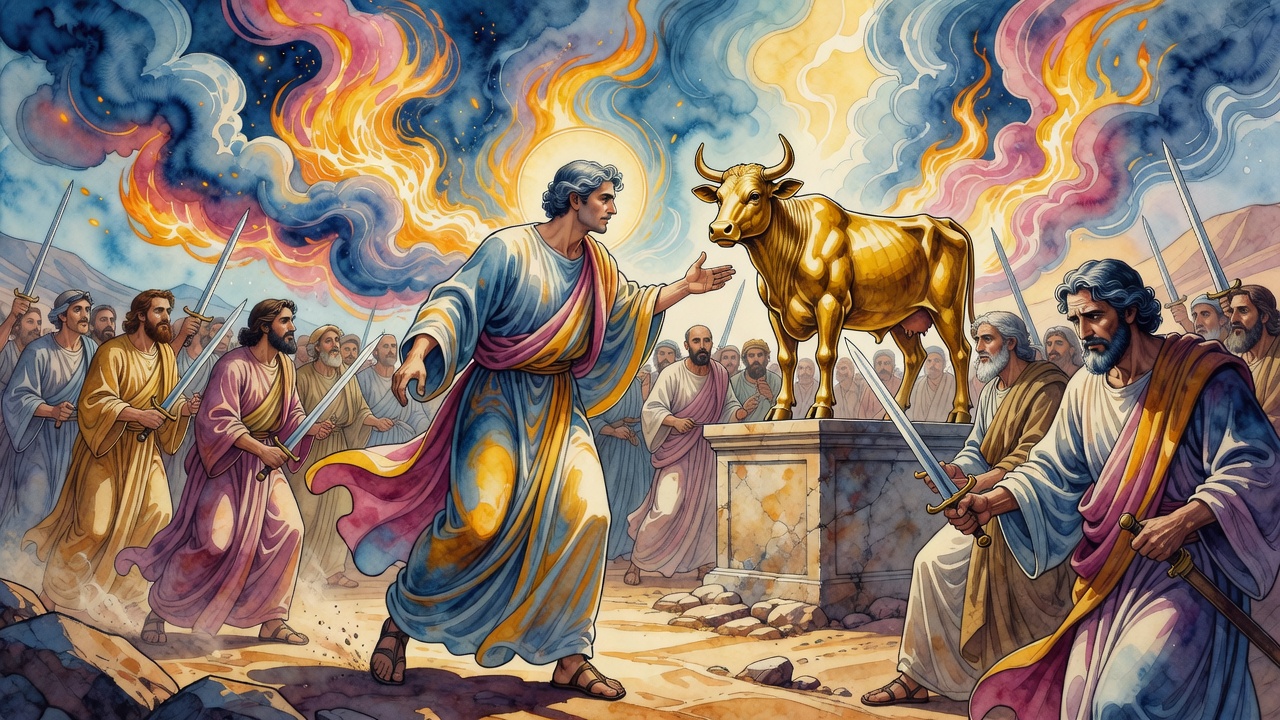
Aaron's priesthood was bracketed by two catastrophes, the Golden Calf and Korah's rebellion. Both threatened him. Both failed to destroy him.
Table of Contents
 Click for full size
The Public Installation
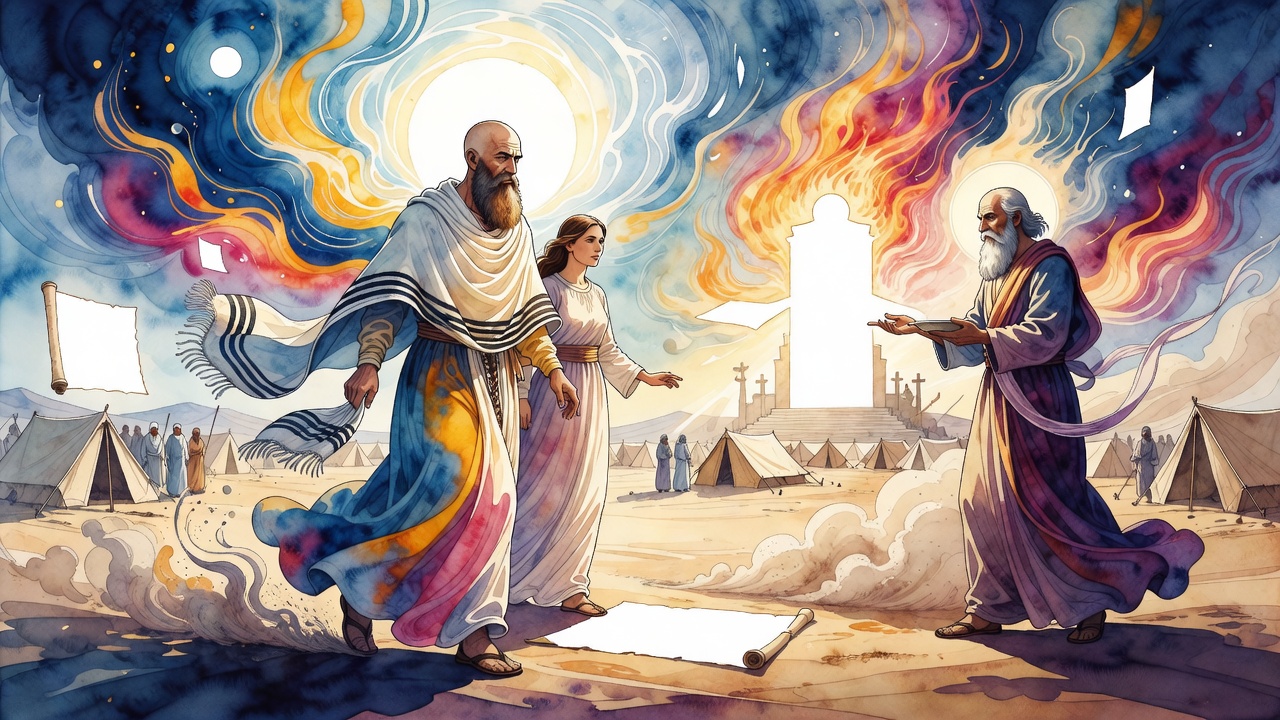
God told Moses to assemble all of Israel at the door of the Tent of Meeting. Not a few elders. Not the Levitical families. Everyone. Aaron was going to be installed as High Priest in front of every man, woman, and child in the camp, and the public nature of the ceremony was not ceremonial. It was a warning.
Midrash Tanchuma, Tzav 11, a homiletical tradition drawing on older material and shaped in its current form by the eighth to ninth century CE, records what God said to Moses about the assembly. Pay him honor in front of all Israel, so they may see him enter the high priesthood. And warn them not to rebel against the priesthood the way Korah and his crowd did. The installation of Aaron was inseparable from the memory of Korah, because the threat Korah represented was not dead. God already knew, Tanchuma notes, that Uzziah the king of Judah would one day rebel against the priesthood and enter the Temple with a censer. The installation ceremony was not just for that generation. It was a standing prohibition, cast in the form of a public honor.
The Levites Were Not Aaron's Property
One detail in the installation kept Aaron's authority from becoming a possession. The Levites who served in the sanctuary did not serve Aaron. They served God through the work of the sanctuary, and Aaron supervised that sacred labor. He did not own it. The distinction mattered because the thing Korah most wanted was precisely the ownership of sacred service, the right to hold fire, to burn incense, to stand in the place that Aaron stood. Korah framed his challenge in the language of equality: why should one man hold the priesthood when the whole congregation is holy? But the argument was a shell over a different desire. He wanted what Aaron had, not because the authority was distributed unfairly, but because he wanted it for himself.
Two Hundred and Fifty Men With Incense Pans
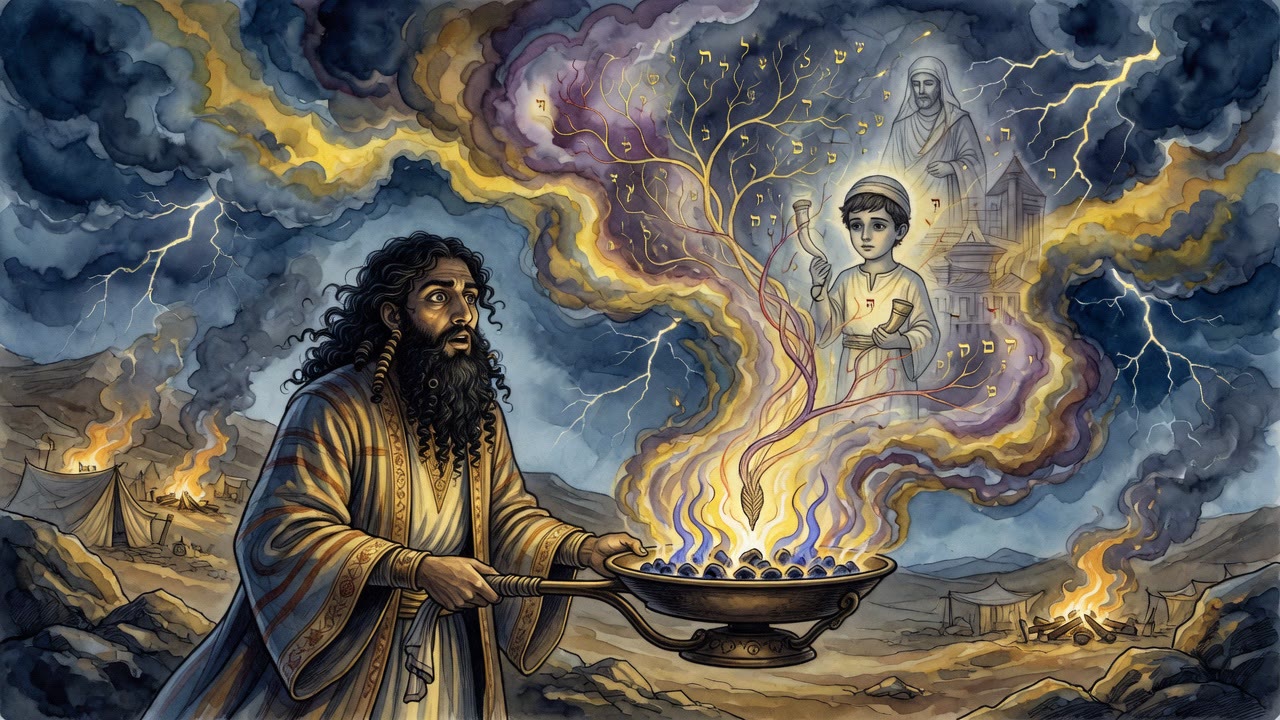
Korah arrived with two hundred and fifty prominent men, each carrying a fire pan, each ready to offer incense before the Lord and let God decide who was holy. Moses accepted the challenge. Bamidbar Rabbah, the midrashic anthology on Numbers with early strata in the fifth century CE, asks what Moses saw in the incense test that made him choose it. The answer: among other nations, there are many priests and many rituals. Israel had one altar, one anointed priesthood, one sanctioned form of offering. The incense test was the test of that singularity. One man would burn incense acceptably. Two hundred and fifty-one men stood with pans. The mathematics of the test were set before it began.
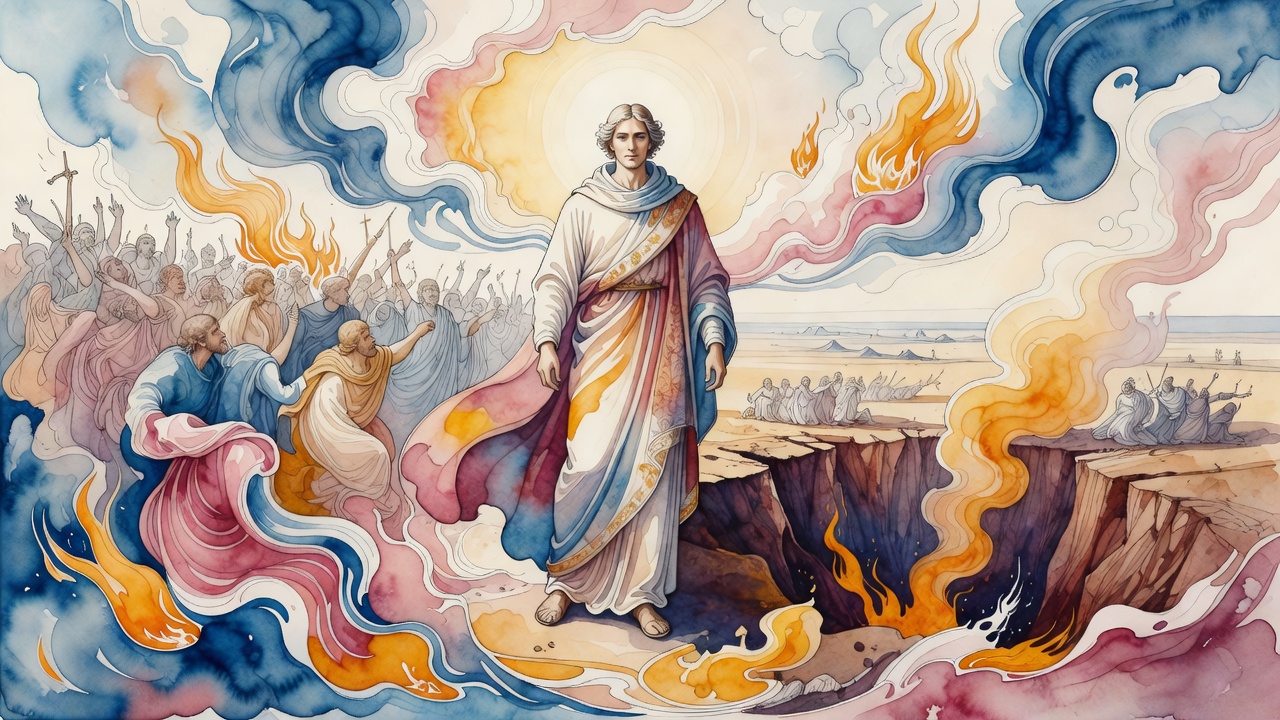
The ground opened. Korah and his household went down into it. The two hundred and fifty men with their fire pans were consumed. The pans, having been used for a sacred purpose even in rebellion, were hammered into plating for the altar as a permanent memorial: no outsider who was not of Aaron's seed should draw near to burn incense before the Lord.
The Plague and the Man Who Ran Into It
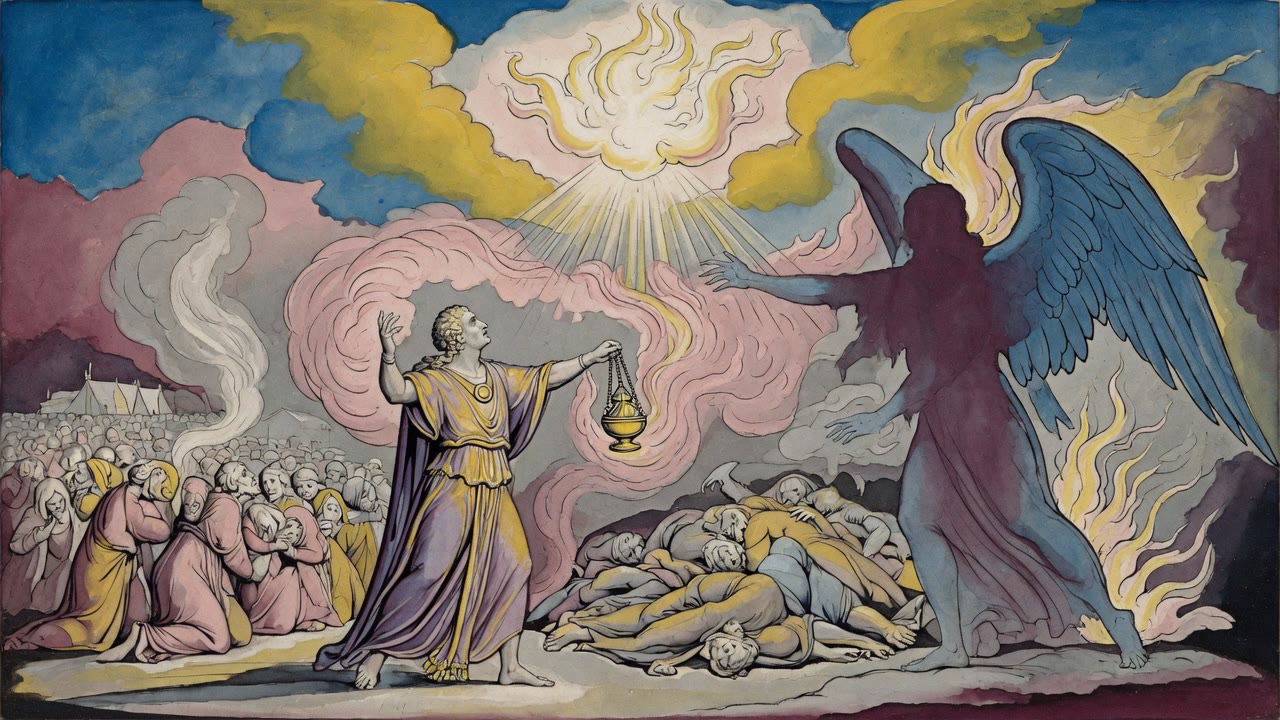
What the incense test had established as lethal to unauthorized hands, Aaron then used to save lives. After the destruction of Korah's company, a plague swept through the camp. Mekhilta deRabbi Yishmael, the tannaitic midrash on Exodus shaped in the third century CE, records the popular understanding among Israel: the incense was an instrument of punishment. Nadav and Avihu had died offering unauthorized fire. Korah's men had died with their pans in hand. The incense killed. Stay away from it.
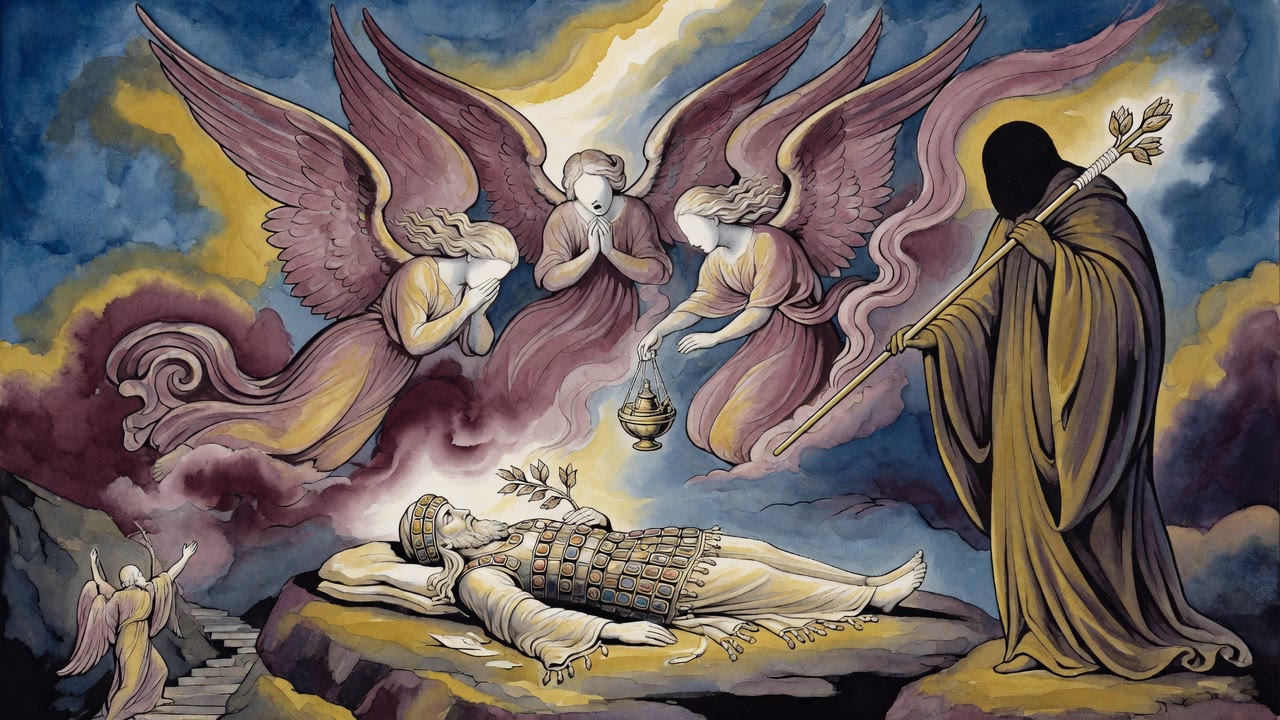
God wanted Israel to understand they had it backwards. The incense was not a weapon. It was a tool that served opposite purposes depending on who wielded it and under what authority. Aaron rushed into the midst of the dying with his censer, burned incense among the people who were falling, and stood between the living and the dead. The plague stopped where he stood. The Legends of the Jews, Louis Ginzberg's synthesis of rabbinic narrative, describes it as the Angel of Death moving like a reaper through rows of wheat until Aaron placed himself in the path of the cutting.
← All myths