Korah Wrapped 250 Leaders in Blue and the Earth Ate Them
The looms ran for days and the wool came off the color of the sky just before dark. Korah ran the cloth through his fingers. He knew what one thread was worth.
Table of Contents
The looms had run for days, and now the wool came off them the color of the sky just before dark. Pure blue, every thread of it. Korah ran the cloth between his fingers and smiled, because he knew exactly what one thread of this color was worth. He had carried holy things on his own shoulder. He knew the weight of them.
 Click for full size
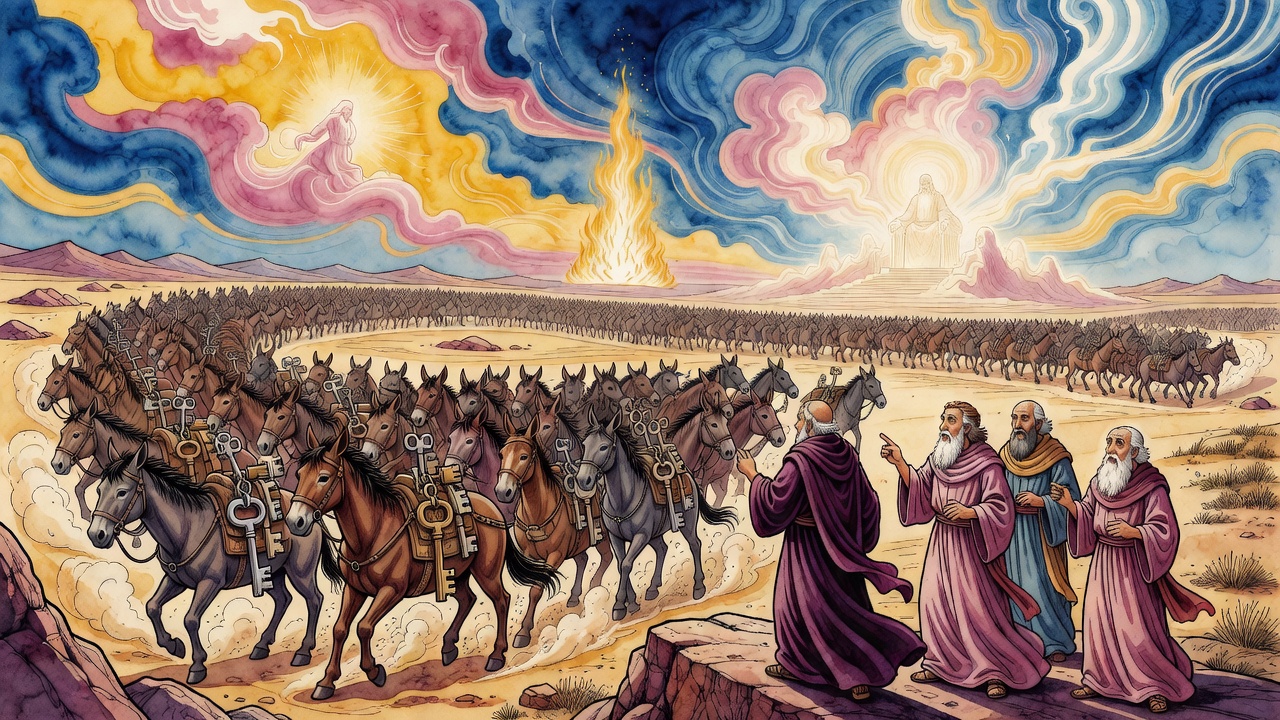
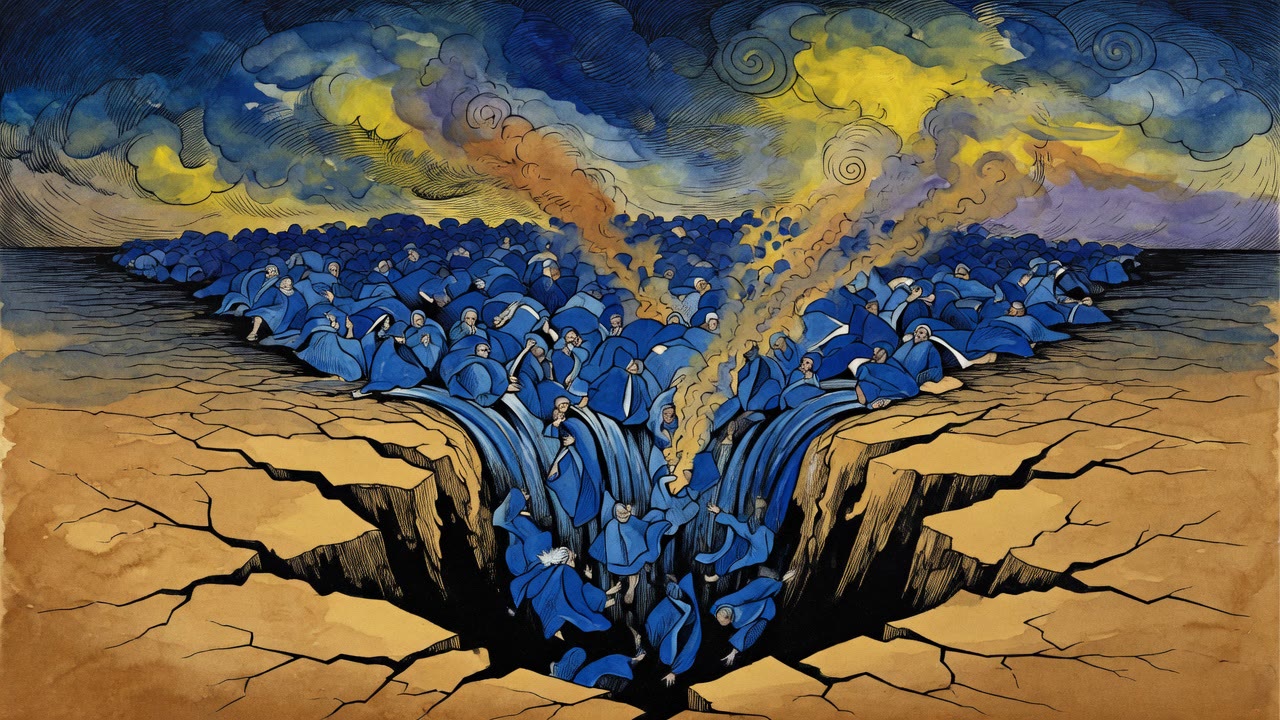
He had the cloaks cut and sewn, two hundred and fifty of them, not a thread of any other color in them. Then he sent for two hundred and fifty men, the heads of the camp, men whose names were already spoken with respect, and he dressed each one in blue from neck to ankle. They sat at his feast wrapped in heaven's own dye, and they looked, every one of them, like priests.
The Cloak Made Entirely of Blue
Korah was no fool, and that was the danger in him. He was a Kohathite, one of the family chosen to carry the holiest vessels through the wilderness, and he had felt the Ark press down on his back. A man who has borne sacred weight does not mock the sacred lightly. He mocks it with care.
He went out to Moses with his blue men behind him, and he asked a small, sharp question. A garment made entirely of sky-blue wool, the kind the people were commanded to fringe with a single blue thread (Numbers 15:38), does such a garment still need its one thread of blue?
Moses did not hesitate. "Yes," he said. "It still needs the thread."
Korah laughed, and the laugh was meant to be heard. "If a single thread can make a plain garment holy," he said, "how can a garment that is all blue, blue through and through, still beg for that one thread?" And he pressed harder, because he could feel the crowd leaning in. "A doorpost gets one small scroll and the house is sanctified. So tell me, a house packed wall to wall with Torah scrolls, does it still need its little box on the doorframe?" The men in blue murmured. It sounded like sense. It sounded like arithmetic anyone could do.
You Fabricate Them From Your Heart
Moses answered the second riddle the same way he answered the first. The house still needs the mezuzah, the small case on the doorpost. The garment still needs the thread.
Then he saw the trap for what it was, two hundred and fifty men dressed as the thing they wanted to seize, and he stopped answering riddles. "You were not commanded these matters," he told Korah. "You are fabricating them out of your own heart." The whole congregation is holy, Korah had been saying through the camp. God is among all of them. So why do you and Aaron lift yourselves above the people?
It was a clean-sounding rebellion. Nobody in blue was saying holiness was a lie. They were saying holiness was everywhere, spread thin across everyone, and that therefore no man had the right to stand at a boundary and say this far and no farther.
The Portions They Refused to Give
The break came over meat. When the sons of Aaron came to the feast to claim what was theirs by the priestly law, the breast and the right thigh of the offering, the men in blue closed ranks and barred them.
"Who told you to take these?" the rebels demanded.
"Moses did," the young priests answered.
"We give you nothing," the men in blue said, "because the Holy One never commanded it."
Word of it ran to Moses, and he rose and went to them himself to make peace, an old man walking out toward two hundred and fifty younger ones who had decided he was finished. They did not let him speak peace. They rose against him where he stood.
The Ground Opened Its Mouth
So it came to censers. The two hundred and fifty took fire and incense in their hands to prove before God that they too could stand at the altar, and Korah stood among them, holding his own censer, dressed in the bluest cloak of all.
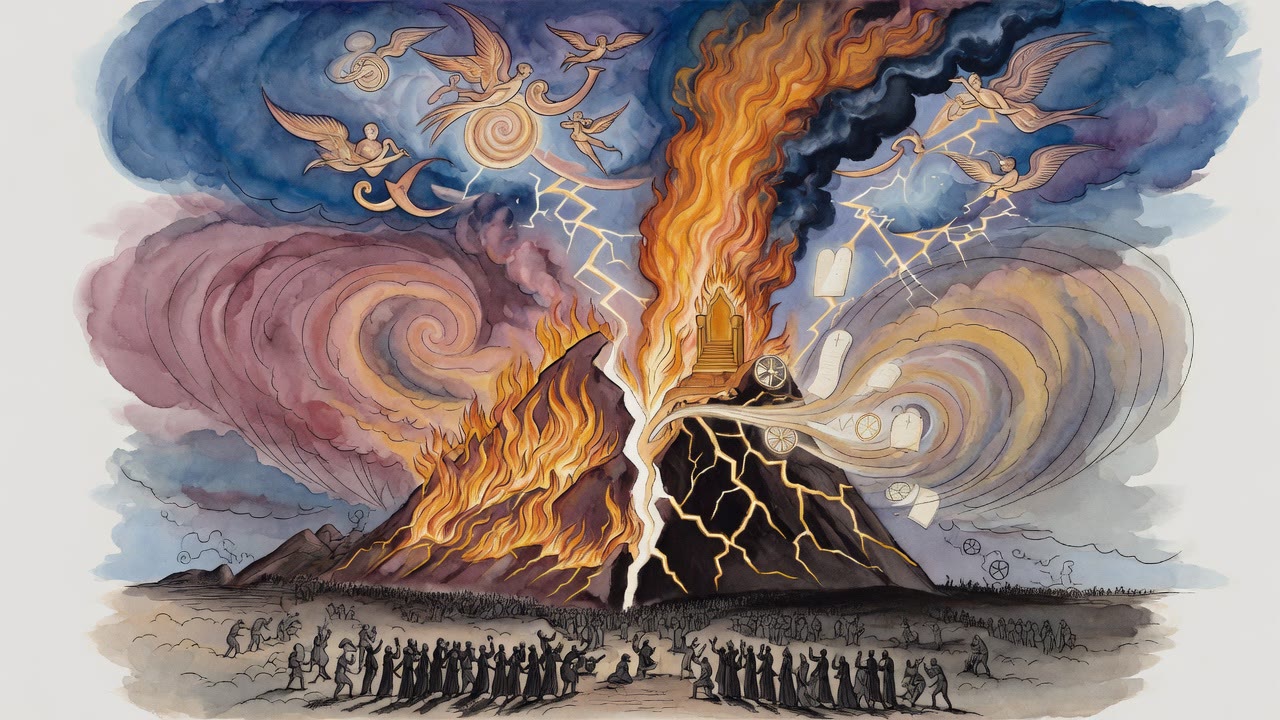
The fire came down. It did not wait. It fell on the two hundred and fifty and burned them where they stood with the incense still smoking in their fists, and it burned Korah among them, so that his body went down scorched and lifeless to the ground.
But Korah had done two crimes, not one. He had reached for a priesthood that was never his, and for that the censer-fire took him. He had also turned the people against Moses and stood with Dathan and Abiram, and those two had a different death waiting. The earth had already opened its mouth for them, a long dark seam in the wilderness floor, and it had swallowed Dathan and Abiram and their tents and their households down alive into it (Numbers 16:32). The ground took even the infants, some of them only a day old, down into the dark with their fathers.
Korah's burned body began to roll. It rolled across the ground and would not stop, on and on across the broken floor of the camp, until it came to the exact place where the earth still gaped. The instant the charred body reached the edge, the ground closed its mouth around him, and the earth swallowed them up together with Korah (Numbers 26:10). He died both deaths at once, burned for the censer and swallowed for the revolt.
The Two Wives and the Four Who Lived
Out of all that company, four men lived. Korah's own three sons stepped back from their father's fire and were spared. And one more, On the son of Peleth, a man who had sat among the blue and should have gone down with them.
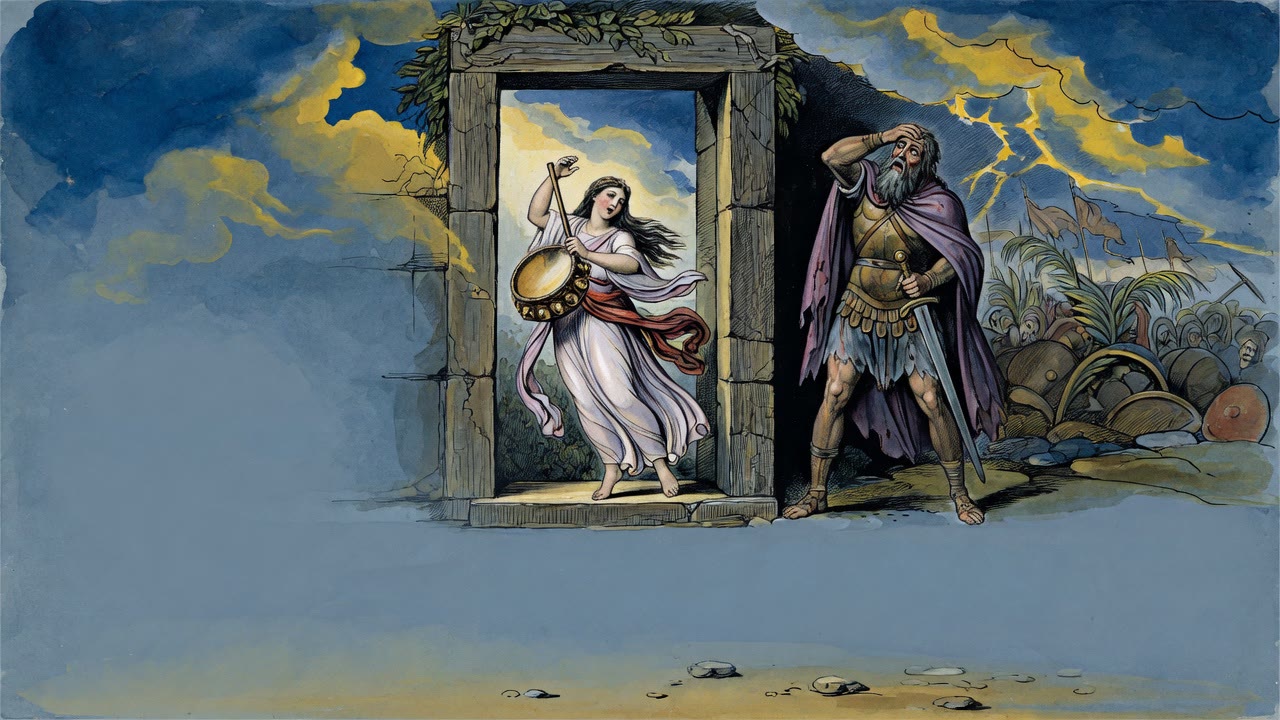
What saved On was his wife. She talked him out of the rebellion, plucked the blue cloak off her husband's shoulders before the morning came, and kept him in the tent while the ground tore open without him. Korah's wife had done the opposite. Her words had pushed her husband toward the censer and the seam in the earth. One woman built her house with her mouth. One pulled it down with her own hands.
← All myths