Eldad and Medad Drew No Slip and Prophesied Anyway
Seventy slips said elder, two were blank, and the lottery never reached Eldad and Medad. So the spirit found the two men where they stood.
Table of Contents
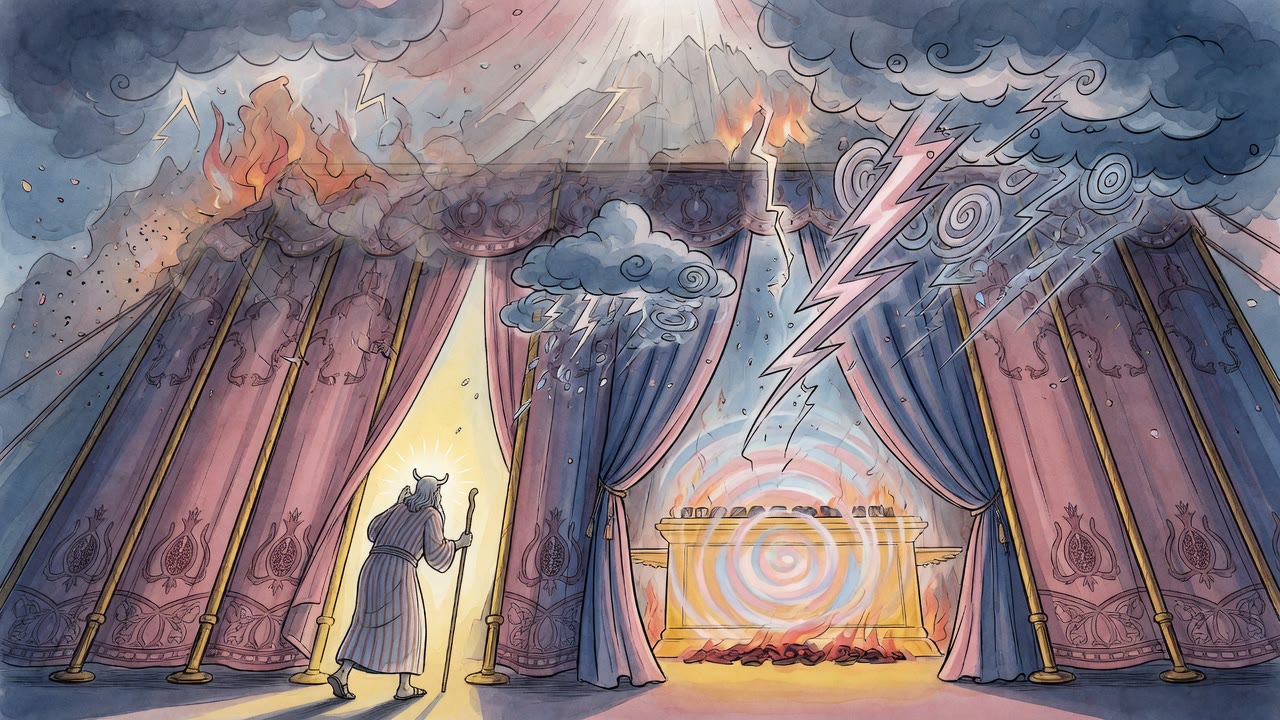
The crying came from the tent doors. Family by family, at the openings of their tents, the people of Israel wept for meat, and the sound of it rolled through the camp until it reached the one man who could not stop it. Moses stood in it like a man standing in rising water. He had brought them out, he had fed them on bread that fell from the sky, and still they wailed as if he had starved them.
 Click for full size
He turned his face up. "Did I conceive this whole people," he asked. "Did I give them birth, that You tell me to carry them in my arms like a nurse carries a suckling child, all the way to the land You promised their fathers? Where am I to find meat for all of them? The weight is too heavy. If this is how You will deal with me, kill me now, and let me not see my own ruin" (Numbers 11:14, 11:15).
God Divides the Weight Among Seventy
The answer did not scold him for breaking. "Gather seventy men from the elders of Israel, men known to you as elders and officers, and bring them to the Tent of Meeting. There I will take some of the spirit that rests on you and put it on them, and they will bear the burden of the people with you, so you do not bear it alone" (Numbers 11:16, 11:17).
Moses heard the relief in it. Then he heard the arithmetic, and the relief curdled. Seventy men from twelve tribes. Five from each tribe came to only sixty. Six from each came to seventy-two, two too many. So he would have to take six from ten tribes and five from the other two, and the two short tribes would count their men, and count the others' men, and never forgive it. He had watched this camp turn hunger into accusation in an afternoon. A slighted tribe nursed a grudge for a generation.
The Lottery That No Tribe Could Curse
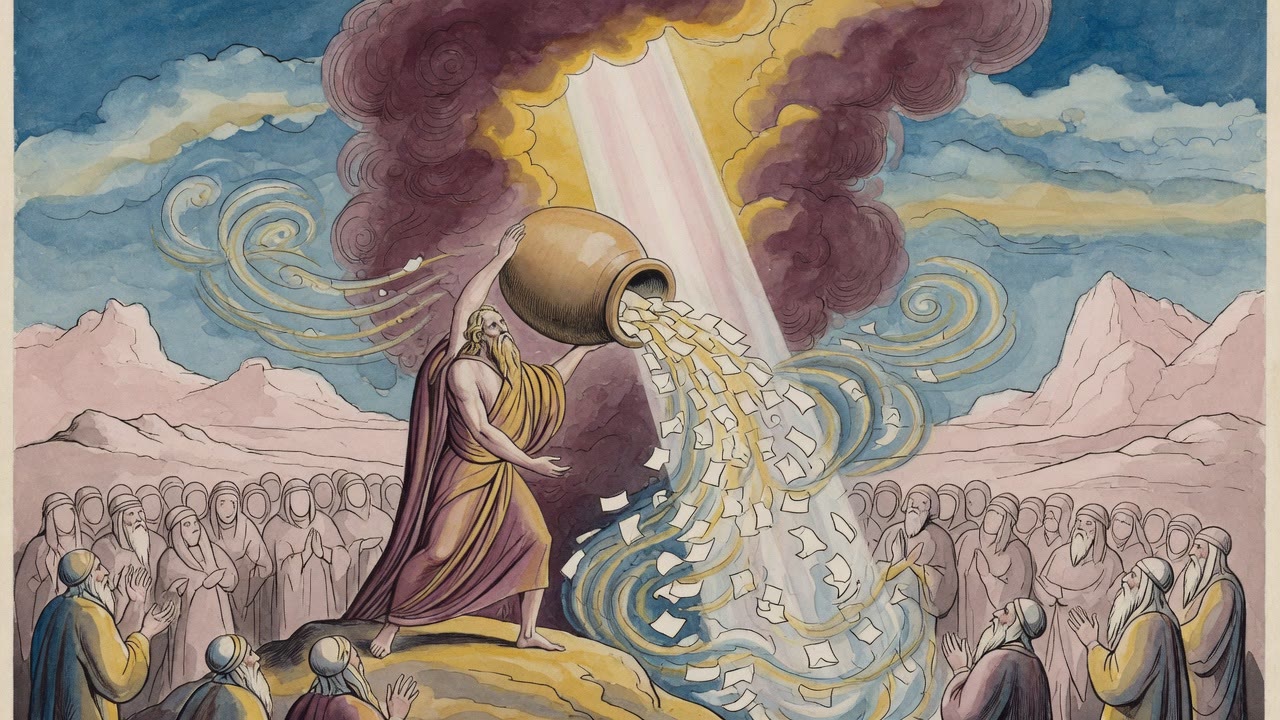
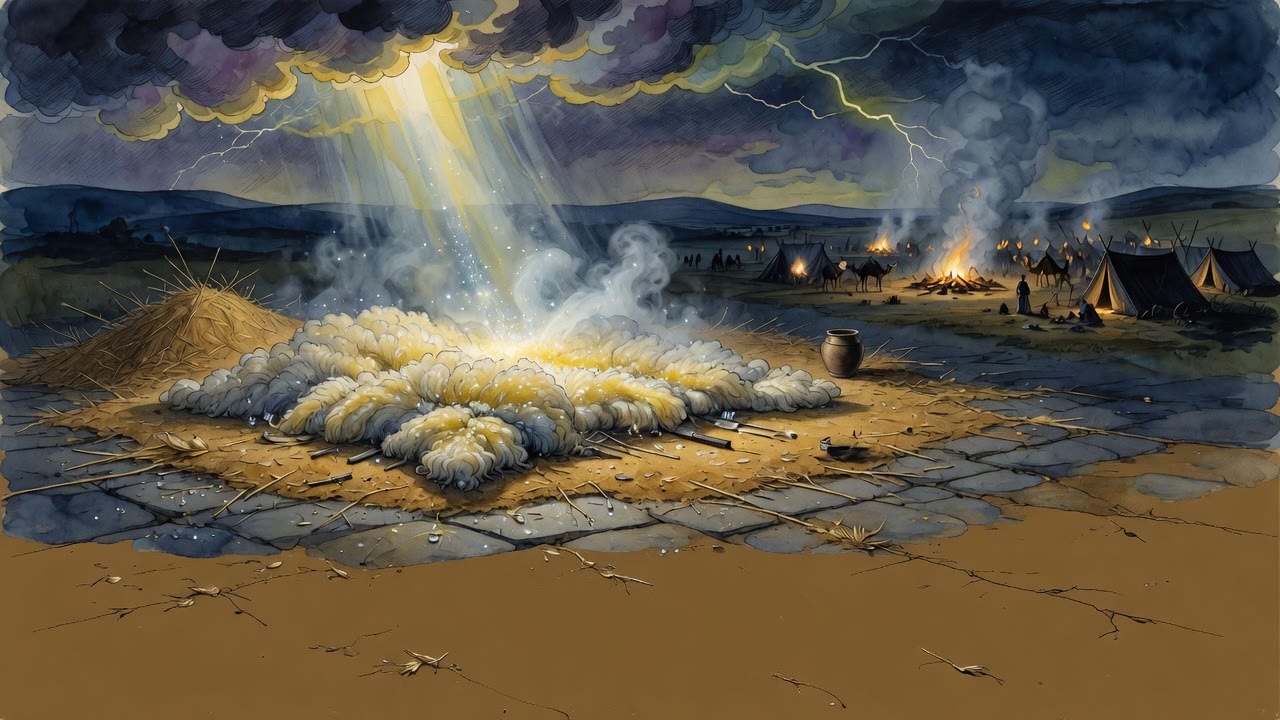
So Moses did not choose. He built something no man could blame him for. He cut seventy-two slips. On seventy he wrote one word, zaken, elder. Two he left blank, white and saying nothing. He folded them, mixed them in a box, and shook it, and the lots lost their order in his hands.
Then he called the candidates forward, tribe by tribe, and each man reached in and drew. A hand opened on the word elder, and Moses said, "God has chosen you, come to the Tent." A hand opened on blank paper, and the man's face fell, and Moses met his eyes. "There is a slip in there with elder written on it," he said. "Had you been worthy to be appointed, that is the one that would have come into your hand." No tribe could call it favoritism. No rejected man could lay the blame on the hand of Moses. The lots had spoken, and the lots had no tribe and no grudge.
Two Men Who Would Not Reach Into the Box
Among the candidates stood Eldad and Medad. When their turn came to step toward the box, they did not step. They folded themselves smaller. "We are not worthy," they said, "to be counted in the appointment of the elders." They believed it. They were not performing humility for the camp to admire. They simply could not put their own hand out for so great an honor, and so they hung back and let the line move past them, and they did not walk out with the others to the Tent of Meeting.
It looked, in that moment, like a man missing his one chance. The chosen sixty-eight gathered at the Tent. The spirit came down and rested on them, and they prophesied. And Eldad and Medad were not there to receive it.
The Spirit Comes to the Camp Instead
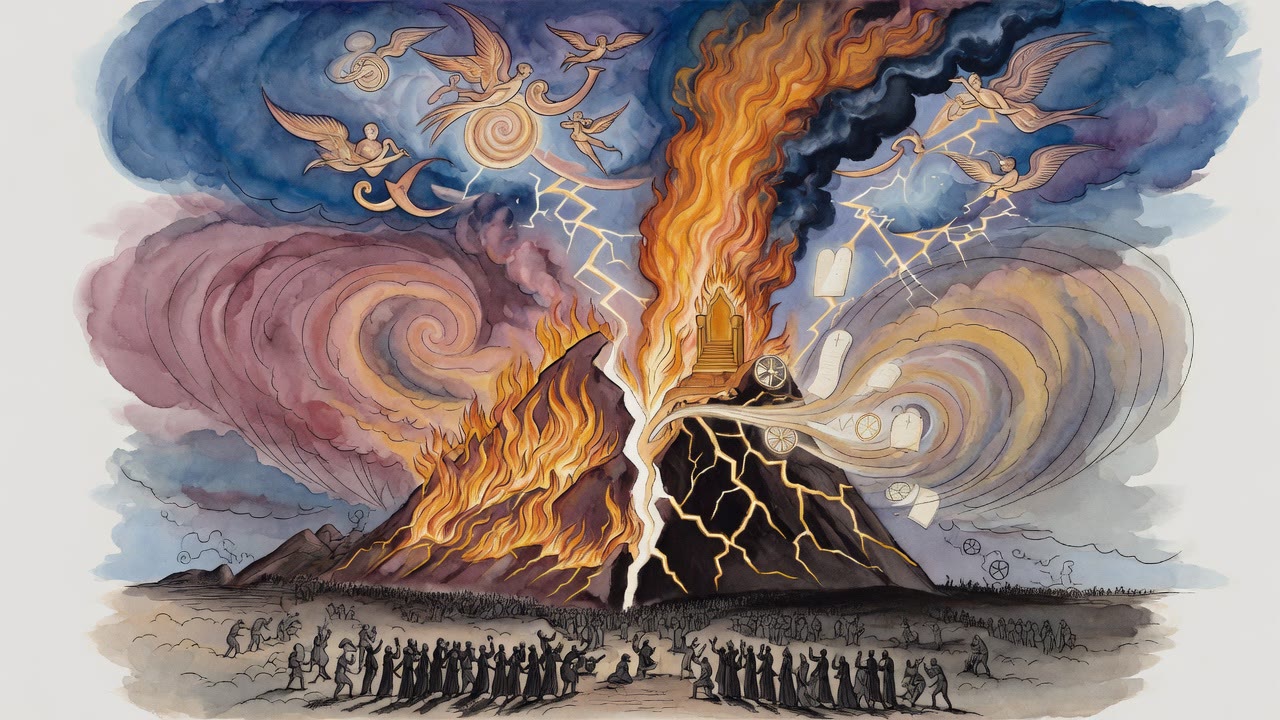
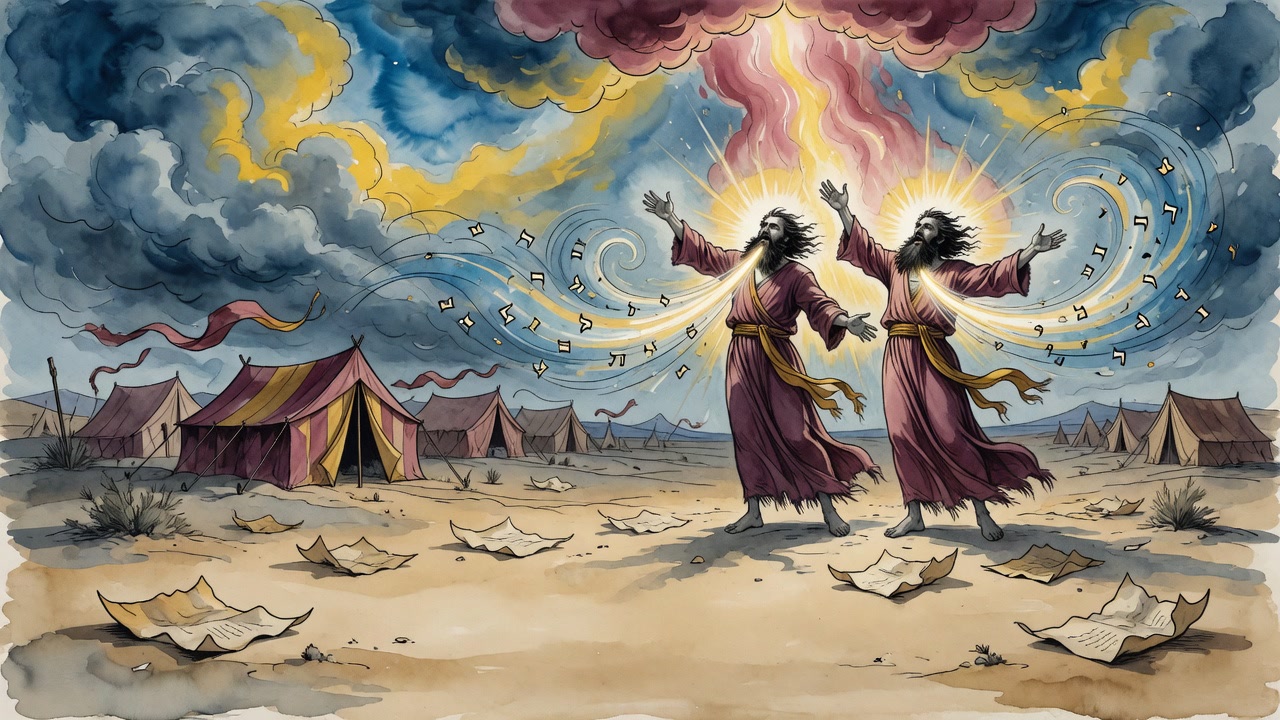
The honor they refused came looking for them. They had counted themselves out, but Heaven had counted them in, written down with the elders even though their feet never carried them to the Tent. So the spirit did not wait at the Tent for men who would not come. It crossed into the camp and seized them where they stood, in the middle of the tents and the cooking smoke and the people still red-eyed from weeping.
They opened their mouths and prophecy poured out. "The quail has come up," they cried, "the quail has come up," naming the meat that was already on its way on the wind. A young man ran to the Tent and told Moses that two men were prophesying in the camp. Joshua son of Nun, who had served Moses since his youth, said, "My lord Moses, stop them" (Numbers 11:28). Moses would not. "Are you jealous on my account," he answered. "If only all the Lord's people were prophets, and the Lord put His spirit on every one of them" (Numbers 11:29).
Why the Two Outranked the Seventy
The reward for hanging back ran deeper than anyone watching could see. The elders at the Tent prophesied once and then never again, and what they foretold reached only as far as the next morning, the quail coming down. Eldad and Medad were lifted five times above them. They did not prophesy once and fall silent. Their words ran past the next day's meat and out to the end of days, to the last war of Gog and Magog, when the nations gather and fall. Because they made themselves small, their two names were written down and carried forever, the two men who hid from the box and were found by the very spirit they fled.
← All myths