God's Voice Narrowed Through the Sanctuary
Moses enters the Mishkan and hears the divine voice pressed through holy space, from Sinai's thunder down to the Temple's last fire.
Table of Contents
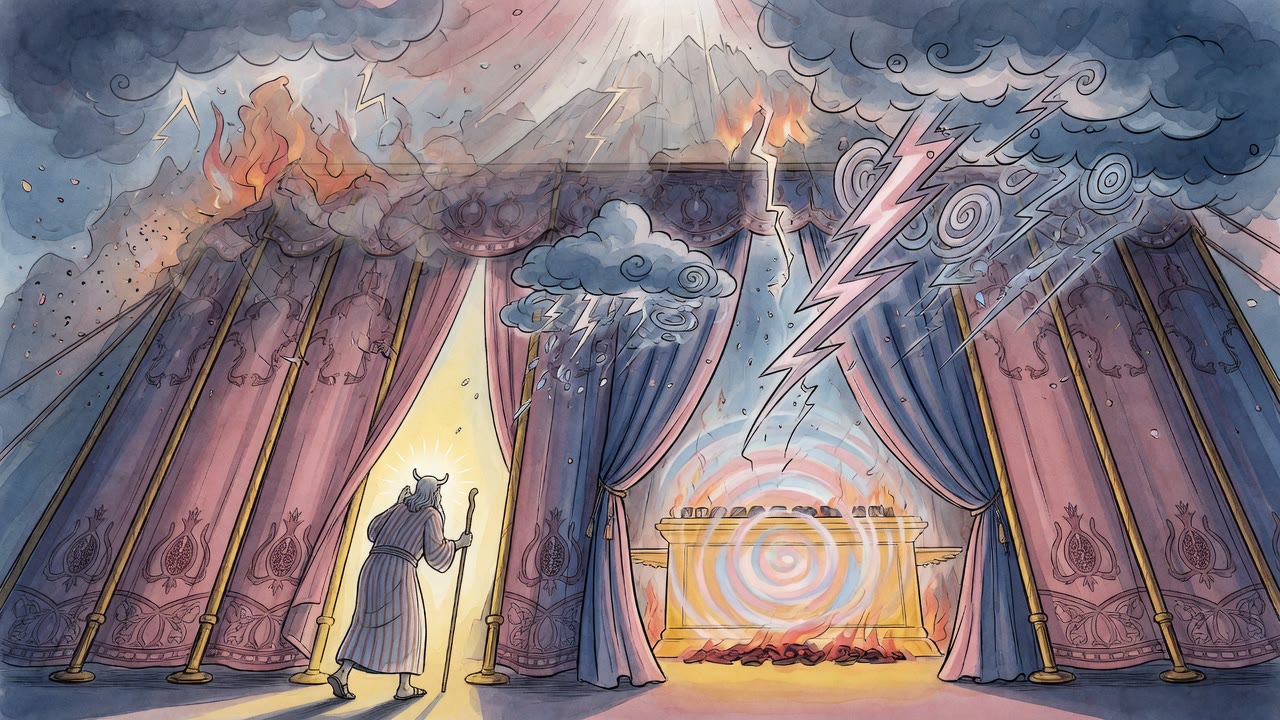 Click for full size
Moses Entered and His Face Turned Red
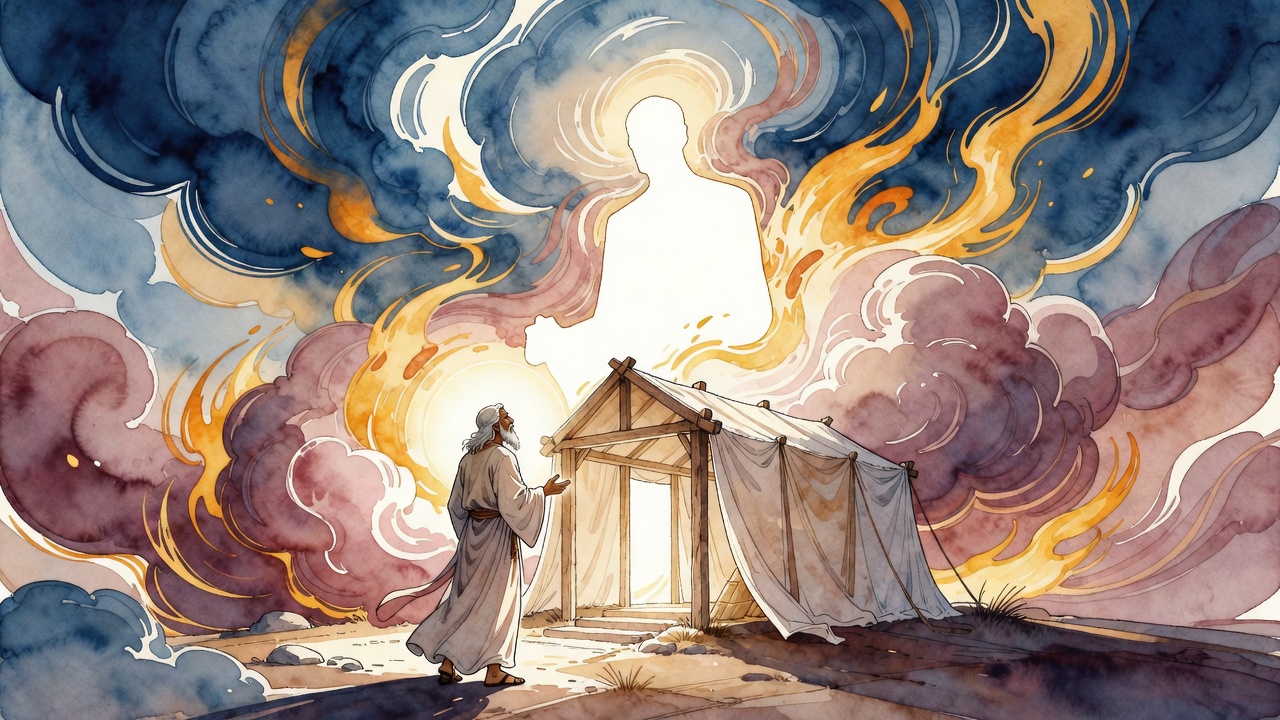
When Moses stepped into the Mishkan (the portable desert sanctuary), the people outside could not hear what was said inside. But they watched his face. The skin flushed deep. His cheeks burned like a man standing too close to a forge. No one needed to ask whether God had spoken. The color of the face answered before Moses could open his mouth.
The rabbis described that voice as sound forced through a narrow tube. Heaven was vast, but revelation had to pass through one man's body, and the body bore the pressure. Before the Sanctuary was built, Sinai had been an open catastrophe of thunder and fire that Israel could not endure. Now the divine voice found a smaller channel: a tent, a curtain, a man's lungs. The narrowing was a mercy.
The Nations Watched and Sent a Curse
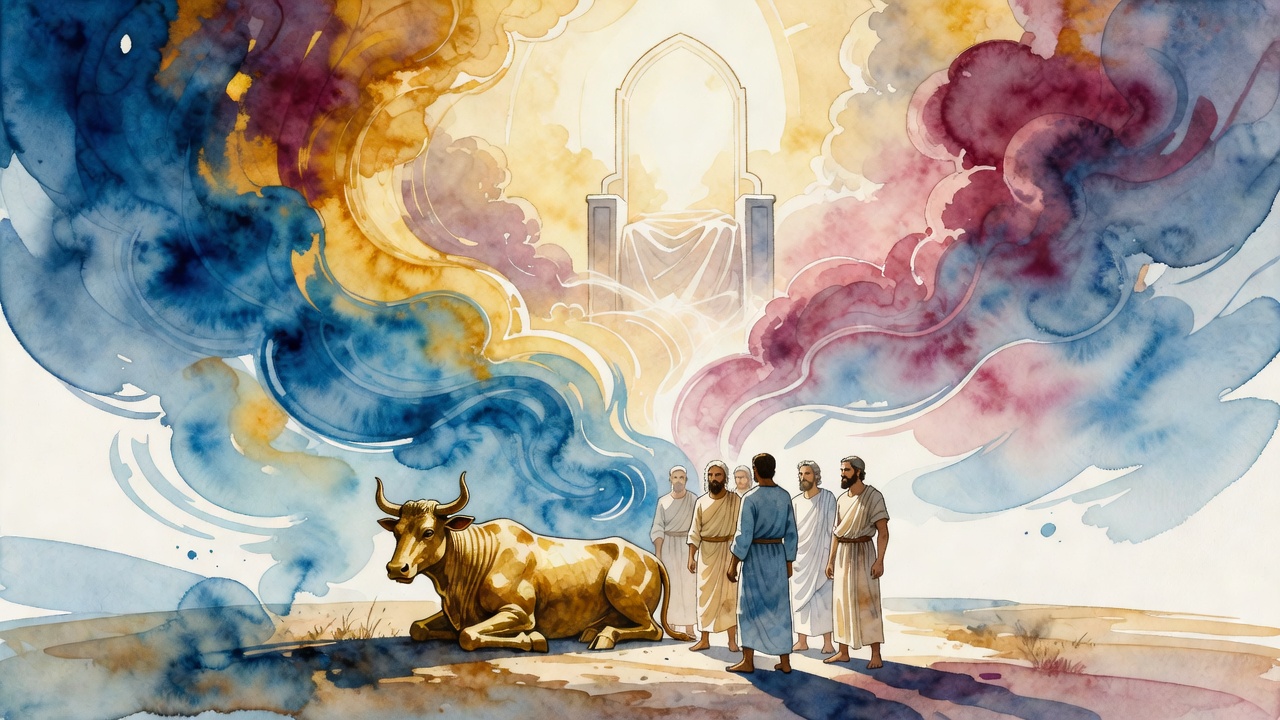
After Sinai, Israel walked out of the wilderness carrying something the other nations could see and could not name. The nations gathered and looked, and their looking carried poison. Seventy peoples watched one small nation receive what they had not received, and the evil eye of seventy nations struck Israel like a blow from behind.
The rabbis did not dismiss this as superstition. Envy has weight. When something precious is made visible, the world's resentment finds it. Moses and Aaron stood between Israel and that accumulated gaze. The Mishkan gave the holy a shelter from the nations' stare, a place where the covenant could continue in enclosure rather than spectacle.
Two Prophets Hid From Their Own Call
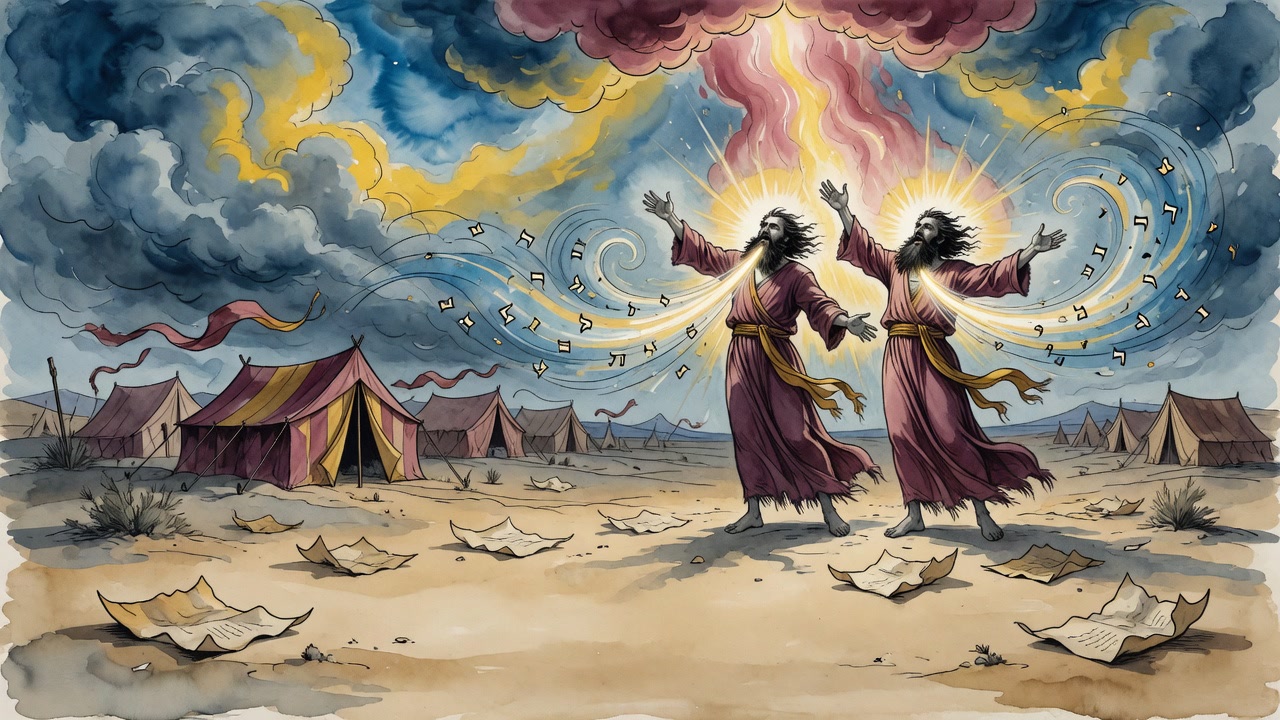
Eldad and Medad did not come to the tent when the spirit fell on the seventy elders. They stayed in the camp and felt unworthy. Joshua ran to Moses and demanded he stop them, as if prophecy ought to be controlled, licensed, kept within a proper boundary.
Moses answered with the oldest wish in the tradition: "would that all of God's people were prophets." He did not protect his monopoly. He did not punish Eldad and Medad for prophesying without permission. He stood at the center of Israel's holy order and opened his hands. The spirit went where it chose. Moses only refused to close the door on it.
Three Mountains Stood Against the Cloud
When the Shekhinah (God's presence dwelling in the world) descended to give the Torah, a cloud of glory leveled all the mountains of the world. Everything tall was pressed flat. But three mountains were preserved: Sinai, Carmel, and Tabor. Each of them had made some claim, some gesture of readiness, some reason to be chosen.
Sinai was chosen not because it was the tallest or most beautiful but because it was the humblest. A mountain that did not push itself forward. The cloud spared all three, but the Torah landed on the small one. The rabbis read this as the structure of holiness: what is set apart is not always what announces itself. Sometimes the preserved thing is what quietly waited.
God Wept When the First Temple Burned
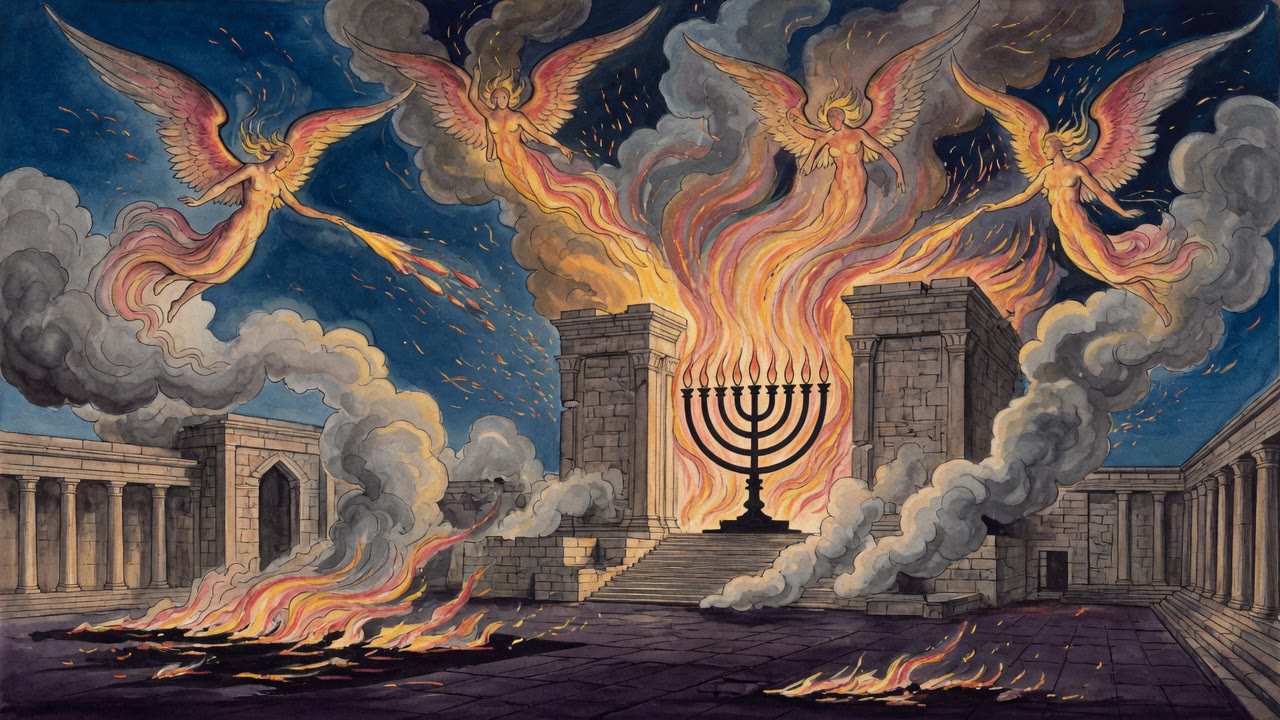
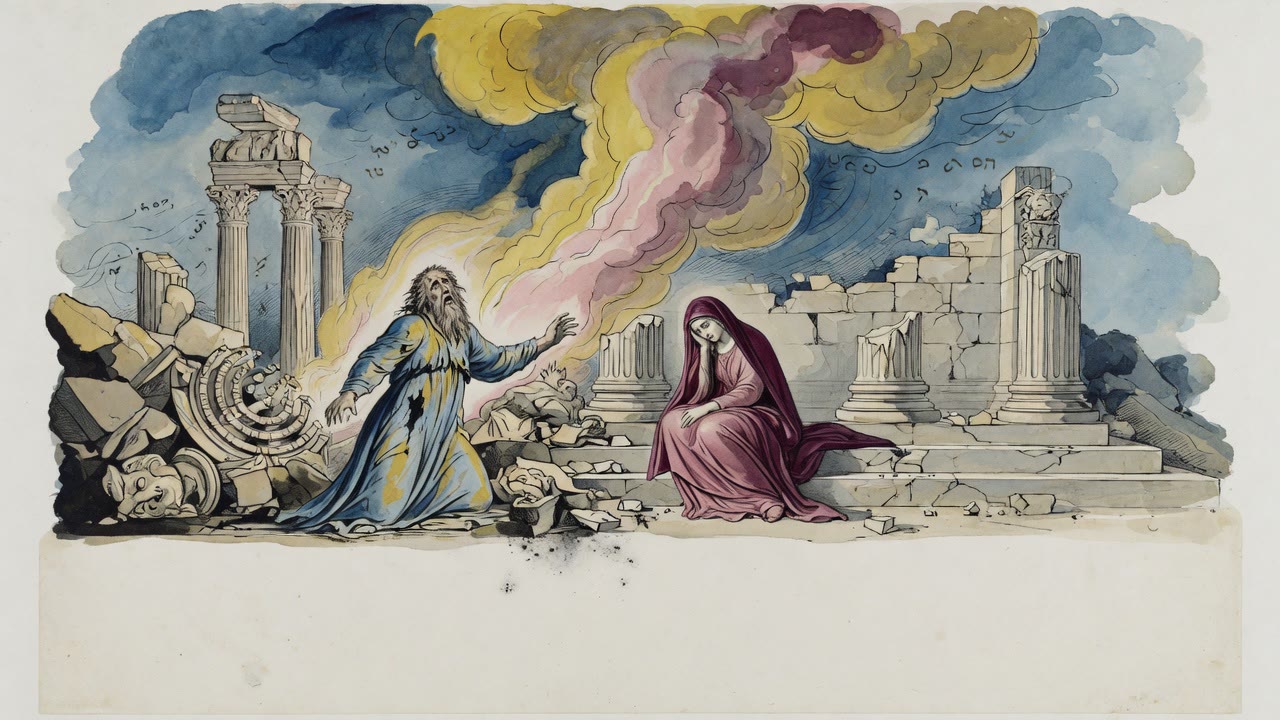
The Babylonians came with torches. The cedar chambers caught first, then the curtains, then the Holy of Holies. The priests ran with their instruments. The ark disappeared into the darkness of the inner sanctuary or into the earth, depending on which rabbi you asked. What the Talmud does not debate is what God did.
God wept. The legends picture angels weeping alongside Him, standing in the smoke and ash while the structure that had channeled revelation for four hundred years collapsed into rubble. The voice that had once come through Moses' tent had found a permanent home, and now that home was gone. The divine voice would need another channel, and until it was found, heaven mourned at the edge of a burning city.
← All myths