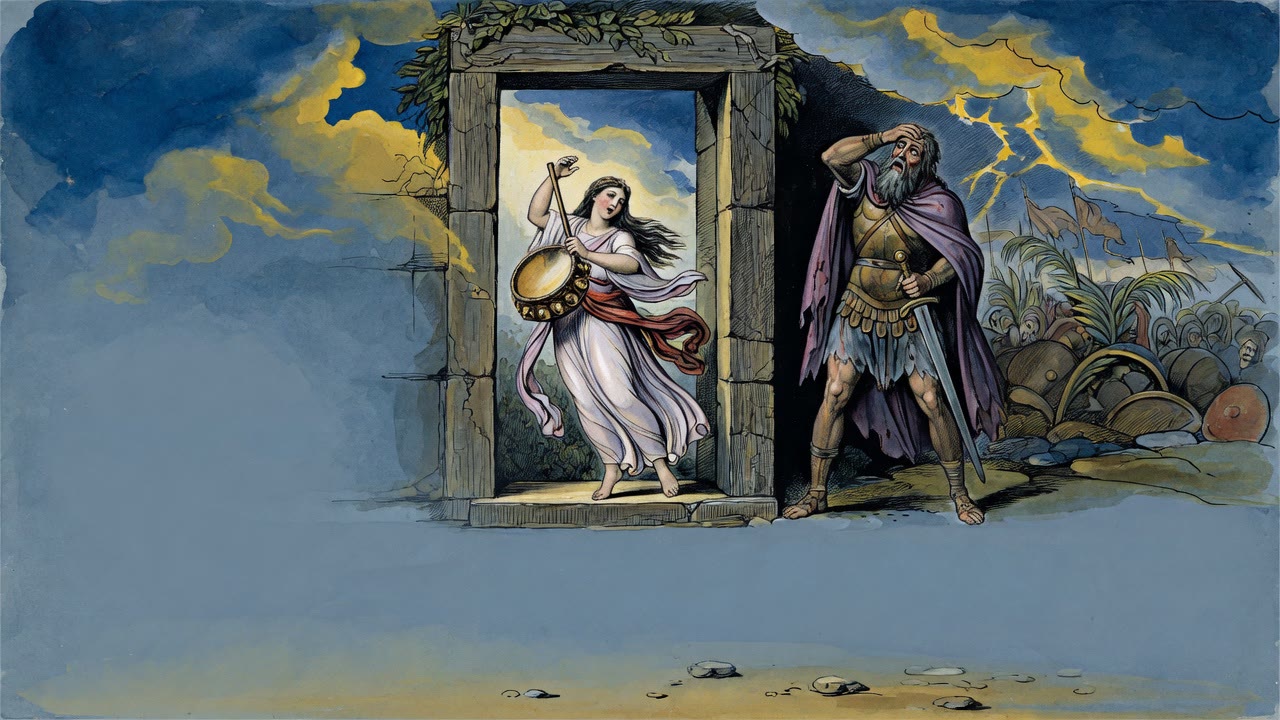
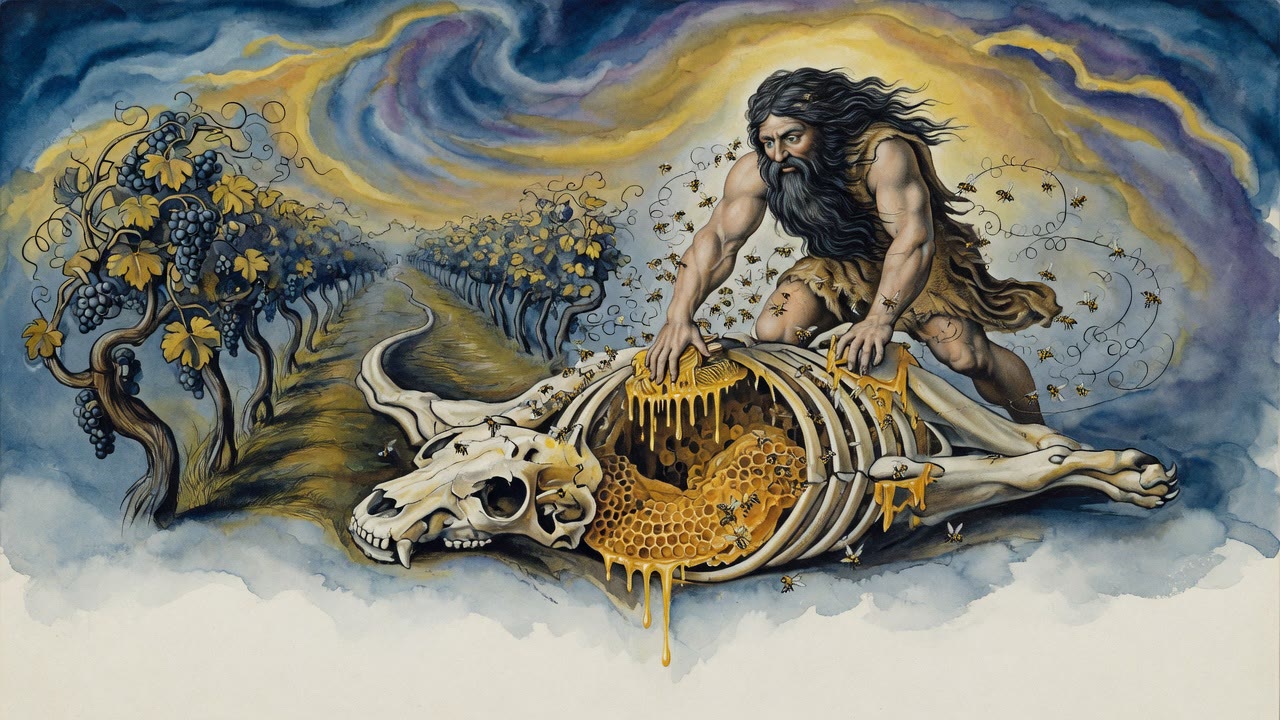
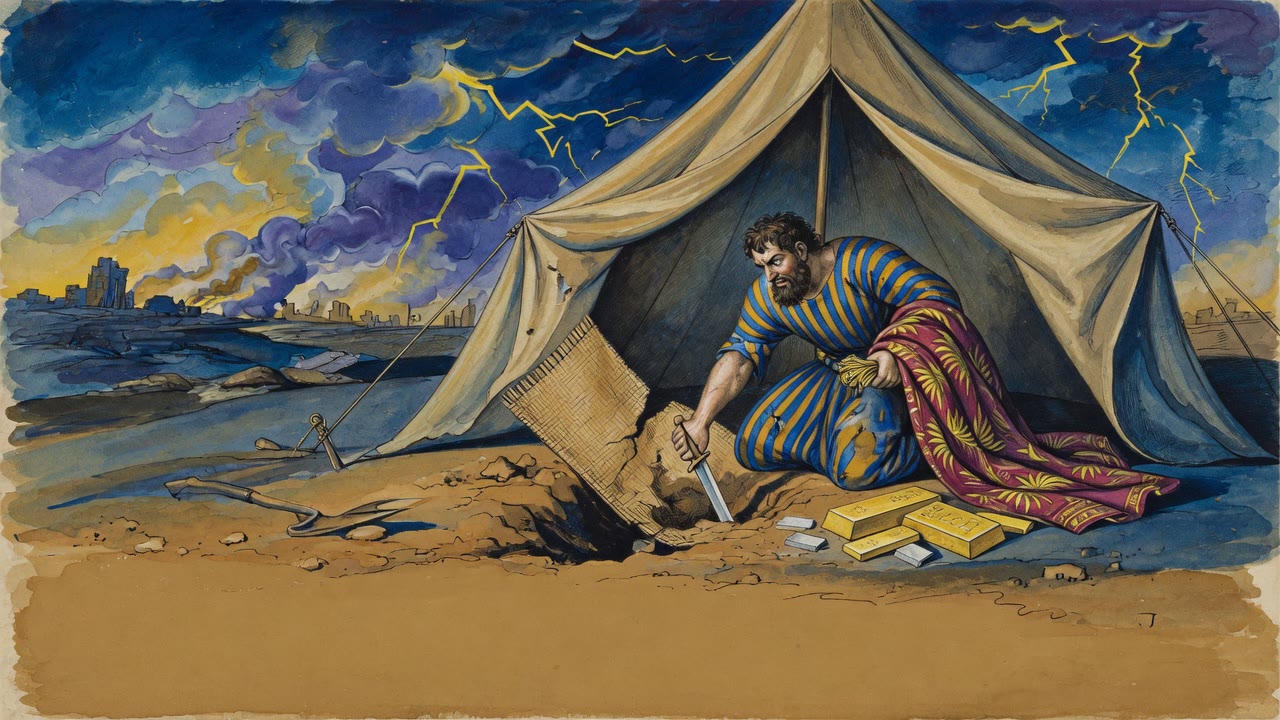
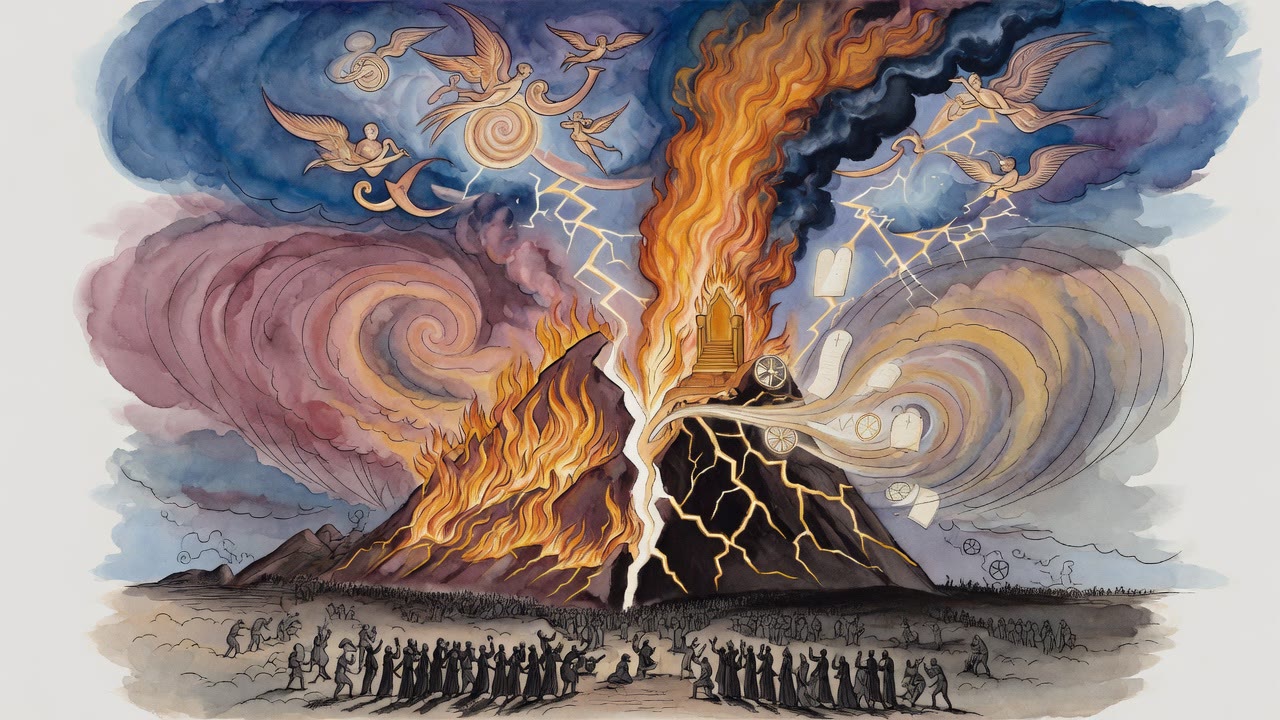
Gideon and the Fleece That Tested Heaven Twice
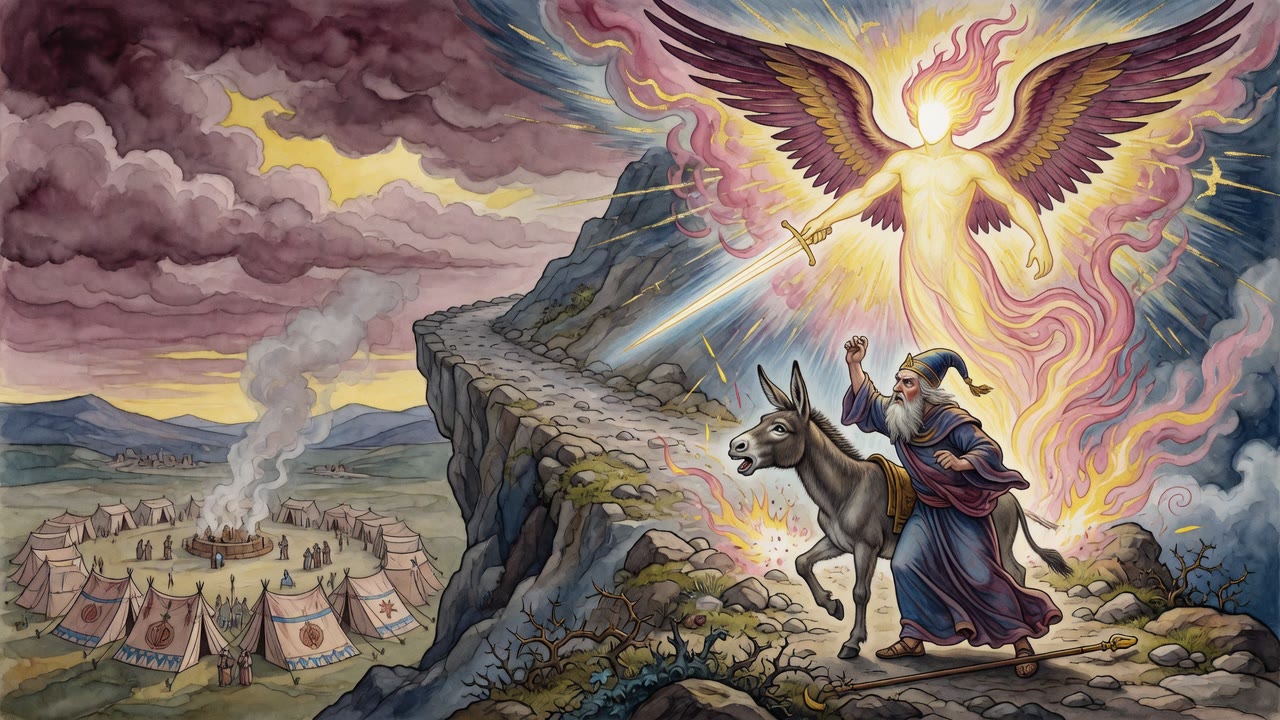
He was threshing wheat in a winepress so Midian would not smell the food. That is where the angel found him and called him a mighty warrior.
Table of Contents
Gideon dragged the wheat into a winepress, where grapes belonged. Grain belonged on a threshing floor, wide to wind. He had taken it down low, where the stalks could not shine and raiders from Midian might miss the smell of food. Israel's harvest had become contraband. Bread had to hide before it could become bread.
 Click for full size
The angel found him there and called him a mighty warrior.
Wheat in the Winepress
The title must have sounded almost cruel. Gideon was not standing at the head of an army. He was working in a pit, saving scraps. His clan was weak. His father's house held an altar to Baal. Around him, Israel crouched under raids that left fields bare.
Then the angel said God was with him, and Gideon did not bow his head into pious silence. If God was with Israel, where were the wonders told by the fathers? Where was the hand that had pulled slaves from Egypt?
The night itself sharpened the question. It was Passover night, the hour when Egypt once broke. Gideon stood with wheat dust on his arms and asked why the miracles of that night had gone quiet.
He placed Israel's misery before heaven, and heaven answered with a command that sounded like an impossible promotion. "Go in this strength. Save Israel from Midian." The strength was not hidden muscle. It was the nerve to speak for people too beaten down to speak clearly for themselves.
The Altar Fell in the Dark
Before he could face Midian's camp, he had to face the altar in his own town. That night Gideon took ten servants and went to his father's altar. Daylight would have brought too many eyes. He worked in the dark.
They tore down the altar of Baal. They cut the Asherah beside it. Then the command pressed past ordinary boundaries. Gideon built an altar to God, took the bull, and used the wood of the ruined Asherah for the offering. No priest stood beside him. The sanctuary at Shiloh still stood. Night was the wrong hour. A private man was the wrong offerer. Wood from an Asherah was the wrong fuel. The bull was the wrong animal for a man of his house to put on a new altar. Each of those limits could have stopped him. The command did not stop.
Morning came with outrage. The men of the town wanted blood. Joash, Gideon's father, did not hand over his son. "If Baal was a god," he said, "Baal could fight for himself." The idol had lost before Midian ever did.
Dew on the Fleece, Then Off It
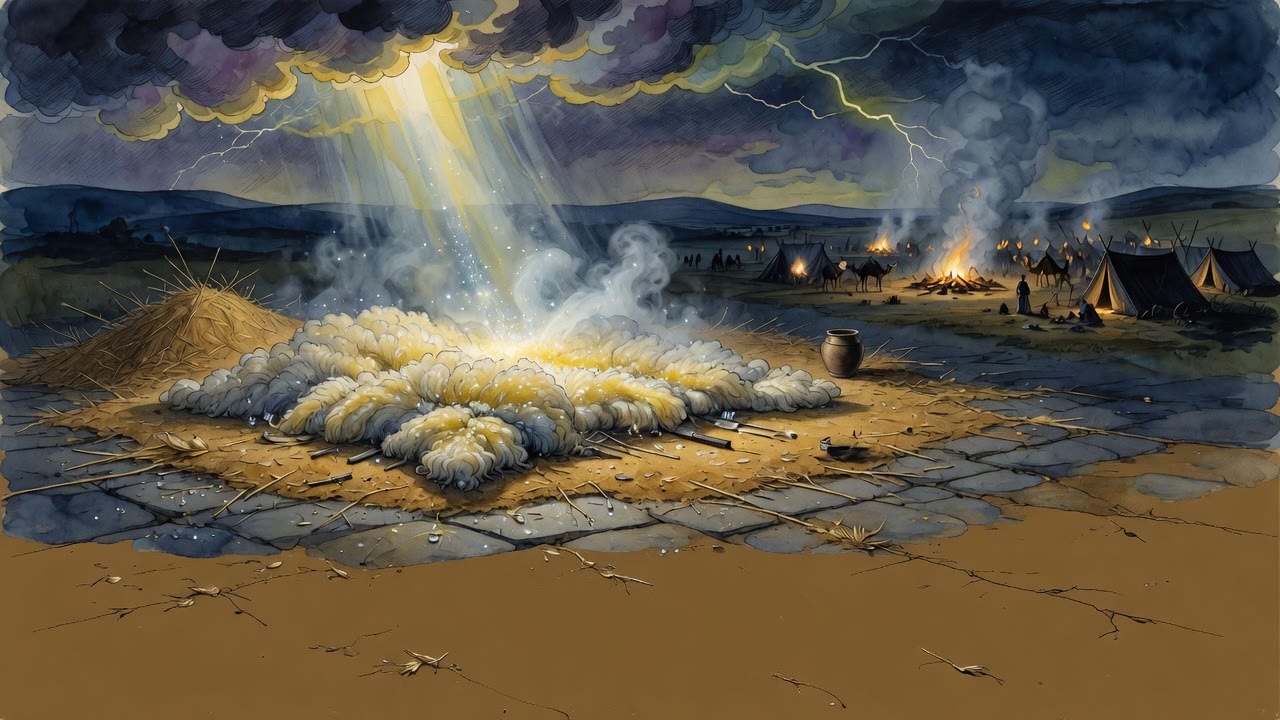
Only after the house-idol fell did Gideon place wool on the threshing floor.
He asked with a careful mouth. If he was truly meant to save Israel, let dew settle on the fleece alone while all the ground stayed dry. Morning came. The earth lay thirsty. The wool was heavy. Gideon wrung a bowlful of water from it.
The sign should have been enough. Gideon asked again. He begged that God's anger not flare while he asked once more. "Reverse the sign. Let the fleece alone be dry, and let dew cover the ground."
The second morning was stranger than the first. The fleece lay dry under his hand. Around it, the ground glittered wet.
A world left dry is a hard sign, a miracle shaped like withholding. Dew belongs to Israel as mercy belongs to breath. Heaven would not seal its own Name over a parched earth. When Gideon asked for dew everywhere and dryness only on the fleece, the ground drank. The wool stayed bare.
He had asked twice because his fear had two faces. First he needed to know that God could single out one small thing in a ruined world. Then he needed to know that the ruined world itself would not be abandoned.
Three Hundred Who Stayed Upright
The sign of dew did not make the army large. It made the test sharper.
At the water, men bent down. Some knelt with their faces low. Others lapped from their hands and stayed upright. The ones who stood were few, only three hundred. They carried the shape of a remnant, knees unbent before idols, bodies trained not to lower themselves where worship did not belong.
Gideon had begun hidden in a winepress, trying to save a little wheat from Midian. By the water, he stood with a force too small for ordinary confidence. A man who had asked heaven for dew now had to walk with three hundred men into the dark.
← All myths