David Danced Before the Ark and His Wife Despised Him For It
No one ever saw a handsbreadth of palm or heel uncovered on a king of Saul's line, Michal told him. David answered with the word she had chosen.
Table of Contents
 Click for full size
The Trees That Moved Without Wind
The Philistines had pitched camp in the Valley of the Giants outside Jerusalem, and David would not move a single man until he had asked. He sent for the high priest and put the question to God. The answer came back that he would win, so he took the army out, came around behind the Philistine line, and broke it.
They came back with three times the men and camped on exactly the same ground.
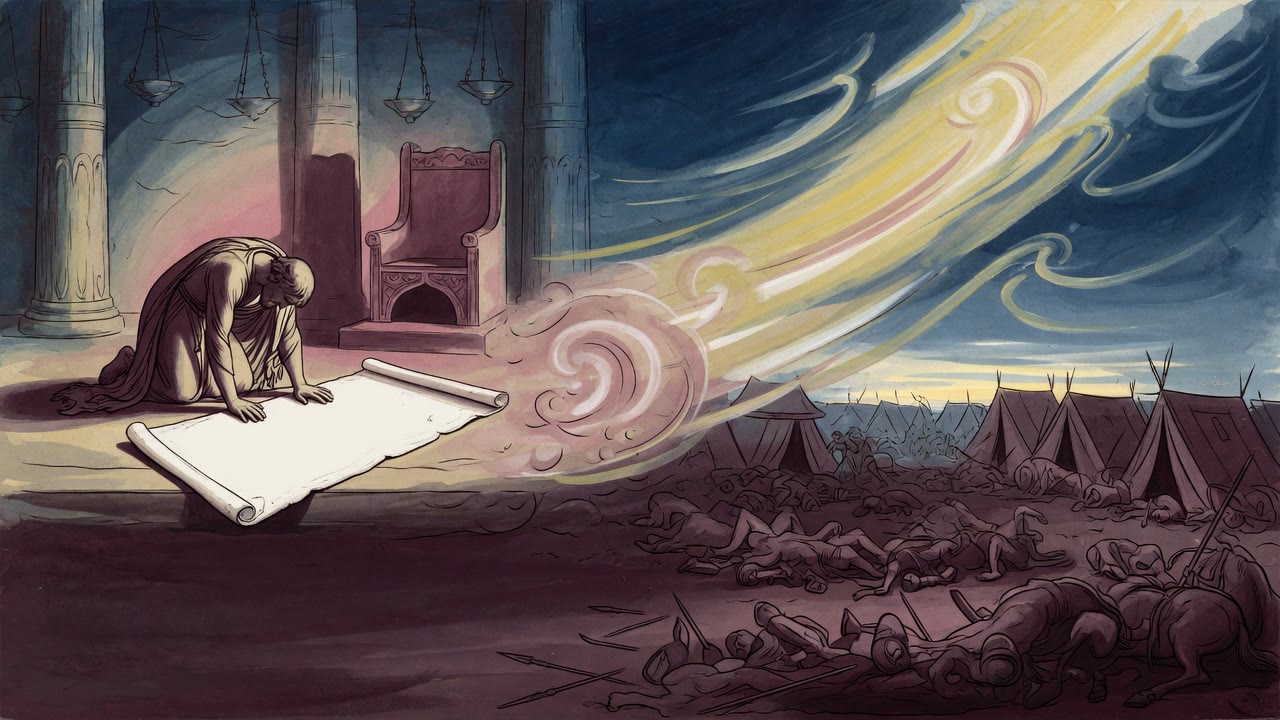
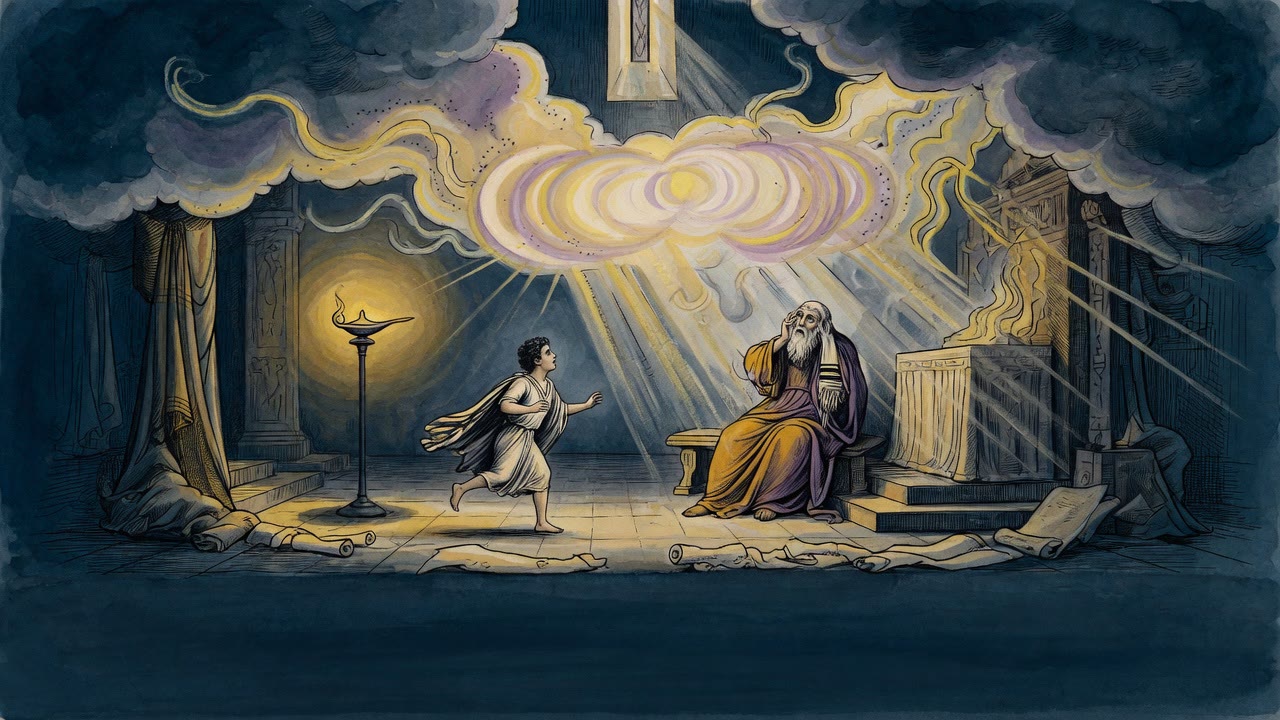
He asked again, and this time the answer was strange. Take the army into the Groves of Weeping near their camp. Do not move. Do not start the fight. Wait until the tops of the trees begin to sway with no wind touching them, and go the moment they do.
So an entire army lay flat in a grove within earshot of the enemy, watching branches. The branches moved in dead air. David went, and the Philistine ranks broke on the first shock and did not stop running until Gaza.
The Hand on the Cart
With the Philistines scattered, David turned to a thing Saul had left alone for a lifetime. The Ark of the Covenant was still sitting in a house at Kirjath-jearim where nobody went. He called up the young men of the whole country, and the priests, and the Levites, and set the Ark on a new cart, and let their own sons walk beside the oxen and draw it. He went in front of it with the whole nation behind him, singing, and the trumpets and the cymbals going.
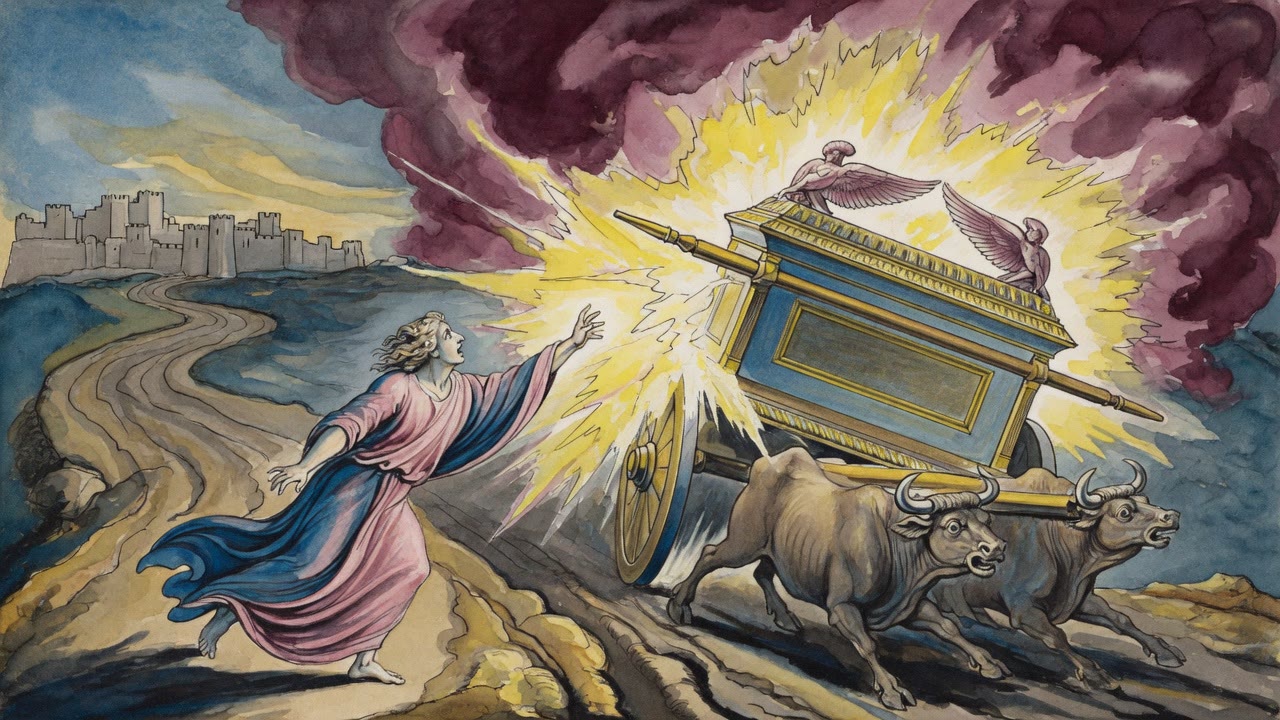
At the threshing floor of Chidon the oxen jolted and the Ark shifted. Uzzah put out a hand to steady it. He was dead before the cart stopped rolling, because he was not a priest and he had touched it.
The procession stopped there. David was angry first and frightened after, and the ground kept the name of the Breach of Uzzah. He would not take the Ark one step further toward his own city. He turned it aside into the house of a Levite named Obed-edom and went home without it.
Three months later the reports coming out of that house were all the same. Obed-edom had been a poor man of no standing, and now people walked past his gate to look at what he had and envy him for it. David heard, and took courage, and went back.
The King Took Off His Robes
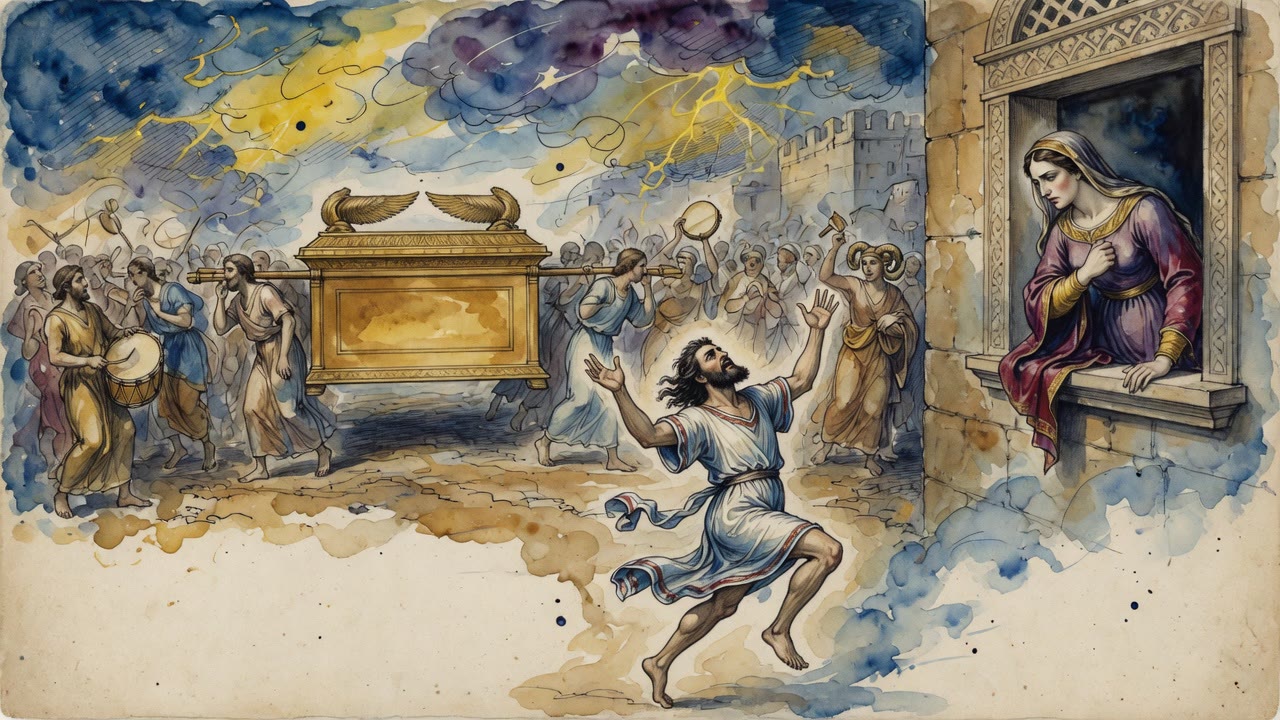
No cart the second time. The priests carried it on them. Seven companies of singers went ahead in the order David had set. And David walked in front of all of it playing the harp, wearing a linen ephod, which is what a man on duty in the sanctuary wears and not what a king wears, and he leaped and danced with everything he had.
Michal, daughter of Saul and now the wife of the man in the linen, watched it come up the street from a window. She laughed at him, and she despised him in her heart.
The Ark went under the tent he had pitched for it. He brought the offerings, and then he fed the crowd, all of it: to every man, every woman, and every infant a loaf of bread, a cake, and a second cake baked in a pan. Then he sent them home and went to his own house to bless it.
Michal was waiting in the doorway.
The Handmaids and the Mothers
"The kingship looked better on my father's house than it looks on you," she said. "In all their days nobody ever saw so much as a handsbreadth of palm or heel uncovered on any one of them. Every one of them carried more dignity than you carried today, out in front of your servants' slave girls."
David did not step back from her.
"It was before God, who chose me over your father and over your father's whole house, that I was leaping," he said. "Your father's house chased its own honor and let the honor of Heaven go. I do the opposite. I put my own honor down and go after the honor of Heaven. And do not tell me I was only lowered in other people's eyes while I stayed proud inside myself. I will be lower than this in my own eyes."
Then he took the word she had chosen and gave it back to her. She had said the amahot, the slave girls. In Hebrew the letters that spell them also spell the imahot, the mothers of Israel, and only the reading is different.
"Hear what you have just said, Michal. You will be counted among the amahot. Never among the imahot."
She bore him no children.
A Weaned Child With Its Mother
Afterward, on his own, David said a psalm in front of God that runs like an inventory of every time he had refused to be impressive.
My heart was not haughty. That was the day Samuel poured oil on his head in front of his older brothers and he went straight back out to the sheep. My eyes were not lifted up. That was the day he killed Goliath and did not carry the head back through the camp for the men to cheer at. I did not walk in things too great for me. That was the Ark, and the linen, and the street.
And the last line was his answer to Michal before she had ever opened her mouth. I have quieted my soul the way a weaned child lies quiet with its mother. A small child is not ashamed to be uncovered in front of the woman who feeds it. I am not ashamed to make myself small in front of You.
He had come home that evening to bless his household. She had come out to the door to tell him how the household had looked from a window.
← All myths