Hezekiah Prayed and 185,000 Soldiers Died
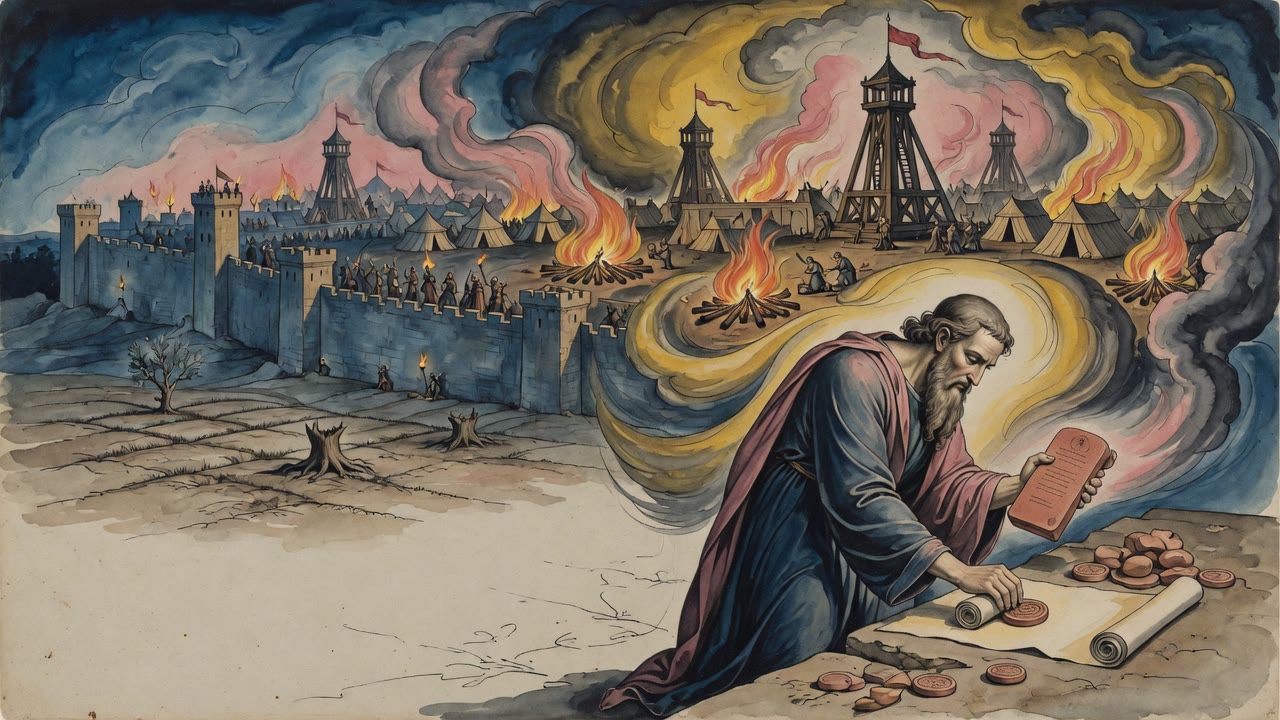
Sennacherib's letter named the gods of every city he had burned. Hezekiah spread the scroll on the Temple floor and asked God to look at it.
Table of Contents
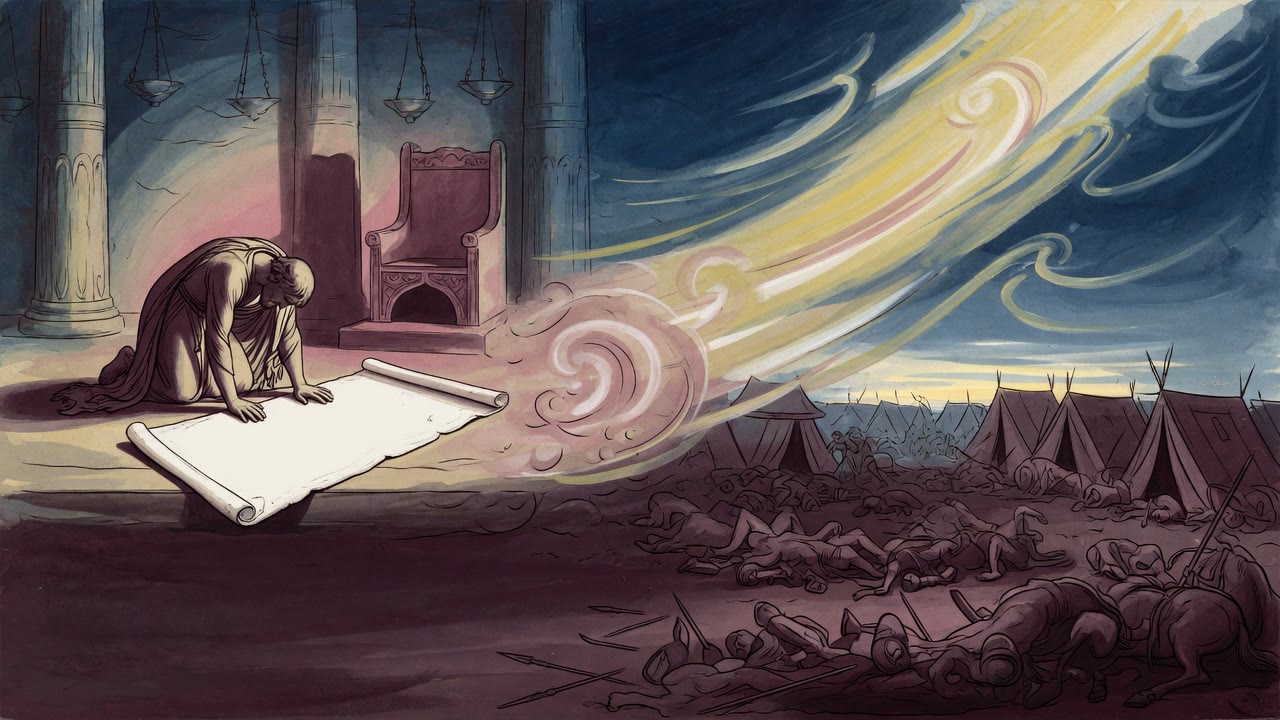
The messenger put the letter in Hezekiah's hands and waited. Hezekiah did not send a reply. He took the scroll up to the Temple, spread it on the floor of the inner court, and prayed over the writing as if the words could still be made to take them back.
 Click for full size
"Incline Your ear and hear," he said. "Open Your eyes and see. Hear all the words of Sennacherib which he has sent to taunt the living God."
The letter named the gods of the cities Sennacherib had already burned. Samaria eighteen years earlier. Forty-six towns of Judah in the months just past. The army sat in the valleys around Jerusalem and asked a simple question. What makes your God different?
White Cloth Over Armor
Hezekiah had already done the other work. He had dressed the men in white on the outside and put weapons under the cloth. He had stripped gold from the Temple doors for a gift, in case a gift would buy time. He had set a sword in the doorway of the study hall and said that anyone who would not sit with the book would meet that blade.
Prayer. Gift. War. He prepared for all three, because Sennacherib had already run two exiles and was coming for the third.
The sages later counted the force the way a man counts a fire after it has gone out. Forty-five thousand princes in gold coronets, with their wives in the camp behind them. Eighty thousand heavy infantry in mail. Sixty thousand swordsmen running at the king's right hand. The camp itself stretched four hundred parsaes. The horses' necks alone ran forty. Two hundred and sixty myriads, less one, and nobody could agree what the missing one was.
Jerusalem held about fifty thousand souls. One king. One letter on a floor.
The Emperor Who Could Not Find a Razor
Before any angel went out, God made Sennacherib small.
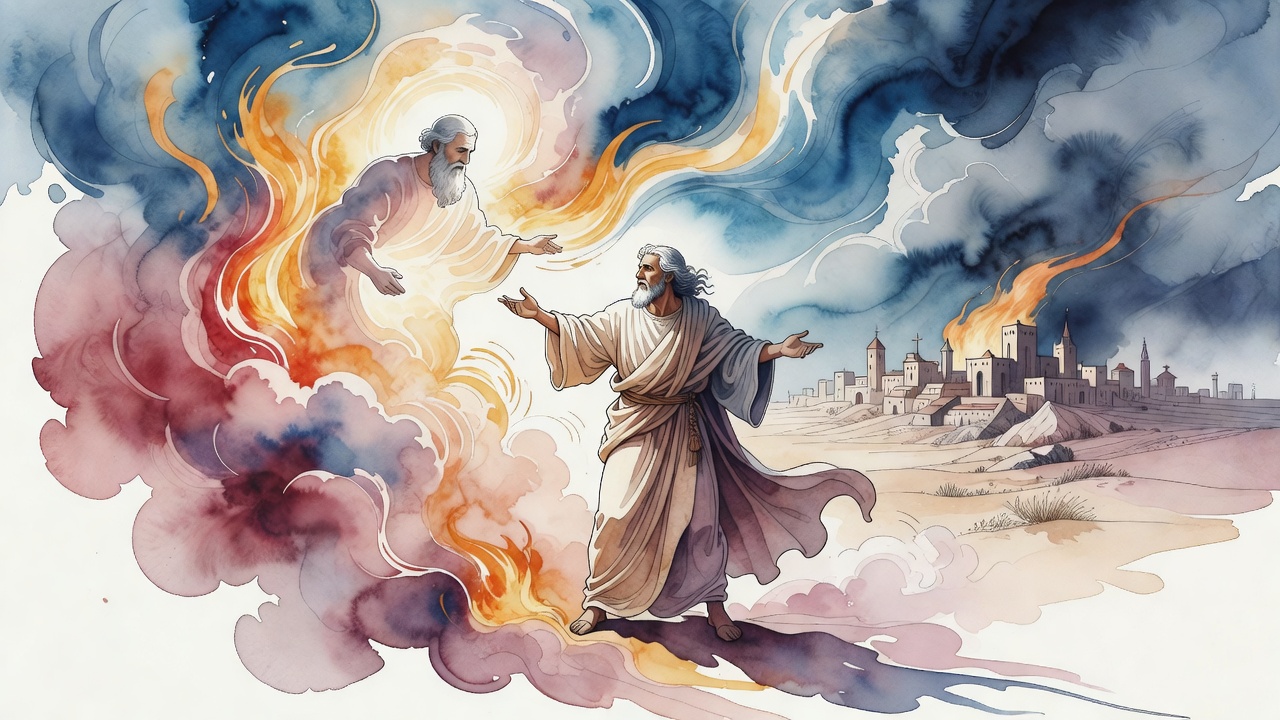
He came to the emperor as an old man and asked a practical question. When you force the sons of the eastern and western kings into your army, what will you say to their fathers?
Sennacherib admitted the fear. He did not know he was speaking to God. He spoke the way a man speaks when he has taken enough cities to stop being surprised.
"Disguise yourself," God said.
"How?"
"Go fetch a pair of scissors. I will cut your hair."
The house that held the scissors was full of ministering angels grinding date-stones, dressed as ordinary men. They would not hand the tools over until Sennacherib ground a measure himself. He did the work. He came back after dark. God sent him for fire. He bent to blow the embers, and the heat took his beard.
Then God shaved his head and what was left of the beard. The king of Assyria stood before Jerusalem's walls with a singed face, a man who could not manage a razor, while his army waited for the order that would never come in the form he wanted.
Dawn Over One Hundred Eighty-Five Thousand
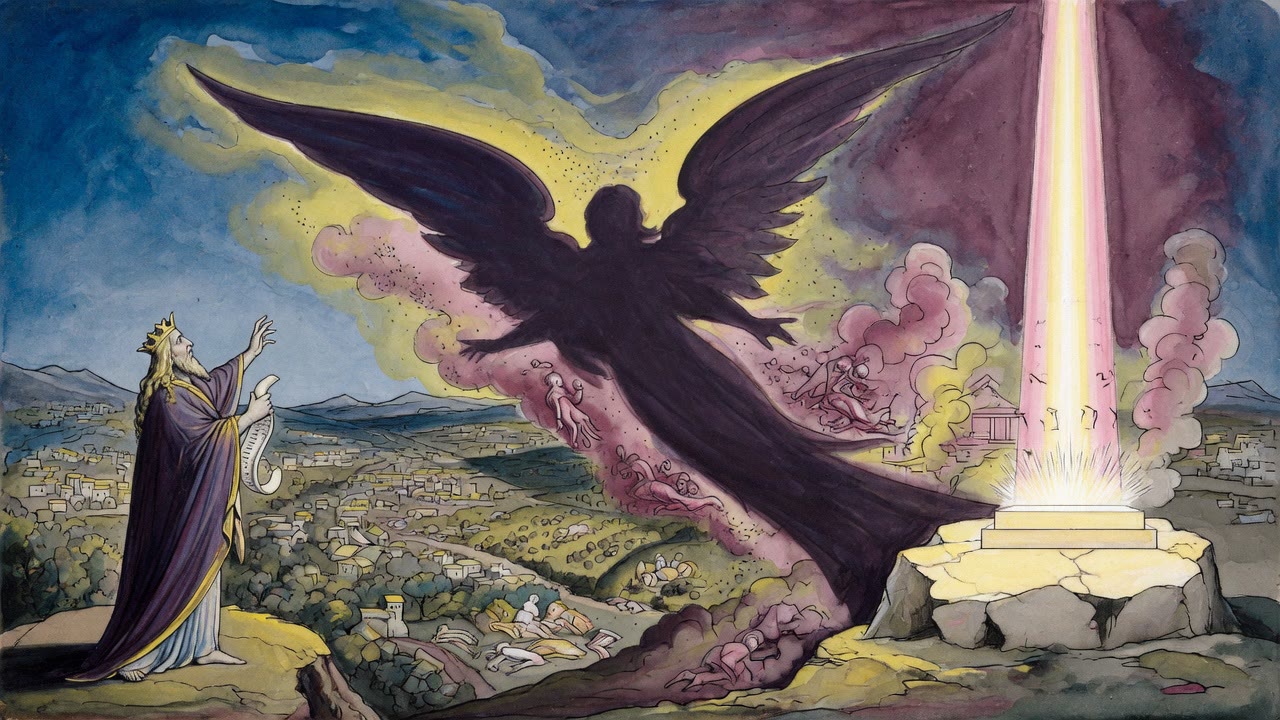
In the night the angel of the Lord went out and struck down 185,000 soldiers in the Assyrian camp (2 Kings 19:35).
Some said their souls were taken and the bodies left sitting in their armor, so that morning looked, for a breath, like a living army. Some said fire ate them from the inside and left the skin. Some said they heard the divine voice, and ordinary hearing cannot survive that sound.
What they agreed on was the hour. It happened in the dark. It was finished. When people rose early, they were all dead bodies.
Sennacherib walked the rows. Armor intact. Faces still. Not a wound he could point to. He stood at the head of no army.
The Flight to Nineveh
He went home.
In Nineveh his own sons murdered him in the temple of Nisroch while he was bowed to the god he had trusted. The man who had listed the gods of beaten nations, and asked what god could keep Jerusalem when no god had kept anyone else, died in the act of praying, by his own house, in his own capital.
Hezekiah did not claim a trick. He had known the address. He had put the letter where the living God would have to look at it, and then he had waited through one night while an old man's errand and an angel's stroke did the rest.
In the morning the valleys were quiet. The white garments came off. The sword stayed in the study-hall door a while longer, because the book had done what the walls could not.
← All myths