5 min read

Daniel in the Lions' Den With Hungry Lions

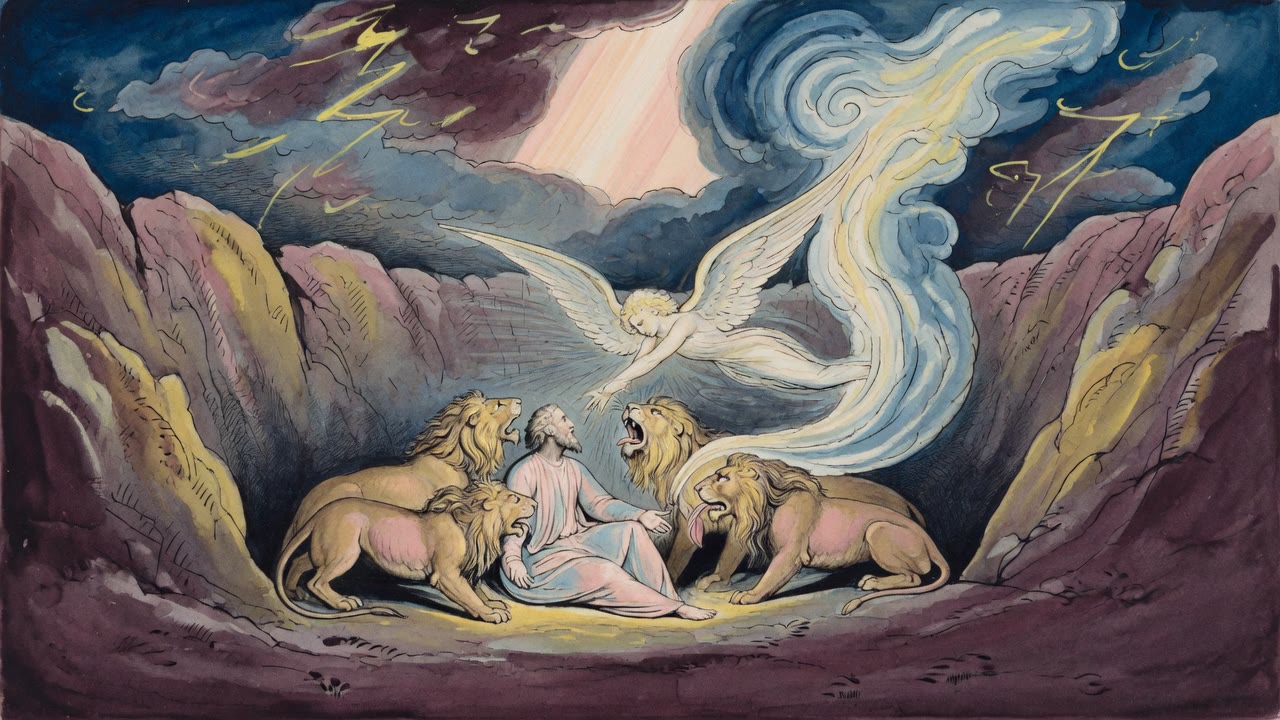
The lions in Daniel's pit had been starved for two days. An angel held their mouths. A prophet flew across Judea to bring dinner to the pit.

Curated by Arthur · Told by Maggid ·
Table of Contents
  1. The Conspiracy
  2. The Lions Were Hungry
  3. The Angel and the Stew
  4. Morning at the Den
  5. What Came After

The Conspiracy

Daniel had survived the fall of Babylon and risen under the Persians. Darius the Mede elevated him to the top of the administrative structure, one of three governors over a hundred and twenty regional officials. The other governors and the regional chiefs spent months looking for something that could be used against him and found nothing. He did his work without taking bribes. He issued correct decisions. He left no trail.

So they went around him. They told Darius that all the governors of the empire had agreed to a decree: anyone who petitioned any god or man except the king for thirty days would be thrown into the lions' den. This was flattery wrapped in a trap. Darius signed it.

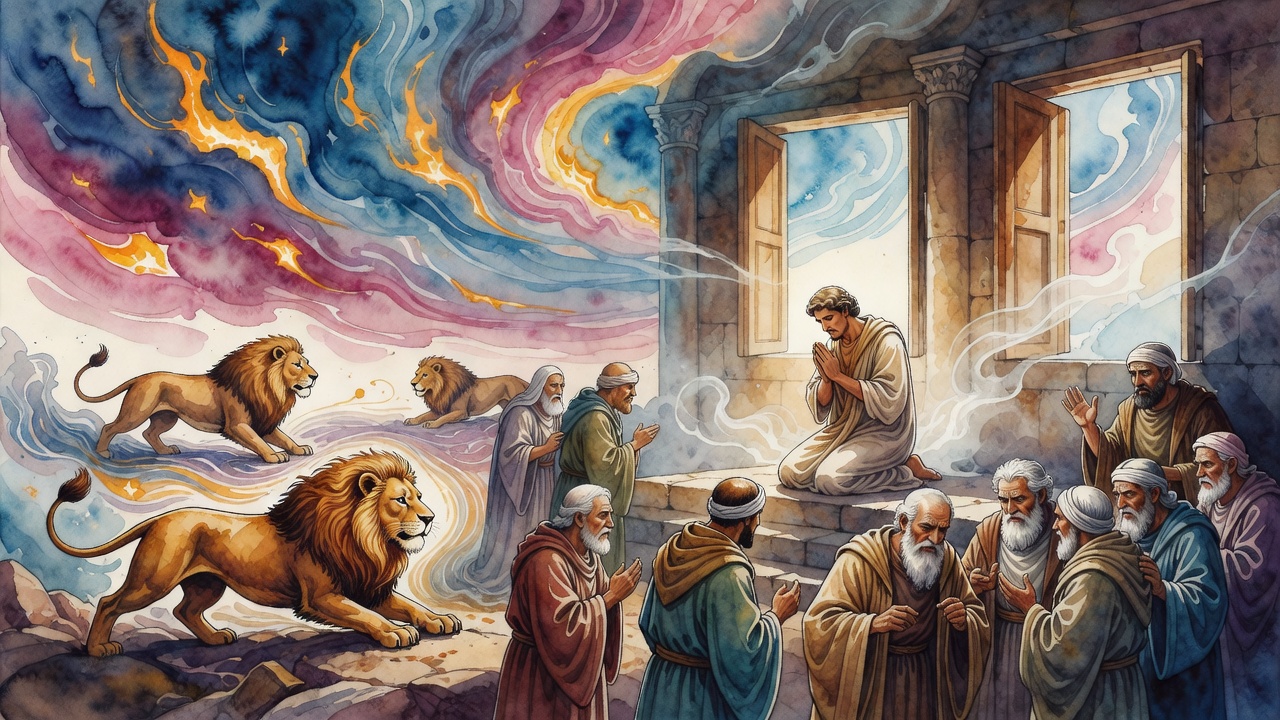
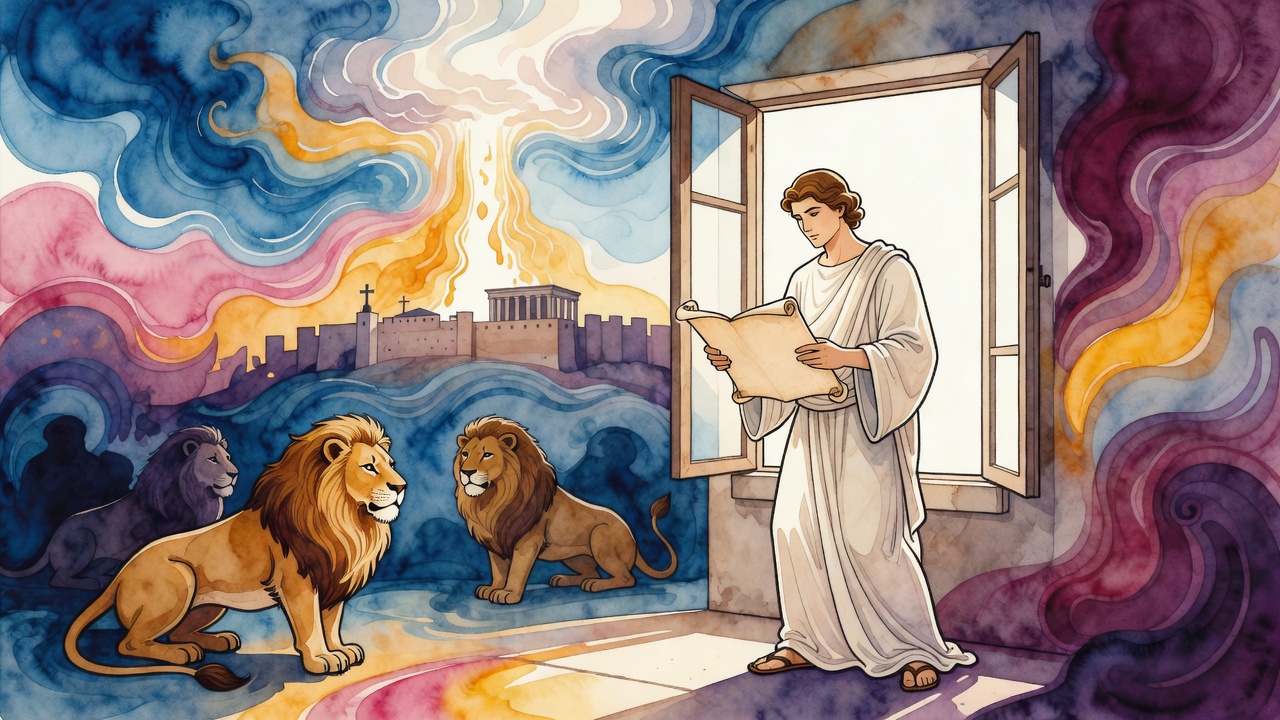
Daniel heard about the decree that afternoon. He went home, opened the windows of his upper room toward Jerusalem, and prayed three times, the way he always prayed. He did not move the furniture in front of the window. He did not pray quietly. His enemies were watching from outside, and they had planned this, and there was nothing to be gained by making it harder for them. The thing was going to happen. He was going to pray.

The Lions Were Hungry

The tradition, working to explain why the lions did not simply eat Daniel, goes further than the angel holding their mouths. The lions had been starved for two days before Daniel was put in with them. This detail appears in accounts drawing on older sources. The handlers had been withholding food to make sure the lions were at their most dangerous when the condemned man arrived. There was to be no question about the outcome. If Daniel survived, it would be unmistakably miraculous, because everything had been arranged to make survival impossible.

Darius rolled a stone over the entrance and sealed it with his own signet and the signets of his lords. He went back to the palace. He did not eat. He did not sleep. He refused his musicians and whatever else was brought to distract him. He spent the night pacing. He had liked Daniel. He had been maneuvered.

The Angel and the Stew

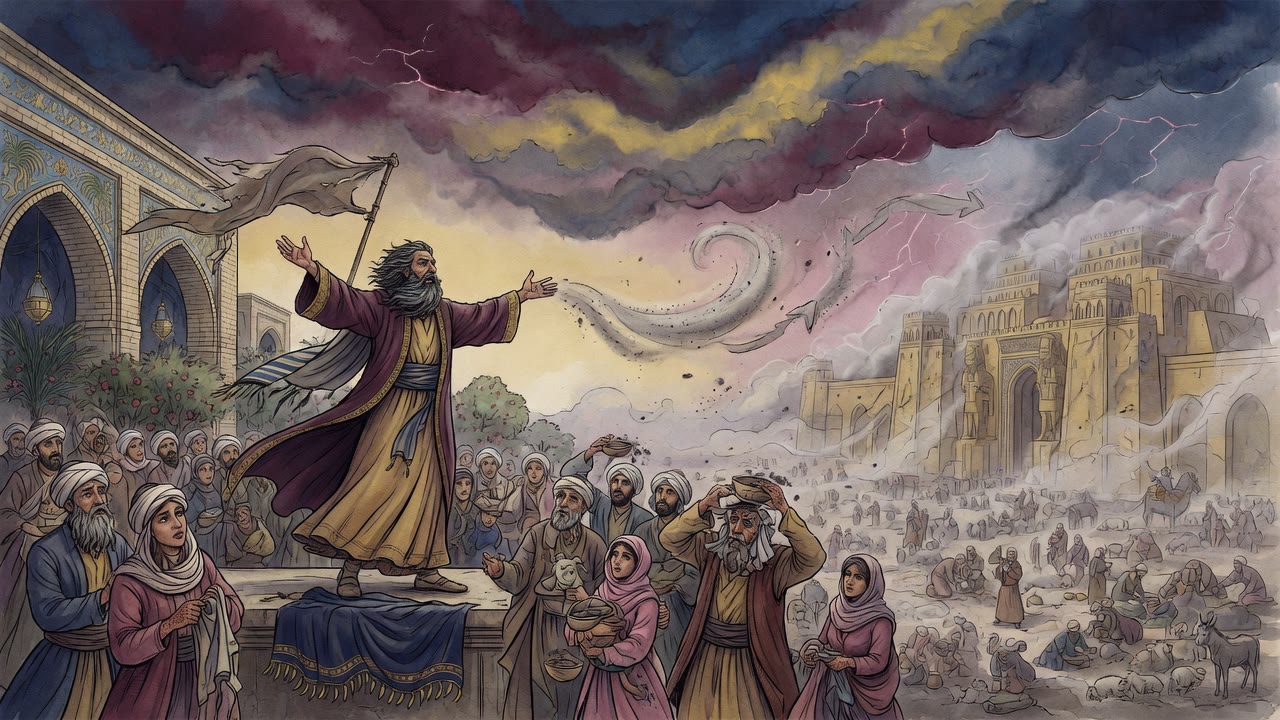
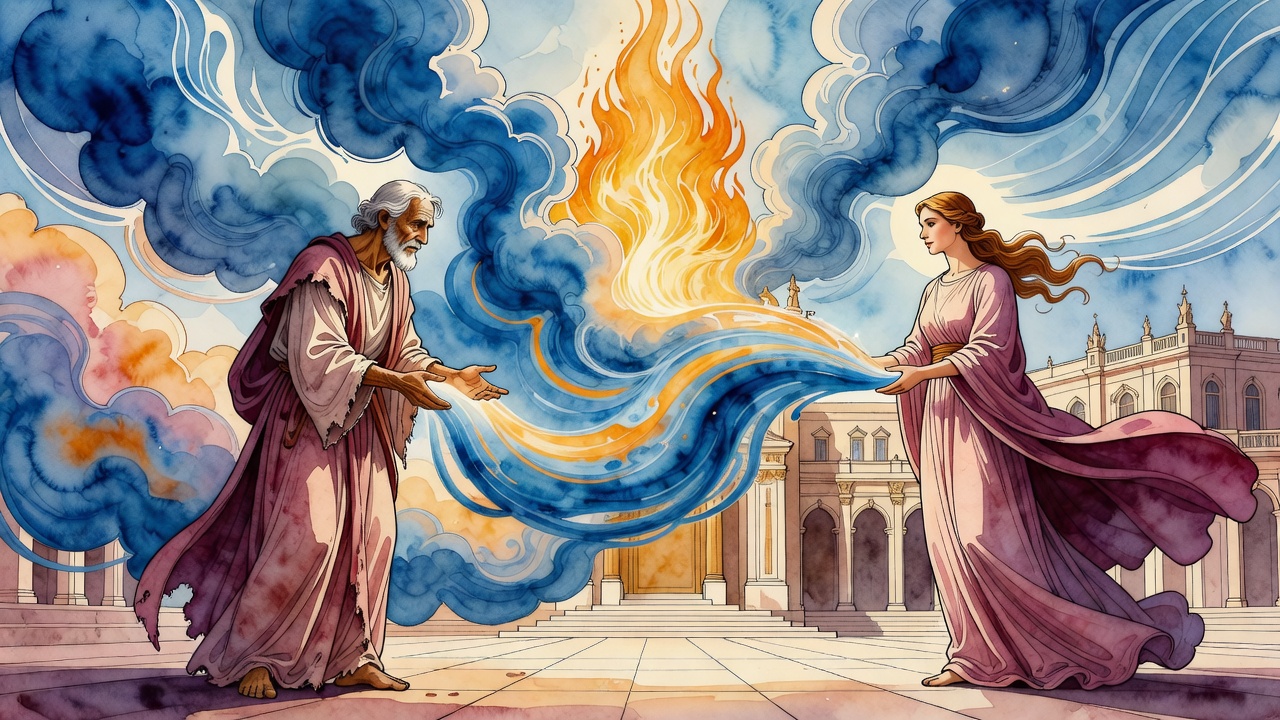
In Judea, the prophet Habakkuk had just prepared a pot of stew for his workers in the field. He was lifting it to carry it out when an angel appeared and told him to take it to Babylon, to Daniel in the lions' den. Habakkuk pointed out that he had never been to Babylon and did not know the lions' den. The angel picked him up by the hair of his head and carried him through the air from Judea to Babylon in one instant.

Habakkuk found himself standing at the edge of the pit with his stew. He called down to Daniel. Daniel thanked God for not forgetting the people who love him. He ate the meal. Habakkuk was carried back to his field in Judea by the same angel, instantly. He resumed his walk to the workers as if nothing had interrupted it.

The sages who preserved this account were interested in the geography of divine attention: Judea and Babylon were months apart by any ordinary measure. The needs of the righteous did not operate on the calendar of geography.

Morning at the Den

At first light Darius ran to the den. He called out in an anguished voice: Daniel, servant of the living God, has your God, whom you serve continually, been able to deliver you from the lions?

The answer came back from the pit: My God sent his angel and shut the lions' mouths, and they have not harmed me.

Darius ordered Daniel brought up immediately. Not a mark on him. Then he ordered the conspirators brought with their wives and children and thrown into the den. The lions, no longer restrained by any angel, had them before they reached the floor of the pit.

What Came After

Darius issued a new decree across the empire: in every dominion of my kingdom, men are to tremble and fear before the God of Daniel. He described God as the living God, as the one who delivers and rescues and works signs and wonders in heaven and on earth. The king who had been maneuvered into almost killing the man he valued most used the aftermath to make the clearest theological proclamation of his reign.

Daniel prospered in the reign of Darius and in the reign of Cyrus the Persian. The tradition reads his elevation as a demonstration of the pattern Midrash Shmuel identifies in Hannah's song: God raises the poor from the dust and lifts the needy from the dunghill to seat them with princes. The repeated use of that arc, Joseph and Daniel and others, establishes it as the primary grammar of divine action in human history.


← All myths

From the tradition

Sources

4 sources

The texts this telling draws on, in full. Open a card to read inline, or expand it for a wider, quieter read.

Legends of the Jews 11:17Legends of the Jews

It comes from Legends of the Jews by Rabbi Louis Ginzberg, drawing on ancient lore, and it involves prophets, angels, lions, and a very, very hungry group of them.

While all sorts of drama were unfolding in Babylon – An angel, a divine messenger, appeared to the prophet Habakkuk. Can you imagine the surprise?

The angel gives Habakkuk a rather unusual command: take the food he’s preparing for his field laborers and deliver it to Daniel in Babylon! Now, Habakkuk, understandably bewildered, asks the angel how he’s supposed to accomplish such a feat, given the vast distance. How could he possibly transport it so far?

Here's where it gets truly fantastical. The angel, without a word, seizes Habakkuk by his hair – yes, by his hair! – and in an instant, whisks him away to Babylon, setting him down right in front of Daniel. They share a meal, a bizarre picnic in the heart of this incredible situation, and then the angel promptly returns Habakkuk to his place in Palestine. One minute you're in Judea, the next you're dining with Daniel in Babylon, and then, poof, you're back home.

The next morning, King Darius, anxious to know Daniel's fate, rushes to the lion's den. He calls out Daniel's name, desperate for a response. But silence. Why? Because, as the story goes, Daniel, having spent the night praising God, was reciting the Shema. The Shema, Shema Yisrael Adonai Eloheinu Adonai Echad, is the central prayer in Judaism, declaring God's oneness. Even in the face of mortal danger, Daniel's faith remained steadfast.

Hearing nothing, the king feared the worst, until he looked closer and saw that Daniel was indeed alive! Overjoyed, but also suspicious, the king summons Daniel's enemies, those who had plotted his downfall, to the pit. They suggest that perhaps the lions simply weren't hungry.

Big mistake.

King Darius, not buying it for a second, orders them to "test" the lions with their own bodies. The result? A gruesome spectacle. According to the tale, the hundred and twenty-two enemies of Daniel, along with their wives and children – a total of two hundred and forty-four people – were torn to shreds by fourteen hundred and sixty-four lions! Yes, you read that right.

Now, let's just pause for a moment and consider that image. It’s a stark, almost unbelievable contrast to the image of Daniel, peacefully reciting the Shema, protected by his faith.

What does this story, drawn from ancient Jewish lore, really tell us? Is it a literal account of historical events? Perhaps. More likely, it's a powerful parable about faith, divine intervention, and the consequences of malice. It reminds us that even in the darkest of times, faith can be a shield, and that actions, good or bad, have repercussions. It's a story that leaves you pondering the boundaries of reality, the power of belief, and the enduring strength of the human spirit, even when faced with a den full of very, very hungry lions.

Full source
Legends of the Jews 11:19Legends of the Jews

When Daniel came out of the lions' den alive, the miracle did not stay private. The king sent word through the empire proclaiming what God had done, and he called on his people to help rebuild the Temple in Jerusalem. Daniel's survival became a public summons.

But Daniel was old. The honors that followed the miracle could not make his body young again. He asked the king to release him from office because he no longer felt fit for the burden. The king agreed only if Daniel chose a successor worthy of the work.

Daniel chose Zerubbabel. The court loaded Daniel with gifts and honored him before the people, and then the old statesman withdrew from public life. He settled in Shushan, where he remained until his death.

Ginzberg preserves one last strange detail. Daniel was not counted among the prophets, but God gave him knowledge of the end of time that had not been granted to Haggai, Zechariah, or Malachi. Even that gift did not stay with him forever. In the fullness of his years, Daniel lost the memory of the revelation. The man who had read the writing on the wall and walked out of the lions' den ended his life honored, diminished, and still held by God.

Full source
Antiquities X.11Antiquities of the Jews (Josephus)

Daniel survived the fall of Babylon. When Darius the Mede took the kingdom, he elevated Daniel to the highest office in the empire, one of only three governors ruling over 360 provincial chiefs. Daniel was so capable and so favored that the other officials burned with jealousy. They needed a way to destroy him.

They found it in his faith. Josephus records that the jealous governors convinced Darius to issue a decree: for thirty days, no one could pray to any god or man except the king, on penalty of being thrown to the lions. Darius signed it. Daniel heard about the law and changed nothing. Three times a day he opened his windows toward Jerusalem and prayed to God, exactly as he had always done.

His enemies were watching. They caught him in the act and ran to the king. Darius, who genuinely loved Daniel, was trapped by his own decree, under Persian law, a royal edict could not be revoked. He spent the entire day trying to find a legal loophole. There was none. At sunset, Daniel was thrown into the den of lions.

Darius could not sleep that night. At dawn he ran to the den and called out to Daniel, barely hoping for an answer. Daniel's voice came back calm and clear: "God sent his angel and shut the lions' mouths." He emerged without a scratch. The men who had conspired against him were thrown into the den instead. And the lions crushed their bones before they hit the ground.

Josephus adds something remarkable about Daniel's legacy. He says Daniel built a great tower at the fortress of Ecbatana in Media, so beautifully constructed that it still appeared newly built centuries later. The Jewish community maintained it, and the high priests of the Babylonian diaspora were buried there. But Daniel's real monument was his prophecies. Josephus insists that Daniel prophesied not just vaguely but with specific timing, and that "by the forementioned predictions of Daniel, those men seem to me very much to err from the truth who determine that God exercises no providence over human affairs."

Full source
Midrash Shmuel 5:14Midrash Shmuel

"He raises up the poor from the dust" (1 Samuel 2:8), this is Joseph. "He lifts the needy from the dunghill", "And Pharaoh sent and called Joseph" etc. (Genesis 41:14). "To seat them with princes, and make them inherit a throne of honor", "And Joseph was the governor over the land" (ibid. 42:6).

Another interpretation: "He raises up the poor from the dust", this is Daniel. "He lifts the needy from the dunghill", "And Daniel was taken up out of the den" (Daniel 6:24). "To seat them with princes, and make them inherit a throne of honor", "And they proclaimed concerning him that he should be the third ruler in the kingdom" (ibid. 5:29).

Full source