An Angel Grabbed the Prophet by the Hair and Flew Him to Babylon
The stew was for men in a Judean field. Daniel was in a pit in Babylon. The pot arrived anyway, still hot, still full.
Table of Contents
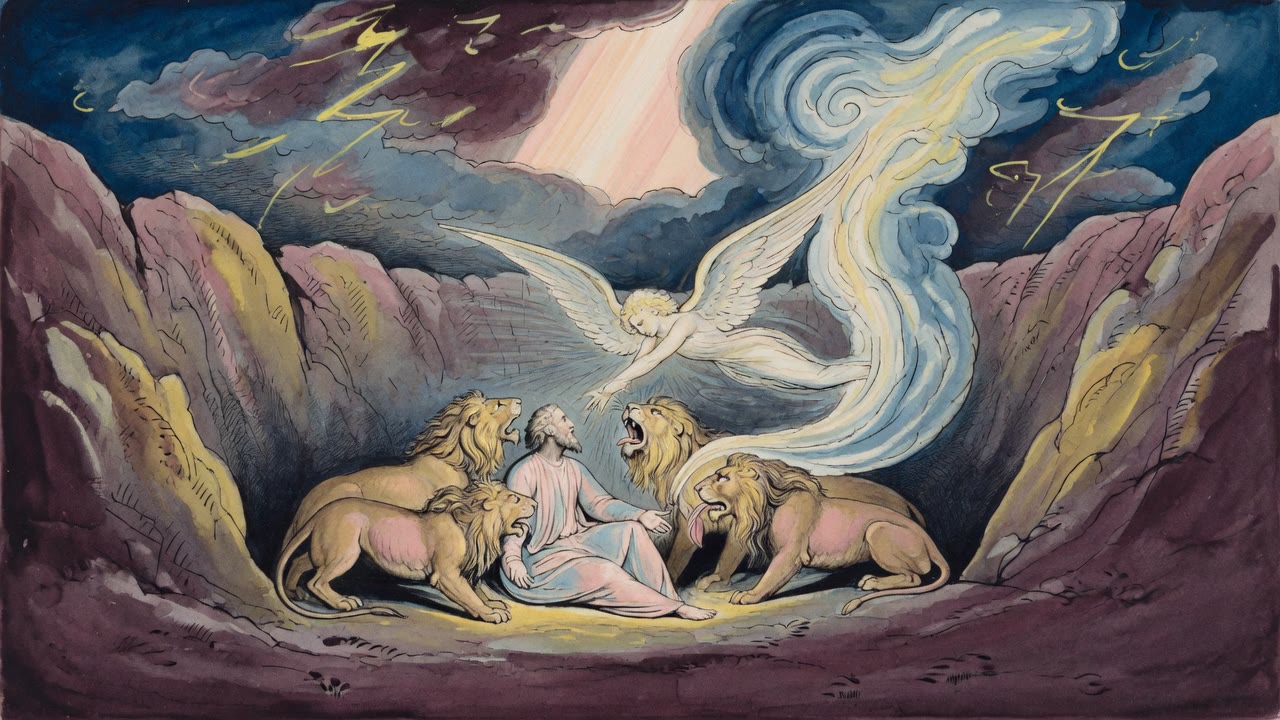
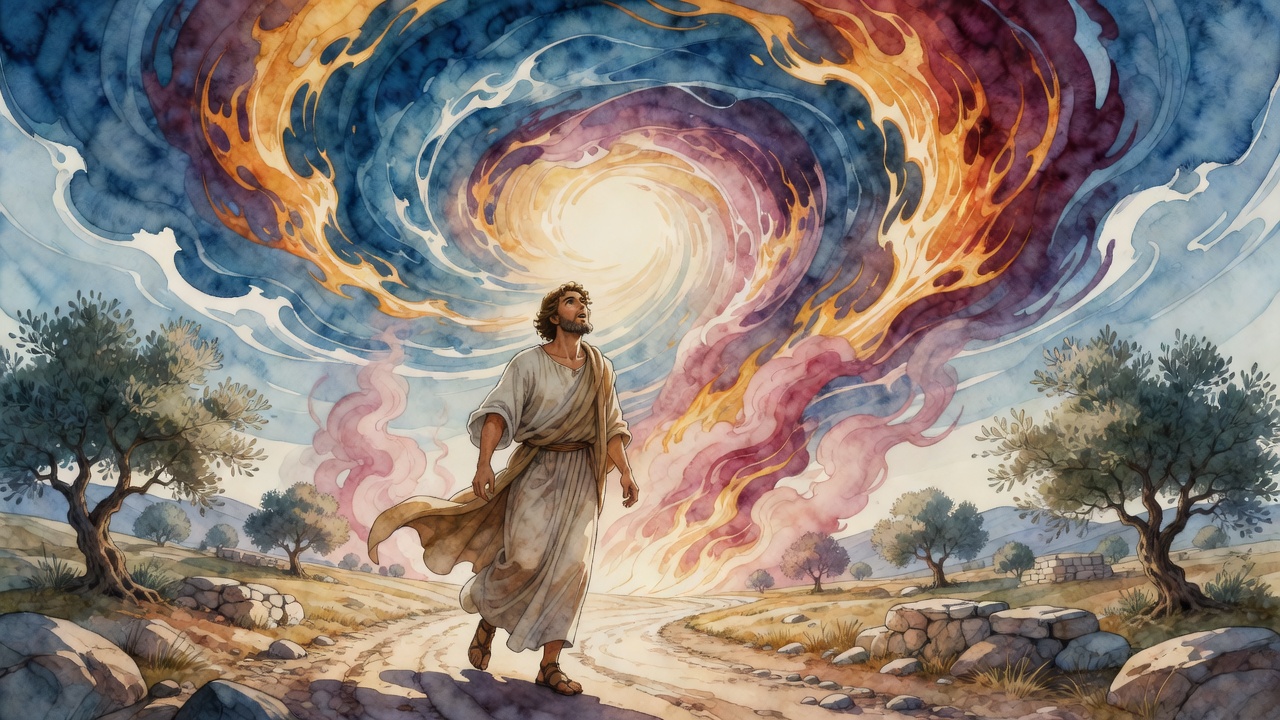
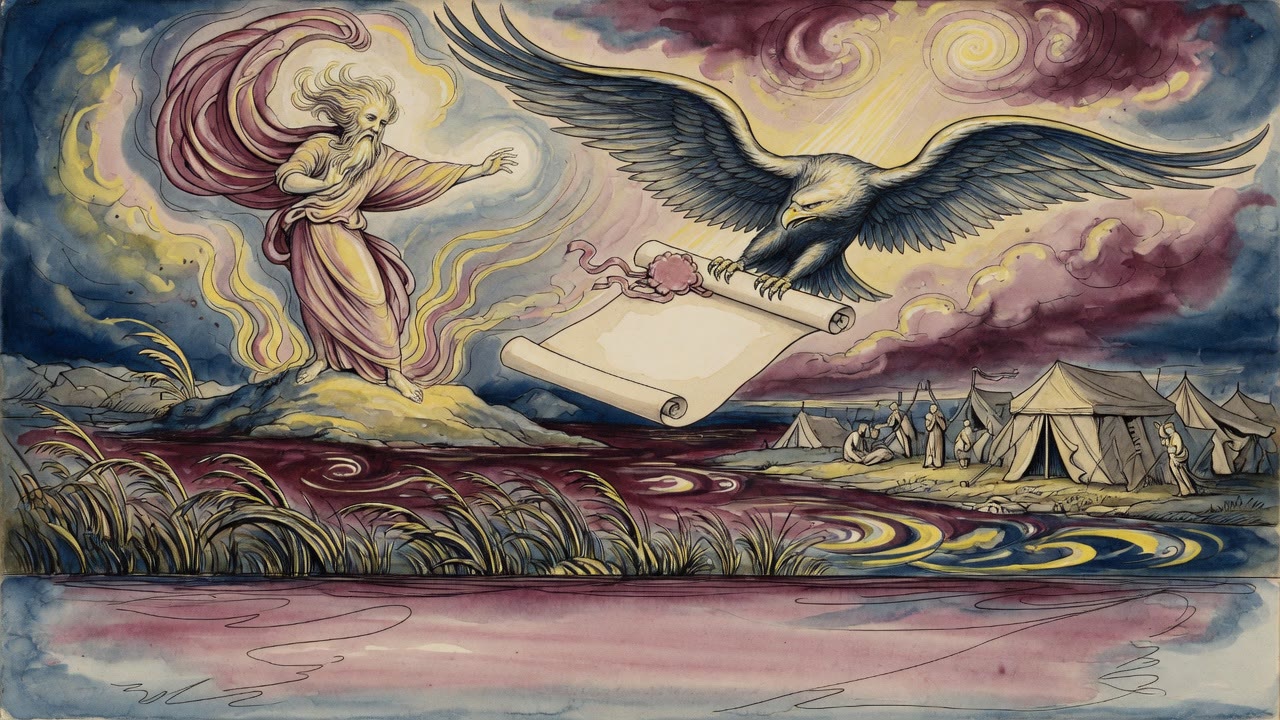
Habakkuk had laborers out in his field in Judea and their food was ready. He had the pot in his hands and was starting out to them when an angel stopped him on the path and told him to take it to Daniel instead, who was in a lions' pit in Babylon.
 Click for full size
Habakkuk asked the practical question. How does a man carry a hot pot that distance.
The angel grabbed him by the hair of his head, and he was there.
Why There Was a Man in the Pit
Daniel had told King Darius to appoint three men over the administration of the empire, and Darius had done it and put Daniel at the head of the three. That left exactly one man between Daniel and the throne, and a great many men below him who noticed.
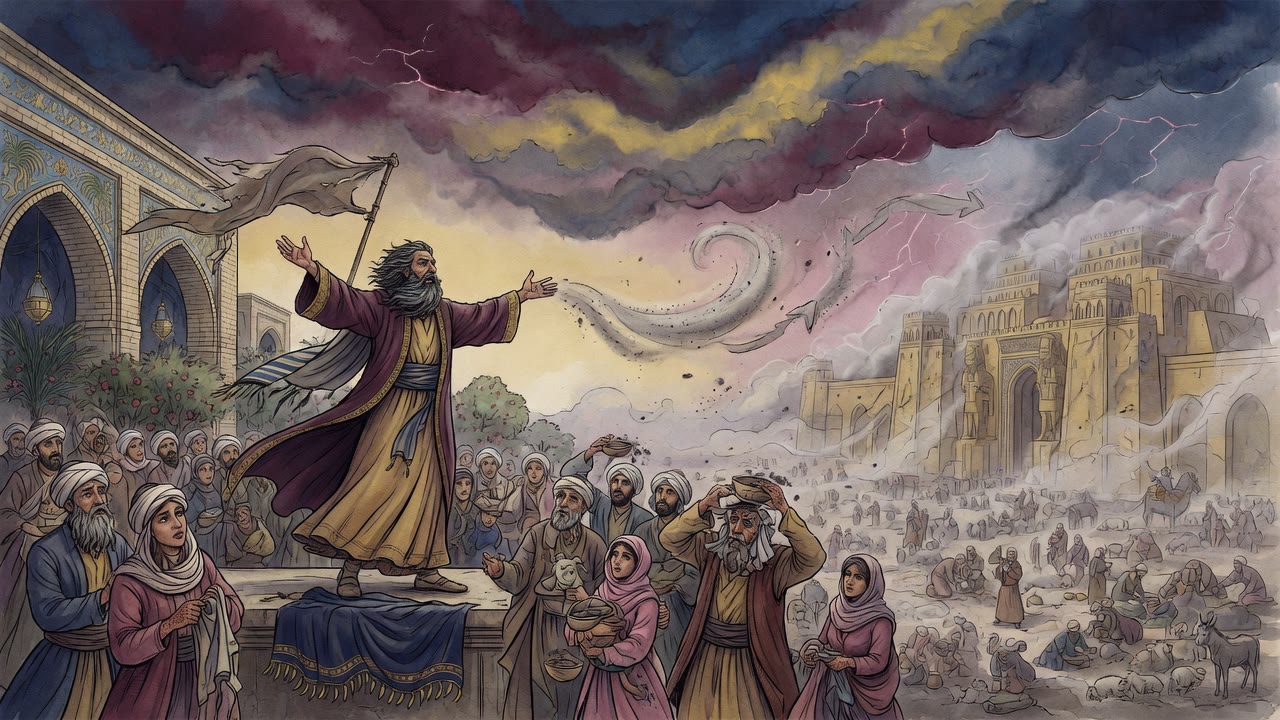
They could not find anything in his work to use, so they went after his prayers. They talked the king into signing an order that made it a capital crime to petition any god or any man except Darius. The order did not ask Daniel to worship anything. It only asked him to go quiet for a while and pick it up again later, which is the cheaper kind of trap, and he would not take the terms.
They came in on him while he was praying and he did not stop praying while they stood there. They dragged him to the palace, and the king refused to believe the charge and started looking for a way around his own law. Then the hour of the afternoon prayer arrived, and Daniel turned and prayed it in front of Darius and all his princes.
After that there was nothing the king could do for him.
The Stone Came by Itself
They put him in the pit. A rock rolled all the way from the land of Israel on its own and settled over the mouth of it, sealing him in and sealing his accusers out, so that nobody could come down in the night and finish what the lions were supposed to start.
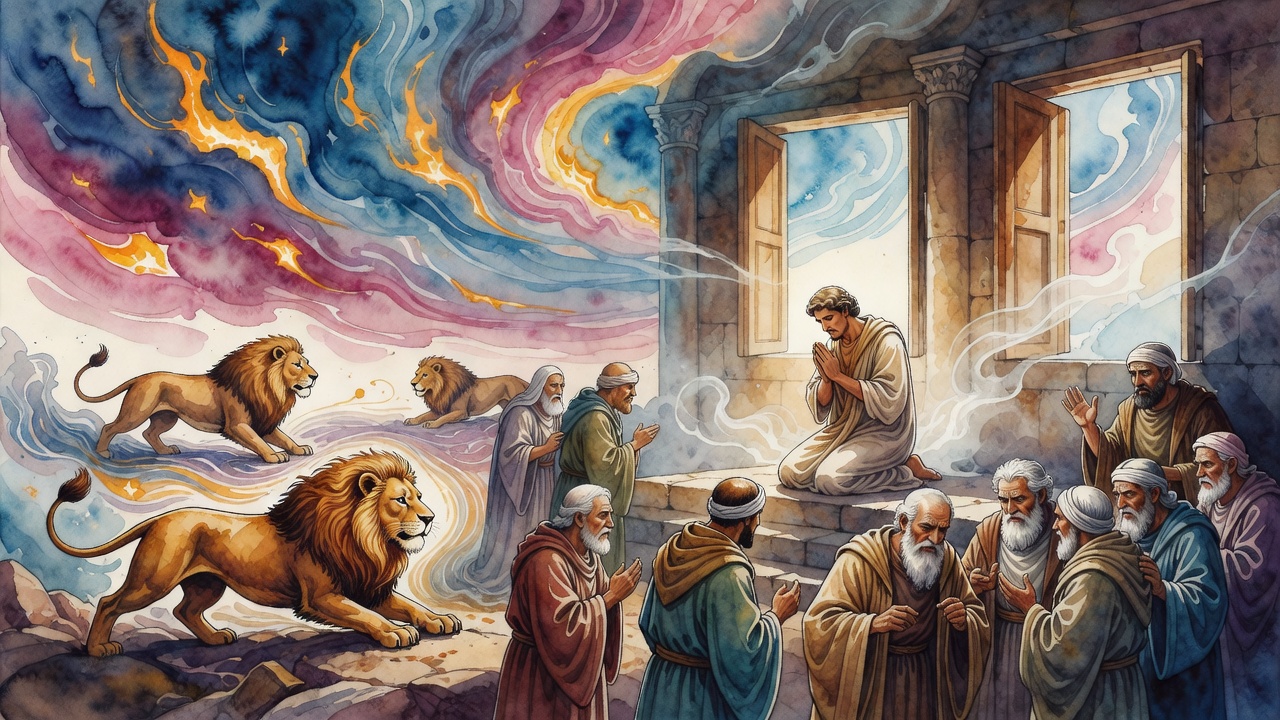
Inside, the lions came at him the way dogs come at a man who has been away. They pushed their heads under his hands. They licked his fingers and swung their tails and made room for him. Fourteen hundred and sixty-four of them, kept for this work, and not one of them was hungry for him.
Daniel spent the night praising God. The stone sat on the pit. The king did not sleep.
They Ate Together and Then He Was Home
That is the room Habakkuk landed in, still holding the pot, with the smell of the stew going out across the floor and the animals watching. The prophet had been in his own field an hour earlier. Now he was in Babylon, hair still pulled from the grab, lunch still steaming in his hands.
The two of them sat down and ate. One of them had been condemned by the law of the Medes and Persians and one of them had been walking toward farm workers, and between them they had a meal cooked for men who were, at that moment, standing around a Judean field wondering where their food had gone.
When it was finished the angel took Habakkuk back and set him down where it had found him, holding an empty pot. He was a man who had spent his life demanding that heaven explain why the wicked prosper and the just get ground down, and he had put those questions in writing. He got no answer to them that day. He got an errand.
Then They Said the Lions Were Not Hungry
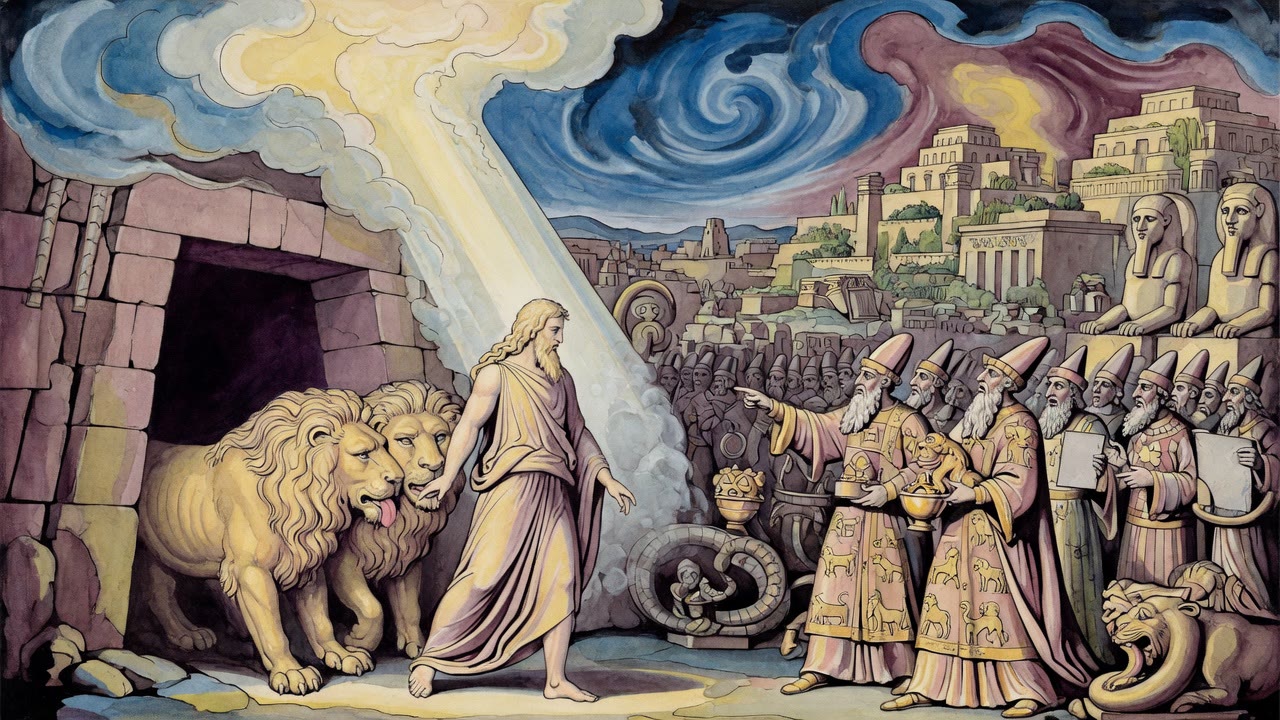
Darius went out to the pit at first light and called Daniel by name. Nothing came back. Daniel was in the middle of the Shema (שמע), Hear O Israel, and a man in the middle of the Shema does not answer a king. Then he finished, and his voice came up out of the ground, and Darius had him lifted out.
The men who had built the law came to look. Their explanation was that the lions had not been hungry. The king told them to prove it with their own bodies. A hundred and twenty-two of them went into the pit, and their wives and their children after them, two hundred and forty-four people in all, and the fourteen hundred and sixty-four lions that were kept there tore every one of them apart.
In Judea, the laborers were still waiting for their lunch. Habakkuk stood in the path with an empty pot and the feel of an angel's fist still in his hair. The field had not moved. Babylon had. The stew was gone.
← All myths