Daniel Prayed With His Windows Open and the Lions Did Not Touch Him
Darius fed the lions until they were full, then threw Daniel's accusers in. He had to know whether the lions had spared Daniel or had merely been fed.
Table of Contents
 Click for full size
They Could Not Find a Single Thing Against Him
They went through the accounts first, because that is where a man usually gives himself away. Daniel was one of three presidents set over the three hundred and sixty provinces of Darius the Mede, and everything in the empire passed under his hand, and he had never taken any of it. He would not accept a payment even when the payment was owed to him. He thought taking was a low thing to do.
So the other officials looked for something shameful in his private life and found that too clean to use. What they finally noticed was that he prayed to his God three times a day, and did not hide it.
They came to the king with a proposal dressed as an honor. Give the people a holiday from petitions. For thirty days let no one in the empire ask anything of any god or any man except the king, and let anyone who breaks it go into the den of the lions. Darius, who had no idea the sentence had a name written on it already, said he was pleased with the decree and published it across the provinces.
The One Man Who Did Not Stop
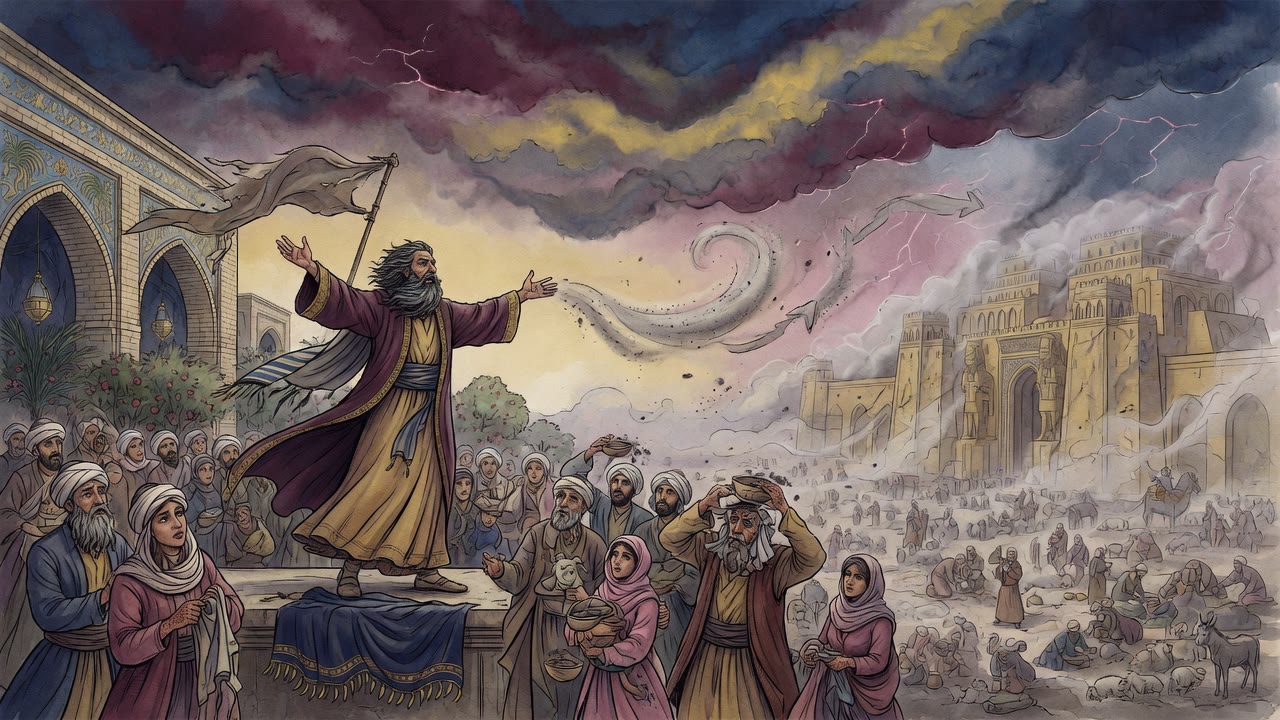
Everyone else went quiet. For thirty days the empire kept its mouth shut and its head down.
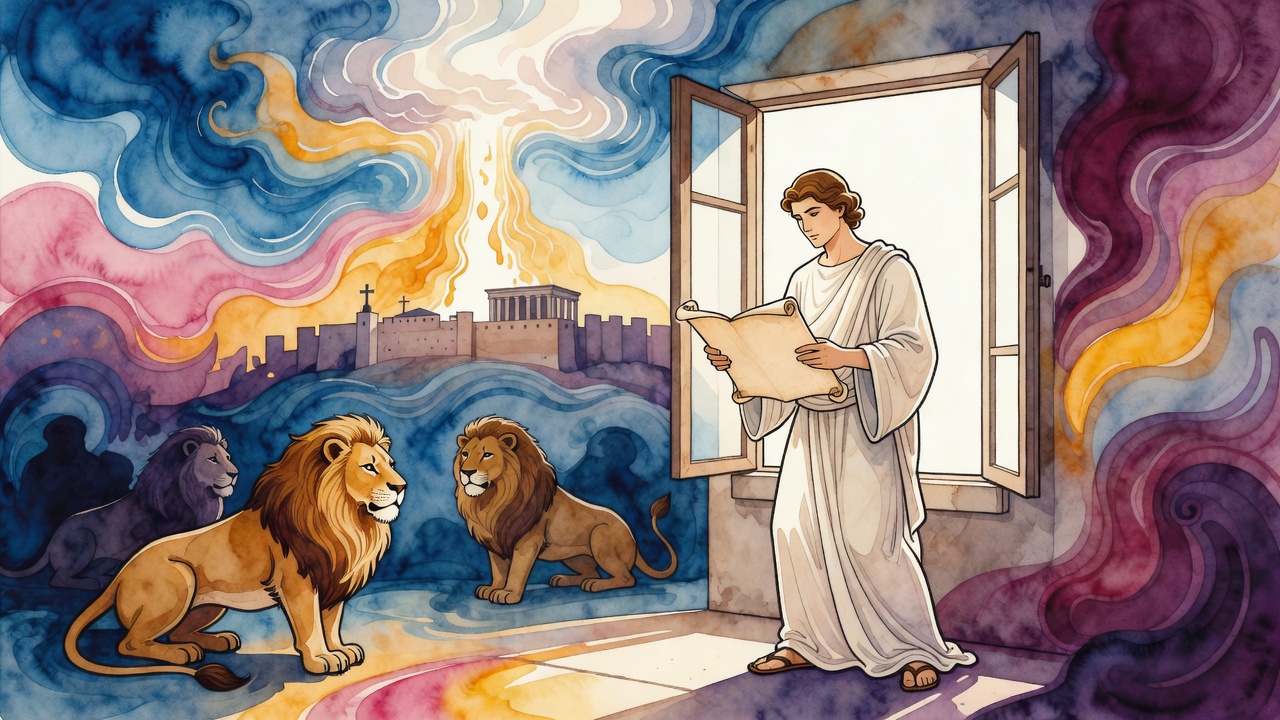
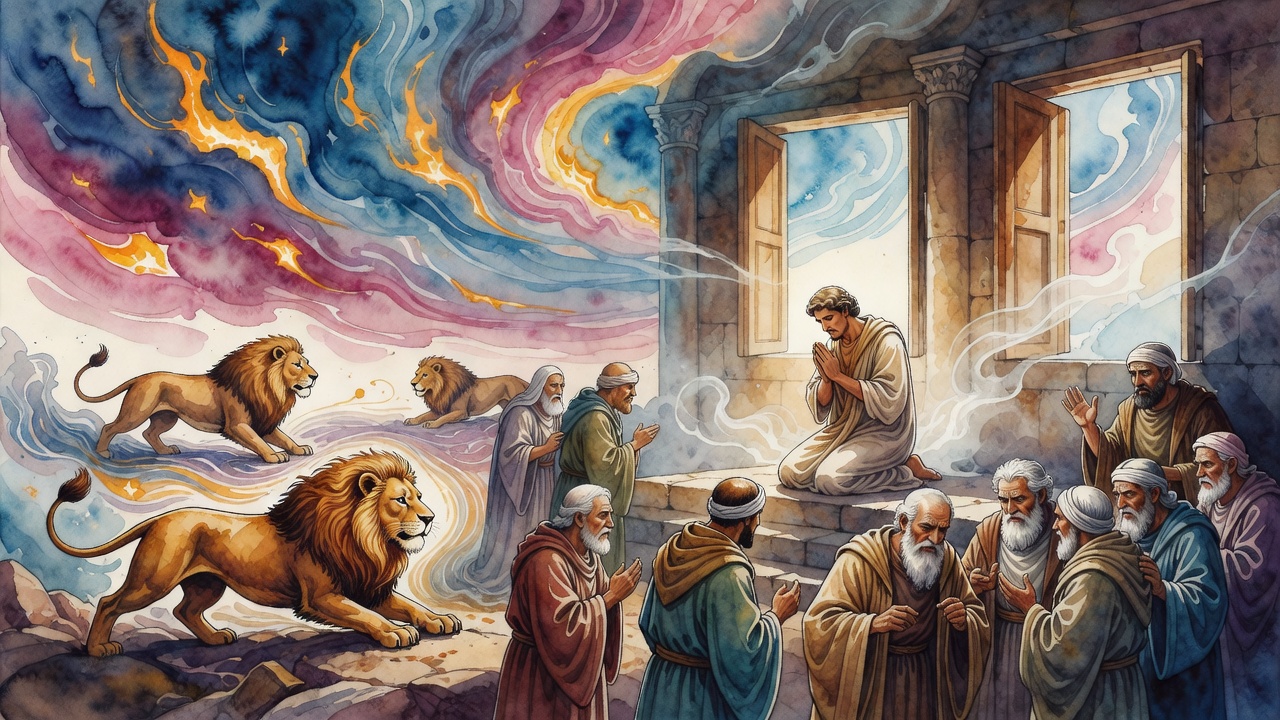
Daniel went up to the upper room of his house, opened the windows that faced Jerusalem, and prayed where anyone in the street could see him, three times, exactly as he always had. The palace had changed the law. It had not moved the city he was facing.
His accusers had been standing outside watching the windows. They ran to the king and reported that one man in the whole kingdom had ignored the decree, and they knew Darius liked him, and they were counting on it. What they wanted was not the crime. They wanted the pardon to be impossible.
Darius spent the day looking for a way out and did not find one. The law of the Medes and the Persians did not bend backward. At sunset he gave the order.
The King Sealed the Stone Himself
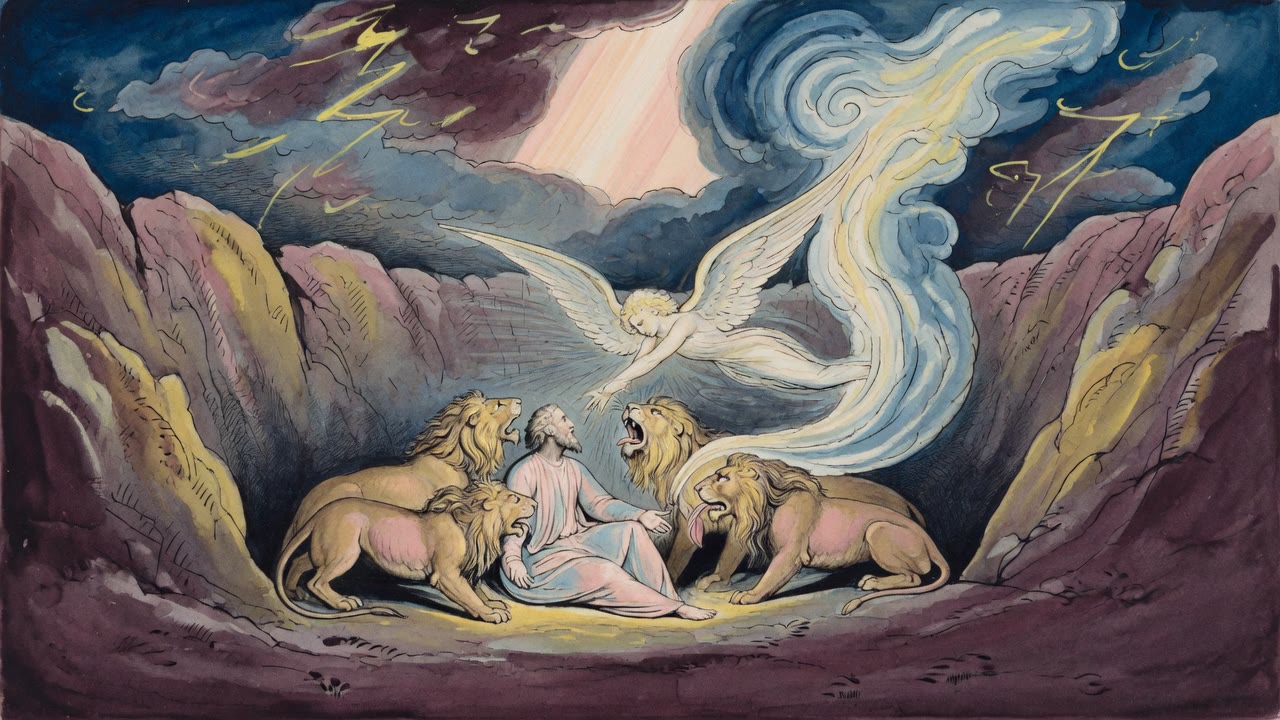
He walked down with him. He told Daniel to take it cheerfully, that his God would get him out, and the words were half hope and half instruction to himself. Then Daniel went into the pit and the stone went over the mouth of it, and Darius pressed his own signet into the seal so that no hand could open it in the night without him knowing.
He went back to the palace and ate nothing. He called for no music. He did not sleep.
Far away in Judea, Habakkuk had cooked a pot of stew and was carrying it out to the men working his field when an angel stopped him and told him to take it to Daniel in Babylon instead. Habakkuk asked how a man was supposed to carry a pot of stew that far. The angel took him by the hair and set him down in the pit an instant later. The two of them ate together on the floor of the den, among the lions, and then the angel picked Habakkuk up and put him back in his own field.
No Answer From the Pit
At first light Darius ran to the den. The seal was exactly as he had left it. He broke it himself, and leaned over the hole, and called down into the dark.
Nothing came back.
He called again. Daniel, servant of the living God, has your God been able to save you from the lions? Still nothing, because Daniel had spent the whole night giving praise and was at that moment in the middle of the Shema, and would not break it off for a king.
Then the voice came up. O king, live forever. My God sent his angel and closed the lions' mouths. They have not hurt me, because I was found innocent in front of him, and I have done you no harm either.
Darius had him hauled out. There was not a scratch anywhere on him.
The King Fed the Lions First
The accusers had an explanation ready. The lions had been fed too well. A full lion ignores a man. It proved nothing about anyone's God.
Darius did not argue with them. He ordered a great quantity of meat thrown down into the pit, and he waited while the lions ate it, and he waited until they were visibly full. Then he had the accusers brought and thrown in, a hundred and twenty-two of them, with their wives and their children, two hundred and forty-four people going down onto the same floor where Daniel had slept.
Fourteen hundred and sixty-four lions came off that floor with their bellies full and tore every one of them apart as though they had gone hungry for a week.
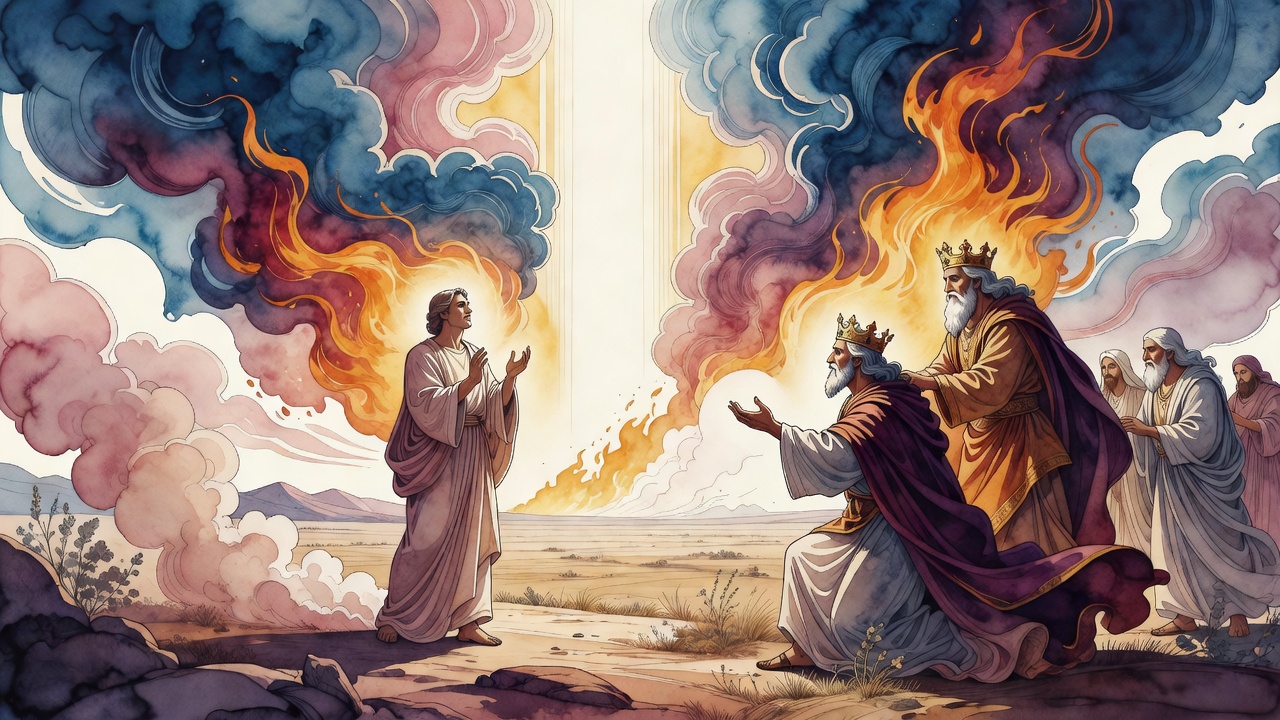
Darius wrote to every province in the empire that the God of Daniel was the only true God and had all power in his hand, and he made Daniel first among his friends. Daniel built a tower at Ecbatana in Media, and centuries later it was still standing and still looked new, as though the stone had been laid that morning. The kings of Media and Persia were buried in it, and the man who held the keys was always a Jewish priest.
← All myths