Daniel's Merit Passed Into Esther's Hands
Daniel left the royal court old and emptied of public office, but the merit of his life moved into Esther's hands at the palace.
Table of Contents
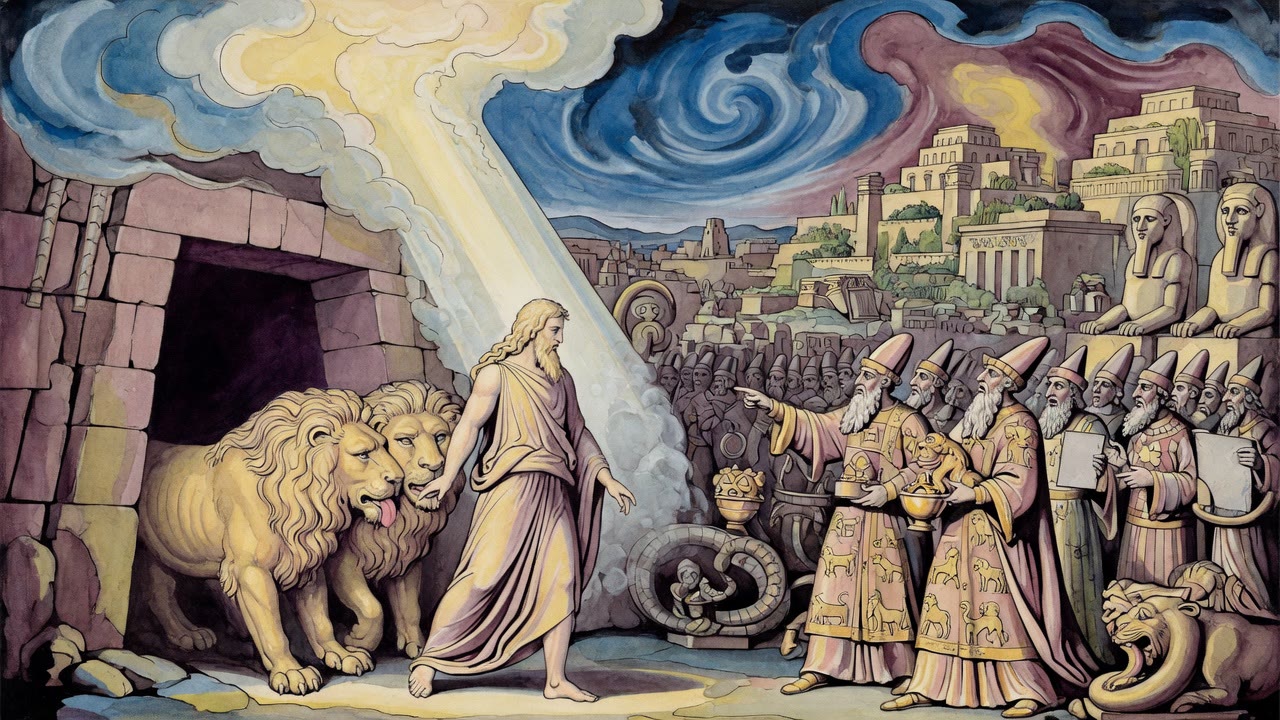
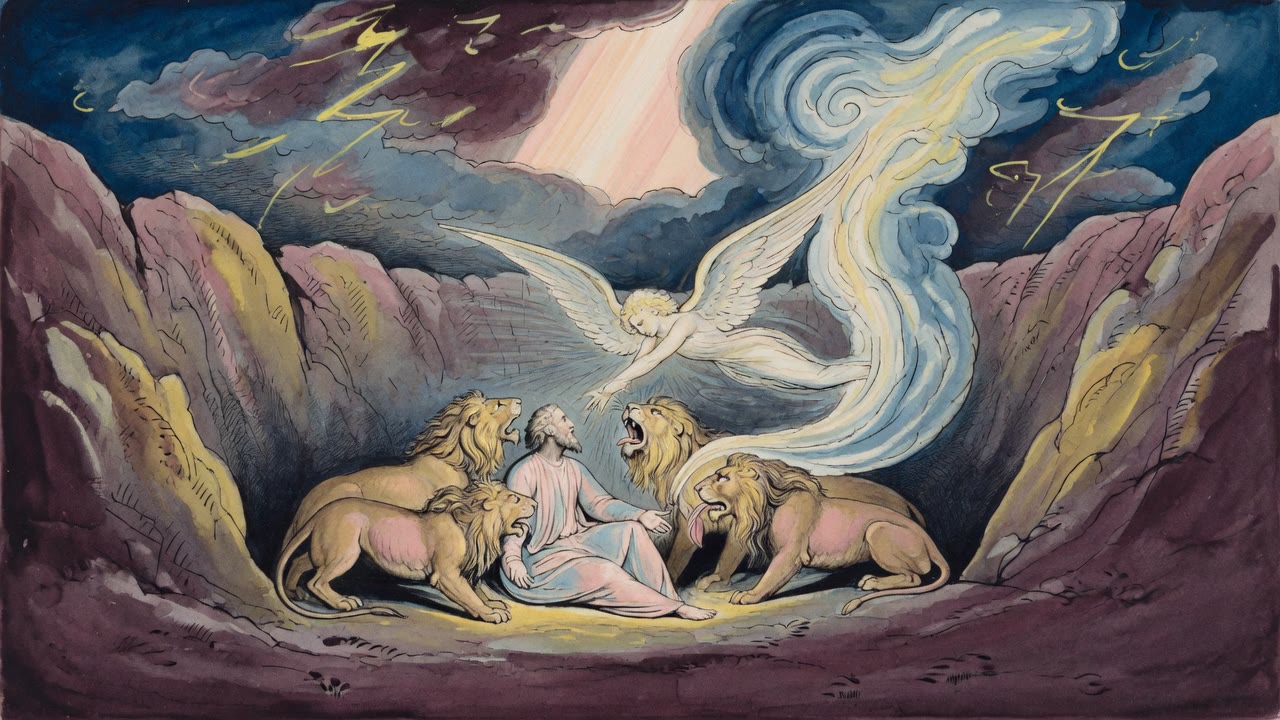
Daniel came up out of the pit and the lions had not touched him, and inside a month the news was in every province of the empire. The king put it in writing and sent it out under seal, and the writing did more than praise a God the court had not believed in the week before. It told the exiles to go up to Jerusalem and put the house back on its foundation. A night in a hole with animals had turned into an order to rebuild.
 Click for full size
None of it did anything for his knees.
He Asked to Be Let Go
He went to the king and asked to be released from office, since he could not carry the work any longer and had reached the age where a man can tell the difference between being needed and being kept. The king would not simply agree. He would let Daniel go on one condition, which was that Daniel name the man to hold the post after him, so the old statesman had to choose his own replacement before he was allowed to stop.
He named Zerubbabel. The court loaded him with gifts and honored him in front of the people the way courts do when they are relieved, and he moved to Shushan and took a house there, and that was supposed to be the end of it.
A King Crying Over a Queen He Had Sent Away
It was not the end of it, because kings send for retired men when something has gone wrong that nobody at the table wants to say out loud.
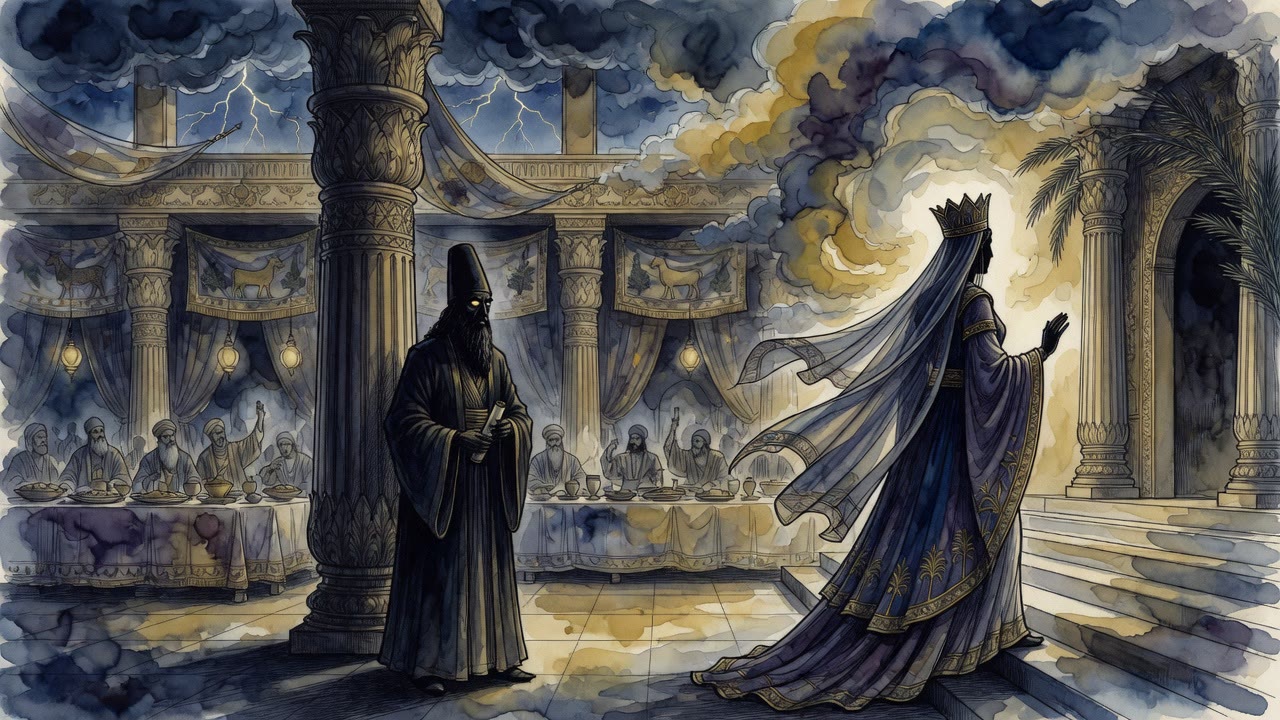
Vashti was gone. The king had done it himself, in front of the whole court, in an evening he could not take back, and now he was weeping over it while the palace stood very still around him.
Daniel told him not to weep. Everything the king had done he had done according to the Torah, since the Torah puts a man over his own house, and a king who keeps the Torah has his kingdom kept for him. That was the entire consolation, and it worked, and the machinery started up again. A decree went out to every province that every man should rule in his own house (Esther 1:22).
Fair Young Women, Not All of Them
The second piece of advice was the one that cost somebody something.
Let there be sought for the king fair young virgins (Esther 2:2). Not all the young women, which is what a frightened court would have done, but the ones picked out for beauty, and whichever one pleased the king would be queen in Vashti's place. It was a narrower sweep than the alternative, so it emptied fewer houses, though it emptied them all the same, from India to Kush, one officer to a district with a list in his hand.
The old man in Shushan had built a corridor without knowing where it came out. Girls went into it and were rubbed with oil of myrrh for six months and with spices for six more, and somewhere in that traffic, in his own city, a Jewish girl went in with her name folded up and put away.
The Morning the End of Time Was Gone
He had one thing left that nobody could take from him, and that went as well.
He had never been a prophet and he said so, since the office belonged to Haggai, Zechariah and Malachi. But he had been shown the end of time, which they had not been, and he had carried it through the writing on the wall and the pit and all the years of court service, wrapped up and never discussed.
Then he reached for it one morning in Shushan and it was not there. He went back through it the way a man goes back through a room for something he had in his hand a minute ago, and there was nothing: not a date, not an order of kingdoms, not the shape of the last thing. He knew only that he had been shown something once and could no longer say what it had been.
Favor in the Eyes of Everyone Who Looked at Her
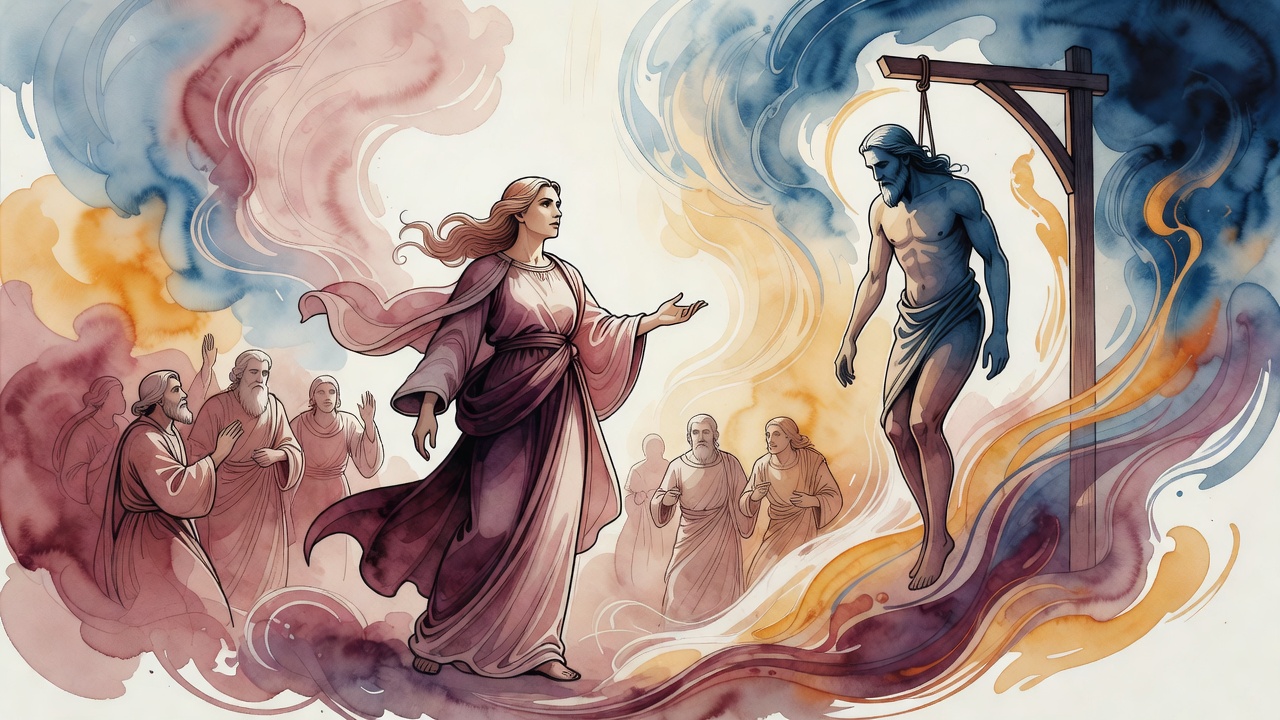
Across the city they were bringing Esther forward. The palace kept specialists for beauty and was not short of it, so beauty by itself would have moved nothing in that building. What came with her was chen (חן), favor, laid on her by the Holy One, so that everyone who looked at her softened before he could say why. The keeper of the women felt it first. Then the officials felt it. Then the king.
She obtained favor in the sight of all who looked upon her (Esther 2:15), and not one of them could have explained it, and none of them knew that the sentence which had opened the corridor she walked in on had been spoken by a retired official at the far end of the same city.
She went in to the king. Two streets over, an old man sat in a house full of the presents a court gives a man on his way out, trying to remember something he had once been shown and could not name.
← All myths