6 min read

Samuel Ran to Eli When God Called in the Night

Samuel heard his name in the sanctuary night and ran to Eli three times before the old priest taught him how to answer God.

Curated by Arthur · Told by Maggid ·
Table of Contents
  1. The Child at the Knife
  2. The Lamp Had Not Gone Out
  3. The Voice Passed the Door
  4. The Words He Feared to Carry
  5. No Word Fell to the Ground

The lamp of God had not gone out, and Samuel was small enough to mistake heaven for a voice from the next room.
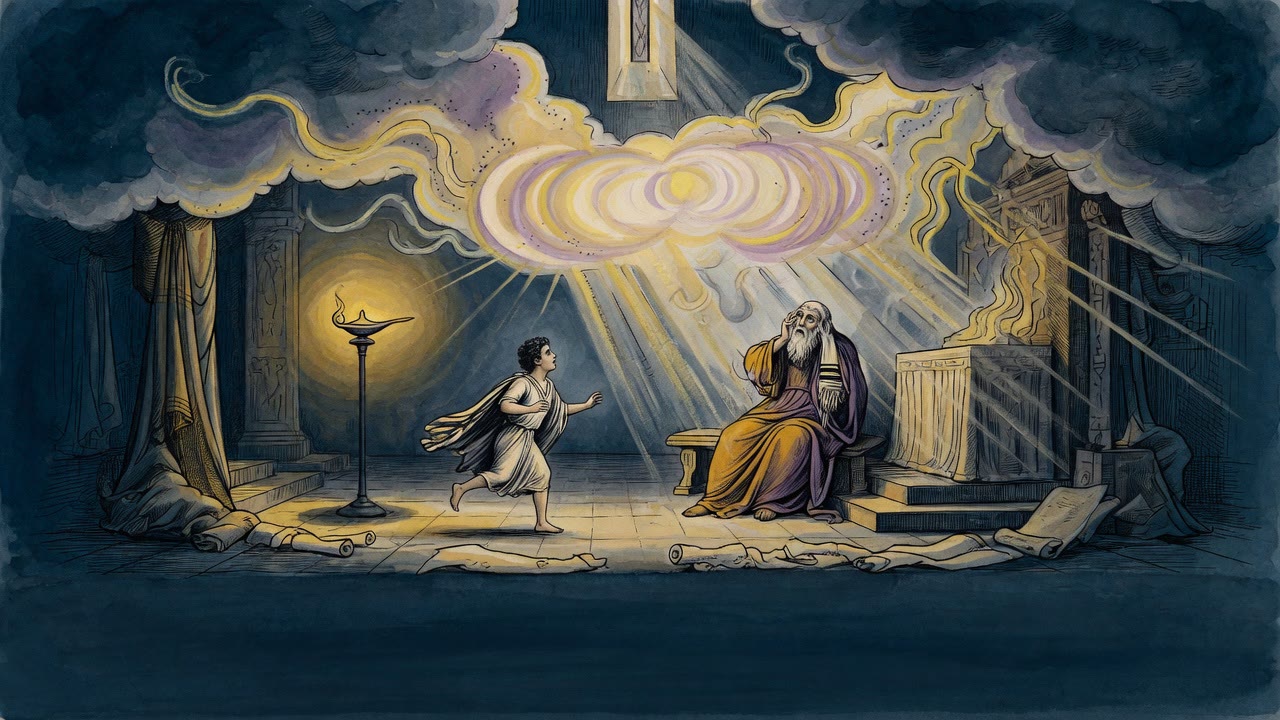
He slept in Shiloh, close to the place of service, while Eli lay behind his own door, old, dim-eyed, still priest, still father to sons who had made the priesthood sour in Israel's mouth. The night was not empty. It was waiting.

The Child at the Knife

Before the night voice, there had been a knife and a bullock and a child barely weaned. Hannah brought Samuel to the sanctuary because her vow had not been a poem. She had asked for a son, and when the son came, she carried him back to the place where she had prayed without sound.

The attendants stood frozen over the offering, looking for a priest to perform the slaughter. The little boy spoke up. "Why wait." The knife was kosher in a layman's hand, even in the hand of a woman or a slave, even for the holiest offerings. The animal was slaughtered, and Eli demanded the name of the one who had permitted it.

They brought him the child. Eli moved to punish him, and Hannah fell at the priest's feet. Eli said he could pray and another child would come. Hannah would not let the boy become replaceable. "For this lad I prayed," she said. "He was lent to the Lord forever." The sanctuary received him that day as more than a mother's offering. It received a mouth that would one day judge the judges.

The Lamp Had Not Gone Out

Years passed under another man's roof. Hannah came each year with a small robe, the cloth growing as the boy grew. Shiloh taught him the smells of oil, blood, wool, dust, and night. It also taught him silence. The word from heaven was rare. Eli's sons still stood in holy places, but their hands had taught Israel to recoil. Eli rebuked them and did not stop them.

Then the lamp flickered in the sanctuary before dawn, and a voice said his name.

"Samuel."

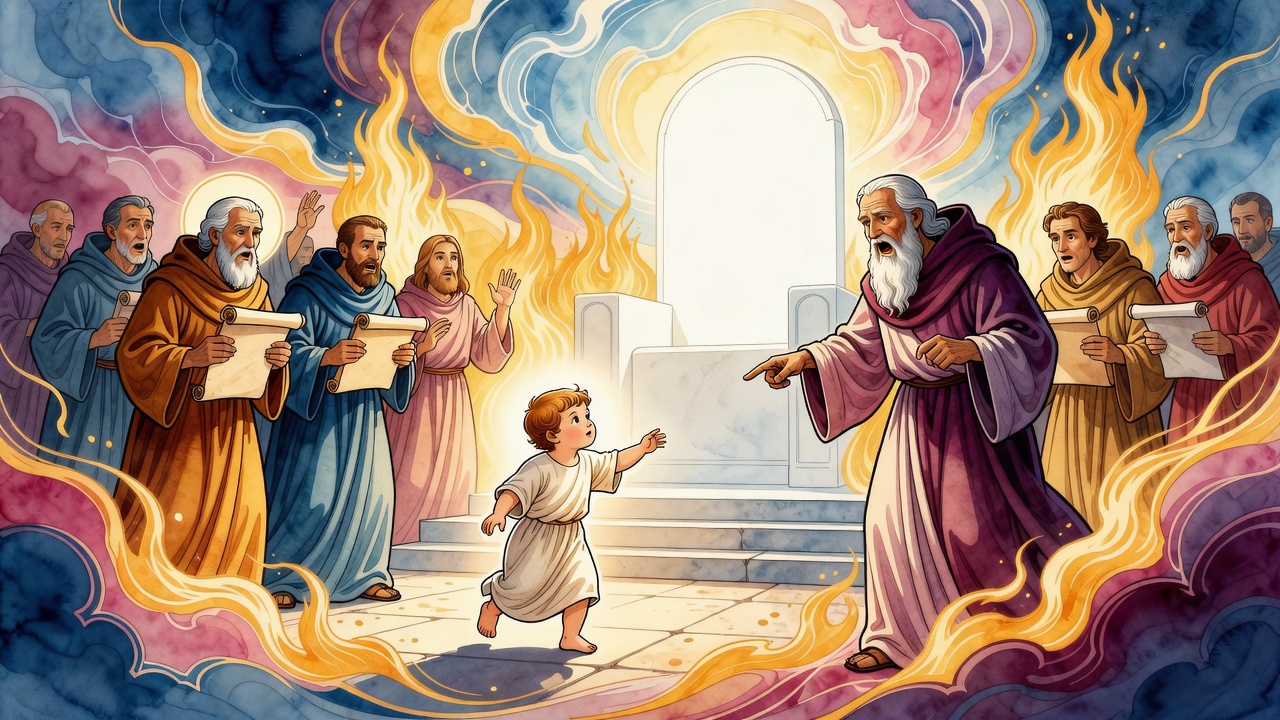
The boy sprang up and ran to Eli. "Hineni," here I am, he said, because readiness was already in him, even when his hearing was wrong. Eli had not called. "Go back," the old priest told him. The boy went back. The voice came again, and again he ran. A third time the dark split around his name, and a third time his bare feet crossed the floor toward the wrong bed.

The Voice Passed the Door

The old priest understood slowly. That slowness hurt. He still knew enough to recognize the pattern after it had bruised the night three times, but the first hearing had passed him by. The voice had gone over the bolted door and found the child outside it.

Eli did not seize what was no longer his. He gave Samuel the posture for hearing: lie down, wait, and let the Lord speak while the servant listens. A whole priesthood narrowed into one instruction, and the old man handed it to the boy without ornament.

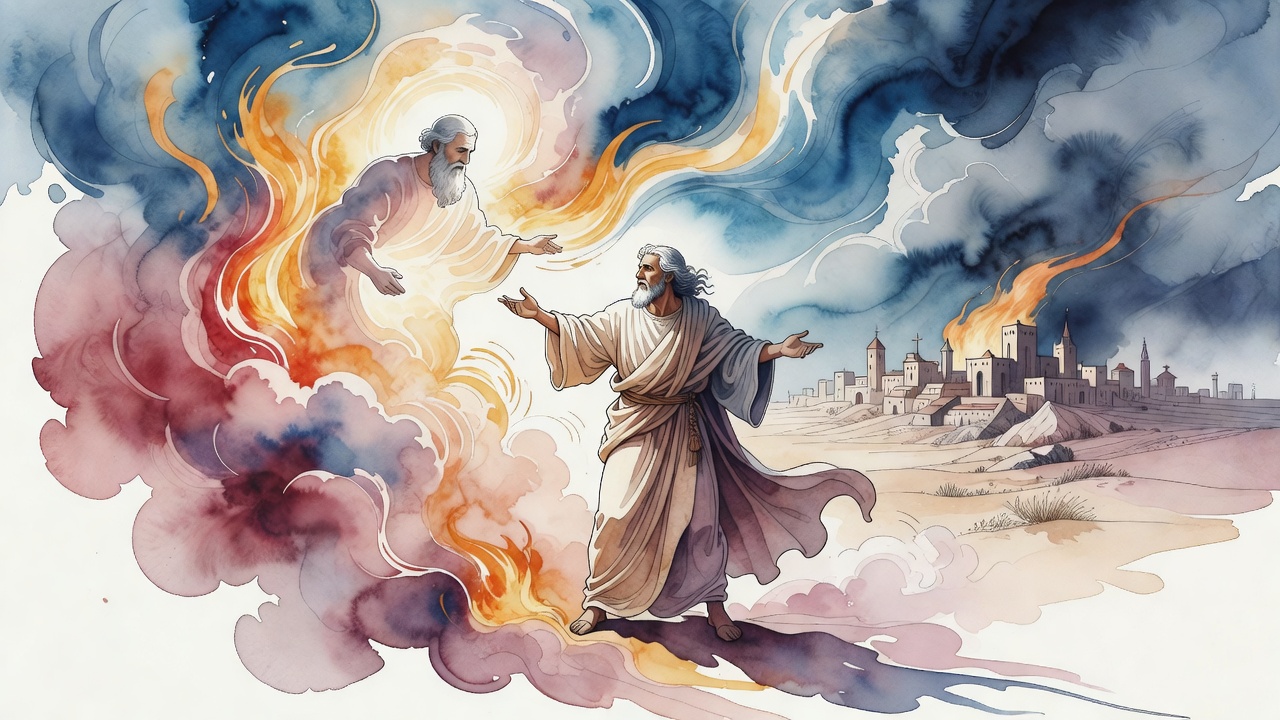
The voice came and stood there, not merely calling from far away. "Samuel, Samuel." The boy answered at last to the One who had been speaking all along. The same naked answer Moses gave at the bush now rose from a child in the sanctuary dark. Hineni had found its listener.

The Words He Feared to Carry

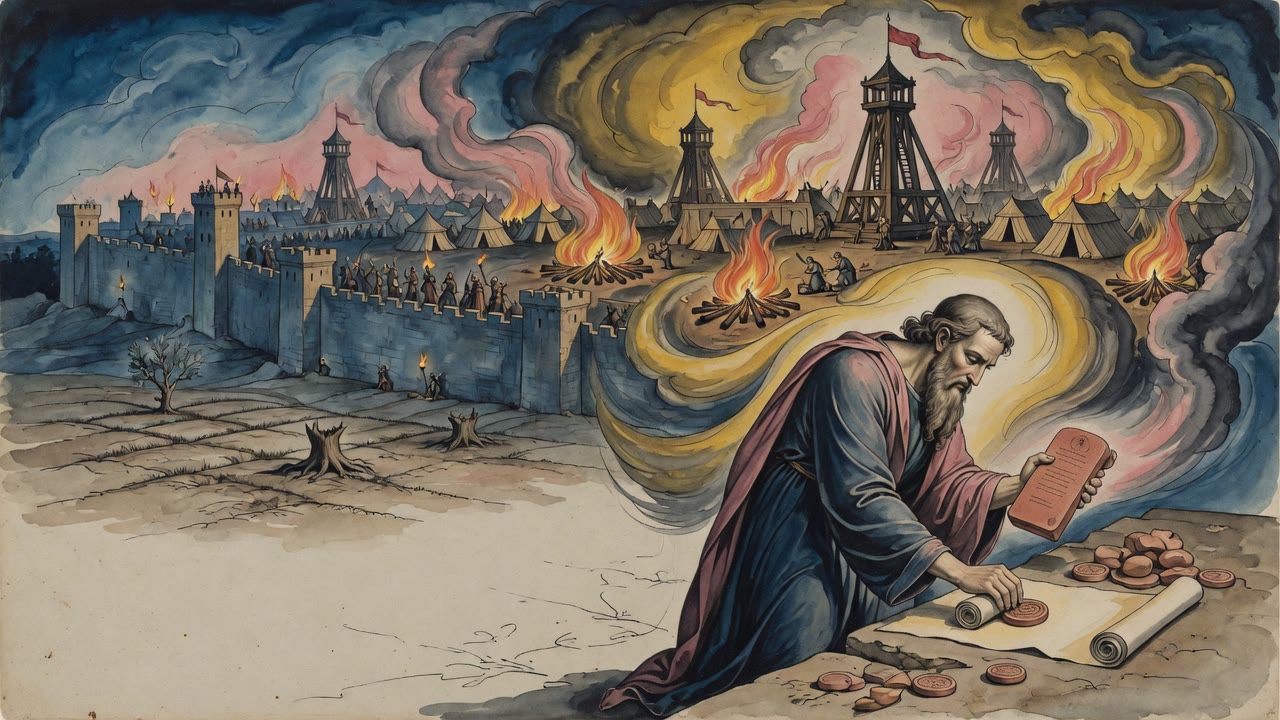
The first prophecy did not warm him. It did not praise his eagerness or reward his obedience. It laid a sentence in his mouth against the house that had fed him. Eli's sons had made themselves guilty, and the guilt would not be wiped clean by sacrifice or offering. The first burden of the prophet was to wound the man who taught him how to answer.

Samuel lay until morning. He opened the doors of the house of the Lord with the message still burning behind his teeth. Eli called him. He did not let the child hide the verdict out of pity. He set an oath on the boy if even one word stayed hidden, and the oath carried a second edge. Eli knew doom had already settled on his own sons. He warned the boy that prophecy does not make a family immune from loss.

Samuel told him everything. Nothing was softened. Nothing was held back. Eli received it with the last dignity left to him. "It is the Lord," he said. "Let Him do what is good in His eyes."

No Word Fell to the Ground

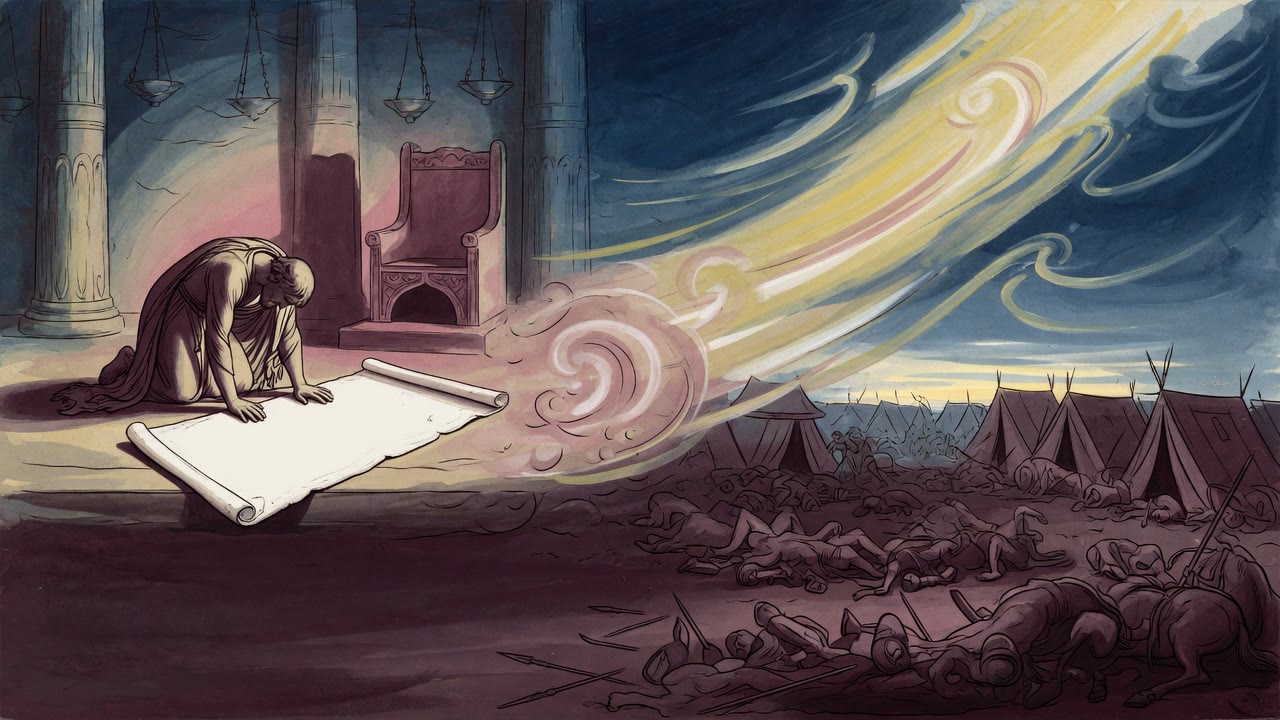
After that morning, speech changed weight. The boy who had mistaken the caller became a prophet whose words did not fall to the ground. They landed. They held. Israel learned that a sentence from Samuel was not sound passing through air, but a thing with force enough to outlive the mouth that released it.

Even death did not loosen that force. Long after Samuel was buried, Saul would seek him from the dead and hear the prophet's old certainty stand upright again. Tomorrow the king and his sons would stand with the prophet. The word reached past the grave and still did not fall.

Shiloh had been dim, but not empty. The lamp had been low, but not dead. A mother had lent a child to the Lord, a priest had lost the first hearing of heaven, and a boy kept getting up in the dark until the voice became unmistakable.


← All myths
From the tradition

Sources

4 sources

The texts this telling draws on, in full. Open a card to read inline, or expand it for a wider, quieter read.

Legends of the Jews 3:8Legends of the Jews

The story of Samuel is a powerful example. We find him, in Legends of the Jews, already displaying wisdom beyond his years as just a two-year-old. Two years old!

His mother, Hannah, fulfilling her vow, brought him to Shiloh to dedicate him to the service of God at the Sanctuary. Now, picture the scene: They enter the sanctuary, and right away, young Samuel notices something amiss. They are looking for a priest to perform the ritual slaughter of a sacrificial animal.

Little Samuel, barely out of diapers, pipes up. He instructs the attendants that according to Jewish law, a non-priest is indeed permitted to perform the sacrifice. Can you imagine the audacity? The high priest himself, Eli, appears just as the sacrifice, under Samuel's precocious direction, is being slaughtered by someone who isn't a priest!

Eli, understandably, is furious. He’s about to have the child executed for his boldness, completely disregarding Hannah's desperate prayer for her son's life. "Let him die," Eli declares, "I shall pray for another in his place."

But Hannah, a woman of immense faith and strength, stands firm. She replies, "I lent him to the Lord. Whatever betide, he belongs neither to thee nor to me, but to God." Only then, after Samuel's life is secure, does Hannah offer her prayer of thanksgiving.

Hannah's prayer, as retold in Legends of the Jews, is more than just gratitude. it weaves prophecies about Samuel's future achievements, and a sweeping recitation of Israel's history, from its very beginnings all the way to the coming of the Mashiach (Messiah). What an incredible moment.

And here's a fascinating little aside: Her prayer also brought relief to the Sons of Korah. Remember them? They were swallowed by the earth as punishment for their rebellion against Moses. As we find in the Midrash Rabbah, they were constantly sinking lower and lower into Sheol (the underworld). But when Hannah uttered the words, "God bringeth down to Sheol, and bringeth up," they came to a standstill in their downward course! Talk about far-reaching consequences.

What does this story tell us? Perhaps it's about recognizing potential, even in the most unexpected packages. Or maybe it’s about the power of faith, and a mother’s unwavering dedication. What do you think?

Full source
Midrash Shmuel 10:2Midrash Shmuel

"And Samuel grew up, and the LORD was with him" (1 Samuel 3:19). Rabbi Yehuda bar Rabbi Simon said: Even after he fell to the ground, he did not let any of his words fall to the ground (ibid.), for thus he says to Saul, "And tomorrow you and your sons shall be with me" (1 Samuel 28:19), within my partition.

"And Samuel lay until the morning" (1 Samuel 3:15). "And Eli called Samuel" (1 Samuel 3:16). It is not written here "So may God do to me and so may He add," but rather "So may God do to you and so may He add" (1 Samuel 3:17). He said to him: Just as my sons do not inherit my place, so your sons do not inherit your place.

"And Samuel told him all the words, and he said, He is the LORD" (1 Samuel 3:18), He is the Master, He is the Lord; "let Him do what is good in His eyes."

Full source
Midrash Shmuel 9:5Midrash Shmuel

"And the Lord said to me, Even if Moses and Samuel stood before Me" (Jeremiah 15:1). You find that what is written of this one is written of that one: this one was a Levite and that one was a Levite; this one built altars and that one built altars; this one ruled over Israel and Judah, and that one ruled over Israel and Judah; this one offered (sacrifices) and that one offered; this one by a calling and that one by a calling; this one with "Here I am" and that one with "Here I am." "And [God] called [to him from within the bush] and said, Here I am" (Exodus 3:4). There we learned: The priest slept inside and the Levite slept outside. The (divine) speech leaped over to Eli and spoke with Samuel: "And the Lord called to Samuel, and he said, Here I am" (1 Samuel 3:4), "and he ran to Eli and said, Here I am, for you called me" (ibid. verse 5). Rabbi Yochanan said: Like that perfect heifer, "And the Lord came and stood, and called as at the other times, Samuel, Samuel; and Samuel said, [Speak,] for Your servant hears" (1 Samuel 3:10).

Full source
Midrash Shmuel 3:6Midrash Shmuel

"And the lad was a lad" (1 Samuel 1:24), two years old, as it is written, "Even a child is known by his doings" (Proverbs 20:11). Samuel came and found them standing over their sacrifices. He said to them: Why do you not slaughter? They said to him: We are waiting for the priest to come, as it is written, "And he shall slaughter the bullock before the Lord" (Leviticus 1:5). He said to them: Stand up and slaughter! Have we not learned thus, that slaughter is valid when performed by laymen, by women, and by slaves, even with respect to the most holy offerings? When Eli came and found that they had slaughtered, he said to them: Who permitted you the slaughter? They said to him: A certain lad. He said to them: Bring him. This is what is written, "And they slaughtered the bullock, and brought the child to Eli" (1 Samuel 1:25). He sought to punish him. His mother came and prostrated herself at his feet. This is what is written, "And she said: Oh, my lord, as your soul lives, my lord" (1 Samuel 1:26). He said to her: Did I not pray, and you are standing? He said to her: Let him die, and I will pray and another will come. She said: "For this lad I prayed" (1 Samuel 1:27). From this one and from that one, he is neither mine nor yours. "And I also have lent him to the Lord; he is lent to the Lord" (1 Samuel 1:28). At that moment the Holy Spirit sparkled within her: all the days that Samuel exists, Saul will exist.

Full source