Eli Sentenced a Two-Year-Old to Death for Knowing the Law
Hannah brought the boy up to Shiloh the day he was weaned. The sacrifice was not finished before the high priest had ordered him killed.
Table of Contents
 Click for full size
The Ox and the Missing Priest
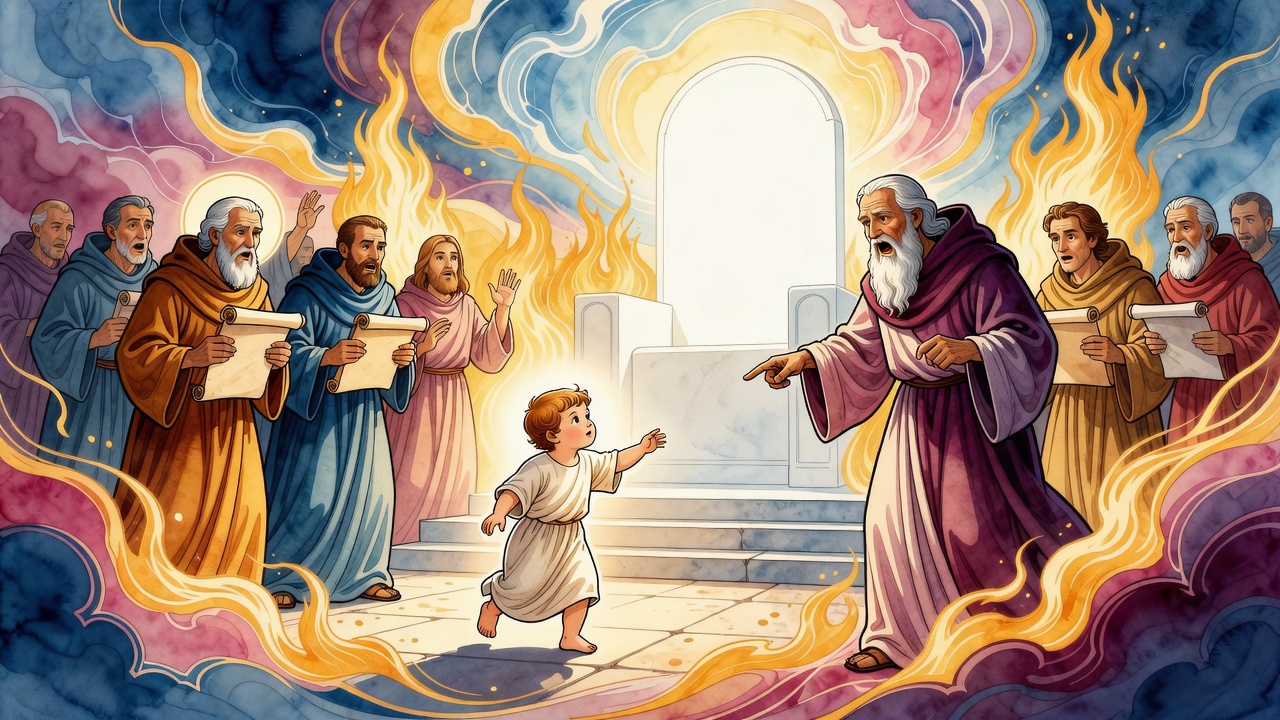
Hannah brought her son up to Shiloh the moment she had weaned him, which put him at two years old, walking, talking, and going with strangers for the first time in his life. She brought the offering with her: a bullock, flour, wine. She had promised the boy to God before she had him and she was not going to hold him a season longer than she had said.
The sanctuary court was full. The animal was there and the knife was there and nothing was moving, because the attendants had gone off looking for a priest to do the killing. Eli had told them to fetch one. So they went around the court asking, and came back, and went around again.
The Boy at the Edge of the Crowd
Samuel watched them circle.
Then the two-year-old said, out loud, in a crowded sanctuary, "Why do you keep going around after a priest? Slaughtering is valid when anyone does it."
The attendants stopped. Somebody picked the child up and carried him across the court to the high priest of Israel.
How Do You Know This
Eli looked down at him. "Where did you get that from?"
The boy answered him from the text.
"Does it say, and the priest shall slaughter it? It says, and he shall slaughter the bull before the Lord. Then it says, and the sons of Aaron, the priests, shall bring the blood. From the catching of the blood onward, the work belongs to the priests. Before that, it belongs to anybody."
He was two. He had the verse, the order of its clauses, and the line where the priesthood begins, and he laid all three out standing in front of the man who ran the sanctuary.
You Have Spoken Well
Eli did not argue with the ruling. He could not. "What you say is correct," he said.
Then he said the rest of it.
"But a man who rules on the law in front of his own master is liable to death."
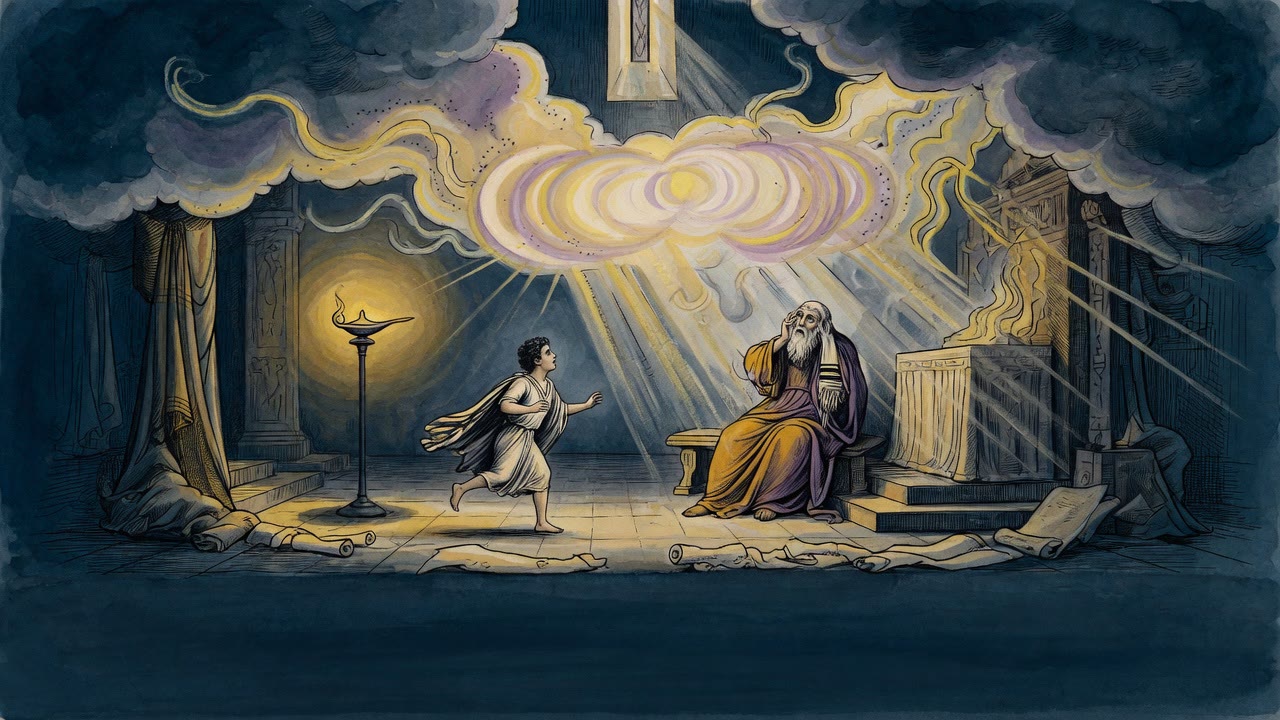
The court went quiet. The child had been right and the child had been carried in front of the high priest to be right in public, and being right was the offense. Eli gave the order. Let him die.
He said it with the mother standing there. He knew whose son it was. He had watched her praying at the doorpost two years earlier and had accused her of being drunk, and he had blessed her when she explained herself, and here was the answer to that blessing, two years old, condemned in the courtyard of the house it had been brought to.
I Am the Woman Who Stood With You Here
Hannah pushed through and got in front of him.
"I am the woman who stood beside you in this place, praying."
Eli tried to buy her off. He was not cruel about it, which is the strange part. He made her what he plainly thought was a fair offer.
"Let me be, and let me punish him. Then I will ask for mercy on your behalf, and you will be given a better son than this one."
A high priest of Israel offering to pray a replacement child into a woman's body, with the first one still standing in the courtyard waiting to hear what would happen to him.
"For this boy I prayed," Hannah said. "This one. And I have lent him to the Lord. Whatever happens to him now, he is not yours and he is not mine either. He belongs to God."
Eli let it go. The boy lived, and stayed, and grew up in that house, and the man who had sentenced him to death in the courtyard was the same man who would wake him in the dark years later and tell him what to say when the voice came again. Only after her son was safe did Hannah open her mouth and give thanks, and what came out of her was not thanksgiving alone but the whole history of Israel run forward to its end.
← All myths