5 min read

David Dreamed of the Temple and God Said No

David conquered Jerusalem, brought the Ark home, and lived long enough to prepare everything for the Temple. God said he could not build it himself.

Curated by Arthur · Told by Maggid ·
Table of Contents
  1. Cedar Walls and a Tent
  2. The Night Reversal
  3. What David Did With the No
  4. From Shepherd to King to Planner

Cedar Walls and a Tent

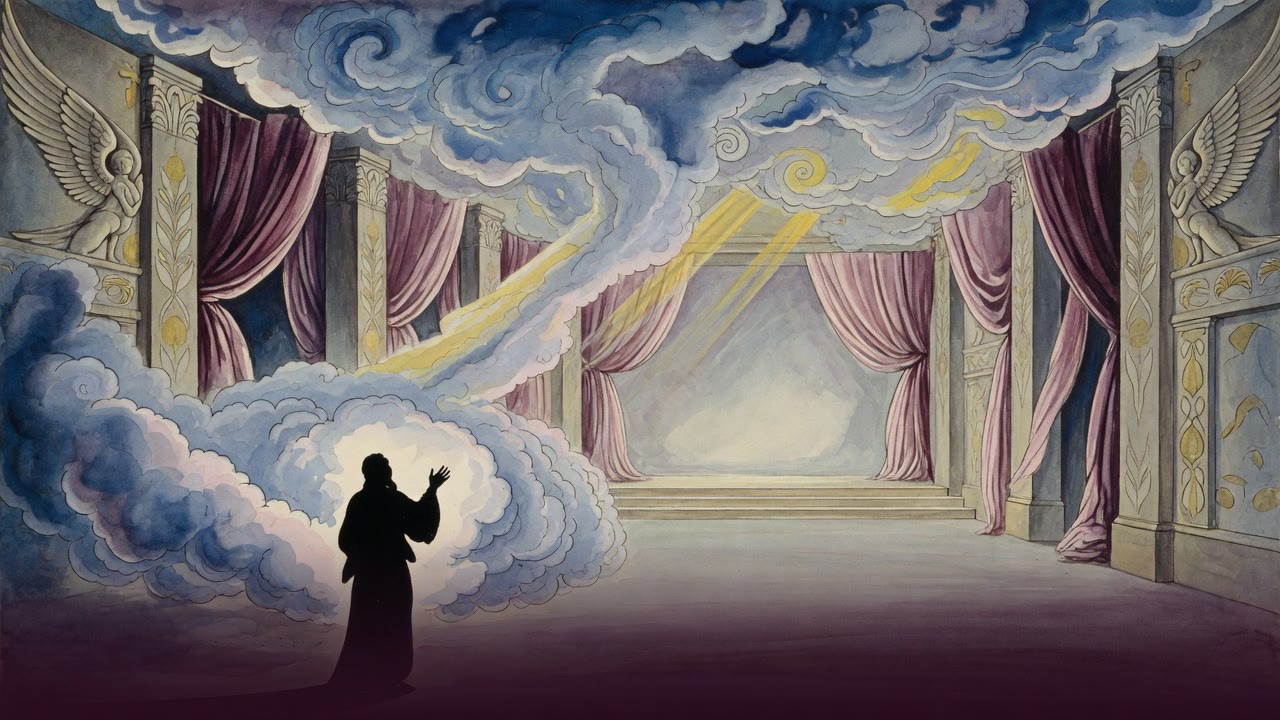
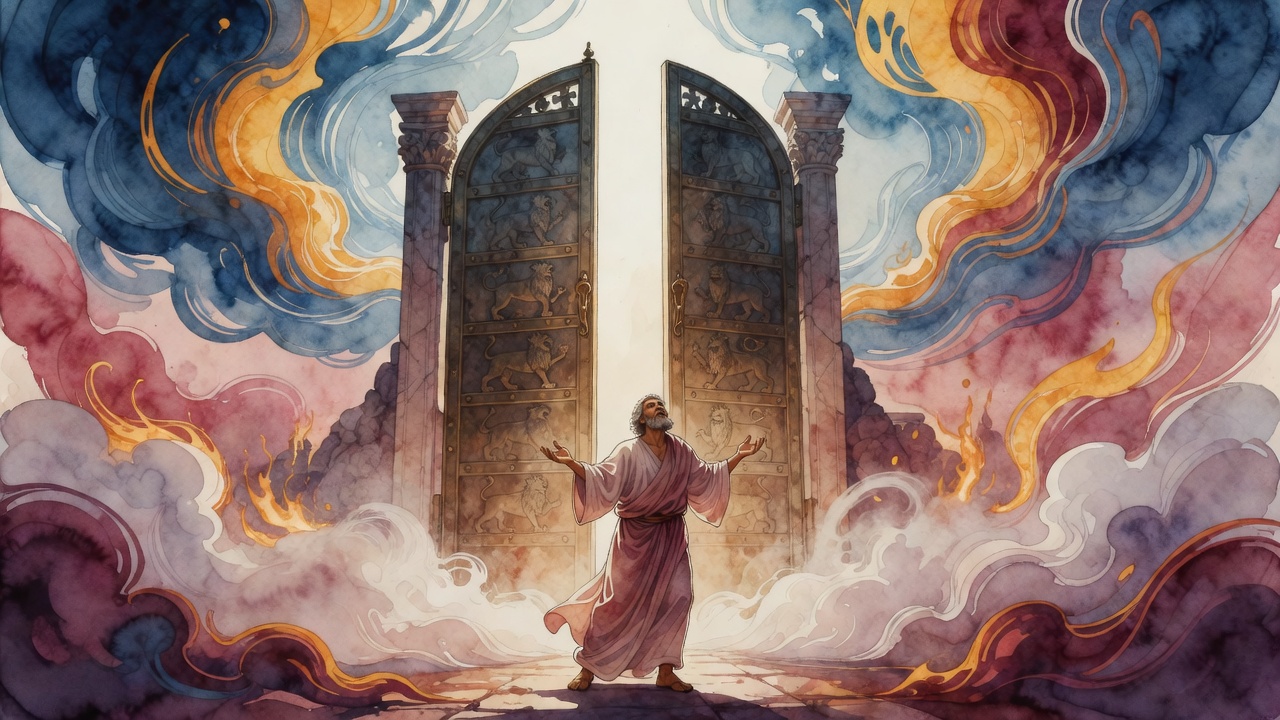
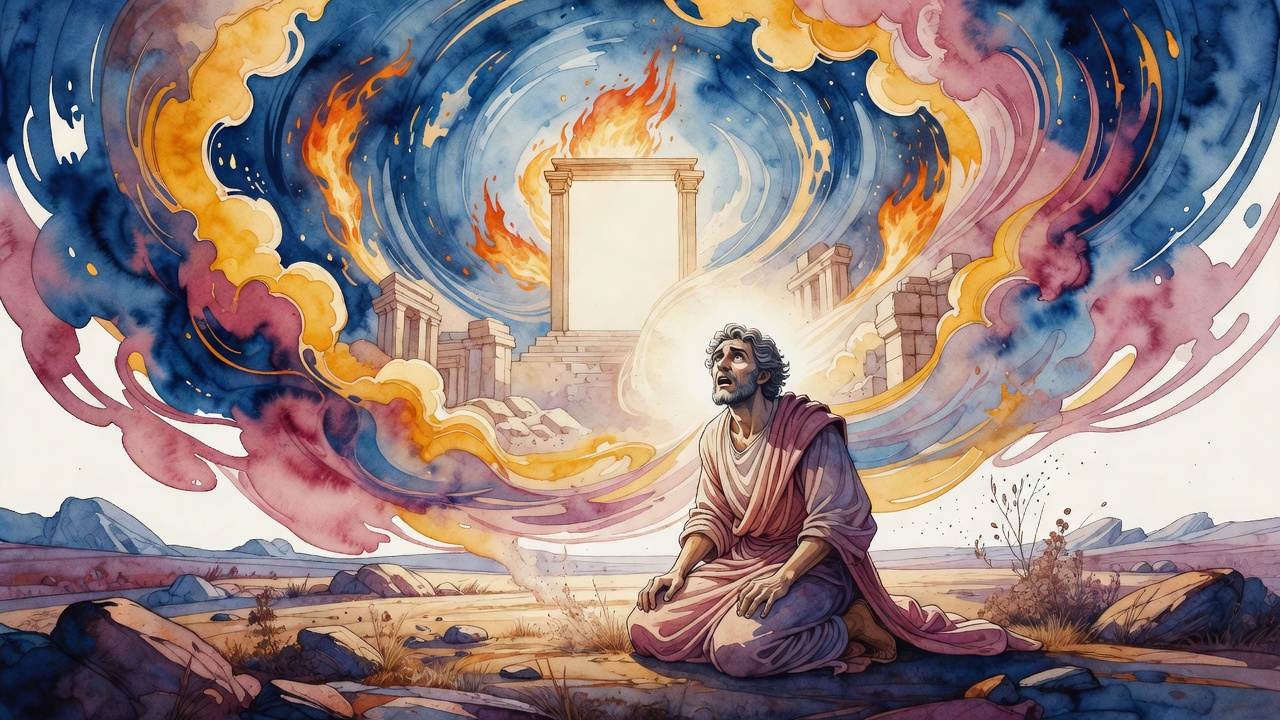
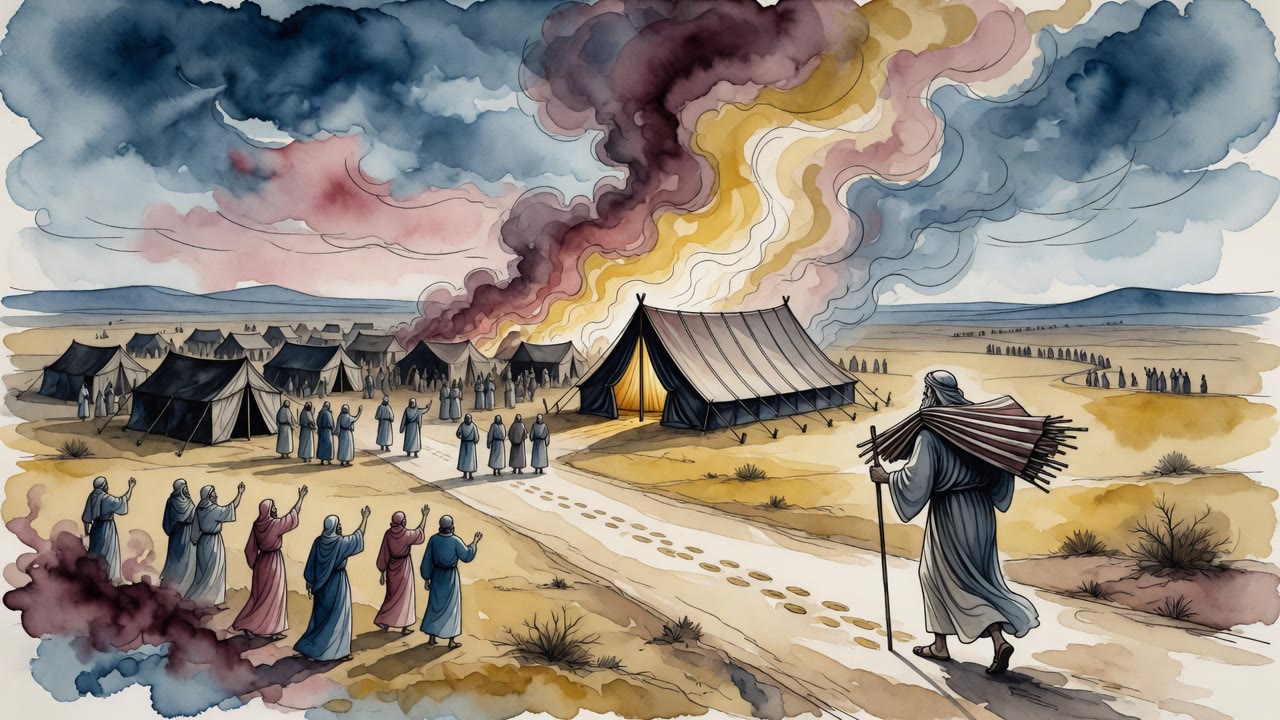
David was sitting in his palace: cedar walls, dressed stone, the smell of Lebanon lumber, and looking at the incongruity. He was living in a house. The Ark of the Covenant, the most sacred object in the world, was sitting in a tent in the city he had conquered and made the capital of a unified kingdom. He had done everything else. He had brought the Ark back from the Philistines with such unrestrained joy that his wife Michal had watched him dancing in the street and despised him for it. He had unified the tribes, defeated every enemy on every border, established Jerusalem as the center of the kingdom. The one thing left was the Temple, and it felt wrong to delay it any longer.

He called the prophet Nathan and told him what he was thinking. Nathan, on his first hearing, encouraged him: do whatever is in your heart, for God is with you. It was a reasonable response. David had built everything else. Why not this?

The Night Reversal

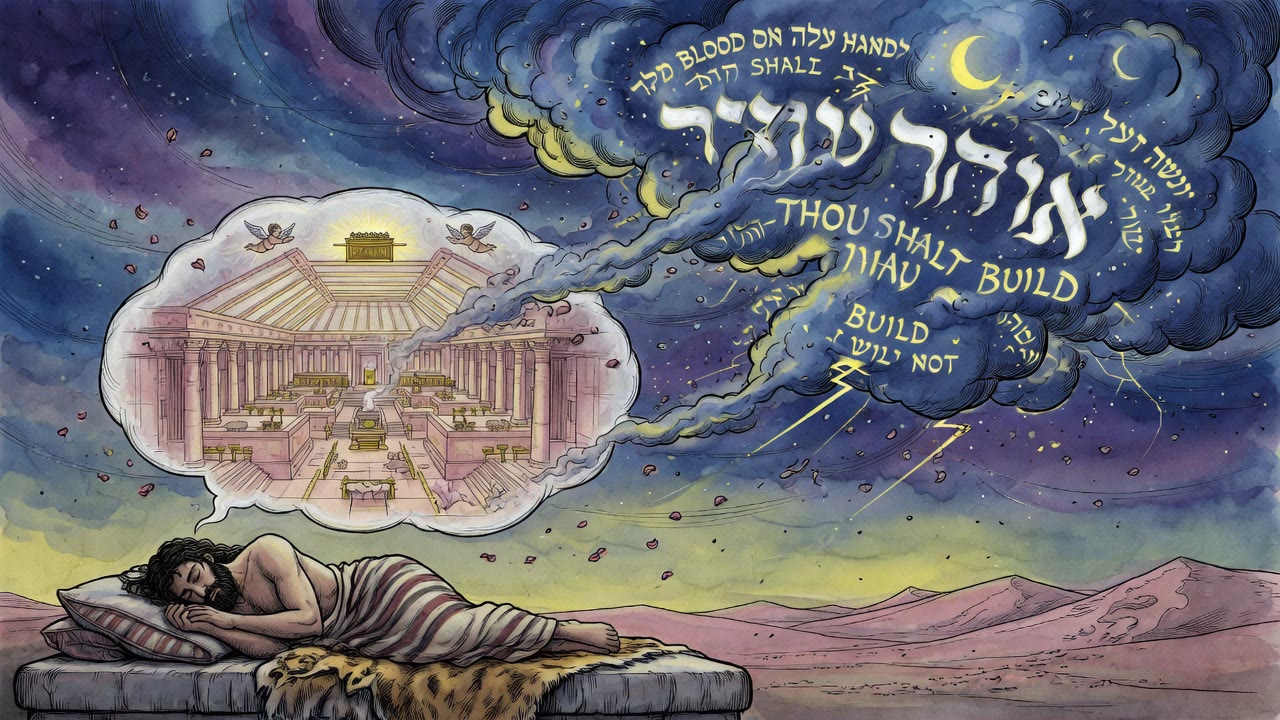
That night, God spoke to Nathan and told him to go back to David with a different message. God did not want a house from David. God had never asked for a house. He had traveled with the people from Egypt in a tent, and a tent had always been sufficient, and no one had ever been told to build anything more permanent. David would not build a Temple. David was a man of war, and the house of God could not be built by hands that had shed as much blood as David had shed, even in righteous wars, even at God's direct command.

What God would do instead was build a house for David: a dynasty, a lineage that would endure. His son would sit on the throne after him, and that son would build the Temple. The refusal was absolute and the consolation was enormous. But it was still a refusal.

What David Did With the No

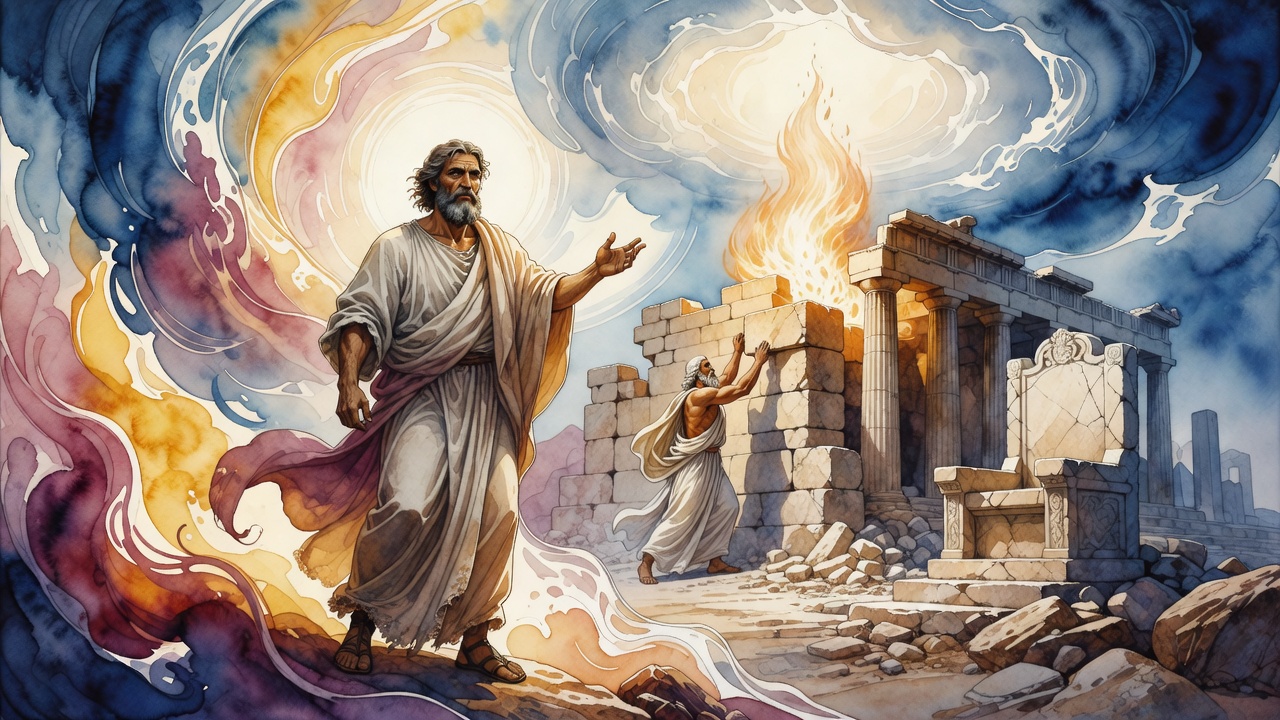
He did not stop working toward it. David spent the rest of his reign gathering the materials that his son would use: gold, silver, bronze, iron, timber, stone. He organized the priests and the Levites into divisions for Temple service. He wrote out the architectural plans in detail and gave them to Solomon. He said plainly: I wanted to build it myself, and God told me I could not because I had shed blood. You will build it. Use everything I have gathered. This is what the Temple is supposed to look like.

Midrash Tehillim, the rabbinic commentary on the Psalms, preserved David's hunger for the Temple as the animating force behind some of the most anguished psalms in the collection. Psalm 13's desperate opening, how long, O Lord, will you forget me forever? The rabbis read it as the voice of someone who has prepared everything for a project and been told he will not live to complete it. The longing was not for an abstraction. It was for a specific building, in a specific city, that he had organized every resource of a kingdom to make possible and would never be permitted to dedicate.

From Shepherd to King to Planner

The arc the tradition preserved about David ran from the sheep fields of Bethlehem to the planning rooms of Jerusalem. He had gone from tending his father's flocks, the smallest task given to the youngest son, to commanding armies, writing psalms, dancing before the Ark, defeating the Philistines so thoroughly that the tradition could say he shattered their horn. And then, in the last chapter, gathering materials for a building his hands were not permitted to erect.

The rabbis who read Psalm 84, how beloved are your dwelling places, O Lord of hosts, and heard David's voice in it as the voice of someone who would never occupy those dwelling places in the way he had planned. The yearning was not empty. It was the force that made everything Solomon would eventually build possible. The Temple that stood in Jerusalem was built by Solomon's hands, but it was made possible by David's longing, which the tradition counted as a kind of building in itself.


← All myths

From the tradition

Sources

4 sources

The texts this telling draws on, in full. Open a card to read inline, or expand it for a wider, quieter read.

Antiquities VII.4-5Antiquities of the Jews (Josephus)

David never went to war without consulting God first. According to Josephus in Antiquities of the Jews, this was the defining principle of his military career. And when the Philistines came to destroy him at Jerusalem, it was prophecy, not strategy, that won the day.

The Philistines had seized the Valley of the Giants just outside the city. David asked the high priest to inquire of God, received assurance of victory, then attacked from behind and routed them completely. They came back with triple the forces. This time, God gave stranger instructions: wait in the Groves of Weeping near the enemy camp and do not move until the trees begin swaying on their own, without wind. When the trees moved, David struck. The Philistines broke ranks immediately and fled all the way to Gaza.

With his enemies scattered, David turned to something that had been neglected since Saul's reign: the Ark of the Covenant. It had sat in the house of Aminadab at Kirjathjearim, essentially forgotten. David assembled priests, Levites, and the entire nation to bring it to Jerusalem in a massive procession, singers, dancers, trumpets, cymbals, and the king himself playing the harp.

Then disaster struck. At the threshing floor of Chidon, the oxen pulling the cart jolted the Ark. A man named Uzzah reached out to steady it. He died instantly. Josephus explains the reason plainly: Uzzah was not a priest, and the Ark could not be touched by unauthorized hands. God struck him down, and the place was called "the Breach of Uzzah" ever after.

David was terrified. He diverted the Ark to the house of a Levite named Obededom, where it stayed for three months. During that time, Obededom, previously a poor man of low standing, became extraordinarily prosperous. When David heard how the Ark had transformed this man's fortunes, he gathered courage and brought it into Jerusalem at last, this time with priests carrying it properly and seven companies of singers leading the way.

His wife Michal, Saul's daughter, watched from a window as the king danced wildly before the Ark. She laughed at him. David's response was sharp: he was dancing for God, who had chosen him over her father, and he would do it again whenever he pleased. Josephus records that Michal bore no children after this confrontation.

Settled in Jerusalem, David looked at his own palace of cedar and felt convicted. The Ark sat in a tent. He told the prophet Nathan he wanted to build God a proper temple. Nathan initially encouraged him, but that night God appeared to Nathan with a different plan: David had shed too much blood in war to build the house of God. That honor would belong to his son, Solomon. David accepted the verdict with joy, not for what he was denied, but for the promise that his dynasty would endure.

Full source
Midrash Tehillim 13:3Midrash Tehillim

The ancient rabbis felt that way too. And they wrestled with that feeling in their interpretations of the Psalms, particularly in Midrash Tehillim, a collection of homiletic interpretations of the Book of Psalms.

Psalm 13 begins with a raw, almost desperate cry: "How long, O Lord? Will you forget me forever?" It's a question that echoes through generations, a question we've all probably whispered at some point. But Midrash Tehillim doesn't just leave us hanging in that despair. It digs deeper.

Rabbi Chanina, in this midrash (rabbinic interpretive commentary), imagines the people of Israel, the Knesset Israel, turning to God with a complaint. "You fought our battles!" they say. "As it is said, 'For then the Lord went out before you' (2 (Samuel 5:2)4). And we expected you would always do so, as it's written, 'And the Lord will go out and fight against those nations' (Zechariah 14:3)." But now? Now, they lament, it seems that "God will not go forth with our armies" (Psalms 60:12). How long, O Lord, will this be?

Then comes the twist. God's response isn't what they expect. "Have I forgotten you?" God asks. "No," comes the reply, in essence. "You have forgotten me!"

Ouch.

It’s a tough love kind of moment. The Midrash doesn't shy away from it. It quotes (Psalm 106:21): "They forgot their savior God." And it continues, "Have I hidden my face from you? You have hidden your face from me!" The proof texts come thick and fast: "And they turned their faces away from the Sanctuary of the Lord" (2 Chronicles 29:6) and "And they turned their backs, not their faces, to me" (Jeremiah 32:33).

It’s a powerful image, isn’t it? Turning your back on something sacred. Turning away from the source of your strength and comfort. We can all relate to that, can't we? Times when we felt disconnected, distant. Times when, perhaps, we ourselves were the ones who turned away.

But the Midrash doesn't end there. It offers a glimmer of hope. God acknowledges the present reality: "In this world I have hidden my face from you." But then comes the promise: "But in the future… 'For they shall see eye to eye when the Lord returns to Zion' (Isaiah 52:8)."

That phrase, "eye to eye," is so evocative. It suggests a moment of perfect clarity, of complete understanding, of restored connection. It's a future where the perceived distance between us and the Divine dissolves.

So, what does this all mean for us today? Perhaps it's a reminder that our relationship with the Divine isn’t a one-way street. It requires our attention, our intention, our willingness to face the sacred. And perhaps, in those moments when we feel forgotten, it's worth asking ourselves: who turned away first? But also, it's a reminder that even when we feel distant, the possibility of reconnection, of seeing "eye to eye," always remains.

Full source
Midrash Tehillim 84:2Midrash Tehillim

The ancient sages certainly did. And they explored that feeling deeply in their interpretations of scripture, the midrash (rabbinic interpretive commentary). to one such exploration from Midrash Tehillim, a collection of homilies on the Book of Psalms.

The passage focuses on the verse, "How beloved are your dwelling places, O Lord of hosts!" (Psalm 84:1). But what is it about those dwelling places that makes them so beloved?

The Midrash Tehillim offers a fascinating answer: it's about connection, contribution, and lasting legacy. It suggests that God, in his infinite wisdom, fashioned a lyre specifically for the Beit HaMikdash, the Temple in Jerusalem. The idea is that anyone who contributed to the Temple's construction or upkeep would have their name inscribed upon this lyre.

The midrash then quotes (Isaiah 66:6), "A voice of uproar from the city, a voice from the Temple!" The sages interpret this as referring to the good deeds performed both within the city and within the Temple itself. Every act of kindness, every offering, every prayer… all contributed to the sacredness of the space and the connection between God and humanity.

It's a powerful idea, isn't it? That our actions, our contributions, literally resonate within the very fabric of the holy place.

But the love doesn't stop there. According to the midrash, not only is the Temple itself "beloved," but so are those who built it. The text points to (2 (Samuel 12:2)5), which tells us, "And they called his name Jedidiah (beloved of the Lord)." Jedidiah, means "beloved of the Lord" in Hebrew. It's a name that embodies the special connection between the builders and the divine.

And it goes even further! Even those who dwelled near the Temple, within its territory, were considered "beloved." (Deuteronomy 33:12) says, "Of Benjamin he said, 'The beloved of the Lord shall dwell in safety by Him; he covers him all the day long, and he dwells between his shoulders.'" The tribe of Benjamin, whose territory included Jerusalem, was thus embraced in this circle of divine love.

The midrash concludes by referencing (Psalm 60:7), where David says, "That your beloved may be delivered." So the Temple, its builders, and its inhabitants are all enveloped in God's love and protection.

What does this all mean for us? Perhaps it's a reminder that our actions, no matter how small they may seem, can contribute to something greater than ourselves. That our connection to sacred spaces, whether physical or spiritual, is nurtured through our involvement and our devotion. And that, in turn, we too can become "beloved," part of that enduring legacy of faith and good deeds.

It makes you wonder, doesn't it? What kind of lyre are we building with our lives? And what name will be inscribed upon it?

Full source
Midrash Tehillim 78:18Midrash Tehillim

The story of David, the shepherd who became the king of Israel, is far more complex and inspiring than any simple rags-to-riches story.

The Book of Psalms, traditionally attributed to David himself, resonates with so many because it speaks to the heart of the human experience. And according to Midrash Tehillim, a collection of rabbinic interpretations on the Psalms, David’s journey from tending flocks to leading a nation was no accident. It was all part of a Divine plan.

“And he built his sanctuary like high palaces.” That's a verse from Psalm 78. Midrash Tehillim connects this verse directly to David’s humble beginnings. when David was just a shepherd, minding his father’s sheep, he sang Psalm 22. Imagine him, a young boy under the vast sky, pouring his heart out in song.

What exactly does it mean that God “chose David his servant and took him from the sheepfolds,” as the verse says? What's the significance of these “sheepfolds?" Rabbi Yehoshua HaKohen (a priest) offers a beautiful interpretation. He explains that David's shepherding wasn't just about keeping the sheep safe; it was about understanding their individual needs.

He would take the young goats and feed them the tender tips of the grass – the easiest to digest. The lambs got the middle part of the grass, and the older, stronger sheep were given the heartiest part. David understood that each creature had different requirements, and he tailored his care accordingly. This wasn't just random feeding. This was compassion in action. This was leadership in miniature.

And that’s where the Divine enters the picture. God saw this, this innate understanding and compassionate nature in David, and declared, “Since he knows how to tend my sheep, he will tend these sheep of Israel.” It’s a powerful moment, echoing the prophecy in (Jeremiah 3:15): “And I will give you shepherds after My own heart, who will feed you with knowledge and understanding."

God recognized in David a leader who would care for his people not with brute force or blind authority, but with empathy and wisdom. David’s ability to discern the needs of his flock foreshadowed his ability to lead and nurture the nation of Israel.

It makes you wonder, doesn’t it? What seemingly small acts of kindness and understanding might be shaping our own destinies? What hidden qualities are being observed, preparing us for roles we can’t even imagine yet? Perhaps, like David, our journey to greatness begins not in palaces or positions of power, but in the quiet, everyday acts of compassion and care.

Full source