Benjamin's Tribe Owned the Ground Under the Temple
Rachel named him son of my sorrow and died that night. Years later his tribe held the soil where the Temple altar stood.
Table of Contents
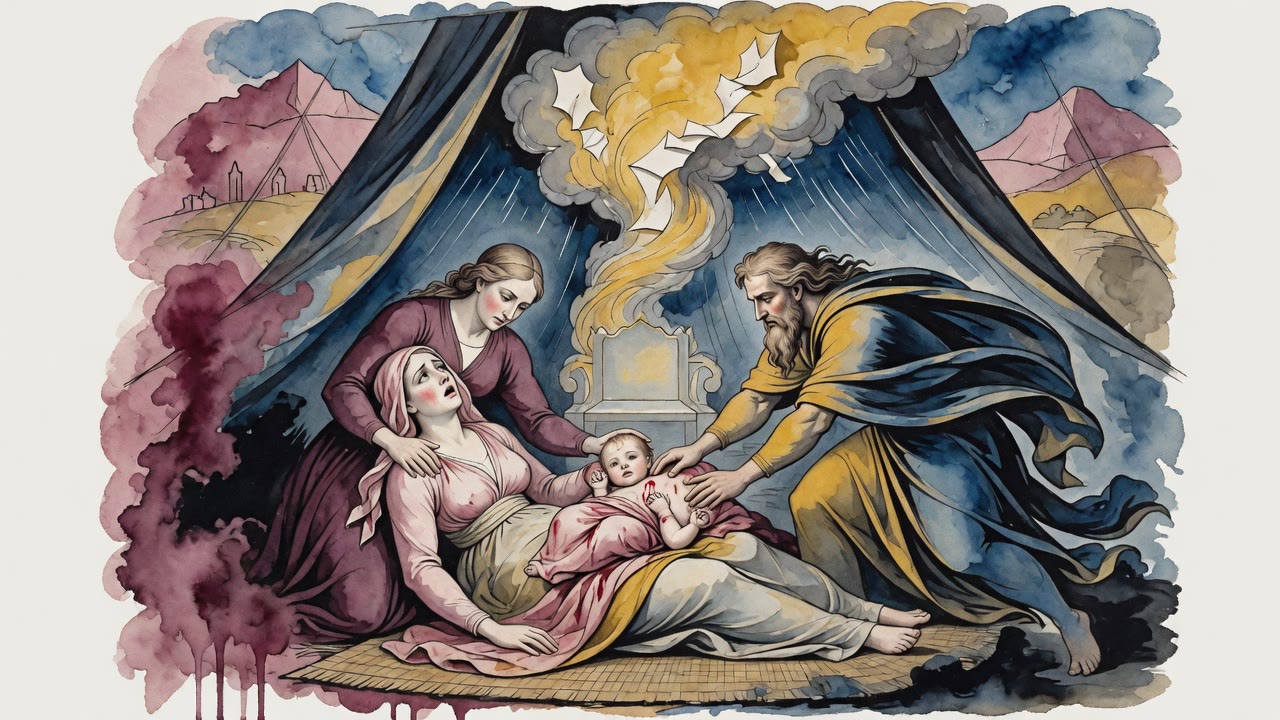
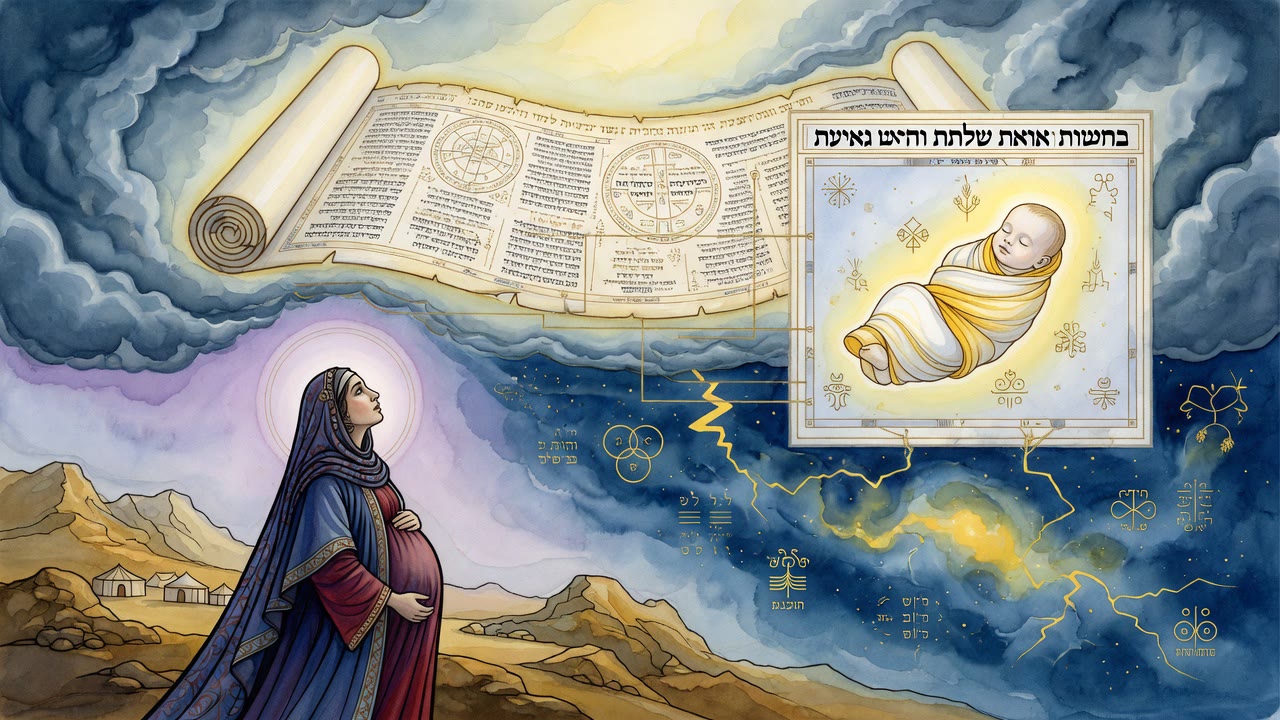
Rachel gave birth late in the night on the road. In her pain she named the boy Ben-Oni (בן אוני), son of my sorrow. Then she died. Jacob renamed him Benjamin, son of my right hand. It was the eleventh day of the eighth month, in the first year of the sixth week of that jubilee. They buried her on the way to Ephrath.
 Click for full size
He came into the world at the cost of the woman his father loved most. He grew up the youngest, the one kept back, the one whose appearance in Egypt would finally break a hidden brother.
Joseph Wept Over His Brother
Years later Joseph saw him and saw their father in his face. He ordered a feast. He had the animals slaughtered so the brothers could watch the sinew of the hip removed (Genesis 32:33). They still feared a trap. They offered back the money they had found in their sacks. The steward told them God had caused them to find a treasure, and brought out Simeon, grown stout in Egypt and unharmed.
When Joseph came in, Judah presented Benjamin, and they all bowed. Joseph asked after their father. From their words he understood that Isaac was dead. Judah handed him a letter in Jacob's hand. Joseph had to leave the room to weep. He came back and blessed Benjamin: "God be gracious unto thee, my son." The youngest, named in sorrow on a road, received a blessing the others had already had from Jacob.
The meal was set in three parts: one for Joseph, one for his brothers, one for the Egyptians. The sons of Jacob hesitated to eat. They had sold a brother once. They would not easily trust a table in Egypt.
The Soil Under the Altar
The tribe that came from him was small and sat at a seam, between the house of Judah and the northern tribes, on the hinge of the land. When David bought Araunah's threshing floor after the plague, the ground he bought sat in Benjamin's portion. Solomon built the Temple on that same dirt. Every tribe put money into the purchase. The soil itself, the mount under the altar, belonged to Benjamin. Not Judah. Not Levi. The youngest son's inheritance held the place where smoke would rise.
No tribe could claim the house as a private field. The silver came from all Israel. The land came from the boy named on the road. Placing the altar there put the nation's heart on the fracture line before the fracture arrived.
The Doors That Would Not Open
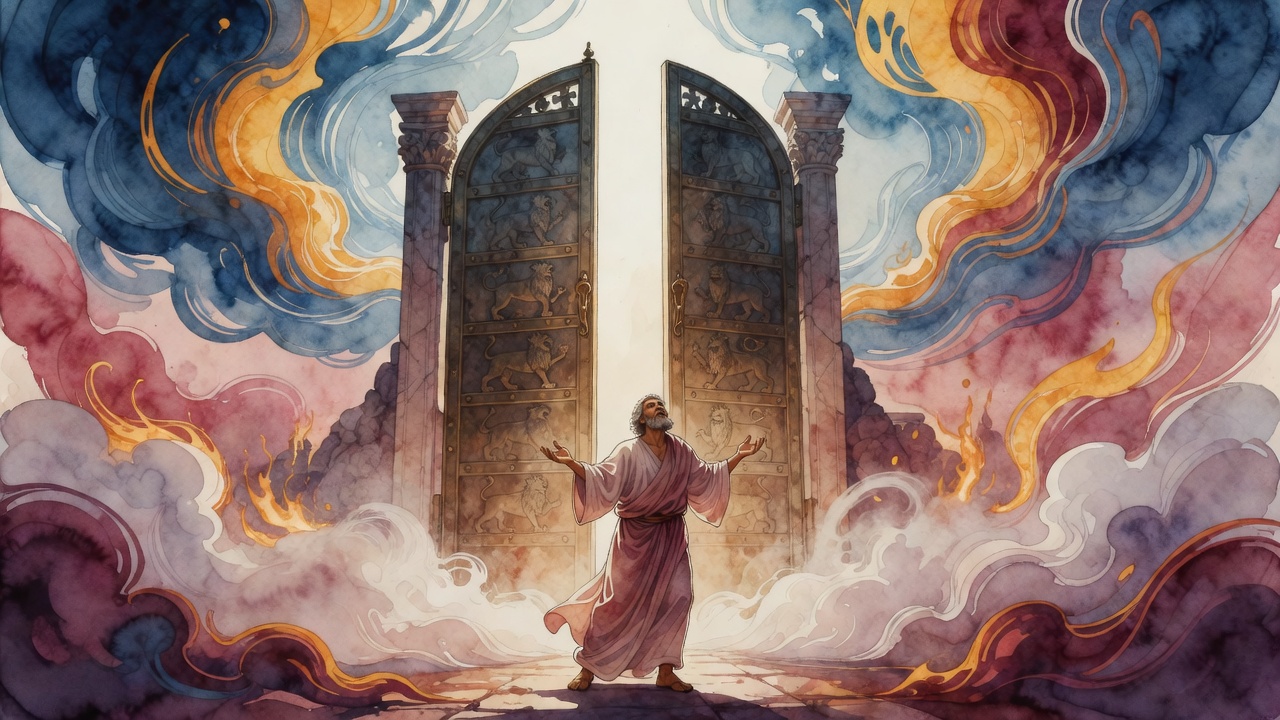
When Solomon brought the Ark into the Holy of Holies, the great doors of the sanctuary refused to open. He prayed. He offered twenty-four praises. He recited, "Lift up your heads, O you gates" (Psalms 24:7). The gates stayed shut. He had said, "I have built You an exalted house, a place for You to dwell in forever" (I Kings 8:13), and the doors would not move for that sentence.
He changed his mouth. "Lord God, do not turn away the face of Your anointed. Remember the acts of kindness of David Your servant" (II Chronicles 6:42).
The doors opened. The Ark went in. Fire came down on the offerings. The youngest tribe's ground received the Presence after the builder named his father instead of himself.
God Prayed for That House
God had been praying for that building since the days of Abraham. Not for a private shrine. For a house all Israel would share, each person an equal portion of the work, so that an earthly Temple could stand and a heavenly one could rest upon it. The stones would not be Solomon's boast. Even spirits and angels had a hand in the raising. The doors had waited for a man to stop claiming the house as his own built building.
Benjamin held the ground. Twelve tribes paid. David's kindness opened the gates. God's own prayer, older than the walls, leaned toward the mount. The boy named son of my sorrow had become, in his tribe's soil, the place where the altar stood.
← All myths