5 min read

Uzzah and the Ark That Needed No Human Hand

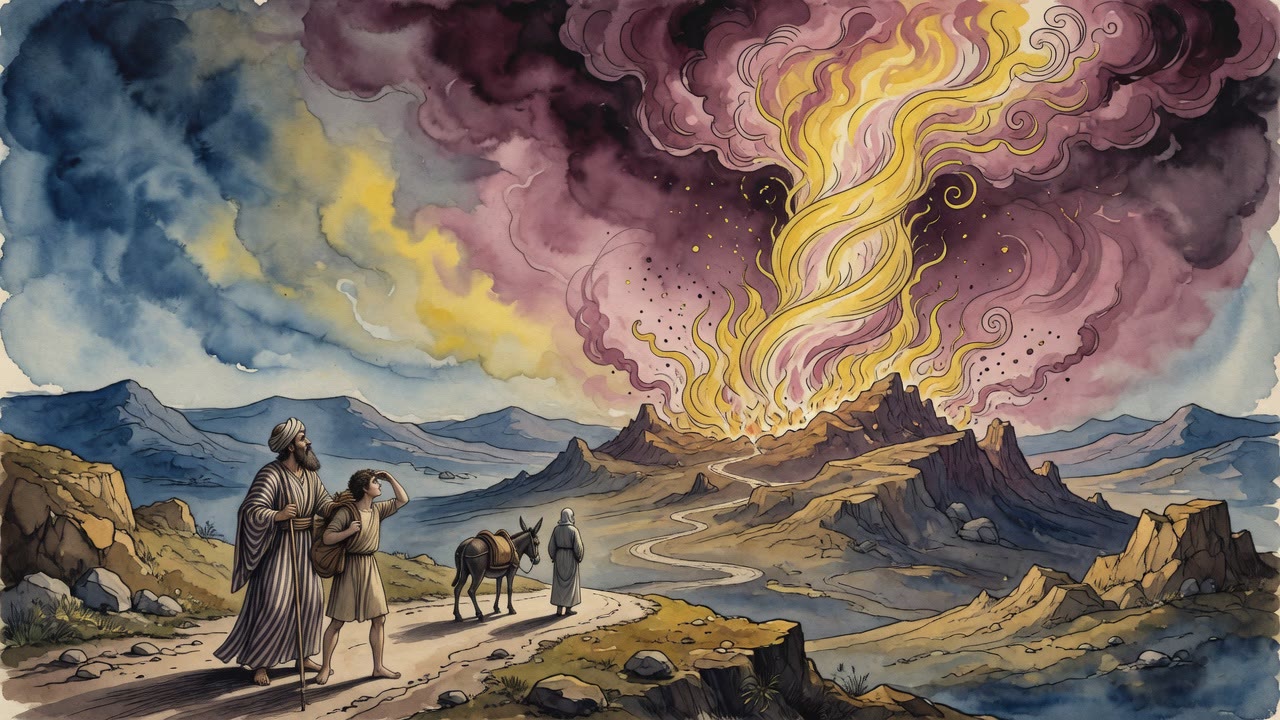
The Ark lurched on the road to Jerusalem. Uzzah reached to save it, and David learned that holy things do not survive by instinct.

Curated by Arthur · Told by Maggid ·
Table of Contents
  1. The Cart Carried a Forgotten Law
  2. The Hand Moved Faster Than Awe
  3. The Breach Stopped the Music
  4. Obed-edom's House Became the Test
  5. Shoulders Took the Weight

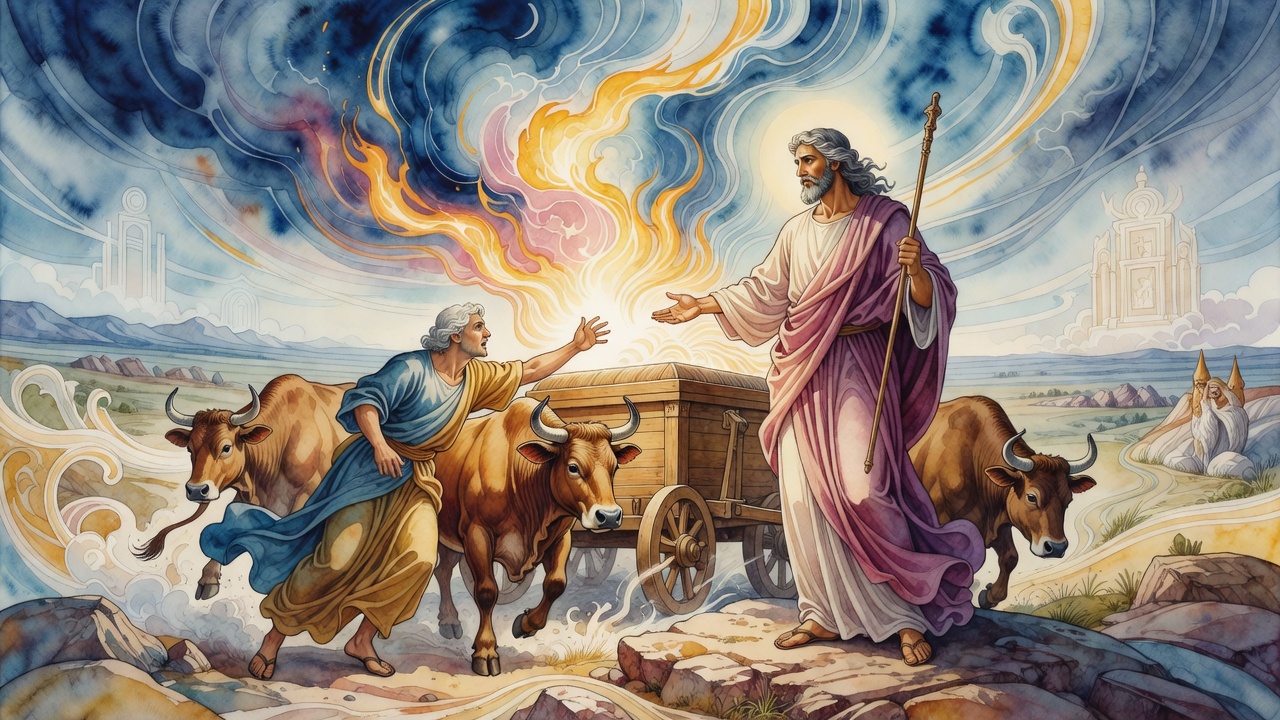
The cart lurched, the oxen dropped, and Uzzah put out his hand.
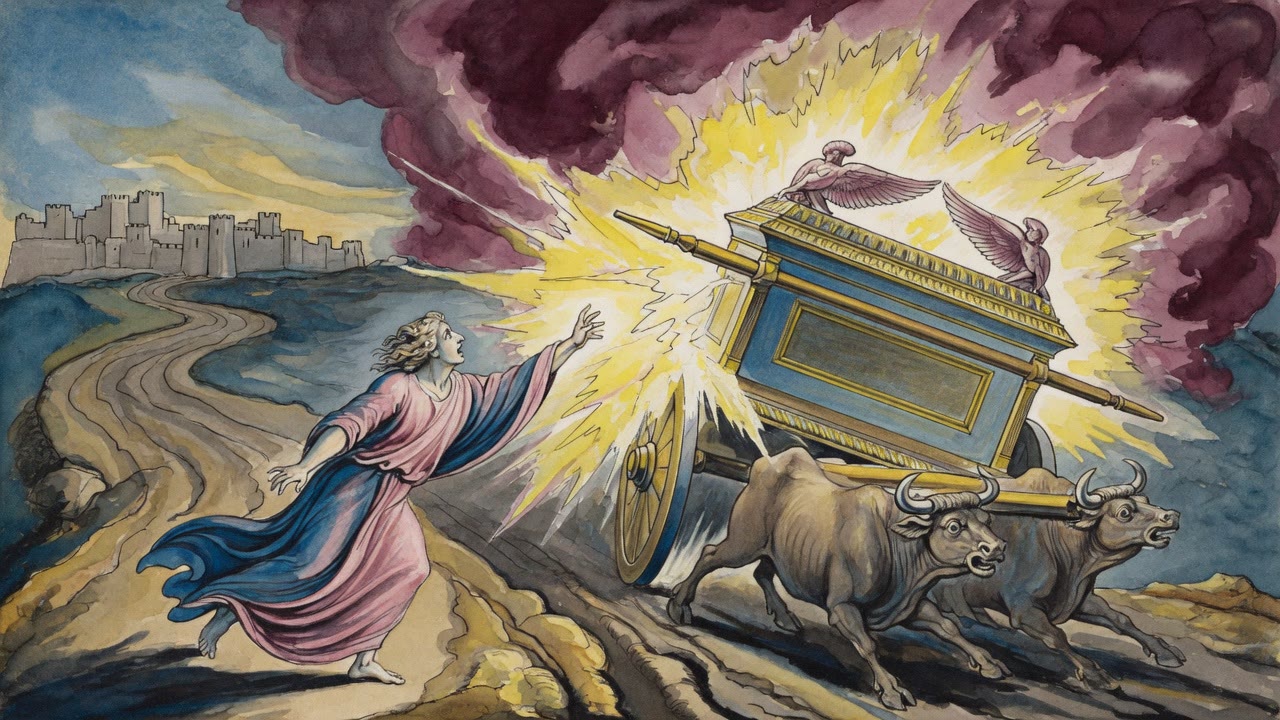
For one breath the road to Zion held everything at once: music, dust, shouting, the sacred chest riding where it should never have been placed. David had gathered Israel to bring the Ark home. He wanted a procession worthy of a king and a dwelling worthy of God. Then the Ark sprang upward, the team collapsed beneath the wagon, and the man entrusted with the transport reached by instinct. His hand met holiness. His body hit the ground.

The Cart Carried a Forgotten Law

The command was not hidden in heaven. Moses had already given it. The sons of Kohath received no wagons for the sacred things, because their service was not cargo work. The Ark was to move on shoulders, with poles through its rings, flesh kept back, weight borne by men trained for that burden.

David knew Torah, and that made the failure sharper. He had spoken of the statutes as if they were songs in his mouth. The rebuke came in the same register. A king who treated the law as melody forgot a law known even to children. The wagon was already a confession before the oxen stumbled.

The cart looked efficient. It looked royal. It looked clean, new, and suitable for a national celebration. That was the trap. Holiness had not asked for a handsome vehicle. It had asked for obedience.

The Hand Moved Faster Than Awe

Uzzah's death hurts because his hand looks innocent. He was not plundering the Ark. He was not mocking it. He saw the sacred chest leap and the animals fall, and the body did what bodies do near danger. It moved before thought could catch it.

That instinct exposed the deeper wound. The Ark had rested in Abinadab's house long enough for his sons to stand near it without trembling. The sacred had become part of the family landscape, a thing under the roof, a responsibility to manage. Uzzah's hand tried to save the Ark as if the Ark were fragile.

It was not fragile. It was the thing that carried its bearers. A human hand could not rescue it from falling. A human hand could only cross the line that had been drawn around it.

The Breach Stopped the Music

When Uzzah fell, David did not bury the moment under more drums. The procession broke open. The road received a new name, Perez-uzzah, the breach against Uzzah, because the death tore through the celebration and left a mark on the place itself.

Anger came first. Fear followed. David had wanted the Ark in Jerusalem, near the throne, near the songs, near the center of power. Now the king looked at the body on the road and pulled back. If a helping hand could die there, a palace was no protection.

The king stopped. That pause matters. A ruler hungry for religious theater would have kept the crowd moving. David let the holiness interrupt him.

Obed-edom's House Became the Test

The Ark was turned aside into the house of Obed-edom, a Levite, and the road held its breath for three months. No one could pretend the Ark was safe. No one could pretend it was hostile either. The evidence had to gather in a household.

Blessing came there. The house rose from low estate into visible happiness, so much so that people spoke of it and envied what had happened under that roof. The Ark had not brought random death. It brought unbearable holiness. Handled wrongly, it burned. Received rightly, it made a home flourish.

David's fear did not vanish because someone explained it away. It changed because the Ark itself answered. The same presence that killed on the road could bless in a house.

Shoulders Took the Weight

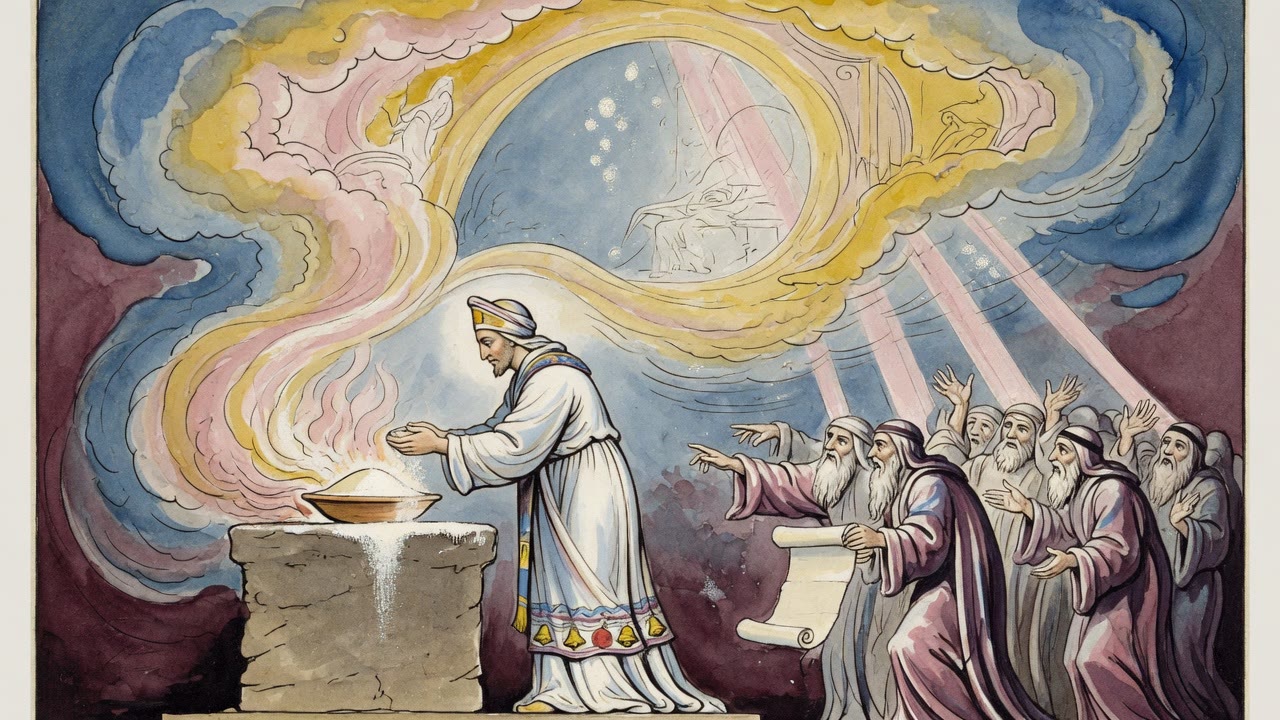
When courage returned, it returned with correction. Ahithophel placed the old command in David's path: should the king not have learned from Moses that the Ark belongs on shoulders? David called the priests and the Levites. Zadok, Evyatar, Uriel, Asaya, Yoel, and the appointed bearers were gathered. The chain went backward from Levites to Aaron, from Aaron to Moses, from Moses to the mouth of the Holy One blessed be He.

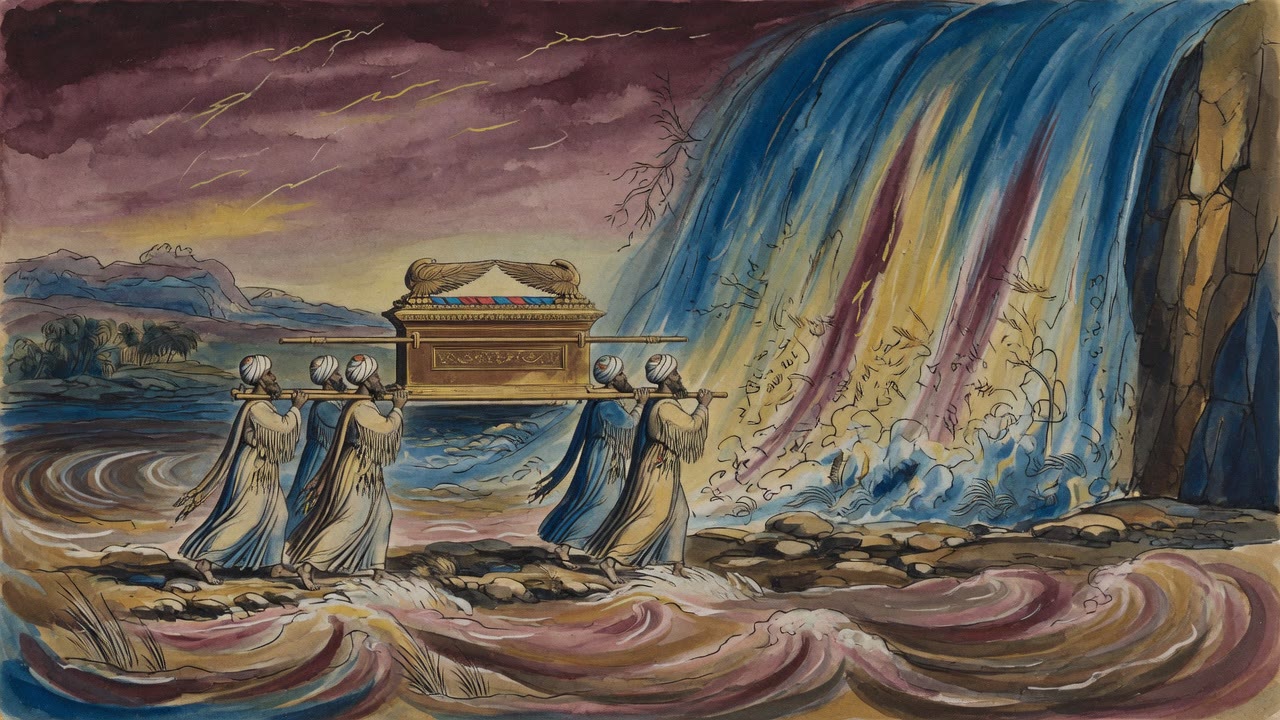
This time there was no cart. The poles carried the Ark, and shoulders carried the poles. Singers went before it. David played the harp. Step by step, the procession moved as if every footfall asked permission from the command it had once forgotten.

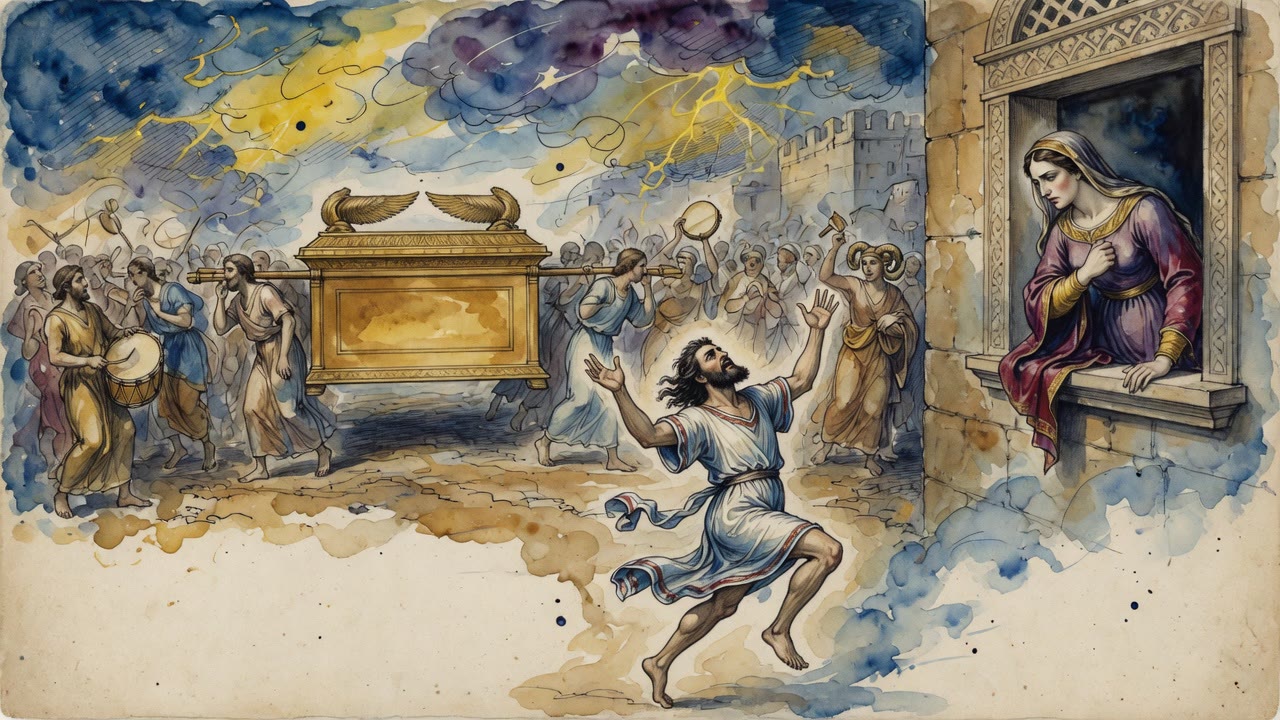
David's later dance was not innocence restored. It was joy with fear underneath it. The Ark entered Jerusalem on shoulders, not wheels. Uzzah remained on the road behind it, the man whose helping hand taught a king that holy fire does not need rescue.


← All myths
From the tradition

Sources

4 sources

The texts this telling draws on, in full. Open a card to read inline, or expand it for a wider, quieter read.

Legends of the Jews 6:81Legends of the Jews

King David knew Torah, but one boast about his knowledge brought punishment faster than he expected.

The story goes that David, feeling pretty good about his grasp of Jewish law, reportedly boasted that he understood the Torah as easily and quickly as songs. But, according to the tale, God wasn't exactly thrilled with this declaration.

The consequence? God declared that David would forget a Biblical law that even schoolchildren knew! Ouch.

That's precisely what happened when David decided to move the Holy Ark, the sacred chest containing the Ten Commandments, from Gibeah to Zion. David, in his moment of lapse, forgot a crucial detail: the Ark was to be carried only upon the shoulders of specially designated Levites, the Kohathites. Instead, he had it placed on a wagon.

What happened next? Well, let's just say it wasn't a smooth ride. The Ark miraculously leaped into the air, and the oxen pulling the wagon collapsed. Uzzah, who had been entrusted with the Ark's transportation, reached out to steady it, preventing it from falling. And tragically, he immediately fell dead.

Talk about a dramatic moment! Why such a harsh punishment? The story, found in Legends of the Jews, citing sources like the Talmud (b. Sotah 35a), explains that even though Uzzah might not have intentionally violated the law, his ignorance of it was considered akin to a deliberate act. He should have known better; he was responsible for knowing the law.

The tale goes on to say that God then rebuked David, reminding him of his earlier boast: "Didst thou not say, 'Thy statutes have been my songs?' and thou hast not even mastered the words of the Bible, 'Unto the sons of Kohath he gave none: because the service of the sanctuary belonged unto them; they bare it upon their shoulders.'" (Numbers 7:9).

So what’s the takeaway here? Is it simply "don't get too cocky?" Perhaps. But I think it goes deeper. This story, like so many in Jewish tradition, serves as a potent reminder that knowledge, especially of sacred texts, is a lifelong journey. It's not about achieving a static state of "knowing it all," but rather about constant learning, humility, and a deep respect for the traditions we inherit. And maybe, just maybe, a little bit of fear of forgetting the basics. Because sometimes, as the story of David and Uzzah so vividly illustrates, the consequences can be… well, let's just say unforgettable.

Full source
Bamidbar Rabbah 12:20Bamidbar Rabbah

That holiest of objects, containing the tablets of the Ten Commandments. Now, you might assume everyone always knew exactly how it was supposed to be handled. But, as we learn from Bamidbar Rabbah (Numbers Rabbah), even King David, the sweet singer of Israel, needed a little reminder.

The verse This seemingly simple statement about who gets what kind of offering during the dedication of the Tabernacle holds a profound lesson about remembering the proper way to do things.

Rabbi Natan points out that this verse highlights a moment when David kind of… well, messed up. Remember when David wanted to bring the Ark to Jerusalem? He put it on a brand new cart, all shiny and impressive (II Samuel 6:3). Seemed like a good idea at the time! But then, disaster struck. Uzzah, one of the drivers, reached out to steady the Ark when the oxen stumbled, and he died. (II (Samuel 6:6)-8). David was, understandably, distressed.

So what went wrong?

According to Bamidbar Rabbah, Ahithophel, one of David's advisors, gently reminded him that the Levites, specifically the sons of Kehat, were supposed to carry the Ark on their shoulders! This wasn't just some minor detail; it was divinely ordained. As Ahithophel might have said, "Should you not have learned from Moses your master...?"

David, to his credit, listened. He gathered the priests Tzadok and Evyatar, along with the Levites – Uriel, Asaya, and Yoel, among others – and instructed them to carry the Ark properly (I (Chronicles 15:11-1)5). The text emphasizes that this was "in accordance with their practice given to them at the hand of Aaron their father" (I (Chronicles 24:1)9), and "as Moses had commanded in accordance with the word of the Lord" (I (Chronicles 15:1)5).

Where did Moses command this? The Midrash (rabbinic interpretive commentary) answers, "But he did not give to the sons of Kehat…" That verse, seemingly about offerings, becomes a crucial reminder of the proper way to honor the divine.

The Midrash makes it clear: the Levites didn't just invent this practice. It all originated with Moses, who received it directly from HaKadosh Baruch Hu, the Holy One, Blessed be He. It’s a chain of tradition, passed down through generations, meant to be carefully preserved.

What's the takeaway? Maybe it’s that even the greatest among us can forget important details. Maybe it's the importance of having wise advisors who can gently correct us. Or maybe, just maybe, it's a reminder that true reverence lies not in grand gestures, but in faithfully following the instructions we've been given, tracing them back to their source, and ensuring that even the smallest details are honored. It's a humbling thought, isn't it?

Full source
Antiquities VII.4-5Antiquities of the Jews (Josephus)

David never went to war without consulting God first. According to Josephus in Antiquities of the Jews, this was the defining principle of his military career. And when the Philistines came to destroy him at Jerusalem, it was prophecy, not strategy, that won the day.

The Philistines had seized the Valley of the Giants just outside the city. David asked the high priest to inquire of God, received assurance of victory, then attacked from behind and routed them completely. They came back with triple the forces. This time, God gave stranger instructions: wait in the Groves of Weeping near the enemy camp and do not move until the trees begin swaying on their own, without wind. When the trees moved, David struck. The Philistines broke ranks immediately and fled all the way to Gaza.

With his enemies scattered, David turned to something that had been neglected since Saul's reign: the Ark of the Covenant. It had sat in the house of Aminadab at Kirjathjearim, essentially forgotten. David assembled priests, Levites, and the entire nation to bring it to Jerusalem in a massive procession, singers, dancers, trumpets, cymbals, and the king himself playing the harp.

Then disaster struck. At the threshing floor of Chidon, the oxen pulling the cart jolted the Ark. A man named Uzzah reached out to steady it. He died instantly. Josephus explains the reason plainly: Uzzah was not a priest, and the Ark could not be touched by unauthorized hands. God struck him down, and the place was called "the Breach of Uzzah" ever after.

David was terrified. He diverted the Ark to the house of a Levite named Obededom, where it stayed for three months. During that time, Obededom, previously a poor man of low standing, became extraordinarily prosperous. When David heard how the Ark had transformed this man's fortunes, he gathered courage and brought it into Jerusalem at last, this time with priests carrying it properly and seven companies of singers leading the way.

His wife Michal, Saul's daughter, watched from a window as the king danced wildly before the Ark. She laughed at him. David's response was sharp: he was dancing for God, who had chosen him over her father, and he would do it again whenever he pleased. Josephus records that Michal bore no children after this confrontation.

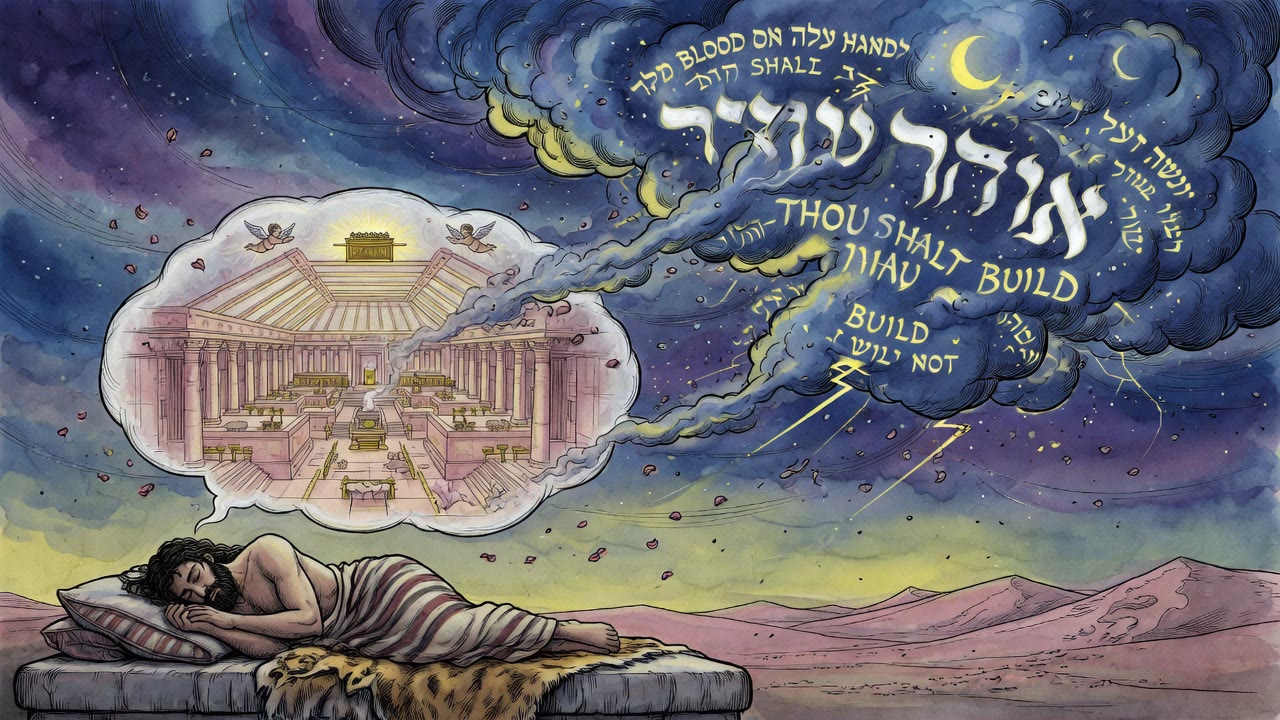
Settled in Jerusalem, David looked at his own palace of cedar and felt convicted. The Ark sat in a tent. He told the prophet Nathan he wanted to build God a proper temple. Nathan initially encouraged him, but that night God appeared to Nathan with a different plan: David had shed too much blood in war to build the house of God. That honor would belong to his son, Solomon. David accepted the verdict with joy, not for what he was denied, but for the promise that his dynasty would endure.

Full source
Vayikra Rabbah 8:3Vayikra Rabbah

The Rabbis in Vayikra Rabbah, a Midrashic (rabbinic interpretive commentary) collection on the Book of Leviticus, tackle this very question head-on.

Rabbi Idi kicks things off with a fascinating idea: King David, he says, deeply "yearned for the offering of the princes." What does that mean? Well, David wanted to build the Temple, and he wanted to inaugurate it with offerings, just like the Mishkan (Tabernacle) had been inaugurated. Remember that long, detailed section in the Book of Numbers (chapter 7) about the offerings brought by the leaders of each tribe, the princes? That's what David was longing for.

Rabbi Idi connects this to a verse in Psalms (66:15): “I will offer You burnt offerings of fattened animals with the burning of rams; I will sacrifice oxen and goats.” Now, what offering includes ALL those animals – bulls, rams, and sheep? Only the offering of the princes, as it's detailed in (Numbers 7:17). Think of it – a comprehensive offering, representing the dedication of the entire community.

It doesn't stop there. We then get a range of opinions, each highlighting the profound significance of these inaugural offerings. Rabbi Yehuda, Rabbi Neḥemya, and other Rabbis each weigh in.

Rabbi Yehuda boldly states that the offering of the princes was as beloved to God as the song the Israelites sang at the Red Sea! A powerful comparison. He draws a parallel using the word "zeh," meaning "this." In (Exodus 15:2), during the song at the sea, they sing, "Zeh is my God, and I will exalt Him!" And in (Numbers 7:17), it says, "Zeh is the offering of Nahshon ben Aminadav." The implication? Both moments – the miraculous salvation and the dedication of the Tabernacle – were equally cherished by God.

Rabbi Neḥemya takes a different tack. He says the offering of the princes was as beloved as the two Tablets of the Covenant, the very luchot given to Moses at Sinai! Again, he uses the word "zeh" as a connecting thread. Regarding the tablets, (Exodus 32:15) says they were inscribed "from this side and from that side." And again, we have "Zeh is the offering of Nahshon ben Aminadav." For Rabbi Nehemya, the princes' offering, like the tablets, represented covenant and dedication.

And the Rabbis? They offer yet another perspective. They suggest that the offering of Aaron himself was as beloved as the offering of the princes. The connection? Both are introduced with the same word: "Zeh is the offering of Nahshon ben Aminadav," and "Zeh is the offering of Aaron."

Finally, Rabbi Berekhya connects Aaron’s offering to the twelve tribes. How? Through gematria, a method of interpreting texts by assigning numerical values to letters. He points out that the numerical value of "zeh" (זֶה) is 12 (zayin = 7, heh = 5). So, for Rabbi Berekhya, the "zeh" connecting Aaron’s offering to that of the princes also connects it to the entirety of Israel, embodied in the twelve tribes.

What can we take away from this? It seems Vayikra Rabbah isn’t just giving us historical trivia. It’s teaching us about the power of dedication, the importance of collective effort, and the enduring value of sincere offerings. Each Rabbi, through their unique interpretation, shines a light on a different facet of what makes something truly beloved in the eyes of the Divine. It makes you wonder, what offerings – what acts of devotion – are we bringing to the table today?

Full source