The Holy of Holies Opened Only for David's Merit
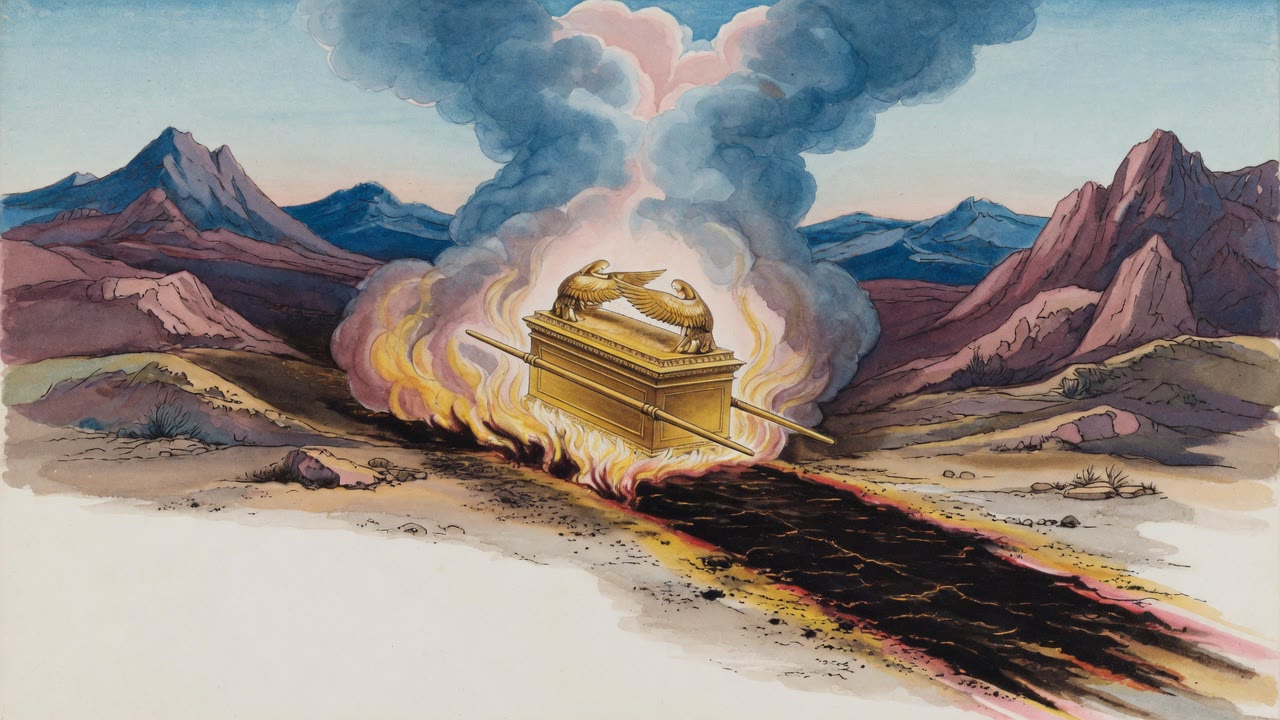
The Temple was complete, the Ark was ready, and the gates refused to open. Solomon prayed until he understood whose name had to be spoken.
Table of Contents
 Click for full size
The Gates That Would Not Move
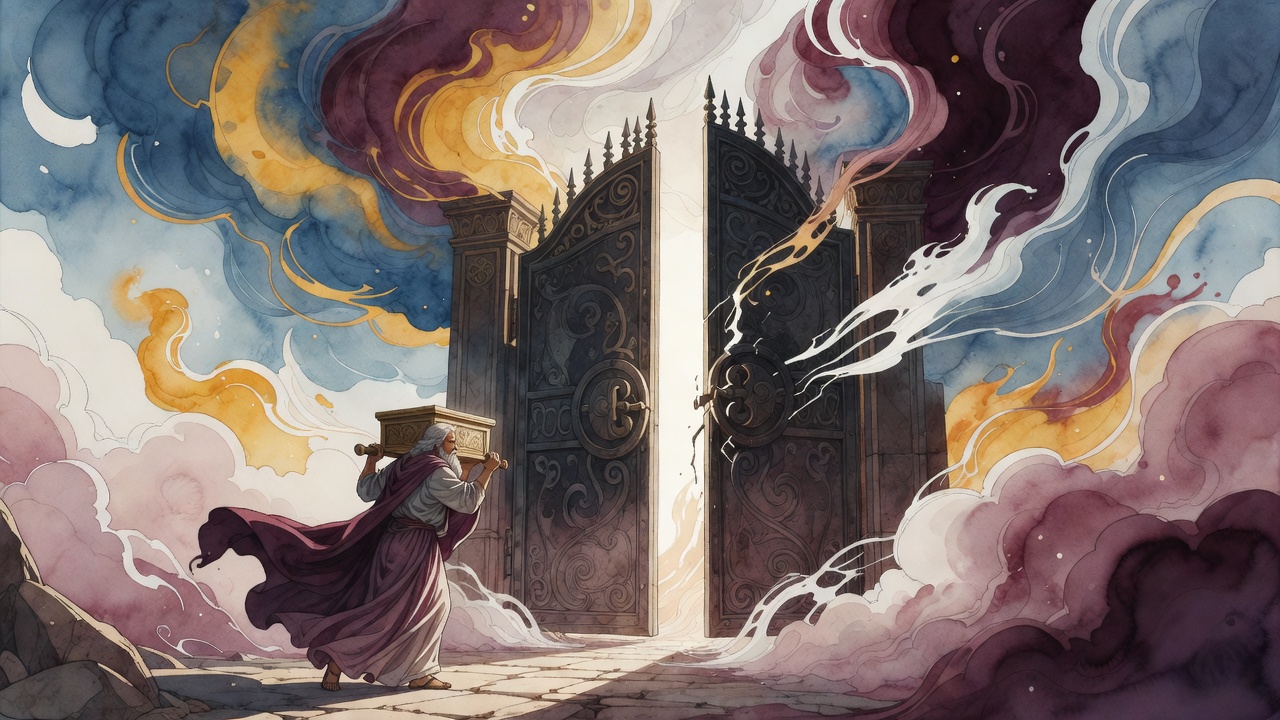
The Temple was finished. Every stone placed, every curtain hung, every vessel of gold polished and positioned. Seven years of construction, tens of thousands of workers, the labor of human craftsmen and spirit artisans brought to completion. The moment had come to carry the Aron HaKodesh into the innermost chamber and consecrate the most sacred space on earth.
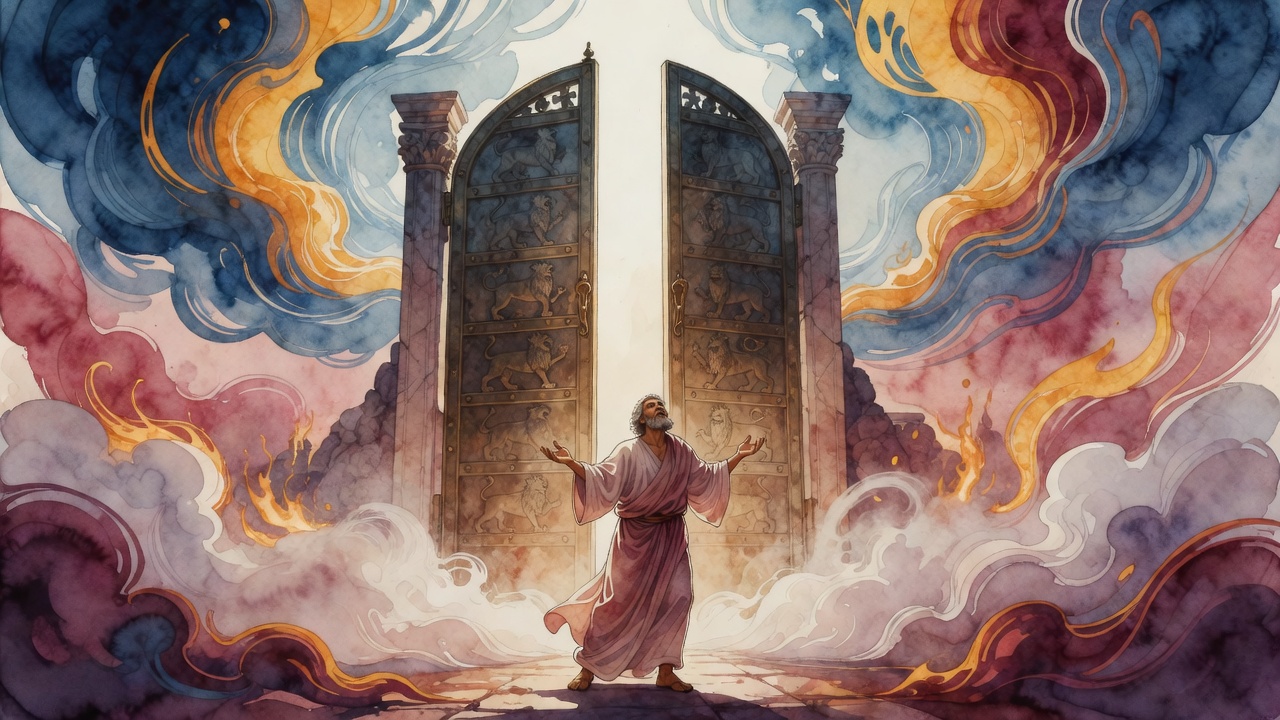
The gates to the Holy of Holies would not open.
Solomon prayed. He had composed the great dedicatory prayer that fills the eighth chapter of First Kings, invoking God's attention, asking for divine presence to take up residence in the house built for the Name. Nothing happened. The gates did not move. The procession bearing the Ark waited. The entire assembly of priests and elders stood still in the silence, watching the wisest king who ever lived kneel before a door that would not answer.
What Solomon's Prayer Could Not Accomplish
The difficulty of this moment is deliberate. Solomon had done everything correctly. His piety was genuine, his preparations meticulous, his prayer articulate and sincere. But something was missing from his invocation, and the gates demonstrated the absence by staying shut.
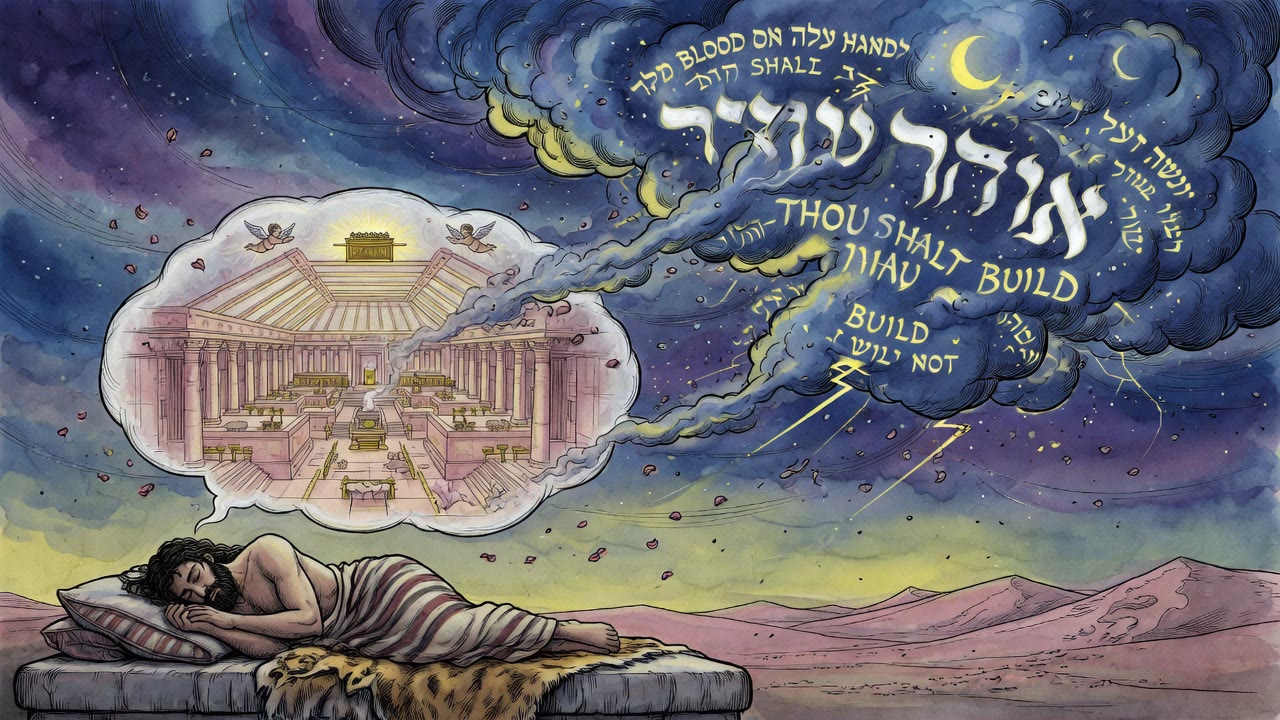
The tradition holds that the gates were responding to a condition that Solomon's own merit could not supply. He was the builder. He was the king. He was present at the threshold with everything the occasion required. But the Temple had been denied to his father, David, who had wanted to build it and been told he could not, because his hands had shed blood in warfare. David died without seeing it built. Solomon was his son and his successor, and the Temple that opened before Solomon had been born in David's longing.
The gates, in the rabbinic understanding, belonged to David in some fundamental sense. They would not yield to a prayer that did not acknowledge whose desire had driven the whole undertaking.
The Name That Opened What Prayer Could Not
Solomon changed the prayer. He stopped invoking God in his own right and invoked instead the merit of his father. He prayed in David's name. He asked that the gates yield for the sake of the one who had longed for this moment and never seen it. He asked that a door that would not open for the living open for the dead.
The gates swung open.
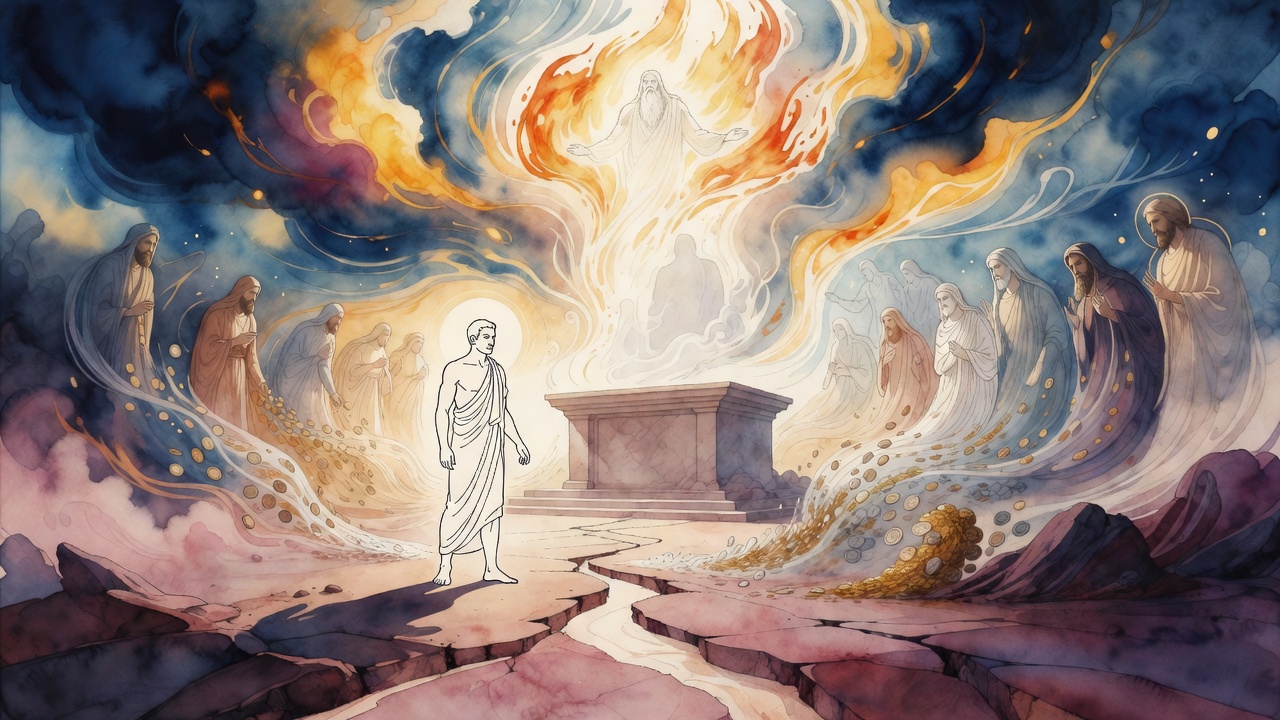
What followed in the tradition is the image of David's merit descending into the space, filling the dedication ceremony with a presence that Solomon's own righteousness could not have summoned alone. The king who built the Temple could complete it only by acknowledging the king who had dreamed it. The inheritance required the inheritor to name what he had inherited.
The Logic of the Locked Door
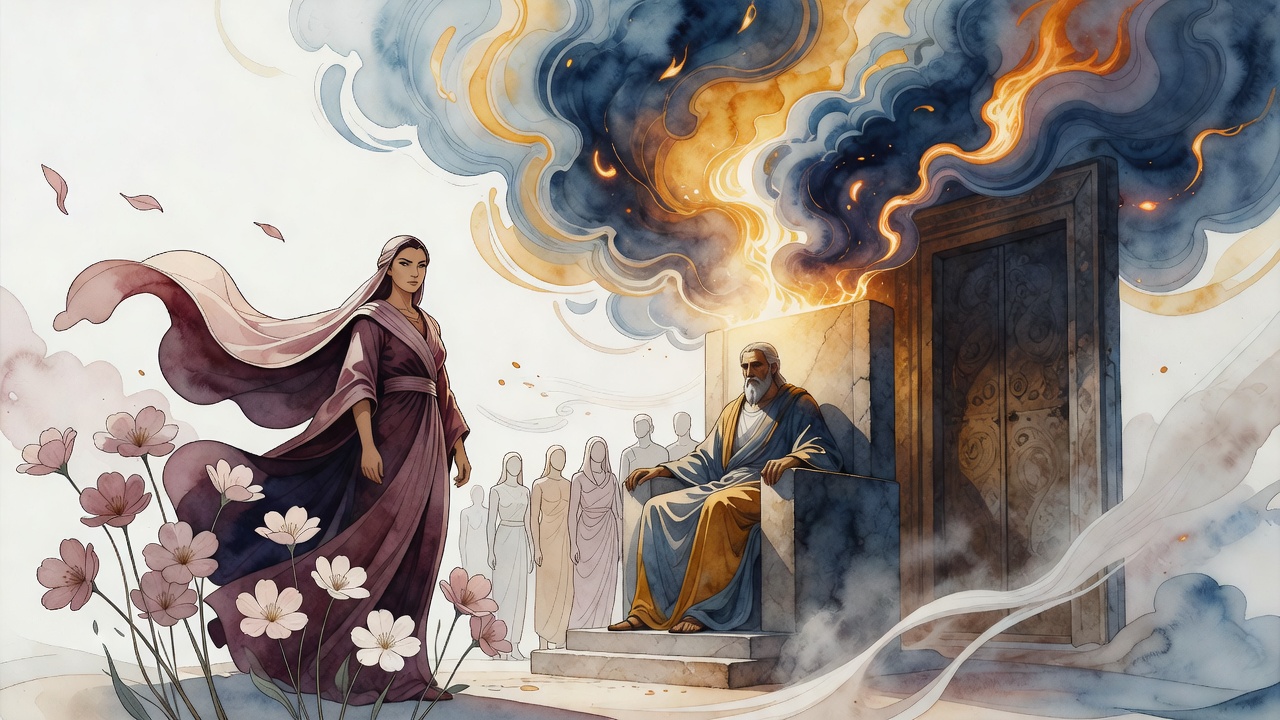
The story works against a simple reading of royal piety. Solomon was not being punished. His prayer was not refused because he had failed. The gates were locked in order to teach him something that no amount of wisdom could produce on its own: the recognition of what you owe to who came before you.
David had wanted to build a house for God and been told no. His wanting had driven decades of preparation, the accumulation of materials, the design of the plans, the designation of the site, all of it handed to Solomon as an inheritance so complete that the son walked into a project already shaped by his father's longing. The locked gate was the moment where that debt became visible. Solomon could only enter the holiest place by acknowledging that the door had been shaped by someone else's prayer.
← All myths