David Prayed That God Would Not Let Him Kill Saul
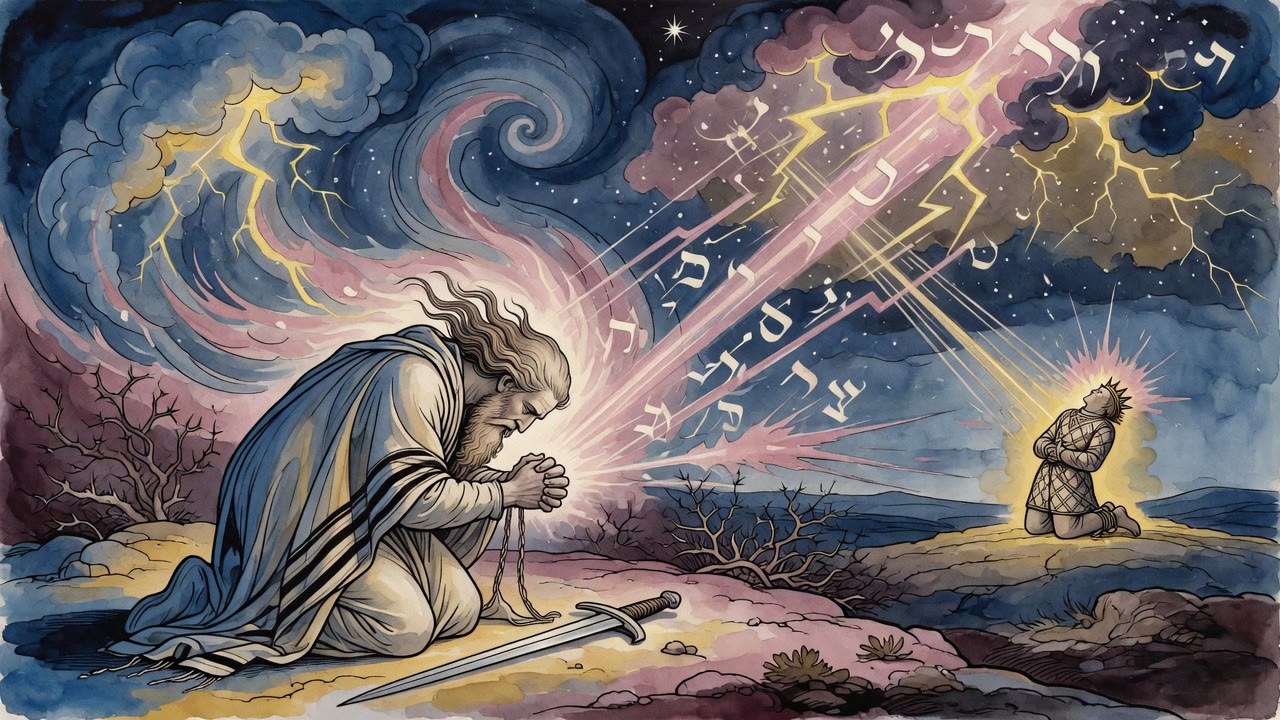
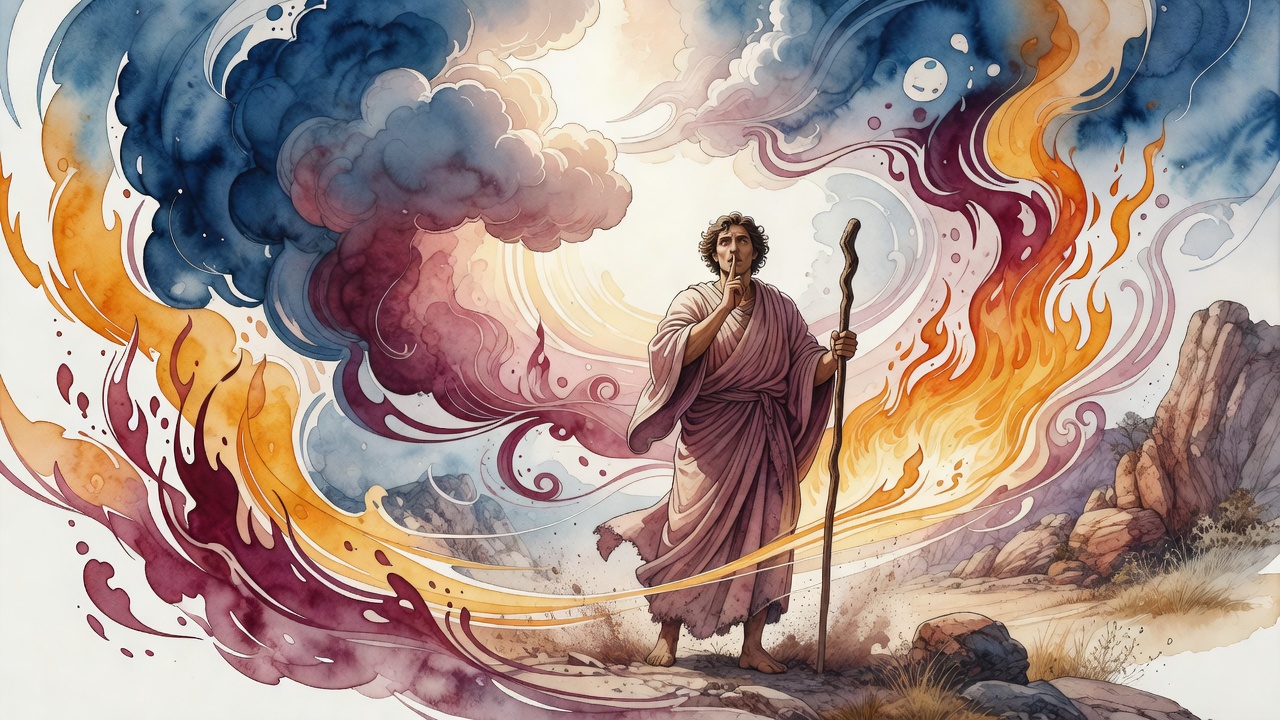
Pressed against the back wall of a cave, knife drawn, Saul within reach, David asked God for two mercies. The second one was the strange one.
Table of Contents
 Click for full size
Three Thousand Men and One Cave
Saul had taken three thousand picked men out into the wilderness to find one. He had been at it a long while by then, since the day the women came out of the cities singing that Saul had killed his thousands and David his ten thousands, and Saul did the arithmetic where he stood and understood there was nothing left to give the boy except the throne. He sent him into the worst of the fighting and hoped the Philistines would finish it. He threw a spear at him indoors. Michal let her husband down out of a window on a rope and laid a goat's liver in the bed so the covers would seem to rise and fall, and after that David lived in caves.
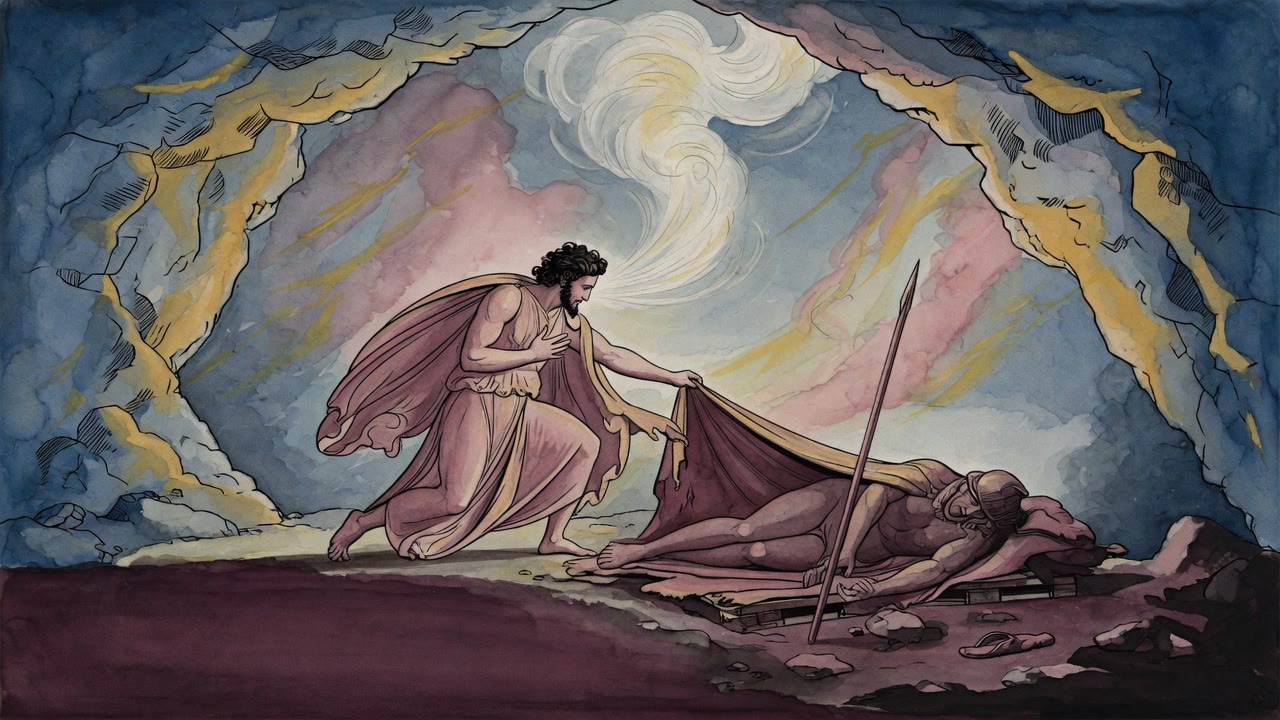
Now Saul stepped into one of them to relieve himself, alone, and did not look at the dark at the back where a dozen men were standing against the wall not breathing.
"This is the day," David's men said, close to his ear. "This is the day the Lord promised you."
The Second Mercy
He had asked for mercy twice, and the sages counted the repetition, because one plea is enough to ask for rescue and two means there were two different things frightening him.
The first was the plain one. Do not let me fall into Saul's hand, and if I do fall into it, do not let him have the rest of me, the part a hunted man loses before anyone catches him. The second was the strange one. Do not let him fall into mine.
He was not asking to be kept from his enemy. He was asking to be kept from his own hands, because the evil inclination had already opened its case in his chest and the case was good. The king came in alone. He has three thousand men outside and not one of them can see this. You will never stand this close to him again as long as you live, and he is trying to kill you, and Samuel poured the oil on your head years ago.
There was a last turn to the argument, and it had teeth in it. Samuel had torn the kingdom off Saul's back for sparing an Amalekite king he had been ordered to destroy, and when the sages weighed that reign afterward they put the whole loss down to mildness, to a man too soft to finish a command. So the voice in the cave had a precedent to work with, and it used it. Mercy is what unseats a king.
The Corner of the Robe
David crossed the floor. He came up behind the king close enough to smell the road on him, and what he did with the knife was cut the corner off Saul's robe, and then he went back to the wall and crouched down with the scrap in his fist and waited for the man to finish and walk out into the light.
Then his heart struck him, and not over the killing he had not done.
The corner of a garment is where the fringes hang. Rabbi Nehemiah says the tzitzit came away with the wool, so for the length of one stroke David had put a commandment out of the world in order to make a point about not touching a king. He had left the man and taken the cloth, and he had still taken something. He came out to the mouth of the cave afterward and called down the slope, holding it up where Saul could see it. "My father, see." Let the Lord judge between me and you. My hand will not be on you.
The Sign Samuel Had Left
Saul stopped on the hillside and understood more than David had meant to tell him. When Samuel took the kingdom away he had not named the successor. He gave a sign instead, and the sign was this: the man who cuts the corner from your mantle is the one who takes your place.
So the scrap of wool held up in the sunlight was not a reproach. It was an announcement, and Saul heard it as one, from a boy who had been trying to say only that he would not lift a hand. Both of them went down off that hill knowing how it ended. Nothing about the hunt changed, since knowing who will hold the throne and letting go of it are not the same act, and Saul came out after him again, and David went on living in the wilderness with a piece of the king's robe in his bag.
What He Carried Across the Jordan
Saul died on Gilboa with Jonathan beside him, and the man who got the news was a king with an unanswered prayer still in his mouth. He had asked never to be handed the chance. He had been handed it, in a cave, and had walked out with cloth instead of blood.
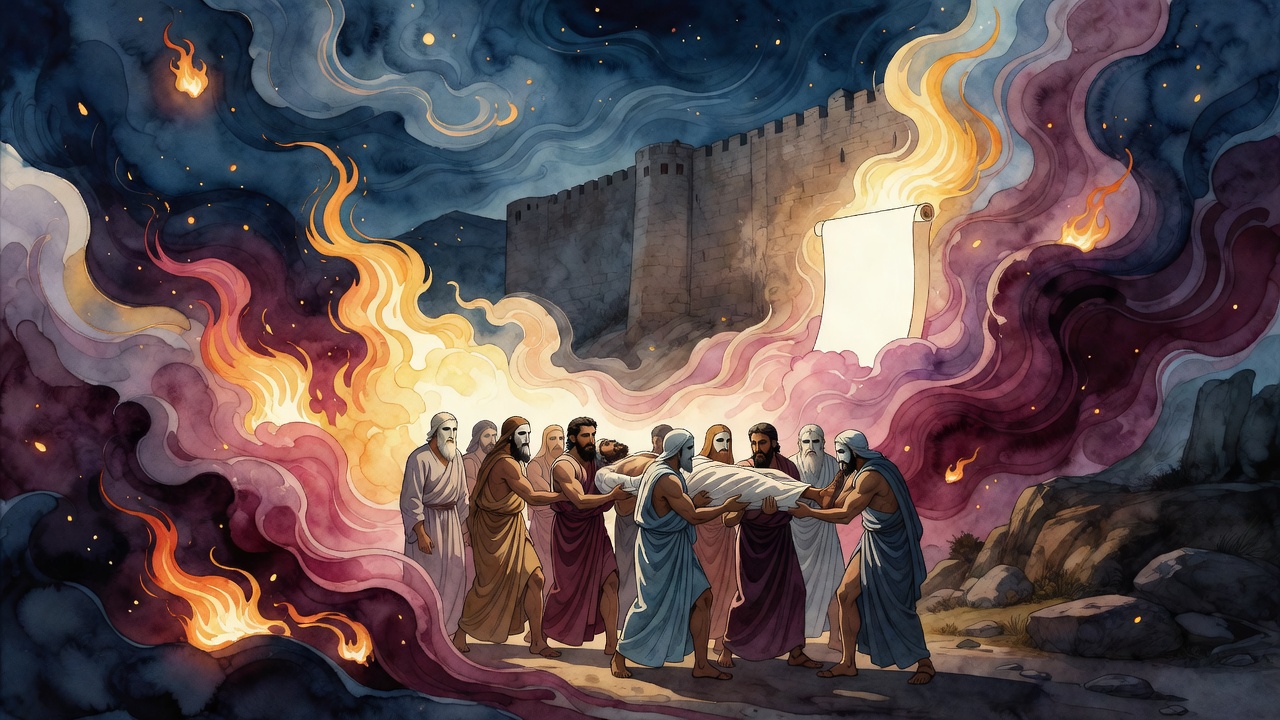
So he gathered the elders and the nobles of Israel and crossed the Jordan to Jabesh-Gilead for the bones of the man who had hunted him for years. They found them clean. Not a worm had been at Saul or at Jonathan. They lifted them into a coffin and carried them back over the river, and David sent that coffin to the border of every tribe in turn, so the people came out household by household to do kindness to Saul and his sons, all the way down to Benjamin, where they buried him in his own ground.
When the last tribe had come out and gone home again, the sky opened over the land, and it rained.
← All myths