5 min read

Jephthah Made a Vow and His Daughter Walked Into It

A judge of Israel swore to sacrifice whatever came through his door first after his victory. His daughter came through dancing with timbrels.

Curated by Arthur · Told by Maggid ·
Table of Contents
  1. The Vow That Could Not Be Unsaid
  2. The Door Opened on His Only Child
  3. She Argued Better Than Her Father
  4. The Two Months She Asked For

Jephthah was an outcast who became a general, the illegitimate son of Gilead driven out by his half-brothers for the accident of his birth. He had gathered an army of outcasts in the land of Tob and made himself useful to anyone who needed fighting done. Then the very elders who had expelled him came begging, because the Ammonites had oppressed Israel for eighteen years and nobody else was left to lead. He agreed to fight them, but only if the elders swore he would rule them permanently afterward. They swore. He tried diplomacy first, sending arguments about land rights and the three-hundred-year history of Israelite settlement in the contested territory. The Ammonite king ignored him.

Before battle, Jephthah made a vow.

The Vow That Could Not Be Unsaid

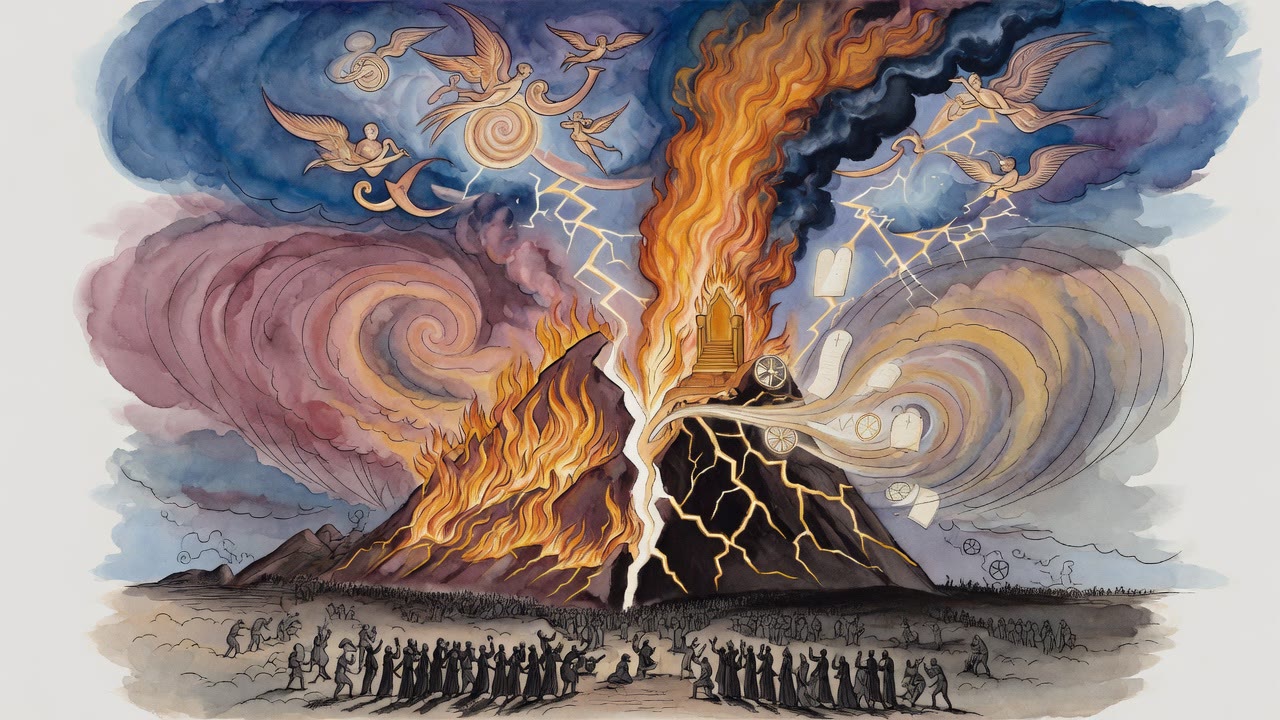
He promised God that if he returned victorious, whatever came out of his house first to greet him would be offered as a sacrifice. The tradition records that God was already displeased the moment the words left his mouth. What if a dog came out? What if an unclean animal appeared first? What if something unfit for sacrifice walked through the door? Jephthah had wrapped his victory in a vow he had not thought through, leaving the outcome to chance when it should have been weighed with care.

Three other men in Scripture had done the same. Eliezer pledged to take for Isaac whatever girl gave him water at the well. Caleb offered his daughter to whoever conquered Kiriath-sefer. Saul promised his daughter to whoever struck down Goliath. In those three cases, heaven intervened and sent worthy people to fulfill the terms. Eliezer got Rebecca. Caleb got Othniel. Saul got David. Jephthah got no such intervention.

The Door Opened on His Only Child

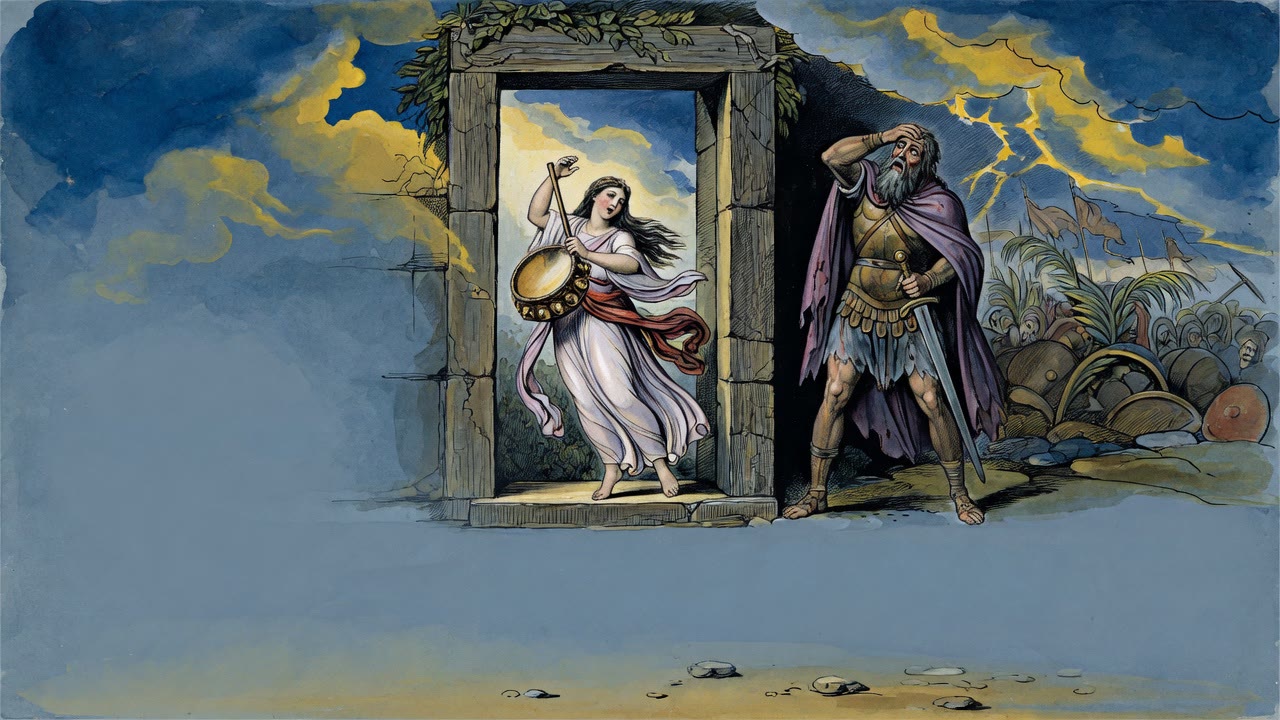
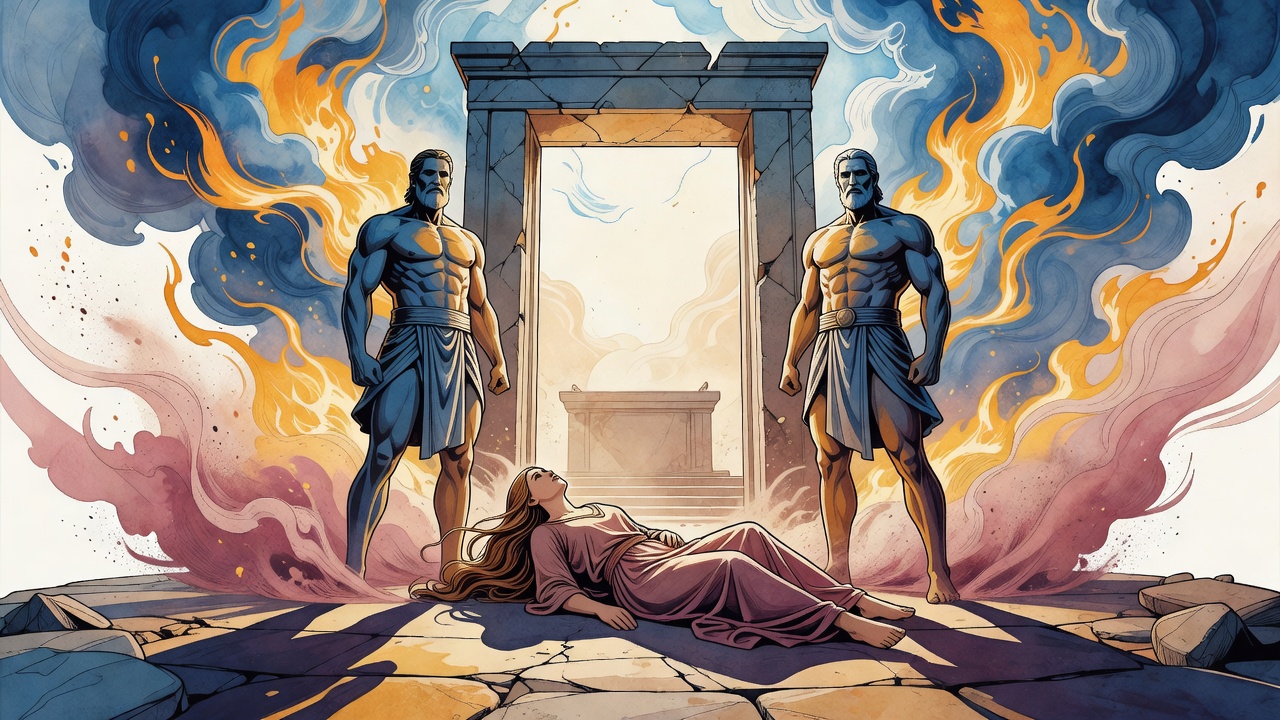
The Ammonites fell. Jephthah came home to Mizpah. The first sound from his house was not barking or hoofbeats. It was music. His daughter came out with timbrels, dancing to greet the father who had saved Israel. She was his only child. He had no other son or daughter.

He tore his garments. He said: my daughter, you have brought me very low, because I have opened my mouth to God and I cannot take it back. Some traditions give her a name: Sheilah, the one demanded. He heard the meaning too late.

She Argued Better Than Her Father

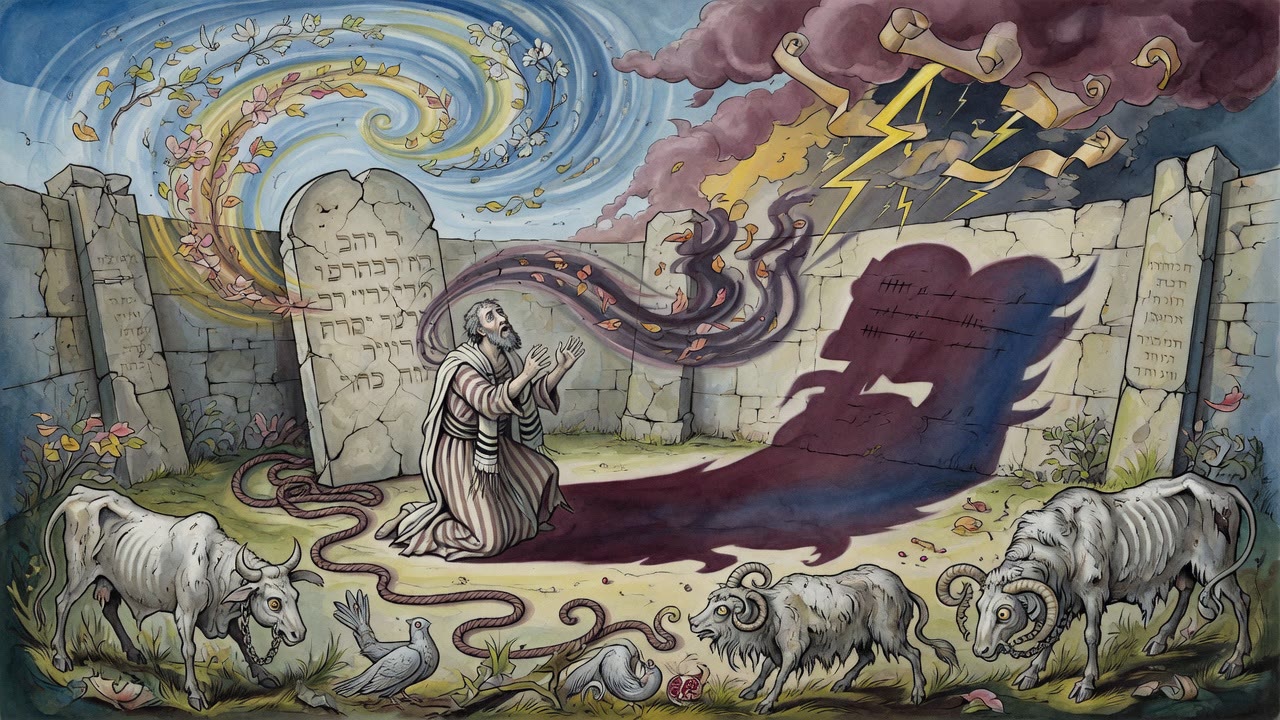
She did not simply submit. She argued. Where in the Torah does it say that human beings can be offered as sacrifices? Sacrifice comes from cattle and from flock, not from daughters. She named Jacob, who had vowed to give God a tenth of all his possessions and who had interpreted that vow as meaning animals and property, never sons. She pointed to the plain text of Leviticus. She made the legal case that her father's vow was either invalid or had to be interpreted as consecrated service rather than death.

Jephthah was a judge of Israel and a military commander, but he was not a scholar. He had not gone to Phinehas the priest to ask whether the vow could be annulled. The sages later blamed him for this and blamed Phinehas in equal measure for not going to Jephthah. Neither man moved toward the other, pride on one side and pride on the other, and a young woman paid for both of them.

The Two Months She Asked For

She asked for one thing: two months with her companions in the mountains to weep over her youth. He gave her that. She went up into the hills with her friends and wept, not for her death exactly, but for what would never happen, for the children she would never have, for the life that had been narrowed to nothing by words her father had spoken before he crossed the Jordan to fight. When the two months ended, she came back to him.

The daughters of Israel went every year, four days each year, to commemorate her. Her name does not appear in the text of Judges. The annual mourning continued anyway. The tradition that gave her the name Sheilah could not let her be simply the daughter of Jephthah, unnamed and absorbed into her father's story.


← All myths

From the tradition

Sources

8 sources

The texts this telling draws on, in full. Open a card to read inline, or expand it for a wider, quieter read.

Legends of the Jews 2:60Legends of the Jews

He was an outcast, remember? Driven from his home by his brothers, he rose to become a mighty warrior. When the elders of Gilead needed a leader to fight the Ammonites, they turned to him. At first, Jephthah refused. He hadn't forgotten how they'd treated him. But eventually, he relented, and agreed to lead them into battle.

Before heading off to war, at an assembly in Mizpah (a place name meaning "watchtower"), Jephthah makes a vow to God. He promises that whatever comes out of his house to greet him upon his victorious return will be offered as a sacrifice. A seemingly simple vow. Maybe not.

As Ginzberg retells it in Legends of the Jews, God wasn't exactly thrilled. Can you imagine the Divine reaction? "So, Jephthah vowed to sacrifice whatever greets him first? What if it's a dog? Would he sacrifice a dog to Me?"

In Divine word, Jephthah's vow will be visited upon his firstborn, his own child. A harsh sentence,. God, however, assures that the deliverance of His people will occur, not for Jephthah's sake, but because of the prayers of Israel.

It's a pretty stark reminder, isn't it? That even in moments of great triumph and leadership, our actions can have unforeseen – and heartbreaking – consequences. The story leaves you wondering, doesn't it? What happens when good intentions pave the road to tragedy? What happens when a vow collides with a father's love? That is a story for another time.

Full source
Legends of the Jews 2:61Legends of the Jews

After a successful military campaign, Jephthah is met by his daughter, Sheilah. But instead of joy, a wave of anguish washes over him. He cries out, lamenting that her name, Sheilah – meaning "the one who is demanded" – foreshadowed this very moment: that she would be offered as a sacrifice. "Rightly was the name Sheilah, the one who is demanded, given to thee. because I opened my mouth to the Lord, and uttered a vow, I cannot take it back."

The weight of those words! Jephthah had made a vow, a neder, and now he was bound by it.

Sheilah, in her wisdom, responds with incredible strength. She asks, "Why dost thou grieve for my death, since the people was delivered?" She reminds him of the stories of their forefathers, where fathers offered sons, and both offerer and offered were filled with joy. She accepts her fate, but with a crucial request.

She asks for time – time to wander the mountains with her companions, to grieve the life she would never live. "Grant me that I may go with my companions upon the mountains, sojourn among the hills, and tread upon the rocks to shed my tears and deposit there the grief for my lost youth." It’s not death she fears, she says, but the possibility that her father’s vow, made without considering her, might render her sacrifice unacceptable.

So, Sheilah and her friends seek guidance from the sages, the wise men, of the people. But alas, they find no solution. They are powerless to undo the vow.

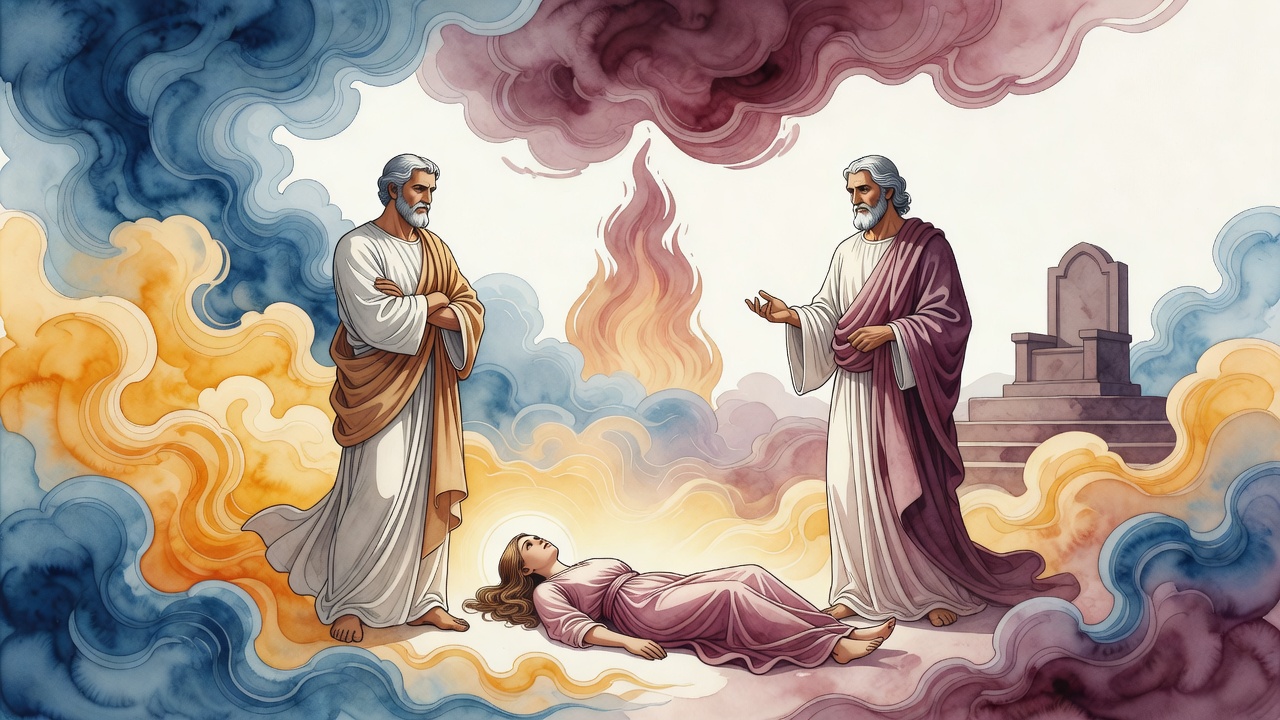
Then, something extraordinary happens. Sheilah ascends Mount Telag, and there, the Lord appears to her in the night. According to the legend, God says, "I have closed the mouth of the sages of my people in this generation. that my vow be fulfilled." But there's more. God acknowledges Sheilah's profound wisdom, stating she is wiser than her father and all the wise men. Her soul, God says, will be accepted, and her death will be precious.

Now, listen to Sheilah's lament. It is a heartbreaking poem, a raw expression of loss and longing. "Hearken, ye mountains, to my lamentations. My words will go up to heaven, and my tears will be written in the firmament." She mourns the joys she will never experience: a wedding, a betrothal, the scent of myrrh, the touch of oil upon her skin. "Alas, O mother, it was in vain thou didst give birth to me, the grave was destined to be my bridal chamber."

She envisions her bridal garments, prepared with love, becoming food for moths. The wreath woven by her nurse, withering away. And she calls upon nature itself to mourn with her. "And now, ye trees, incline your branches and weep over my youth; ye beasts of the forest, come and trample upon my virginity, for my years are cut off, and the days of my life grow old in darkness."

What are we to make of this tragic story? It’s a stark reminder of the power of words, the weight of vows, and the profound sacrifices sometimes demanded in the name of faith. It also highlights the quiet strength and wisdom that can be found in unexpected places, even in the face of unimaginable loss. Sheilah's lament echoes through the ages, a evidence of a life unlived, and a poignant reminder of the enduring human cost of promises made. What does this story mean to you?

Full source
Legends of the Jews 2:62Legends of the Jews

Legends of the Jews turns to Jephthah's Daughter Pleads Against Her Father's Vow.

He vowed to God that if he was victorious in battle, he would sacrifice the first thing that came out of his house to greet him. And tragically, that first thing was his daughter.

Her despair. She argued with her father. She pleaded with him. According to Legends of the Jews, she even tried to show him from the Torah itself – the very foundation of Jewish law – that the law only spoke of animal sacrifices, never human ones. It's in there, in black and white! She even brought up Jacob, who had vowed to give God a tenth of all his possessions, but didn’t interpret that to mean he should sacrifice one of his sons.

Jephthah was, sadly, unyielding.

He granted her a brief reprieve, a chance to consult with the scholars of the time. Maybe they could find a way out, a loophole, some kind of… escape. She traveled to them, seeking guidance, desperately hoping they could release her father from his terrible promise.

Here's where it gets even more tragic. According to the Torah, Jephthah's vow was entirely invalid! He wasn't even obligated to pay her value in money, a kind of legal workaround sometimes used. But… the scholars had forgotten this Halakah (legal ruling)! This vital piece of knowledge, this crucial understanding of Jewish law, had simply… vanished from their collective memory.

They decided he had to keep his vow.

Ginzberg, in Legends of the Jews, suggests this "forgetfulness of the scholars was of God." A divine hand, it seems, arranging this lapse in memory. Why? As punishment, we're told, for Jephthah having slaughtered thousands of Ephraim. A brutal act met with an equally brutal consequence.

What are we to make of this story? A rash vow, a daughter's desperation, a community's collective amnesia… it's a chilling reminder of the power of words, the weight of promises, and the devastating consequences of forgetting our own traditions. It forces us to ask: what knowledge are we in danger of forgetting? And what price will we pay if we do?

Full source
Yalkut Shimoni on Torah 107:4Yalkut Shimoni on Torah

"Behold, I stand by the well of water, and let it be that the maiden" (Genesis 24:13-14). Four there were who made requests improperly. To three of them He gave fittingly, and to one He gave unfittingly. And these are they: Eliezer the servant of Abraham, and Caleb, and Saul, and Jephthah.

Eliezer: "and let it be that the maiden to whom I shall say" - had a mere bondwoman come out and given him drink, he would have married her to his master's son! The Holy One, blessed be He, arranged for him fittingly, "and behold, Rebecca came out" (Genesis 24:15).

Caleb said: "He that smites Kiriath-sefer and takes it, to him will I give Achsah my daughter to wife" (Joshua 15:16) - had a slave captured it, he would have given him his daughter! The Holy One, blessed be He, arranged for him fittingly: "And Othniel son of Kenaz captured it" (Joshua 15:17).

Saul said: "And it shall be that the man who smites him" and so forth - had a Cushite or a gentile or a slave gone out and smitten him, he would have given him his daughter! The Holy One, blessed be He, arranged for him fittingly: "And David, the son of an Ephrathite man" (1 Samuel 17:12).

Jephthah said: "And it shall be that whatever comes forth, that comes out of the doors of my house" - had a donkey or a dog come out, he would have offered it up as a burnt offering! The Holy One, blessed be He, arranged for him unfittingly: "And Jephthah came to Mizpah, and behold, his daughter came out to meet him" (Judges 11:34).

Full source
Antiquities V.7Antiquities of the Jews (Josephus)

A father's rash vow cost him the only thing he loved. Jephthah, the illegitimate son of Gilead, was thrown out by his own half-brothers for being born to a foreign woman. He fled to the land of Gilead, gathered an army of outcasts, and lived as a mercenary commander, until the very people who exiled him came begging for help.

The Ammonites had oppressed Israel for eighteen years. Jephthah agreed to lead the counterattack, but only if the elders swore he would rule them permanently afterward. They swore. He tried diplomacy first, sending messengers to the Ammonite king with a sharp legal argument: God had given Israel this land over three hundred years ago (Judges 11:26). If the Ammonites had a claim, they should have pressed it then. The king ignored him.

So Jephthah went to war. And before the battle, he made a vow. If God granted him victory, he would sacrifice whatever living thing first came out of his house to greet him upon his return. The victory was devastating. He slaughtered the Ammonites from Aroer to Minnith, liberating Israel from nearly two decades of servitude.

Then he came home. His daughter, his only child, ran out to meet him with tambourines and dancing. Jephthah tore his clothes and cried out in agony. He blamed her for being the first to greet him, but she did not flinch. She told him to fulfill his vow. She had only one request: two months to wander the mountains with her companions and mourn the life she would never live.

When the time expired, Jephthah kept his word. Josephus does not soften this. He calls the sacrifice something "neither conformable to the law nor acceptable to God", a horrifying act born from a reckless promise. The man who won Israel's freedom destroyed his own household in the process. Even the tribe of Ephraim turned on him afterward, furious they had been excluded from the spoils, and Jephthah slaughtered forty-two thousand of them at the fords of the Jordan (Judges 12:6). He ruled six years and died, leaving behind a legacy of brilliance and devastation in equal measure.

Full source
Vayikra Rabbah 37:4Vayikra Rabbah

In Vayikra Rabbah 37, the Midrash (rabbinic interpretive commentary) explores this idea through a fascinating lens: vows. Specifically, it looks at instances where individuals made, shall we say, unreasonable requests, or perhaps poorly thought-out vows, and how the Holy One, blessed be He, responded.

The Midrash identifies four figures: Eliezer, the servant of Abraham; Caleb; Saul; and Yiftach. Each story highlights a different facet of this divine-human interaction.

You remember him. Abraham sends him to find a wife for Isaac. Eliezer, in (Genesis 24:14), essentially says, "God, the woman who offers water to me and my camels, that's the one You've chosen." The Midrash points out the absurdity: What if a Canaanite servant girl, or even a prostitute, had done that? Would that really be God's chosen one? But, the text notes, God intervened and arranged for Rebecca to appear. A lucky break for Eliezer, wouldn't you say?

Then there's Caleb. In (Joshua 15:16), he declares he'll give his daughter Akhsah to whoever conquers Kiryat Sefer (literally, "City of the Book"). The Midrash asks a similar question: What if a Canaanite, a mamzer (illegitimate child), or even a slave had captured the city? Would Caleb have actually given his daughter to them? Again, divine intervention comes into play. God arranges for Otniel ben Kenaz, Caleb's brother, to do the deed (Joshua 15:17). Problem solved, but the potential for disaster was definitely there.

Saul, offering his daughter to the man who could defeat Goliath (I (Samuel 17:2)5), faces the same critique. What if an Ammonite, a mamzer, or a slave had been victorious? Would Saul have kept his word? The Midrash tells us God arranged for David to win, ensuring a more suitable match for his daughter Mikhal.

Now we come to the tragic tale of Yiftach. Oh, Yiftach. In (Judges 11:31), he vows to sacrifice whatever comes out of his house first upon his return from battle. The Midrash is aghast: What if it had been a camel, a donkey, or a dog? Would he have actually offered it as a burnt offering? Unlike the others, Yiftach's ill-considered vow leads to tragedy. God, according to the Midrash, responds unfavorably, and his daughter is the first to greet him. The text emphasizes his failing: "It was upon his seeing her that he rent his garments" (Judges 11:35) – he could have had his vow dissolved and gone to Pinḥas. But pride got in the way.

Yiftach thought he was too important to seek a release from his vow. And Pinḥas, for his part, felt he was too important to go to Yiftach! So, as the Midrash poignantly states, "That miserable one died, and both of them were liable for her blood." The Divine Spirit even departs from Pinḥas. A harsh consequence for pride, isn't it? The Midrash even says Yiftach's limbs fell off one by one and were buried separately, emphasizing the severity of his sin (Judges 12:7).

Rabbi Shimon ben Lakish and Rabbi Yoḥanan offer a legalistic debate on Yiftach's case. Reish Lakish argues he should have redeemed his vow with money and sacrifices. Rabbi Yoḥanan counters that his vow was invalid from the start, as human sacrifice is forbidden.

The Midrash then adds a fascinating twist, drawing from the Tanchuma. It suggests that God views Israel's "valuations" (nefashot) as if they were sacrificing their very souls. This connects to the verse in Leviticus (Vayikra), "If a man articulates a vow in accordance with the valuation of persons [nefashot] to the Lord." Furthermore, the Midrash concludes that anyone who makes and fulfills a vow merits to pay it in Jerusalem, giving thanks to God for His eternal kindness.

So, what's the takeaway here? Perhaps it's a reminder to think before we speak, especially when making promises to the Divine. To choose our words carefully and with humility. And maybe, just maybe, to avoid making unreasonable requests in the first place. It's a powerful lesson on the importance of thoughtful devotion and the potential consequences of pride and impulsivity. And it all started with four very different vows.

Full source
Yalkut Shimoni on Nach 25:1Yalkut Shimoni on Nach

Said Rabbi Shmuel bar Nachmani in the name of Rabbi Yonatan: four asked improperly; to three of them it was answered properly, and to one it was answered improperly.

Eliezer the servant of Abraham, as it is written, "and it shall be that the maiden to whom I say" and so forth (Genesis 24:14), one might think even a lame woman, even a blind woman. Rebekah was set before him. Caleb: "And Caleb said: whoever strikes Kiriath-Sefer" (Judges 1:12), behold, had a slave captured it, he would have given him his daughter. But it was answered for him properly, and Othniel ben Kenaz captured it. Saul son of Kish, as it is written, "and it shall be that the man who strikes him, the king will enrich him with great wealth and will give him his daughter" (1 Samuel 17:25), one might think even a slave, even a mamzer. David was set before him.

Jephthah the Gileadite, as it is written, "and it shall be that whatever comes out of the doors of my house... I will offer it up as a burnt offering" (Judges 11:31), one might think even an unclean animal. His daughter was set before him. And this is what the prophet said to Israel: "Is there no balm in Gilead? Is there no physician there?" (Jeremiah 8:22).

Full source
Yalkut Shimoni on Nach 67:2Yalkut Shimoni on Nach

"And it shall be that whatever comes forth, which comes out of the doors of my house" (Judges 11:31): four asked in an improper manner (it is written in remez [reference] 25).

Full source