The Noblewoman Who Rescued Korah's Sons Before the Earth Opened
The earth opened under Korah. His three sons sat on a pillar in the fire and sang. A noblewoman in Rome would not let three men die.
Table of Contents
 Click for full size
The Earth Opens Under the Father
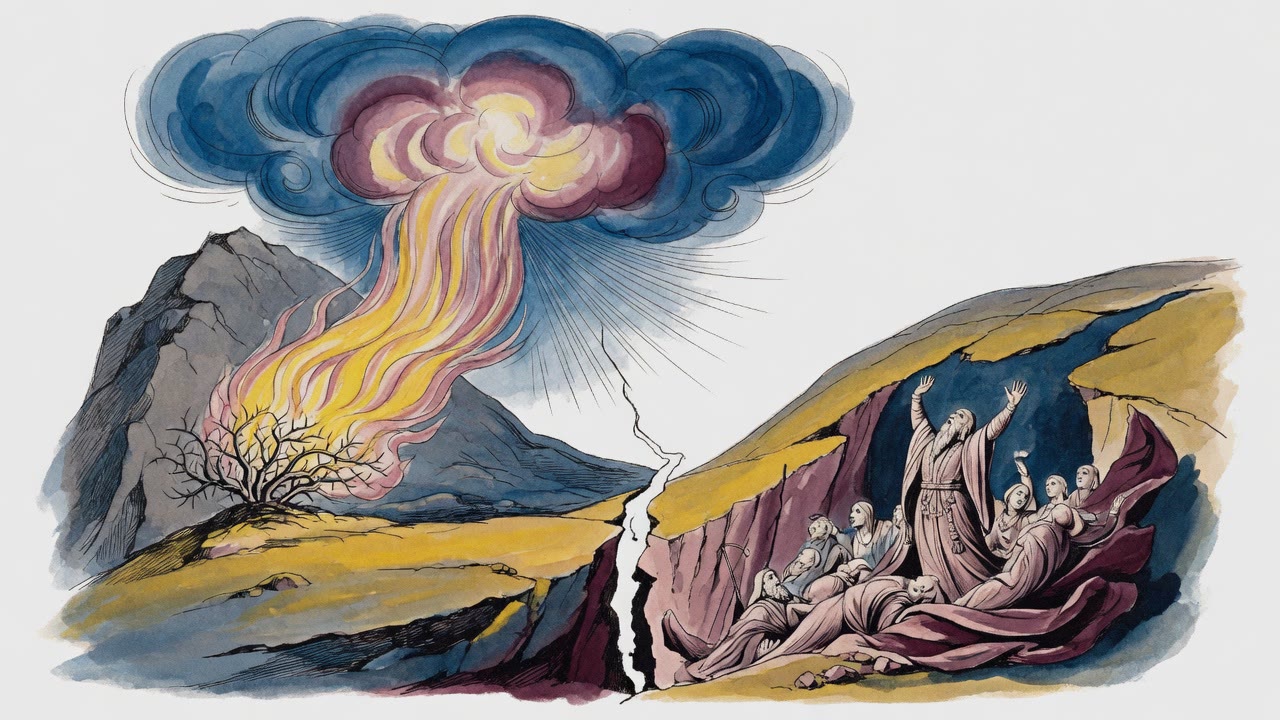
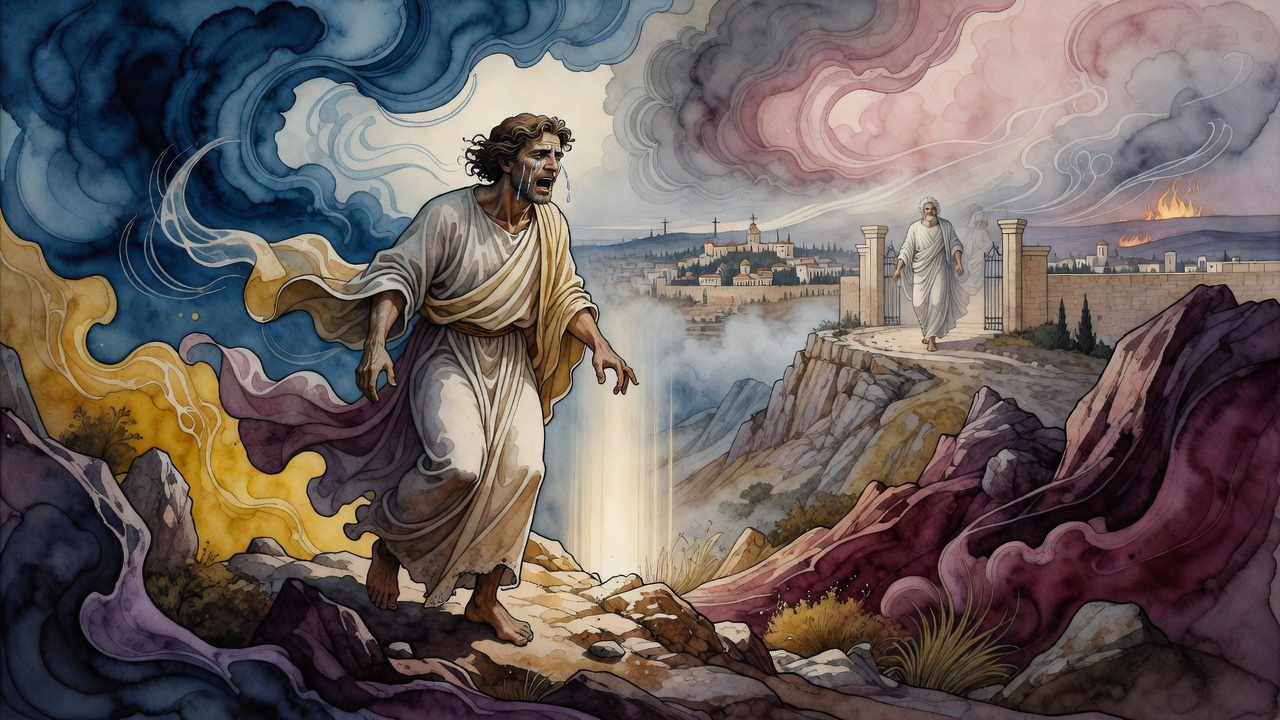
Korah was still speaking when the ground split. Two hundred and fifty men had stood with him against Moses and Aaron. He had called the whole people holy and the priesthood a theft. The tents went down. The households went down. The earth closed its mouth on the argument.
His three sons cried, "Help us, Moses!"
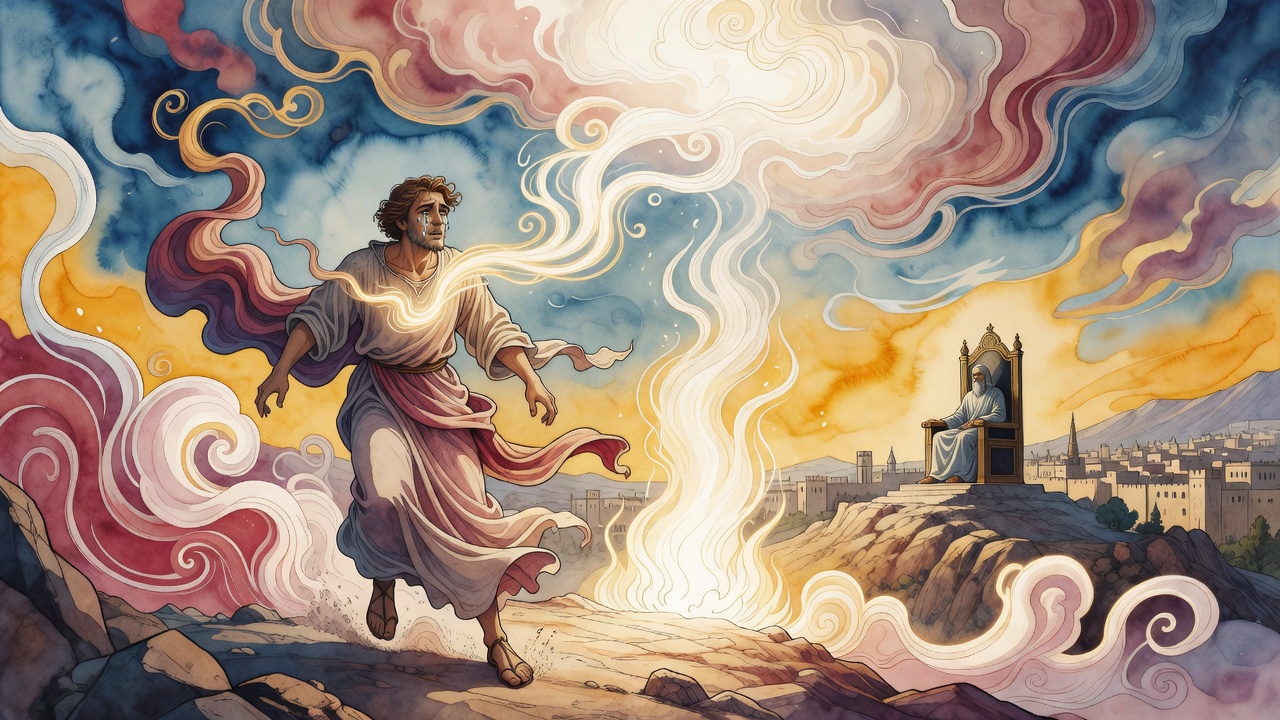
The Shechinah (שכינה), God's dwelling presence, answered that if these men would turn, they should be saved. Repentance was wanted. Nothing else. The sons decided, all three at once, to turn from their father's quarrel. Fire burned around them. Gehinnom (גיהנם), the realm of judgment after death, gaped below. Their mouths would not open. The thought had formed. The words had not.
Three Hearts Turn Without Mouths
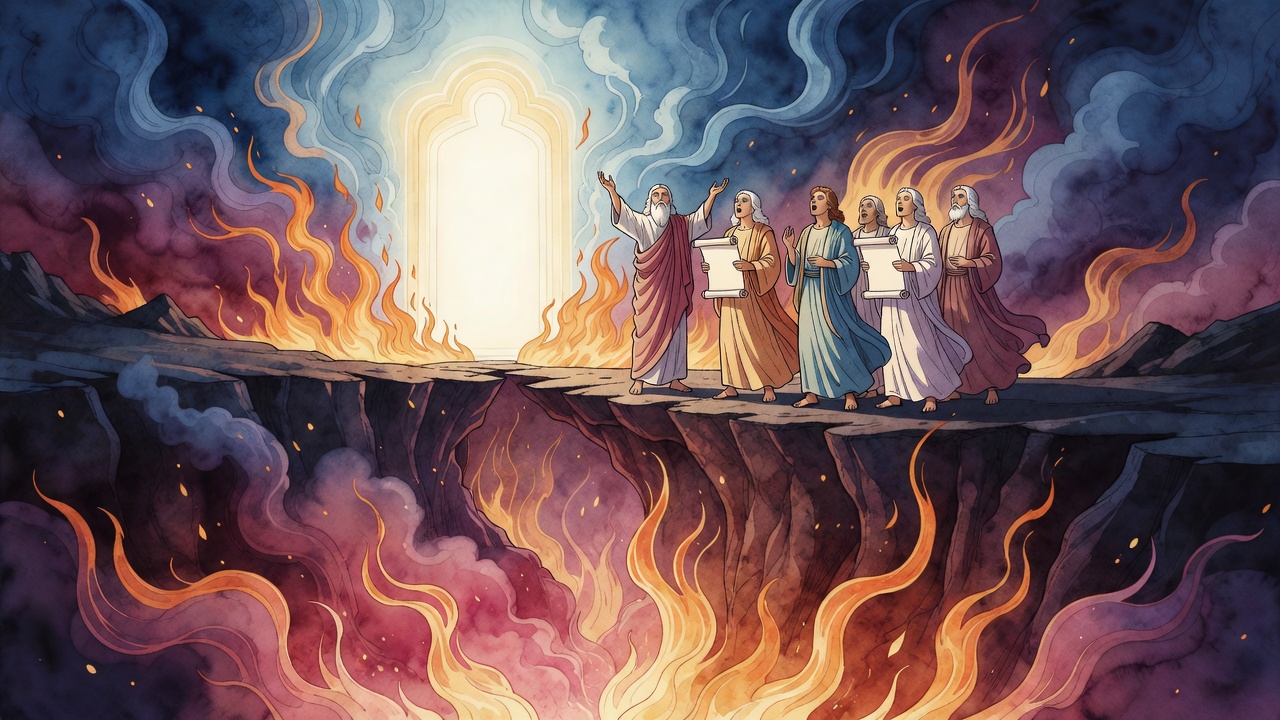
God took the thought. In the sight of all Israel a pillar rose in the pit, and the three sat on it. Heat close enough to feel. The father gone past them. They sat and sang praises sweeter than any living ear had heard. Moses and the camp below stopped to listen. Song was coming up out of the place that had swallowed the tents.
They had not had time to speak with their lips, so they spoke with their hearts. A man going up to a platform once took blank parchment to a judge. The judge asked why nothing was written. "I did not have time," the man said. The sons of Korah had been that man. The page was empty. The heart was not.
Another man, hurrying to the same platform, met a creditor. "Give me what you owe." "Wait until I come down," he said, "then I will pay." The sons said the same to the King. They did not have time to sing now. When they were free, their deeds would be for the King. The heading of the psalm already knew the sentence: "I say, my deeds are for the king" (Psalms 45:2).
The Noblewoman and the Eagles
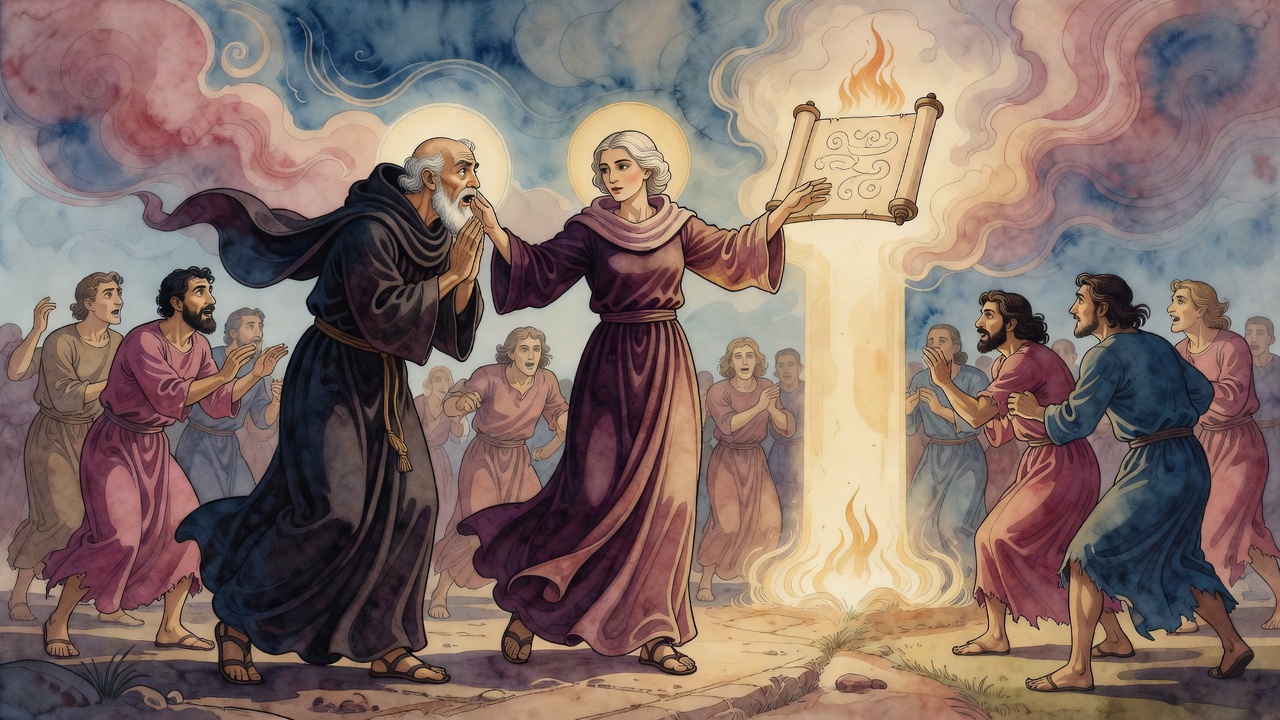
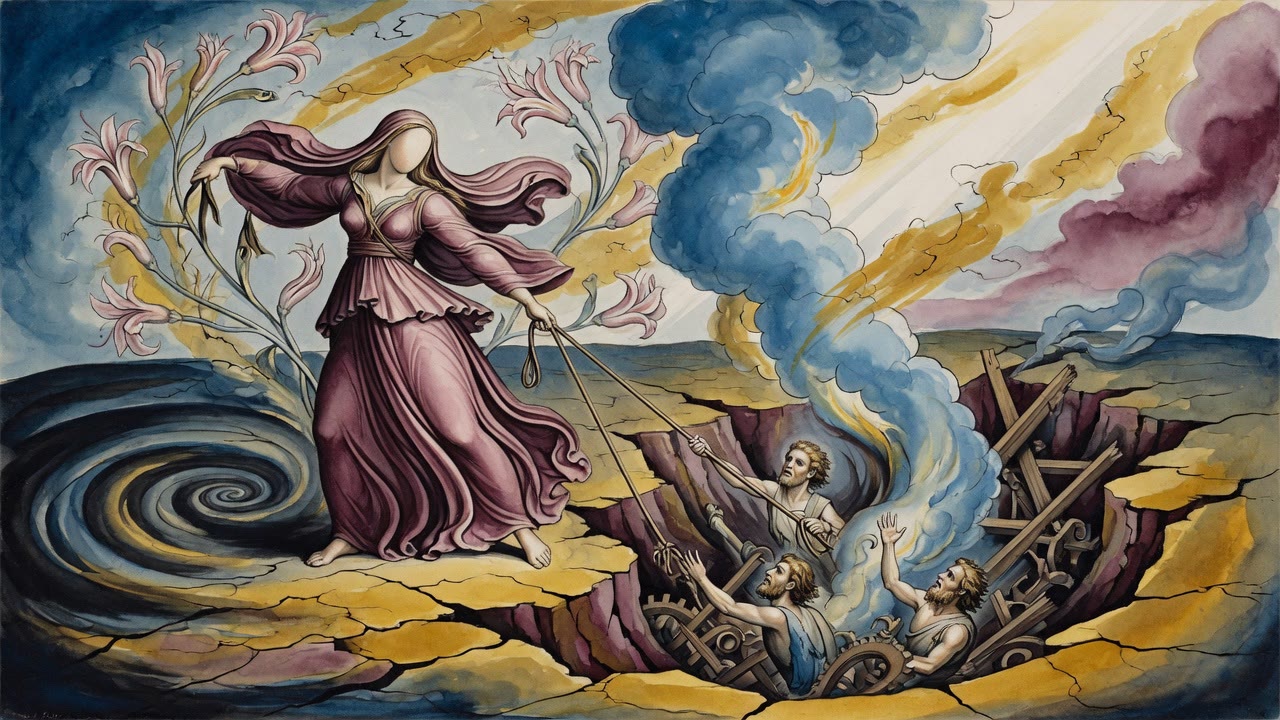
In a street of Rome a noblewoman saw three men being led toward death. She did not turn her face. She went to those who held the ropes, spoke, spent what the ransom cost, and brought the three back alive.
Later the eagle-bearers came through the same street with the imperial standards. Everyone around her bowed. She did not. She had already learned the difference between a power that pulls men out of a sentence and a power that only parades.
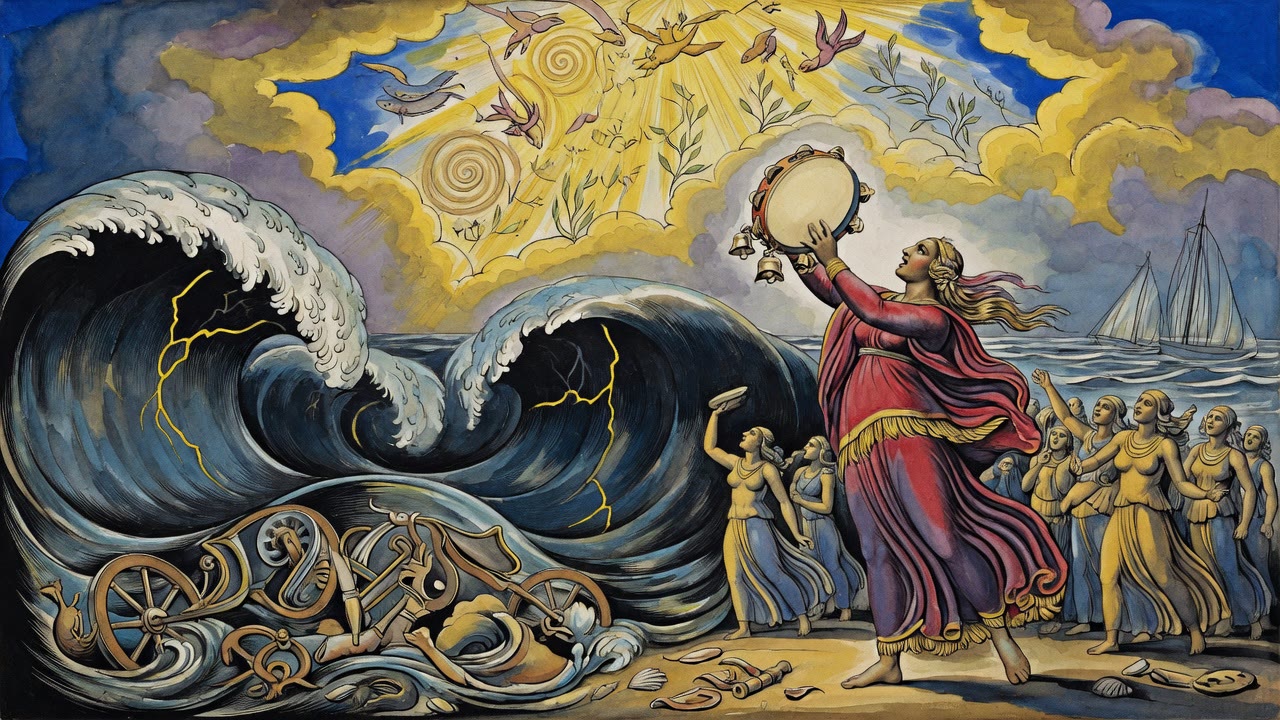
The sons of Korah were those three men. They had disagreed with their father. For Korah, the swallowing. For the sons who turned, a name like a flower. The psalm is headed "on shoshanim" (שושנים), on lilies (Psalms 45:1). Lilies root near water. They are particular about where they stand. The sons rooted on a pillar in the middle of a judgment that could have taken them whole, and they became prophets from that seat. They sang of a day when the Holy One would take hold of the ends of the earth and shake the wicked out of it, and they told the pious not to fear, because judgment would have as little power over them as it had had over three men on a pillar while their father sank.
Smoke From Two Crevices
Rabbah bar bar Chana walked with a merchant who knew the desert. "Come," the merchant said, "I will show you the place where the children of Korah were swallowed."
Two crevices in the ground. Smoke. Rabbah took a scrap of wool, wet it, fixed it to his spear, and pushed it into the crack. When he drew it out, the wool was singed.
"Listen," the merchant said. "What do you hear?"
From the smoke the voices said, "Moses and his Torah are true, and we are liars."
The merchant told him the rest. Each thirtieth day of the month, Gehinnom turns them there the way a cook turns flesh in a pot, and they say it again. Moses and his Torah are true. We are liars.
The pillar had held. The singing had been heard in the camp. The earth still had a mouth. Once a month it opened wide enough for a living man to hear the confession the sons had not had time to speak when the ground first split.
← All myths