Korah Told a Parable About a Widow to Turn Israel Against Moses
Korah did not start his rebellion with a speech. He started it with a story about a poor widow that made every listener hate Moses on the spot.
Table of Contents
 Click for full size
Before the Firepans, Before the Challenge
Most people remember Korah's rebellion as the confrontation: 250 men holding firepans, a challenge delivered face to face to Moses and Aaron, the earth opening and swallowing everyone whole. That is the ending. The midrash is interested in the beginning, which was quieter and more effective than anything that happened with the firepans.
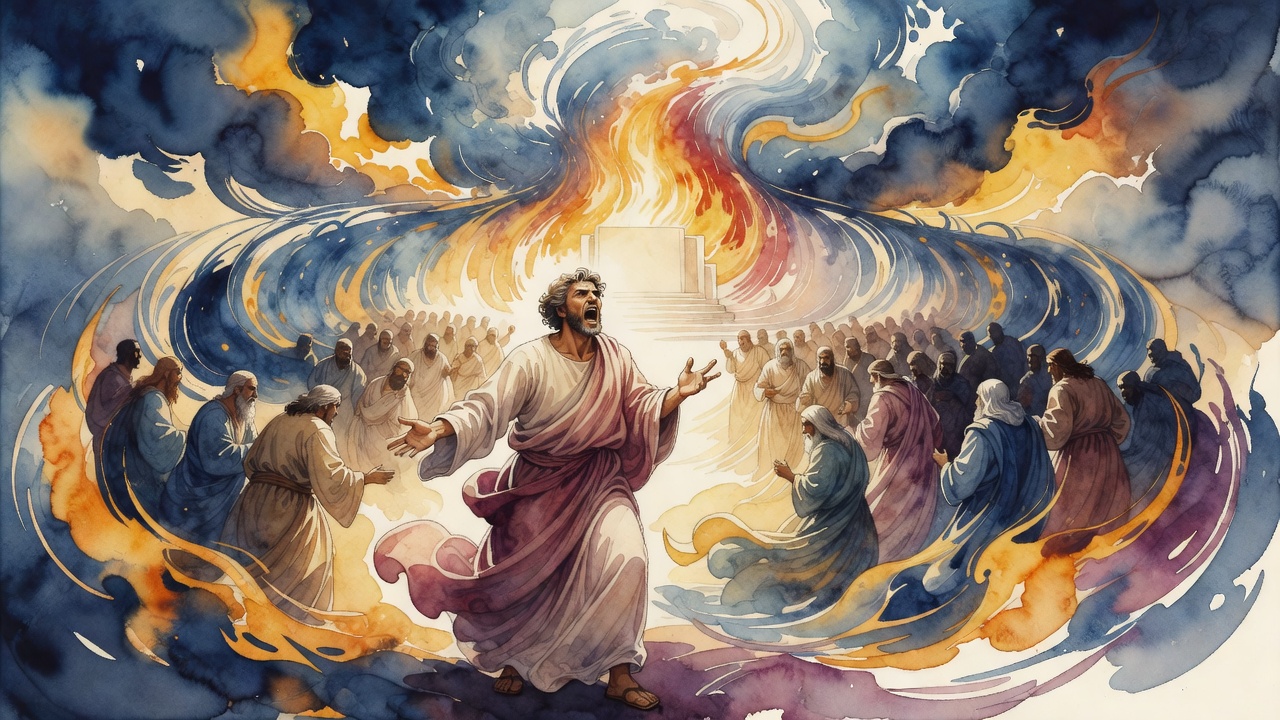
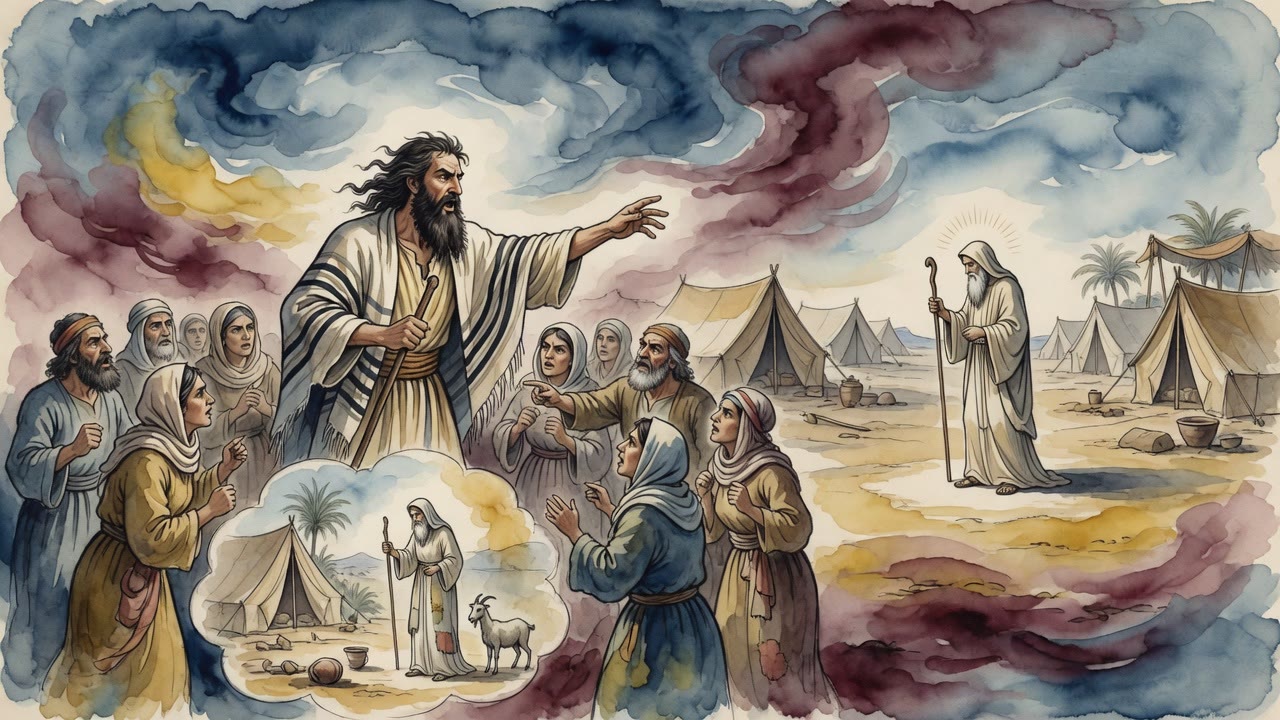
Korah gathered a crowd. Not in the center of the camp. At the edge of it, where people stood and talked about the leadership the way people everywhere stand and talk about leadership: with exhaustion and suspicion and enough plausible grievances to fill an afternoon. He did not announce himself as a rebel. He told a story.
The Widow With One Field and Two Daughters
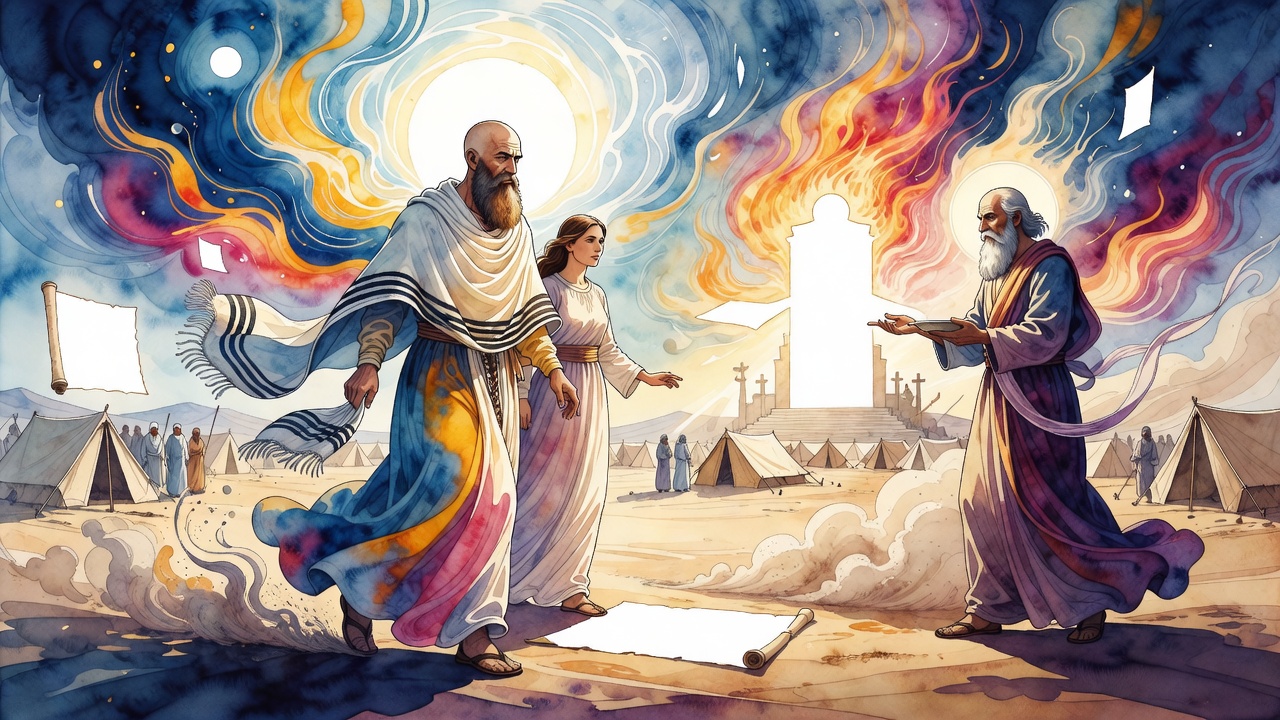
The widow in the story owned one field and had two daughters and was trying to make an honest living in the wilderness, and Moses had been ruining her since before the harvest.
She went to plow, Korah said, and Moses told her it was forbidden to plow with an ox and a donkey yoked together. She went to sow, and Moses told her not to plant two kinds of seed in the same field. The harvest came in, and Moses told her to leave the corner for the poor, leave the gleanings, leave the forgotten sheaves. Then came the tithes: first tithe for the Levite, second tithe, poor tithe, terumah for the priest. By the time Moses was done with her harvest, Korah said, she had almost nothing left.
So she sold the field and used the money to buy two lambs. One to clothe herself with in the cold nights. One to slaughter on the holidays.
Aaron came and told her she owed him the firstborn of the two lambs. She could not refuse a commandment. She gave him one.
Aaron came back and told her to give him the fleece of the remaining lamb, because that too was required.
She could not afford to keep the second lamb anymore. She slaughtered it for her table. Aaron came and told her she owed him the shoulder, the cheeks, and the stomach, the priestly portions.
The woman stood in her empty tent with nothing left of the two lambs she had bought with the money from the field she had sold, and Aaron told her she had sinned by slaughtering a consecrated animal. All of it, everything she owned, went to the priest in one long sequence of legal necessity.
Korah looked at the crowd and let the story sit there.
Moses Against the Story
Midrash Tehillim, whose oldest Palestinian material predates the twelfth century CE, preserves the aftermath. Moses did not respond to the parable directly. He could not. The parable was not false. Every law Korah had enumerated was real. Every requirement the widow had been obligated to fulfill was in the Torah. That was the genius of the parable: it was made entirely of true things arranged in a certain order, and in that order they looked like robbery.
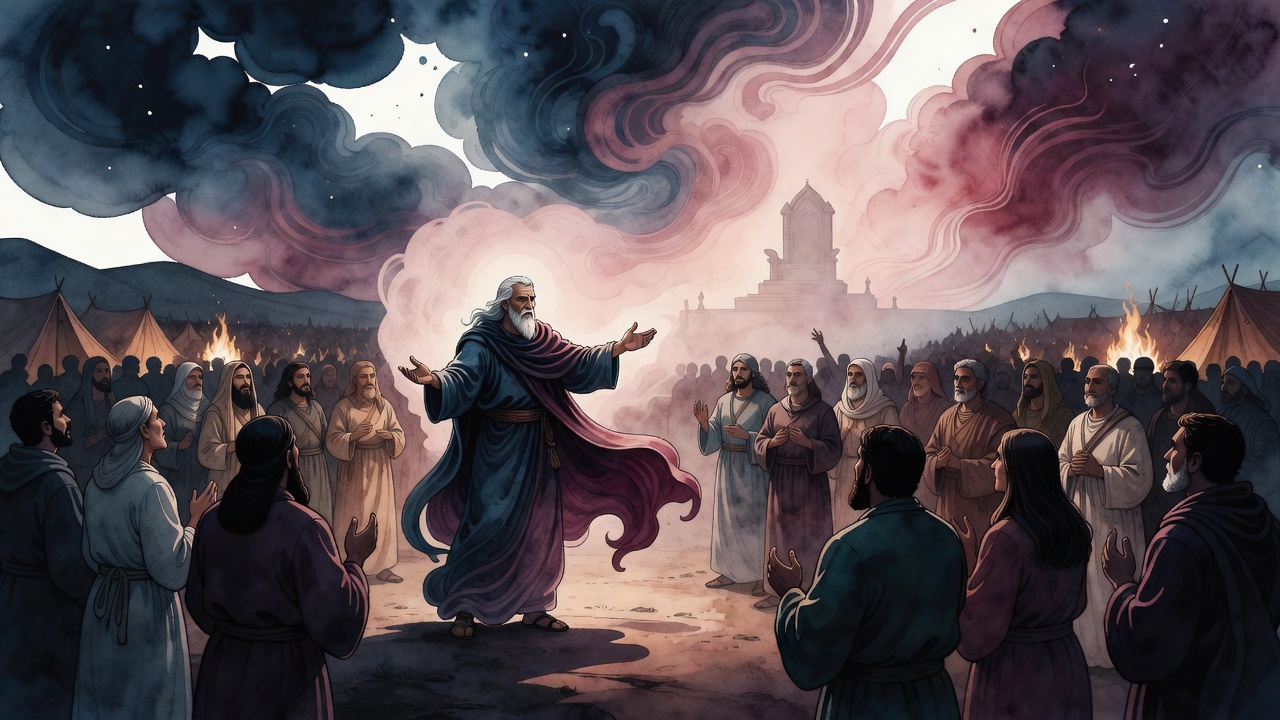
Moses appealed to the Levites instead. Bamidbar Rabbah preserves his words to Korah's followers. He told them what the Levites already had, what their role in the Tabernacle was, what honors had been given specifically to them by God. He was asking them to weigh the parable against what they actually knew to be true about how the system worked. He was asking them to weigh the parable against what they knew to be true.
Korah's followers had heard the story. The hearing changes things that subsequent facts cannot easily undo.
The Sons Who Did Not Follow Their Father Down
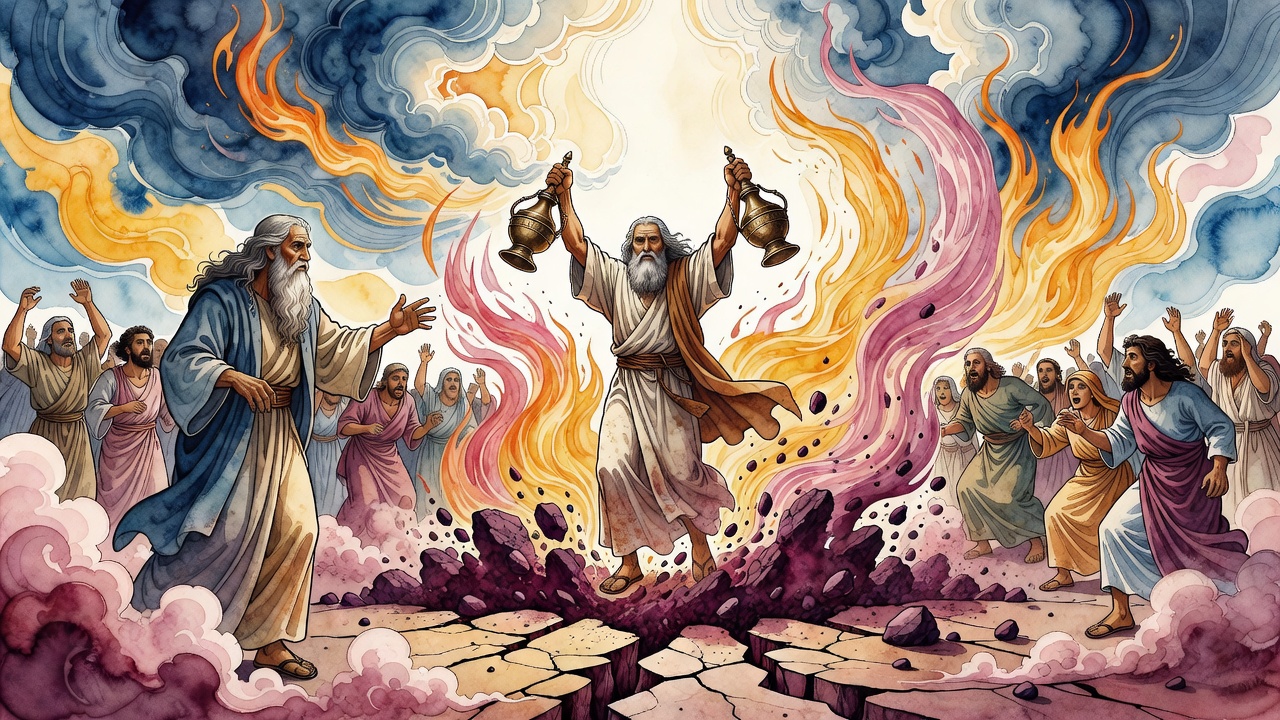
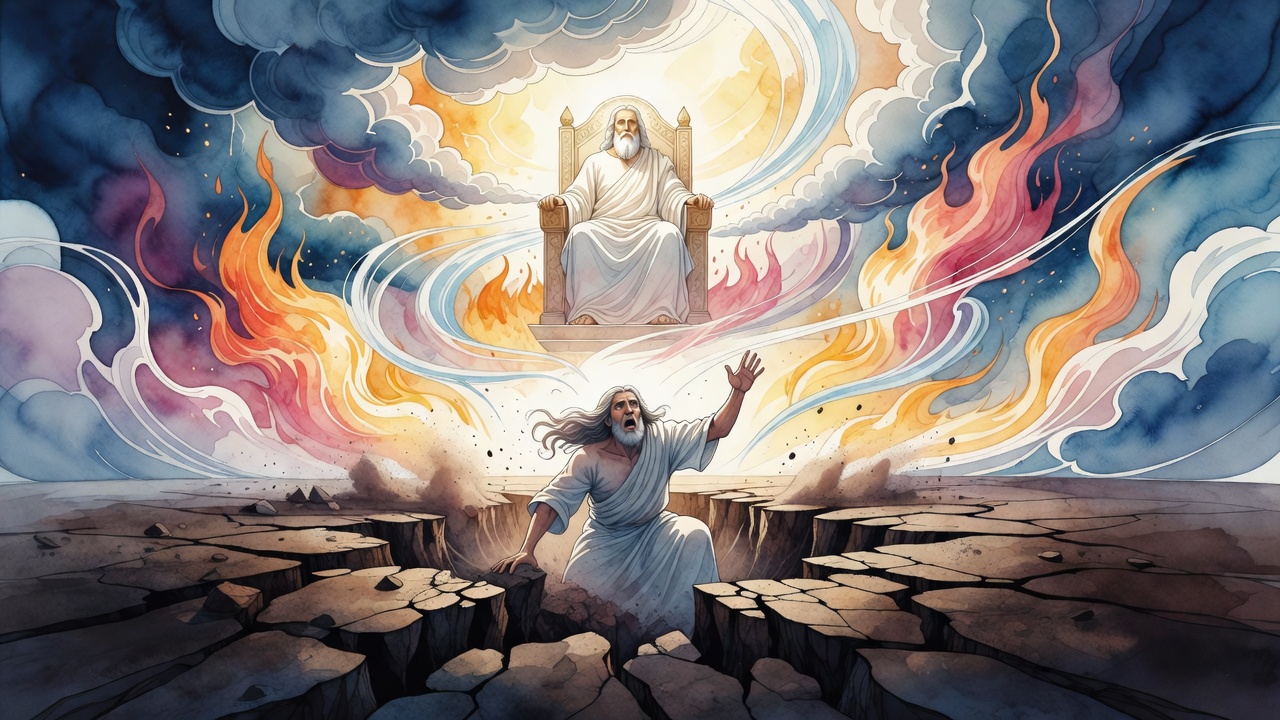
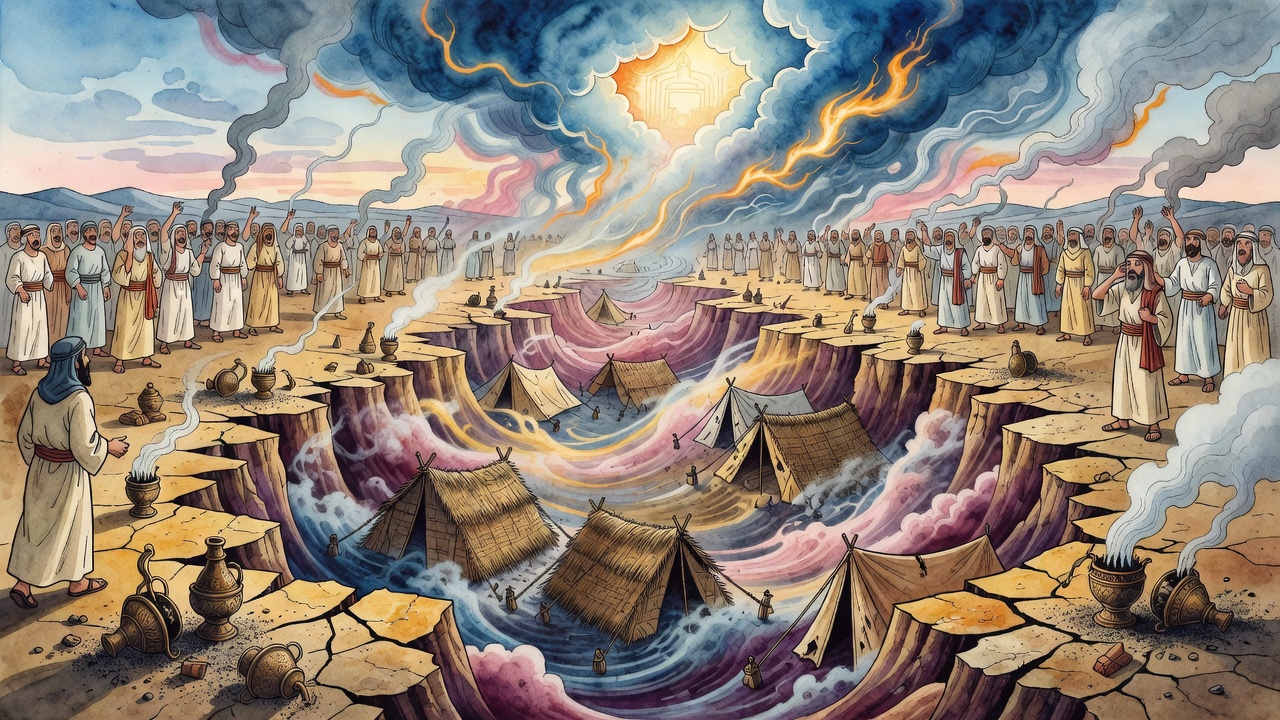
The earth opened. Korah and his household went into it. The 250 men holding firepans were consumed by fire from the altar. The rebellion ended the way rebellions end when the divine presence is this close to the proceedings.
But three of Korah's sons had not followed him. At the last moment, the tradition says, they repented. They stood on the edge of the opening in the ground and stayed on the right side of it. The tradition preserved a detail about where they ended up: a special platform was prepared for them in the depths, partway down but not at the bottom, where they sat and sang. The Psalms attributed to the Sons of Korah, eleven poems of extraordinary beauty in the Book of Psalms, are said to have been composed in that place, by men who watched their father go down and chose to stay.
← All myths