The Earth That Swallowed Korah Heard Him Confess from Below
Korah used a widow's grief to fuel his rebellion. The earth waited until he had made his choice, then swallowed him alive while he was still confessing.
Table of Contents
 Click for full size
A Rebellion Born From a Widow's Grief
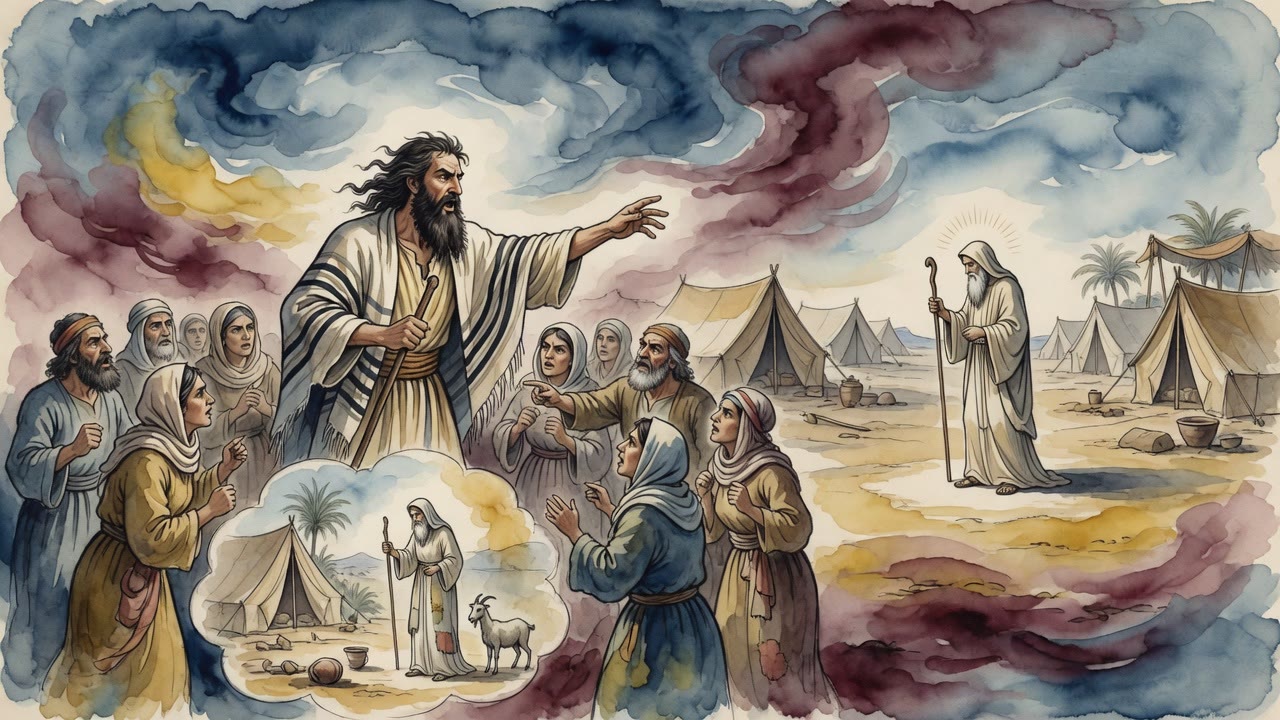
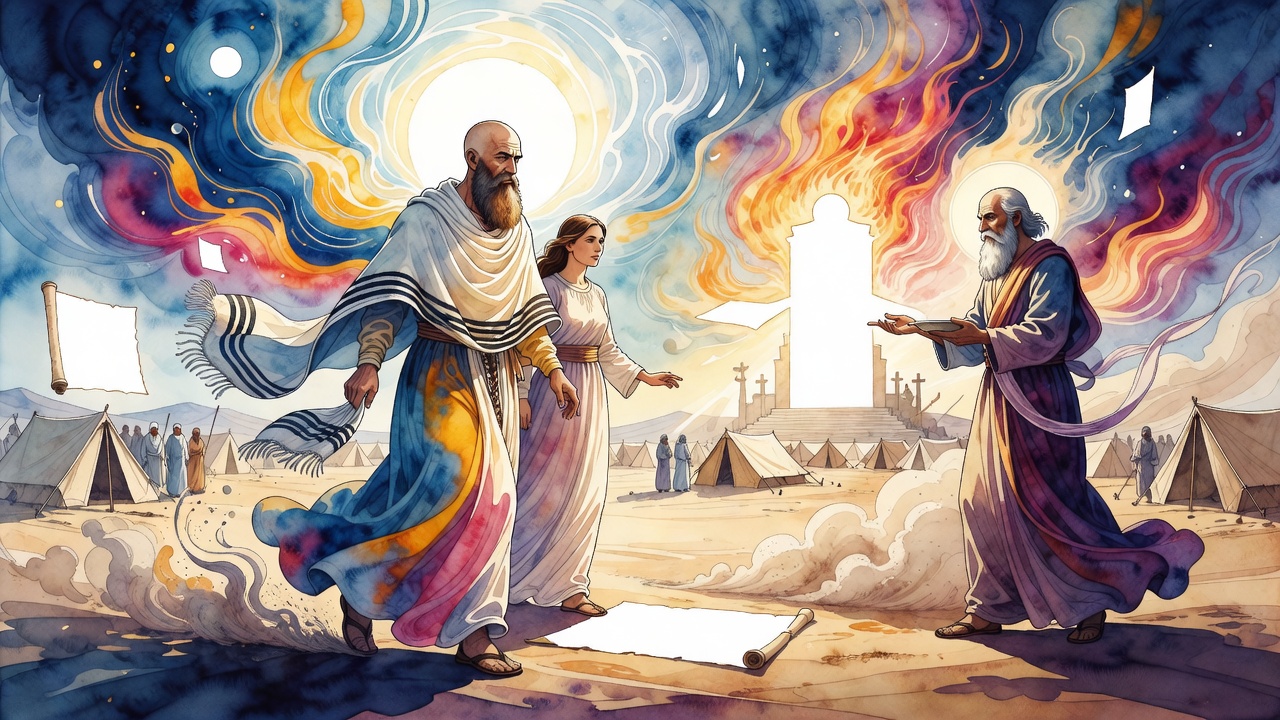
There was a poor widow. She had a field, two daughters, and a single ewe-lamb. She fed the lamb from her own bread and let it drink from her own cup and raised it as one raises an animal that represents most of what you have. When the lamb grew and was sheared, Aaron came to claim the firstling of the fleece as the priests' due. The widow argued that the lamb was all she owned. Aaron invoked the law. The widow went to Korah and wept.
Korah confronted Aaron. Aaron refused to bend. When the ewe-lamb bore its first offspring, Aaron came for that too - the firstborn animal belongs to the priest. The widow came to Korah again. This time she was broken. She sacrificed the lamb in front of her daughters and ate it herself rather than surrender it. Aaron came for the parts that belong to the priest. She gave them. Aaron took them and left. The widow had nothing.
Korah used her grief as kindling. He went to the princes of every tribe and every great man of Israel and spent two months building his coalition, gathering two hundred and fifty men of renown, men with standing and names, and then he went to Moses and Aaron and told them they had taken too much.
What Korah Said and What He Meant
"All the congregation is holy," Korah said. "The Lord is among all of them. Why do you lift yourselves above the assembly of the Lord?" It was a speech that could be delivered as theology or as accusation, and Korah delivered it as both simultaneously. The whole congregation had been called holy at Sinai. Moses and Aaron had been elevated above the rest of the camp in ways that concentrated power in a single family. The tradition insists that Korah's error lay in the conclusion he drew: that the elevation of Moses and Aaron was their own doing, their own ambition, their own grasping after what should belong to everyone.
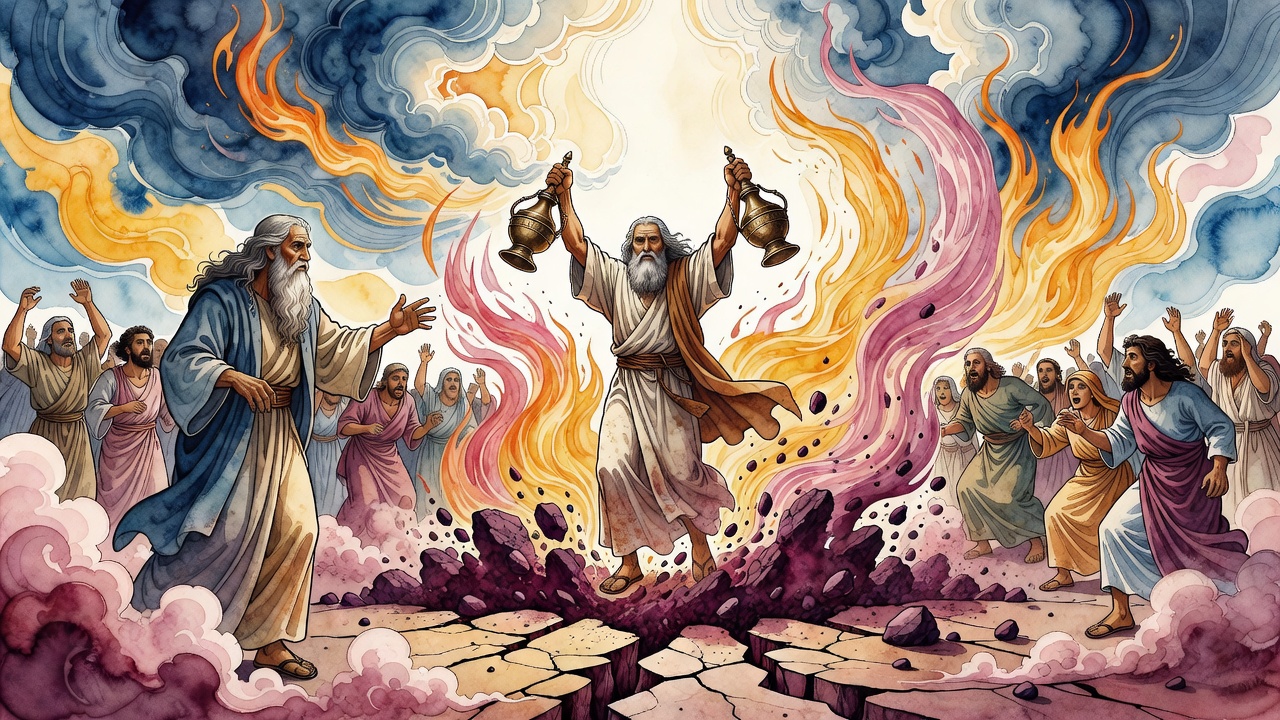
Moses fell on his face. Then he made a counter-proposal. "Tomorrow morning," he said, "the Lord will show who is holy and who belongs to the Lord. Bring fire pans before the Lord, all two hundred and fifty of you and Aaron too, and the man the Lord chooses will be the holy one. Come tomorrow."
The Ground That Opened
In the morning, Korah assembled the whole congregation against Moses and Aaron at the door of the Tent of Meeting. The glory of the Lord appeared to the whole congregation. The Lord told Moses and Aaron to separate from the congregation so he could consume them all in a moment. Moses and Aaron fell on their faces and prayed: "God of the spirits of all flesh, shall one man sin and you be angry with the whole congregation?"
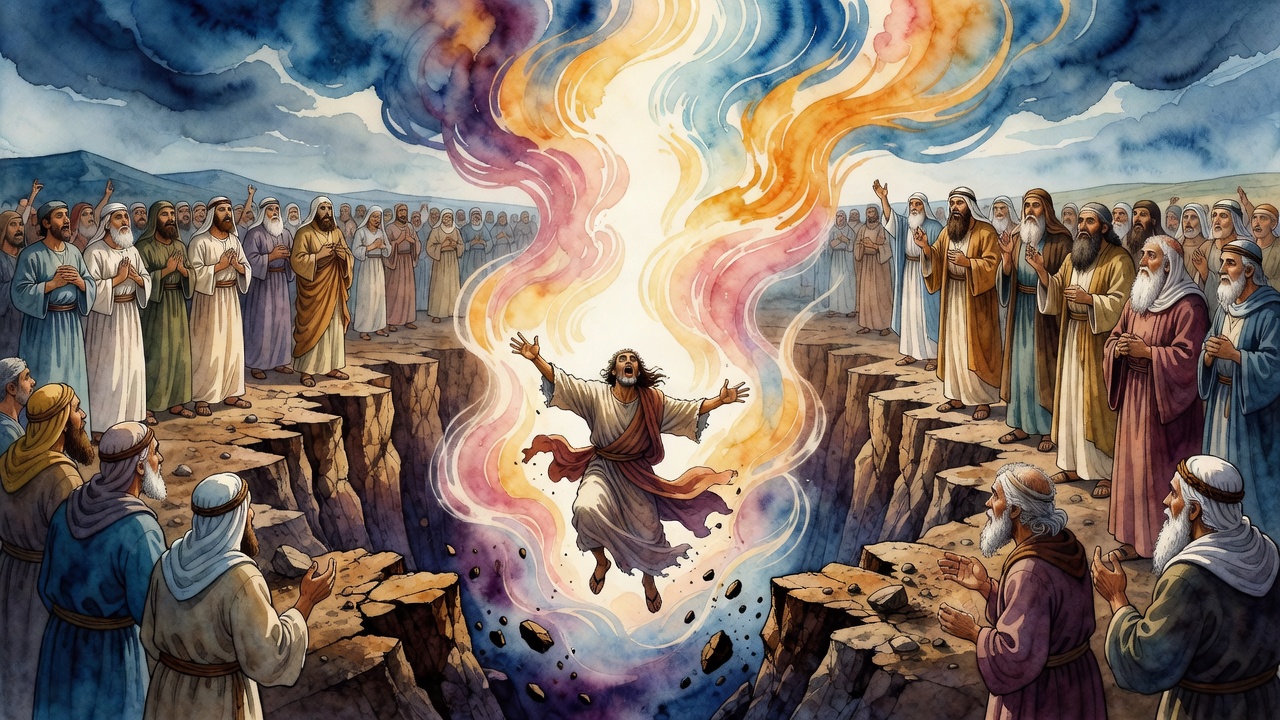
The Lord told everyone to move away from the tents of Korah and Dathan and Abiram. Moses went to those men and the elders of Israel followed him. He told the congregation: "If these men die the common death of all men, then the Lord has not sent me. But if the Lord creates something new - if the ground opens its mouth and swallows them and everything belonging to them and they go down alive into the pit - then you will know that these men have spurned the Lord."
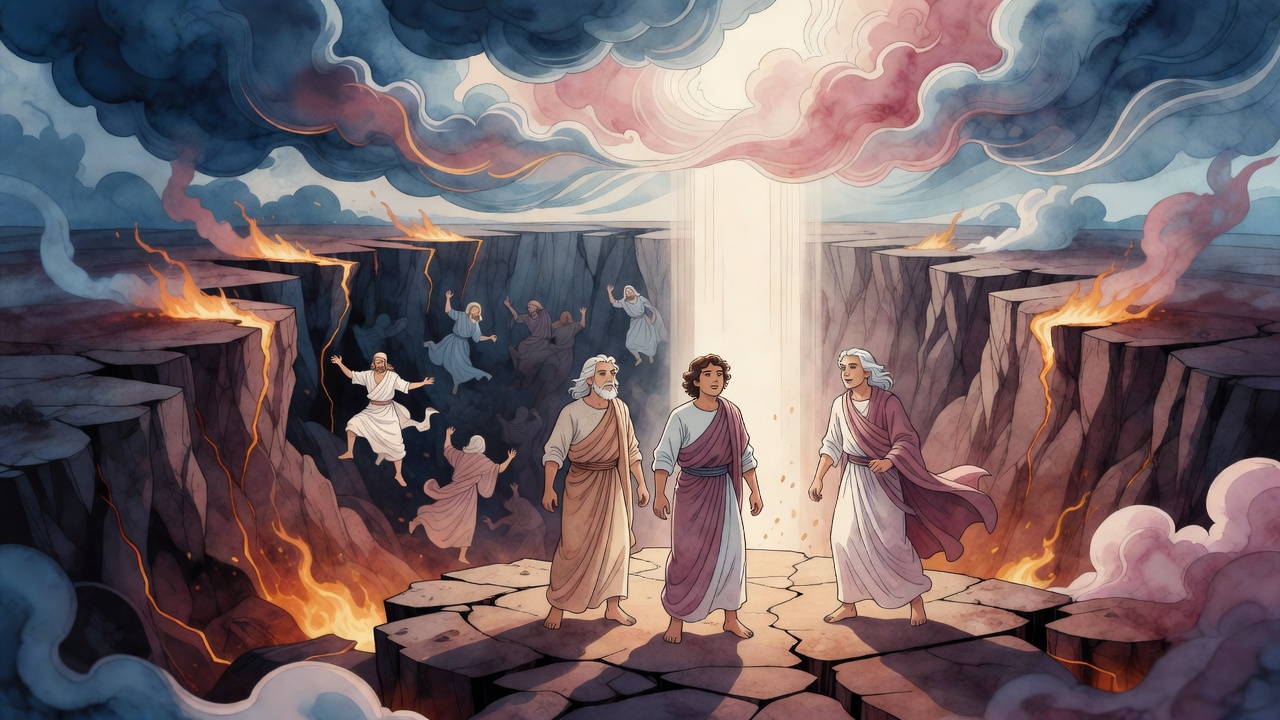
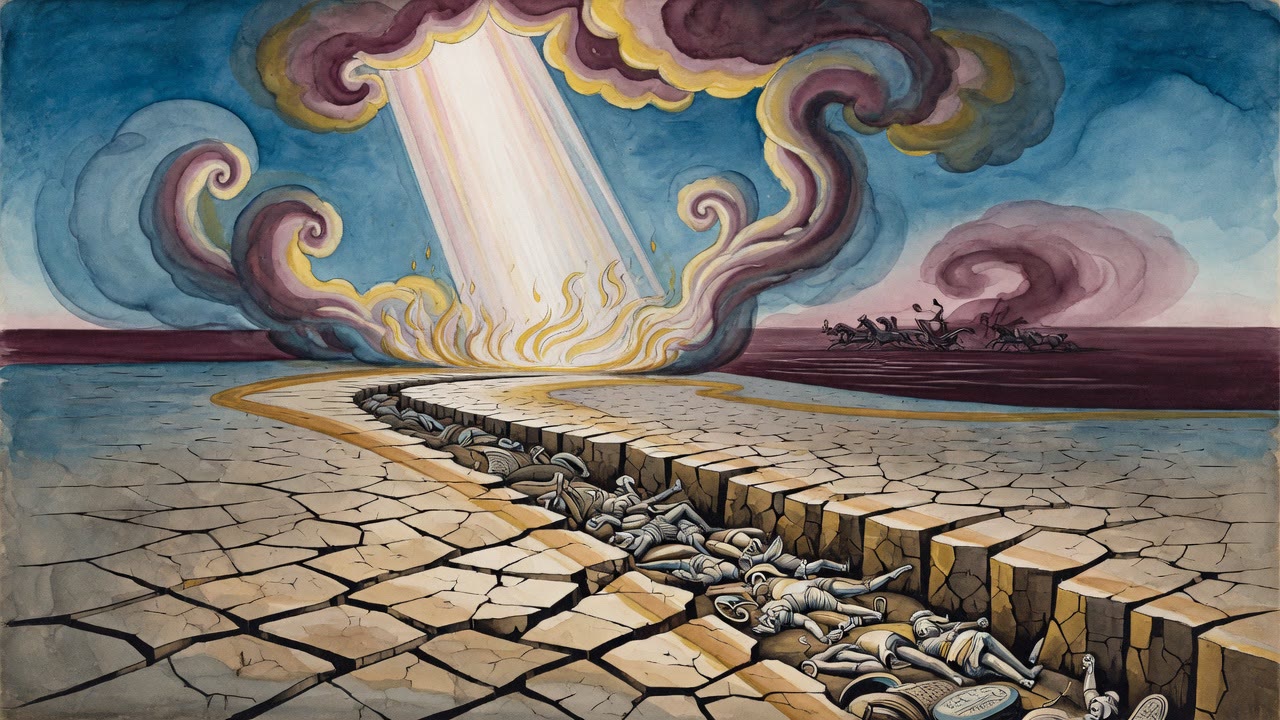
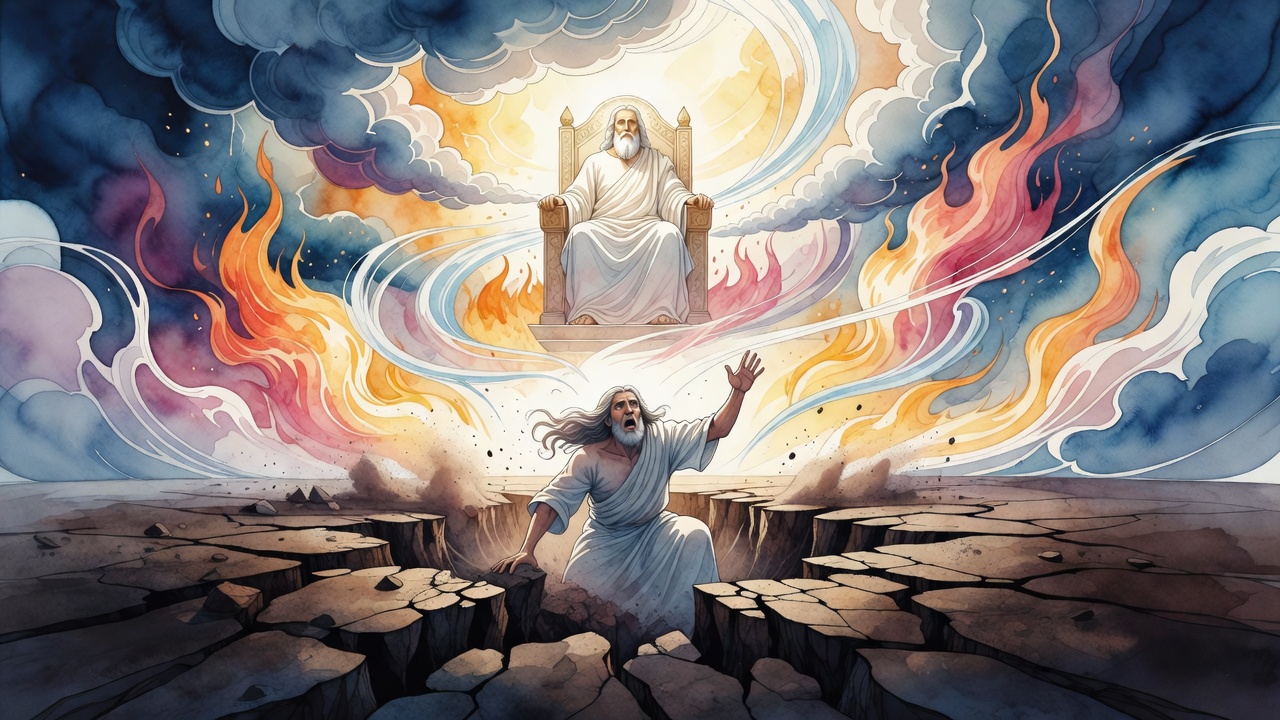
The ground split open as he finished speaking. It swallowed Korah and Dathan and Abiram and their households and all the men who belonged to Korah and everything they owned. They went down alive into the pit and the earth closed over them.
The Voice From Below
The tradition that preserved this account did not let Korah disappear entirely. His sons did not die with him - the text of Numbers 26:11 notes this without explanation. The Psalms of the sons of Korah, a collection of eleven psalms in the Hebrew psalter, are attributed to the family that survived. And the tradition of the Mouth of the Earth - one of the ten things created at twilight on the eve of the first Shabbat - holds that the earth that opened at Korah's rebellion was not simply geological. It was appointed. It had been waiting since before Sinai for this exact use.
The Chronicles of Jerahmeel preserves the tradition that Korah confessed from below, that his voice could be heard in the pit acknowledging Moses as true and his own teaching as false. The earth had swallowed him alive and he was still alive in it and the thing he had spent two months building - the case against Moses - he was dismantling with his own voice from inside the ground.
← All myths