Joshua Toured Gehinnom and Solomon Built Over Its Mouth
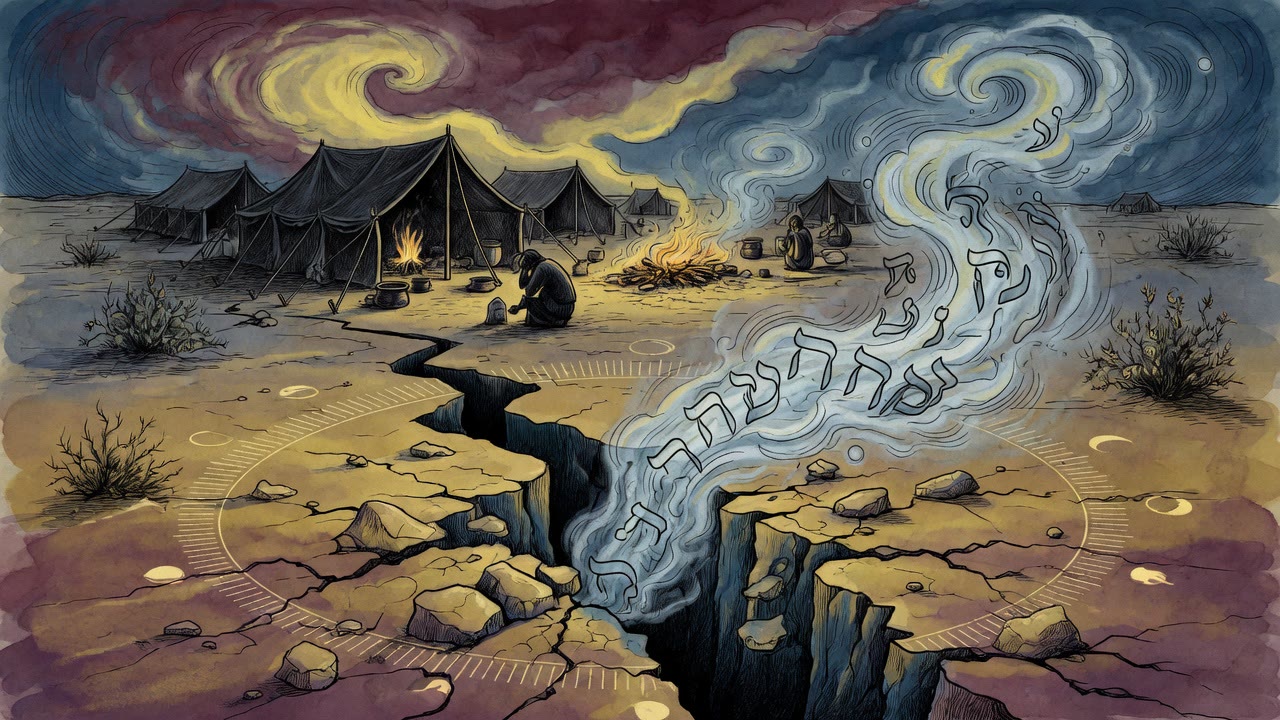
The Messiah would not take him down. Joshua walked the seven chambers anyway. Solomon built the House over the same mouth and never went in.
Table of Contents
Joshua ben Levi stood at a wall of fire and asked again. Show me Gehinnom.
 Click for full size
The Messiah would not. "It is not fitting for the righteous to see it," he said. "There are no righteous people there." Joshua did not step back. He wanted the chambers, not a rumor of them.
The Angel Who Could Not Measure
He sent for the angel Qipod to measure Gehinnom from end to end. Qipod could not. In that hour Rabbi Ishmael and Rabbi Shimon son of Gamliel and ten other pious men were being put to death, and the measure would not hold. Joshua went to Qipod himself. The angel walked him as far as the fire at the gates. The Messiah came too, against his own warning.
The wicked inside saw the Messiah's light and cried out. "This one will bring us out of this fire!"
The cry did not open the gates. Joshua stepped through anyway.
Lions of Fire and a Spared Son
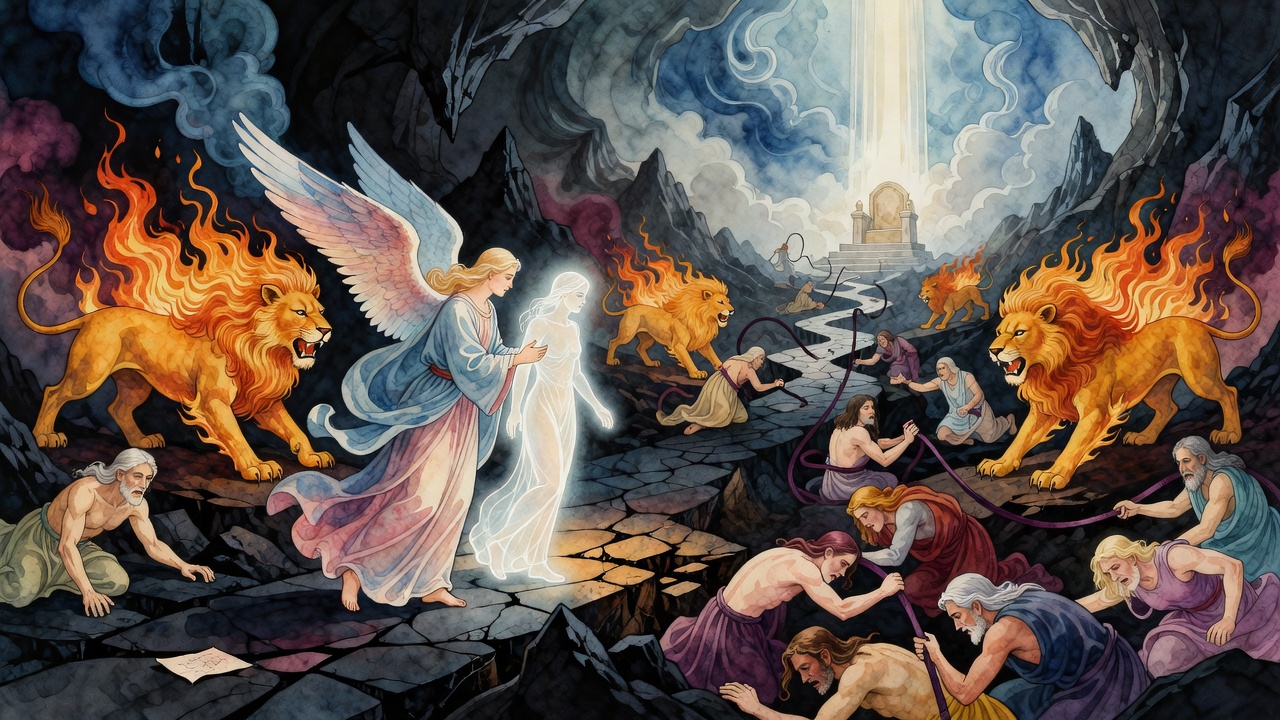
The first chamber ran a mile long and a mile wide. Open pits. Lions made of fire. Two brooks cut through it, and when the wicked fell in, the lions stood over them and threw them back into the flames. Joshua watched a body try the water and fail.
The second held nations, with Absalom set over them. The nations turned on him. If we sinned because we never took the Torah, what did you do? Your fathers stood at Sinai. Absalom did not argue the law. "I did not listen to my father," he said. The punishing angel Qushiel struck with a rod of fire, seven times by day and three by night. Absalom was pulled out each time. Sinai still covered a son who had hunted his own father.
The pattern held. Korah in the third. Jeroboam in the fourth. Ahab in the fifth. Micah in the sixth. Elisha ben Abuya in the seventh. Each Israelite sinner was hauled from the worst of it by the merit of ancestors who had said, we will do and we will hear. The dark in those rooms was the dark from before the first day. No soul could see the face next to it.
Elijah Showed Him the Gates
Later Joshua was walking when he met the prophet Elijah. "Would you like to be brought to the gate of Gehinnom?" Elijah asked.
"Yes," Joshua said.
Elijah showed him men hanging by their hair. They had grown it to look ready for sin. Others hung by their eyes, for following a gaze where it should not have gone. Others by their noses, for perfume used as a net. Others by their tongues, for slander. Others by their hands, for theft. Others by their feet, for running to do the harm. Women hung by their breasts for drawing men on purpose.
Deeper in, men were forced to eat coals. They had blasphemed. Others swallowed gall for eating on a fast. Others chewed sand until their teeth broke. God spoke to those mouths. When you ate stolen food it was sweet. Now you cannot eat even this.
Some were thrown from fire to snow and back. They had turned the poor from the door. Some were driven mountain to mountain like sheep, with death as the shepherd. For every sin an angel took a turn, like a creditor collecting. Three kinds never rose: the adulterer, the one who shames a neighbor in public, the one who swears false. Even Gehinnom kept Shabbat. On Friday the sinners were led to two mountains of snow and left until Saturday night. Some hid snow under their arms for the week. God rebuked them. You steal even here.
Joshua came back with the map in his mouth. He did not go silent. He taught.
The Page Who Lost His Wages
Solomon never asked to see those chambers. He had a different problem. A malicious spirit kept snatching the money and food of a page the king loved. It happened again. Solomon could not catch the thief. He prayed until the archangel Michael stood in front of him with a small ring.
"Take, O Solomon, king, son of David," Michael said. "The gift which the Lord God, the highest Zebaot, hath sent unto thee." With it he would lock the demons of the earth, male and female, and with their help build Jerusalem. He must wear the seal. The engraving was a Pentalpha, a five-pointed mark.
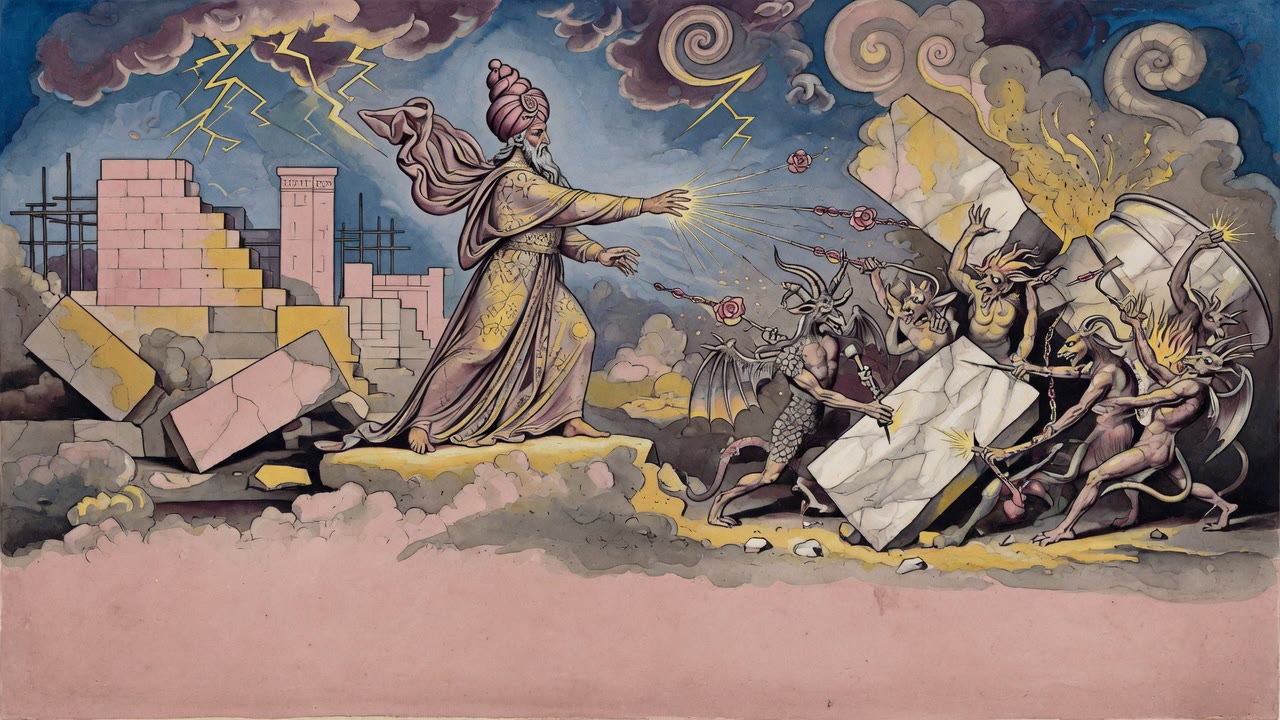
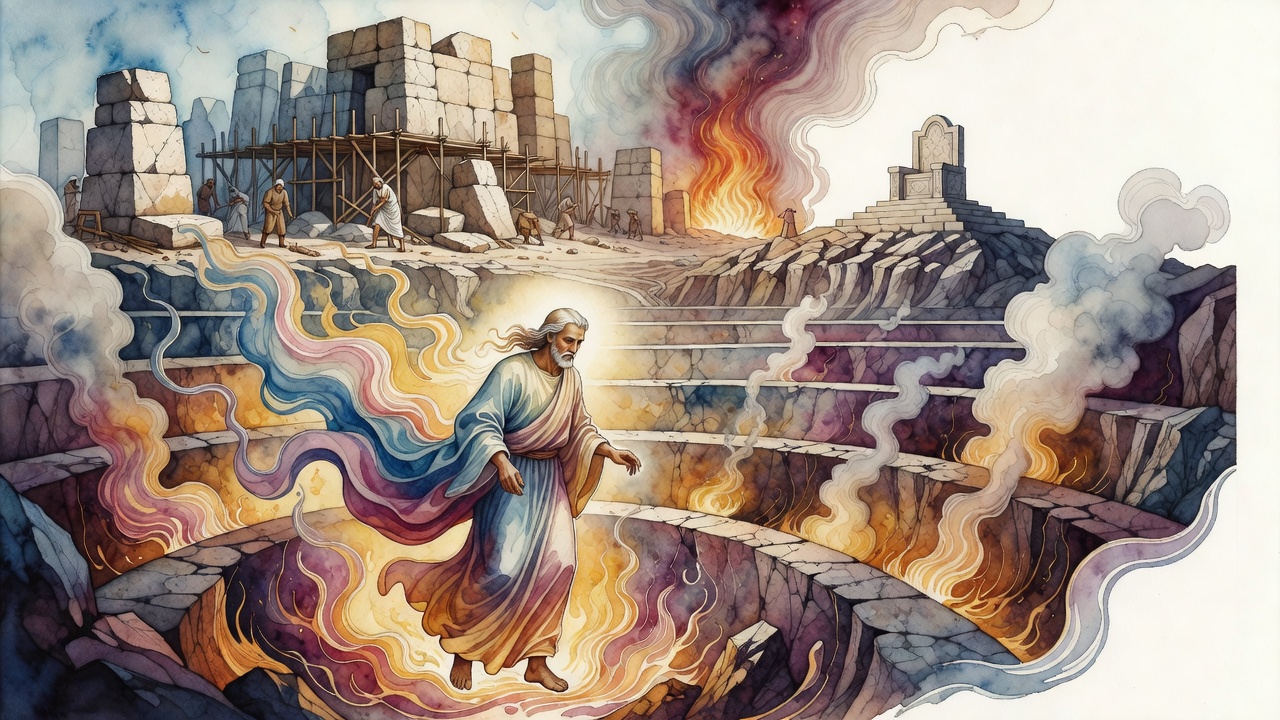
Solomon put the ring on. He called the demons up and asked each one a name, and the star or sign that ruled it, and the angel it answered to. One after another they were bound. He set them to work on the House. Some hauled water. Some dressed stone. The same kind of beings Joshua had seen below were now lifting weight in the sun.
The Roof Over the Mouth
The mountain of the House sat over the mouth of Gehinnom. Solomon built worship on top of the place Joshua had walked. The bound spirits pressed stone against stone above the domain they knew. Joshua had come back from fire lions and hanging mouths and kept teaching. Solomon sent a workforce into a dark he refused to tour.
The chambers stayed. The House rose. The mouth of Gehinnom had been seen and had been roofed. It had not been closed.
← All myths