Solomon Wrote the Line That Saved a Merchant at Sea
Below deck the crew talked as if the hold were empty. Two kav of gold dinars still lay under the merchant's hand.
Table of Contents
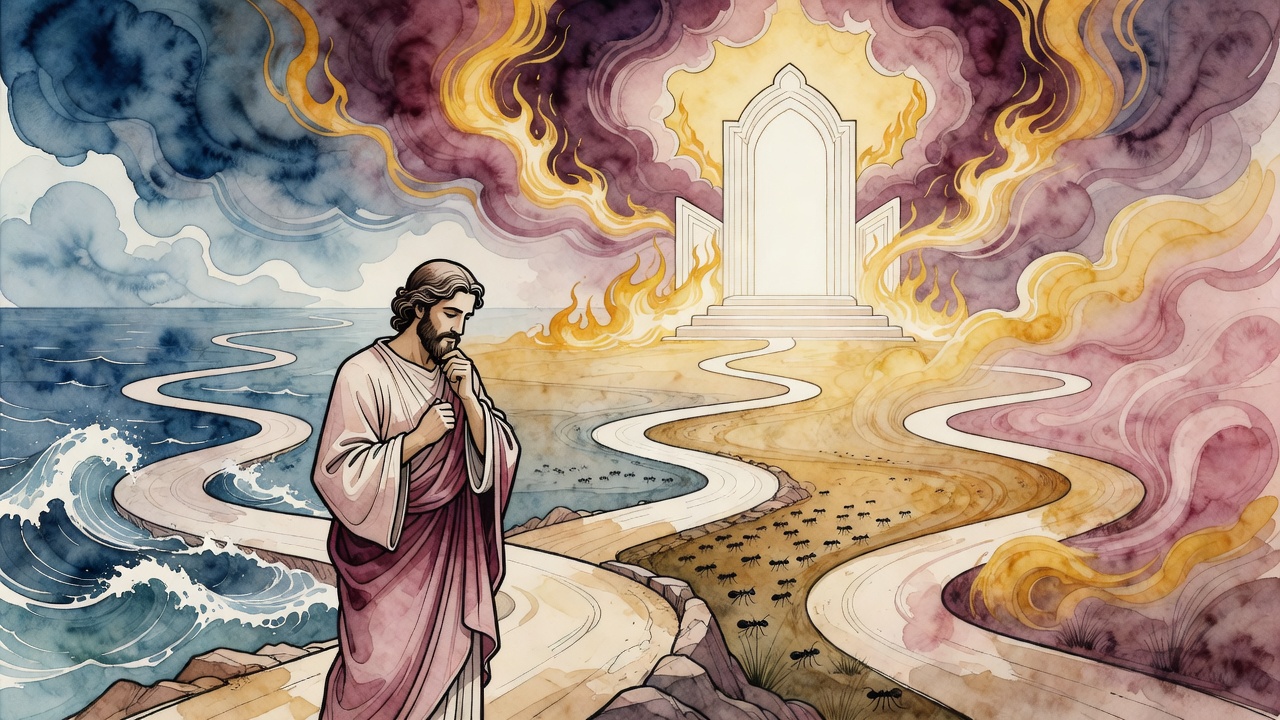
The captain put them below, in the dark part of the hold where paying passengers do not usually sleep. That was the first thing the merchant should have read. He did not. He lay down in the dark. Above him the crew talked the way men talk when they are certain no one is listening.
 Click for full size
"Once we are out to sea we kill them both. Over the side. Then we take the load of dinars."
The ship was already past sight of land. There was no port to make for, no weapon in the baggage that would have mattered against a crew. The only thing on board the sailors wanted was the gold, and the gold was lying under his hand.
Two Kav of Dinars in the Hold
He had taken ship with his son and carried two kav of gold dinars in his baggage. A kav is not a pocket. It is a load. In the dark he put his palm on the sacks and felt the coins shift, and he understood that the crew would not stop at theft. Theft still leaves a witness.
The boy slept. The merchant did not. Every creak of the hull sounded like a man coming down the ladder with a knife.
He Picked a Fight With His Son
So he started shouting at the boy.
He made it ugly and public, the kind of quarrel that empties a deck of sympathy, a father in a rage over nothing. In the middle of it, with the crew watching a family embarrass itself, he snatched up the dinars and flung them into the sea.
Two kav of gold went into the water in front of the men who had been planning to murder him for it. Then there was nothing left on that ship worth killing for. The voyage went on. The merchant and his son came into port alive.
The Governor Quoted Solomon
The merchant went straight from the harbor and laid a complaint before the governor of Caesarea. The governor jailed the crew, convicted them of the conspiracy, and ordered them to pay the man a load of dinars.
They did not accept it. They had never touched the money. They had not laid a hand on him or on the boy. They had planned, and planning is not taking.
"On what basis do you find us guilty?"
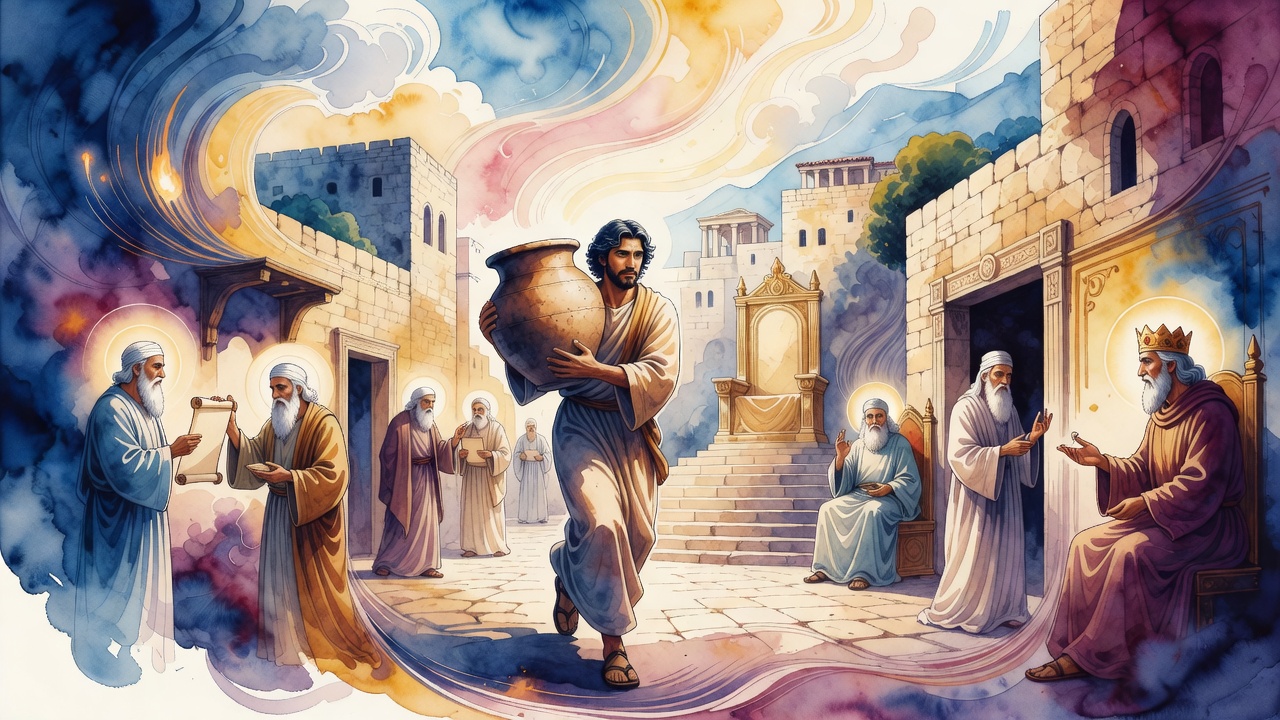
"On the basis of Solomon, king of Israel," the governor said. "A time to seek and a time to lose. A time to keep and a time to cast away" (Ecclesiastes 3:6).
A time to seek is peacetime. A time to lose is wartime. A time to keep is when keeping a thing is good for you. A time to cast away is when it has stopped being good for you. The man in the dark hold had done his arithmetic and thrown the gold where it could no longer buy his death. The men who put him in that position would pay for what he had been forced to drop.
The Table That Never Lacked a Rose
The king who wrote that line had never in his life been short of anything. Three hundred and ninety-two are counted in the roll of his slaves and their children. His officers provisioned the court and lacked nothing, and lacking nothing was meant exactly.
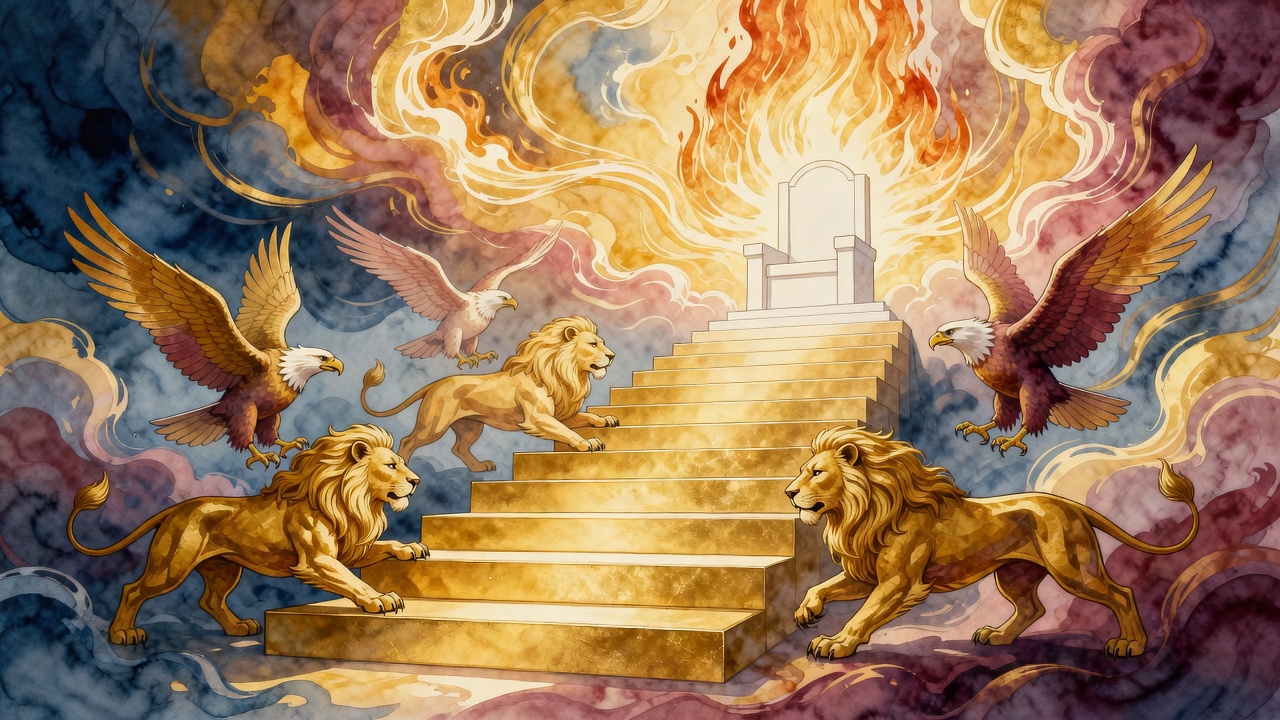
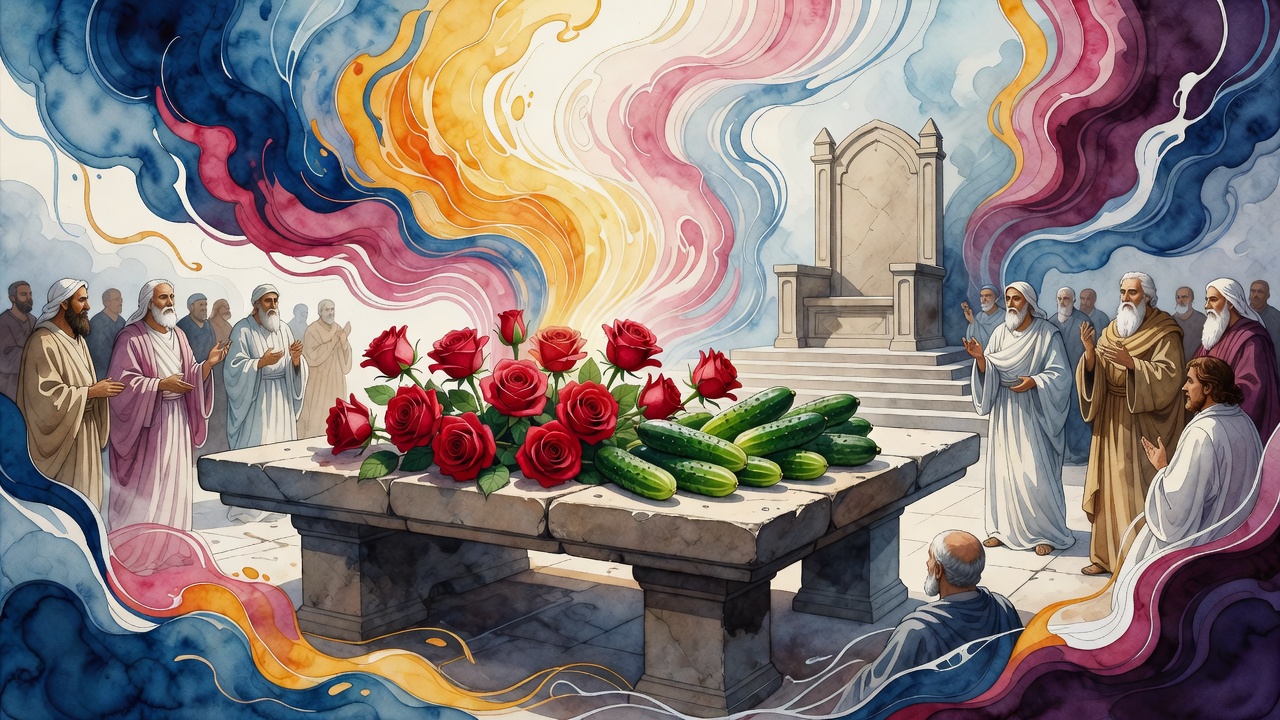
Solomon's table never wanted a rose in summer or cucumbers in the rainy season. Both lay there together, out of their months, tasted all year round. Fowl grew fat in cages for that table. And there was one bird that was not raised anywhere near the palace, a large bird, which came up and settled on the wood in front of the king every single day. It came from Barbary. It came from Barbary every day, and nobody in the hall explained how.
That is the man who worked out when a thing should be thrown into the sea.
Pharaoh Walked Past the Orchard He Sold
A man owned an orchard and sold it for one maneh, because he had never walked it and did not know what stood in it. Afterward they told him. A hundred maneh of olive trees. A hundred of grapevines. A hundred of pomegranates. Spices worth another hundred. The springs alone would have been worth the price he took. He stood there and began to regret.
Rabbi Levi told it as a field. A field with a heap of pebbles piled in it, worth nothing, sold off. The buyer cleared away the heap and found spring water underneath. He set out grapevines in rows, planted spikenard and saffron and calamus and cinnamon, put in pomegranates and apple trees, built a tower in the middle, and posted a guard in the tower. Everyone who passed praised it. Even wicked Balaam looked down and could not help himself: how goodly are your tents, Jacob (Numbers 24:5). And the man who had sold it walked by, saw it filled with everything good, and said, woe is me that I sold it.
Israel was the heap of pebbles. Pharaoh was the seller.
His own senior advisers came to him afterward and did the accounting out loud. The plunder alone would have been reason enough to keep them. Among them went wealthy men, wise men, craftsmen, women, children, a whole mixed multitude walking out through the gate. Then Pharaoh stood and watched the thing he had let go move past him in rows, priests and Levites and Israelites, each tribe under its own flag, and he began to scream.
Woe. Woe to that man, who let this nation out from under his hand.
← All myths