Solomon's Temple Went Up in Silence and He Dreamed of Its Burning
Solomon's masons fitted the stones so close that no one could find a tool mark. The house went up in silence, and then he dreamed of it burning.
Table of Contents
 Click for full size
Nobody Could Find a Tool Mark
Solomon put the foundations of the house deep enough that the stone would take hold of the earth and never let go of it.
What went up on top was white, sixty cubits long and sixty high and twenty across, with a second house built over it of the same size, so that the whole thing stood a hundred and twenty cubits into the air with its front turned east. Thirty small rooms ran all the way around it, five cubits by five, with doors cut between them so a man could walk the whole ring without coming out. He nailed gold plate over the cedar until the inside of the house threw light back at anyone who entered it and hurt to look at.
And the polished stones were fitted so exactly that a man standing in front of that wall could not find the mark of a hammer or a chisel anywhere on it. The pieces looked as though they had agreed among themselves. No hammer was heard in that house the whole time it was going up. Seven years of work, in silence.
Hiram came down from Tyre to do the metal, a craftsman whose mother was of Naphtali. He cast two hollow pillars of brass four fingers thick and eighteen cubits high, hung two hundred pomegranates on each in two rows, and stood them at the porch, Jachin on the right hand and Booz on the left. He cast a sea of brass resting on the backs of twelve oxen, three facing each wind. Inside the innermost room Solomon set two cherubim of solid gold, five cubits tall, one wing of each touching the south wall and the north, their other wings meeting over the empty place where the ark would go. What those creatures looked like, nobody can say, and nobody has ever guessed well.
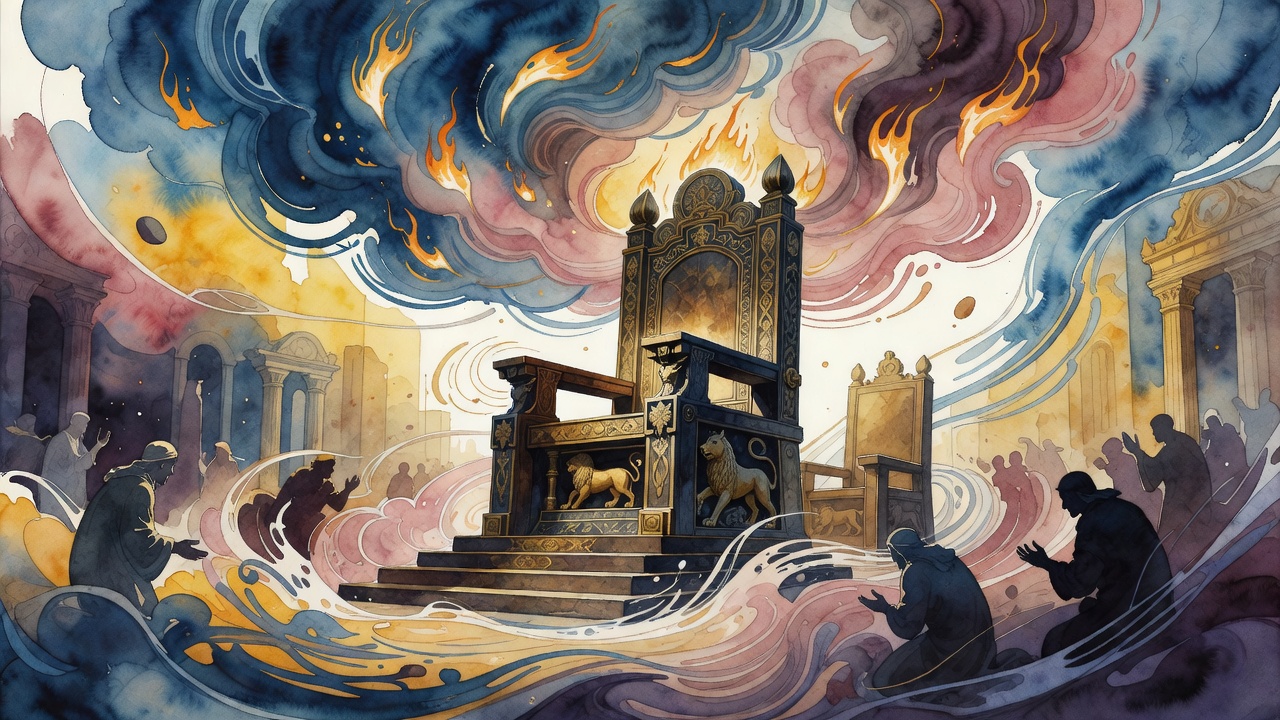
Next to the house he built the throne, gold out of Ophir, beryl and marble and emerald and pearl worked into it, two golden lions and two golden eagles standing on each of the six steps, a lion facing an eagle so that the paw of one was level with the wing of the other. Kings who owed him tribute came to look at it and went down on their faces and praised God.
Two Doors for Two Kinds of Men
Then he did something to the walls that cost nothing and outlasted the gold.
He cut two extra gates. One for bridegrooms. One for mourners and for men under the ban.
On Sabbaths the people came and sat down on the ground between those two gates and watched who went through which. A man came through the first gate and they knew what he was and called out to him: may the one who dwells in this house make you rejoice with sons and daughters.
A man came through the second gate with his upper lip covered, and they knew he had buried somebody: may the one who dwells in this house comfort you.
And a man came through the second gate with his lip uncovered, which meant nobody in the town was speaking to him, and they called out to him too. May the one who dwells in this house put it in your heart to listen to your friends. And may he put it in your friends' hearts to bring you back.
The Cloud in the Room
Seven years after the first stone, in the seventh month, at the feast of tabernacles, the whole nation walked up to Jerusalem to watch the ark go in.
The king went first with the Levites, and the ground went wet with blood and drink offerings all the way up, and so much incense burned that the smell reached people who were still a long way out on the roads and told them what was happening before they could see it. The priests moved in their fixed numbers, eleven of them to carry the parts of a ram, twenty-four to a bull with fifteen of those carrying the limbs alone, three for the intestines, three for the flour, three for the wine, and not one of them missing from the count.
When it came to the last room the crowd stopped at the door. Only the carrying priests went in, and they set the ark down between the two golden wings, which closed over it like a tent. There was nothing in it but the two stones from Sinai.
The priests came out. And a cloud came down into the house, not a hard black weather cloud but a soft one, and it spread itself through the room so thickly that no priest in there could see the priest standing next to him.
Fire Came Running Out of the Air
Solomon had been sitting. He stood up and spoke to God in front of all of them.
"You have an eternal house already. We know what it is. It is the heaven and the air and the earth and the sea, and you are not held inside their edges. I have built this one so that when we sacrifice here we can send our prayers up through the air and know you are near."
Then he asked for a thing kings do not usually ask for. When anyone comes here from any end of the earth, he said, from any nation at all, and turns away from his sins and begs your pardon, hear that man too.
He threw himself flat on the ground and stayed there a long time. Then he got up and filled the altar with unblemished animals, and fire came running out of the air and struck the altar in front of everybody and ate what was on it. The whole crowd went down on the ground.
They killed twenty-two thousand oxen and a hundred and twenty thousand sheep for that week. The king kept the feast for twice seven days and ate with the people, and then he sent them home, and they went singing, and the walking did not tire them.
What Came to Him in His Sleep
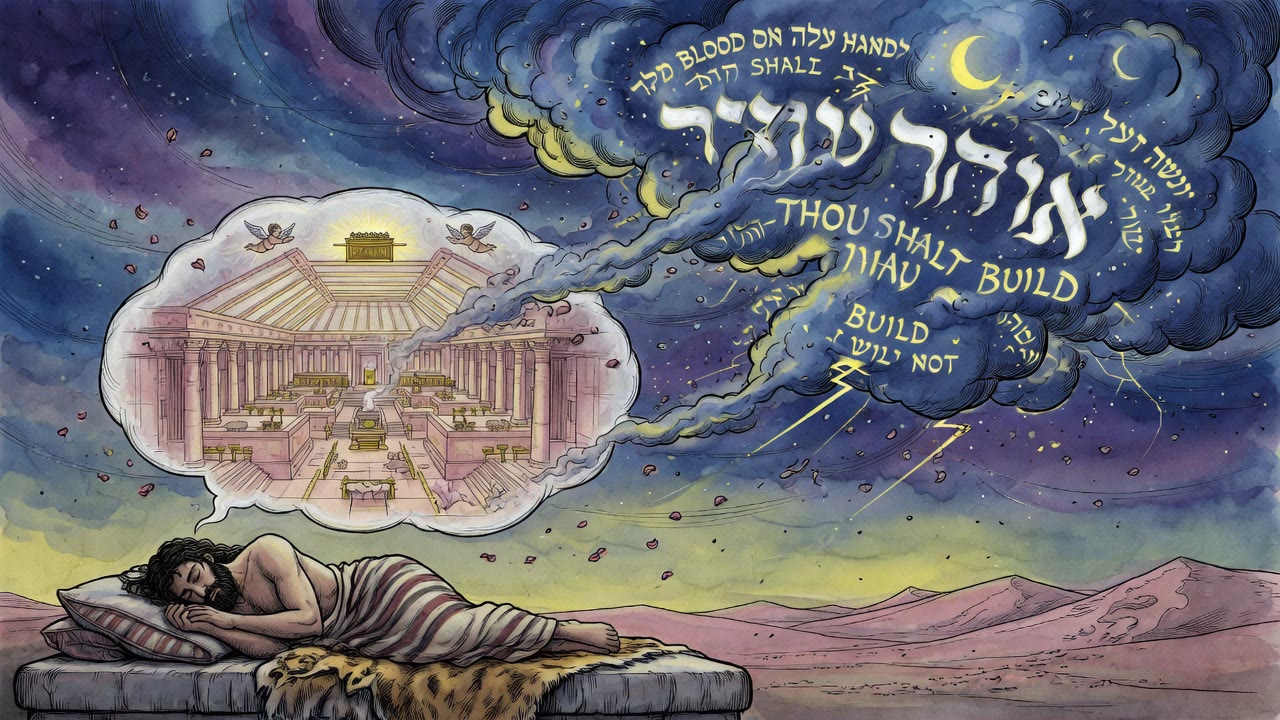
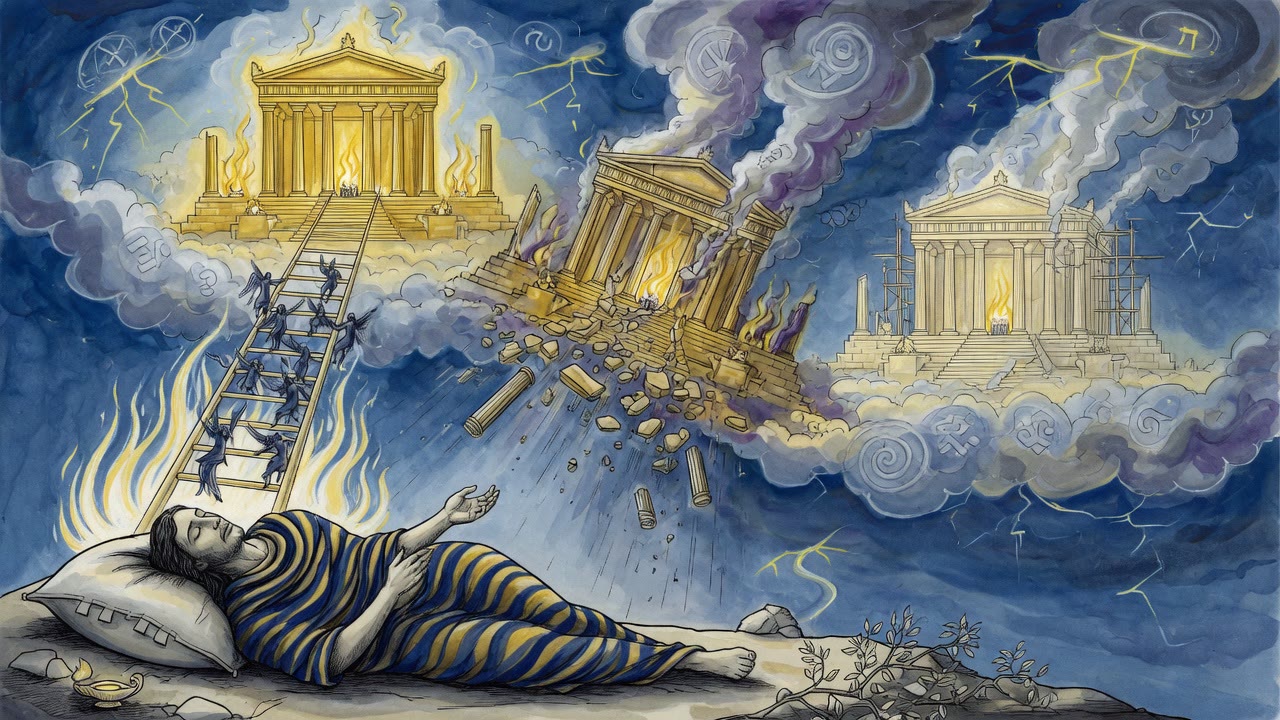
The dream came after the crowds had gone.
God had heard the prayer. He would keep the house and stay in it. That was the first half.
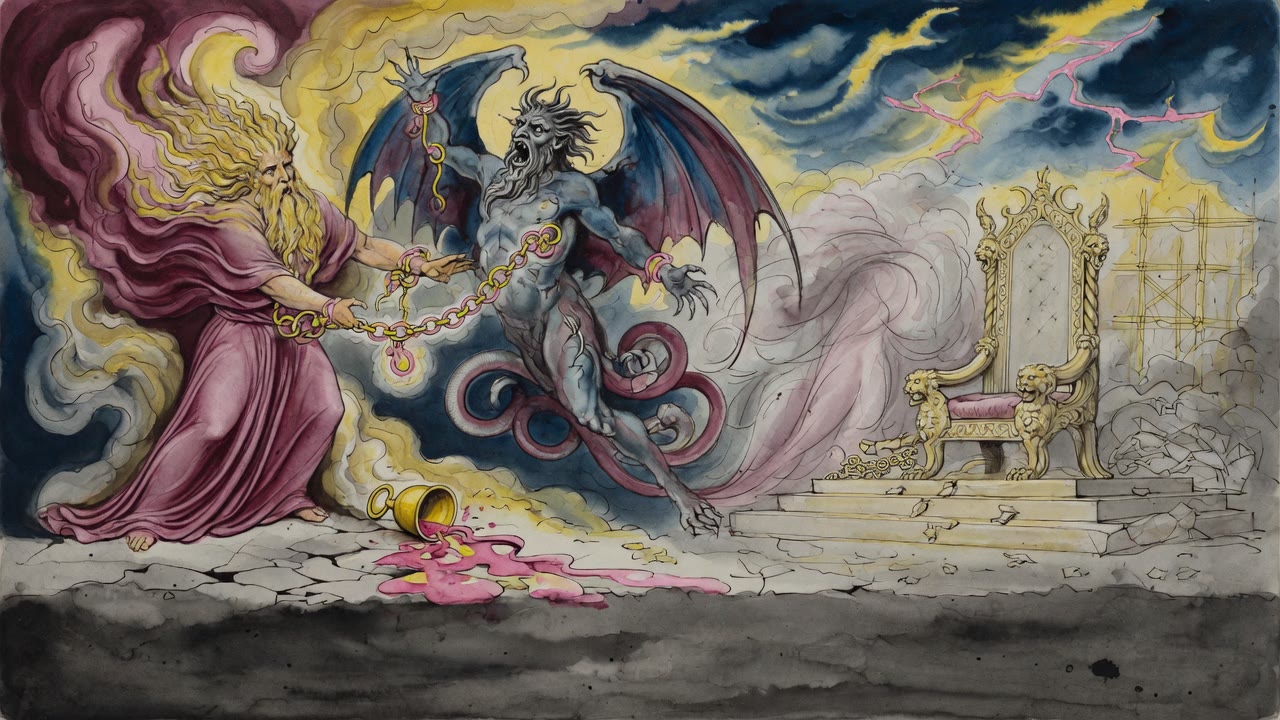
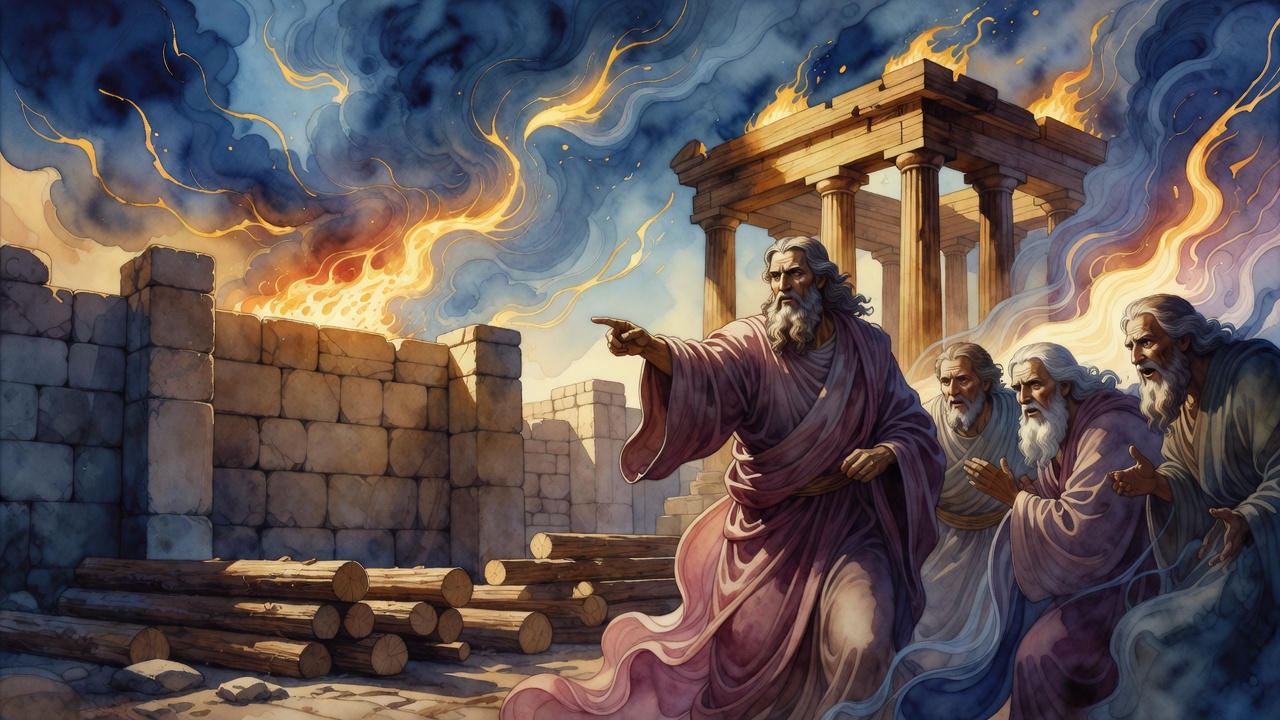
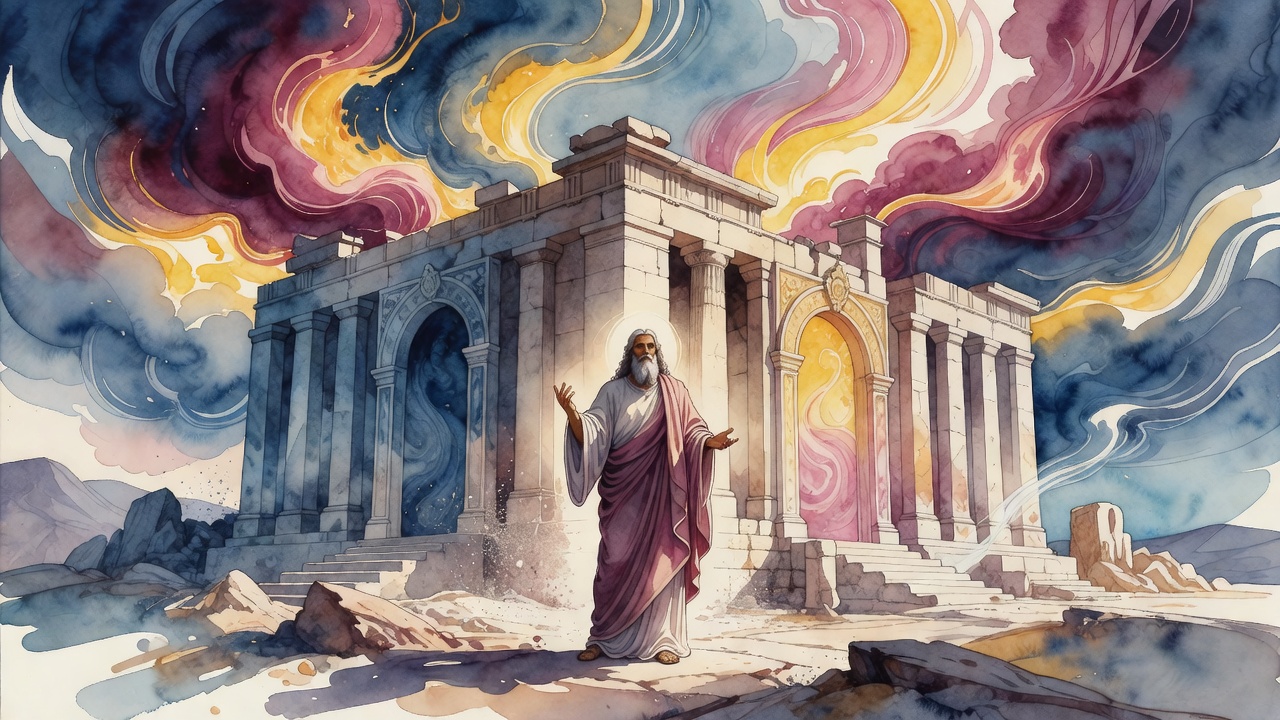
The second half was conditional and it was specific. If Solomon forgot the law and turned aside to strange gods, God would cut him off at the root and leave none of his family standing. He would hand that temple over to enemies to be burnt and stripped. He would let the city be pulled down. And he would make what happened to the people so extreme that their neighbours would refuse to believe the reports, and would come asking how a nation carried that high could be hated that much, and the only answer left would be the one the survivors gave.
He woke up in the morning. On the Sabbath after that, and on every Sabbath he had left, the people came back and sat down on the ground between the two gates to watch which man came through which one.
← All myths