The Queen of Sheba Brought Her Hardest Tests and Solomon Passed Them
The Queen of Sheba came to find where Solomon's wisdom failed. She brought a gender test, a flower test, and finally a door that would not open.
Table of Contents
 Click for full size
The Women and Men Who All Looked the Same
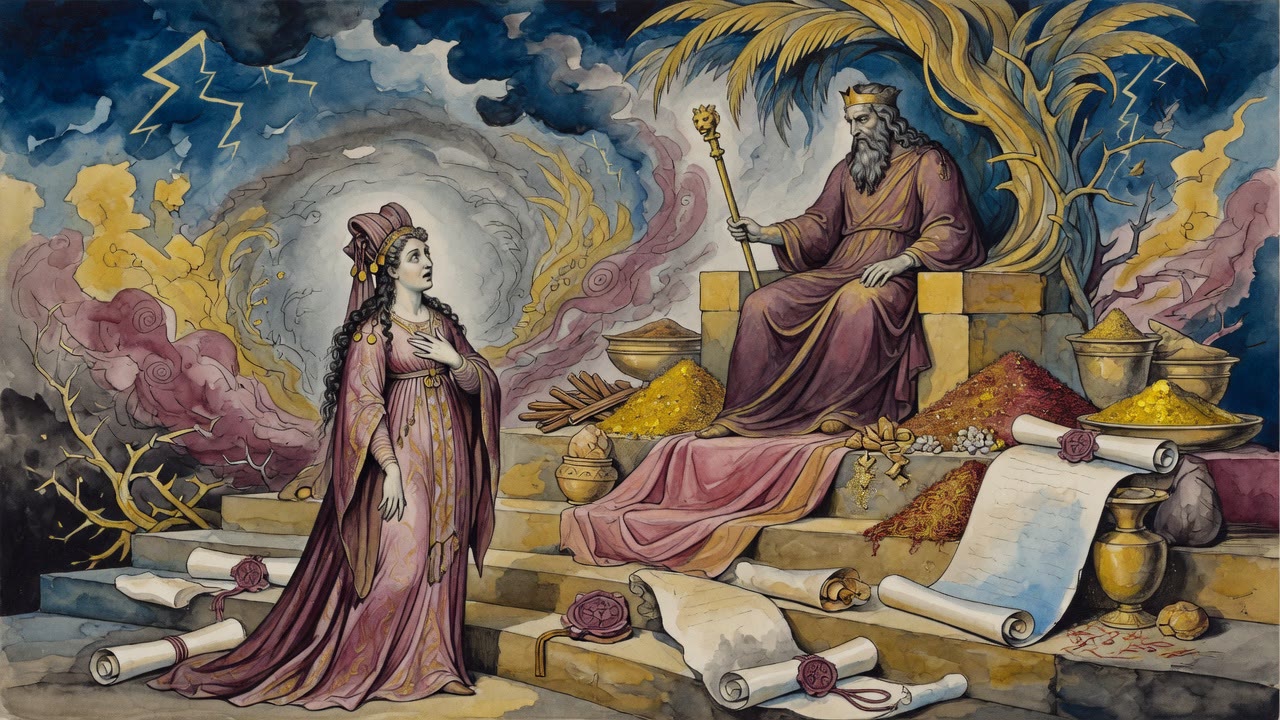
The Queen of Sheba had prepared. She had assembled a group of young men and women, dressed them in identical clothing, cut their hair to the same length, and arranged them in a single line before Solomon. The challenge was simple in its statement and genuinely difficult in its requirement: look at these people and tell me which are male and which are female.
Solomon did not study their faces. He did not examine their bone structure or their posture. He signaled to his attendants, who brought out nuts and roasted corn, and offered them to the assembled group.
The young men reached out with bare hands and took the food without ceremony. The young women extended gloved hands from beneath their garments, careful about presentation even in the small moment of accepting a handful of grain.
"Those are the males," Solomon said. "And those the females."
He had given them a situation where their habits would express themselves, then watched the habits. The test was not about observation. It was about creating the conditions under which truth shows up without being asked to.
The Flowers That Were Almost Indistinguishable
The Queen tried again. She brought a bouquet of flowers, some real and some crafted by the finest artisans in her kingdom, the artificial ones so precise in their construction that even the bees in Solomon's garden had been confused. She placed them before him. "Which are real?"
Solomon opened a window. The bees came in without hesitation and settled on the living flowers and ignored the perfect imitations entirely. He pointed. The Queen conceded the round.
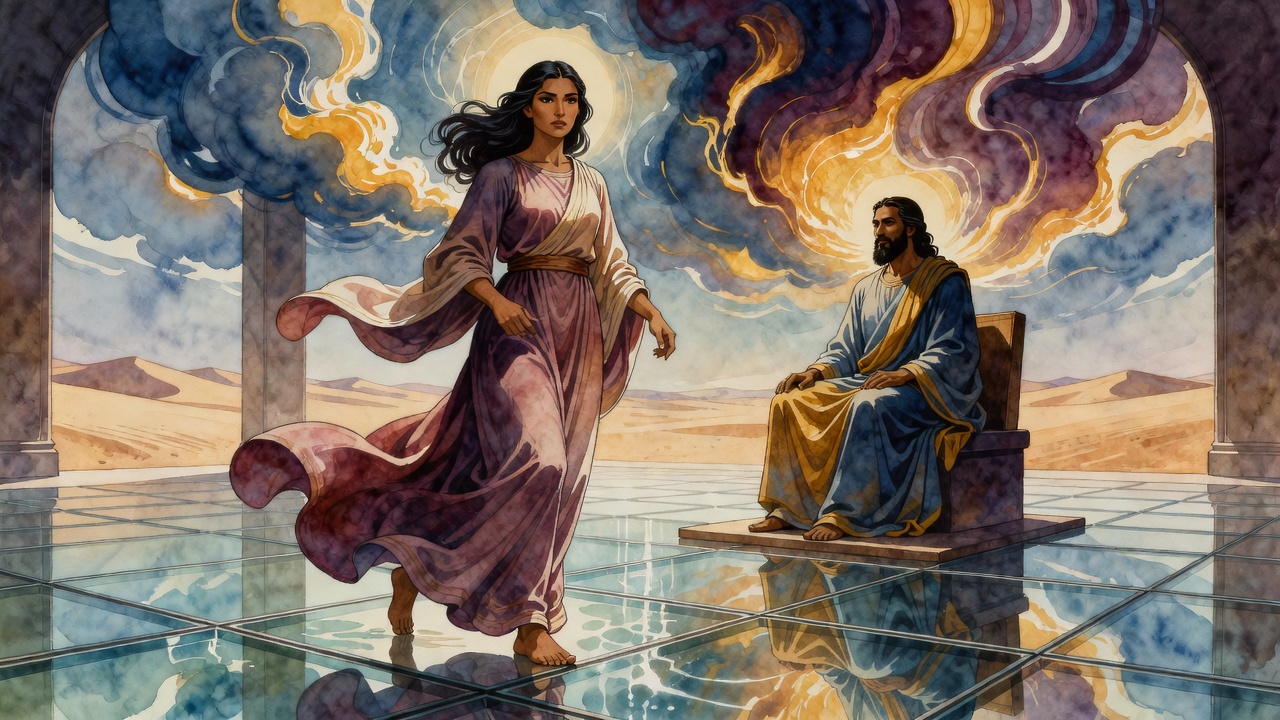
The tradition records her pattern of testing as both a form of genuine inquiry and a form of respect. She had come to Jerusalem not to be impressed by ceremony but to find the boundary of Solomon's wisdom, to locate the question that would finally return silence instead of an answer. She had not found it yet.
The Door That Would Not Move
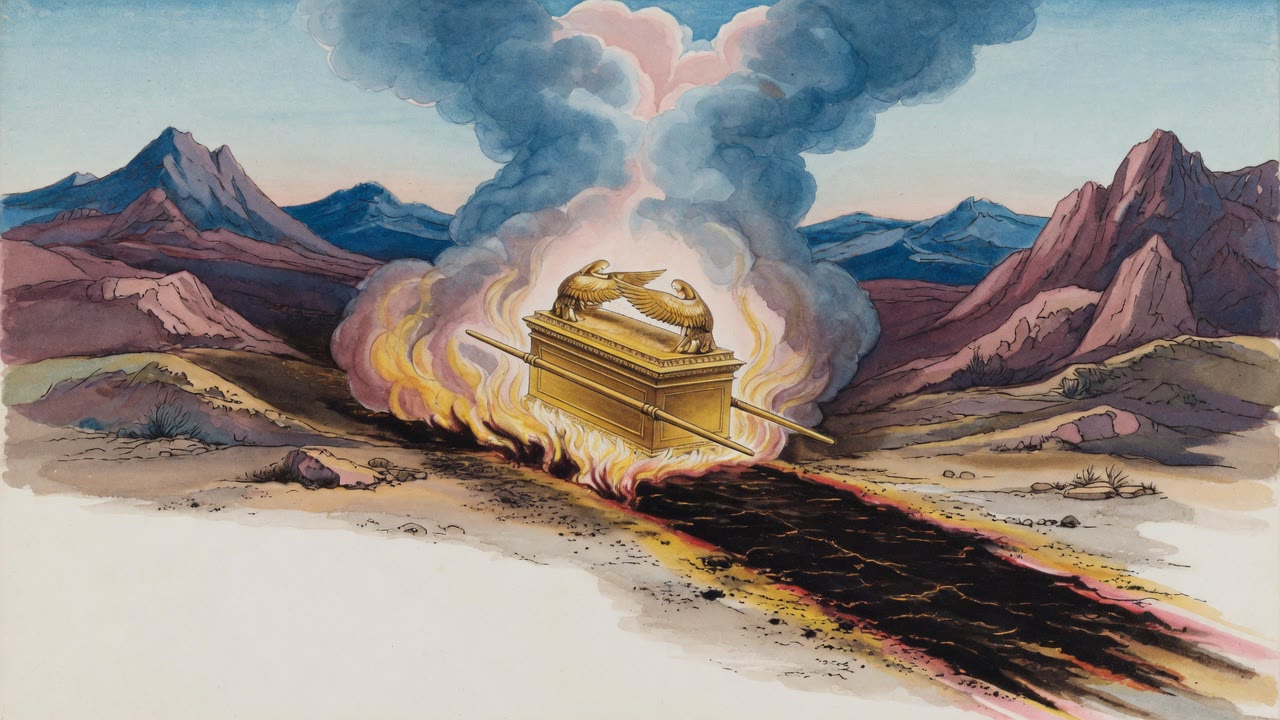
Her final test was not a riddle or a puzzle of observation. She had heard that Solomon had built the Temple, and she asked to see the Ark of the Covenant housed within it. This was not a casual request. The Ark was the most sacred object in Israel, the seat of the divine presence, housed in the inner sanctuary where ordinary people did not go and ordinary requests did not reach.
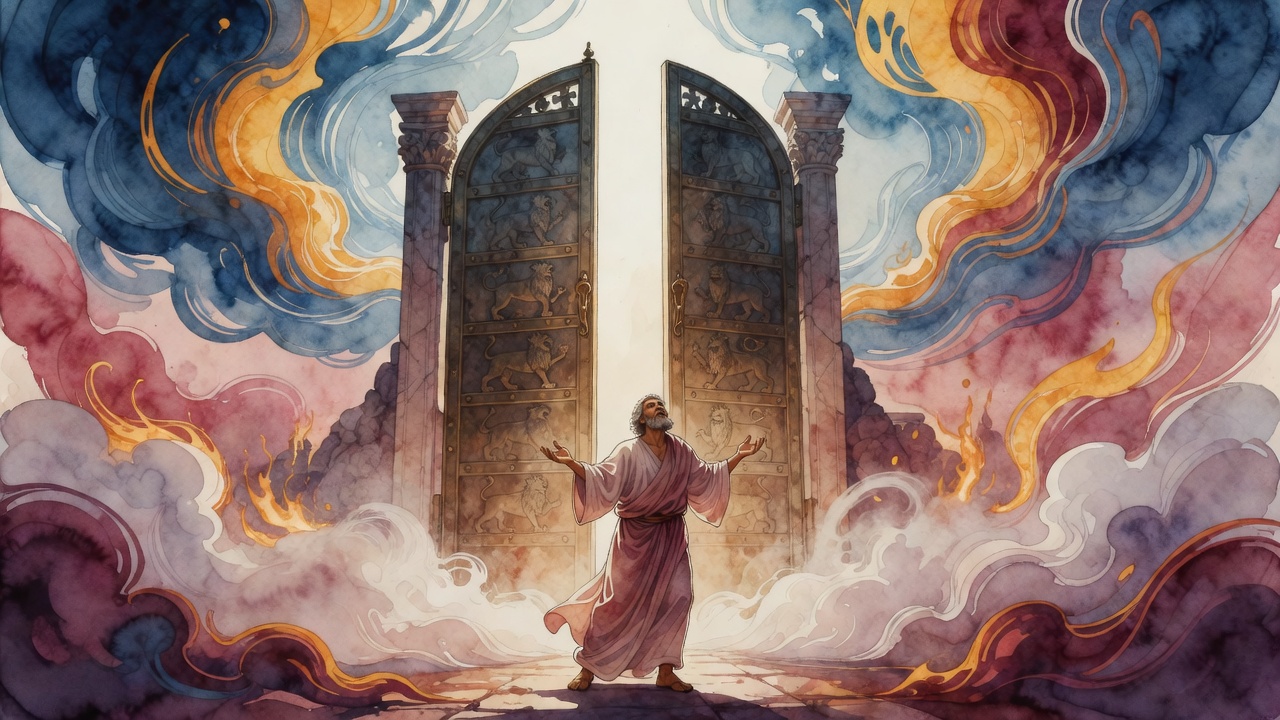
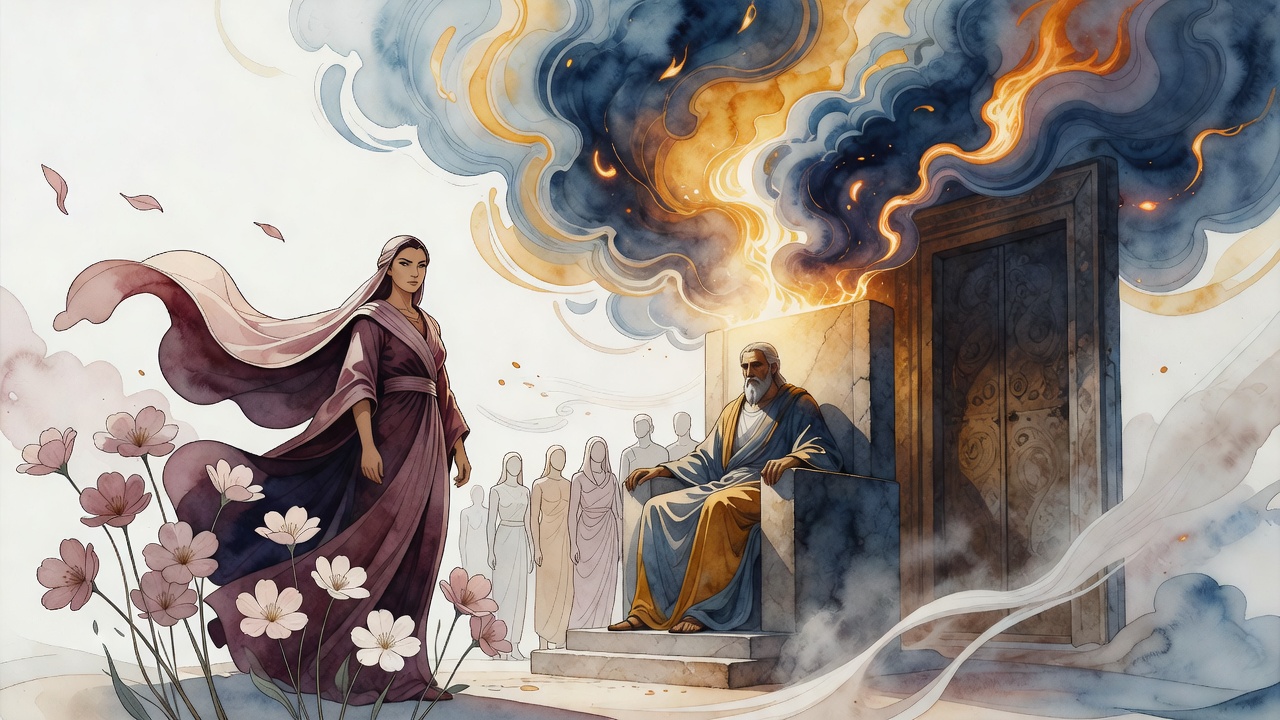
The tradition records something that had happened at the Temple's dedication and that connected to this moment: when Solomon had brought the Ark to the sanctuary, the doors had refused to open. He had recited twenty-four prayers and the doors had not moved. He had appealed with hymns and the sanctuary stayed sealed.
Then Solomon had invoked the merit of David, his father. He had asked that for David's sake, the gates be opened. And the gates had opened, and the Ark had entered, and the Temple had received what it was built to receive.
What the Queen Understood
When Solomon showed the Queen the Ark and told her what had happened at the dedication, the tradition records her response as acknowledgment without qualification. She had come to test the limits of his wisdom and had found instead something larger than she had expected: not a man who could answer every question, but a man whose wisdom included knowing when to appeal beyond himself.
Solomon had not opened the Temple doors. He had reminded them who David was and what David had given his life to, and they had opened for that reason. The wisdom was not in solving the problem. It was in knowing whose merit to invoke when his own was not sufficient.
The Queen returned to her own country. The tradition says she carried with her what she had come for, though it does not describe that thing precisely. Sometimes wisdom is the knowledge that the question you came to ask was not the right question, and that you are returning with something better than an answer.
← All myths