Every Night One Thousand Wives Cooked Solomon's Entire Dinner
Ten fattened oxen, twenty more off the grass, a hundred sheep. That was one ordinary day, and a thousand women cooked all of it.
Table of Contents
 Click for full size
Fire Came Down on the Day the House Opened
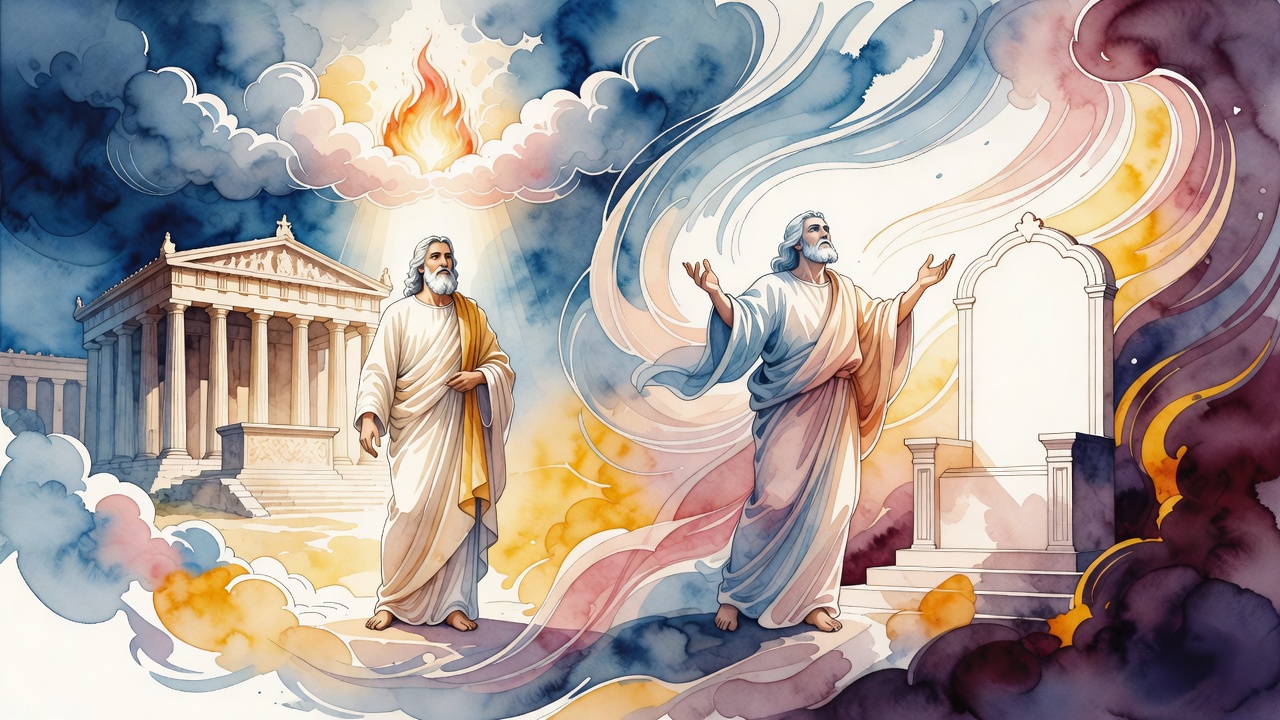
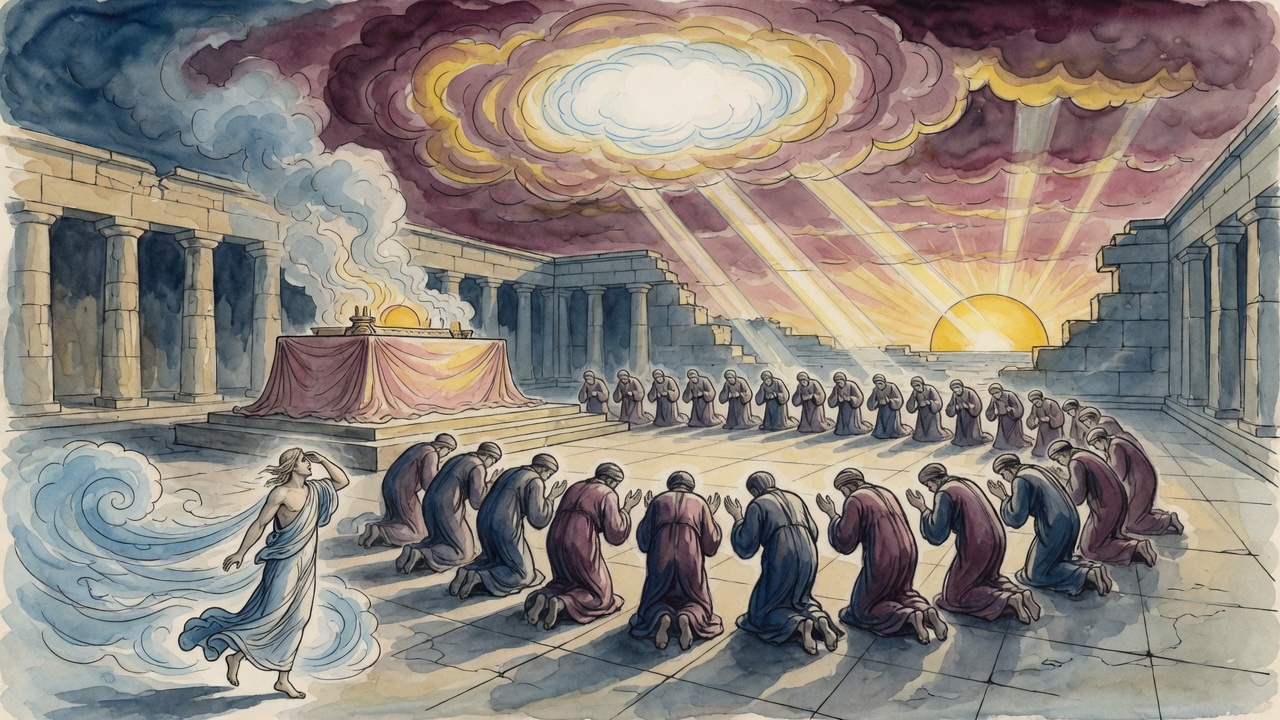
The Temple was finished and Solomon stood out in front of it and prayed, and the fire came down out of the sky and took the offering off the altar.
It had happened once before, for Moses. Now it happened for Solomon, in front of the whole assembly, and the priests could not get back inside the house because the glory had filled it up. He kept the altar going for eight days. When Moses had finished with the ram of the sin offering he went hunting for it in the ashes and found it burned down to nothing, and no man ate any of it, and Solomon did the same with his.
Ten Oxen, Twenty From the Pasture, a Hundred Sheep
His table matched the house.
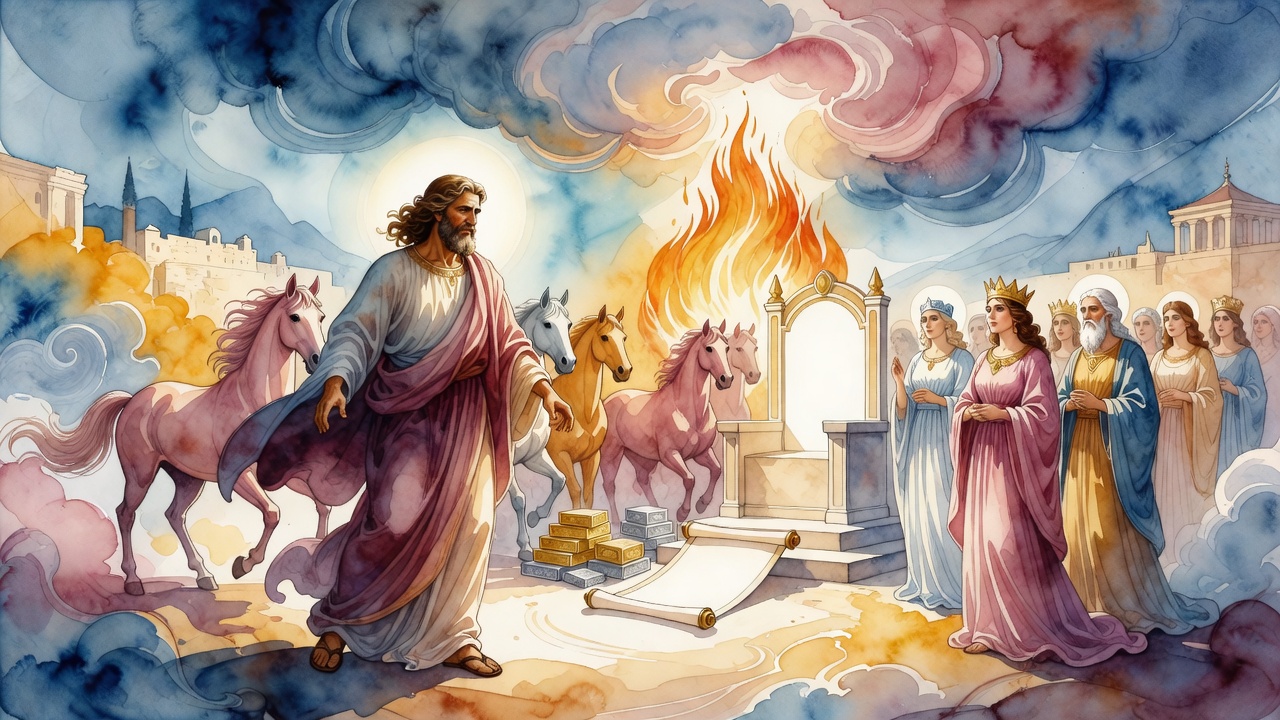
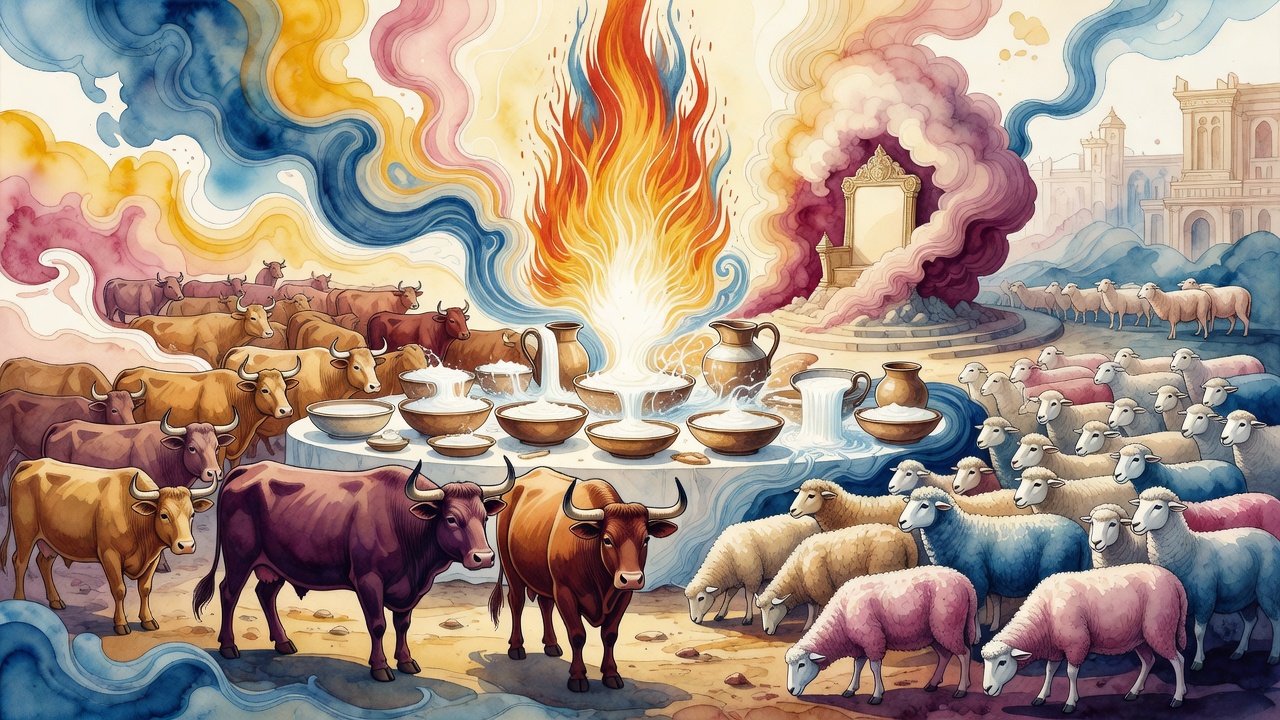
Thirty measures of fine flour and sixty of meal. Ten fattened oxen and twenty more brought straight off the grass. A hundred sheep. On top of that, deer, gazelle, roebuck and fattened geese.
That was one day. Not a coronation, not a state visit, not the week the queen came up from the south with her riddles and her camels. An ordinary day.
A Thousand Tables and One King
He had a thousand wives, and every one of them cooked all of it. Every day.
Not a share of it. The whole provision, the flour and the meal and the oxen off the grass and the hundred sheep and the geese, prepared a thousand times over in a thousand separate kitchens, because each woman believed that tonight was the night he would eat with her.
He ate in one room. The other nine hundred and ninety-nine tables were laid, and carried in, and stood there, and went cold, and were cleared away. Then it was done again the next morning.
Centuries later a governor of Judah named Nehemiah sat down to one bull, six good sheep and some birds, and refused to take the food allowance his office entitled him to, because the people were already carrying more than they could hold. He paid for his own table out of his own pocket for twelve years.
What God Said He Actually Wanted
"My children," God said, "there is no eating and drinking in front of Me. It is the smell. What I want is that you should be pleasant to Me the way a smell is pleasant, that I tell you to do something and you go and do it."
A thousand kitchens working since before dawn produce an enormous amount of smoke.
The Help Withered Out of Him
"You gave your lust to women, and they ruled you in your pride."
That sentence was delivered to his face by a scribe in Jerusalem writing centuries after his death, and it is not a remark about appetite. The wives came with countries attached, and the countries came with gods. The king who had built a house for the name of the God of Israel put up high places on the hill east of the city for Chemosh and for Molech, and burned offerings there for the women whose kitchens fed his court.
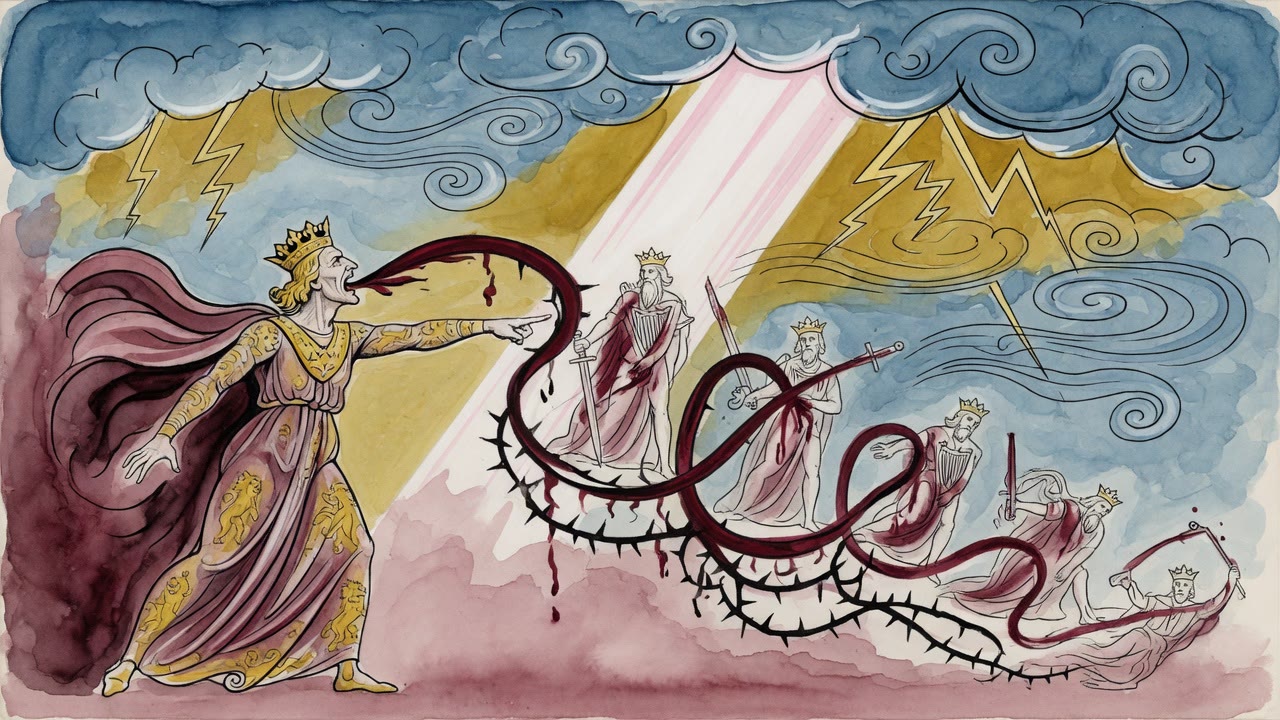
"You put a blemish on your glory. You brought anger down on your children and groaning onto your deathbed." The people were cut back to a portion, two tribes, and out of Ephraim came a kingdom of violence.
He had piled up gold like iron and multiplied silver like lead. His teaching had run out over the whole country like the Nile in flood, and men had come from the ends of the earth to watch him take apart a riddle. He lay down to die with no hope in him, and the help withered out of him.
Nine hundred and ninety-nine dinners went cold in Jerusalem every night of the golden age, and the smoke of all of them went up together.
← All myths