Solomon Poured Hot Water on a Man With Two Heads
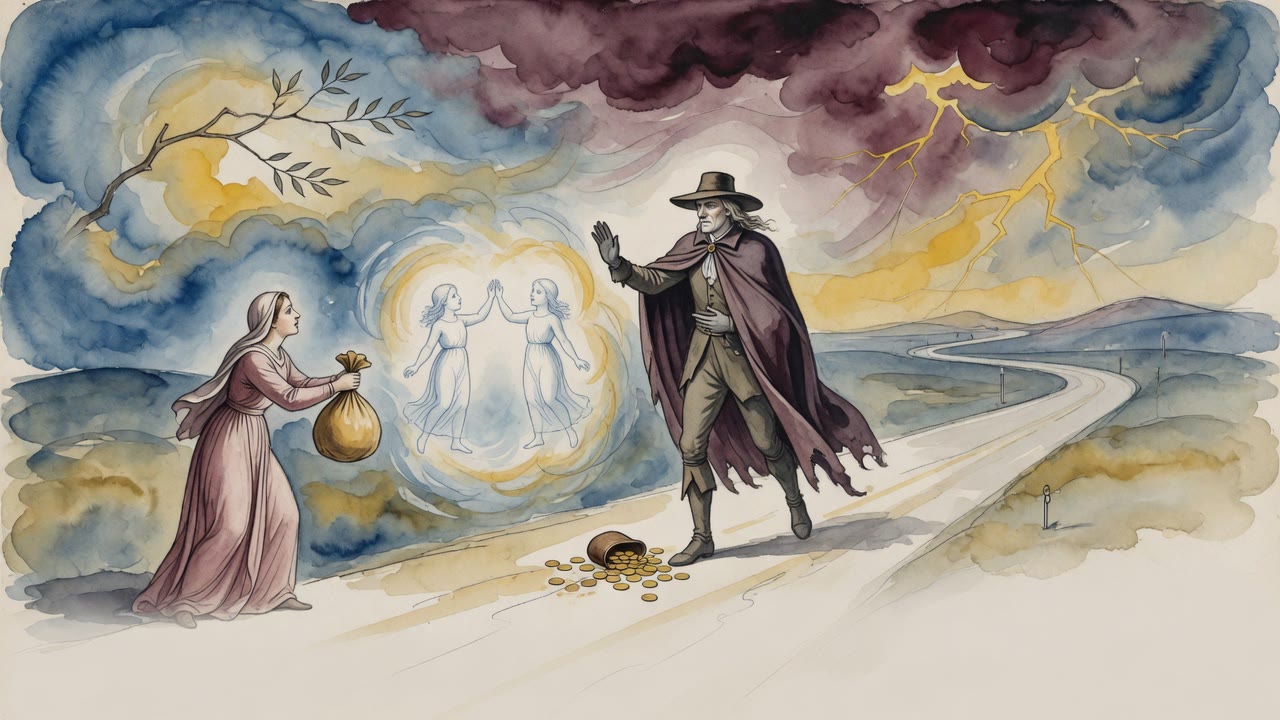
Ashmedai brought a Cainite up from under the earth to confuse the king. Years later the two-headed son wanted two shares. Both mouths screamed as one.
Table of Contents
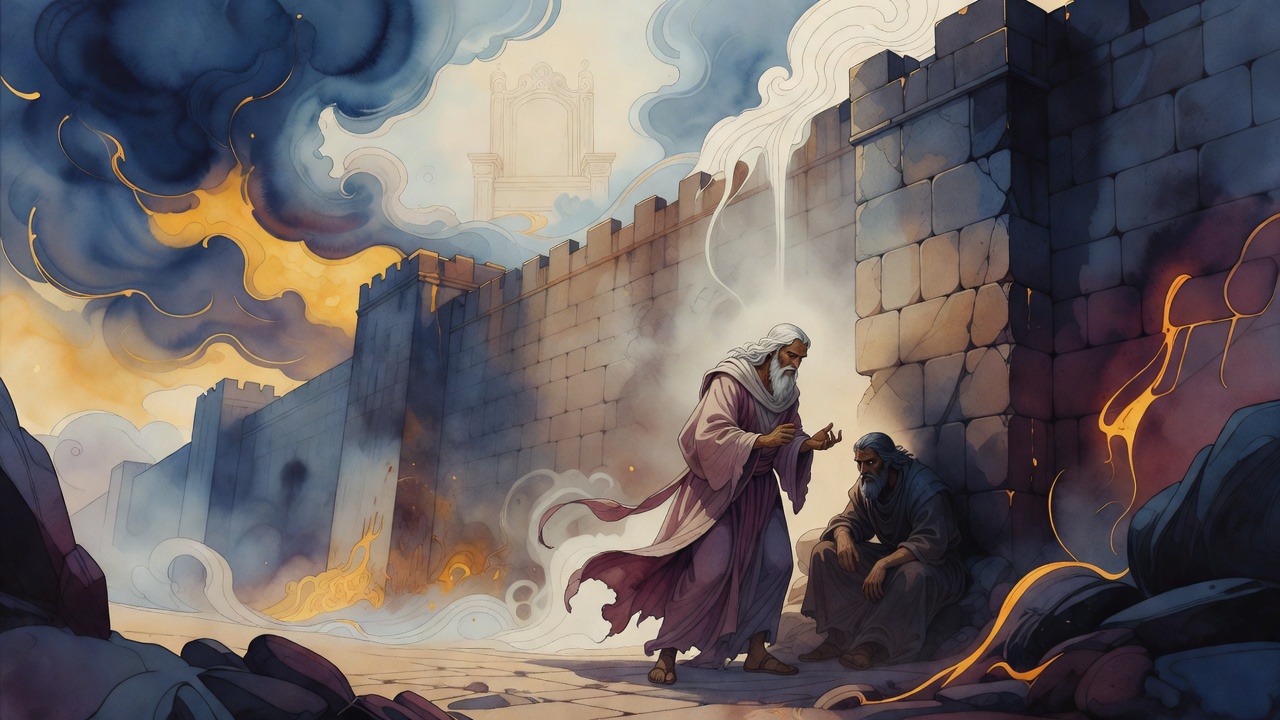
Ashmedai, king of the demons, wanted to trip Solomon in public. Wisdom is easy to praise and hard to watch fail. He went down under the earth and brought up a man with two complete heads, both blinking, both talking, and set him in the court.
 Click for full size
Benayahu would not believe it until the second mouth answered a question the first had not heard asked.
Solomon asked the man who he was. He said he was of the children of Cain, from a land called Tevel (תבל), where sun and moon shine, where they sow and reap and keep animals, and where the sun rises in the west and sets in the east. When he asked to be sent home, Ashmedai refused. Once brought up, there is no road back.
Ashmedai Brought Him Up From Tevel
So the two-headed man stayed. He married. He grew rich. He fathered seven sons. Six of them had one head. One of them was born like his father, two faces on one neck, two mouths that did not always agree.
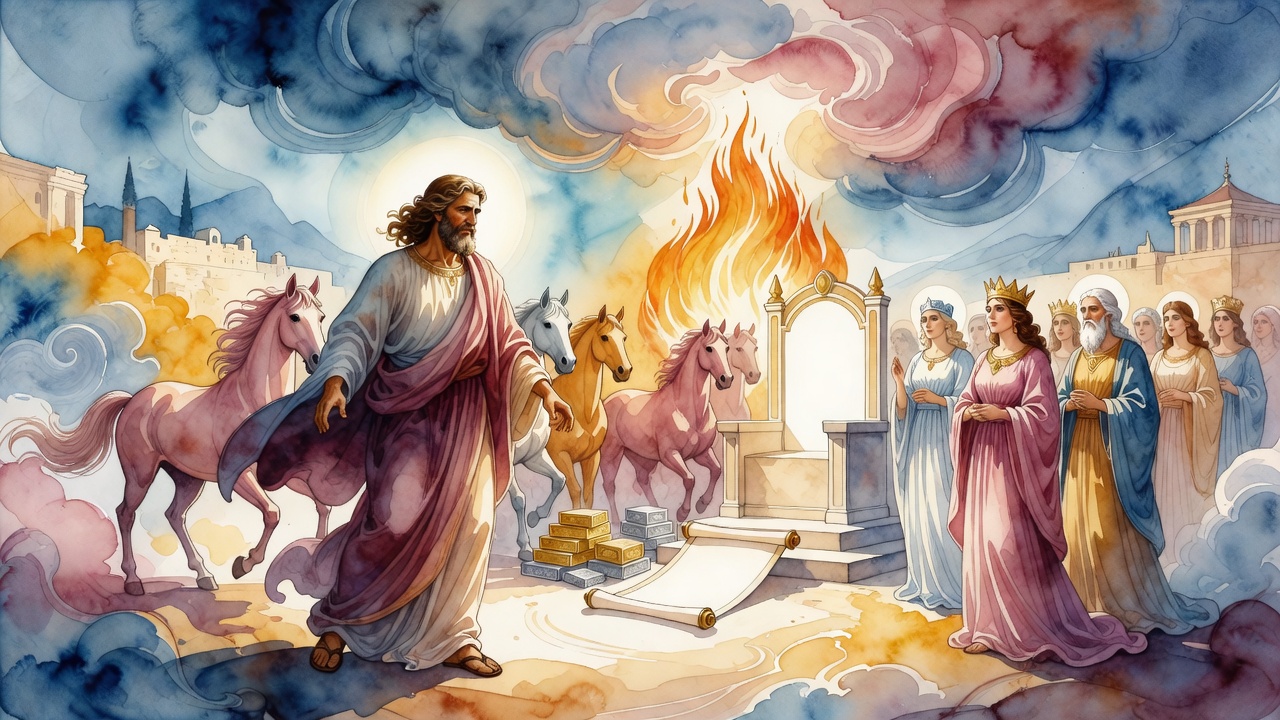
Years later the father died. The sons gathered to divide the estate. The two-headed son wanted a double share. He said he was two persons sharing a body, each entitled to a full portion. The six brothers said he was one of them: one man, one share. They took the quarrel to the Sanhedrin. The Sanhedrin could not decide. Two waking heads are a hard thing to count.
They brought the case to Solomon.
Seven Sons and One Double Claim
Both heads talked. They talked at once. They talked in turns. Each mouth had a lawyer's appetite. The brothers waiting in the courtyard had only their count: six ordinary sons and one strange one, seven mouths at a table that had been a father's, now a pile of goods.
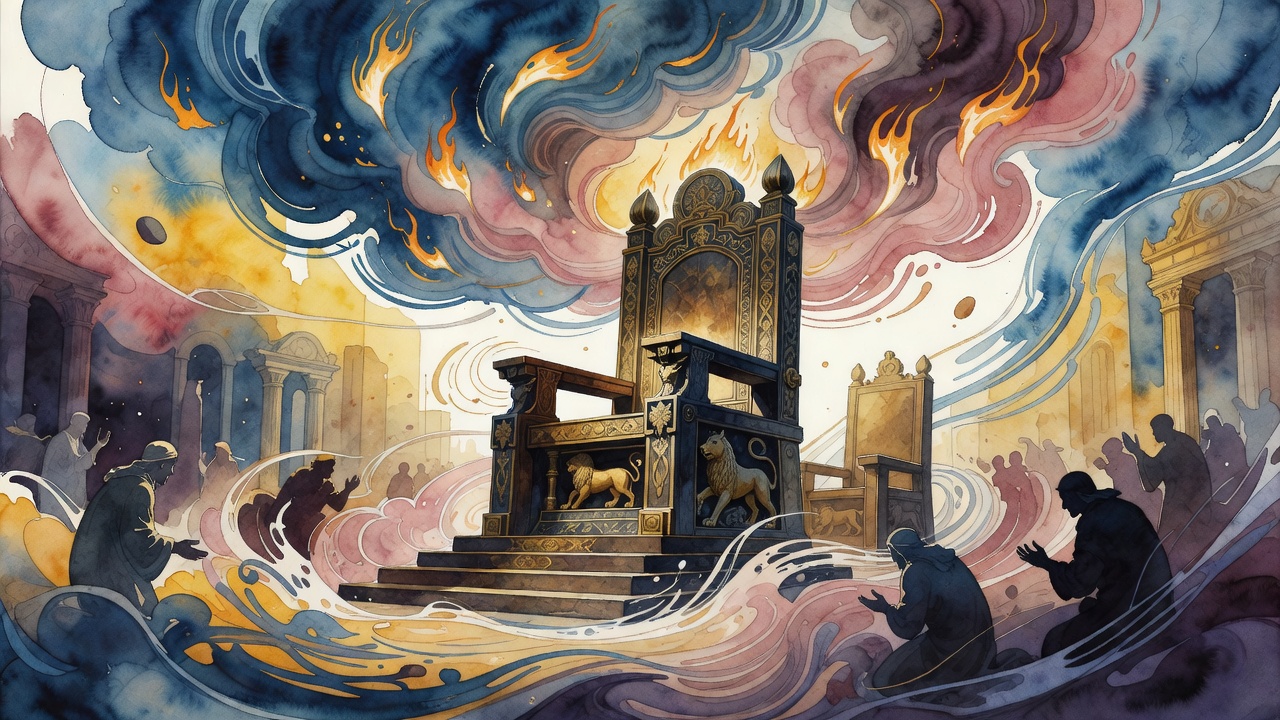
Solomon did not adjourn. He prayed. In the morning he ordered two things brought: hot water, and strong wine.
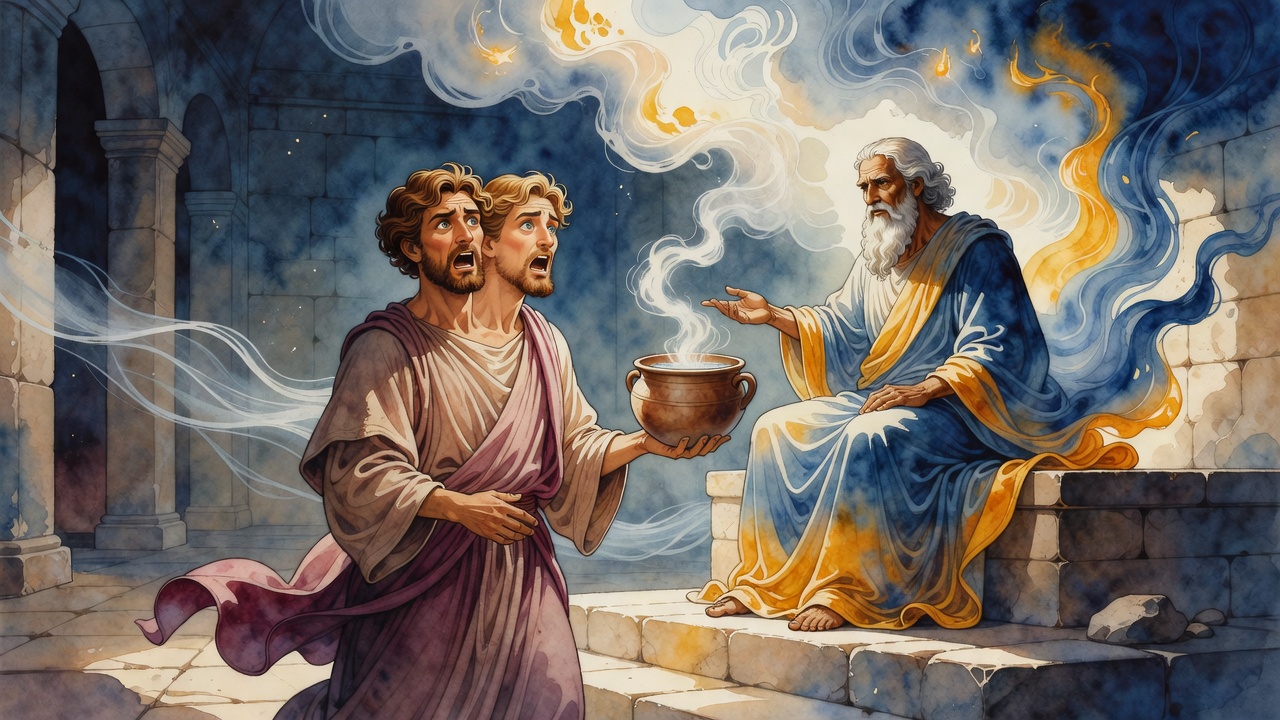
Servants poured the water on one head. Both heads flinched. Both mouths cried out at the same instant: "We are dying, we are dying. We are but one, not two."
They put the wine to the other mouth. Both heads grew drunk together. Pain had traveled through a single body. Drink had done the same. Two mouths, one experience, one share.
Hot Water and Wine
Solomon declared the verdict before the court had time to start a new argument. He had solved the problem the Sanhedrin could not count. One person. One seventh of the inheritance. The two-headed son took the cup from his lip and did not ask again. Ashmedai, if he was watching, had not confused the king. He had given him a body that could not lie about itself once it was hurt.
The brothers went out. The clerks wrote the shares. The man from Tevel, who could not go home, had left a son the upper world now knew how to count. One. Not two. The second head was not a second heir.
The court should have emptied. It did not. A man who had been waiting in the back came forward with a different complaint, no monsters in it, only hunger.
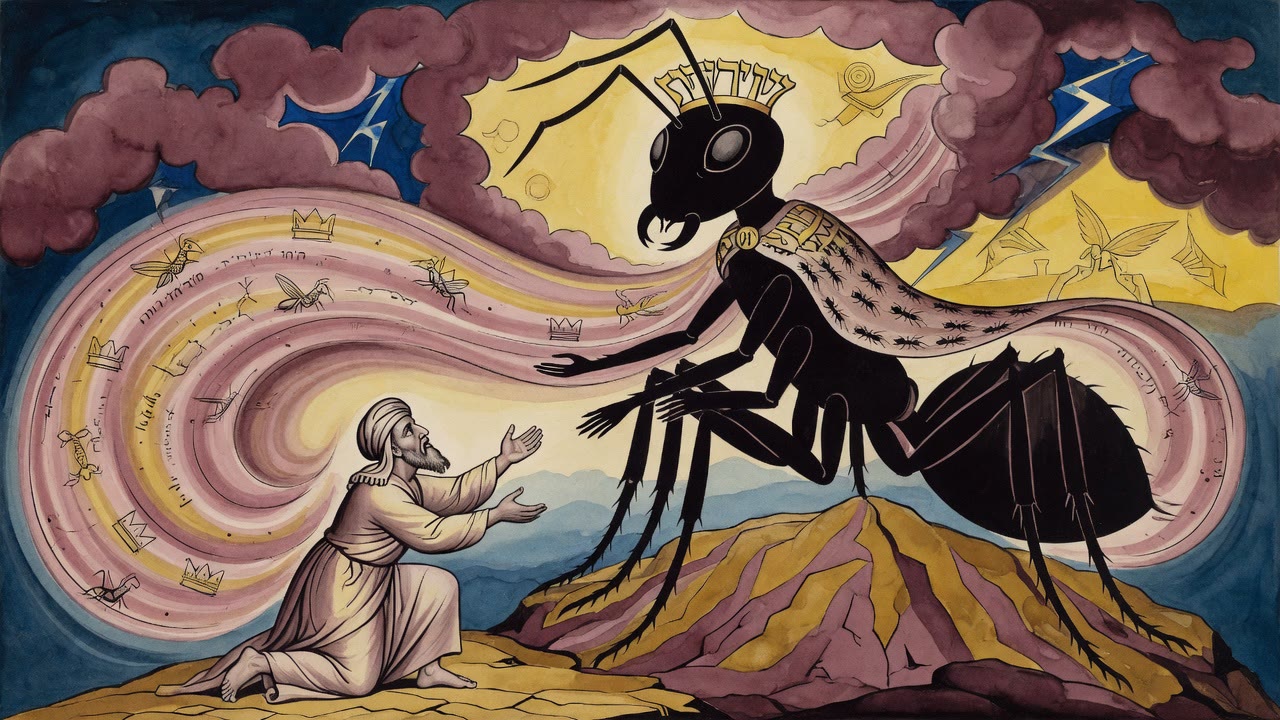
Go to the Ant
He said he was poor and that other men had been born into wealth. He wanted Solomon to explain the injustice, or to fix it. Solomon did not open a ledger. He told the man to go outside and watch an ant.
The man went. He crouched in the dust. An ant dropped a grain of wheat. Other ants came, smelled it, and left it. Not one took what was not hers. The owner came back and carried her own grain home.
Solomon had him look longer. An ant keeps three chambers. She will not store in the upper one, because water drips. She will not store in the lower one, because of the mud. She stores in the middle. She lives six months. All she needs in that life is one and a half wheat kernels. She gathers anyway, wheat and barley and lentils, enough that men once found three hundred kor in a single hole, because she says in her work: perhaps God will decree more life, and then I will have bread.
"Go to the ant," Solomon said. "See her ways and become wise" (Proverbs 6:6). "She has no commander, no officer, no governor, and she still prepares. You, for whom I appointed judges and officers in every gate, wait to be fed."
The two-headed son had wanted two portions from a dead father. The idle man had wanted a portion from the air. Solomon gave neither of them the story they had brought in. He gave one of them hot water. He gave the other an anthill. Both left knowing what they actually were.
← All myths