Solomon Built Bigger Than Moses but God Never Forgot Which Came First
One Temple candelabra came out of the mold heavier than the wilderness lamp by a single coin's weight. It went back into the furnace eighty times.
Table of Contents
 Click for full size
The Dream at Gibeon
Solomon was young and asleep at Gibeon when God stood over him and said, ask for anything.
Almost nobody in the whole history of Israel got that offer. He did not ask for years, or for the necks of his enemies, or for money. He asked for wisdom, on the reasoning that a man who has wisdom will end up holding everything else anyway.
He was right, and he got more than he bargained for. The forty-nine gates of wisdom opened to him, the same forty-nine that had opened to Moses. He wrote proverbs, eight hundred of them, and each one carried a second and a third meaning folded inside it, so the count in Scripture runs to three thousand. He took the laws Moses had brought down off the mountain, the ones nobody could explain, the ones people obeyed with a shrug, and he supplied the reasons.
Then he started measuring himself against the man who had brought them down.
The Voice That Stopped the Verdict
A case came before him and he looked at the man in front of him and knew.
He could read a defendant the way other men read weather. Witnesses, cross-questions, the slow machinery the Torah insists on, all of it was a formality wrapped around a conclusion he already had. So he opened his mouth to give the ruling without calling anyone to the stand.
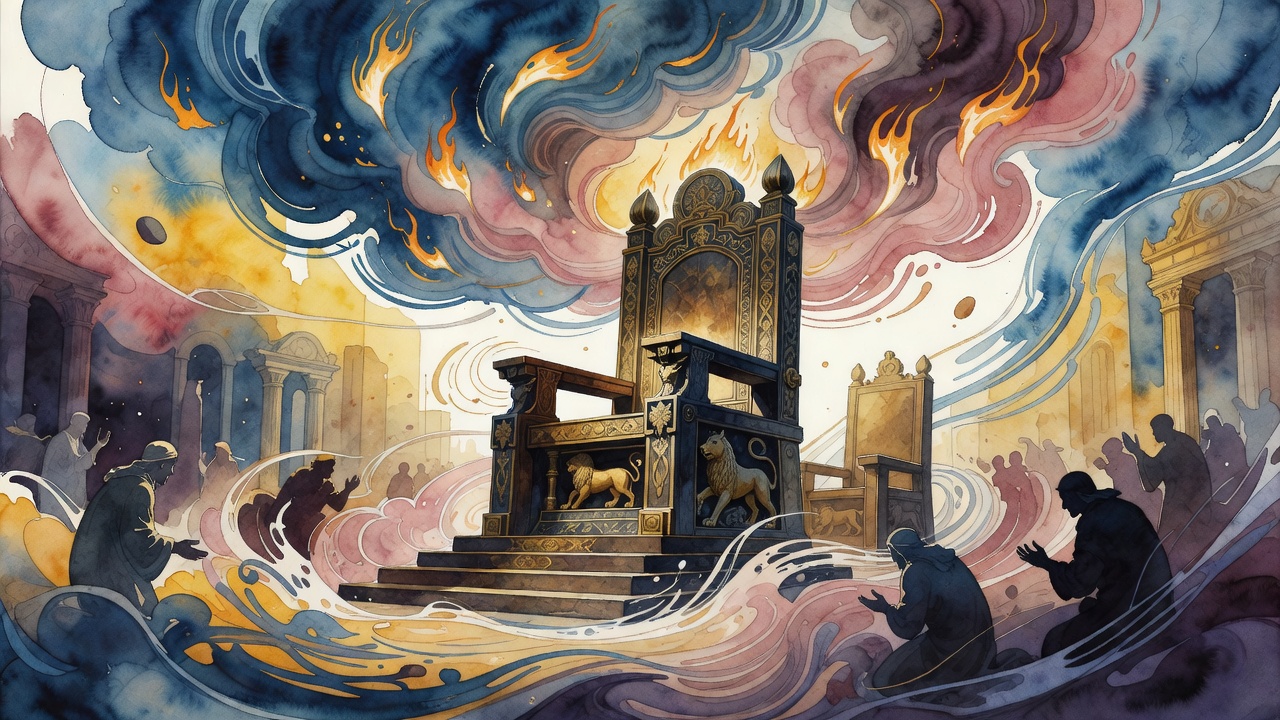
A voice came out of heaven and stopped him before the sentence was finished.
He never got to hand down that judgment. The wisest man alive was not permitted to skip a step that exists for men who are not.
Ten Lamps and the One Lit First
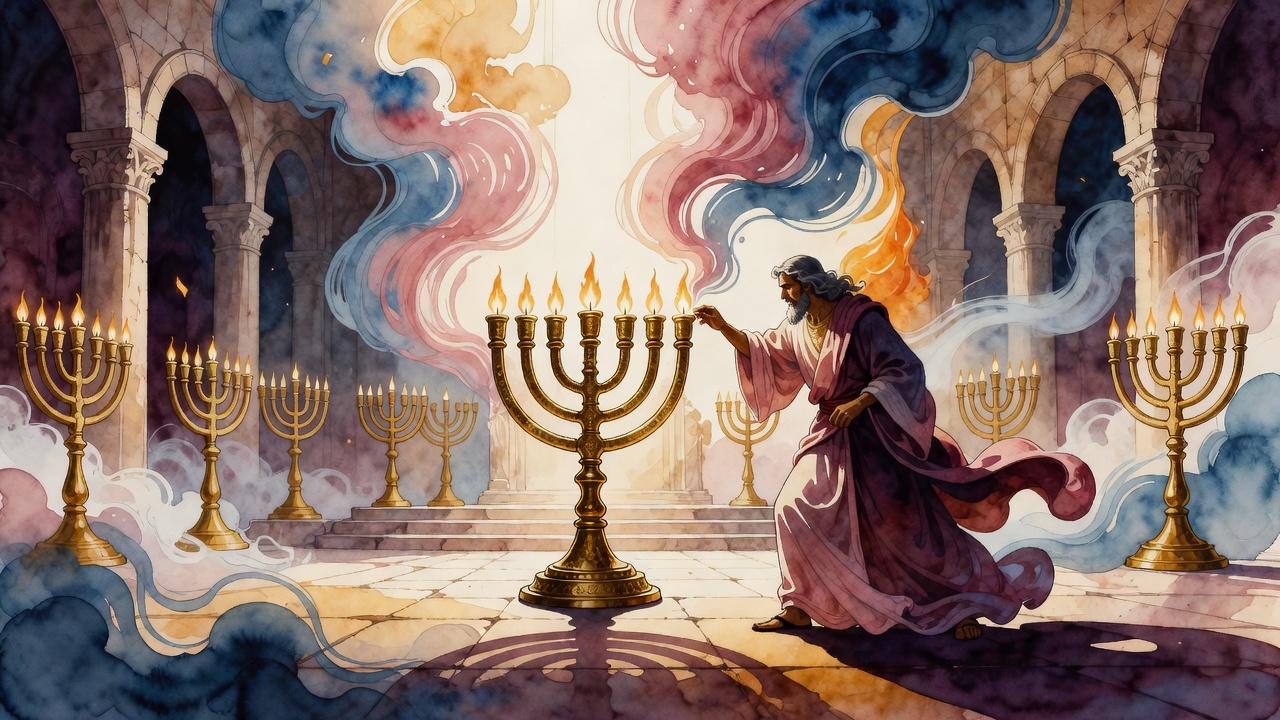
The lamp Moses made had crossed the wilderness. It had stood in a tent for forty years, and then at Shiloh and Nob and Gibeon for four centuries more, and when the Temple was finished Solomon carried it in and set it in place.
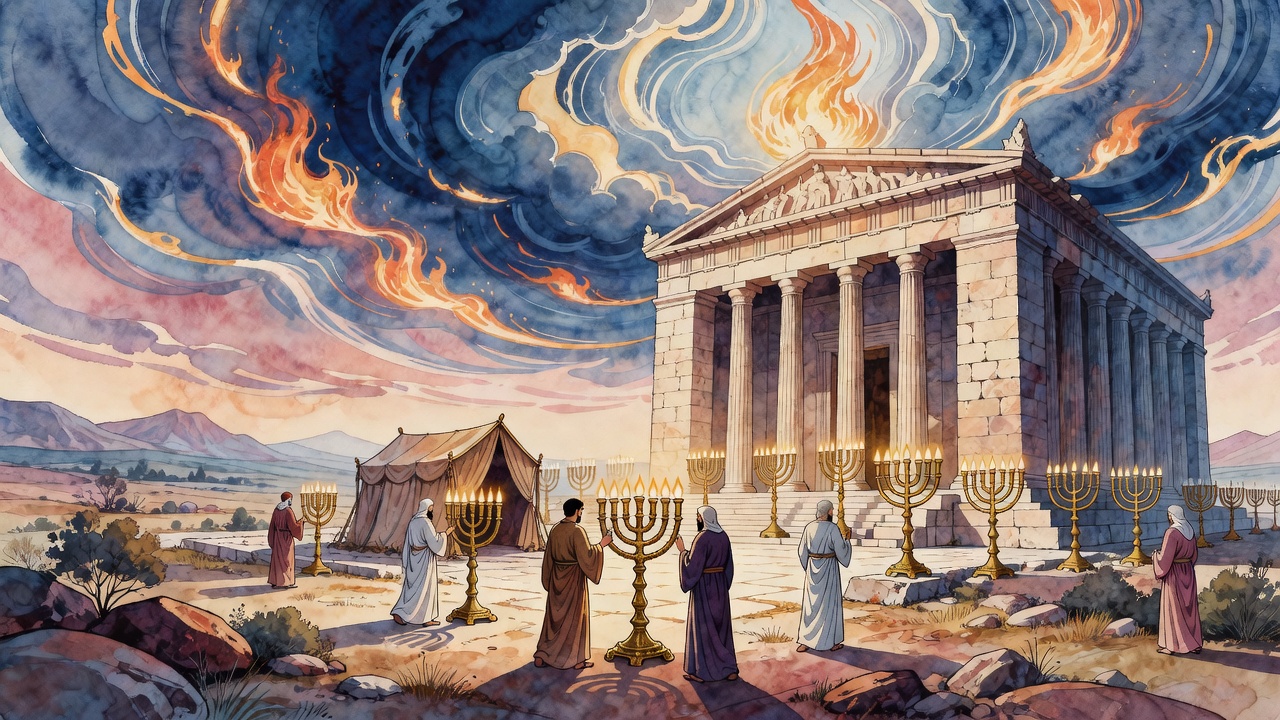
Then he built ten more, five along the south wall and five along the north. Ten, for the ten Words spoken at Sinai. Seven lamps on each of them, which is seventy flames, one for each of the seventy nations of the world, and while those seventy burned the nations stayed in their own borders and kept their hands down.
The work was exact past the point of reason. One of the new candelabras came out of the goldsmiths' hands heavier than the wilderness lamp by the weight of a single coin, and it went back into the furnace eighty times, burning off dross a little at a time, until the difference was gone. In the same years Solomon put a thousand talents of gold through the fire a thousand times, and what came out at the end was one talent.
He built bigger. He built brighter. And in four hundred years of evening service in that building, not one priest ever forgot which lamp was older. Moses' menorah (the lampstand) was lit first, every night, before any of the seventy.
The Altar That Kept the Old Name
He did the same thing with the altar, and he did it knowingly.
The new one was larger than the brass altar Moses had built in the wilderness, and better made, and when it came time to name it Solomon gave it the old name. He knew what the old one was worth to heaven, and he was not going to be the king who let its name lapse.
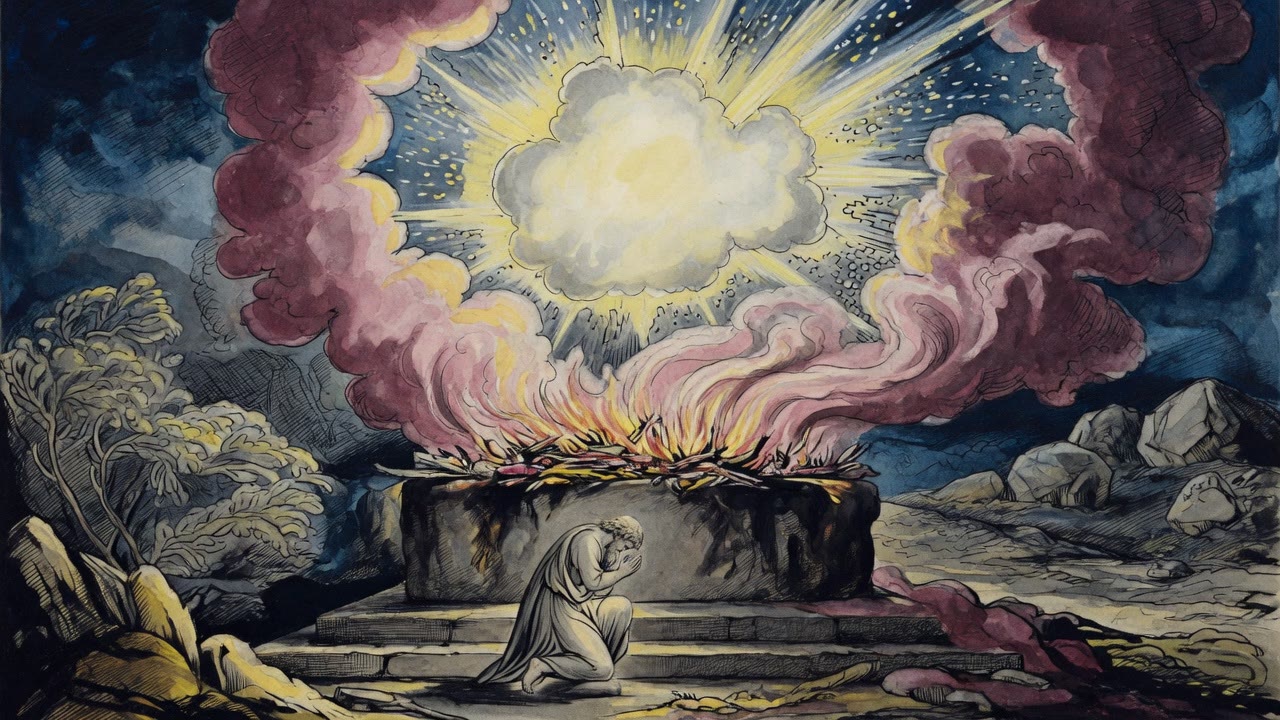
What he was buying with that gesture was not small. A fire had been kept alive on Moses' altar without a break, night and day, fed by men who were not being watched and would not be remembered. God's answer to it was a sentence passed on somebody else: because Israel kept a fire burning on that altar continually, I will repay the kingdom loaded with crimes with a fire that is not quenched night or day, and its smoke will go up forever.
Two altars stood in the house after that. The brass one took the animals, the way a body takes food. The gold one took the spices and the incense, because a soul will accept nothing but fragrance. Both were used every day, since a man is expected to show up in both halves.
Horses, Silver, and the Five Things Taken Away
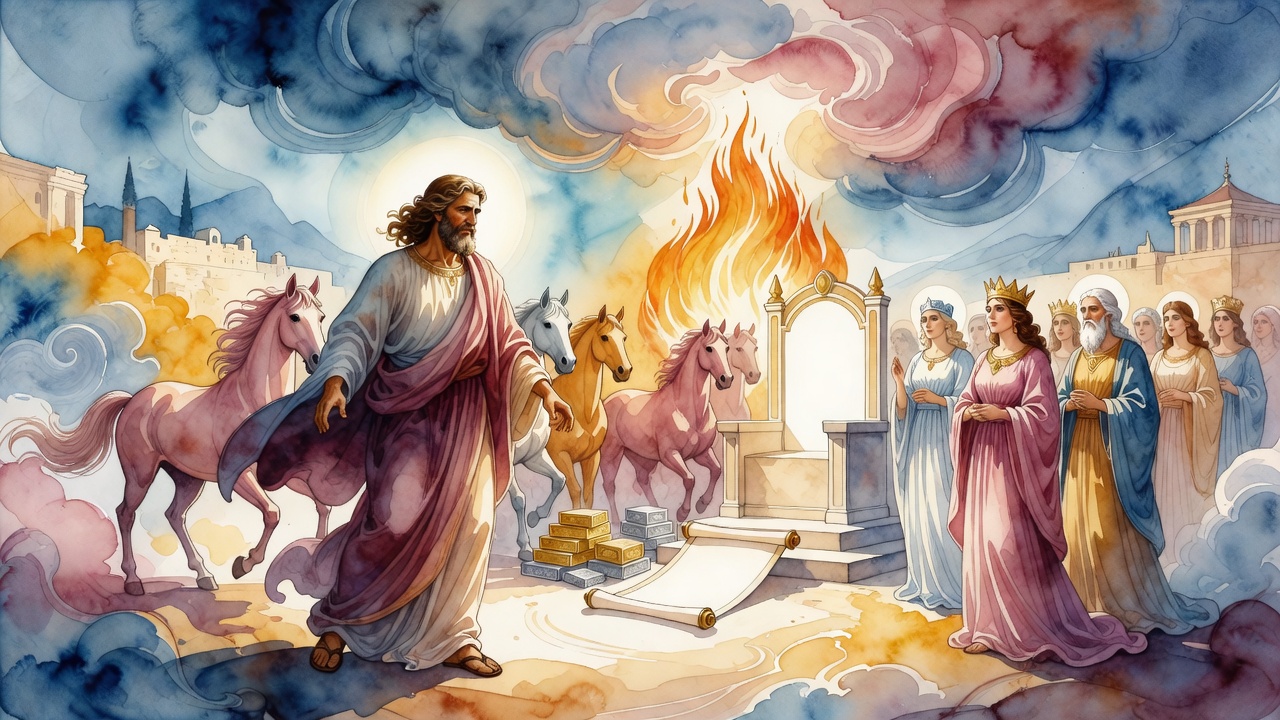
He kept horses, which a king of Israel may not do. He married a foreign woman whose turn toward the God of Israel was not made for clean reasons. He piled up silver and gold until the day came when people in Jerusalem were eating off it, using for kitchen pots the metal the Temple was plated with.
He knew the prohibitions. He had written commentary on them. He seems to have concluded that they were fences built for men who could not see over them, and he atoned for that conclusion later, and the atonement was not gentle.
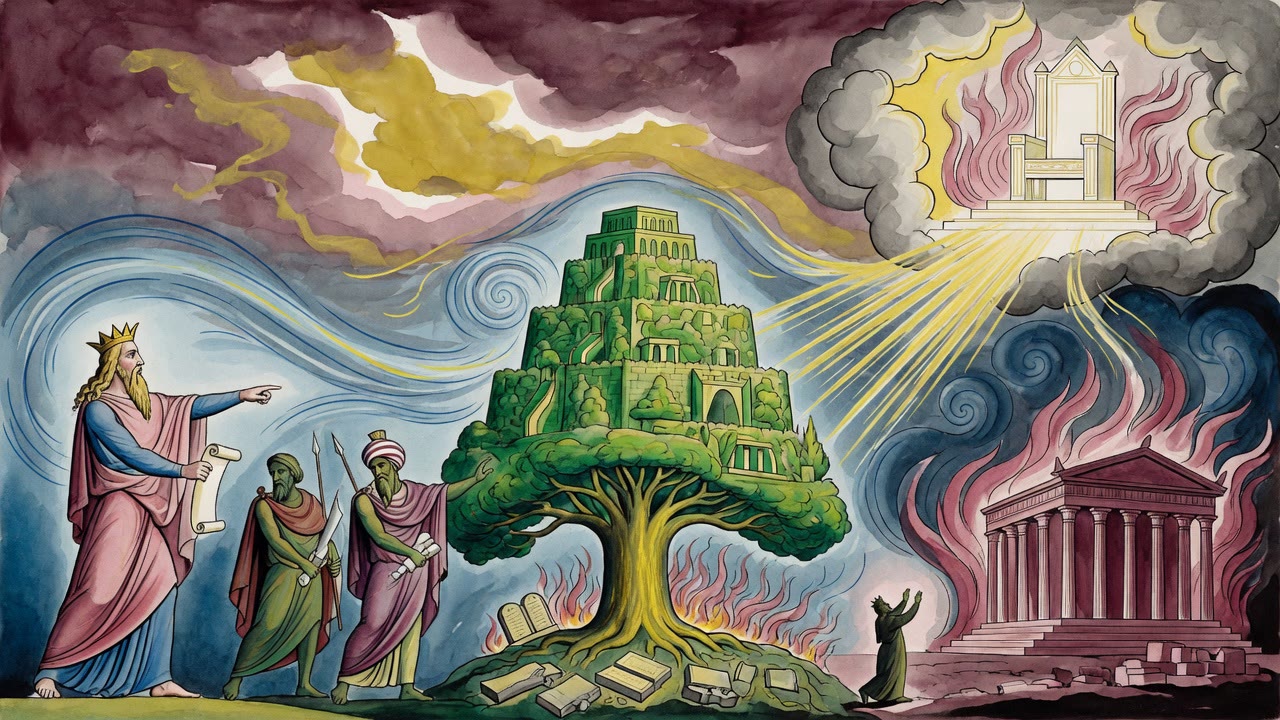
Generations after him Manasseh carried an idol into the sanctuary and set it down inside, and the gold of that house, the kind that used to bring forth fruit, dried up and stayed dry.
Then Nebuchadnezzar came, and the burning, and the carrying off. Five things went out of the world that day and have not been seen since: the Ark, the fire of the altar, the spirit of prophecy, the cherubim, and the lamp Moses made with his own hands. God took them and hid them, and He has not said where.
The seventy flames along the north and south walls went out one after another in the smoke. On the far side of the sea, the nations lifted their heads.
← All myths