Isaiah Waited for the Messiah While Solomon Came Close
The fire fell on Solomon's altar. Later Hezekiah watched an army die overnight and did not sing. Isaiah kept waiting for the one who would.
Table of Contents
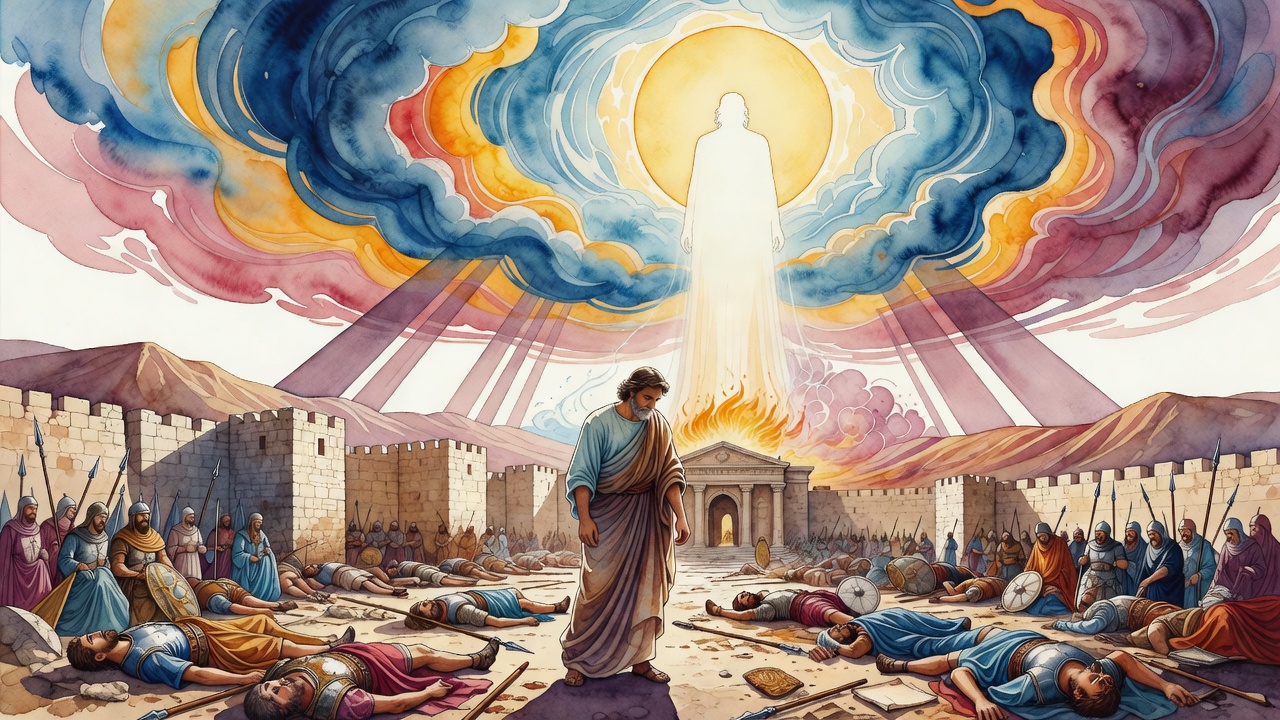
The army was dead in the morning. Hezekiah walked the wall and did not sing.
 Click for full size
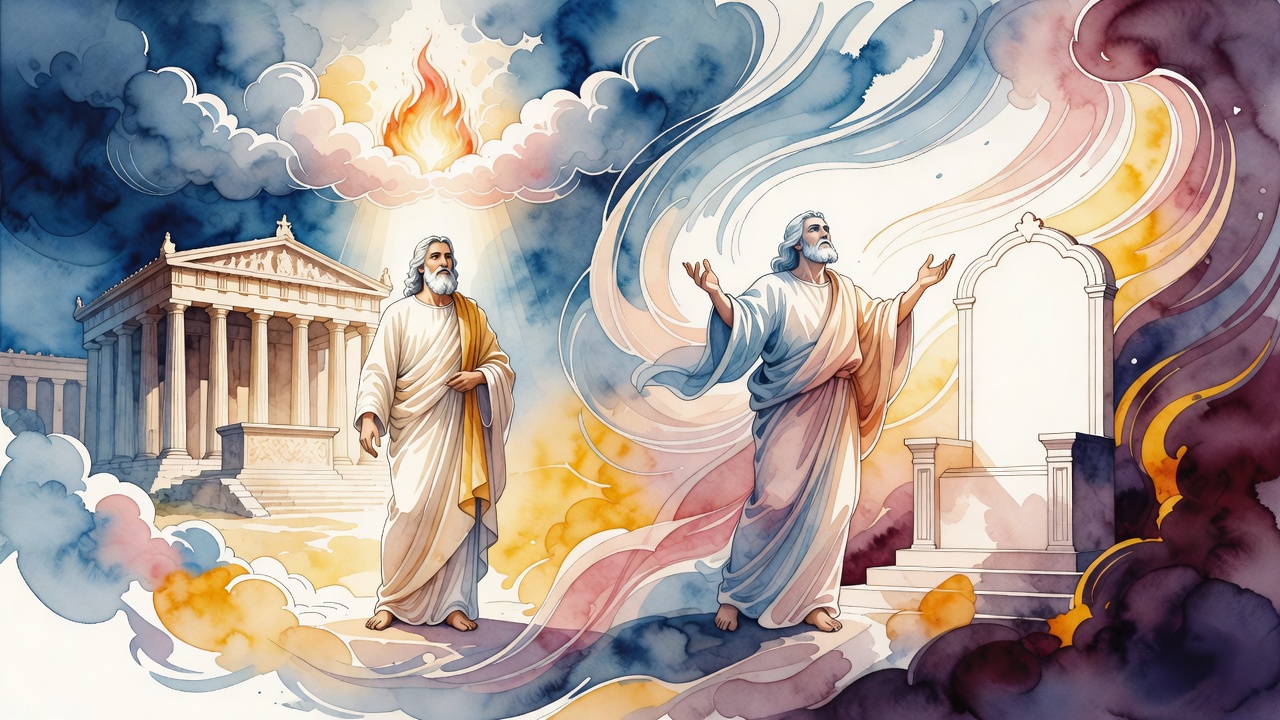
Assyrian bodies lay in the field as if a hand had set them down in the night. Jerusalem still stood. The sun had gone backward for this king. Every person in Israel, not only the scholars, knew the laws of purity and impurity. God had meant, in that hour, to make him the Messiah. The song that would have sealed it did not come. Hezekiah accepted the rescue and went back inside.
Hezekiah Walked the Wall and Did Not Sing
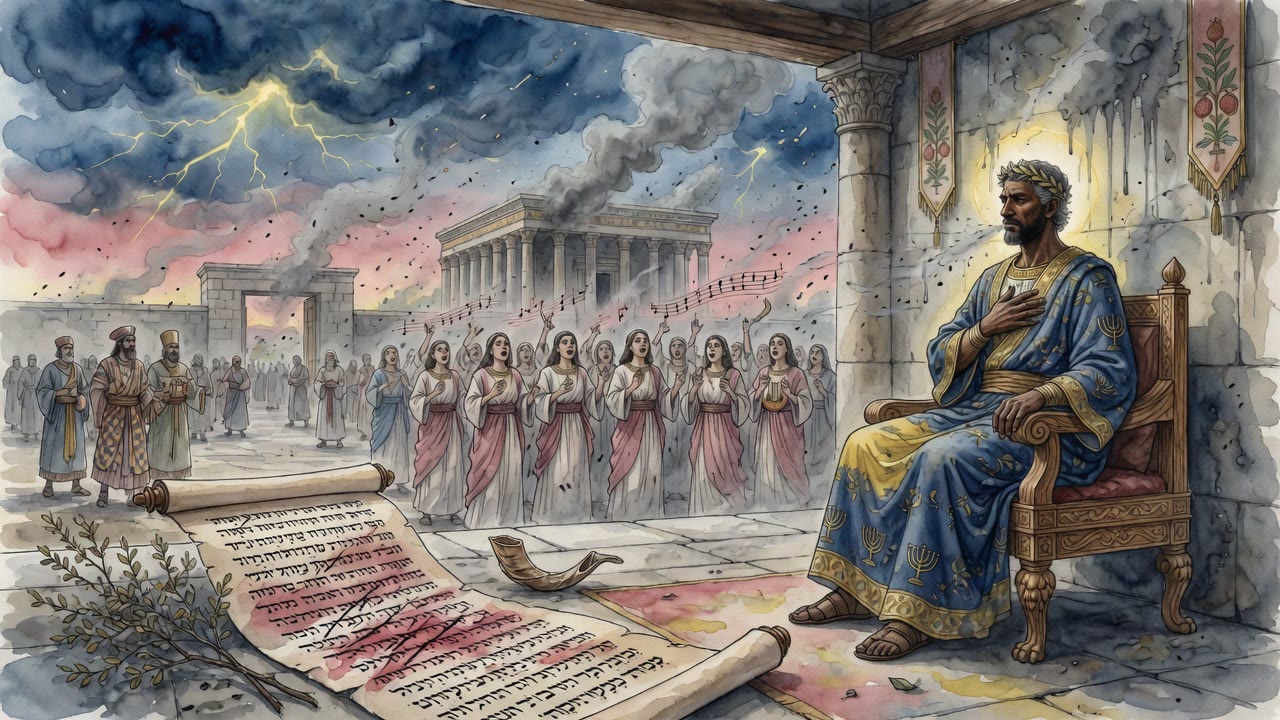
His throat was clear. He had breath and a city, but he did not open his mouth, because he thought Torah study was enough and a song would be extra. Pride can look like seriousness. The hour passed, so the intention was withdrawn.
Isaiah had been waiting for that song. He had taken a mission that promised blows, and he had taken it so a king would one day rise to the moment. The king on the wall had the moment in his hands and set it down.
Solomon Wore Seven Names
Before Hezekiah, another king had come even closer. Solomon was not yet named when Nathan came to David with a message from God. The child would be called Jedidiah, Beloved of God. He received six other names as well. Peace defined his reign, building defined his work, and wisdom defined his reputation. The name God gave him at birth defined his potential: this was the king through whom the promise to David's line might finally arrive.
For a stretch of years it looked as if the arrival had begun. Nations sent ambassadors, the Temple stood, and creatures submitted. The government sat on a man's shoulders and the land was quiet. If the Messiah is a prince of peace, Solomon had worn the clothes.
The Temple Rose Without Iron
No iron tool was heard while the House went up (1 Kings 6:7). Hammers, chisels, the noise of conquest, all fell silent. What rose, rose by other means. Solomon built with labor bound under command, and Jerusalem heard no blow. The silence was the sign. This is how the world was meant to be built.
Isaiah had seen that same silence in vision. Nation shall not lift up sword against nation, neither shall they learn war anymore (Isaiah 2:4). Solomon achieved it for the building. He could not keep it for the reign.
Fire Fell, Then the King Multiplied
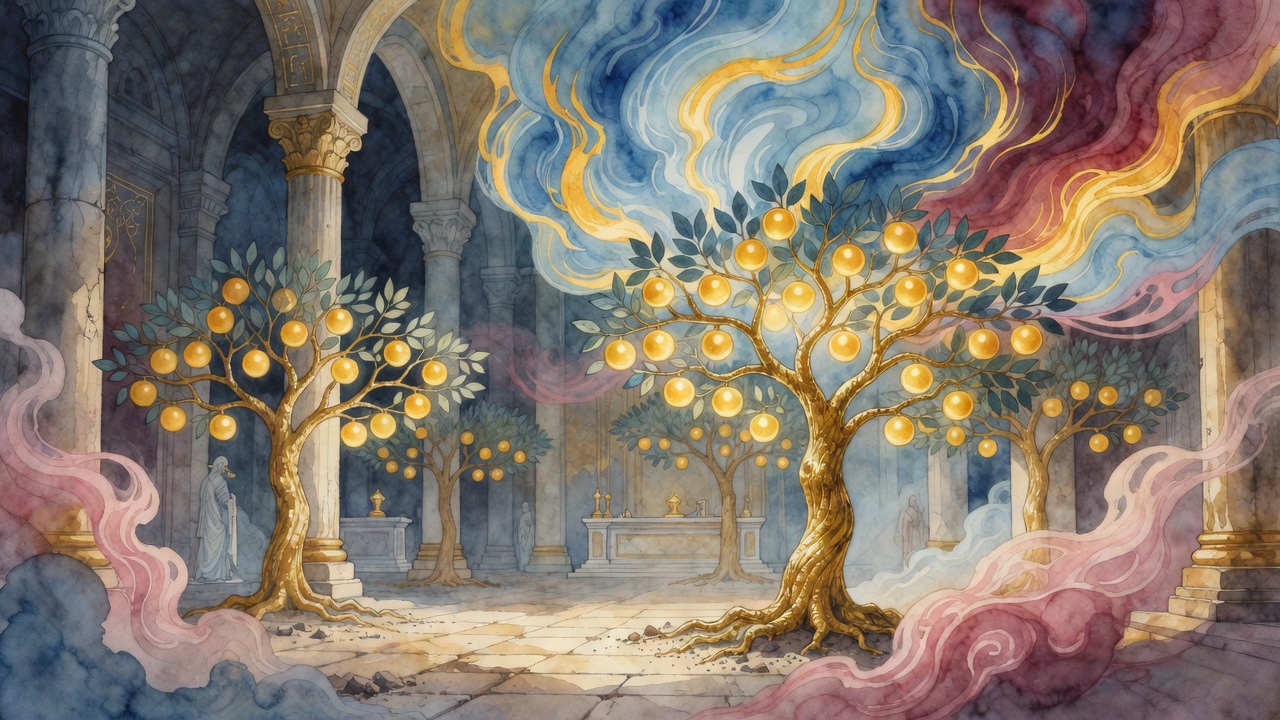
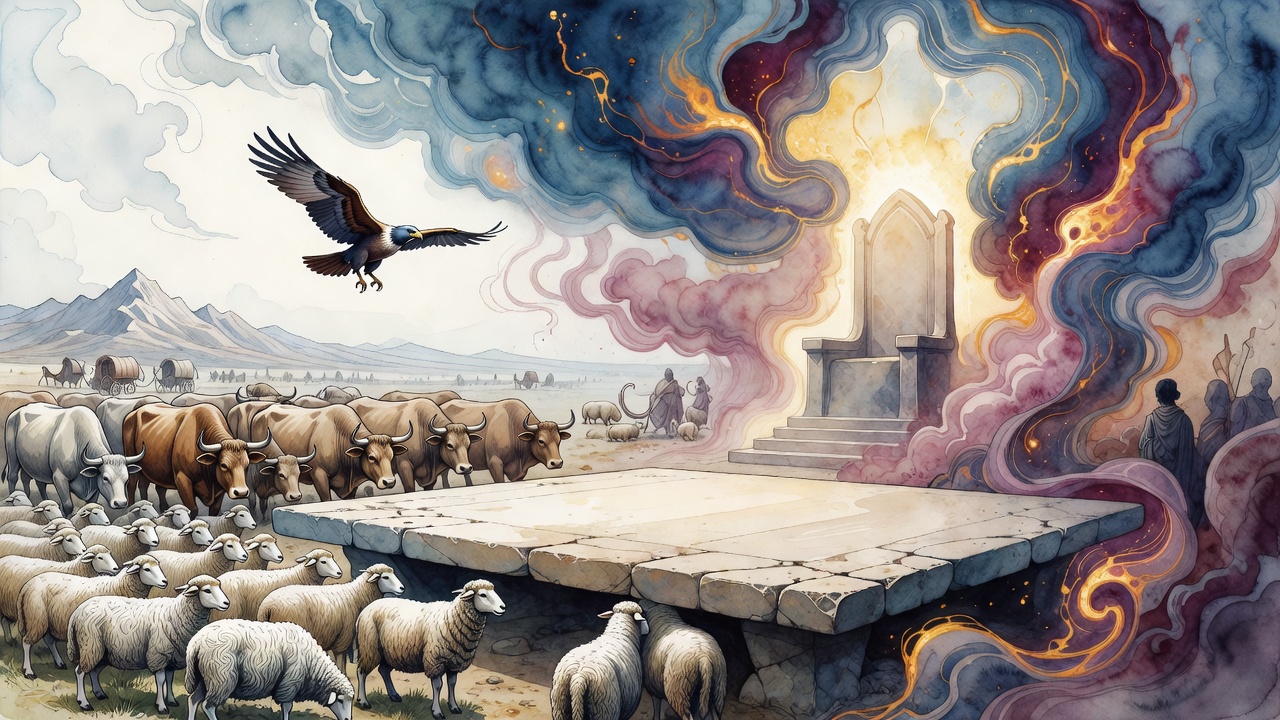
When Solomon finished the prayer of dedication, fire left the presence of the Lord and consumed the burnt offering (2 Chronicles 7:1). No priest had kindled it, but the people fell on their faces. That fire was the same attention that had taken Abel's offering and refused Cain's, the same fire that had spoken from a bush. It fell on Solomon's altar. Then the king who received it began multiplying what he had been told not to multiply.
He understood the restrictions: multiply not horses, wives, or silver and gold. He read them and decided they applied to kings who might be corrupted, not to a king wise enough to manage what he possessed. He multiplied all three. The wisdom came first, but it was not enough. The fire had said yes, though the stables, the wives, and the treasuries said the yes would not hold.
Isaiah Took the Blows and Kept Watch
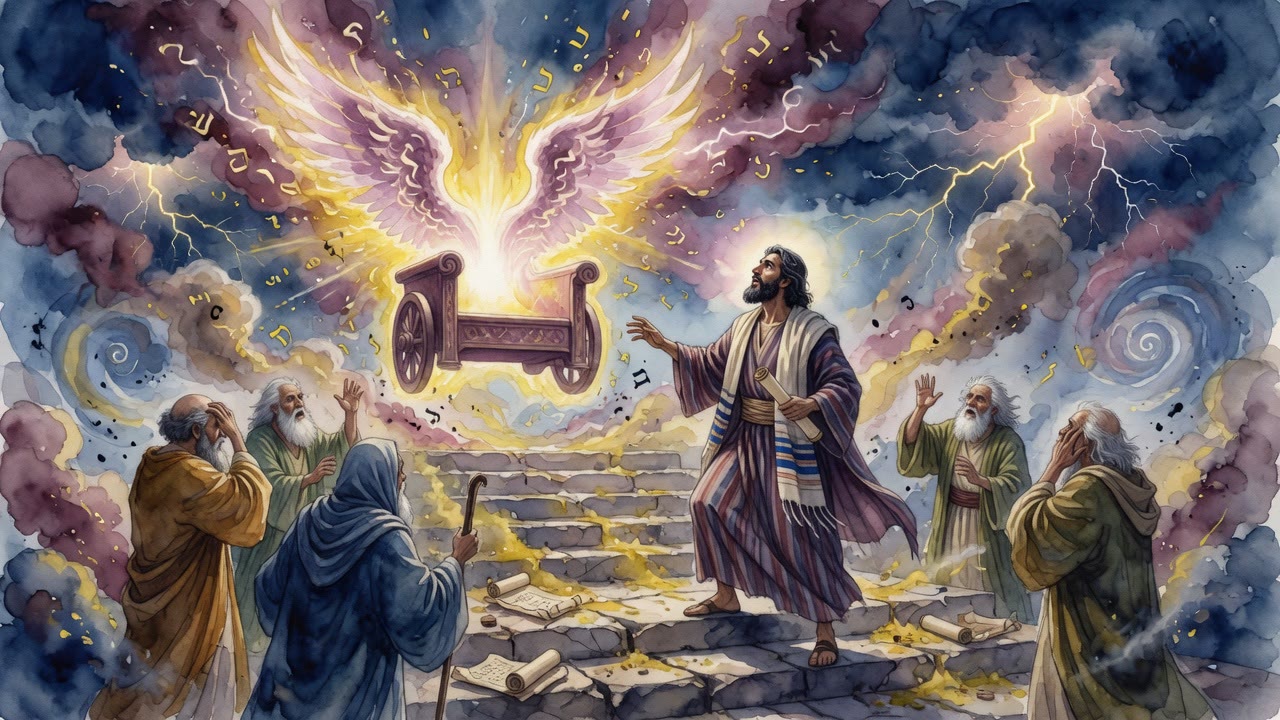
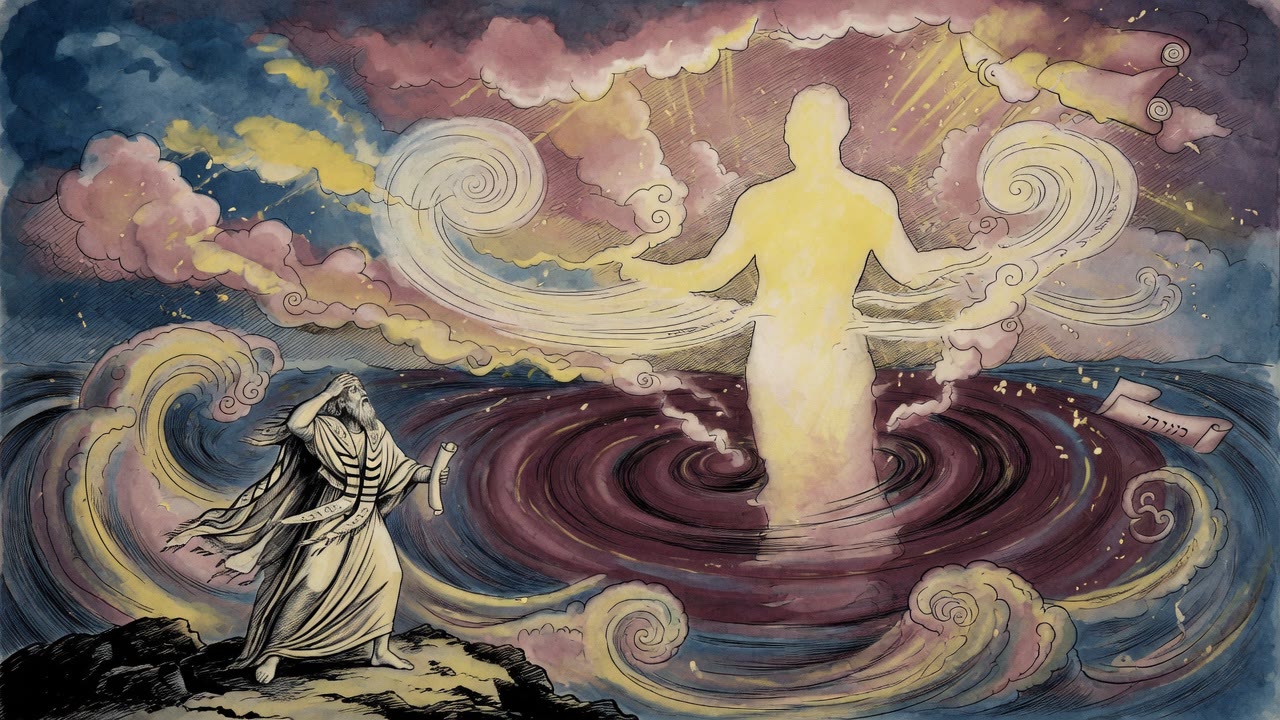
Isaiah was in the study hall when he overheard the call. "Whom shall I send, and who will go for us?" (Isaiah 6:8). God had already sent others. Micah had been struck on the cheek, and Amos had been treated as slow of speech, but Isaiah stepped up anyway. "Here I am; send me."
God laid out the terms. "My children are troublesome. If you accept being demeaned and stricken by them, you will go. If not, you will not." Isaiah agreed. He gave his body to those who smite and his cheeks to those who pluck (Isaiah 50:6). He also said he was not worthy. God answered that he loved to vindicate the children and hated to condemn them, and so he was anointed for the work.
The work was waiting. Solomon had held peace, the Temple, the fire, and the name Jedidiah, and had let the hour thin out in his hands. Hezekiah had held a dead army, a backward sun, and a people fluent in purity, and had not sung. Isaiah kept the watch anyway, because someone had to stay in the gap after the almosts. He took the blows, but he did not get the king who would finish the song.
The wall in Hezekiah's morning stayed quiet. The altar in Solomon's day had already cooled. Isaiah's mouth stayed open toward a future that had twice come close enough to touch.
← All myths