Saul Sinned Once and Lost Everything While Solomon Sinned for Decades
Agag was still breathing when the voice came down. Do not be more righteous than your Creator. Years later the same mouth ordered priests killed.
Table of Contents
 Click for full size
The Knife of Fourteen Fingers
The people were eating meat with the blood still in it. Saul moved through the camp with a knife in his hand, fourteen fingerbreadths long, and showed them the length they were to use.
"In accordance with this protocol you shall be slaughtering and eating," he said.
He wanted the slaughter clean. He wanted the blood out. He wanted to be the king who did it right. On a later day of battle neither sword nor spear was found in the host, except with Saul and with Jonathan his son. Who provided it? Some said an angel. Some said the Holy One Himself. Saul built an altar to the Lord. The verse treats him as if he were the first among kings to begin that work. Piety had a reward. Piety also had a next test.
Agag Still Breathing
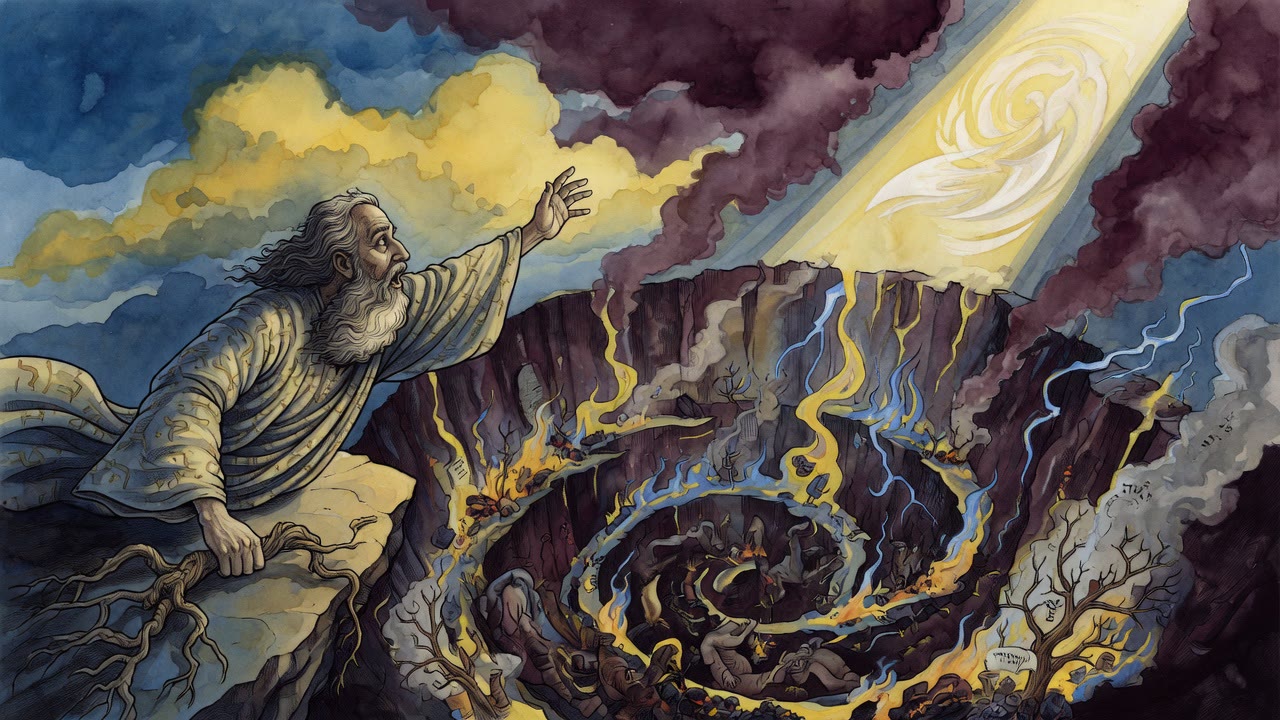
Samuel's command had been absolute. Destroy Amalek. Every man, woman, child, and animal. Leave nothing. Saul led the army into battle and won. Then he stood looking at Agag the Amalekite king alive in front of him, and at the best of the cattle and the sheep, and he began to argue.
"If the Torah ordains that a heifer of the herd shall be beheaded in the valley as an atonement for the death of a single man, how great must be the atonement required for the slaughter of so many men? And granted they are sinners, what wrong have their cattle done? And granted that the adults are worthy of their fate, what have the children done?"
Doeg was at his ear. The law prohibits the slaying of an animal and its young on the same day. How much less, Doeg said, to destroy at one time old and young, men and children. Saul had gone to this war because he was forced into it. He was easily persuaded to let the people keep a part of the cattle alive. He himself was so affluent he had taken a census of the army by giving a sheep to every soldier, two hundred thousand sheep. He did not need the booty. He needed the argument to be right.
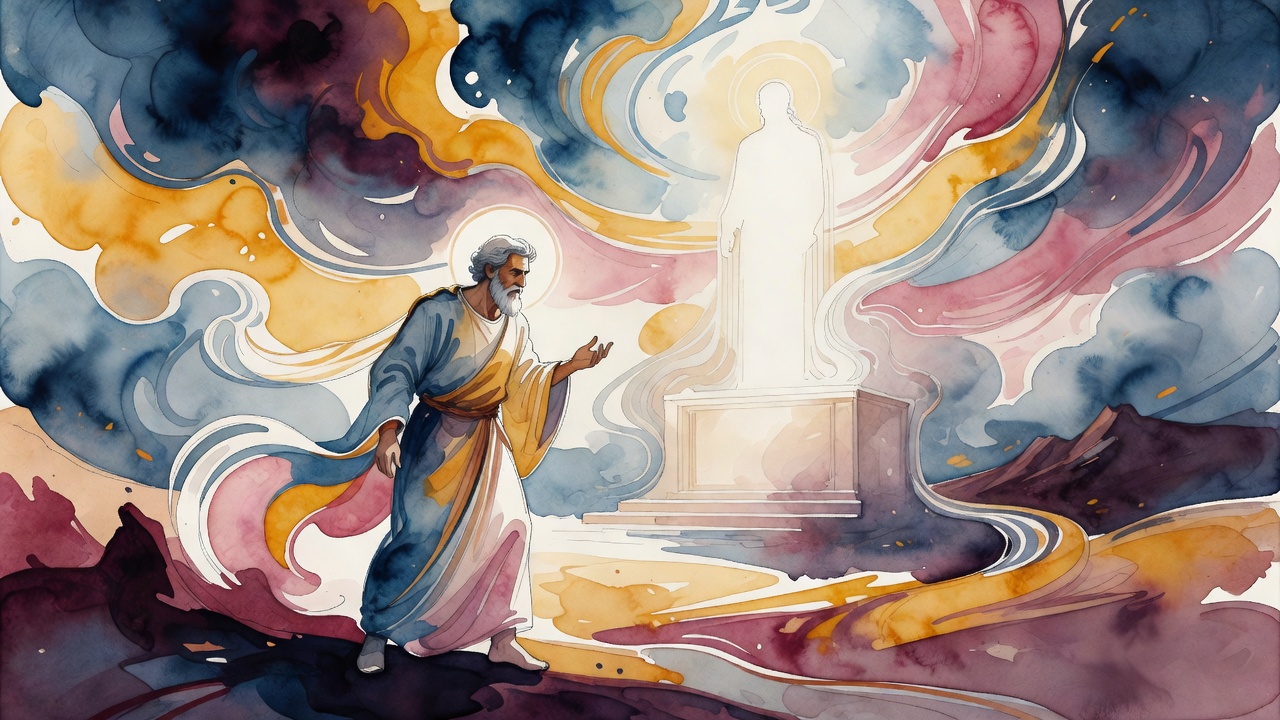
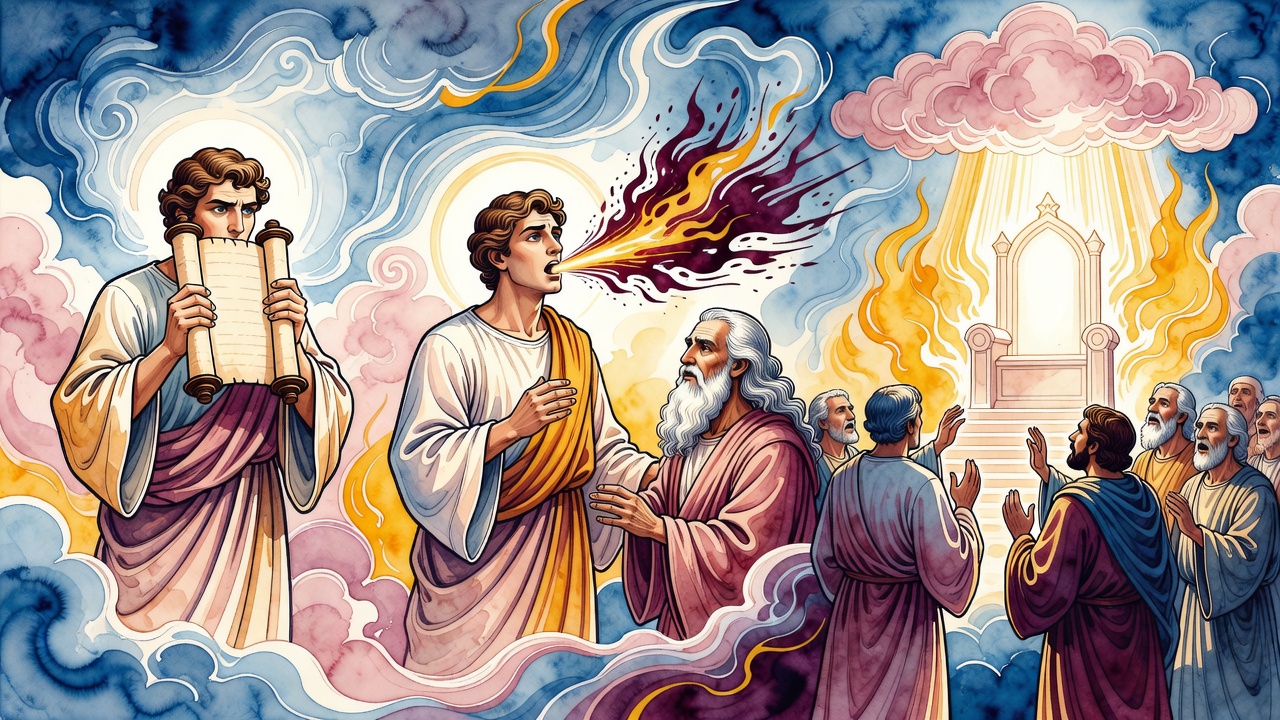
A voice came down from heaven. "Be not overjust." Do not be more righteous than your Creator.
The Same Mouth at Nob
Samuel found him with the bleating still in the air. "What then is this bleating of sheep in my ears?" Saul said he had performed the commandment of God. Samuel said that to obey is better than sacrifice. Because you have rejected the word of God, he has rejected you as king.
Saul said he had sinned. Then he added, "But honor me now before the elders of my people." He wanted the acknowledgment alongside the confession. He wanted the throne and the admission in the same breath. The confession was not yet free of what it was confessing.
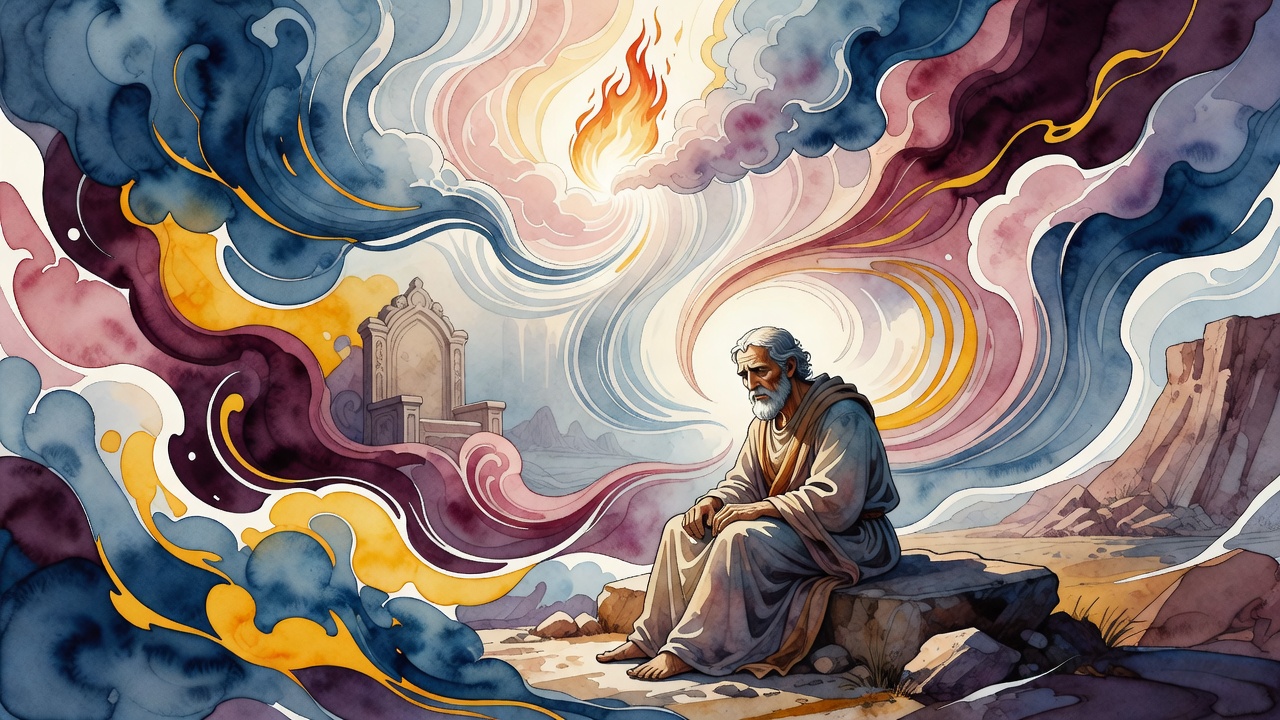
Years later he commissioned Doeg to cut down the priests at Nob. The same voice that had said "Be not overjust" now said "Be not overwicked." Anyone who becomes compassionate when he should be cruel will become cruel later, when he should be compassionate. Saul and his three sons died on the same day. He lost everything. The piety that had held a fourteen-finger knife had no middle left.
Solomon Writes the Warning
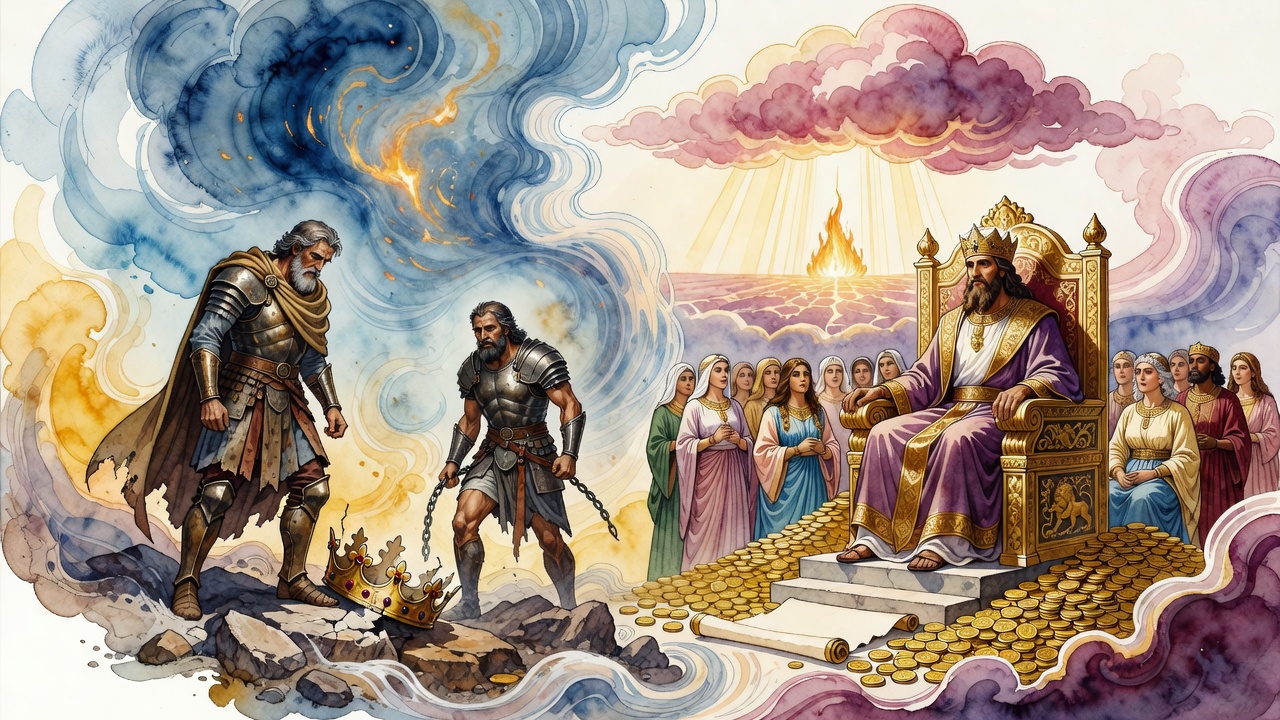
Solomon multiplied horses and wives and silver and gold for forty years. He knew the Torah had forbidden a king those piles. He knew the wives would turn his heart. Altars rose for the gods of his foreign wives. His heart was not wholly true to God as was the heart of David his father. He committed for decades what tore kingdoms, and he kept the throne.
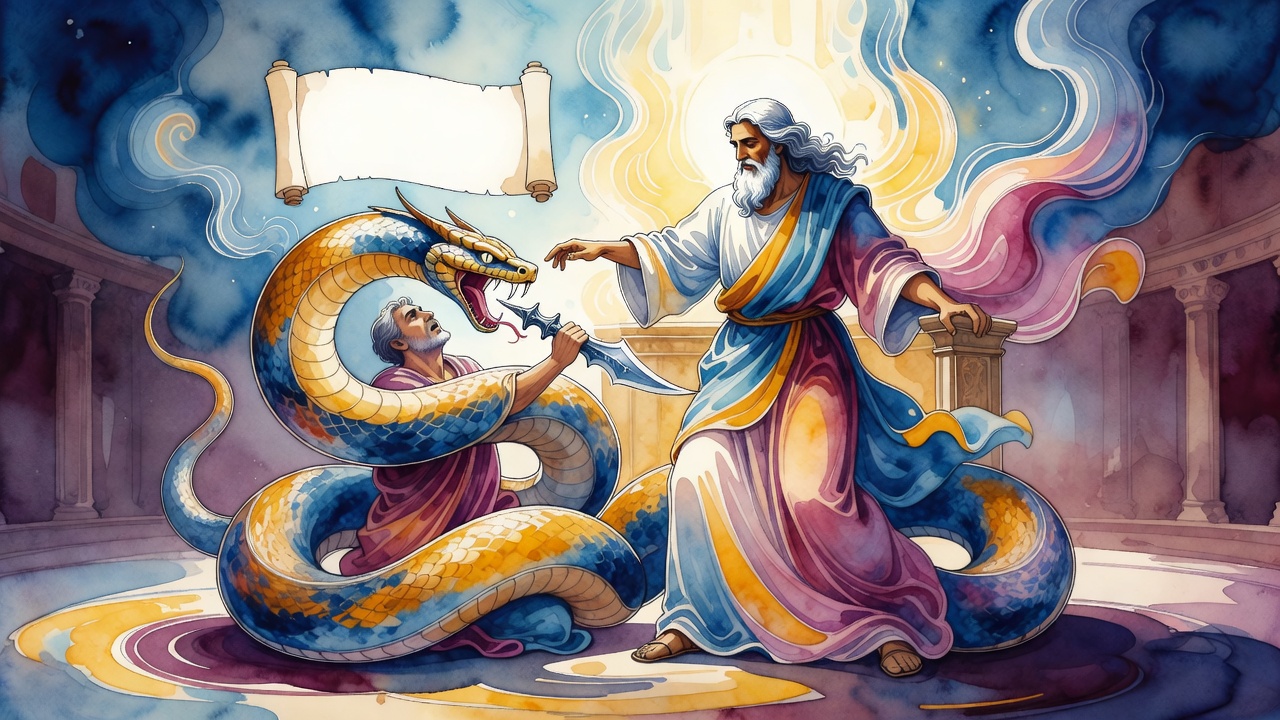
In his old age he wrote. "Do not be overly righteous, and do not be exceedingly wise. Why should you be destroyed?" (Ecclesiastes 7:16). The line sits in Solomon's book. The man who sinned for decades named the danger of the man who sinned once. Saul had calculated his way into an exception. Solomon had accumulated his way into a ruin and still had ink left to warn.
Two Mouths Crying Give
Gan Eden (גן עדן), the Garden, says, "I hate the vain watchmen. I love those who keep Your commandments." Gehinnom (גיהנם) says the opposite. "I love the vain watchmen. I hate those who keep Your commandments." The leech has two daughters: give, give. Gan Eden cries, "Give me what is mine." Gehinnom cries, "Give me what is mine."
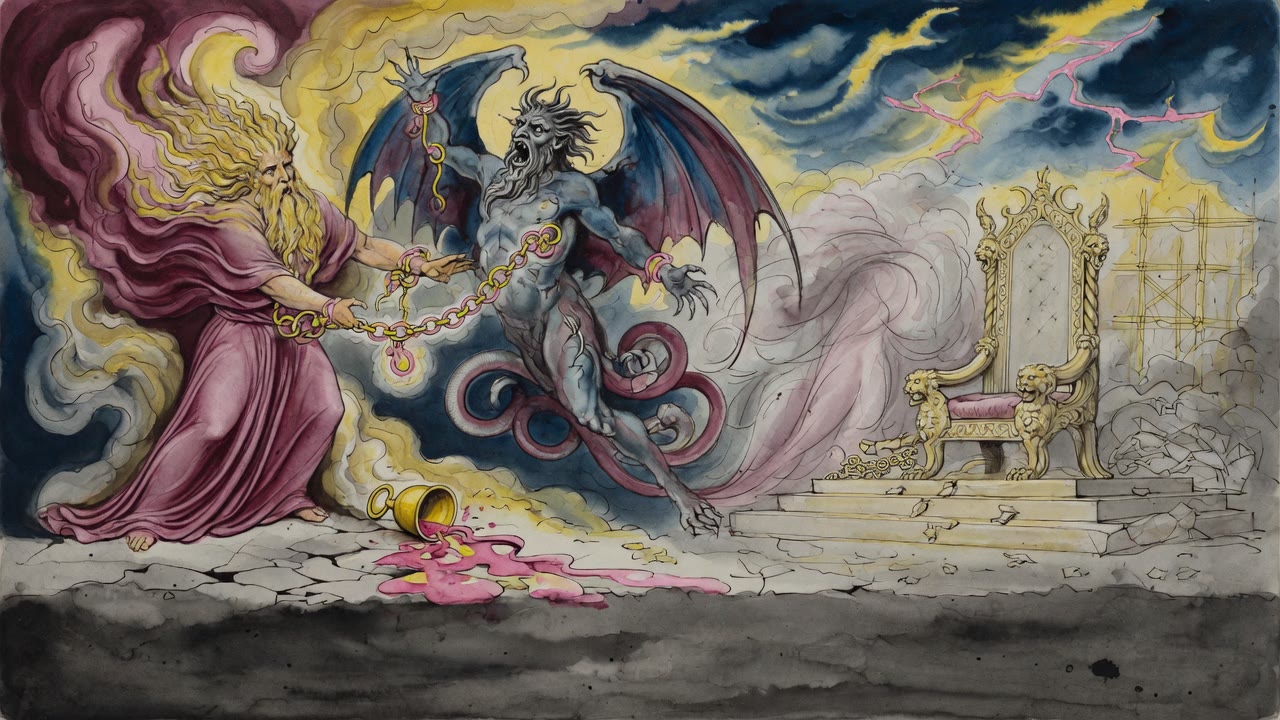
Both kings stood in that quarrel. Saul went to the witch at Endor and called up Samuel's ghost and asked what to do. Samuel, from beyond death, told him it was too late. Tomorrow you and your sons die. He had no gate left to walk through. Solomon's years of excess still left him a mouth that could write the warning and a Temple that sat between the two cries of give. Gan Eden and Gehinnom both wanted their share. Saul had already spent his share on a spared king and a slaughtered priesthood. There was nothing left to give back.
Four things weaken a person's strength: sin, the hard way, fasting, and exile. Saul took the first and the last. Solomon took the first for forty years and still found a way to accept the narrowness. The voice that corrected Saul twice never had to say to Solomon, in the same hour, both "too just" and "too wicked." Solomon's sins were long. Saul's turn was one hesitation, then a collapse with no middle.
← All myths