Solomon's Throne Was Built to Humble Every Visitor
Solomon's legendary throne was not just a seat of power. It moved, tested every visitor, and punished rulers who lied before it.
Table of Contents
 Click for full size
Six Steps to Judgment
When a foreign king arrived at Solomon's court to pay tribute or press a case, the audience did not begin when he opened his mouth. It began when he set his foot on the first step of the throne.
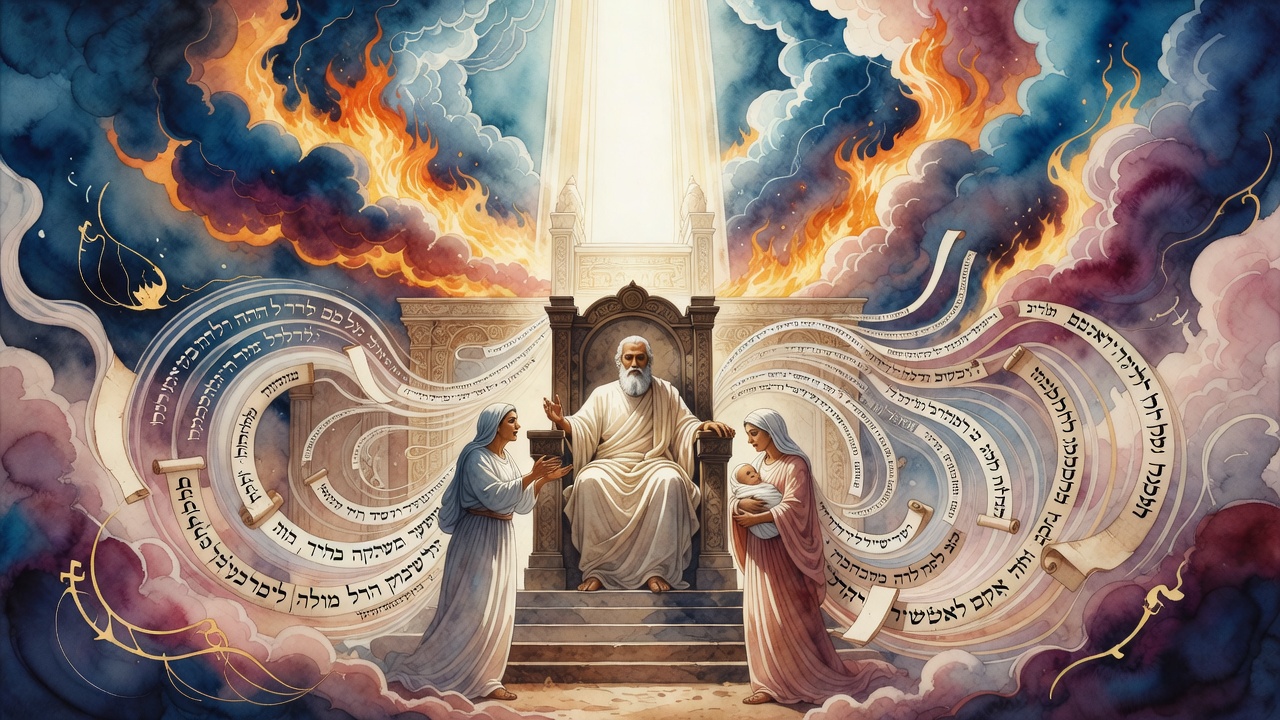
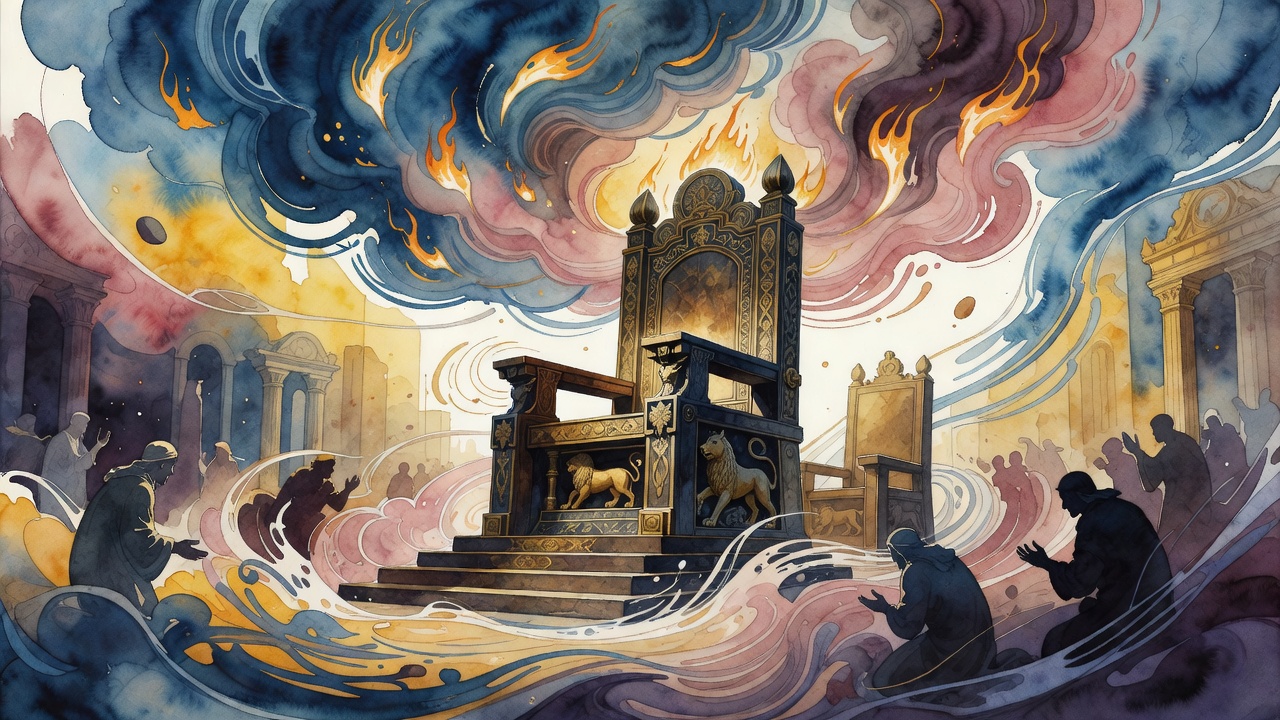
The throne had six steps. On each step, flanking both sides, were pairs of golden animals: lion and eagle, lion and eagle, all the way up. When Solomon placed his foot on the first step, the animals moved. By the time he reached the top, he was surrounded by an honor guard of animated gold, shifting and settling as he passed. A golden eagle spread its wings above his head. A golden serpent coiled above the throne itself. The whole structure, in motion, looked less like furniture and more like a living organism that recognized its master.
The foreign visitor watched all of this before he spoke. That was the design.
What the Throne Did to Visitors
The animals were not merely decorative. Each step of the approach carried a verbal declaration, announced by mechanism or by angelic voice, reminding the approaching dignitary of a commandment he was bound to keep. Do not murder. Do not steal. Do not bear false witness. By the time any visitor reached Solomon's presence, they had been walked through the moral architecture of Sinai. If they were going to lie to the king, they had been warned against lying at each stage of their approach.
The throne also detected falsehood. The tradition records that when a foreign ruler testified falsely before Solomon, the golden lion on the nearest step would strike him on the head with its tail. The blow was not fatal. It was clarifying. No one came before Solomon to argue a case without understanding that the court itself was watching, and that the animals on the steps had been given more than their golden form.
What Happened When It Left Jerusalem
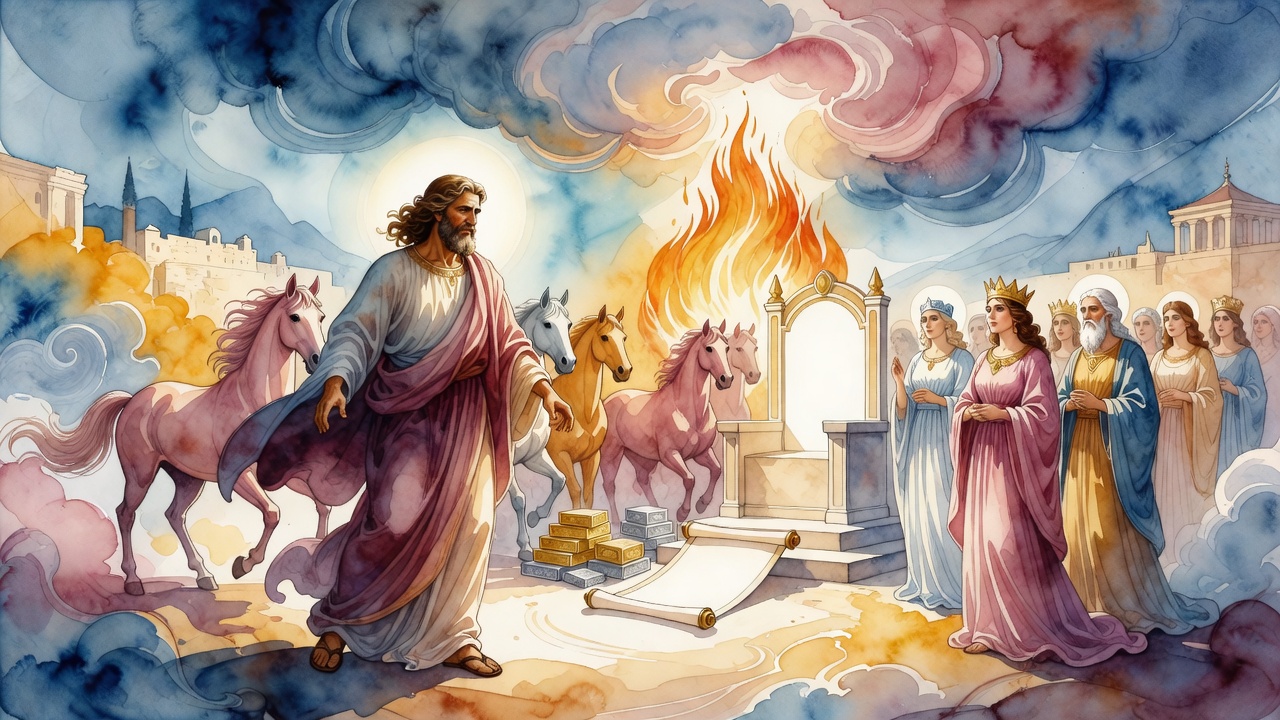
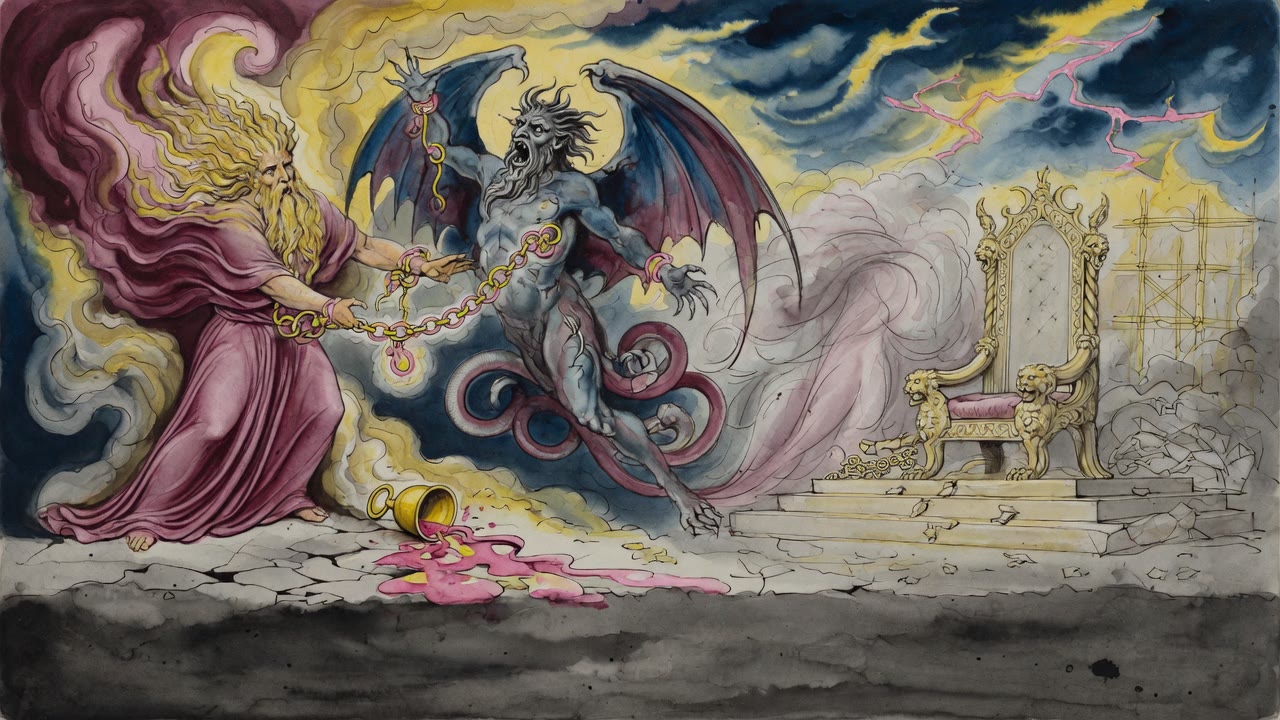
The throne outlasted Solomon, and its history outside Jerusalem is one of the darker threads in the tradition. After the Babylonian conquest, it was taken by Nebuchadnezzar. He attempted to sit on it. The lion struck him on the heel as he climbed. He fell, and the injury remained with him. Later it passed to Pharaoh Necho of Egypt, who met the same fate climbing the same step. The animals punished every ruler who tried to occupy a seat built for the one person the throne had been made to recognize.
The Ahasuerus of the Purim story, according to the tradition in Targum Sheni, possessed a replica of the throne, built for him because the original had been damaged in its travels and no craftsman could reproduce the mechanism exactly. The replica had the shape but not the life. All the golden animals sat still when Ahasuerus climbed. The kings who came after Solomon had the symbol without the substance, and the throne's silence around them was its own form of judgment.
The Queen of Sheba and the Hall of Mirrors
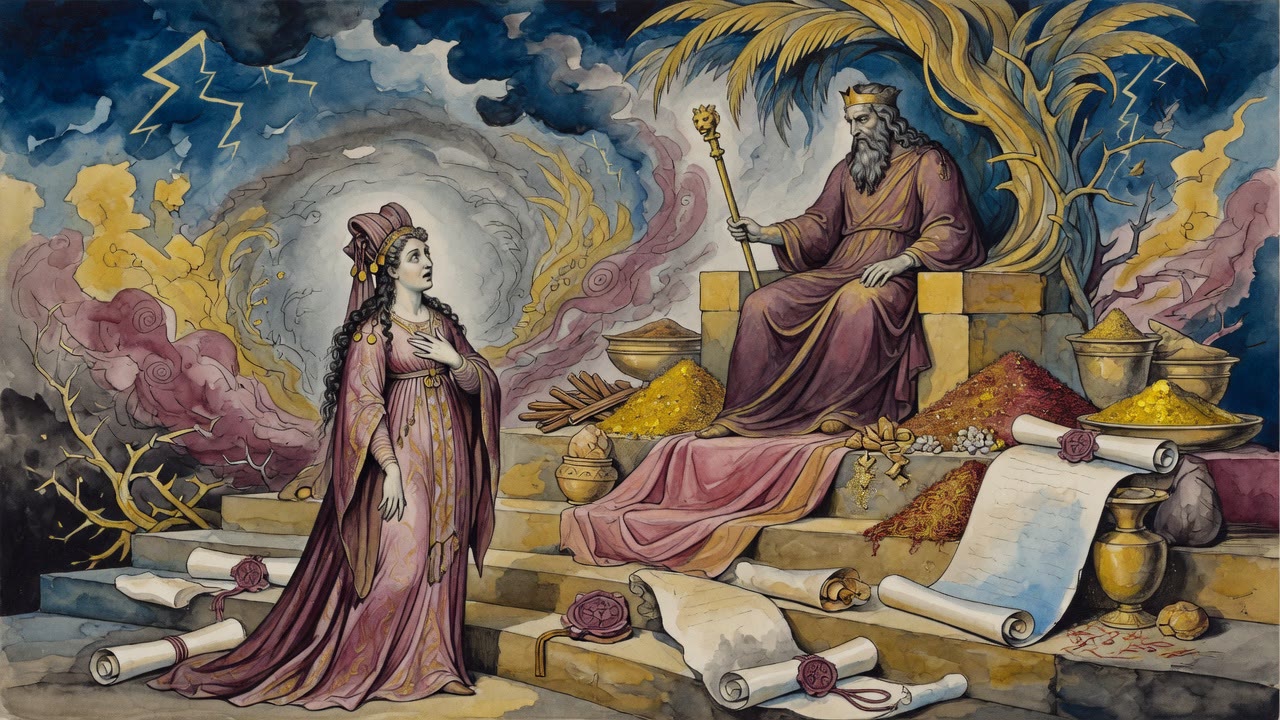
The Queen of Sheba came not to pay tribute but to test. She had heard reports of Solomon's wisdom and had composed riddles she believed no man could answer. She arrived with a large retinue, expensive gifts, and a set of puzzles designed to distinguish true wisdom from the performance of wisdom.
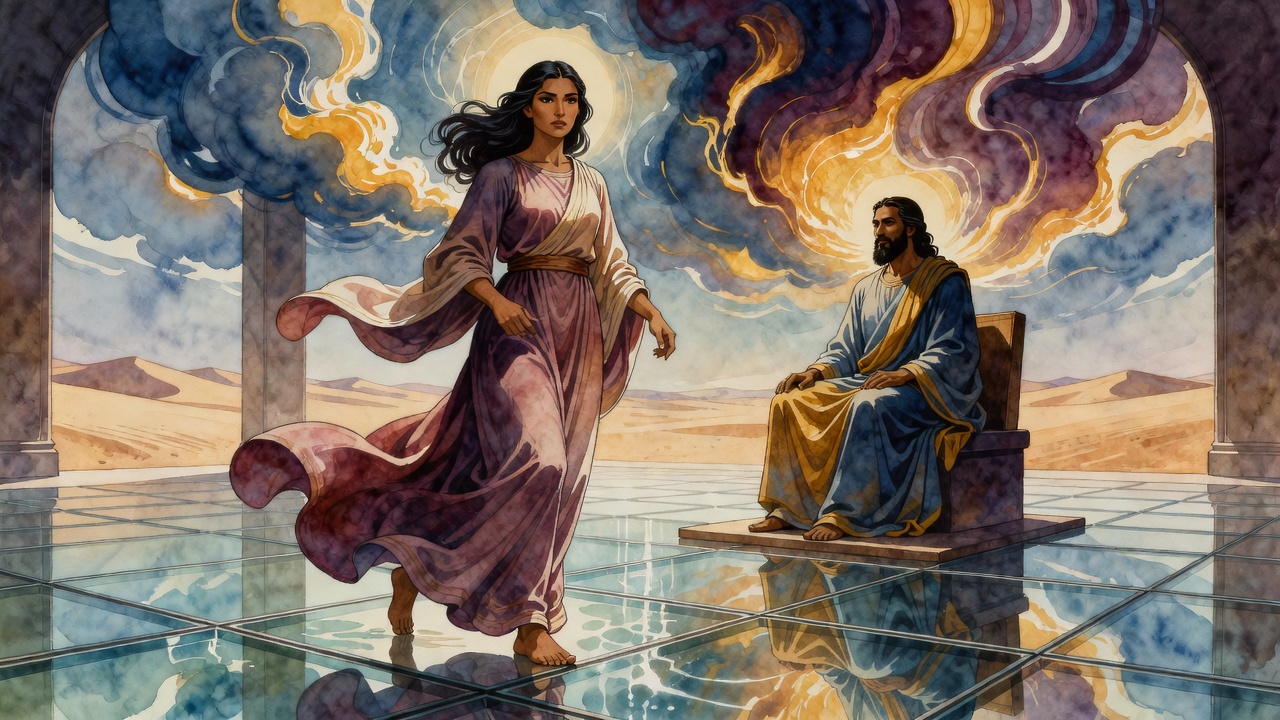
Solomon answered every riddle. But the tradition preserves one detail from her approach to his throne that matters more than any individual answer: she walked toward him across what she believed was a tiled floor and raised her skirt to keep it dry. The floor was glass, polished to the depth of a mirror. She had mistaken the reflection of the sky for standing water. When she understood what she had done, she stood corrected before the wisest king in the world, and her embarrassment was the first real answer he gave her: that what you see is not always what you think you see, and that the surest proof of wisdom is knowing the difference.
← All myths