Solomon Made Thirty-Six Demons Confess Their Names and Their Cures
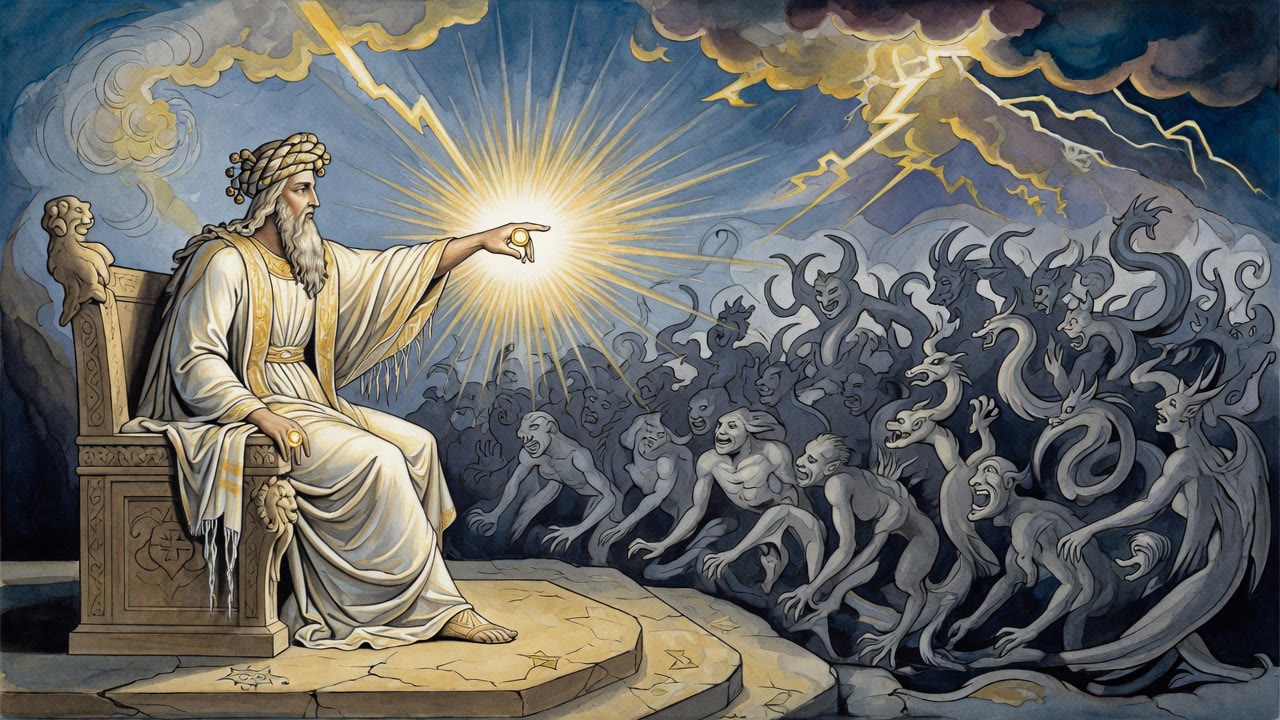
A ring dragged them in one at a time. Ornias strangled men in their sleep. A headless spirit ate heads. Each said which angel could stop it.
Table of Contents
 Click for full size
The Creature at the Palace Gates
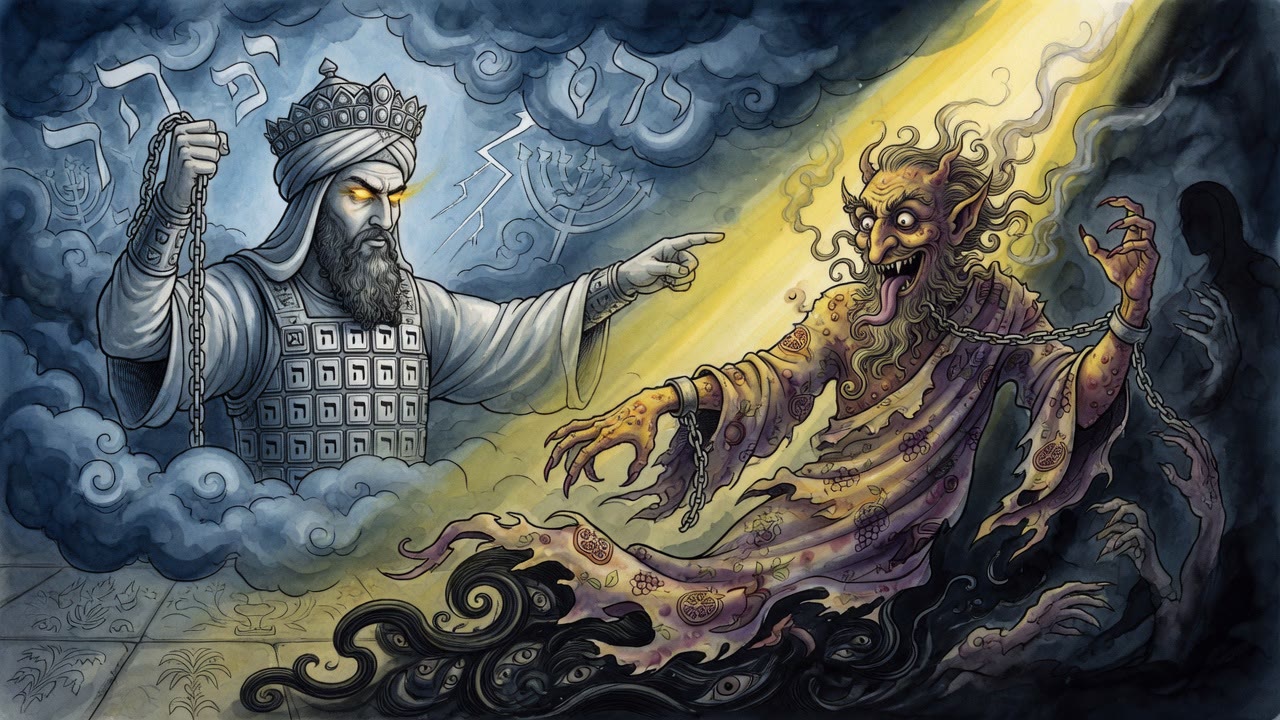
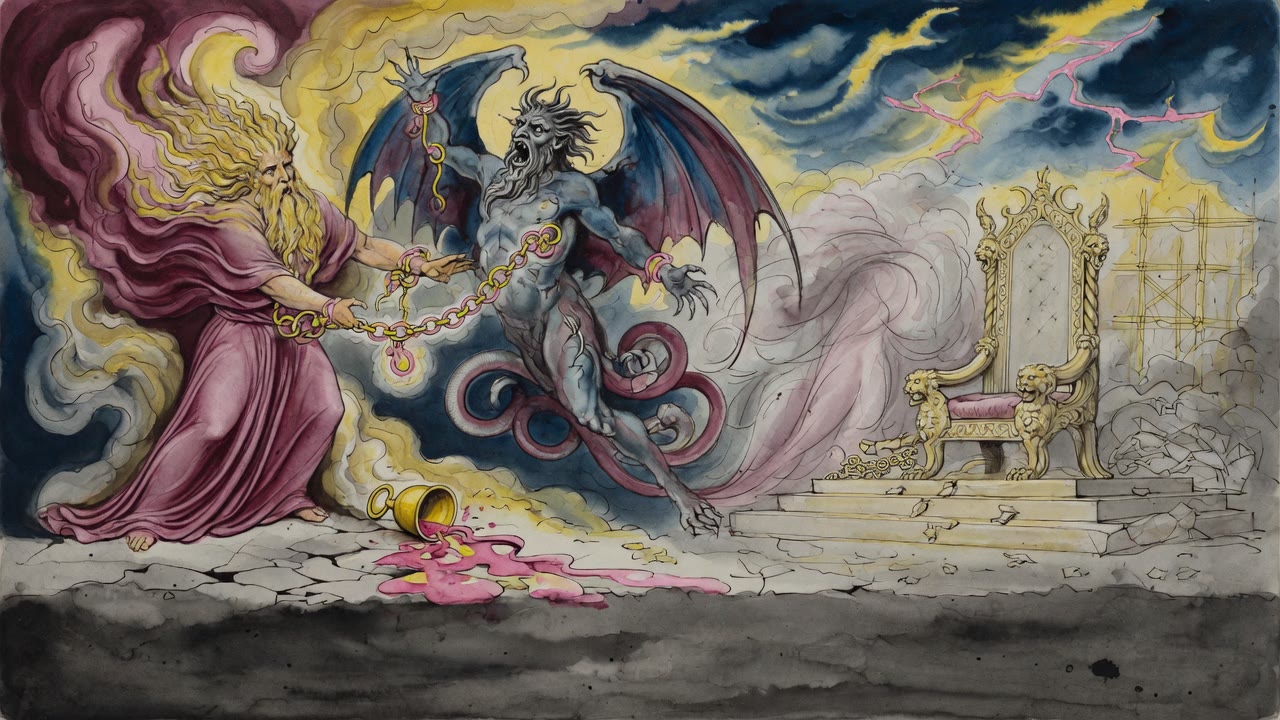
The demon arrived shuddering at the palace gates, terrified of a ring no bigger than a man's thumb. He had been dragging himself through the night to torment a boy who was building the Temple, stealing the boy's wages, drinking his life away. Then someone pressed a seal against his neck and marched him to the king. He offered silver. He offered gold. Nobody touched him. The seal of God had caught him, and that was that.
Solomon walked out to the vestibule and looked at the creature. "Who are you?" he asked, the way a judge asks a defendant whose guilt is already settled. "I am called Ornias," the demon said. "I strangle those consumed with desire. I change my shape into a beautiful woman who visits men in their sleep. I shift into a winged creature and fly toward the heavens. I change into a lion. I am the offspring of the archangel Uriel and I command all the demons."
Solomon heard the name of the archangel and prayed, glorifying God. Then he sealed Ornias with the ring and set him to work cutting stone for the Temple. Then he gave the demon a task: "bring me the prince of all demons."
The Prince of All Demons Kneels
Ornias went and came back dragging Beelzeboul, the spirit of spirits, the one who made all the others do his bidding. Even Beelzeboul knelt before the ring. He confessed who he was, what he could do, what angel's name could neutralize him. Solomon wrote it all down. The confession was the weapon. Knowing a demon's name, its sign of the zodiac, the angel whose invocation would bind it, that was the weapon. That was what he was building, entry by entry, alongside the Temple stones.
He built it demon by demon. A creature without a head was brought in next: arms, legs, torso, but nothing above the shoulders. "I am called Envy," it said, "and I delight in devouring heads because I want one for myself. I am wholly voice. I have inherited the voices of many men." It described what it did to children on their eighth day, how it glided on the sound of crying in the night, how it worked worst at crossroads. "By what angel are you defeated?" Solomon asked. "By the fiery flash of lightning," the demon said. Solomon sealed it with the ring, watched it throw itself down and groan, and added it to the catalog.
Thirty-Six Spirits and Their Cures
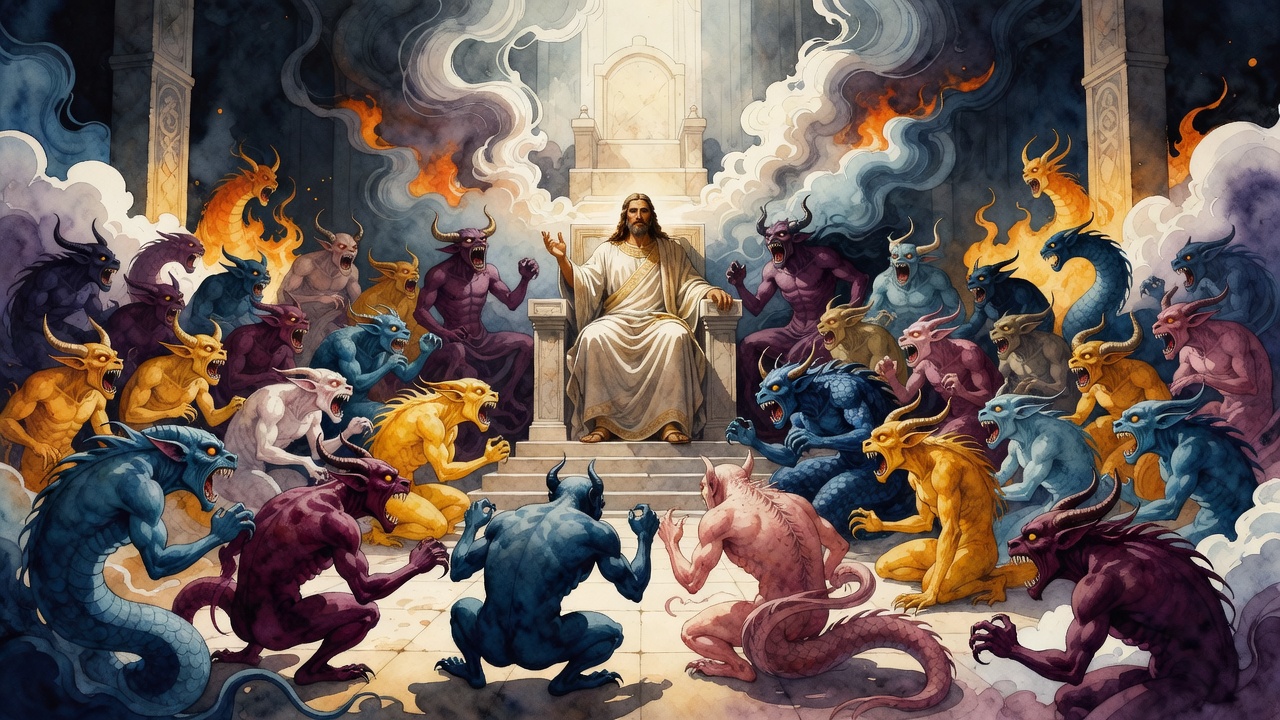
There were thirty-six spirits in total, one for each division of the heavens. They confessed the diseases they caused, the afflictions they fed on, the angels whose names undid them. Metathiax caused kidney pain, banished by the angel Adonael. Katanikotael created strife inside houses, defeated by writing the opposing angel's name on laurel leaves and washing them in water. Bobel caused nervous illness, call out Adonael, imprison Bobel, and he fled. Roeled brought stomach pain and bitter cold; say the words Iax, be still, for Solomon is greater than eleven fathers, and he was silenced. Each confession was a cure. The interrogation was a manual of spiritual warfare, and Solomon was compiling it entry by entry.
Building the Temple Without Iron
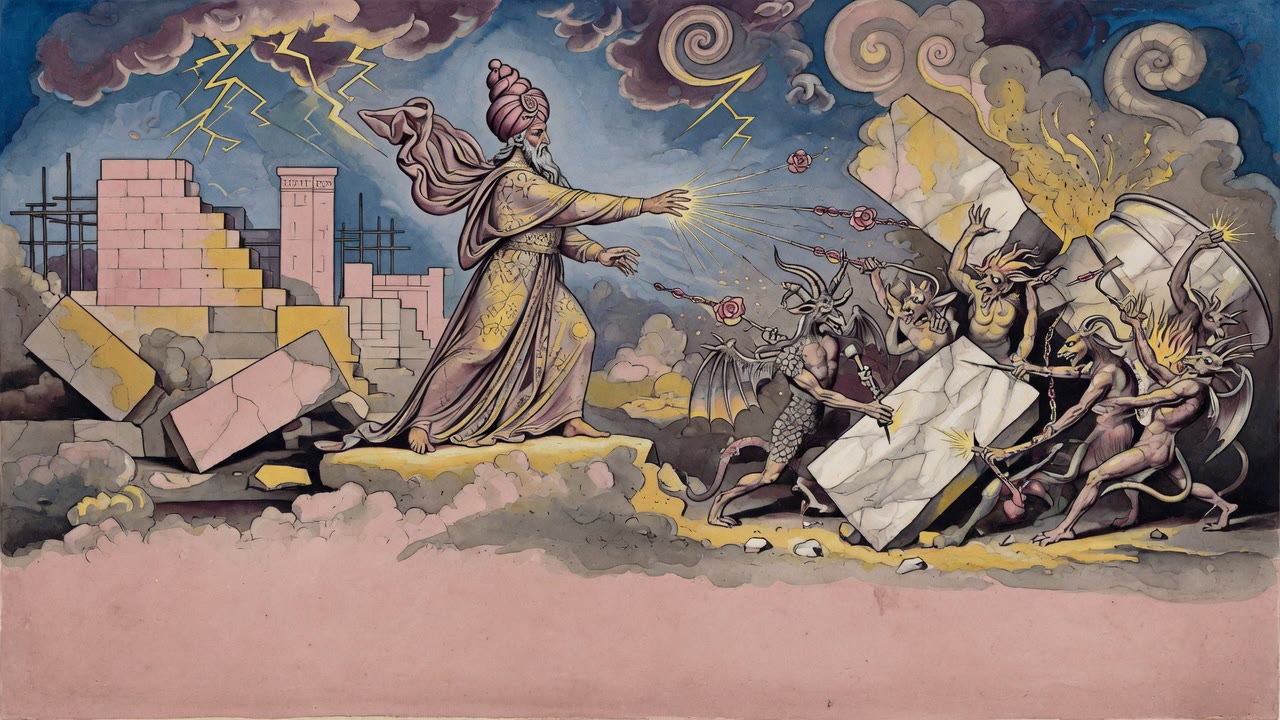
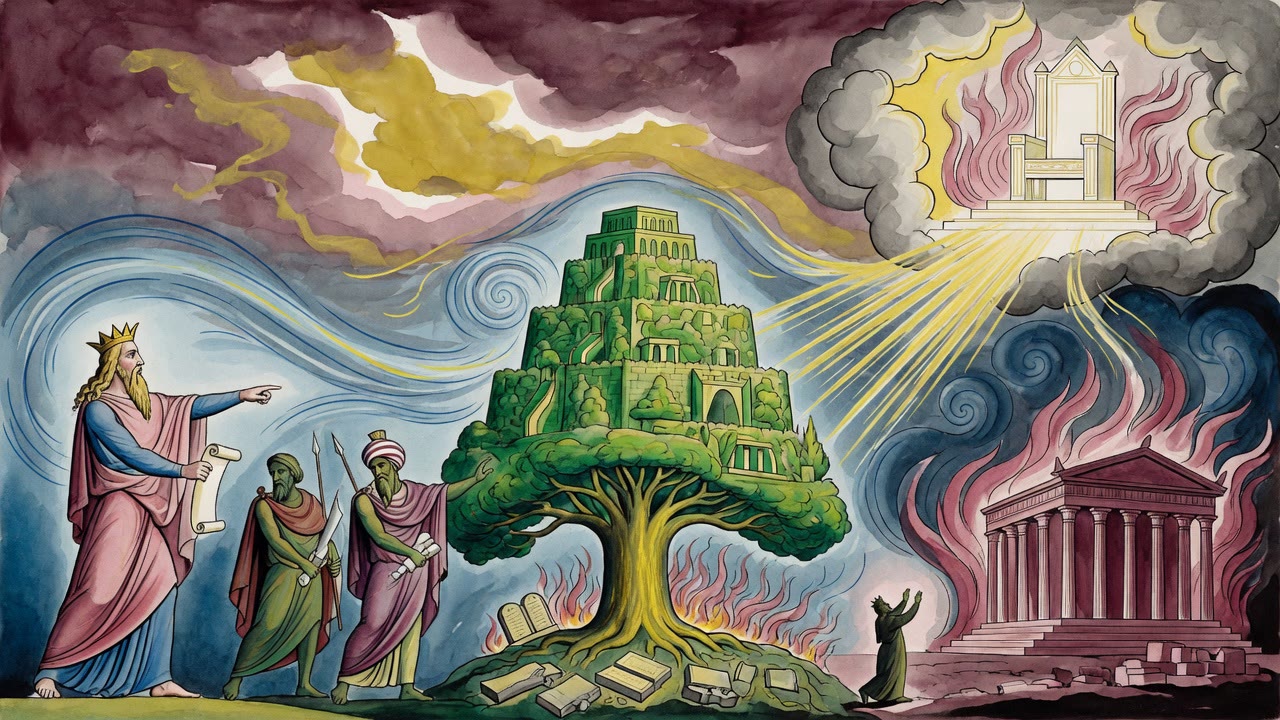
Josephus, writing for Roman readers around 93 CE, added his own layer to the picture. He described Solomon commanding spirits to build the Temple using a root that could shatter stone without iron tools, because no iron, the metal of weapons and war, was permitted in that sacred space. The throne Solomon built afterward had six steps, fourteen lions flanking them, a half-bull supporting the king's back. The same wisdom that organized the heavens organized the building project. Nothing was built by accident. The demons who cut the stones participated in something they did not fully understand. Solomon understood it. That was the difference.
What the Knowledge Cost
The Midrash Rabbah tradition describes Solomon's wisdom as touching every living thing, animals, birds, trees, the deep logic of creation. But the Testament's version is stranger and more honest about what that wisdom cost. It was not comfortable knowledge. It meant sitting with the headless embodiment of Envy and taking notes on how it worked. It meant cataloging thirty-six flavors of human suffering and learning the angelic antidote for each one. The ring protected Solomon from being consumed by these encounters. It did not protect him from having to look at them directly.
When the Temple was finally finished, the catalog was complete. Every demon had confessed its name. Every affliction had its angel. The building stood and the knowledge stood with it, preserved in the text for anyone who would need it afterward. What happened later, the love that undid everything, the throne lost to a demon in disguise, the kingdom split in two, is another story. But first there was this: a king in a vestibule, a shuddering spirit at the gates, and a question so plain it could crack the world open. "Who are you?" Knowing the answer was how you survived the meeting.
← All myths