Jacob, Solomon, and Job Would Not Let Go of God
Jacob would not release the stranger until the sky paled. Job, married into that house, demanded a hearing. Solomon set both faces on a lamp of gold.
Table of Contents
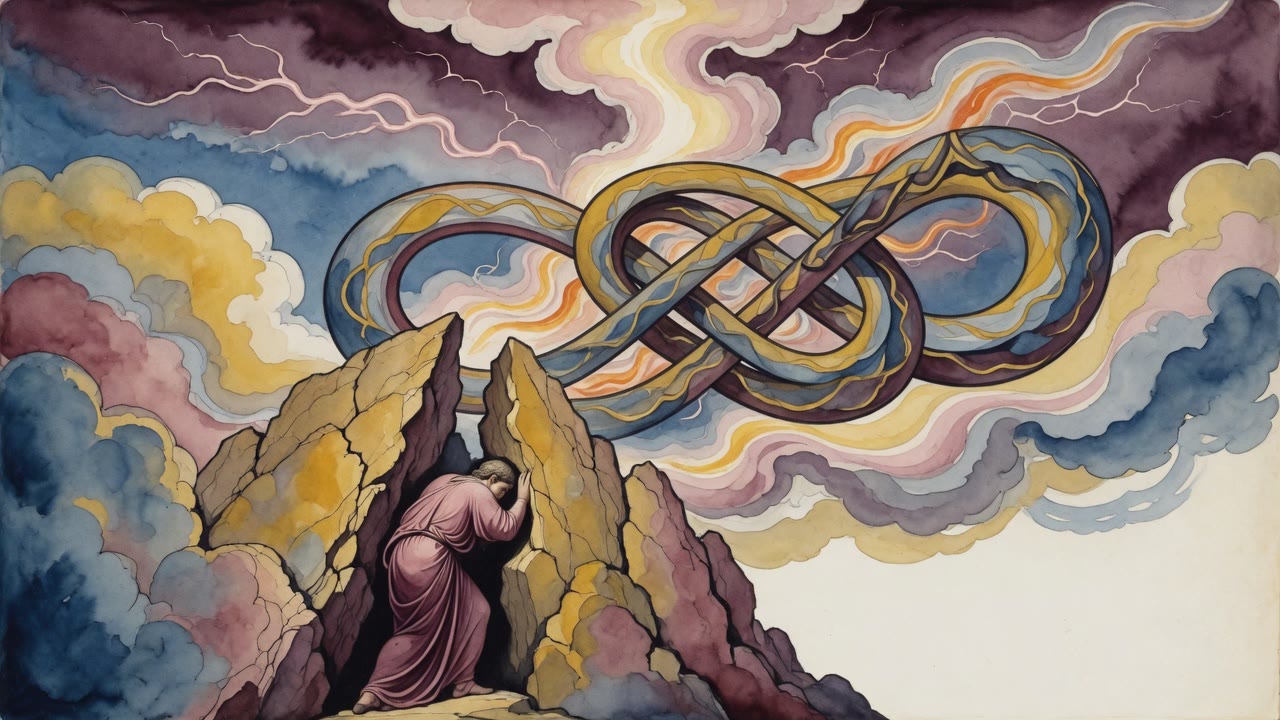
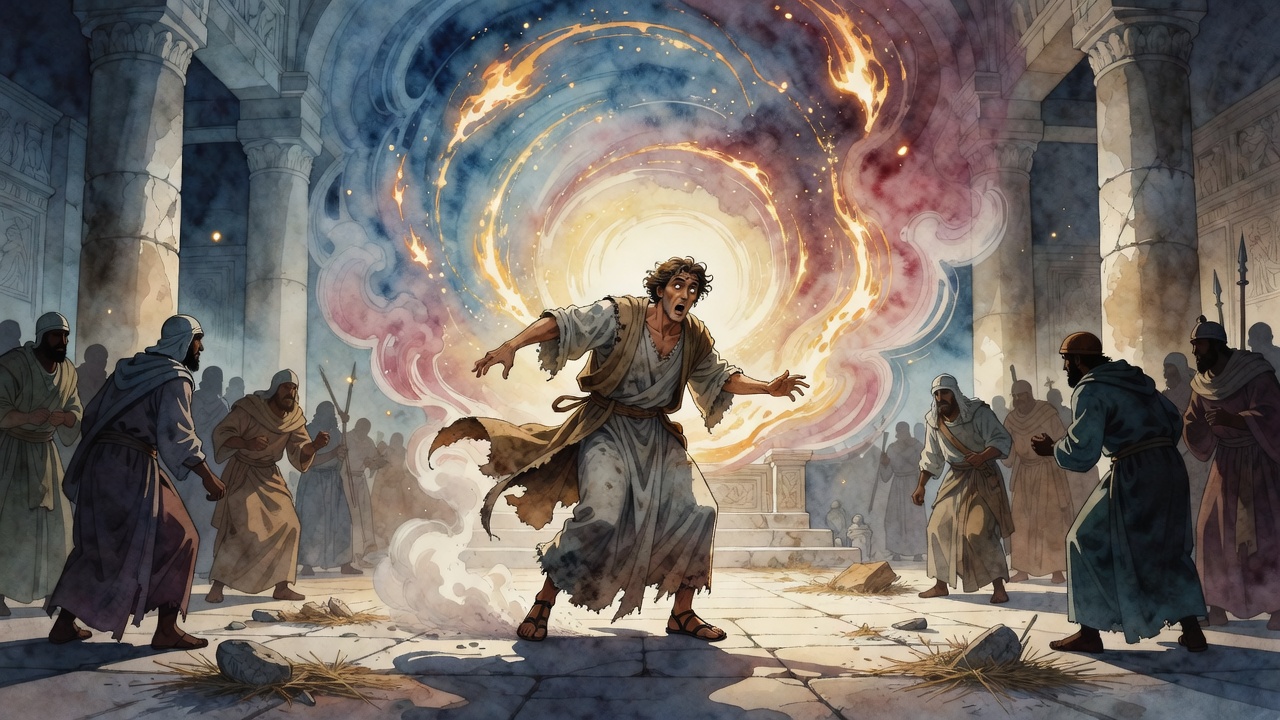
Jacob crossed the Jabbok alone at night, and something found him in the dark. They wrestled until the sky paled. When the being could not break him, it wrenched the socket of his thigh. Jacob still would not open his hands.
 Click for full size
He Would Not Release the Stranger
"I will not let you go unless you bless me," he said.
He had not asked permission. He had not sat still and waited. He held on through the pain until the blessing came, and he walked into the morning with a limp and a new name, Israel.
He Built Again After the Deaths
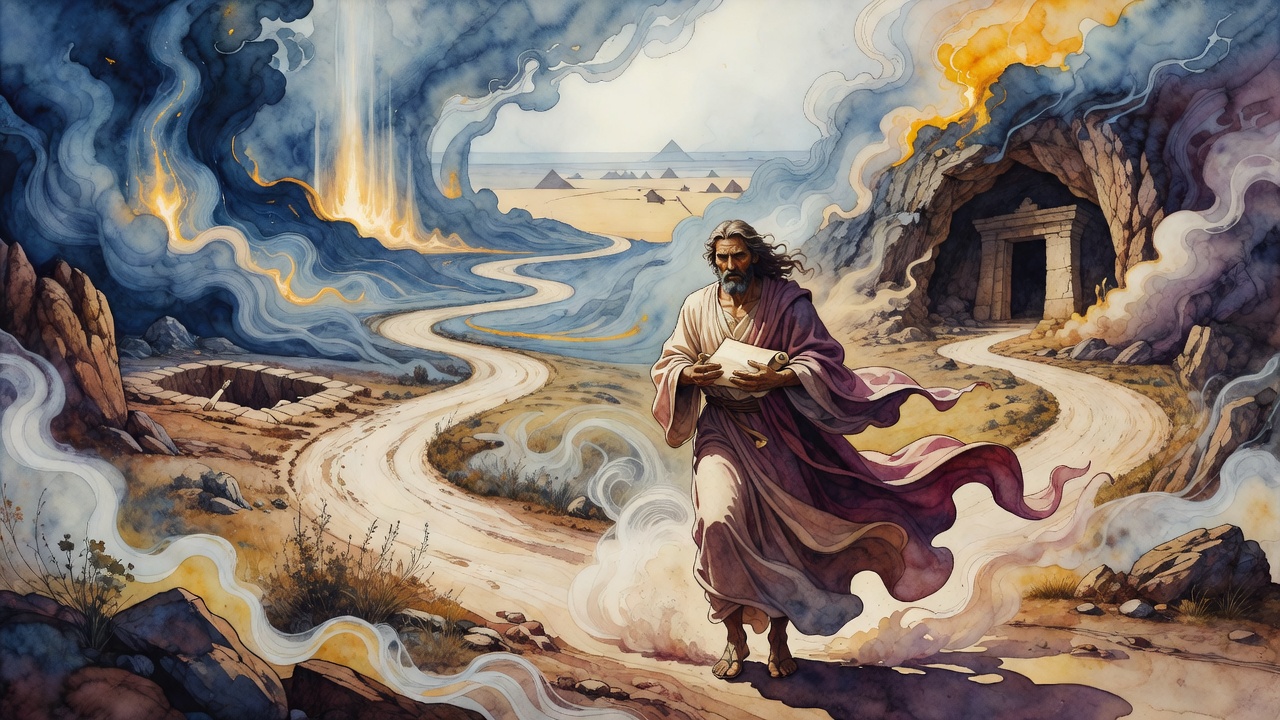
Decades later he came back to Bethel, where the ladder had stood in his dream. He was ninety-nine. He buried Deborah under an oak. He mourned his mother Rebecca, dead in Hebron at a hundred and thirty-three. He mourned Laban, struck down for breaking the covenant made with Jacob. He named the oak Allon-bachuth, the oak of weeping, and then he built an altar anyway.
God appeared again, blessed him again, and put the name Israel back in his mouth. Jacob planted a pillar of stone, poured oil over it, and called the place holy. Grief had not taught him to let go. It had taught him to pile stone on the same vow.
Rachel conceived. On the road toward Hebron her labor turned hard, and she died at forty-five giving birth. Jacob buried her on the way to Ephrath and set a pillar on the grave. He named the boy Benjamin. He still walked. Years after that, old in Egypt, he made Joseph swear to carry him to the cave of Machpelah. Even dying, he held a place and would not release it.
Job Wanted His Name Beside Jacob
Job was tied to that house twice. He was a grandson of Esau, and he had married Dinah, Jacob's daughter, as his second wife. The legends call him the most pious Gentile who ever lived, a servant of God, which is not a small title. He had flocks, children, a name that stood up in the gate.
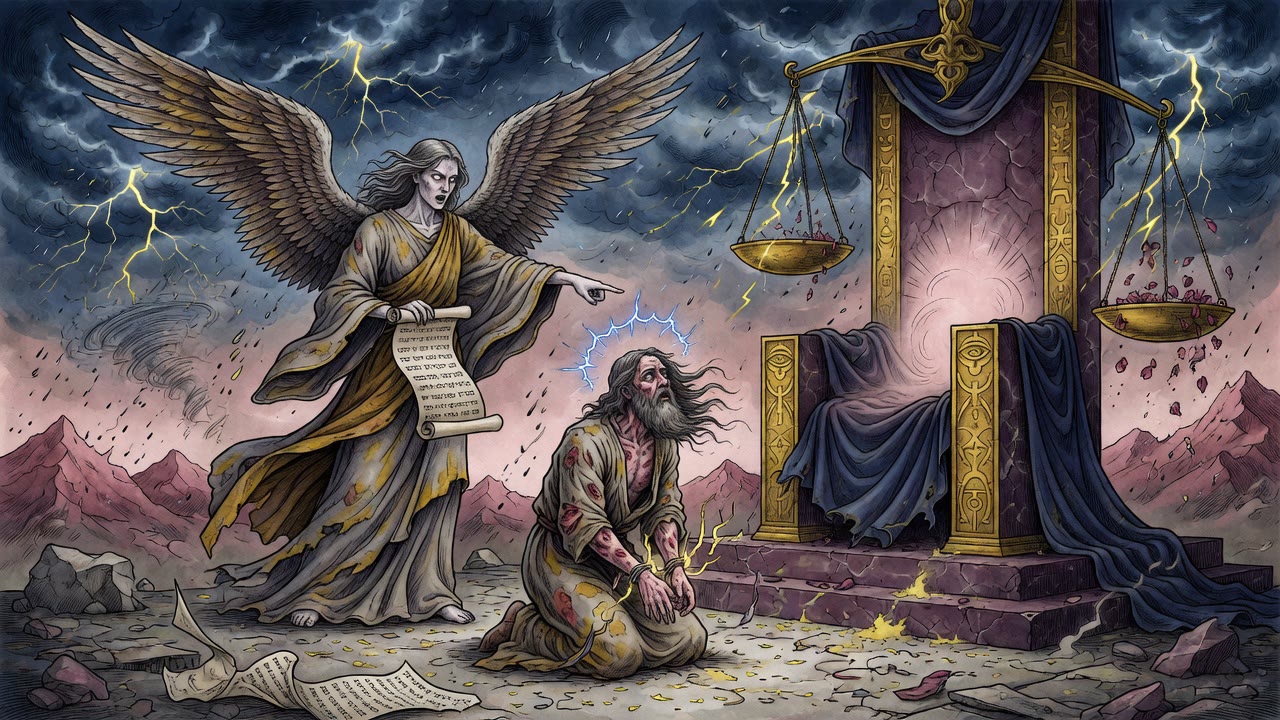
Then he had ash and boiled skin, and he said so to heaven. He murmured. He named the ruin. He called the silence unjust. He demanded a hearing. His friends spent their breath defending God's honor and explaining why Job must have earned the blow.
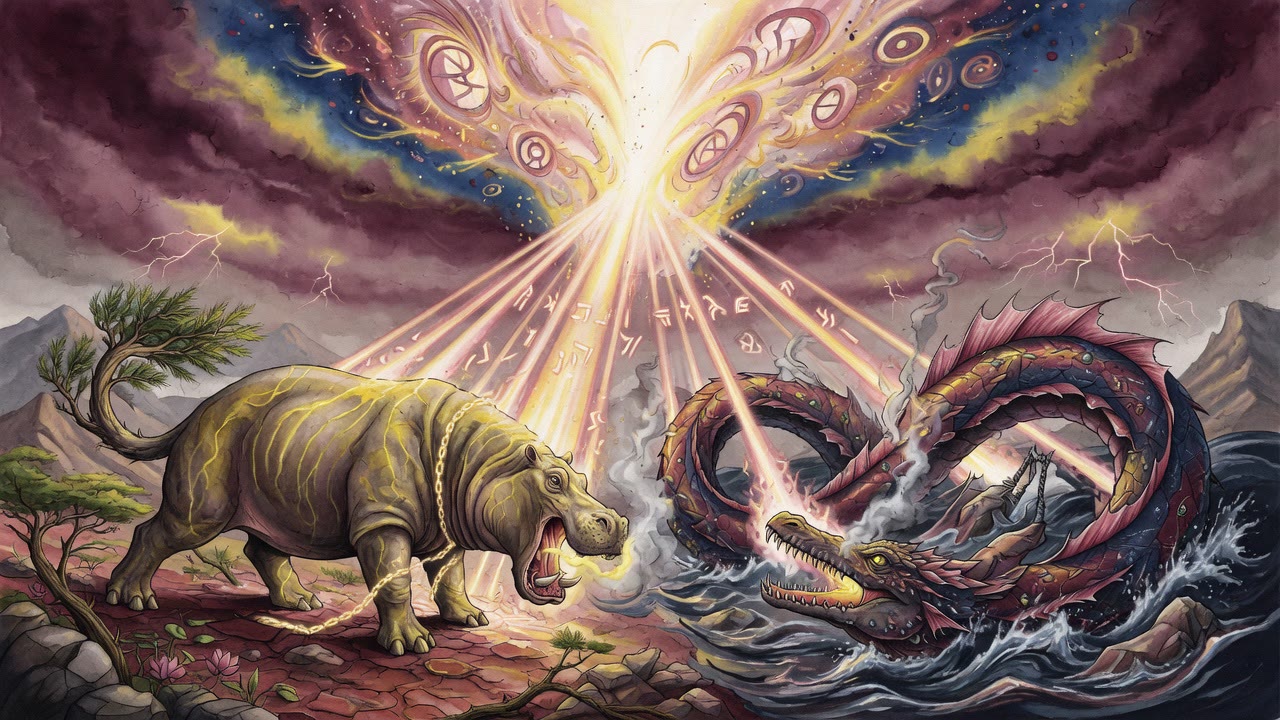
God spoke from the whirlwind and set Job beside the men who had not complained. Was he greater than Adam, who took death for one transgression and did not murmur? Greater than Abraham, tested and quiet? Greater than Moses, barred from the land and silent about it? Greater than Aaron, who lost sons and did not open a case?
Job had grabbed heaven the way Jacob had grabbed the stranger. Jacob got a name that still opens prayers. Job did not. Had he held still under the suffering, people would have said the God of Abraham, Isaac, Jacob, and Job. He did not hold still. The formula stopped where it had always stopped.
Solomon Set Their Faces on the Lamp
Solomon did not wrestle at a river. He built a machine. His throne was ivory and gold, six rising pathways, two golden lions on every step. When he set his foot on the first step, the lion on the right stretched out a paw: you shall not respect persons in judgment. The lion on the left: you shall not take a bribe. At every step a commandment showed itself before the king could climb.
Precious stones sat in the treads, red, white, and green. Golden palms held eagles, peacocks, songbirds. Seats waited for Gad the seer and Nathan the prophet, and seventy golden chairs for the judges. Clean and unclean animals faced each other on the stairs: ox opposite lion, goat opposite wolf, eagle opposite dove. As Solomon went up, each animal lifted him. At the top, birds sang, trees gave off perfume, a golden serpent coiled and seated him. Eagles set the crown on his head. The beasts cried that the kingdom of David's house be established. When a liar came for judgment, the whole throne roared.
Ahasuerus later spent three years trying to copy it. His craftsmen failed. They could copy gold. They could not copy a court that moved.
Before the seat stood a golden lamp. On one side it carried seven faces: Adam, Noah, Shem, Abraham, Isaac, Jacob, and Job. Job's face sat in the gold beside Jacob's, even though the prayer never added his name. Solomon could not put Job into the blessing. He could put him on the lamp that watched every case.
Jacob had held a stranger until dawn. Job had held a grievance until the whirlwind. Solomon built a court that would not let a king sit down until the law had been read to his feet. None of them came quietly. The lamp kept both faces, the one heaven named and the one heaven refused to name, shining on the same steps.
← All myths