43 myths · Page 1 of 2
Each story names the sources it was written from.
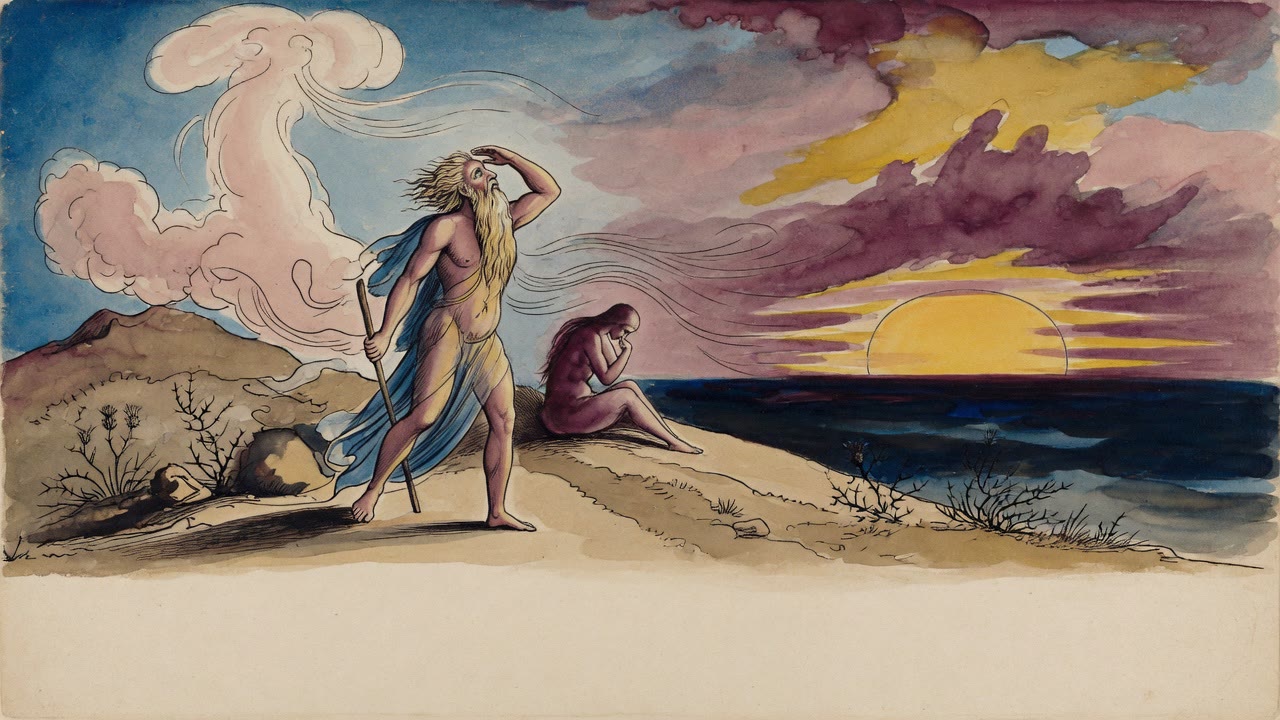
The sun dropped. Adam told Eve the world was going void. They sat in the dark and did not know morning existed.
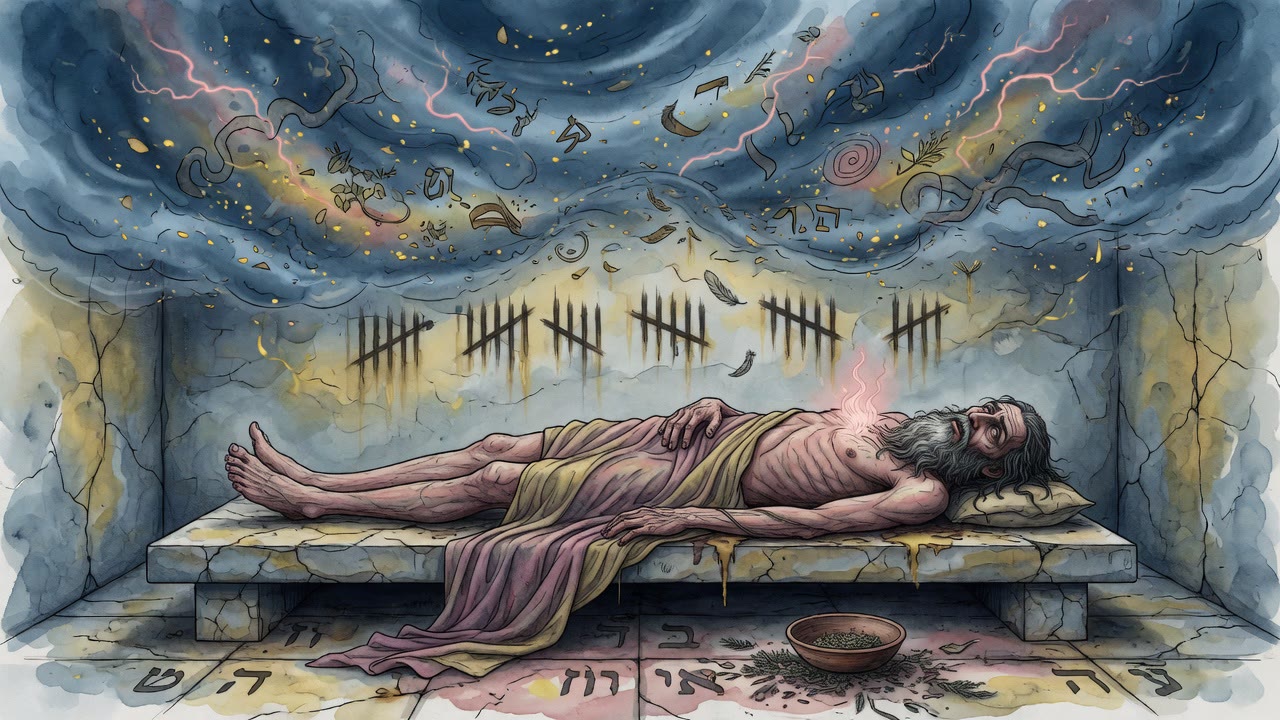
Seven sheep were laid against David each day for warmth, and none of it reached him. He had counted Israel, and seventy thousand men died in the plague.
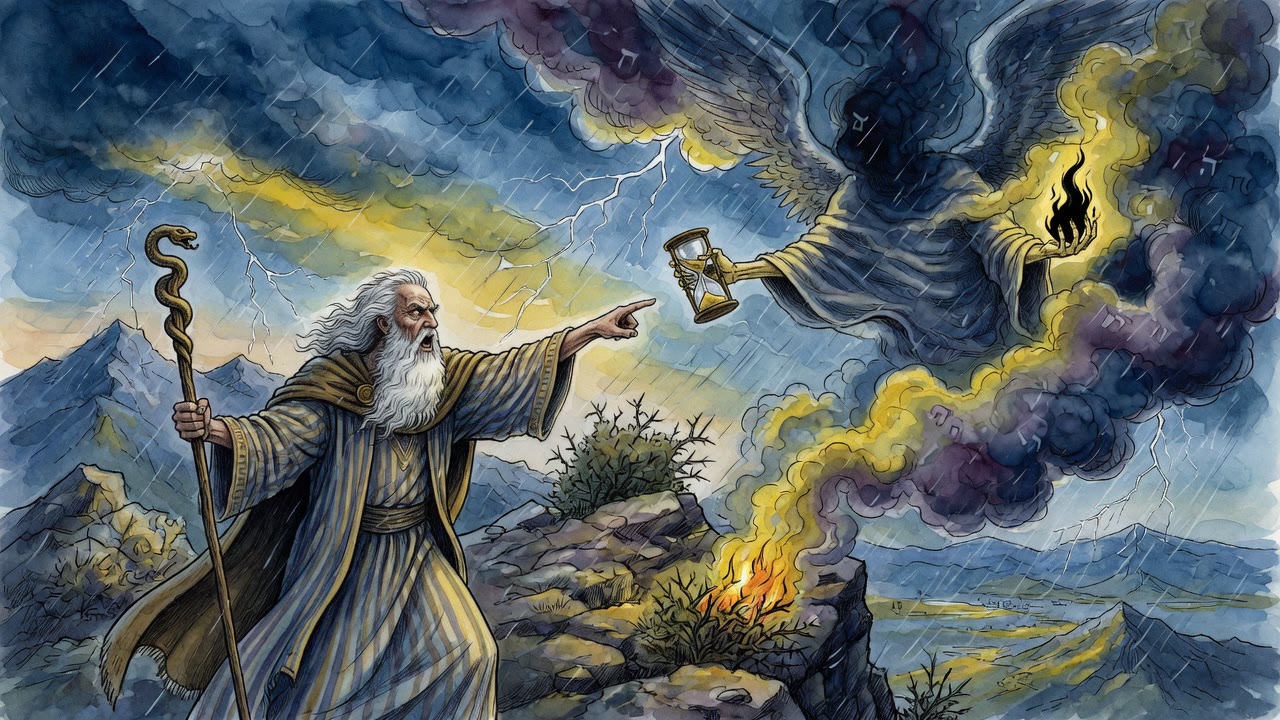
The Angel of Death came into the tent, and Moses spoke the Ineffable Name at him until he fled. On the third approach Moses met him with open hands.
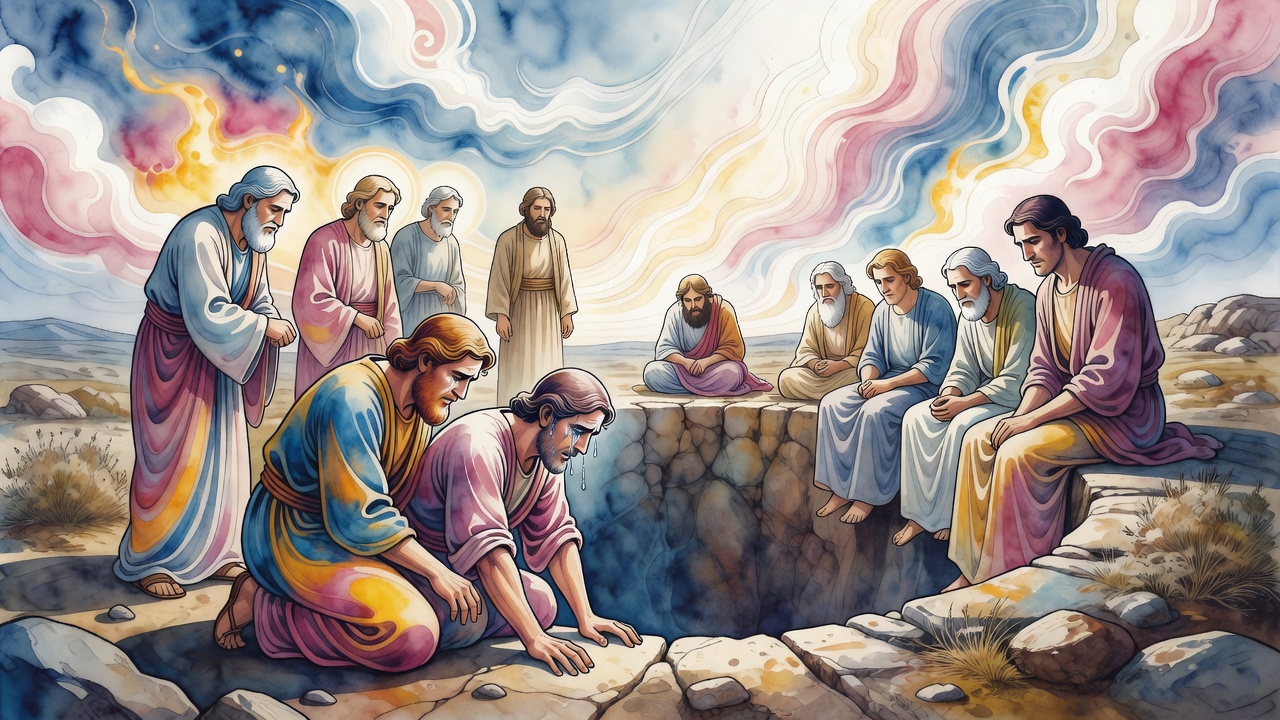
Reuben called Joseph's name into the pit. Nothing answered. He climbed down, searched the dark, and tore his clothes at the rim.
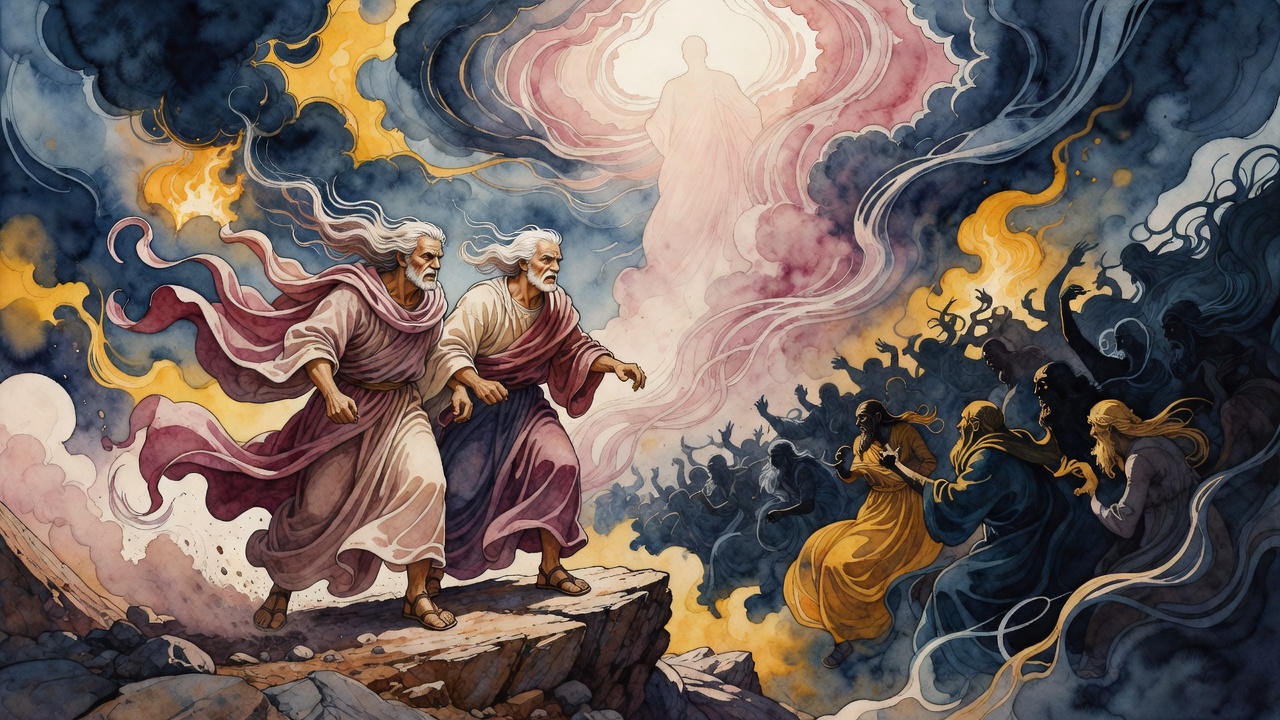
David and Job watched the wicked thrive and nearly lost their footing. Their anger became the song that kept faith alive.
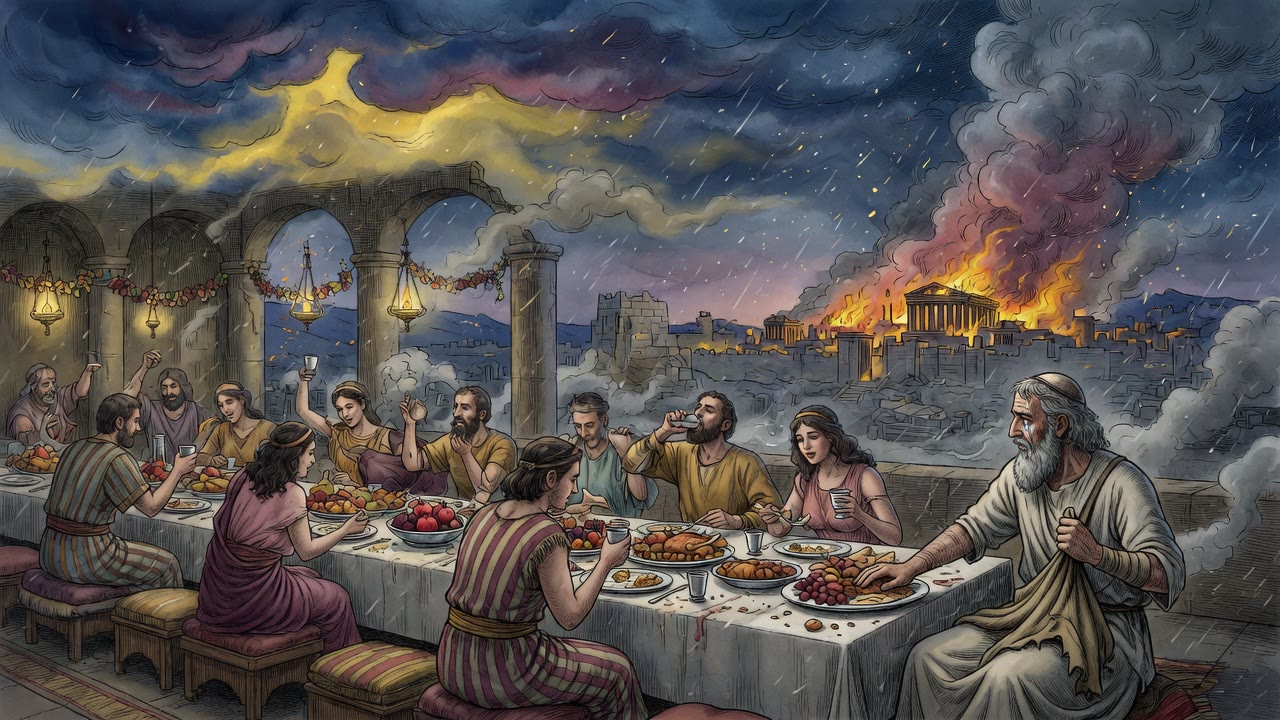
On Shavuot in Nineveh the harps were already going. Tobit stepped past a body in the street that the king had ordered left there.
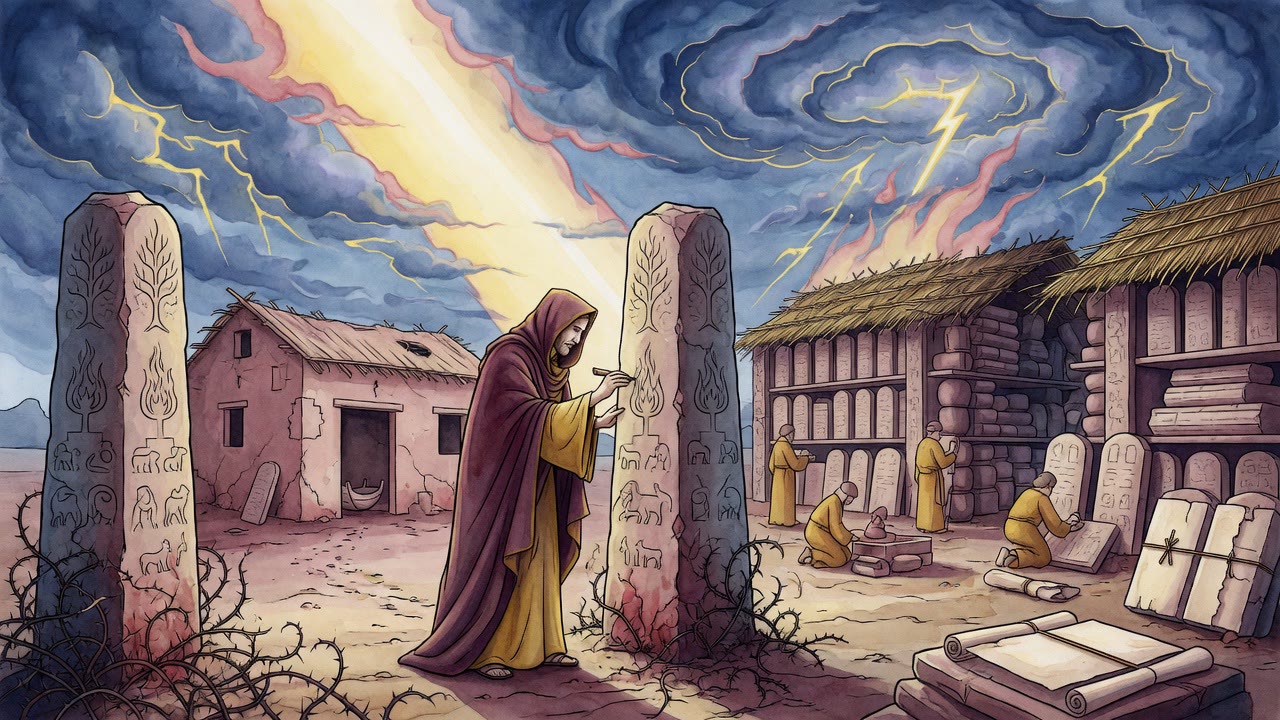
At 930, Adam called his children close as sickness entered the world. Seth offered Paradise fruit, and Eve begged to share the pain.
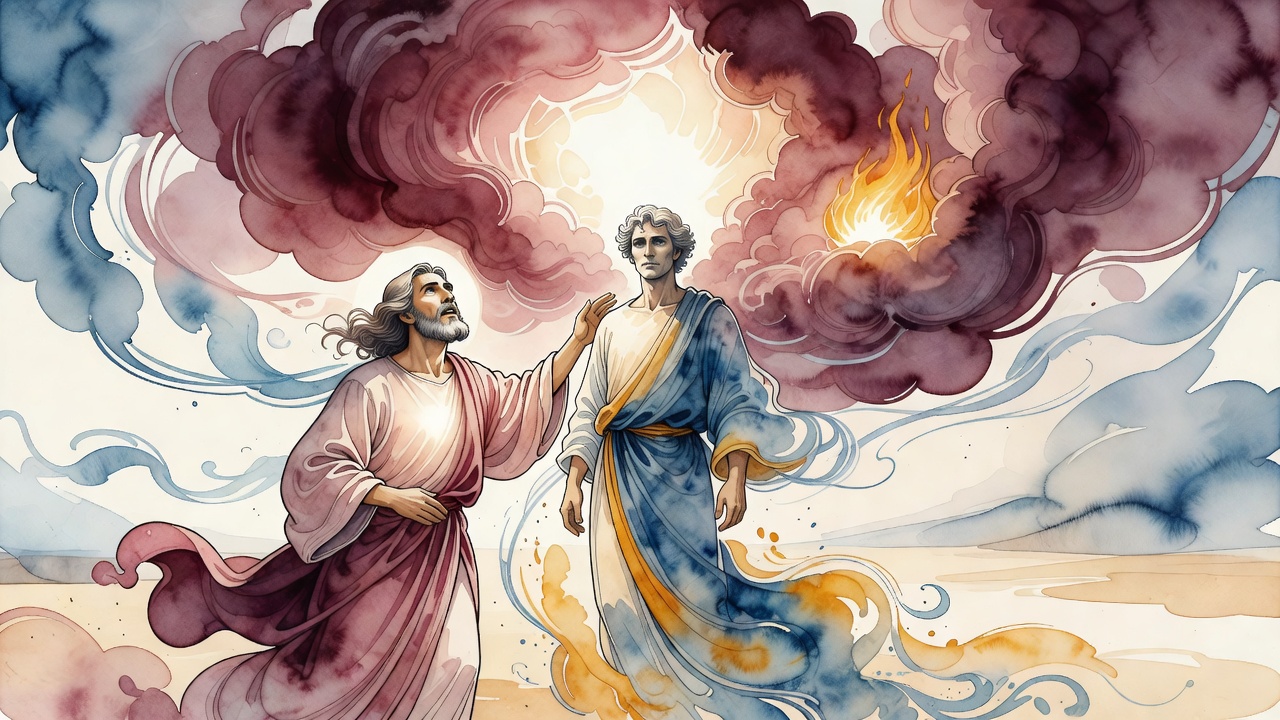
The last sacks were empty. Judah put his own life up for Benjamin, and Jacob still had to send the boy into Egypt. He prayed first.
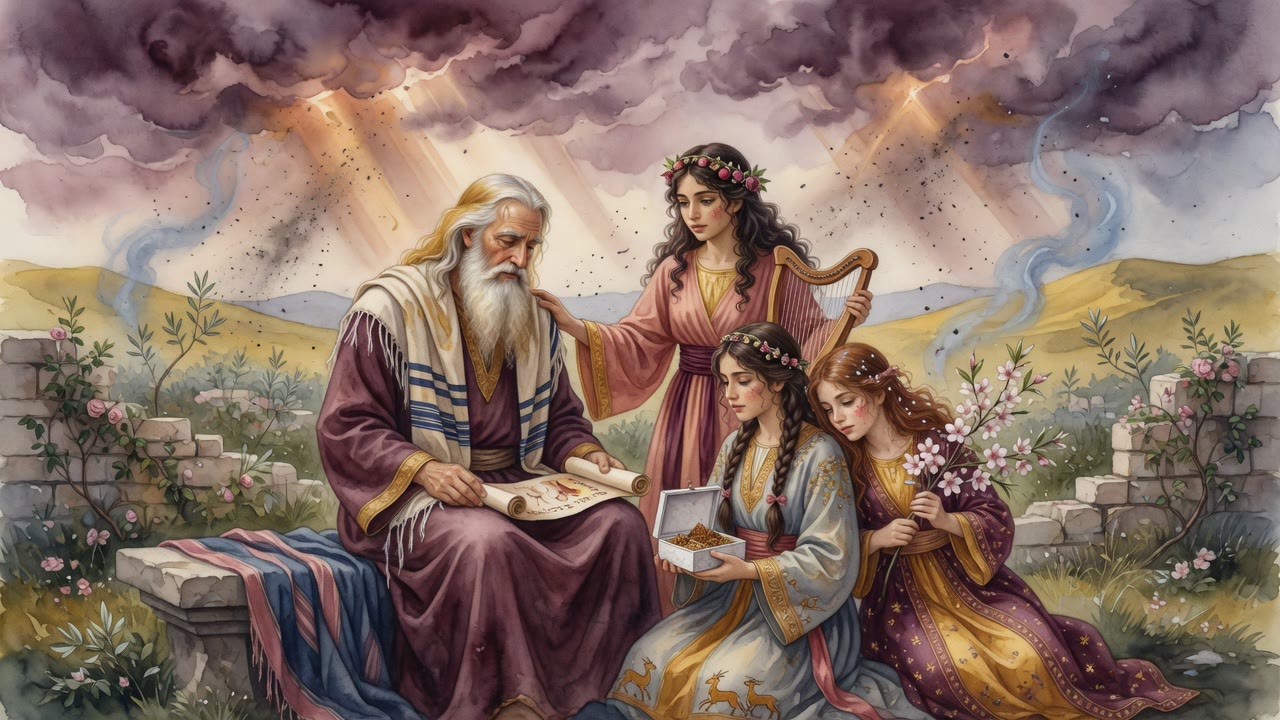
Job told Eliphaz to go look at his own father Esau. Eliphaz answered that a son does not carry his father's guilt, and heaven made him carry it anyway.
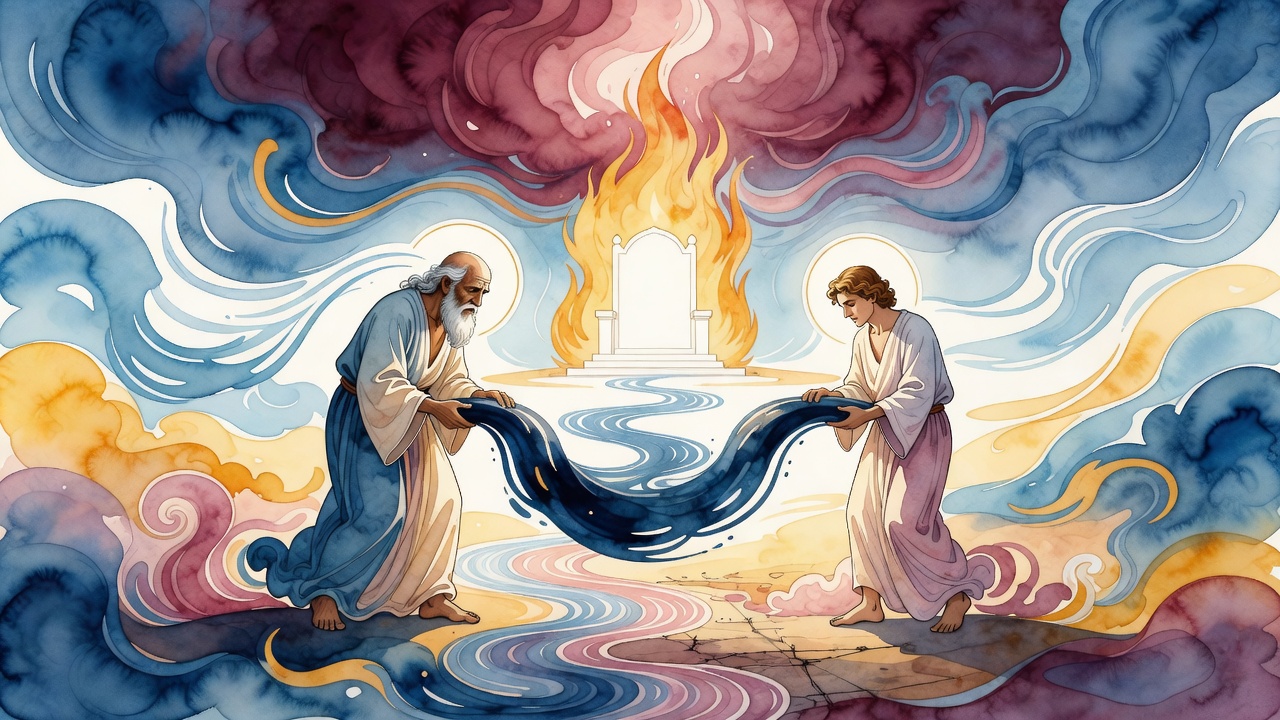
An angel killed four of David's sons and the prophet Gad, then wiped the sword clean on David's clothes. His limbs shook for the rest of his life.
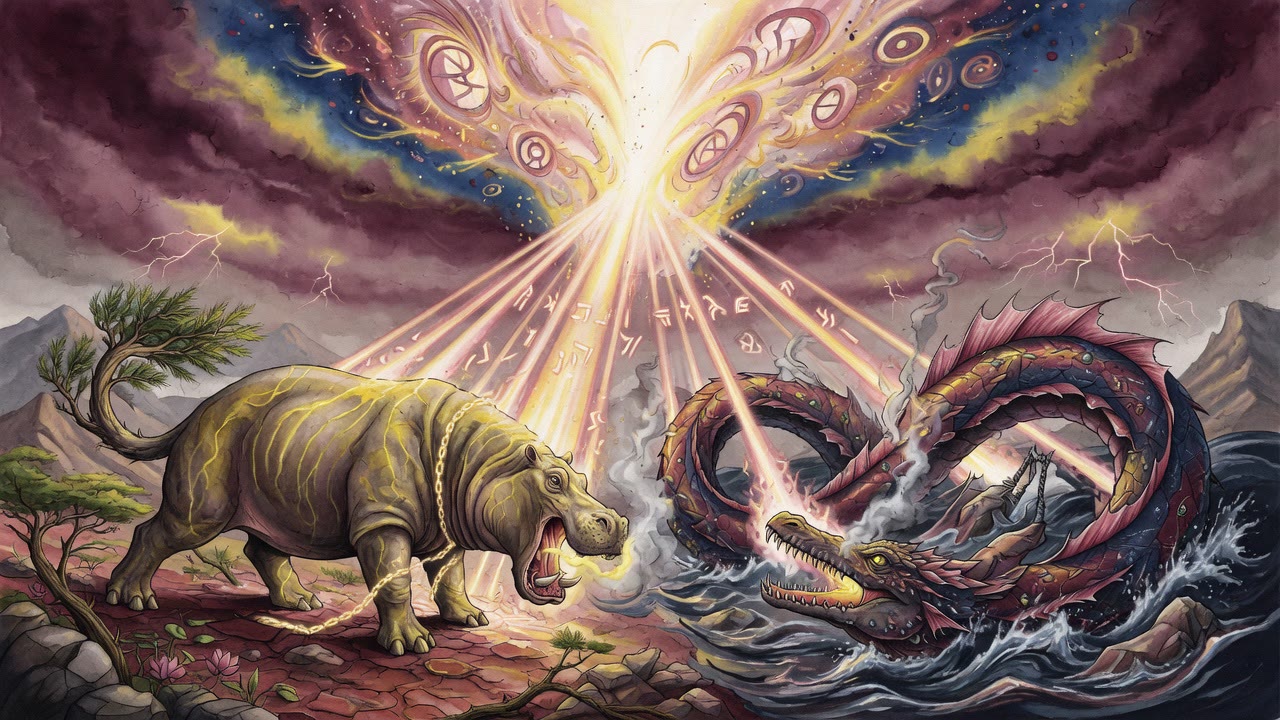
Nimrod named his cities after his own defeats. His son Bel became the first idol. Job, living in Nimrod's shadow, became the test case for righteous suffering.
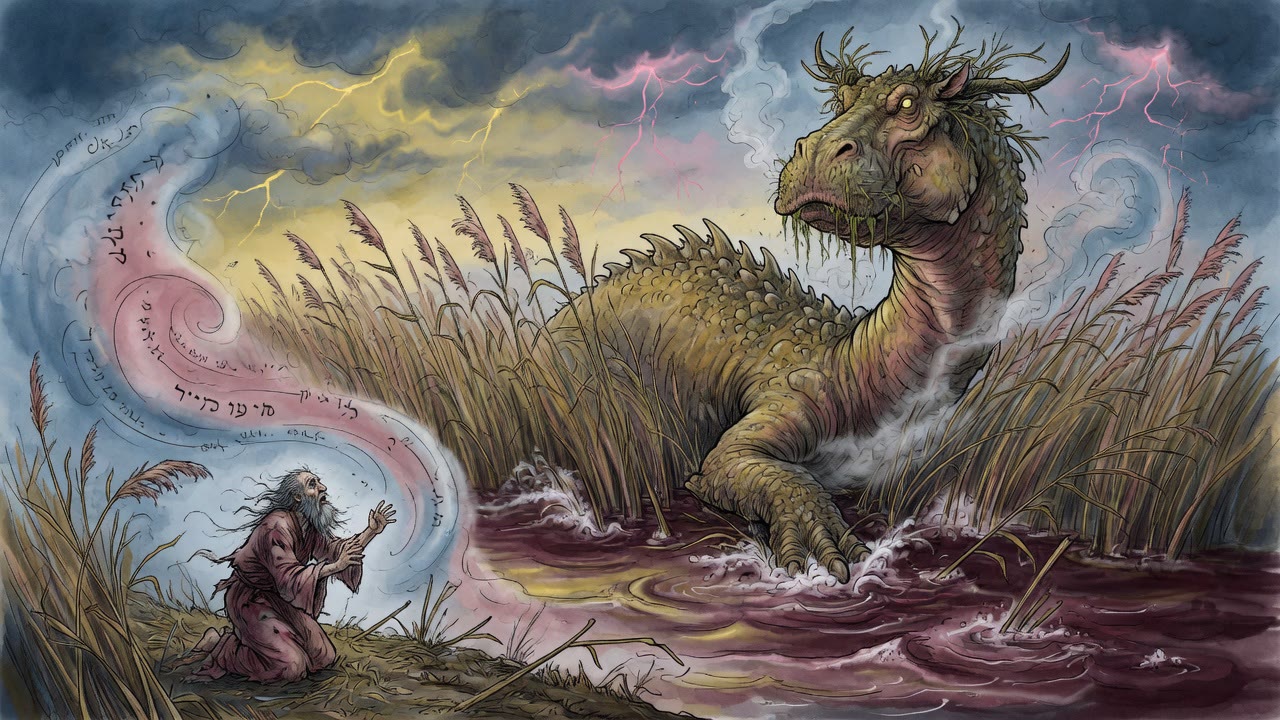
Noah wept over the ruin he had survived. God rebuked him for not praying before it happened. Job suffered while still called God's servant.
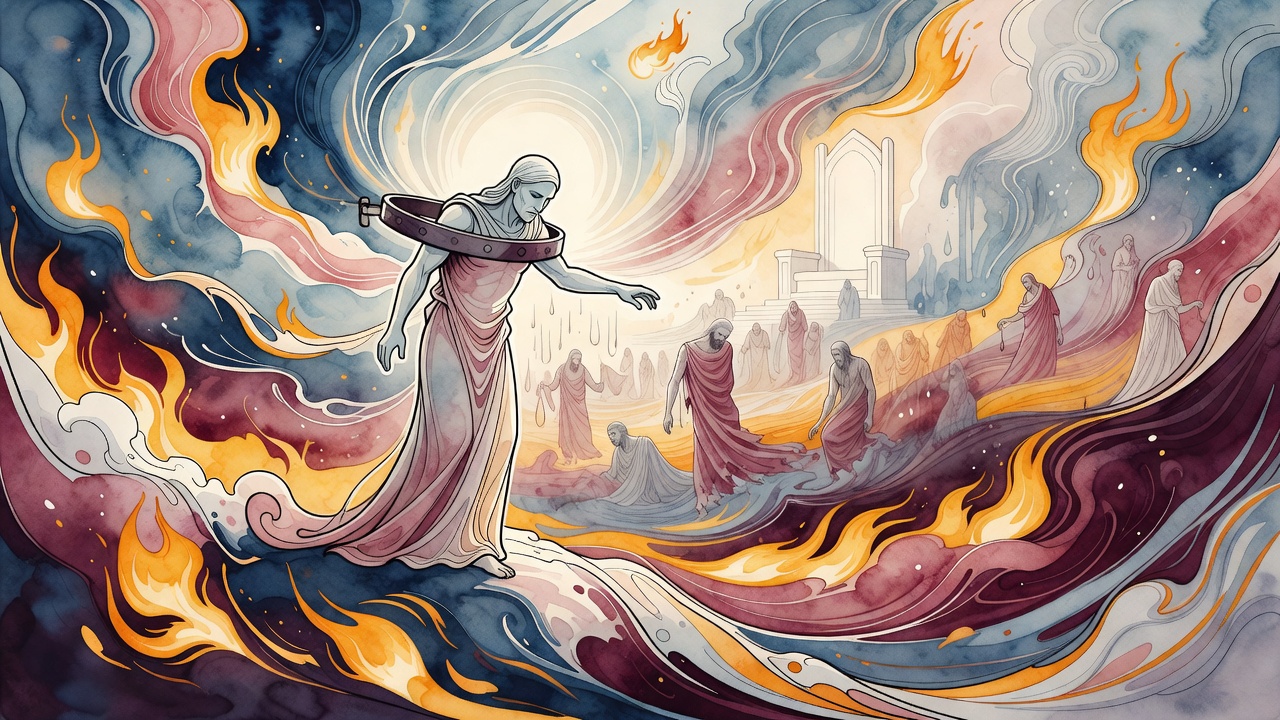
Jacob would not release the stranger until the sky paled. Job, married into that house, demanded a hearing. Solomon set both faces on a lamp of gold.
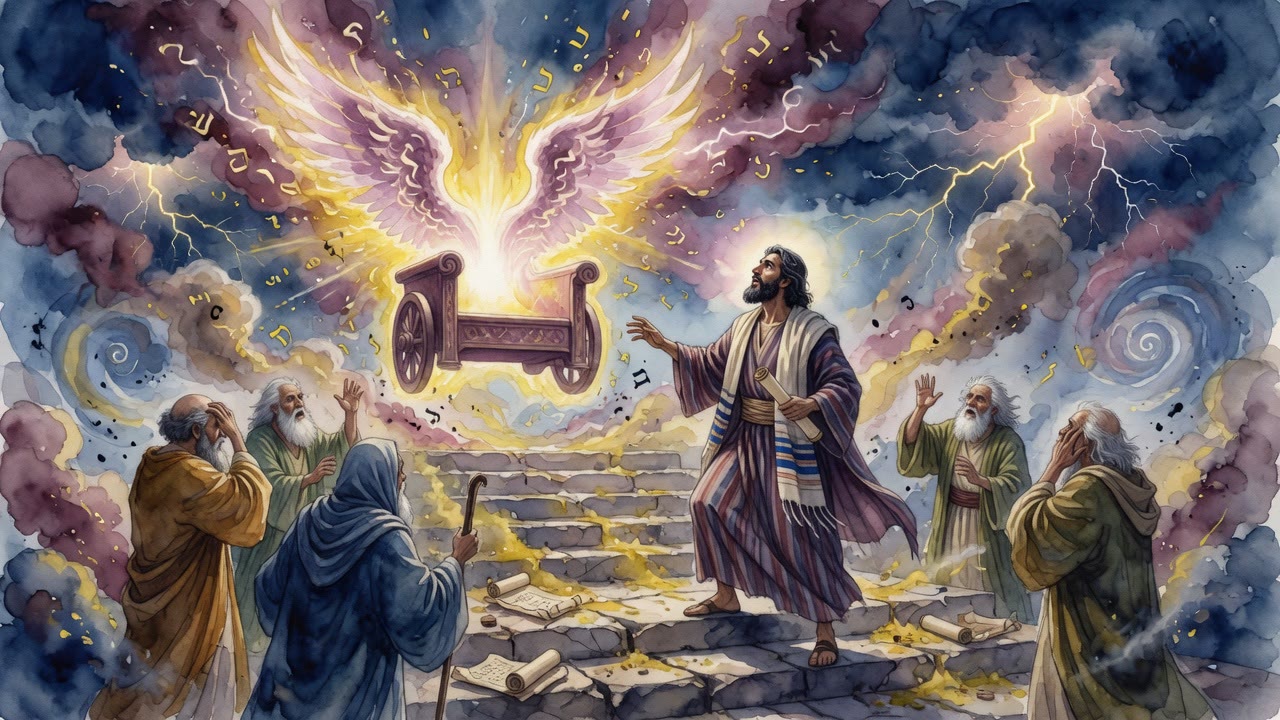
Micah came home with a rod mark across his cheek. They turned Amos into a joke. The call went out again, and Isaiah stood up anyway.
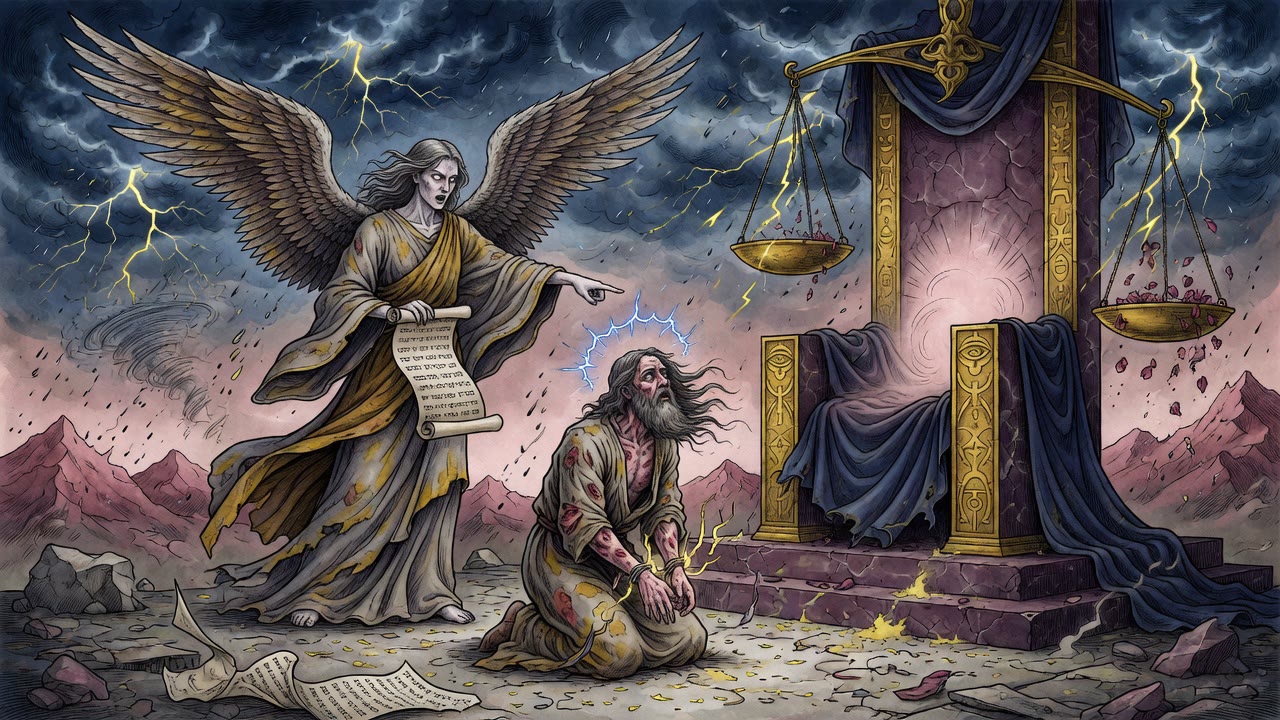
The Accuser asked whose light waited under the Throne. God drew Ephraim forward. The Accuser fell on his face before a king who had no world yet.
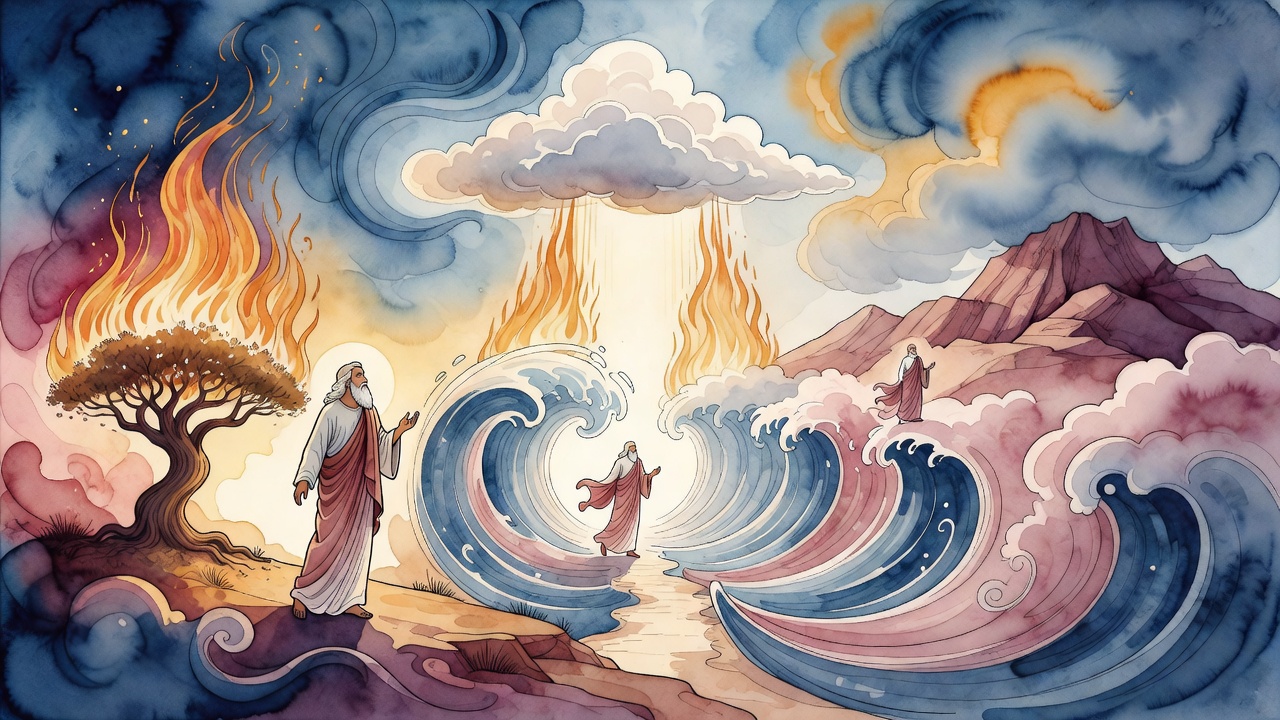
Moses ran out of Egypt with a dead taskmaster behind him and stopped at a well in Midian. Shepherds were driving women off it. He drew the water himself.
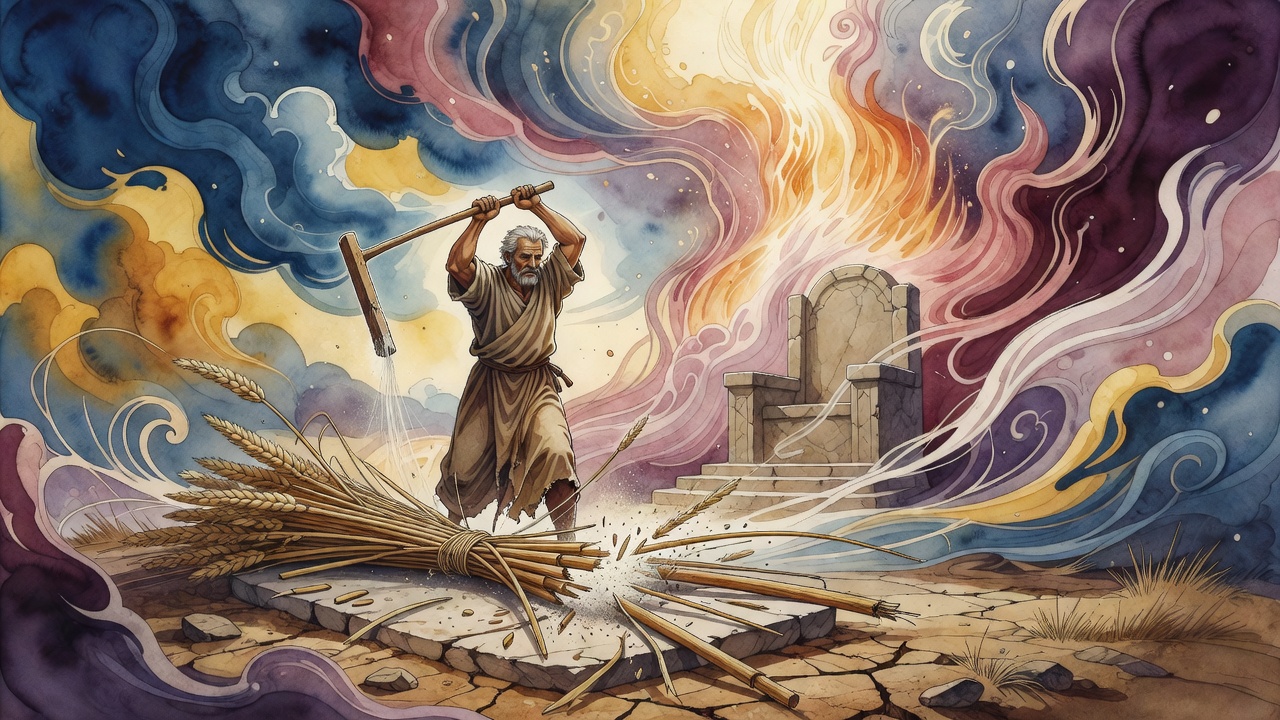
Leah prayed not to be given to Esau. The whole country mocked her anyway. Jacob meant to send her out until four sons filled the yard.
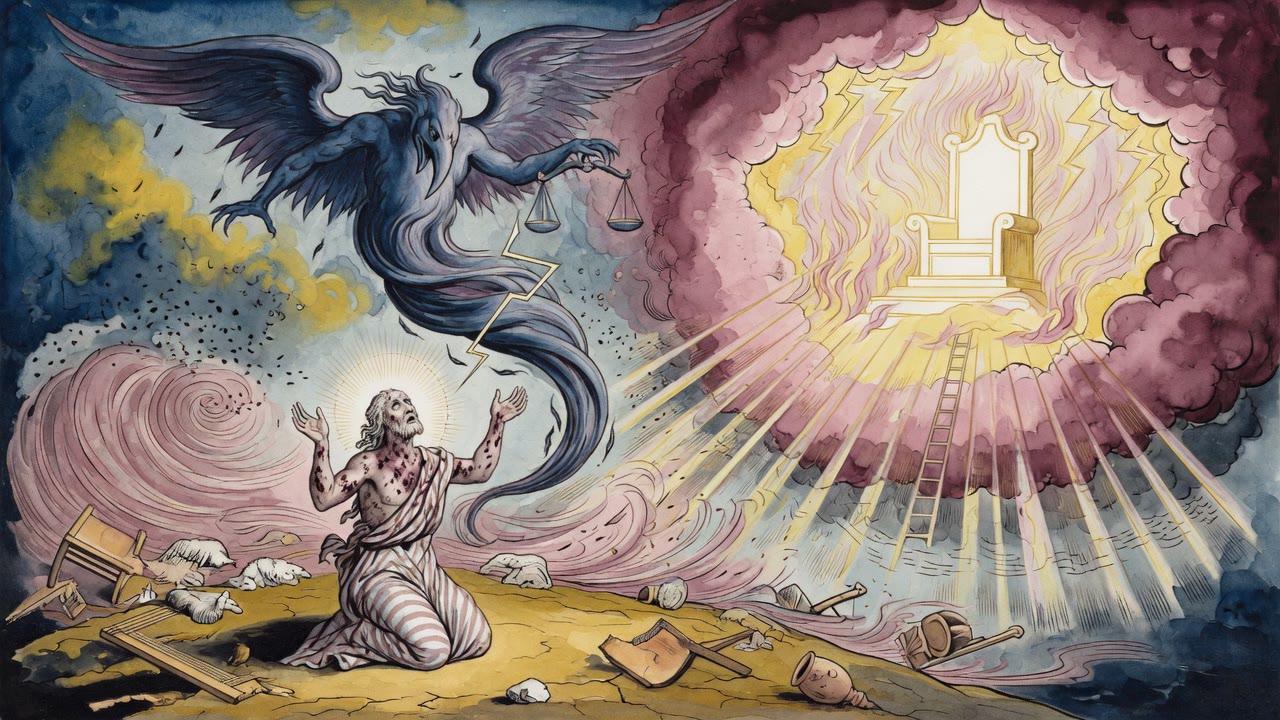
Lilith, queen of Sheba, marched three years to reach Job's cattle. One gashed herdsman broke free and ran to Job's feet. He gave the news and died there.
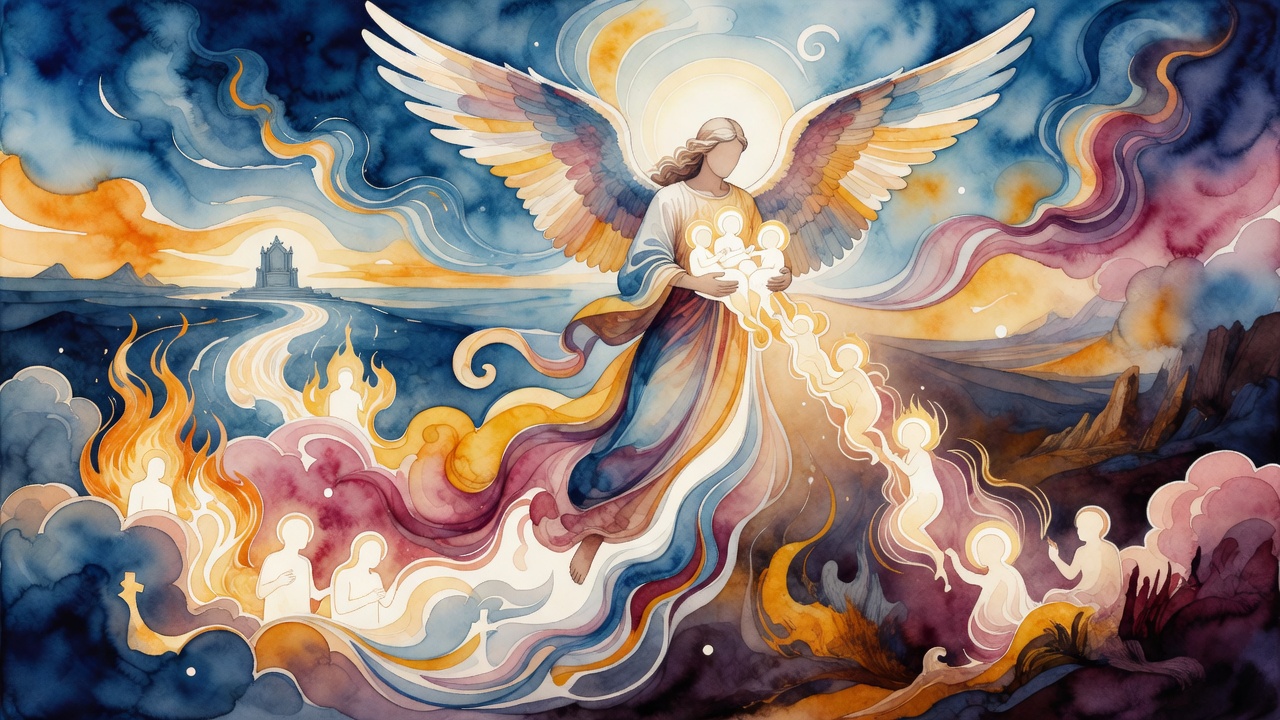
An angel carries each unborn soul through heaven by day, then lets it go down into labor, into affliction, into the long accounting.
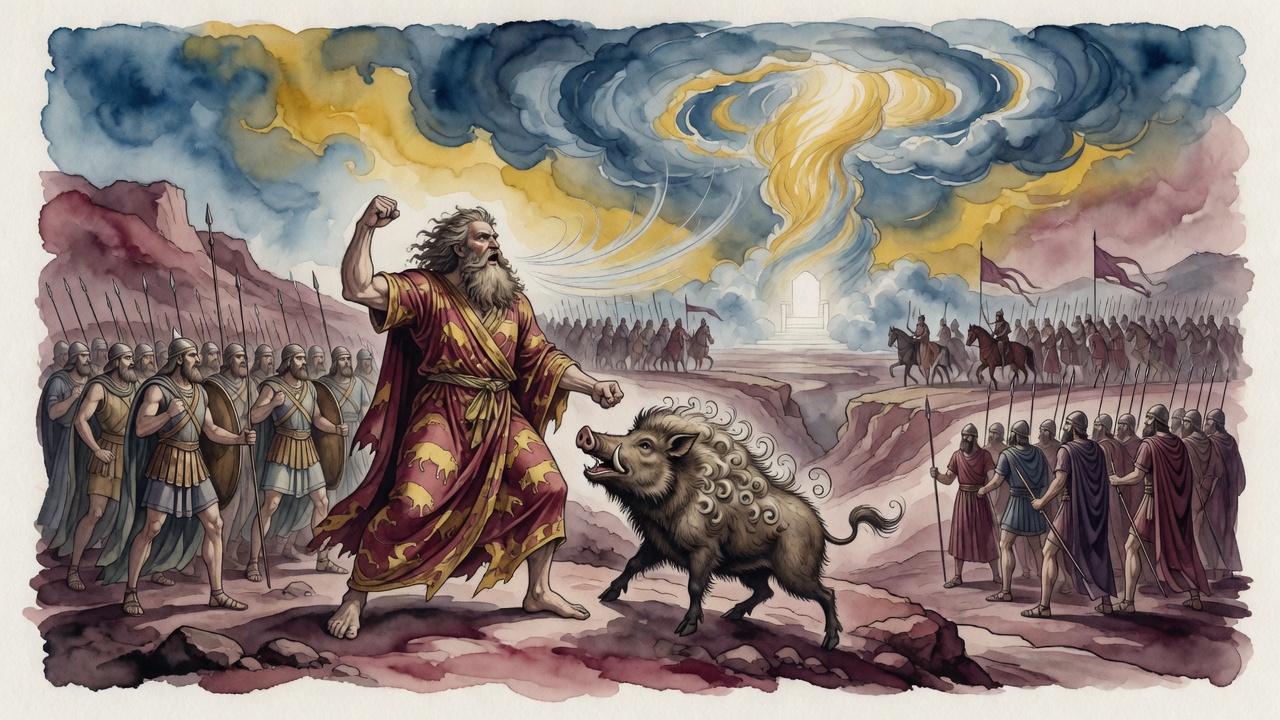
Job took his cry for God's abode as an address and marched east, west, south, and north, while the presence stood unseen in the west.
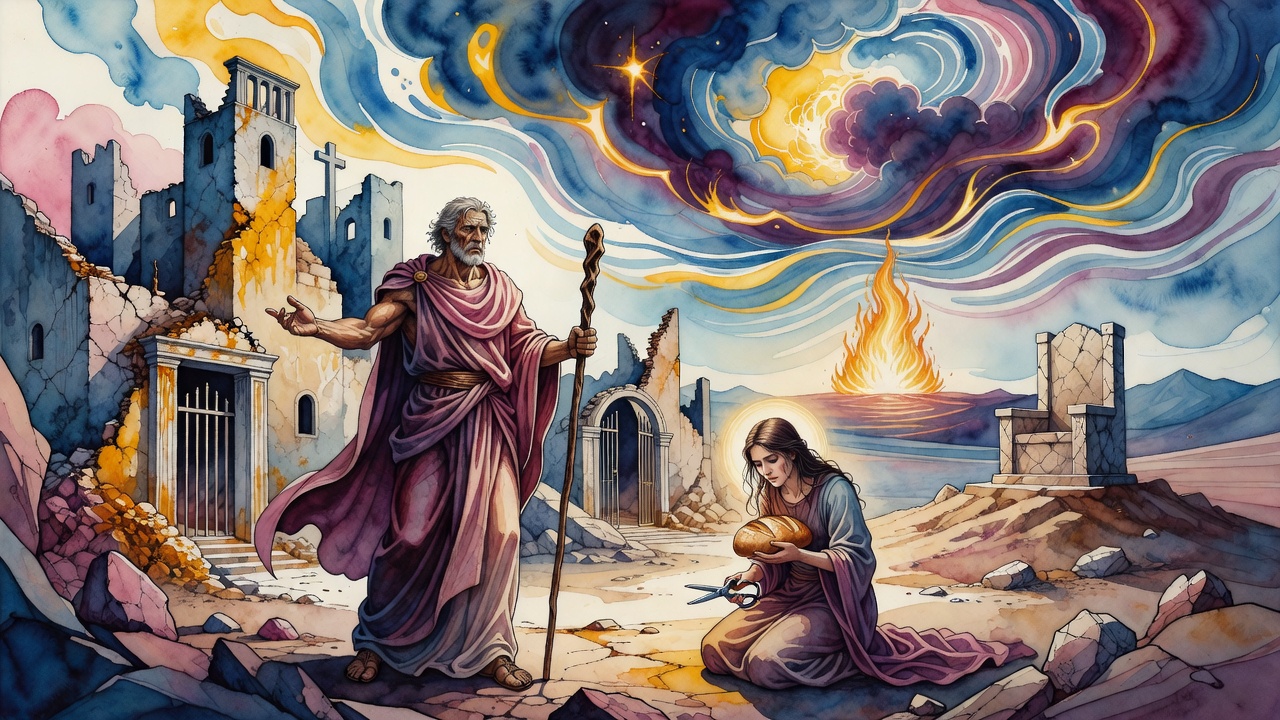
Job ruled a city behind unbarred gates and led an army for the poor; ruin left his wife selling her hair for one loaf of bread.
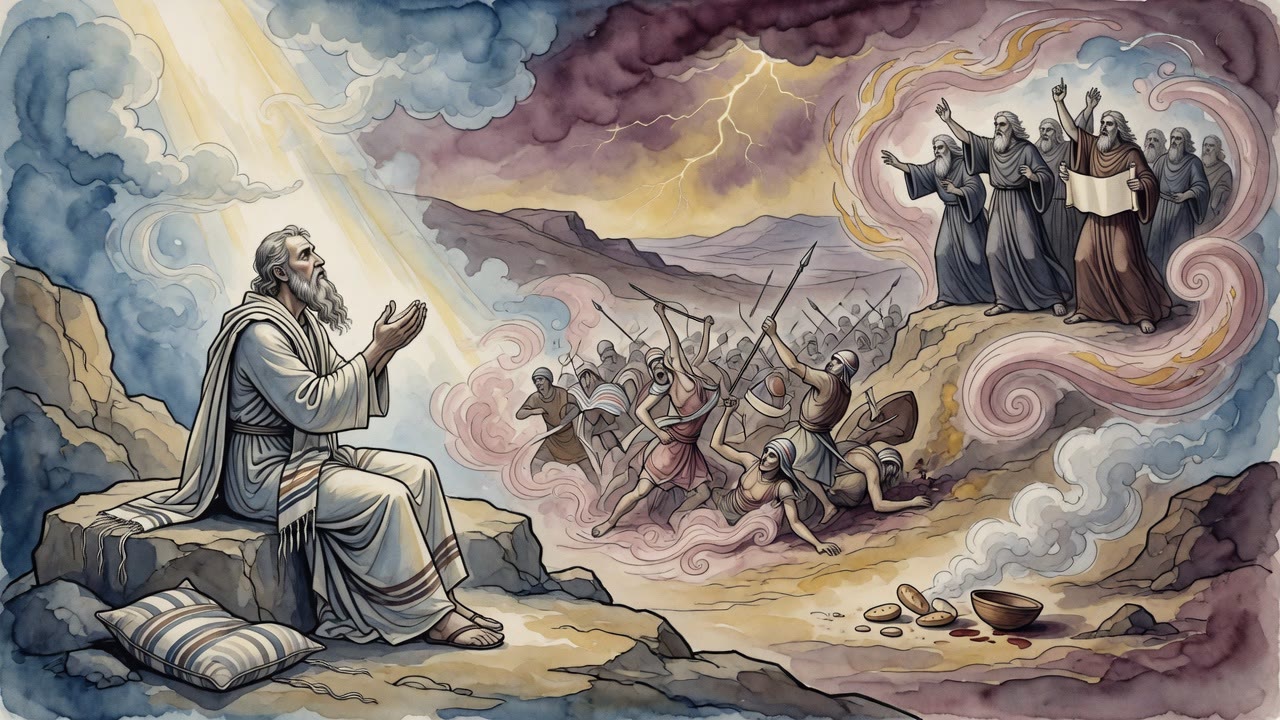
His arms were heavy and the camp had pillows to spare. Amalek was still attacking, so Moses sat on a rock instead and kept his hands up.
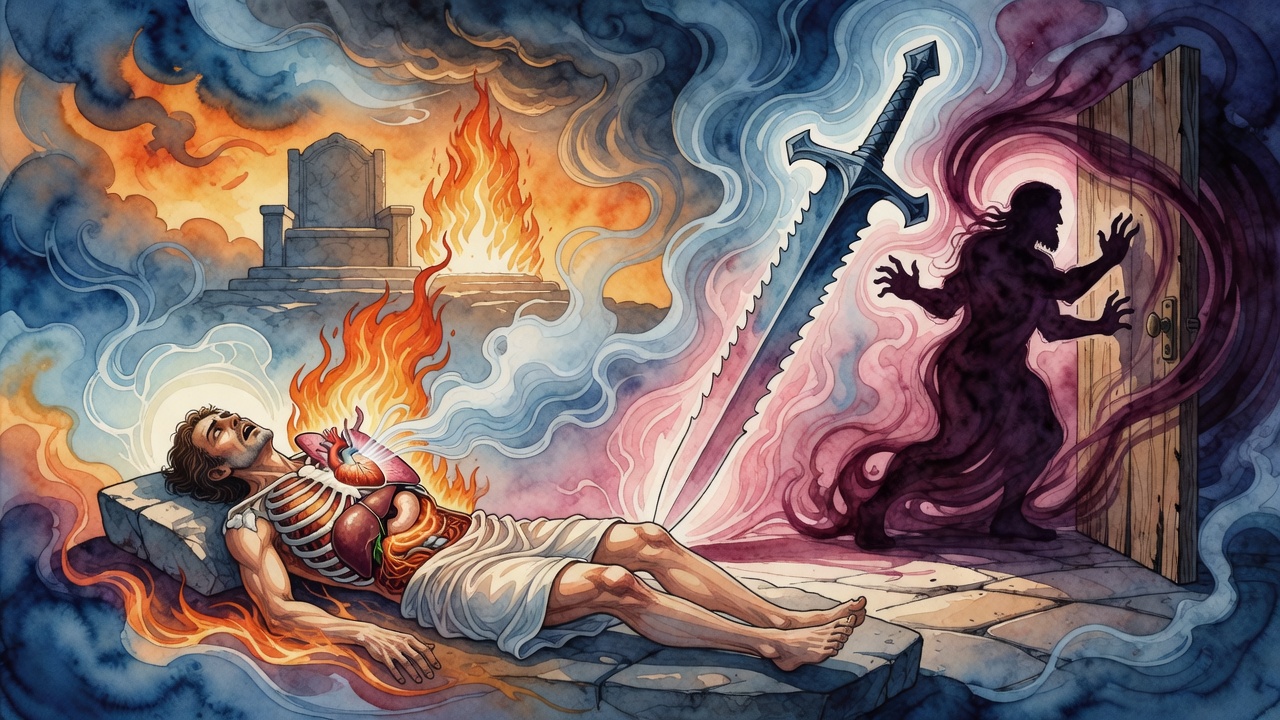
A dying man's liver lifts fire toward his heart while lungs beat cool air. Bitter marah becomes a sword, and pain-shaped prayer holds the door.
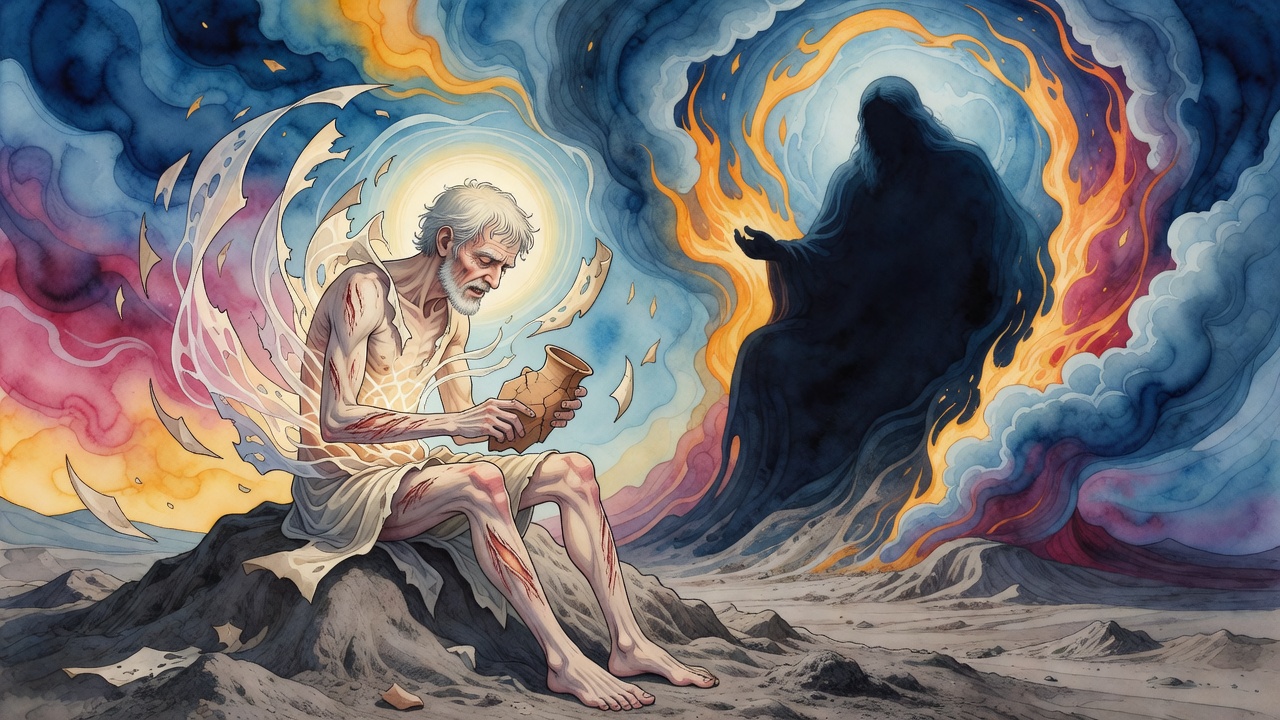
Job dug a shard under a scab until blood answered. Ash stuck to the wound. The sky looked shut, and night still shone like day.
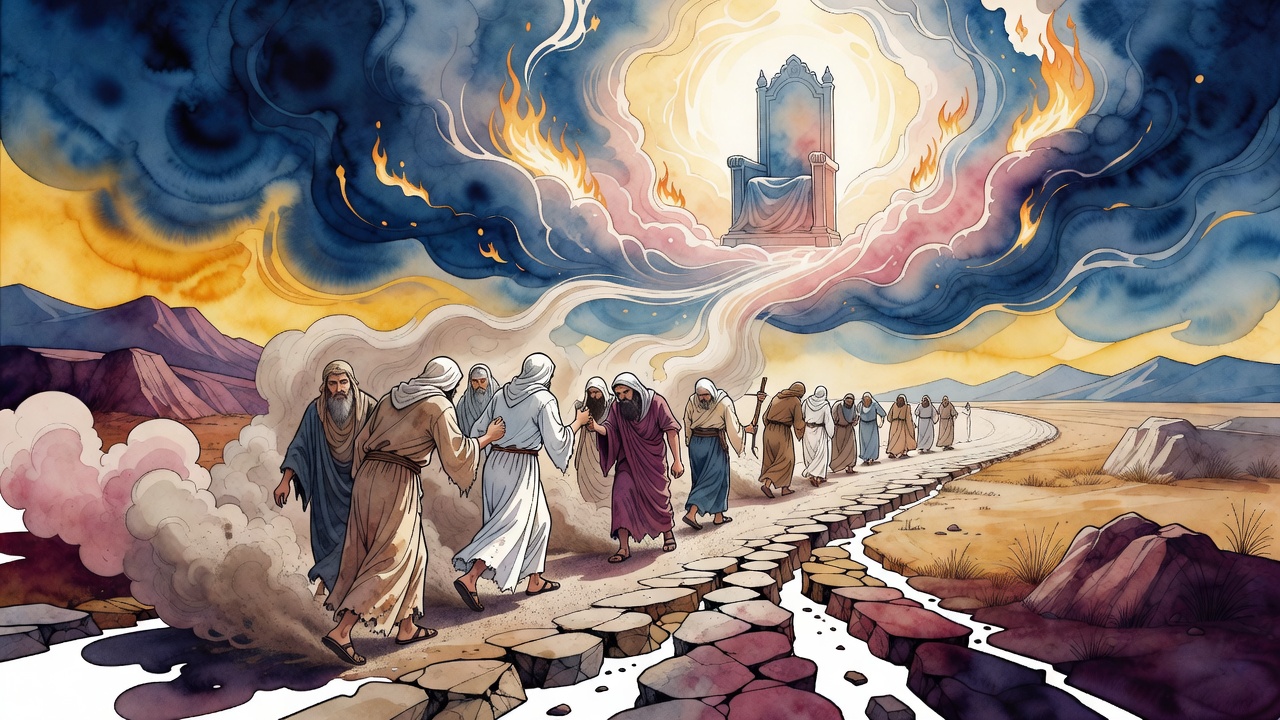
A people bent under foreign dust keeps walking while Heaven waits for human hands to finish the repair that no decree alone will seal.
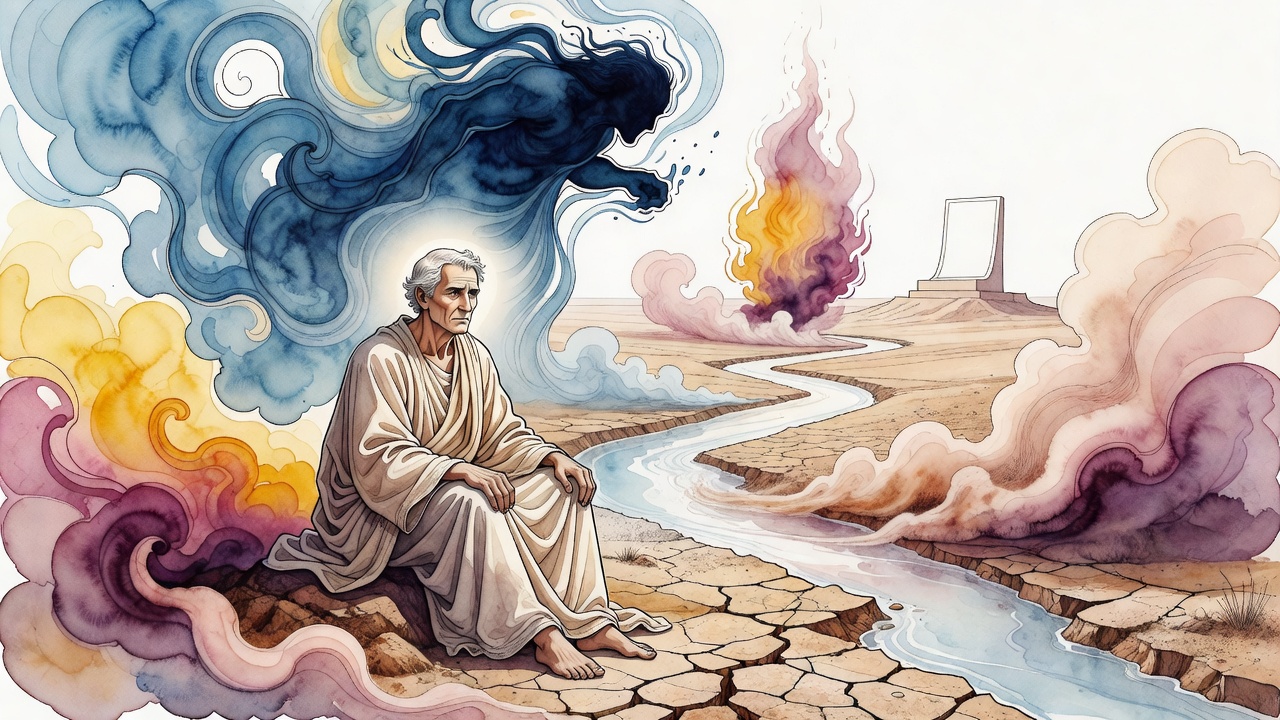
The heron that hunted this bank is gone and the insects sound careful. Three friends arrive with advice about sin. Job scrapes a potsherd across his boils.
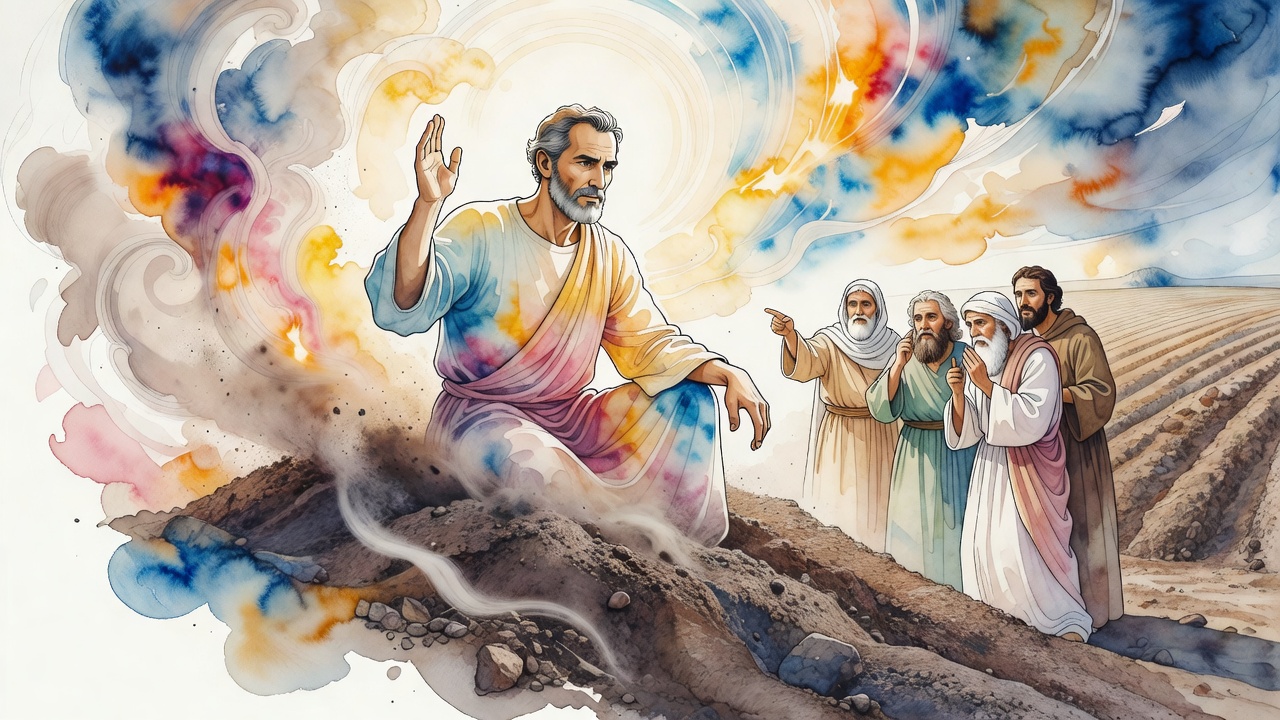
Boils from his scalp to his soles, and Job was still saying my land. The men listening heard a rich man who had learned nothing from losing it all.
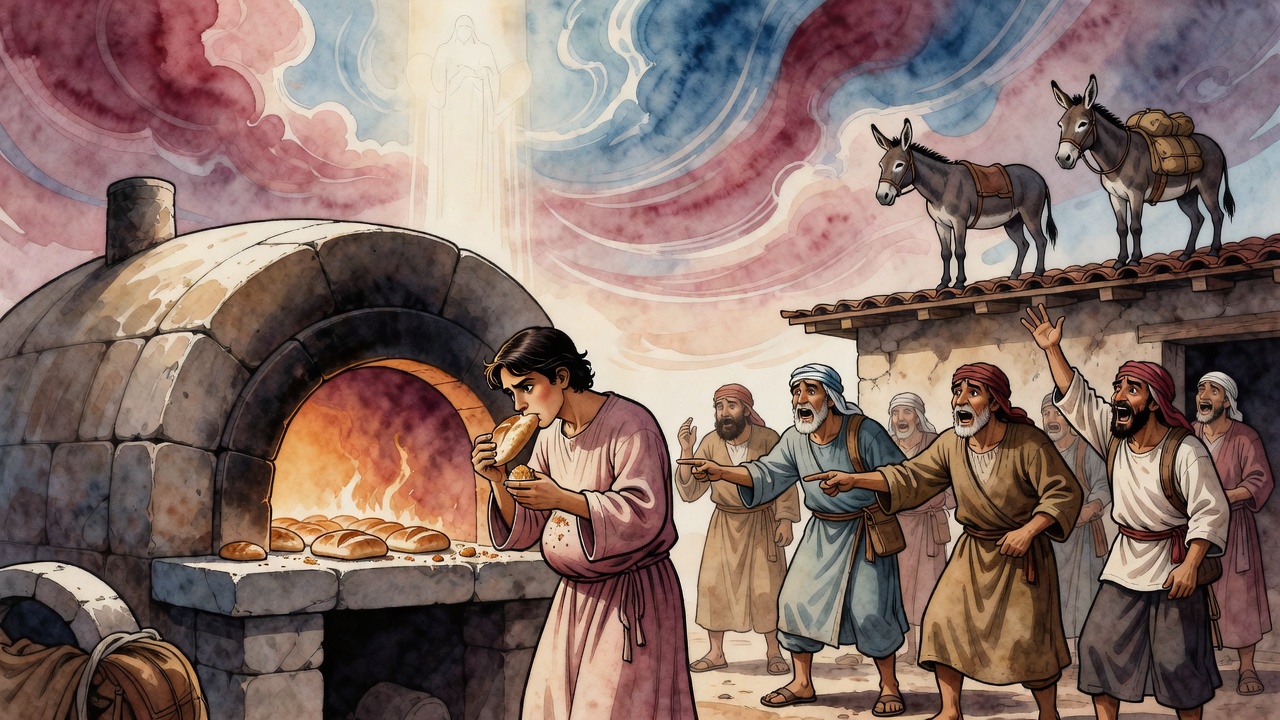
His mother kept sliding loaves at the oven. The drivers counted. Then their donkeys stood on a roof and would not come down.
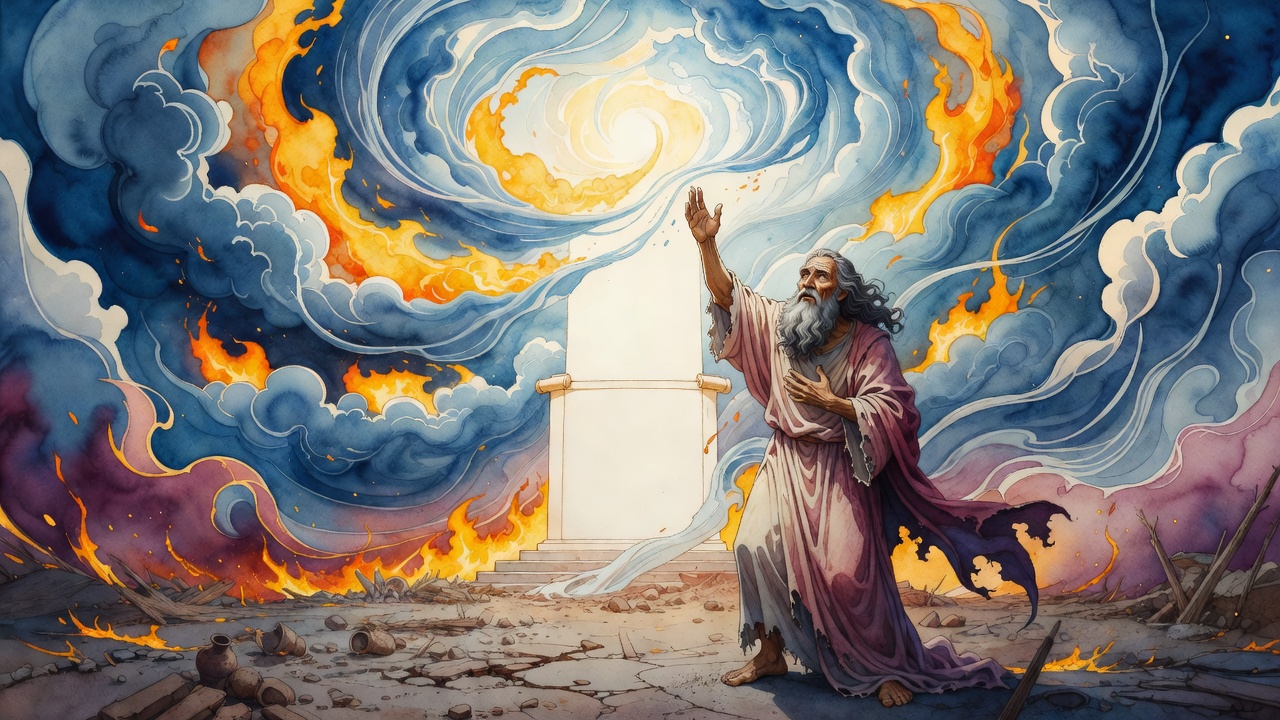
Herds gone. A house fallen on the children. Job's wife told him to curse. He stayed on the ash and blessed the Name.
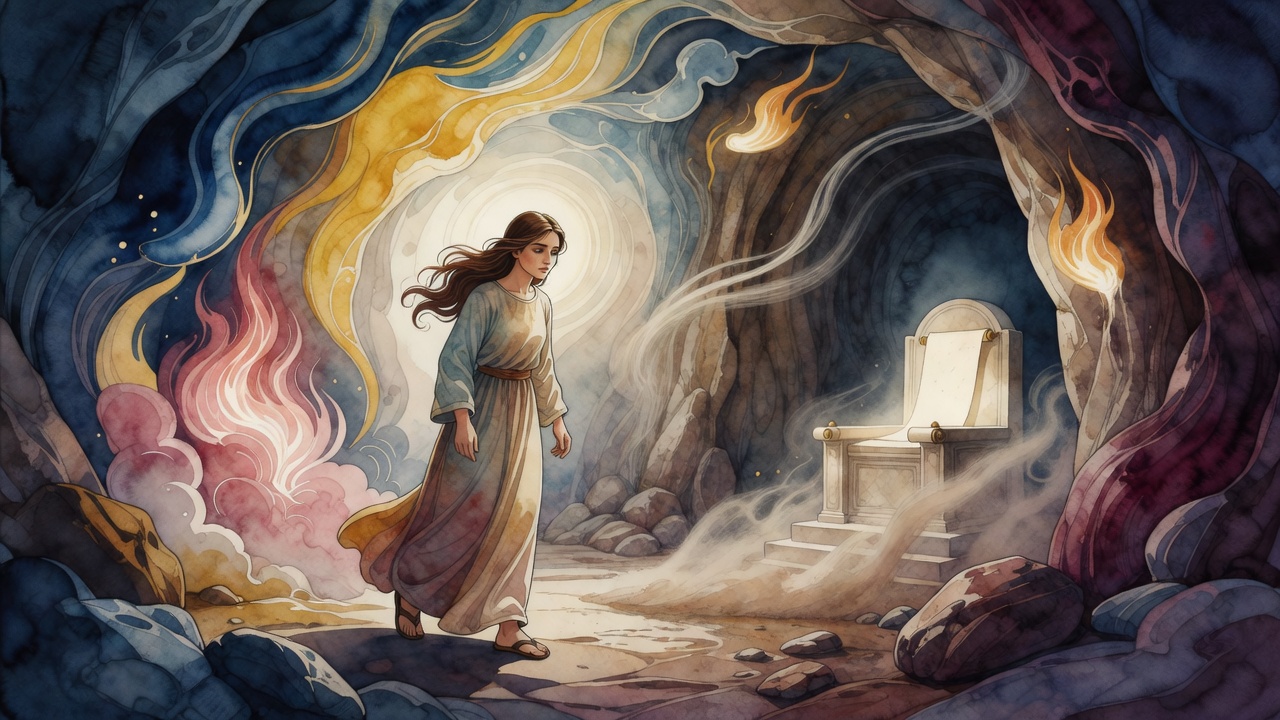
A traveling scholar refused every inn and slept in the synagogue. The caretaker there heard him weep till dawn for a wife he had carried to burial.
