5 min read

Adam Faces the First Sickness and First Death

At 930, Adam called his children close as sickness entered the world. Seth offered Paradise fruit, and Eve begged to share the pain.

Curated by Arthur · Told by Maggid ·
Table of Contents
  1. The House of Prayer Went Quiet
  2. Seth Turned Toward the Gate
  3. Eve Asked for Half the Sickness
  4. The Children Learned the Shape of Mourning

Adam had carried the sentence for nine hundred and thirty years, but no one in his house knew what it looked like when death began to keep its appointment.
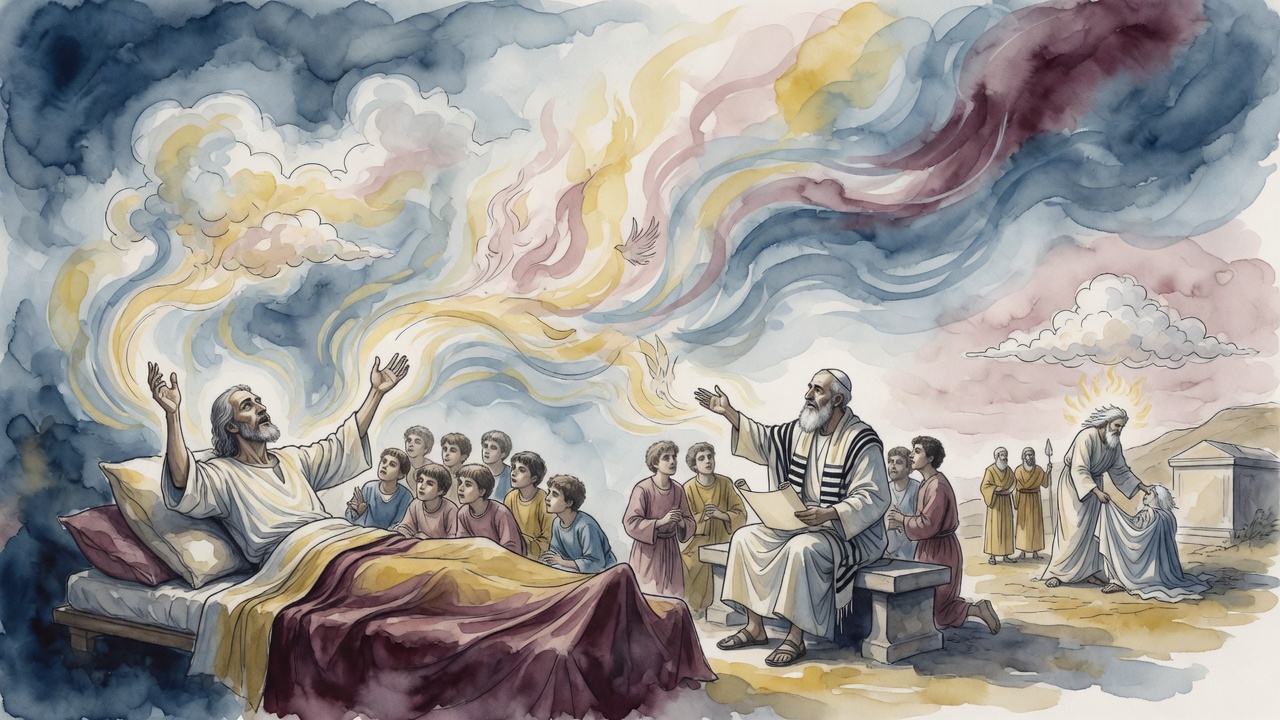
His body went first. The man formed from dust, the father whose voice had filled generations, lay weakened while his children and descendants gathered near the place where he had always prayed. They had come for his blessing. They found his strength gone. The room held the wrong kind of quiet, the quiet of people trying to name something that had never entered the world before.

The House of Prayer Went Quiet

They did not call it sickness. They had no word ready for a father whose skin burned, whose breath shortened, whose hands no longer rose in blessing. Death had been spoken in Eden, but speech is not the same as seeing. A decree can stand for centuries like a closed gate. Then a beloved man stops standing, and the gate opens.

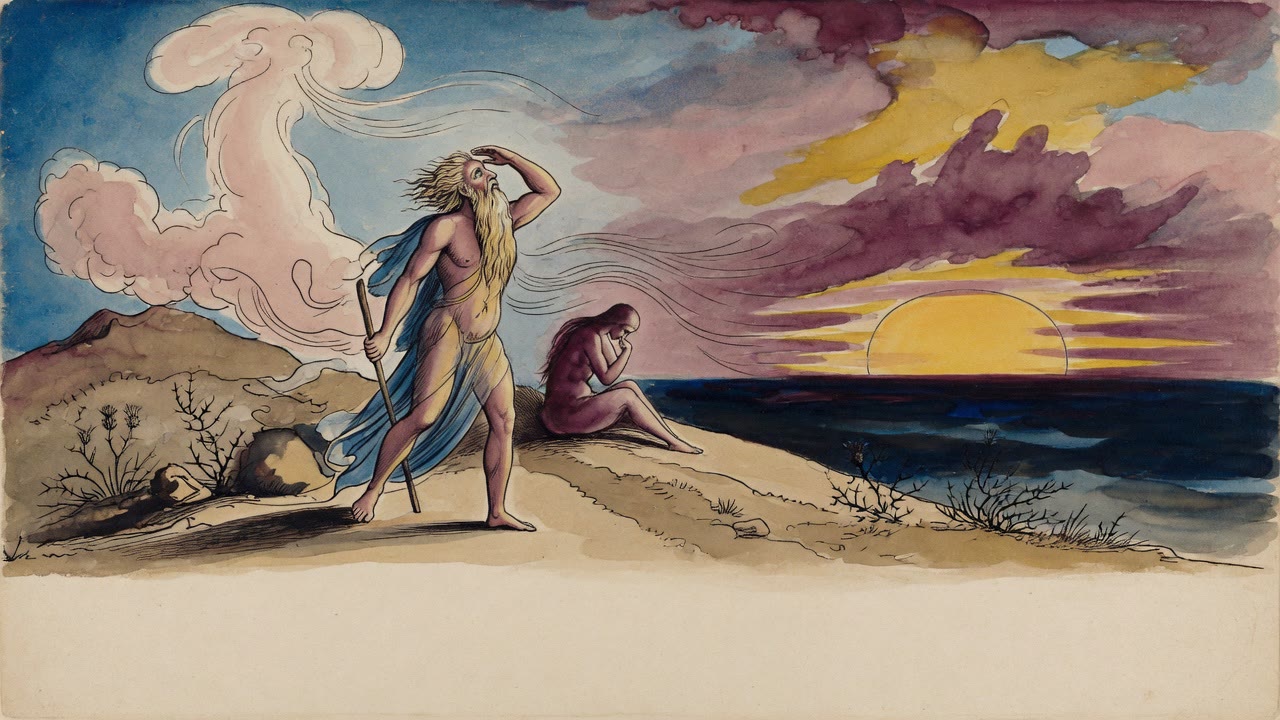
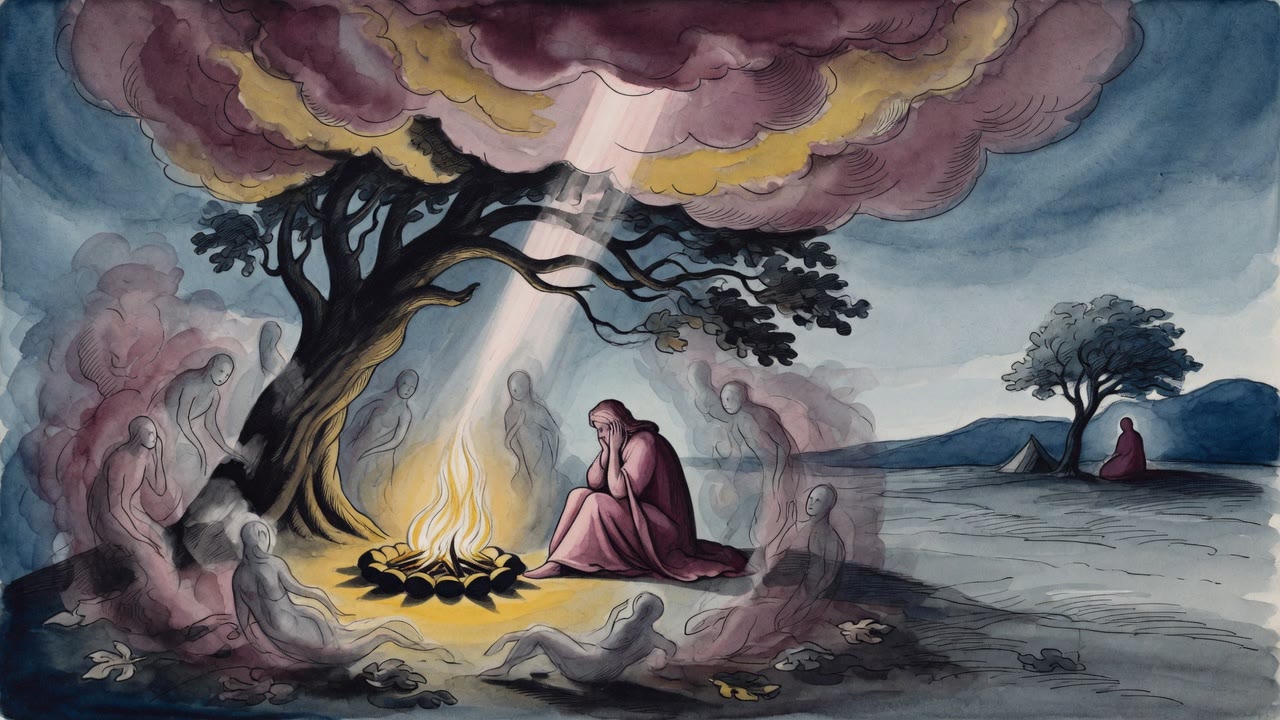
The children looked toward Paradise. That was the only loss large enough to explain the sight before them. Perhaps Adam was not dying. Perhaps he was only aching for Gan Eden, the garden behind him and behind all of them, the place whose fruit still shone in family memory like a lamp left burning beyond a locked door.

Seth stepped forward because someone had to move. If the fruit was the pain, then fruit might be the cure. He would go to the gates. He would beg. He would ask God for something from the garden, some mercy in a leaf or sweetness in a branch, and he would bring it back to his father before the breath failed.

Seth Turned Toward the Gate

Adam stopped him. There was no anger in it. A father does not scold the son who wants to run barefoot to Paradise for him. But Adam knew the sickness did not come from missing fruit. It came from the fruit already eaten.

So he taught his family the first vocabulary of suffering. Pain was not merely hunger. Weakness was not merely longing. The body could become the place where an old command returned. What happened at the tree had not stayed beside the tree. It had entered bone and breath. It had waited through marriages, births, work, prayer, and years so many that ordinary memory could not hold them. Now it had come to the bed of the first man.

Seth stood there with his errand undone. The road to the gate remained closed. No fruit would cross it. No son could climb back into the first morning and unmake the bite.

Eve Asked for Half the Sickness

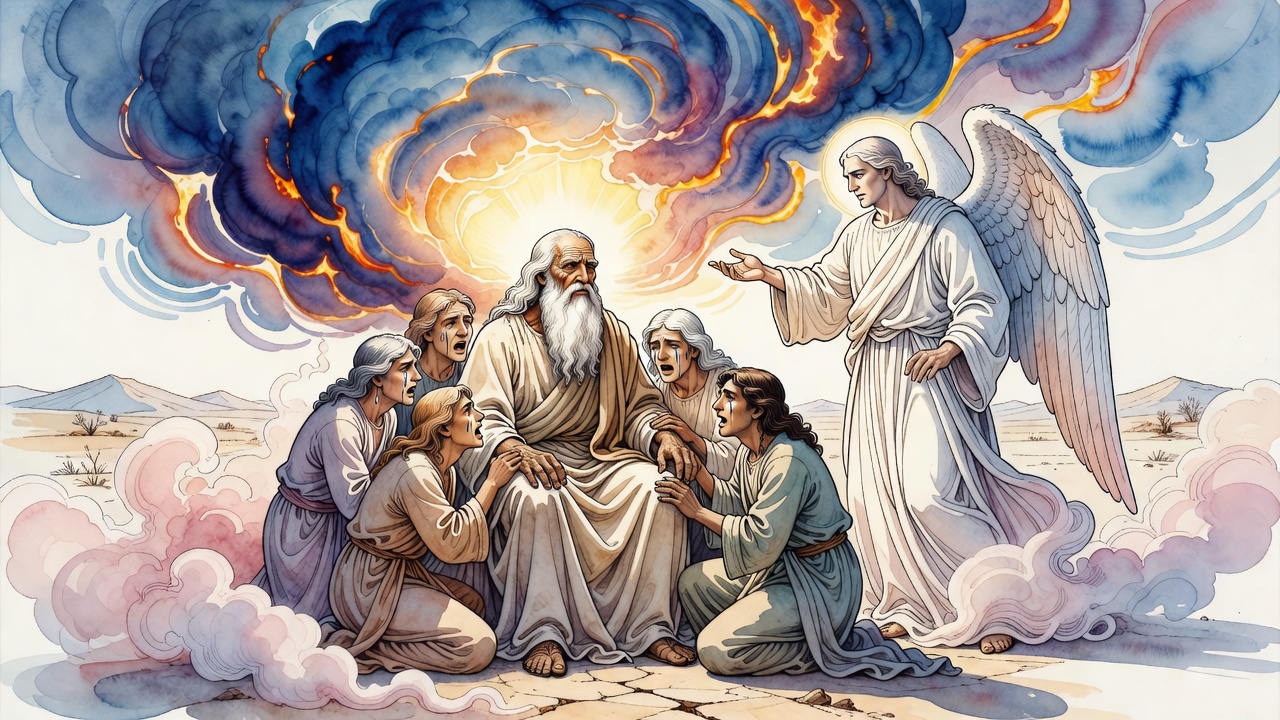
Eve came near him and broke. She had known the tree before any child knew his own name. She had heard the serpent, reached, eaten, given, and watched the world change around her. Now the change was inside Adam's body, and she could not bear that it rested there alone.

Give me half of it, she pleaded. Let me carry half the sickness. Let the pain divide between husband and wife.

It was the first bargain ever offered at a deathbed, and it was useless in the way love is often useless against the body. Eve could not take half the fever into her hands. She could not draw pain out of Adam's limbs as one draws water from a well. She could only stand beside him and refuse the loneliness of his suffering. The sentence had entered human flesh, but so had companionship. Even judgment would not find Adam unattended.

He called for his sons. The voice that once named the creatures now asked for faces, all of them, gathered close enough to receive whatever blessing could still pass from a dying mouth.

The Children Learned the Shape of Mourning

Seth hurried through the family lines and brought them in. Sons, daughters, descendants, the living branches of the man on the bed. They came because he had summoned them, but they also came because no one should have to learn death alone.

Adam looked at them with the terrible knowledge of a beginning. He had been first in breath, first in labor, first in exile, first in shame, first in fatherhood. Now he was first in this as well: the first sickness taught from the inside, the first deathbed around which a family stood asking what the body was doing and why heaven did not send medicine from Paradise.

No one in that room could repair Eden. No one could divide the pain cleanly. But they could gather. They could listen. They could let the dying man see what had come from him before he returned to the dust from which he had come.

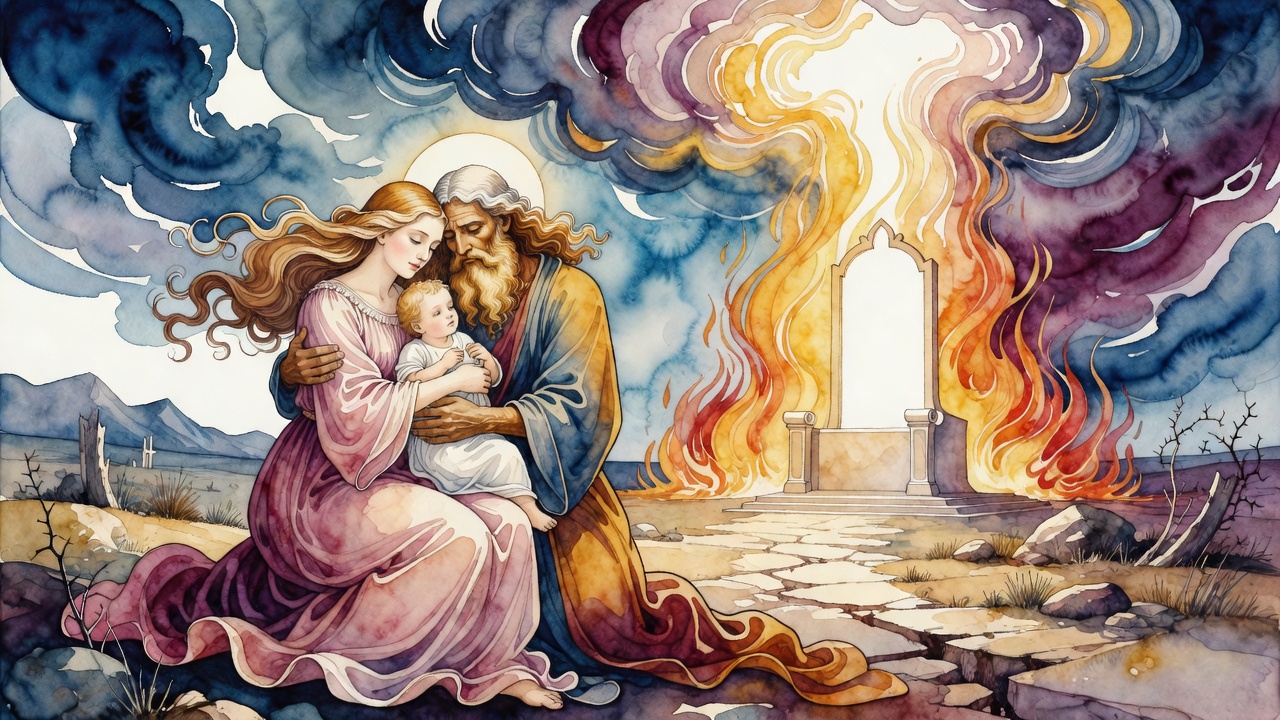
Outside, the gate of the garden did not open. Inside, Eve stayed near Adam, Seth stood with the unanswered errand in his hands, and the first family learned that mourning begins before burial, while the beloved is still breathing and everyone waits for the next breath to come.


← All myths
From the tradition

Sources

2 sources

The texts this telling draws on, in full. Open a card to read inline, or expand it for a wider, quieter read.

Legends of the Jews 2:97Legends of the Jews

It's a scene brimming with sorrow and a desperate yearning for understanding.

In Legends of the Jews, when Adam reached the ripe old age of nine hundred and thirty, he fell ill. Now, think about that for a moment. Nine hundred and thirty years! His descendants, who had never witnessed illness before, were utterly bewildered. They gathered before the house of worship where Adam had always prayed, expecting to receive his usual blessing, but instead, they found him weakened and suffering.

They didn't understand what was happening. They assumed his sadness stemmed from missing the delights of Paradise. Seth, ever dutiful, offered to venture to the gates of Gan Eden (the Garden of Eden, paradise), Paradise, to plead with God for some of its fruits, hoping that would ease his father's suffering. What a heartbreakingly naive attempt. But Adam stopped him. He explained to them the concept of sickness, of pain, revealing it as a punishment from God for his sin. Can you imagine the weight of that realization crashing down on them? The first family, confronted with the consequences of disobedience.

Adam’s suffering was intense. Tears streamed down his face, and groans escaped his lips. Eve, overcome with grief and guilt, cried out, "Adam, my lord, give me half of your sickness! I will gladly bear it. Is it not on account of me that this has come upon thee? On account of me thou undergoest pain and anguish.”

Eve's words are so raw, so human. The desire to shoulder the burden, to take on the pain of a loved one, is a timeless sentiment. It speaks to the deep connection between Adam and Eve, a bond forged in innocence and now tested by the harsh realities of their transgression. It's a powerful moment of grief, acceptance, and the beginning of understanding what it means to be mortal.

And doesn’t it make you wonder: faced with such a moment, what burden would you offer to carry for someone you love?

Full source
Life of Adam and Eve 45-48Apocrypha

Apocrypha turns to Adam Cries Out as the First Human to Face Death.

Well, Jewish tradition has a lot to say about the death of Adam, the first human. And it's not just a simple passing; it's a cosmic event, filled with angels, regrets, and a whole lot of divine intervention.

Adam is lying in his tent, and he knows. He knows the end is near. According to Louis Ginzberg's Legends of the Jews, Adam, realizing his time was up, cries out with a mighty voice. “Let all my sons gather by me," he pleads, "so that I may see them and bless.” (Ginzberg, Legends of the Jews, 1:10). Can you imagine the scene? The weight of millennia on his shoulders, the knowledge that he was the beginning?

His son Seth, ever dutiful, hurries to gather the family. But here’s where things get interesting. Seth isn't alone. With him are not just his siblings, but also… an entourage. According to the Tree of Souls, Seth and his mother, Eve, are on a quest to plead for mercy. (Schwartz, Tree of Souls, 9:7).

They venture to the Gate of Paradise, desperate for a cure for Adam. Think of it as the ultimate doctor's visit. They beg for oil from the Tree of Mercy, hoping it will heal him. But an angel appears – some say it's the archangel Michael himself – and delivers a somber message: their plea is denied. Now is the time for Adam to go.

But why? Why deny Adam, the first man, a longer life? The angel explains that this is God's decree, a necessary part of the cosmic order. It's a harsh reality, a reminder that even paradise has its limits.

When Seth and Eve return, grief hangs heavy in the air. Adam prepares for his final moments, surrounded by his children. The Zohar, a central text of Kabbalah, paints a vivid picture of Adam's death. The sun begins to dim. The earth trembles. Even the celestial realms feel the impact of his passing.

According to tradition, God then sends angels to prepare Adam for burial. They wash and anoint his body, a ritual that becomes the basis for Jewish burial practices. It's a poignant moment, a divine act of compassion for the man who walked in the Garden of Eden.

And where is Adam buried? Tradition places his grave in the Cave of Machpelah in Hebron, alongside Abraham, Sarah, Isaac, Rebecca, Jacob, and Leah. This cave, purchased by Abraham as a burial plot, becomes a significant site in Jewish history, linking the first man to the patriarchs and matriarchs of the Jewish people. (Ginzberg, Legends of the Jews, 1:10).

The death of Adam, as depicted in Jewish tradition, is more than just the end of a life. It's a powerful reminder of our mortality, the consequences of our choices, and the enduring presence of God's compassion, even in the face of death. It's a story that invites us to contemplate our own lives, our own legacies, and the eternal questions that have haunted humanity since the very beginning.

So, next time you think about death, remember Adam. Remember the angels, the pleas for mercy, and the solemn acceptance of God's will. It's a story that stays with you, long after the last word is spoken.

Full source