Adam Was the First Human to Die and He Pleaded for the Righteous
Adam lay dying after 930 years with no predecessor, no tradition of how to die. His final plea to God was not for himself but for those who would blame him.
Table of Contents
 Click for full size
Nine Hundred and Thirty Years Later
He had been told what would happen on the day he ate of it. God had said: on that day you shall surely die. Adam had eaten, and the day the Torah described in those terms turned out to be nine hundred and thirty years long. Now it was ending.
Nobody had done this before. Every other death in human history would be preceded by the deaths of others, observed from a distance, prepared for however imperfectly by the knowledge that it had happened to someone else first. Adam had no such preparation. He had no stories to draw on, no tradition of how to die, no predecessor who had told him what it felt like when the end arrived. He had only the garden and the warning and the nine centuries since, and now the warning was arriving in his body.
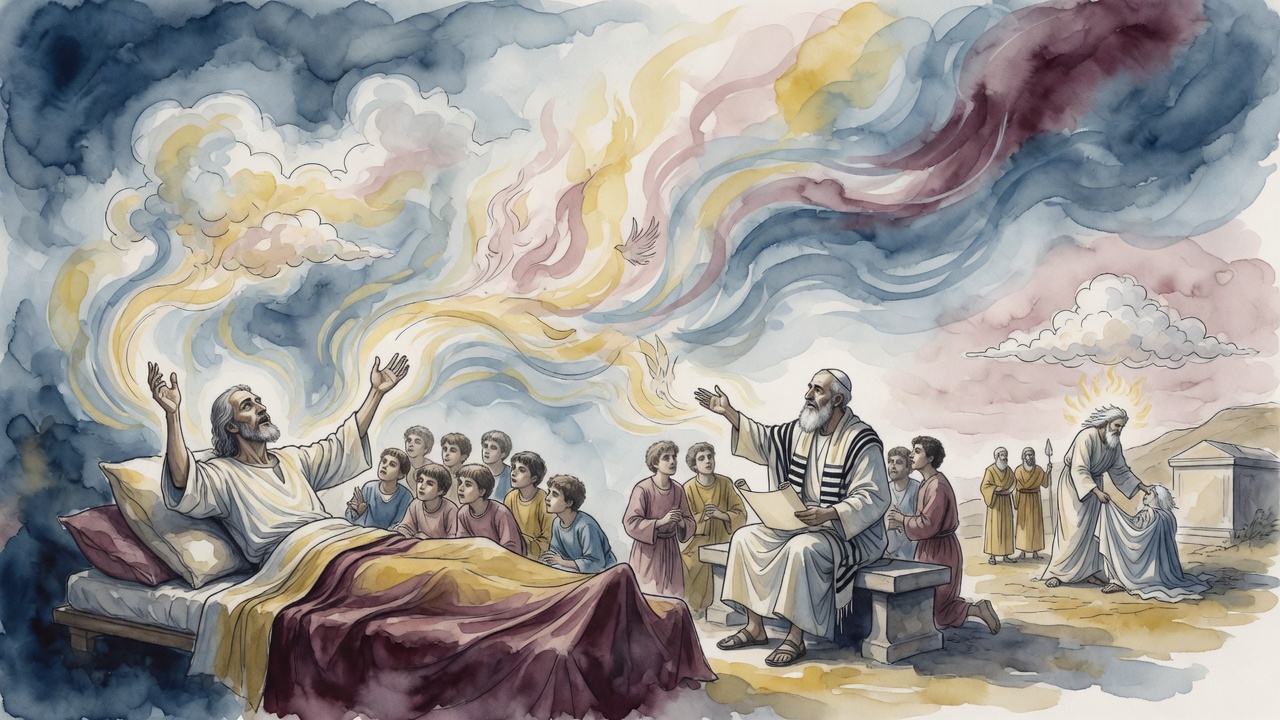
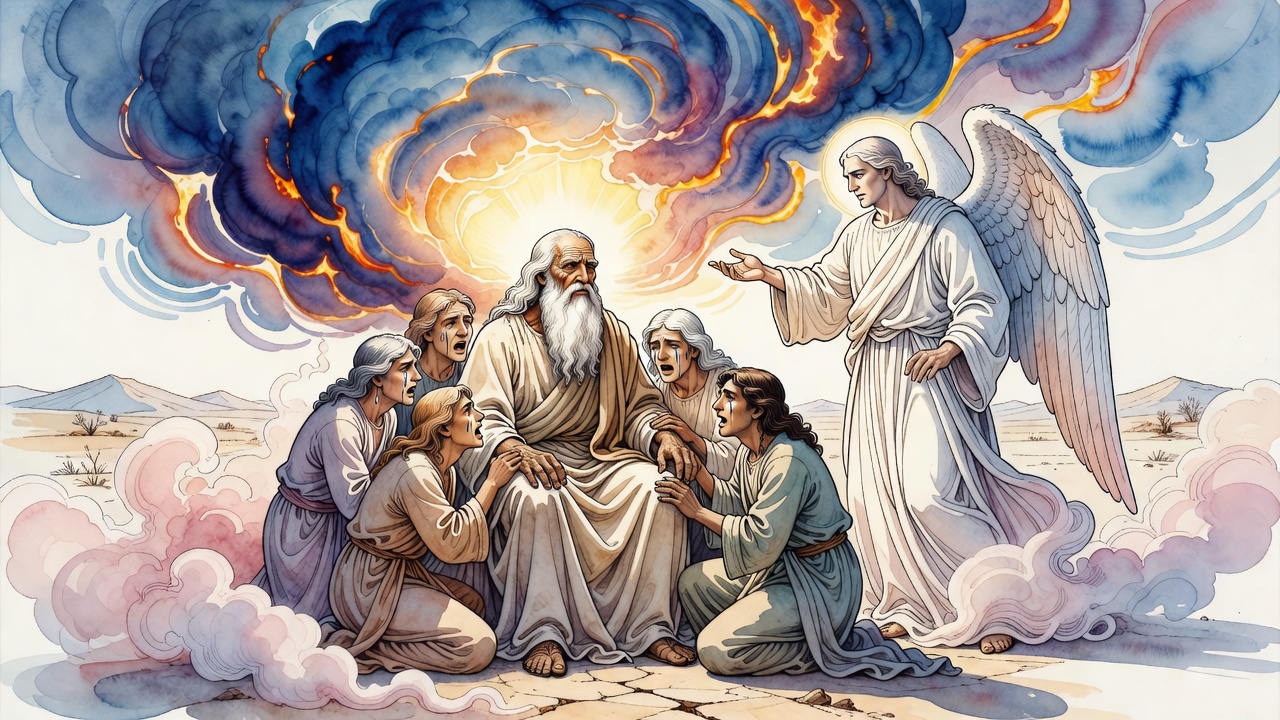
He called his sons together. "Let all my sons gather by me, so that I may see them and bless them." The gesture was the first death-bed scene in human history, and he was inventing it as he went.
No Oil of Mercy for Adam
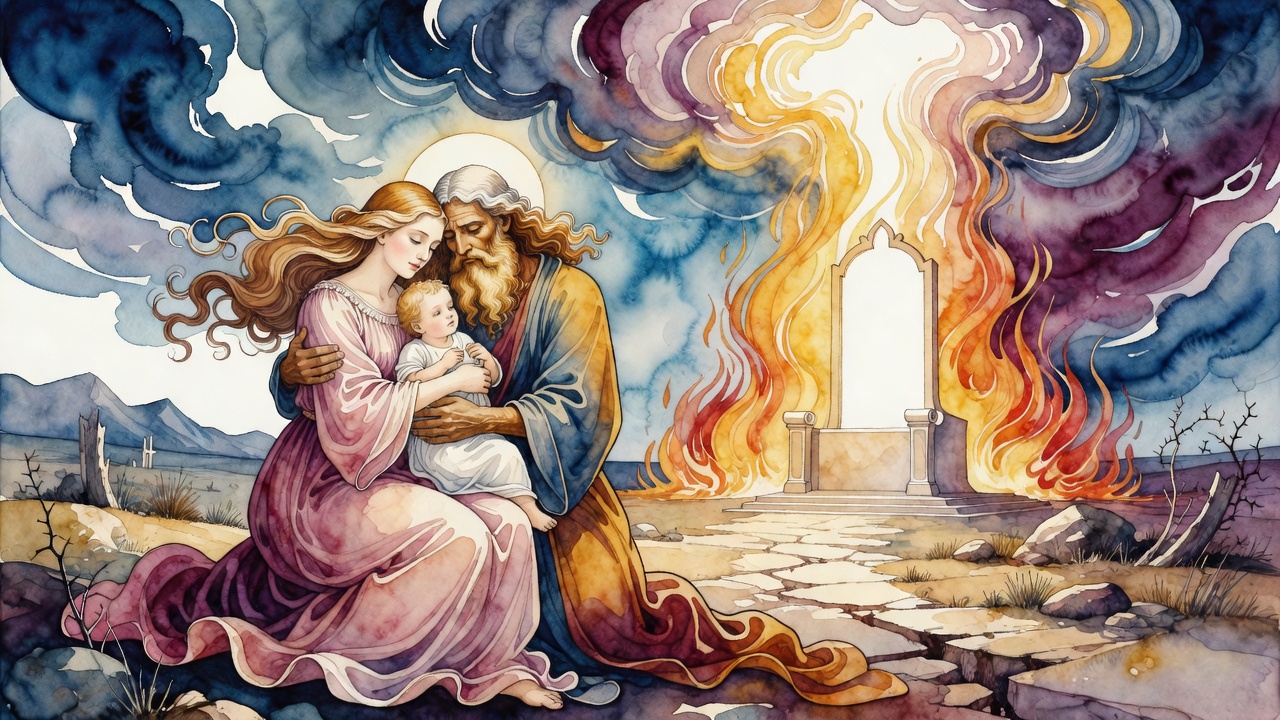
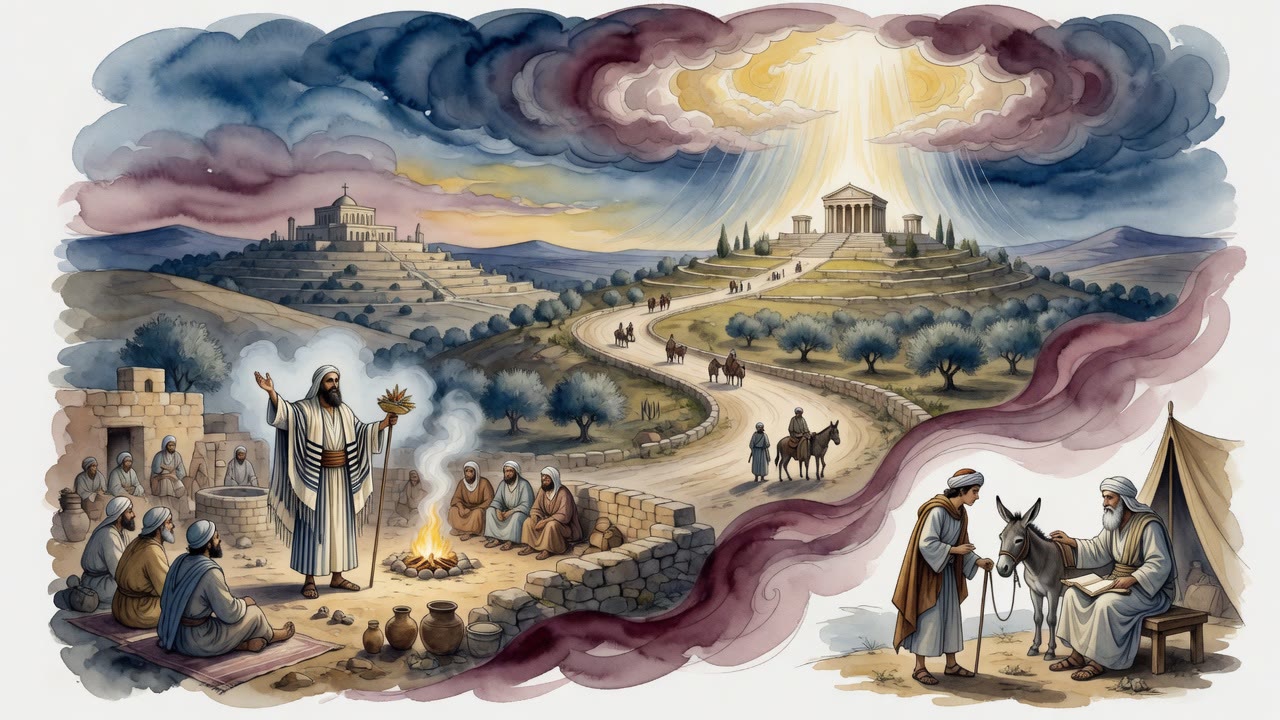
What happened in the hours before the end survives in the Life of Adam and Eve, one of the pseudepigraphical texts preserved from around the first century CE, and in the great synthesis that Louis Ginzberg assembled in his Legends of the Jews, published between 1909 and 1938, gathering rabbinic and apocryphal traditions that had circulated in Hebrew and Aramaic for centuries before reaching print in that form. Adam was sick before he died, not just old. He lay in real pain, and the Life of Adam and Eve records that Eve and his son Seth went looking for the oil of mercy, a substance from the Garden of Eden said to bring healing. They traveled toward the Garden, toward the angel who guarded the eastern entrance. The angel heard their request and denied it. The oil of mercy was for the end of days, for the general resurrection, not for Adam's specific illness now. They returned empty-handed. Adam died without it.
The detail that strikes hardest is the one about the oil being reserved. It was not that mercy did not exist. It was that this particular mercy was allocated for a future that Adam would not see, and the mercy he needed now was not available. He lay in his tent and waited for the thing that had been promised him in the garden to arrive, and there was nothing his wife or his son could bring back from the world that would delay it.
The Plea He Made Before the End
Ginzberg's synthesis preserves a passage that catches Adam at the exact moment when the righteous in future generations became his concern. He lay dying and thought about how he would be remembered. Not with vanity. With a specific dread. The righteous people who would live and die in the centuries after him would know the story of the garden. They would know that death entered the world through his act. And they would, rationally, blame him for their deaths. Their lives cut short, their children's grief, every funeral in the history of humanity, all of it traceable back to the morning in the garden when he ate what he had been told not to eat.
"I am not concerned about the death of the wicked," Adam said to God. "But I should not like the pious to reproach me and lay the blame for their death upon me. I pray Thee, make no mention of my guilt." God, according to the legend, granted this prayer. The covenant of silence would hold. The death of the righteous would not be attributed to Adam's act in a way that would give them cause to reproach him at the resurrection.
The Angel Who Came With a Warning
The Life of Adam and Eve does not end with the denial at the garden gate. After Adam died, the angels came. They washed and wrapped his body and buried him, performing the first burial rites in human history, establishing the ritual that would be transmitted to all the generations after. Then an angel appeared to Seth and warned him: when you too are near death, do not mourn too long, because the same mourning and wasting will overtake you. The instruction was pragmatic and grim. Grief was not prohibited. Extended grief that destroyed the living would follow Adam into the earth if Seth allowed it to.
Eve's death follows Adam's in the tradition, and it is recorded with a parallel finality. She asked to be buried beside her husband. The tradition granted her that wish. The first two human graves were adjacent, in the ground of the world they had lived in together, east of the garden they had been driven from, a bowshot's distance from the place they could no longer enter.
← All myths