6 min read

Job Was Accused on Rosh Hashanah and Lifted Into Paradise

On the Day of Judgment the accuser rose against Job, stripped him bare, and lost him to heaven when the broken man still blessed God.

Curated by Arthur · Told by Maggid ·
Table of Contents
  1. The Accuser Marched the World Against Him
  2. The Broken Man Put God on Trial
  3. God Answered With the Arithmetic of Creation
  4. Heaven Doubled What the Accuser Had Stolen
  5. The Accuser Fell and the Faithful Rose

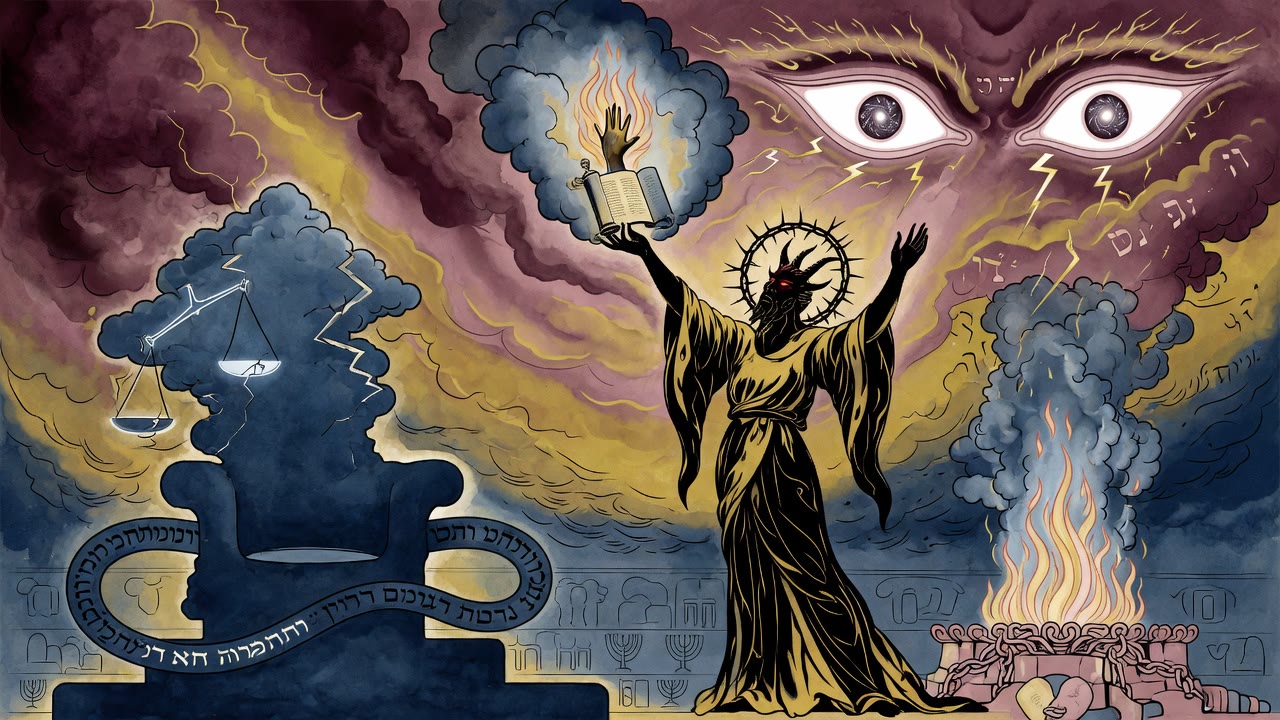
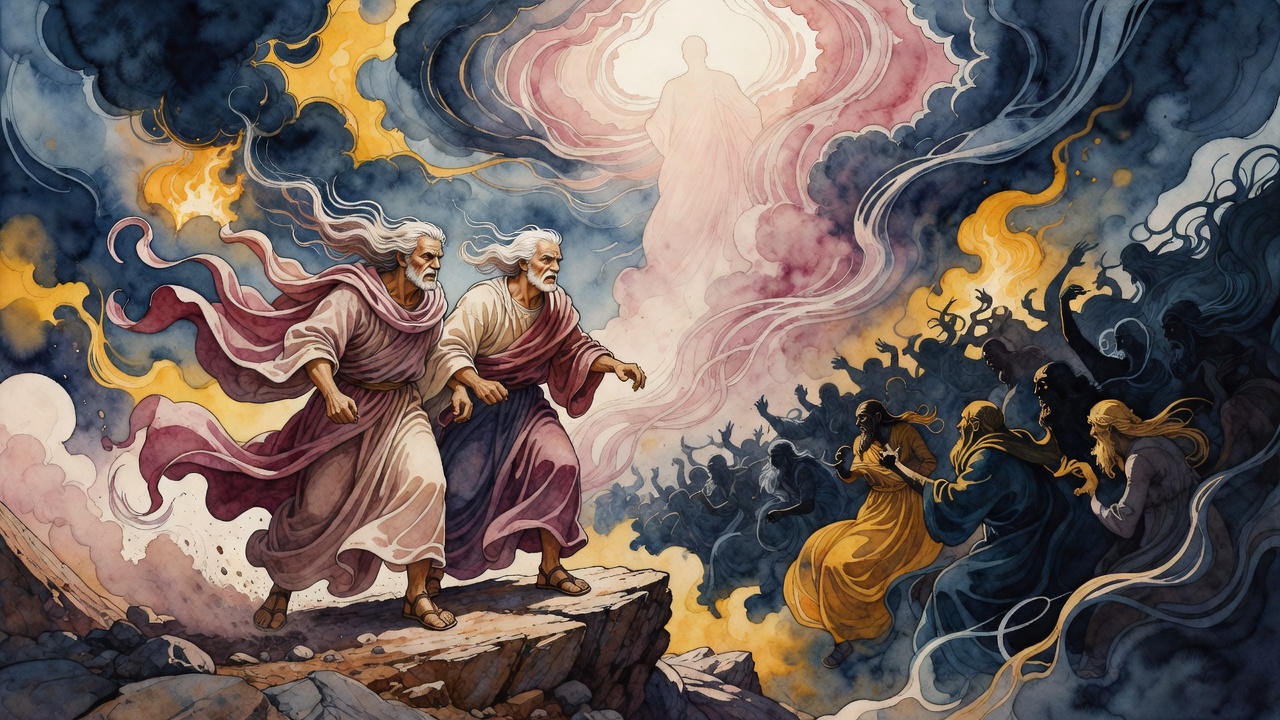
The books of every life lay open before God, and it was Rosh Hashanah, the day the New Year turns and deeds are weighed. Into that court the prosecutor walked. He was no demon of pure malice but the heavenly accuser, Ha-Satan, granted leave to test whether one righteous man would hold. He looked down the long table of the world and stopped at the name Job. On the Day of Judgment, the righteous man stood accused.
The Accuser Marched the World Against Him

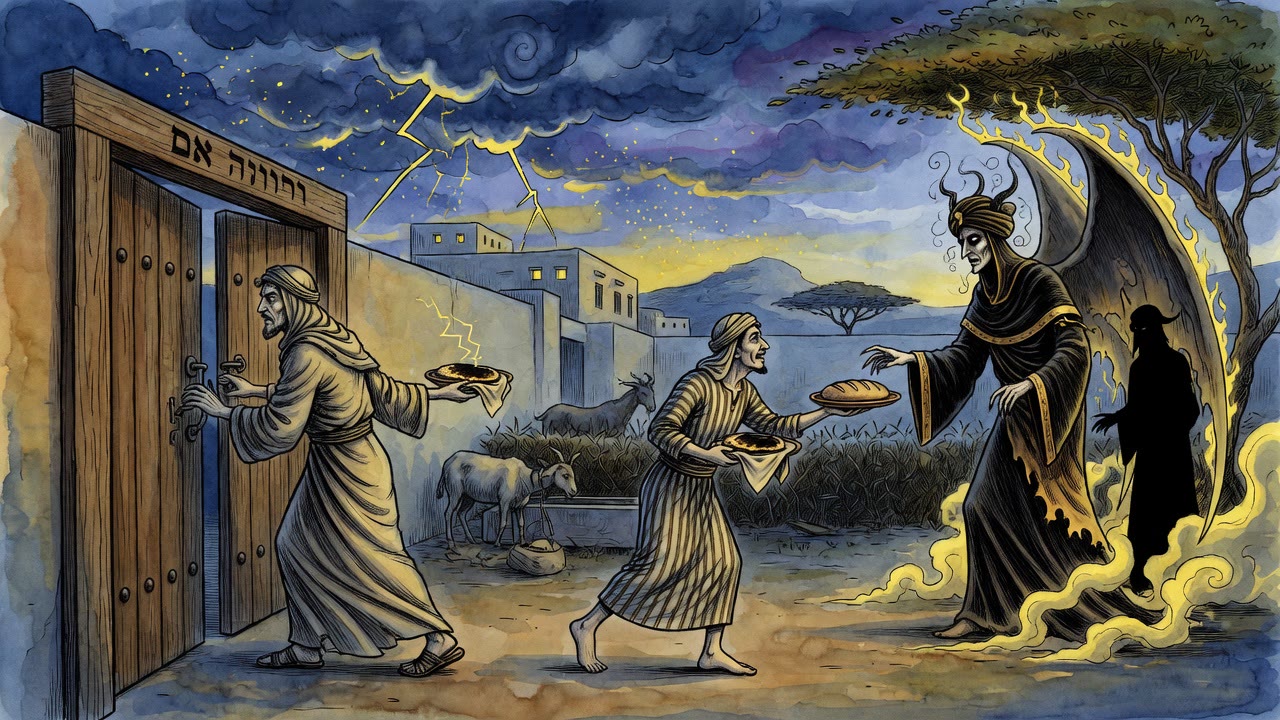
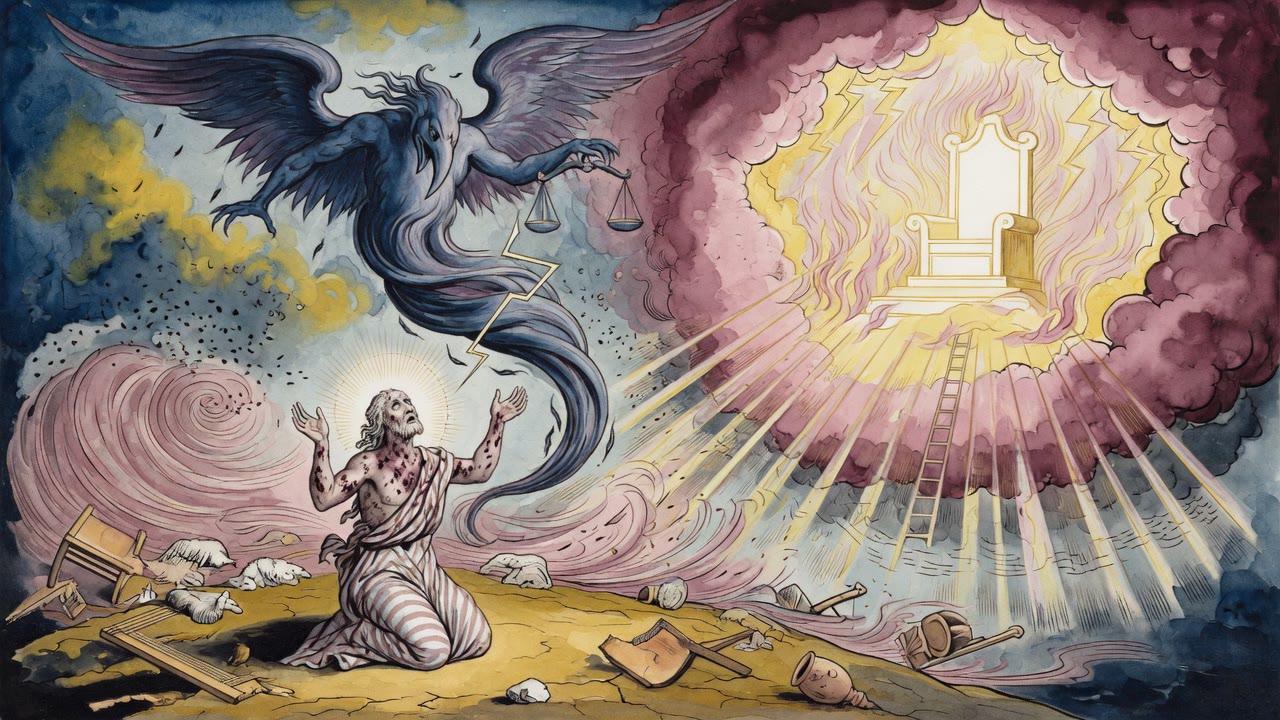
It began with the herds. Some of the cattle burned where they stood. Others were driven off by men who had eaten at Job's table, who had been clothed and fed by his hand, and who now turned and took what was his. The wound under the wound was not the loss. It was the betrayal.

Then came an army from the far edge of the earth. At its head rode Lilith, queen of Sheba, and her kingdom lay so distant that her host marched three full years to reach the land of Uz. Three years of dust and intent. She fell upon the oxen and the asses and cut down the men who guarded them. One herdsman alone broke free, gashed and reeling, and ran until he reached Job's feet, gasped out the news, and dropped dead on the ground.

The sheep that her sword spared, the Chaldeans seized. Job rose to fight, a man who had always defended his own. Then word came that a fire had fallen from heaven and devoured the rest. He let his hands fall. "If the heavens turn against me," he said, "I can do nothing."

The Broken Man Put God on Trial

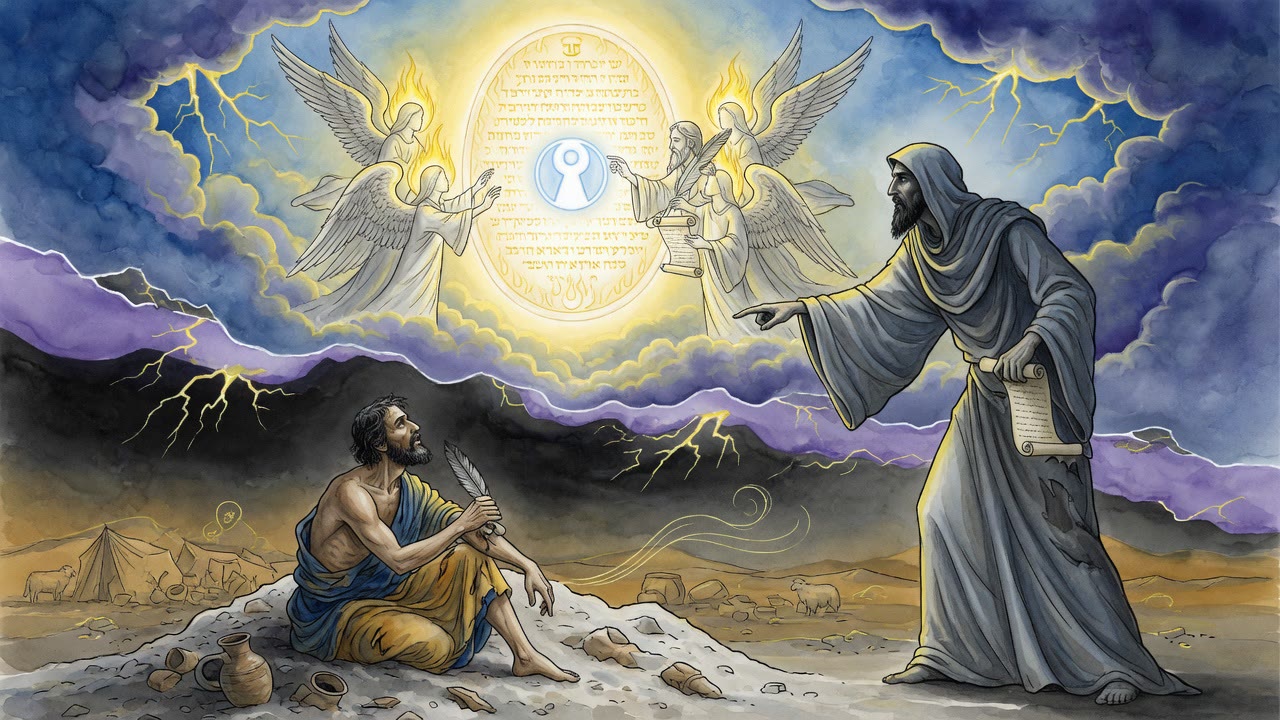
The boils came after, head to sole, and Job sat in the ashes and scraped himself and began to question. Not in the small way of a frightened man. He questioned everything. He weighed the world by what his eyes could reach, the wicked thriving in their houses, the upright rotting on a dunghill, and from that ledger he drew a verdict so bold it shook the air. The dead, he said, do not rise. There is no resurrection. And his own ruin was no punishment at all but an error, a mistaken identity. God had confused him with some sinner who had earned the pain.

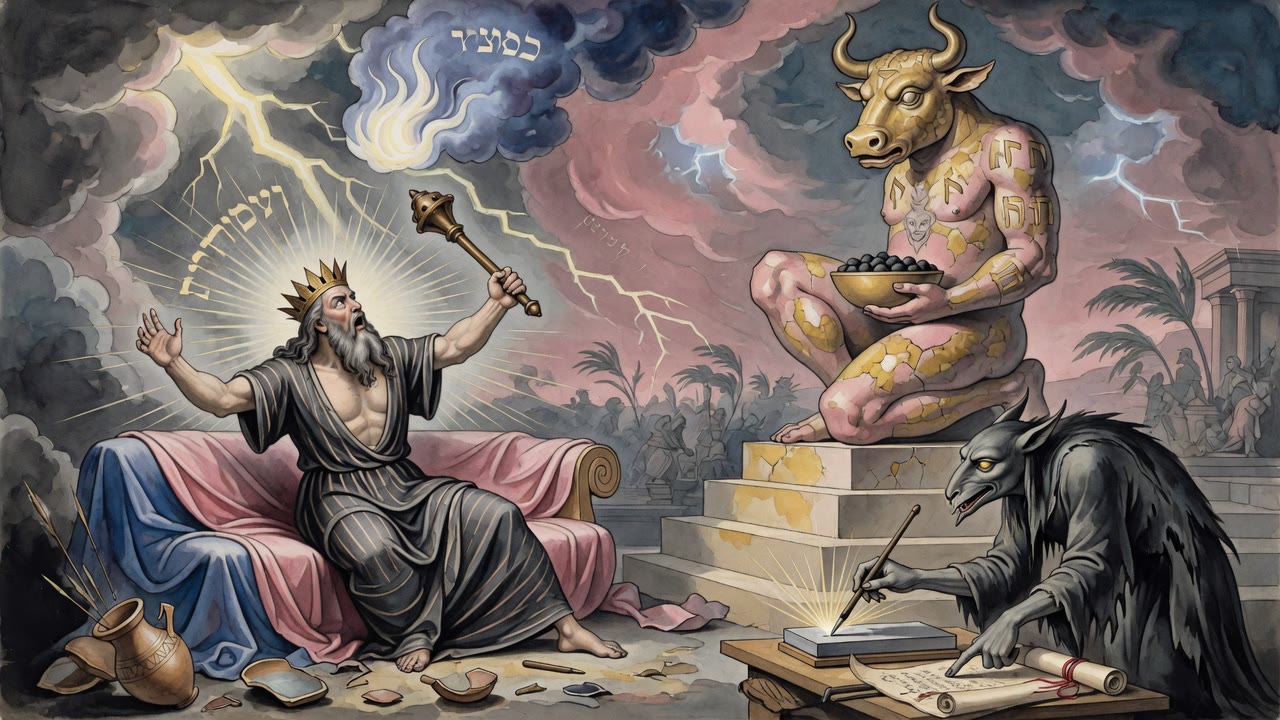
To accuse the Almighty of a clerical slip. The man had lost his children, his skin, his name, and still he reached up and charged heaven with carelessness.

God Answered With the Arithmetic of Creation

God did not thunder. God counted. "Many hairs have I created upon the head of man," he said, "yet each hair hath its own sac, for were two hairs to draw their nourishment from the same sac, man would lose the sight of his eyes. It hath never happened that a sac hath been misplaced. Should I, then, have mistaken Job for another?"

Then the rain. "For each drop there is a mould in the clouds, and it hath never happened that a mould hath been misplaced. Should I, then, have mistaken Job for another?" Then the thunderbolts, each one loosed down its own appointed path, "for were two to proceed from the same path, they would destroy the whole world."

And then the small lives, the ones no human eye guards. A gazelle labors at the lip of a precipice, and at the instant of birth an eagle sweeps in to catch the falling young. "Were the eagle to appear a minute earlier or later than the appointed time, the little gazelle would perish." The hind, her womb contracted, cannot deliver until the dragon comes to soften it at the exact second. "Were the dragon to come a second before or after the right time, the hind would perish." Every hair, every drop, every birth on its precise mark. The God who never once misplaces a second does not lose track of a man.

Heaven Doubled What the Accuser Had Stolen

The story did not end in the ashes. Job recovered, in flesh and in spirit, and went back to his city with his companions. The people threw a festival, and the old friends who had vanished in his ruin returned, and Job did again the thing he did best. He gathered the poor. He had nothing left to give them, so he asked the crowd, "Give me, each one of you, a sheep for the clothing of the poor, and four silver or gold drachmas for their other needs."

Within days the Lord blessed him until his wealth stood at double what it had been before the fire. He married again, this time Dinah, daughter of Jacob, and she bore him seven sons and three daughters. He kept one wife only. "If it had been intended that Adam should have ten wives, God would have given them to him," he said. "Only one wife was bestowed upon him, and one wife suffices for me, too."

The Accuser Fell and the Faithful Rose

When at last he died, the poor and the widows and the orphans could not bring themselves to bury him. For three days they kept his body above the ground, unable to let go of the man who had stood between them and the cold.

And the accounts were settled. Job's name was set into memory forever for his piety. His friends, who had grieved with him through every blow, were spared the fire of Gehenna, and God poured the Ruach ha-Kodesh, the holy spirit, upon them. As for Ha-Satan, who had marched the world against this one man, he was thrown down out of heaven. He had reckoned that loss would break the praise out of Job, and he had reckoned wrong. Even on the dunghill, even with his skin in ruins, Job had kept blessing the Name. The prosecutor was beaten by a man in ashes, and the man in ashes was lifted into Paradise and the heavenly realms.


← All myths
From the tradition

Sources

4 sources

The texts this telling draws on, in full. Open a card to read inline, or expand it for a wider, quieter read.

Legends of the Jews 3:23Legends of the Jews

The day Job was first accused was none other than Rosh Hashanah, the Jewish New Year. a day meant for solemn reflection and divine judgment, and it’s on this very day that the deeds of humanity, good and bad, are laid bare before God.

Enter the Satan – not necessarily the embodiment of pure evil The familiar picture has, but more of a heavenly prosecutor, tasked with testing the righteousness of humankind. As Legends of the Jews tells it, this Satan was given immense power, and he set out to strip Job of everything he held dear.

It started with the livestock. Some were burned, others stolen by enemies. But what stung Job most wasn't just the material loss. It was the betrayal. Those he had helped, those who had benefited from his generosity, they turned on him, seizing what was his.

The story gets even wilder. Among those who attacked Job was none other than Lilith, the queen of Sheba. Yes, that Lilith – often associated with the night, with primal feminine power, and sometimes, with demons.

According to the legends, her kingdom was so far away that it took her and her army a full three years to travel to Job’s lands. Three years! Imagine the sheer scale of this journey, the unwavering determination to wreak havoc. She and her forces descended upon Job's oxen and asses, slaughtering the men who guarded them. Only one managed to escape, a wounded and battered messenger, who lived just long enough to deliver the devastating news before collapsing dead at Job's feet.

And it didn't stop there. The sheep, spared by Lilith, were then snatched away by the Chaldeans. Initially, Job was ready to fight back. He was a man of action, used to defending what was his. But then came the final blow: word that some of his possessions had been consumed by fire "from heaven." It’s a detail that speaks volumes.

Faced with such overwhelming force, an act of seemingly divine wrath, Job relented. "If the heavens turn against me," he said, "I can do nothing." A chilling statement of acceptance. the story highlights the absolute powerlessness of man in the face of the divine.

What does this tell us? Perhaps, this episode in Job's life is a reminder that even the most righteous among us can face unimaginable trials, and that sometimes, the forces arrayed against us are simply too great to overcome.

Full source
Legends of the Jews 3:6Legends of the Jews

Job wasn't just suffering, he was questioning. Questioning everything! Ginzberg, in his Legends of the Jews, tells us that Job went so far as to deny the resurrection of the dead. He was judging the world solely on what he could see, on the immediate fortunes of the wicked and the suffering of the righteous.

From that limited perspective, Job came to a pretty radical conclusion. He thought, essentially, that God had made a mistake! That the punishment he was enduring wasn't meant for him at all. That God had confused him with someone else, some sinner who deserved the pain.

Can you imagine? Accusing the Almighty of a cosmic mix-up?

Then, God answers. And it's not the fire-and-brimstone rebuke you might expect. Instead, God responds with a series of examples, each demonstrating the intricate, almost unbelievable precision of creation.

God starts with the hairs on our heads. "Many hairs have I created upon the head of man," God says, "yet each hair hath its own sac, for were two hairs to draw their nourishment from the same sac, man would lose the sight of his eyes."! Each tiny hair, with its own unique source of life. "It hath never happened that a sac hath been misplaced," God emphasizes. "Should I, then, have mistaken Job for another?"

Then comes the rain. "I let many drops of rain descend from the heavens, and for each drop there is a mould in the clouds.." Each raindrop, formed perfectly to nourish the earth. "It hath never happened that a mould hath been misplaced. Should I, then, have mistaken Job for another?"

And the thunderbolts! "Many thunderbolts I hurl from the skies, but each one comes from its own path, for were two to proceed from the same path, they would destroy the whole world." The sheer power, yet controlled and directed. "It hath never happened that a path hath been misplaced. Should I, then, have mistaken Job for another?"

But the examples get even more specific, more intimate. God describes the gazelle giving birth on a dangerous precipice, rescued at the last moment by an eagle. "Were the eagle to appear a minute earlier or later than the appointed time, the little gazelle would perish." The timing, the precision – it's almost miraculous. "It hath never happened that the proper minute of time was missed. Should I, then, have mistaken Job for another?"

Finally, God speaks of the hind (deer) and the dragon (in this context, a creature assisting in a natural process, not a fire-breathing monster). The hind, with her contracted womb, needs the dragon to soften it at the precise moment of birth. "Were the dragon to come a second before or after the right time, the hind would perish." A single second! "It hath never happened that I missed the right second. Should I, then, have mistaken Job for another?"

What is God really saying to Job? It's not just about power or control. It's about care. About an attention to detail so profound that it encompasses every hair, every raindrop, every birth. It's about a universe governed not by chance, but by a meticulous and loving design. It's a reminder that even when we can't see the purpose behind our suffering, there's a larger, more intricate plan at work. And maybe, just maybe, we're not a mistake after all.

Full source
Legends of the Jews 3:43Legends of the Jews

After the boils, the loss of his family, the relentless questioning... what then?

Well, the story doesn't end with him sitting in ashes. According to Legends of the Jews, Job eventually recovered – not just physically, but spiritually and materially too. He and his three.. well, friends is a strong word, but companions, returned to his city.

Can you imagine the scene? The people threw a festival, a celebration not just for Job, but for the glory of God. His old friends, the ones who’d seemingly vanished during his trials, reappeared. And he went right back to what he did best: caring for the poor.

Where did he get the resources? Remember, he’d lost everything. According to the legends, he asked the people for help. He said, "Give me, each one of you, a sheep for the clothing of the poor, and four silver or gold drachmas," a type of ancient coin, "for their other needs."

And here's where the story takes a turn for the miraculous. The Lord blessed Job, and in a matter of days, his wealth doubled what he had before tragedy struck! After losing everything, he was given back twice as much.

But the story doesn't stop at financial recovery. Job also found love again. His wife, Zitidos, had passed away during his years of suffering. He remarried, this time to Dinah, the daughter of Jacob – yes, that Jacob, from the Book of Genesis! They had seven sons and three daughters.

The text makes a point to tell us that Job never had more than one wife at a time. Why? Because, as he was wont to say, "If it had been intended that Adam should have ten wives, God would have given them to him. Only one wife was bestowed upon him, whereby God indicated that he was to have but one, and therefore one wife suffices for me, too." A pretty straightforward philosophy, wouldn’t you say?

It’s interesting to consider how this ending shapes our understanding of the Book of Job. It’s not just a story of suffering, but one of resilience, faith, and ultimately, restoration. It suggests that even after unimaginable loss, it is possible to find healing, love, and renewed purpose.

Does this "happy ending" diminish the power of Job's struggle? Or does it offer a glimmer of hope, reminding us that even in the darkest times, the possibility of redemption remains? It's a question worth pondering.

Full source
Legends of the Jews 3:48Legends of the Jews

Legends of the Jews turns to Job and the Heavenly Realms.

We see this powerful emotion reflected in the stories of our ancestors, particularly in the reaction to the death of righteous individuals. The Legends of the Jews, that incredible compilation by Louis Ginzberg, tells us about just such a moment. It describes the immense grief that gripped the people, especially the vulnerable, the poor, the widows, and the orphans, upon the death of a particularly righteous man.

For three whole days, they couldn't bring themselves to bury him. Three days of raw, unabated mourning. They simply couldn’t bear the thought of parting with his physical presence. They felt such a deep connection to him, it was too much to bear. It's a powerful image of love and respect, isn't it? It’s a evidence of the impact one person can have on a community.

The text doesn't specify who this person was, but the sentiment echoes throughout Jewish tradition when speaking of righteous figures. It reminds me of the stories surrounding the passing of great tzaddikim (a righteous person) (righteous individuals) where communities would gather, overcome by the loss of their spiritual leader.

Now, this passage in Legends of the Jews goes on to speak about recompense. It’s a fascinating glimpse into the idea of divine justice and reward. In this case, it talks about Job and his friends.

We know Job as the epitome of patience and unwavering faith. Well, the story emphasizes that Job's name will be remembered forever because of his piety. But what about his friends? They too were rewarded for their sympathy and support during his trials. Their names were preserved, they were spared the punishment of Gehenna (hell), and perhaps most significantly, God poured out the Ruach (spirit) ha-Kodesh (holy spirit) upon them.

Isn’t it interesting how kindness and empathy are viewed as so worthy of reward?

And what about the source of Job's suffering? Satan. The Legends of the Jews recounts that Satan, the instigator of Job's anguish, was cast down from heaven. Why? Because Job, even in the depths of his despair, continued to praise and thank God. He had been vanquished by Job's unyielding faith.

It’s a powerful reminder that even in our darkest moments, when we feel most tested, faith and gratitude can be a potent force. It's not about ignoring the pain, but about acknowledging the good, even when it's hard to see. It is about clinging to the belief that there is something greater, something beyond our immediate suffering.

So, what do we take away from this short passage? Perhaps it's the understanding that grief is a natural part of the human experience. Perhaps it’s the importance of empathy and support during times of hardship. Or maybe it’s the enduring power of faith and gratitude in the face of adversity.

Whatever it is, this small glimpse into the Legends of the Jews offers a profound reflection on life, loss, and the enduring human spirit.

Full source