5 min read

David Takes the Cup at the Feast in Paradise

At the feast in Paradise, every righteous giant refuses the blessing cup until David lifts it and brings even Gehinnom to answer.

Curated by Arthur · Told by Maggid ·
Table of Contents
  1. The Thrones Face Each Other
  2. Abraham Will Not Touch the Cup
  3. The Fathers Count Their Wounds
  4. Moses and Joshua Step Back
  5. David Lifts What Others Refuse

The cup moves last.

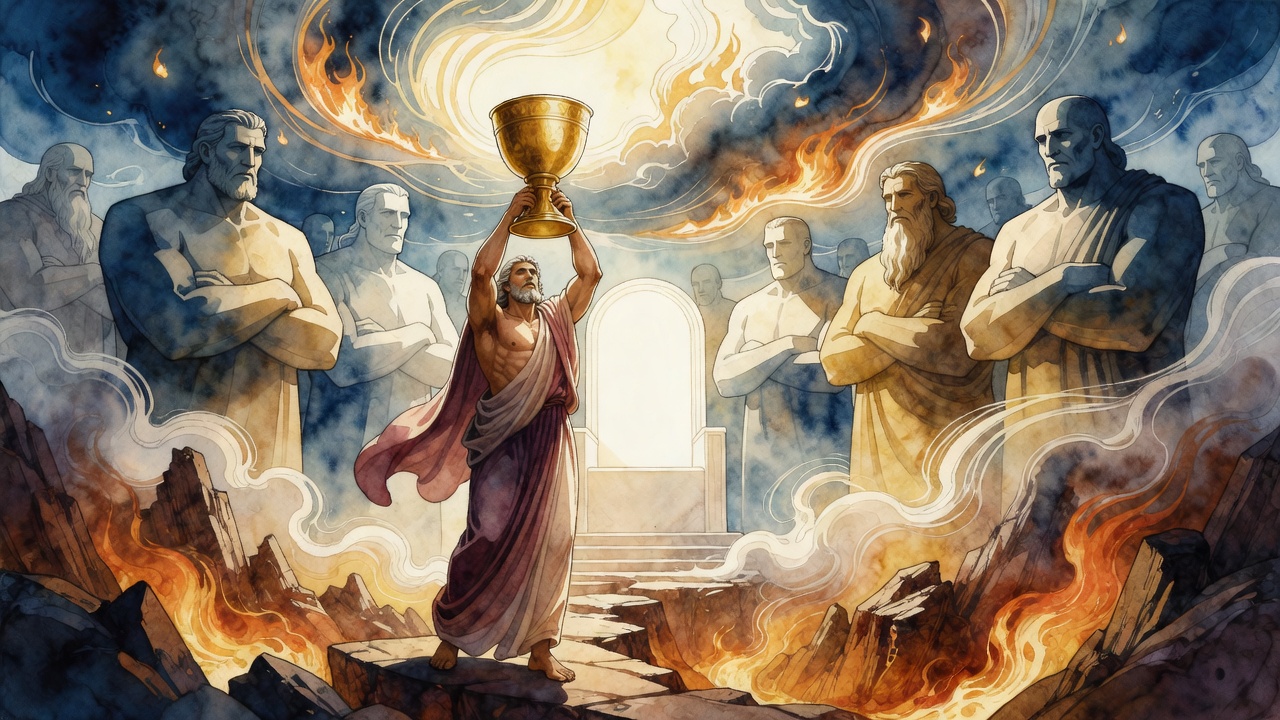
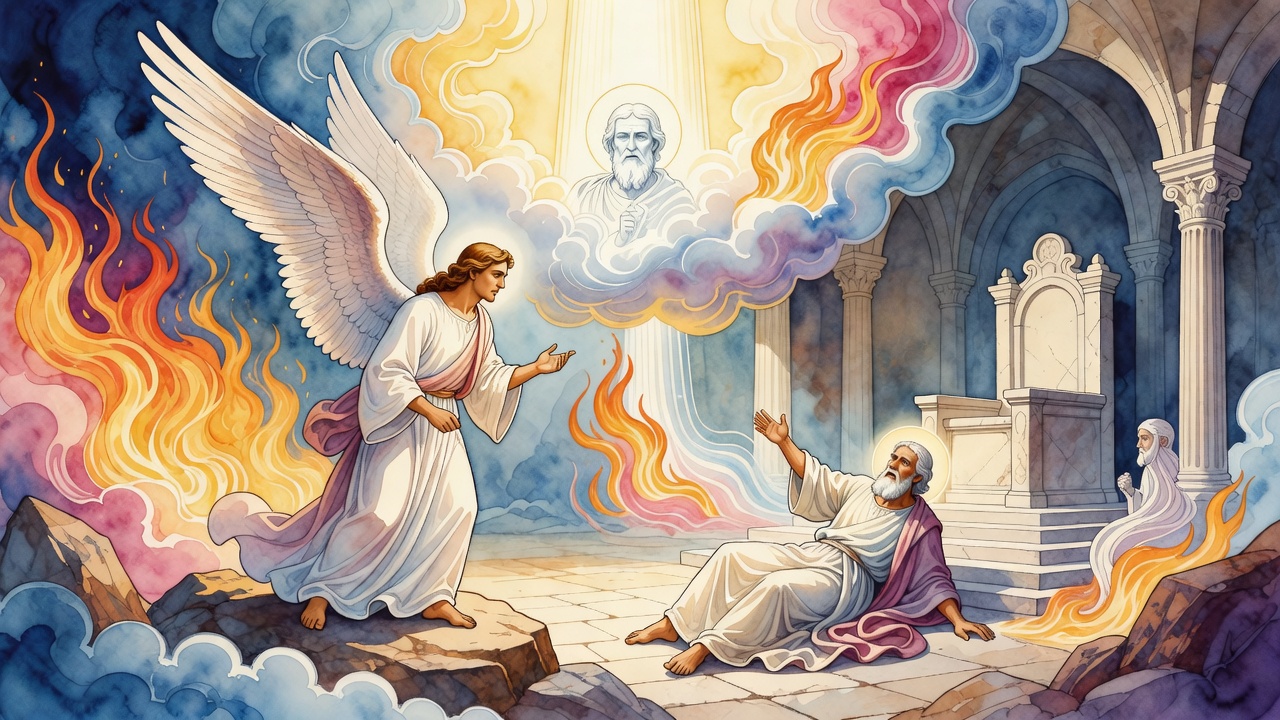
When the righteous finish eating in Paradise, the tables do not empty into silence. The wine still waits. The blessing after food still waits. God sits on His throne, and across from Him stands another throne, set for David, the king whose songs have already climbed through every chamber of heaven.

The Thrones Face Each Other

The banquet is not hurried. Every righteous soul has a place. The air is thick with the peace people wanted all their lives and only tasted in fragments. No sword hangs over the meal. No famine presses at the door. No exile patrols the road outside. Paradise has opened its table, and the table has held.

Then comes the moment of birkat hamazon, the blessing after food. A cup of wine is lifted, not as decoration, not as ceremony alone, but as the voice of the whole feast. Whoever blesses over it must gather the meal, the world, the dead, the living, the forgiven, and the waiting into one mouthful of praise.

God turns first to the oldest merit in the room.

Abraham Will Not Touch the Cup

Abraham is called as father of the pious. The title is true. He walked out from his father's house, crossed the land, built altars under open sky, and taught the name of God to strangers. The cup is offered to him as if the whole feast has leaned toward its first host.

Abraham does not reach for it.

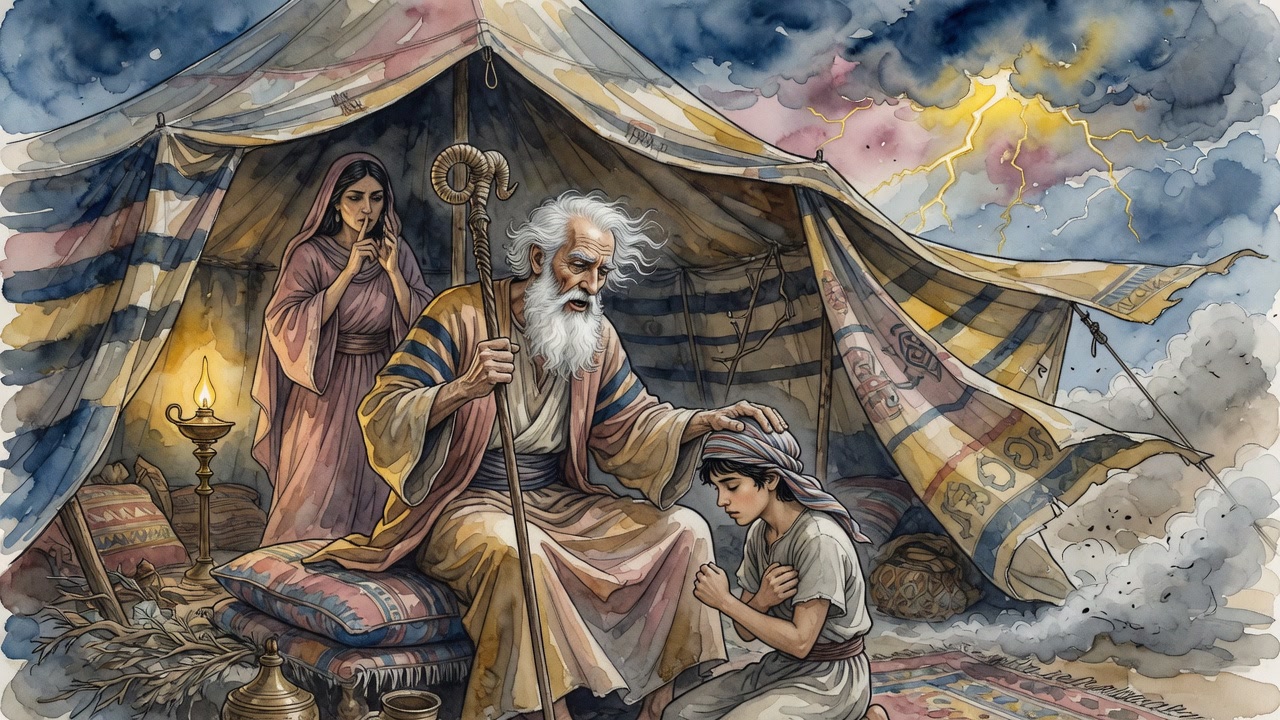
His hand stays still because fatherhood does not let him forget any branch. He carries the children of Isaac, but he also carries the children of Ishmael. He hears, even in Paradise, the crackle of wrath kindled by descendants who came from his tent. A father does not bless by pretending his house is smaller than it is. Abraham lowers his eyes and lets the cup pass.

The Fathers Count Their Wounds

Isaac is next. If anyone can bless from surrender, it is the son who lay bound on the wood and did not flee the knife. His silence once shook heaven. The cup comes to the man who gave his body to obedience before he had a child of his own.

Isaac refuses too. His son Esau stands inside his memory, and from Esau's line came hands that would tear at the Temple. The altar where Isaac was bound cannot erase the smoke of the altar that later fell. He will not cover ruin with a blessing.

Jacob receives the cup after him. His children became the tribes. His bed was whole. Around him gather names that became Israel itself. Still he remembers his own house, two sisters under one roof, a marriage that later law would forbid. Jacob, who wrestled until morning for a blessing, will not seize this one.

Moses and Joshua Step Back

Moses stands where thunder once stood. Torah passed through him. Commandments found a human voice in his mouth. He faced Pharaoh, climbed Sinai, broke the tablets, carved new ones, pleaded for a people who kept testing the patience of heaven.

The cup comes to him, and the man who brought Israel to the edge of the Land remembers the border he never crossed. His grave lies outside the place he spent forty years leading others toward. He has no wish to bless as if the locked gate did not remain locked for him.

Joshua, who crossed where Moses stopped, is called next. He led the people through the river, lifted the sword, divided the inheritance, and made the promise touch soil. But Joshua has his own lack. No son follows him into the room. No child carries his name forward. He steps back from the cup with the ache of an empty place beside him.

David Lifts What Others Refuse

Then God turns to David.

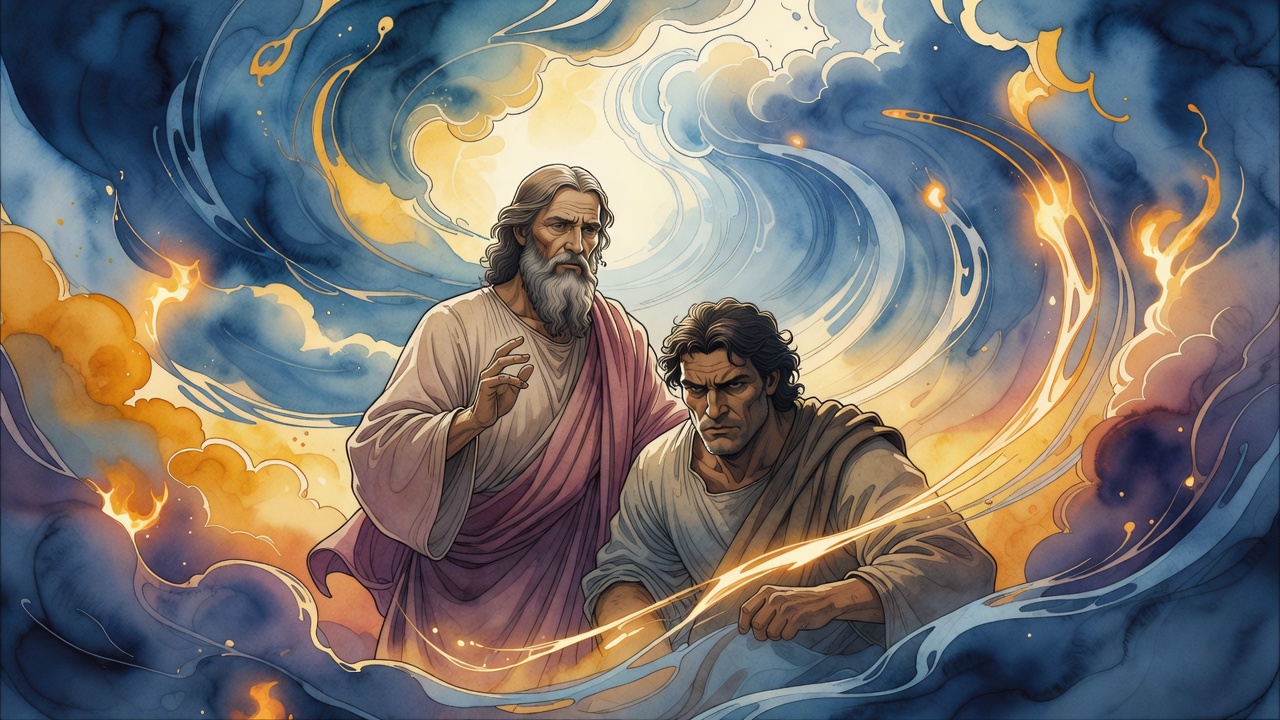
This is the dangerous choice. David is not the cleanest man at the table. He knows pursuit, blood, desire, rebuke, death in his own house, and the terrible weight of being forgiven after there is no way to become innocent again. He has asked God to correct him without destroying him. He has felt the rod and begged that the blow not become annihilation.

So when the cup reaches him, David does not hide behind a perfect record. He takes it because he knows what a blessing must carry. Not perfection. Return. Not spotless ancestry. A mouth that can praise after judgment and still tremble.

He lifts the cup and says he is fit to bless. The room does not crack. The Patriarchs do not protest. Moses does not rise against him. David's worthiness is not the worthiness of a man without stains. It is the worthiness of one who has been struck, sung, confessed, and kept singing.

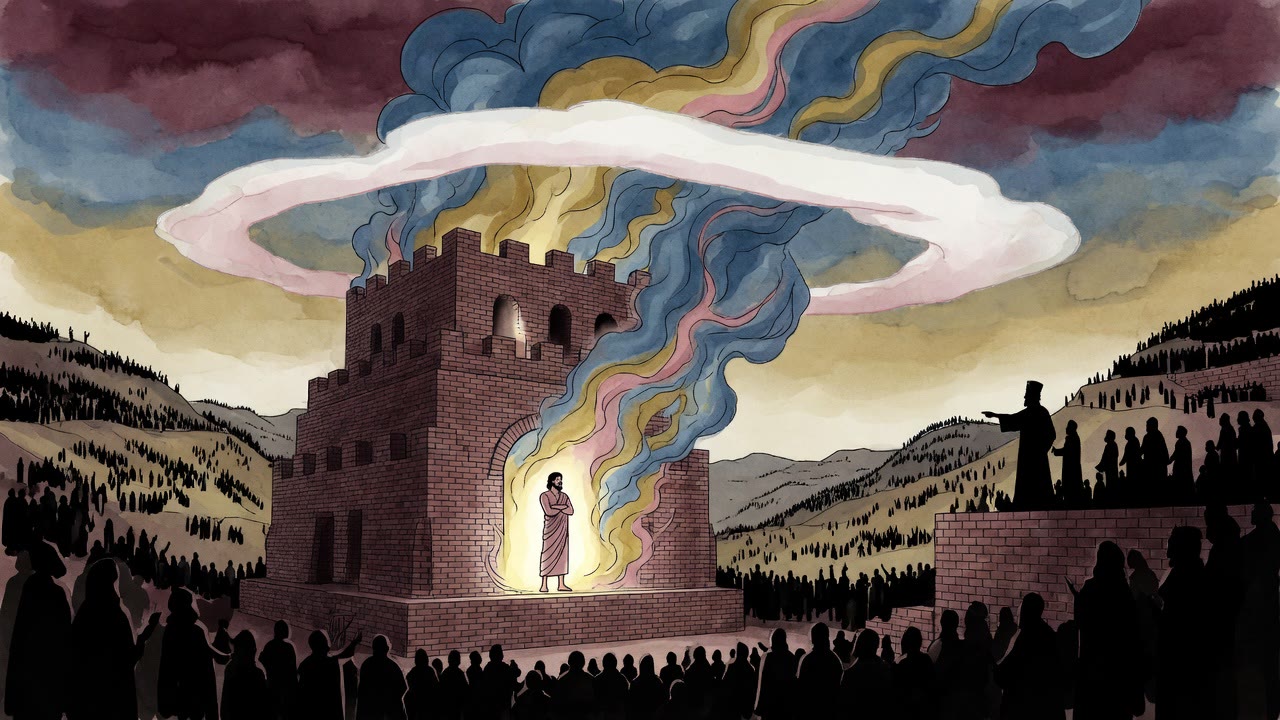
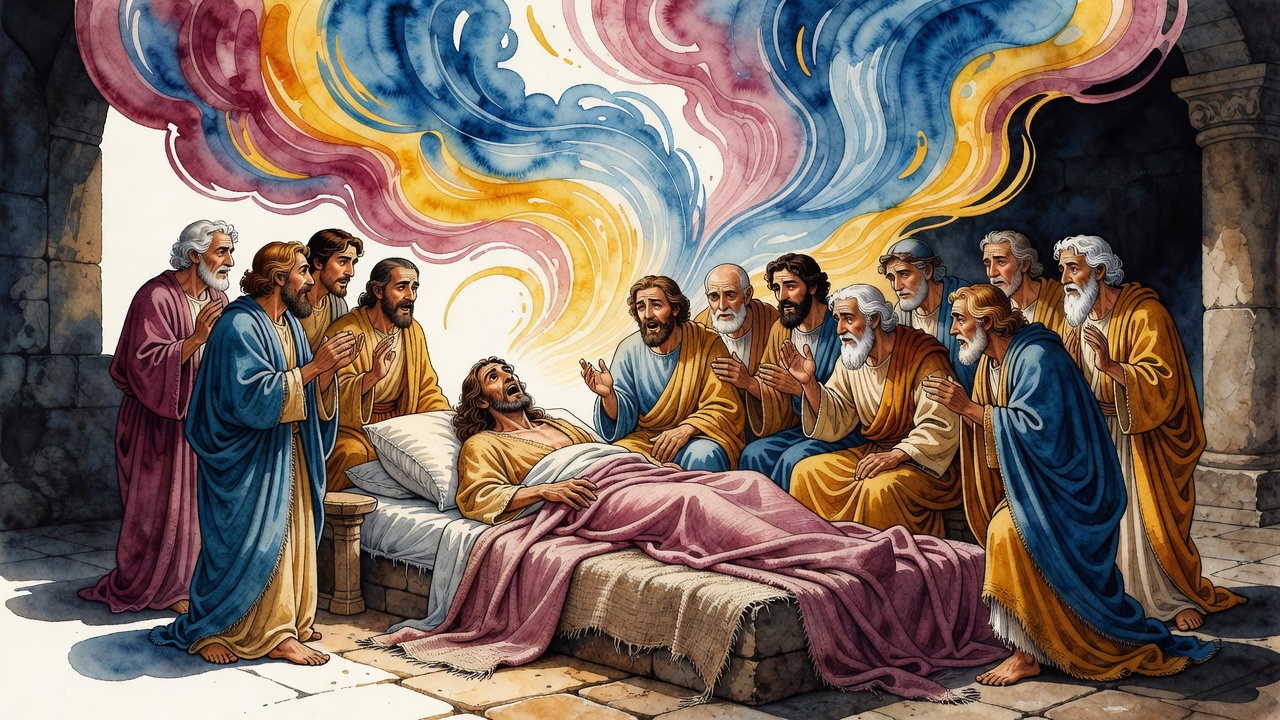
After the blessing, Torah is opened and David's psalm rises through Paradise. The righteous answer first. Then, from Gehinnom, the wicked answer too. Amen crosses the border no one thought a voice could cross.

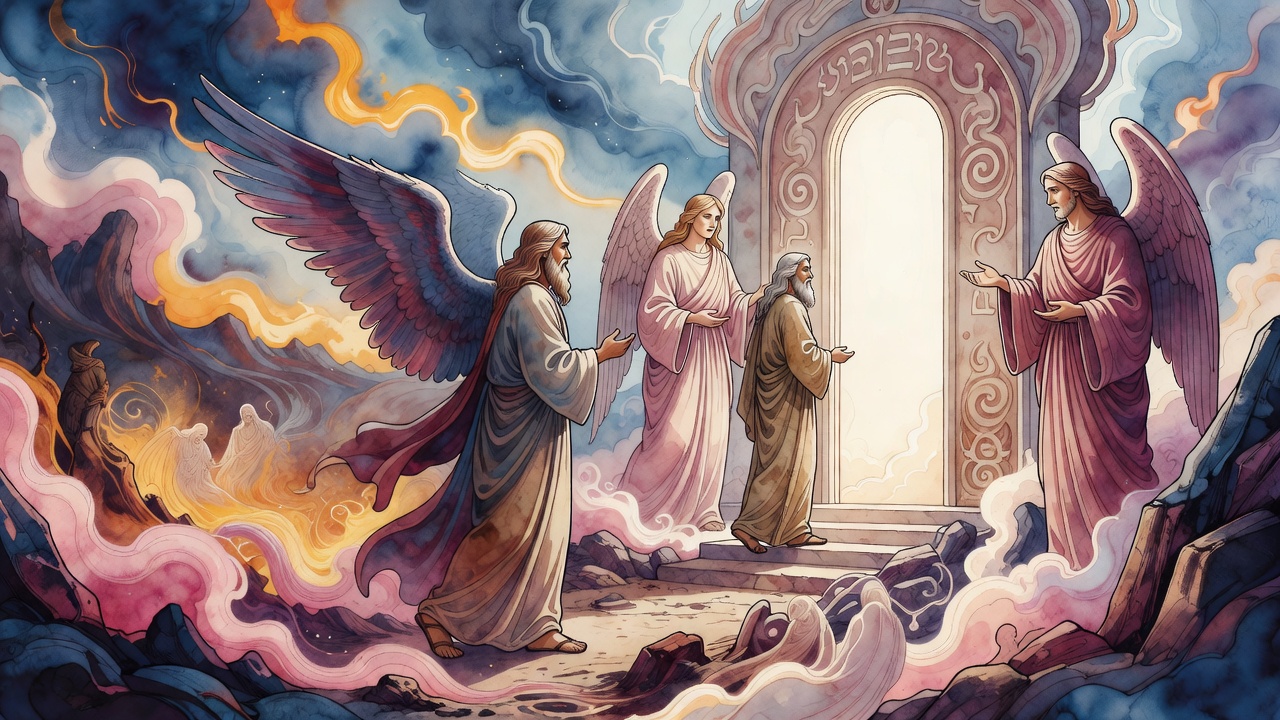
At that sound, angels move. The gates that held the condemned do not hold forever. David's cup has become wider than the table. A blessing begun among the righteous reaches the place of burning, and souls that had only known sentence are led toward Paradise.


← All myths
From the tradition

Sources

2 sources

The texts this telling draws on, in full. Open a card to read inline, or expand it for a wider, quieter read.

Legends of the Jews 4:82Legends of the Jews

Not just any dinner party, but a celestial banquet in Paradise, a feast for all the righteous souls who've ever lived. And King David? He's about to play a very special role.

In Legends of the Jews, a magnificent work compiled by Rabbi Louis Ginzberg, this banquet isn't just about eating and drinking. It's a moment of profound spiritual significance. God Himself will be there, seated on His throne, with a throne prepared for David right across from Him.

At the end of this incredible meal comes the time to say grace, the birkat hamazon. And who gets the honor of leading the blessing over the wine? God, in his infinite wisdom, starts with Abraham, the father of the Jewish people. "Pronounce the blessing," God says, "you who are the father of the pious of the world."

Abraham demurs. "I am not worthy," he replies, "for I am also the father of the Ishmaelites, who kindle God's wrath." It's a fascinating glimpse into the complexities of lineage and responsibility, isn't it? Even the patriarch Abraham acknowledges his own limitations.

Next, God turns to Isaac, the son who was bound upon the altar, a symbol of ultimate sacrifice. Surely, he is worthy? But Isaac, too, declines. "I am not worthy," he says, "for the children of my son Esau destroyed the Temple." The weight of history, of future generations’ misdeeds, presses even on the most righteous.

Then comes Jacob, the father of the twelve tribes, the man who wrestled with angels. God says, "Do thou speak the blessing, thou whose children were blameless." But Jacob hesitates, explaining that he was married to two sisters at the same time, something later forbidden by the Torah. It's a reminder that even those closest to God aren't perfect, and that laws evolve over time.

Moses, the lawgiver himself, is next. "Say the blessing," God urges, "for thou didst receive the law and didst fulfil its precepts." Yet Moses, too, refuses. "I am not worthy to do it," he answers, "seeing that I was not found worthy to enter the Holy Land." The man who led the Israelites out of Egypt, who spoke to God face to face, feels unworthy because of a past transgression.

Even Joshua, who led Israel into the Promised Land and faithfully followed God's commands, declines the honor because he was not blessed with a son.

Finally, God turns to David. "Take the cup and say the blessing," He says, "thou the sweetest singer in Israel and Israel's king." And David, the shepherd-turned-king, the poet, the warrior, accepts. "Yes, I will pronounce the blessing," he replies, "for I am worthy of the honor."

What makes David worthy when the others, seemingly more righteous, felt they were not? Perhaps it's his humility, his constant seeking of forgiveness, his passionate love for God, expressed in the Psalms he composed. He knew his flaws, yet he never let them define him.

The story continues. God then takes the Torah and reads passages from it, and David recites a psalm. And here's where it gets truly amazing: both the righteous in Paradise and the wicked in hell join in with a resounding "Amen!" The Zohar, a central text of Kabbalah, tells us that even the souls in Gehenna, in hell, have a spark of good within them.

And because of that shared Amen, God sends his angels to lead the wicked from hell to Paradise. It’s a powerful image of redemption, of universal reconciliation.

So, what does this all mean? Is it just a beautiful story? Perhaps. But it also speaks to the idea that worthiness isn't about perfection. It's about striving, about acknowledging our imperfections, and about connecting with something greater than ourselves. It's about finding our voice, our song, and offering it to the world, just like David. And maybe, just maybe, that's enough to earn a seat at the ultimate banquet.

Full source
Midrash Tehillim 38:1Midrash Tehillim

What does it really mean to ask for correction, but not destruction?

"O Lord, in Your anger rebuke me not," David cries out. This isn't just a personal lament; it's a sentiment echoed throughout Jewish tradition. As we find in (Jeremiah 10:24), there's a yearning for justice tempered with compassion: "Correct me, O Lord, but with justice; not in Your anger, lest You bring me to nothing." It's the understanding that discipline, or mussar, is necessary, even good, but it shouldn't lead to annihilation. I'm willing to accept discipline, but not to the point of death. We see a parallel in (Proverbs 23:13), "Do not withhold discipline from a child; if you punish them with the rod, they will not die."

David even acknowledges the value of suffering itself. As it is written in (Psalm 94:12), "Happy is the man whom You instruct, O Lord, and teach out of Your law." It's a challenging idea, isn't it? That suffering can be a source of learning and growth. But, as the Midrash (rabbinic interpretive commentary) points out, we're only human. We’re short-tempered; we don't always have the strength to endure these trials. "Master of the universe," David pleads, "we are sinners, and You are angry with us. Because of this, we are not redeemed but remain captive, one by one." It’s a powerful image of being trapped, not just by external forces, but by our own shortcomings.

The Midrash Tehillim offers a beautiful analogy here, comparing God to a weaver and us to the warp threads. A skilled weaver knows how much tension the threads can bear. Too much force, and they break. As it is written in (Micah 7:19), "He will again have compassion on us, and subdue our iniquities." The weaver weaves with strength when he can, and gently when he cannot. We are the warp and You are the weaver, but we do not have the strength to withstand either wrath or anger. "What profit is there in my blood, when I go down to the pit?" David asks in (Psalm 30:10). What good is destruction?

And it’s not just about the force of the blow, but also the aim. The Midrash notes that someone unskilled might strike blindly, causing unnecessary damage. But a skilled hand knows where to strike to correct without causing lasting harm. "What are these wounds between Your arms?" we ask in (Zechariah 13:6). Paradoxically, these wounds, these moments of discipline, can lead to a deeper love and connection with the Divine. "There is no healing in my flesh because of Your indignation."

Rabbi Yitzhak offers a striking parable. Imagine someone drowning in a river, their legs sinking, the current overwhelming them. And then someone scolds them for lifting their legs! It's absurd. Similarly, the Holy One, blessed be He, said to Israel, 'Why do you say (Psalms 130:3), "If You, God, were to keep track of iniquities, who could stand?" Let the wicked one turn from his evil ways, abandon your wicked deeds, and I will have mercy on you.' God isn't interested in simply tallying our sins. He wants us to turn away from destructive paths.

The Midrash connects this idea to Abraham, our patriarch. Rabbi Hanina bar Pappa said (Psalms 40:6), 'Your wonders and thoughts which are directed toward us.' Abraham cleared away the obstacles that prevented us from standing in the world. Rabbi Shimon bar Abba said in the name of Rabbi Yochanan, 'The Holy One, blessed be He, showed Abraham the exiles and so forth,' as it is written in Psalm 92. Abraham, through his faith and actions, paved the way for our redemption, for our ability to stand strong in the face of adversity.

So, what does it all mean? Perhaps it's a reminder that discipline, suffering, and even divine anger are not necessarily punishments, but opportunities. Opportunities for growth, for repentance, for a deeper connection with something larger than ourselves. It’s a call to recognize our own limitations, to ask for mercy and understanding, and to strive to be worthy of the compassion we seek. Can we find the wisdom to learn from our struggles, to weave our lives with strength and resilience, and to trust in the guiding hand of the Weaver?

Full source