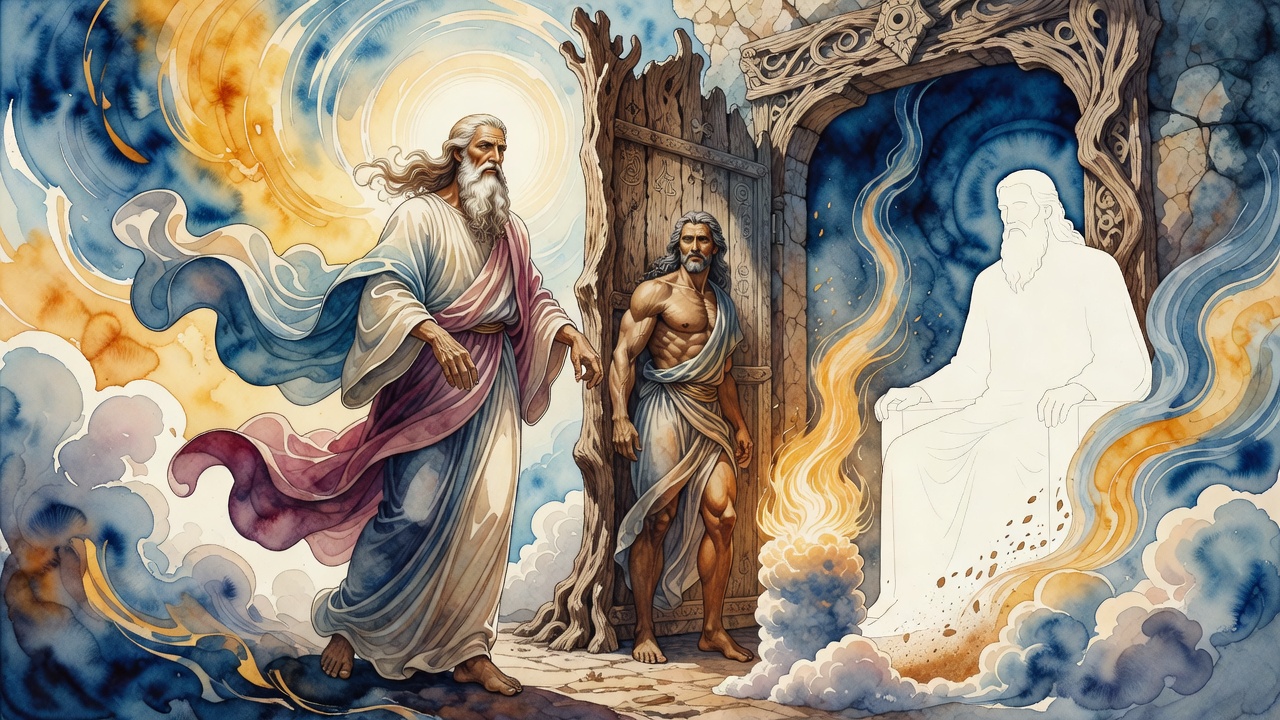
Moses Stood at the Gate of Paradise and Was Welcomed by Name
Gabriel led Moses through Gehinnom (afterlife of judgment) first, then to Paradise, where two angels at the gate said something no living visitor had ever.
Table of Contents
 Click for full size
A Voice Sent Him Down
Moses had climbed through seven heavens and stood in front of the treasuries, and he was ready to go home, when the voice stopped him. You have seen the throne of My glory. Now you will see the other two places.
Two of them had been made ready in the world, one for the upright and one for the guilty, and no living man had walked through either and come back to say what was in them. Gabriel was sent to take him. Gabriel took him to Gehinnom (the place of punishment after death) first, because a man who has just been standing at the throne needs the other end of the ledger while the glory is still on him.
He Would Not Go In
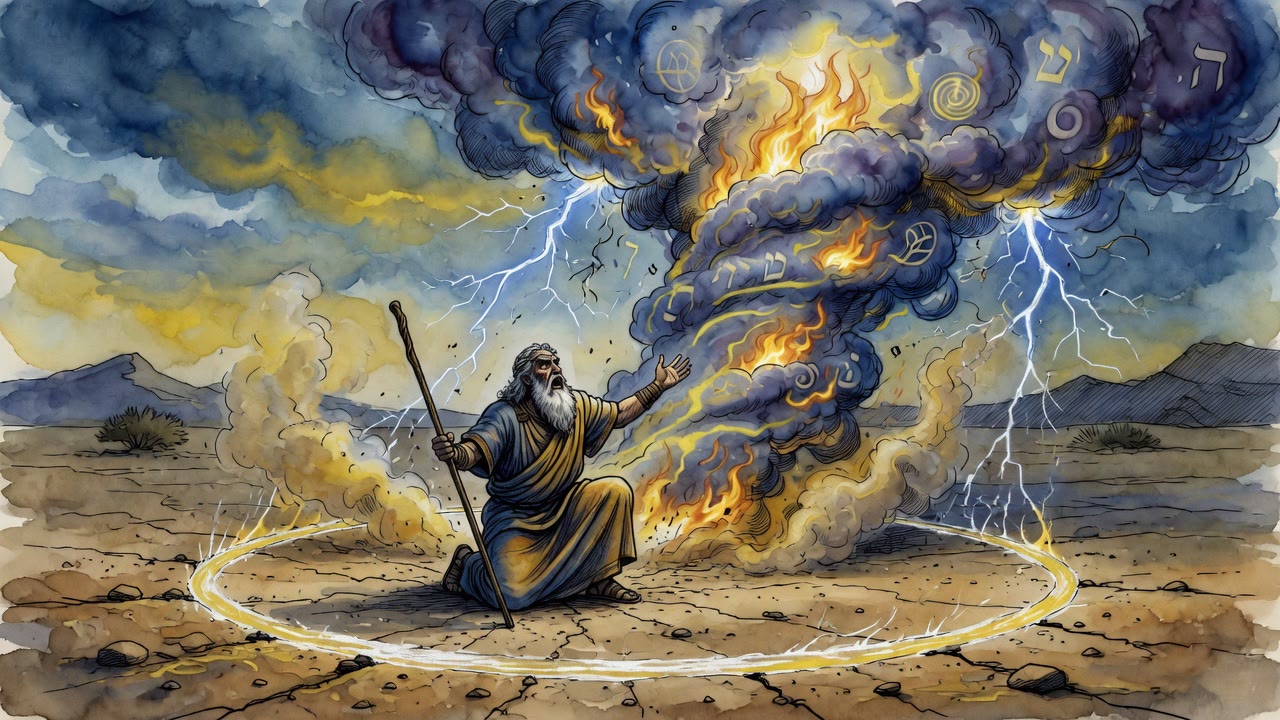
At the gate he stopped and would not step over. He had stood in Pharaoh's hall and on the floor of a split sea and under a mountain on fire, but the heat coming out of that doorway was a different kind of heat, and he said plainly that he could not go into a furnace like that one.
Gabriel told him a fire would go down with him that burned hotter than anything inside, and that fire would not touch him. So Moses put a foot over the threshold, and the flames pulled back from him five hundred parasangs in every direction, the whole place recoiling like a dog from a stick, as if the ground itself had checked his name against a list and found he was not on it.
Nasargiel, the angel set over Gehinnom, came to see what had made his fire run, and demanded to know who this was and what he thought he was doing here.
Moses gave him a man's name and a father's name. I am the son of Amram. And I have not come to stay, only to see the works of my Maker.
What Was Hanging in There
Nasargiel showed him, and every punishment was cut to fit the thing that earned it. Men hung by their eyelids because of what those eyes had gone looking for. Men hung by their ears because of what those ears had leaned in to hear. Men hung by the tongue, men hung by the hands. Women hung by their hair and by their breasts.
Deeper in, men hung head down under worms five hundred parasangs long, and scorpions with a thousand stings apiece worked over the ones who had sworn falsely and broken the Sabbath and pushed a widow's case aside. In the pit called Tit ha-Yaven the sinners stand in mud to the waist while chains of fire come down across their backs, and their teeth are broken with stones of fire and grow back to be broken again. Others were laid half in flame and half in snow at the same time, and the worms went over both halves.
Gehinnom (the realm of judgment after death) itself spoke while Moses was in it. It said it was hungry and asked to be given the souls of the pious. It was refused.
The Petition He Lost
Moses came out of there and prayed the only prayer a man could pray after that. May it be Your will, LORD my God and God of my fathers, to save me and the people of Israel from the places I have seen.
He had argued God out of a decree before. He had stood in the breach at the calf and held on until the sentence was lifted, and he knew the shape of that kind of conversation, the give in it, the place where the Holy One relents. He waited for the give.
The answer had none in it. Before Me there is no respecting of persons and no taking of gifts. Whoever does good deeds goes into the garden, and whoever does evil goes to that place.
The Gate That Said His Name
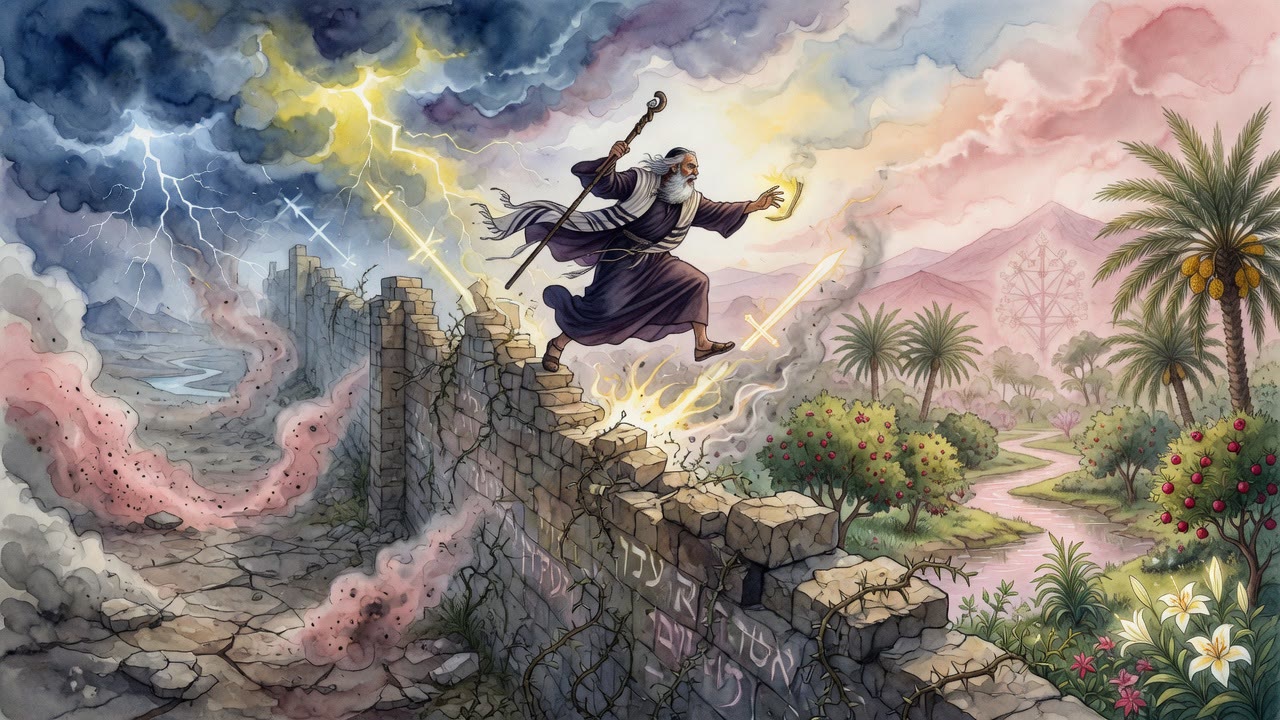
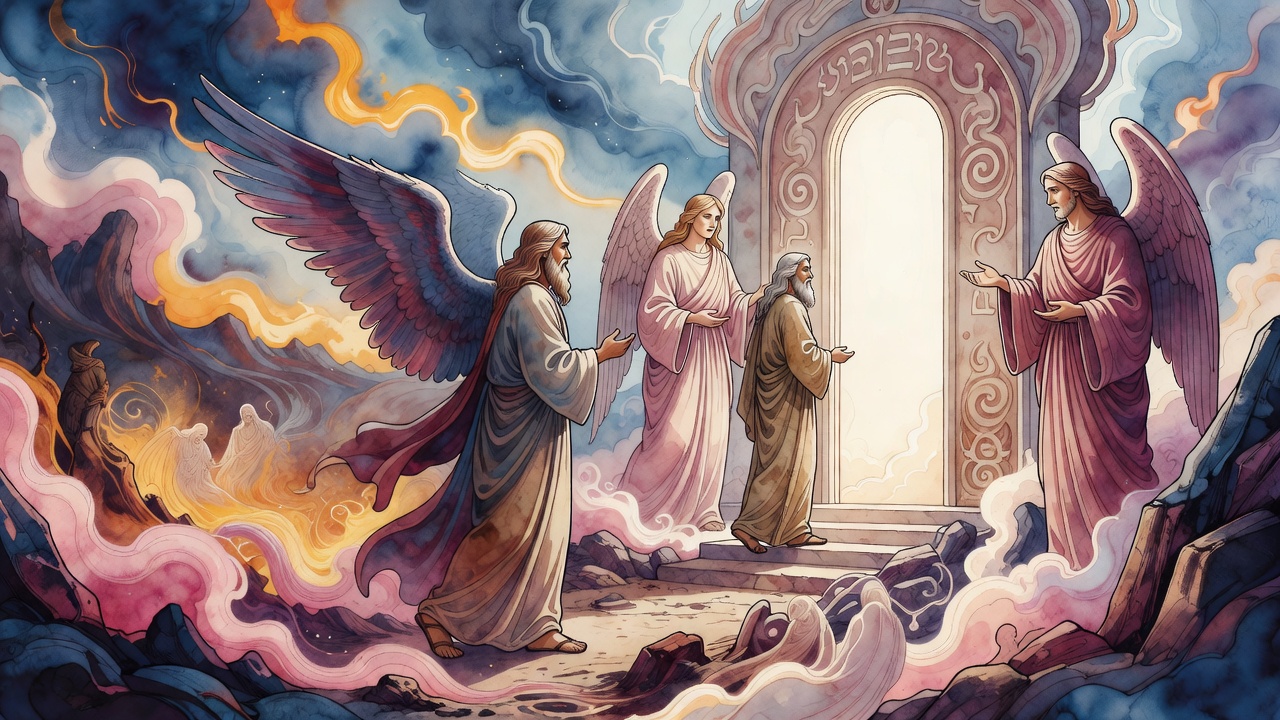
Gabriel took him across to Paradise, and two angels were standing at the gate. They looked at a living man in a body with an angel beside him and told him his time to leave the world had not come. He did not argue with them. What you say is true, he answered, but I have come to see the reward of the pious.
So they let him have it out loud, three times over. Hail, Moses, servant of God. Hail, Moses, born of a woman, found worthy to climb the seven heavens. Hail to the nation you belong to.
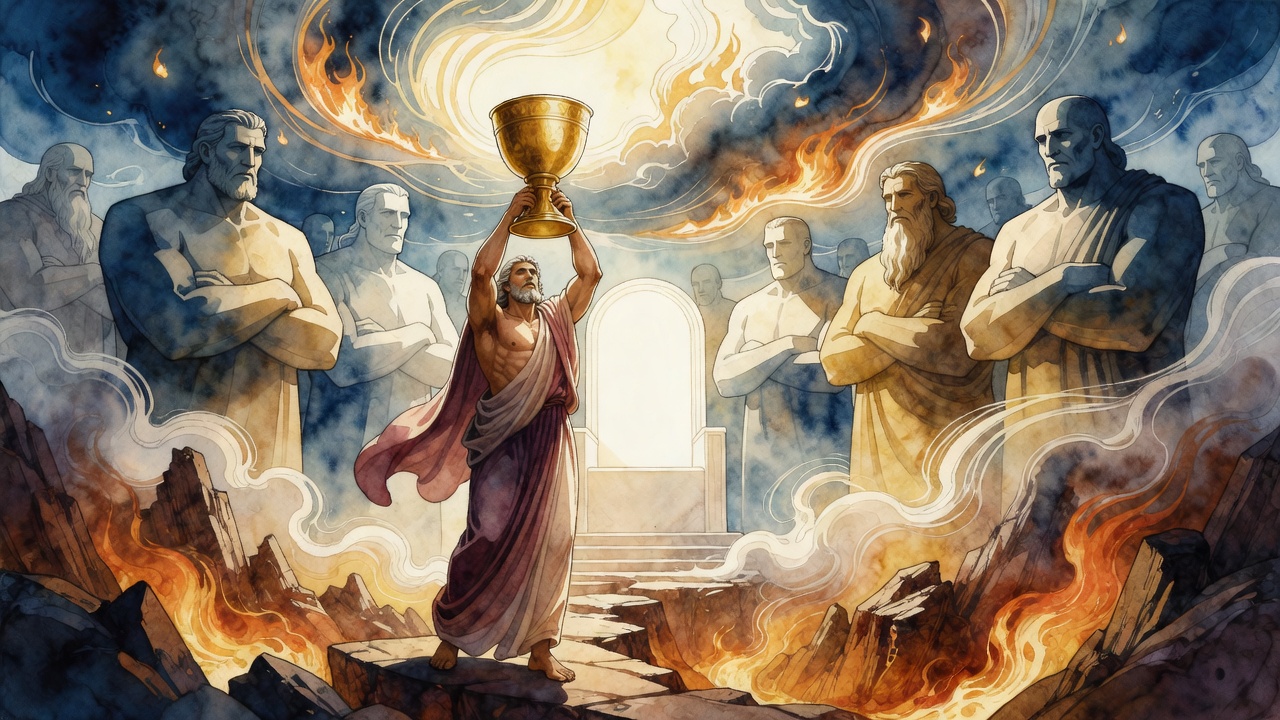
Inside, under the Tree of Life, the prince of the place came to walk him through it. Moses asked Shamshiel how big Paradise was, and the angel who runs it could not tell him. There were seventy thrones of precious stone with rings of angels around them, and the largest had a hundred and twenty angels around it and belonged to Abraham, who looked up, saw who had come in, and praised God for it. A spring came out from under the Tree and split four ways into honey and milk and wine and balsam, and the four ran on under the thrones.
Shamshiel named the seats by their material as they went. Pearl for the ones who spent their lives in Torah. Precious stone for the pious, ruby for the just, gold for the ones who turned back late, silver for righteous converts.
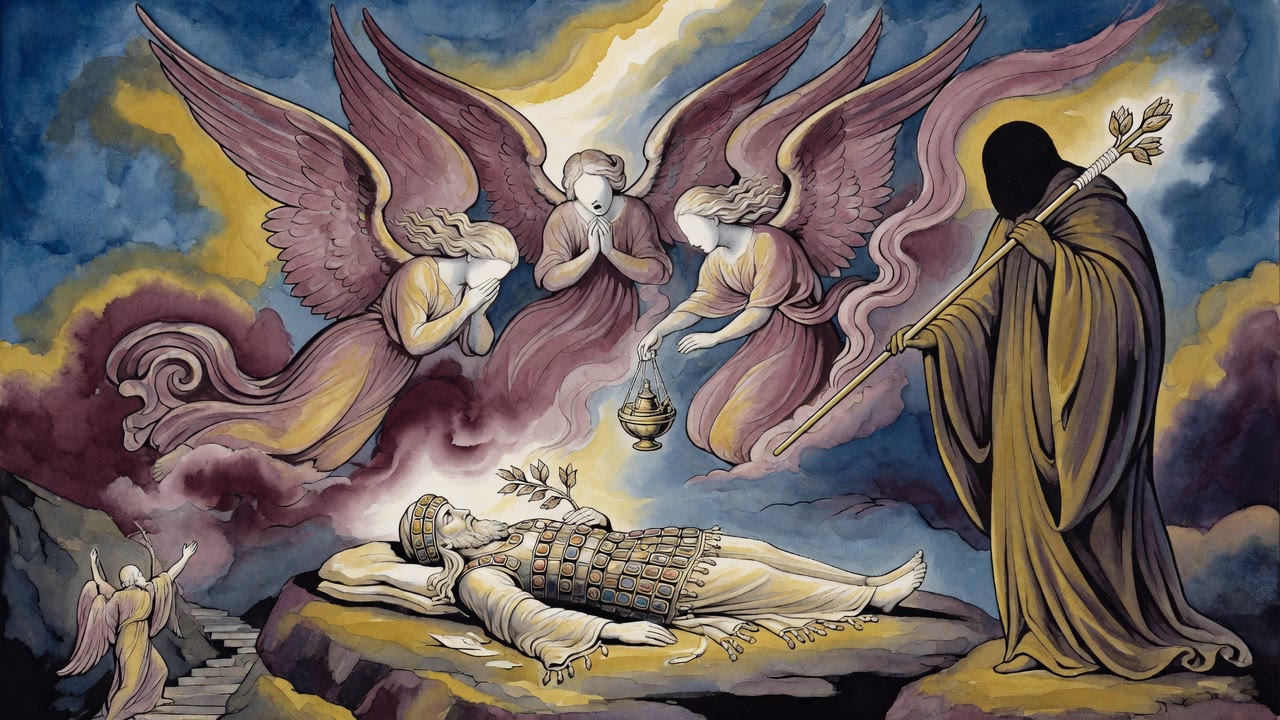
And then a throne of copper, with nobody in it, kept for a sinner whose son had turned out well.
← All myths