36 myths · Page 1 of 2
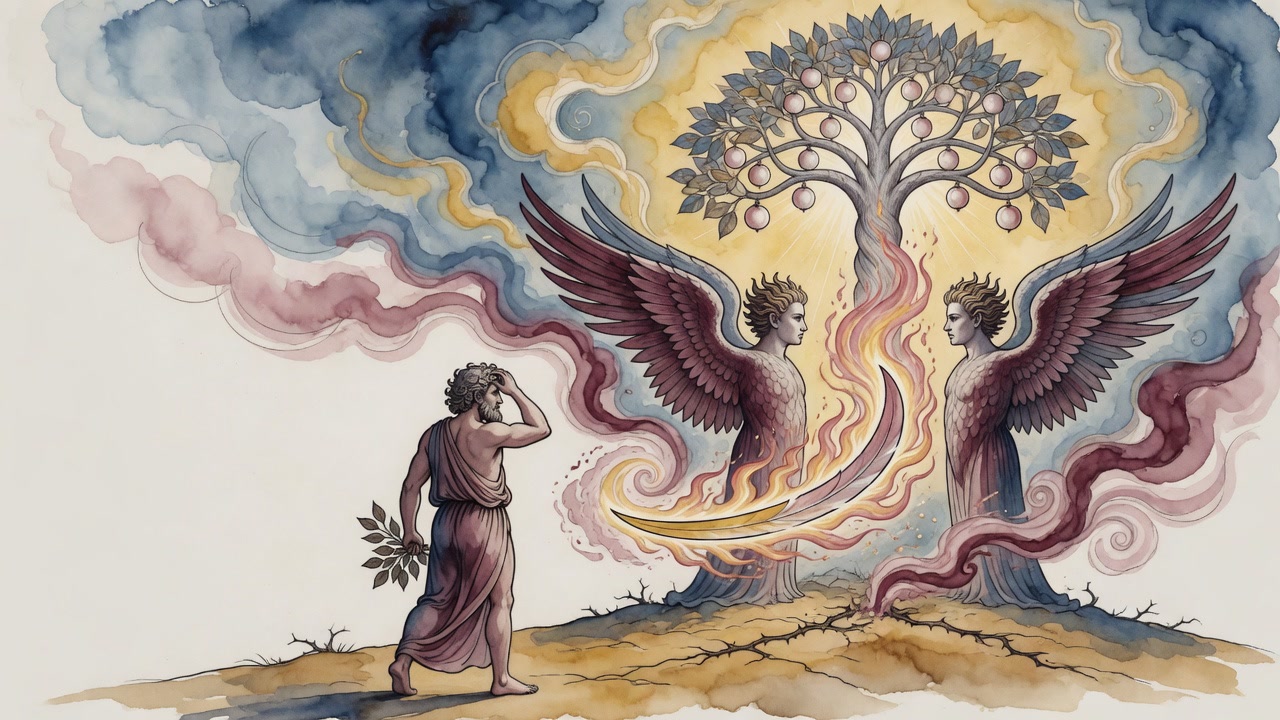
Adam stood east of the garden and watched a blade of fire turn without a hand. Two keepers breathed. The path behind them was not sealed.
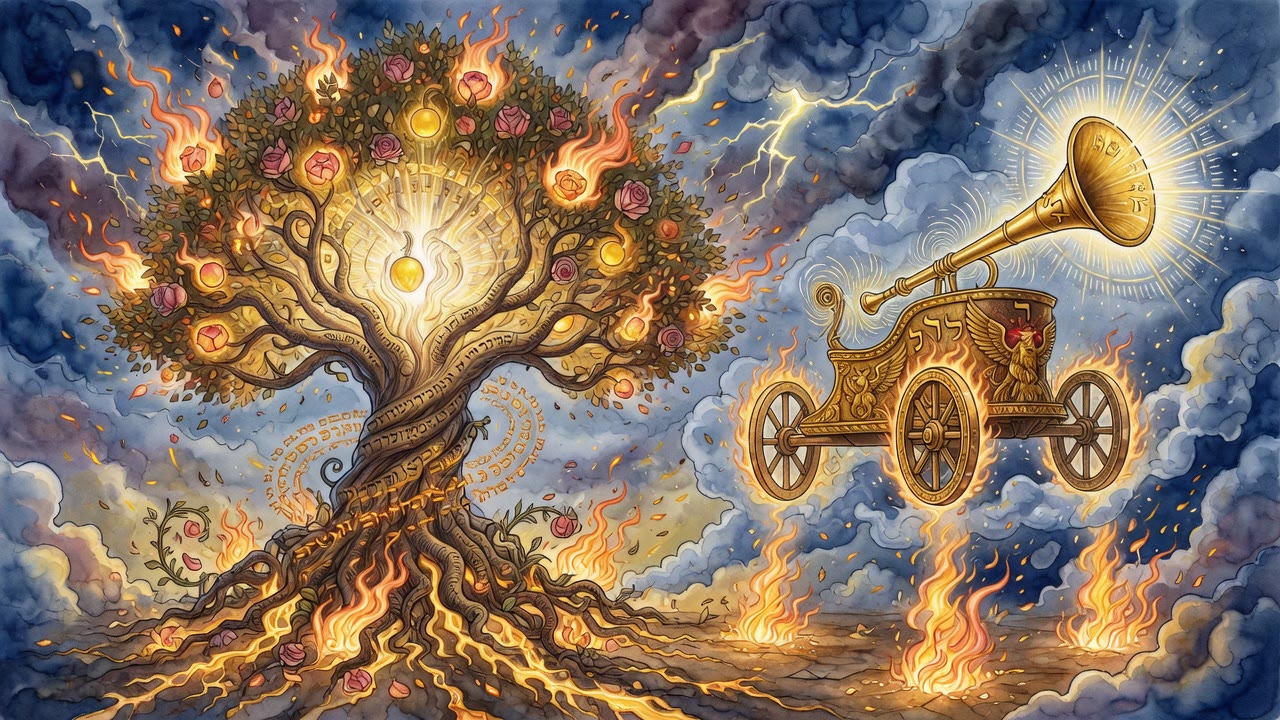
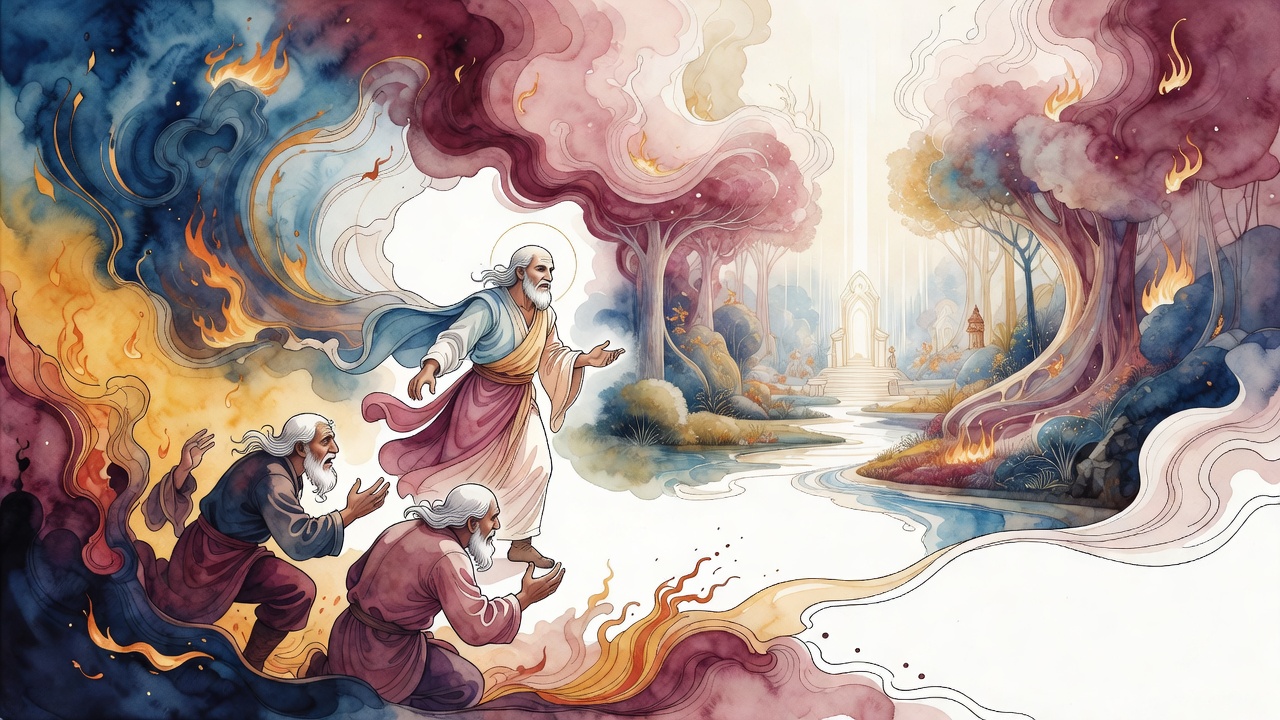
A trumpet splits the sky over Eden. A chariot of cherubim descends. Adam crouches in the leaves while the dead trees burst alive around the Tree of Life.
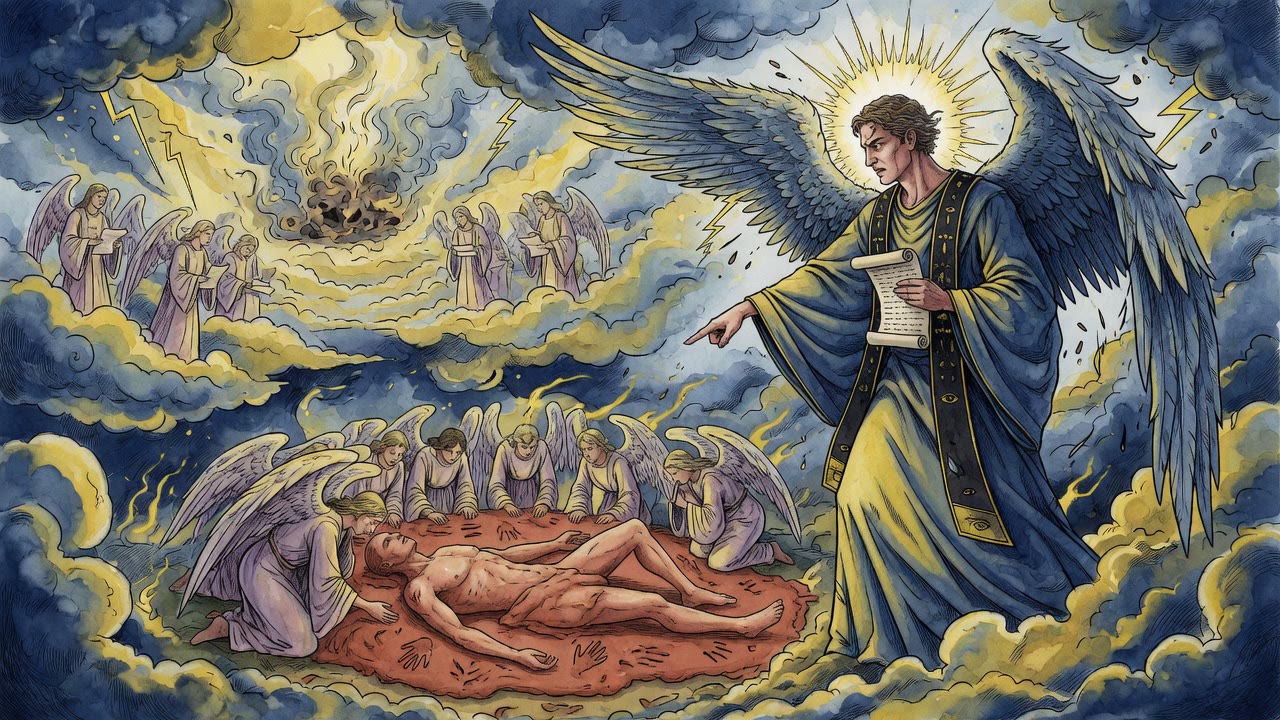
When God formed Adam and commanded the angels to honor him, Ha-Satan, the Accuser, refused. Formed from fire, he would not bow before dust.
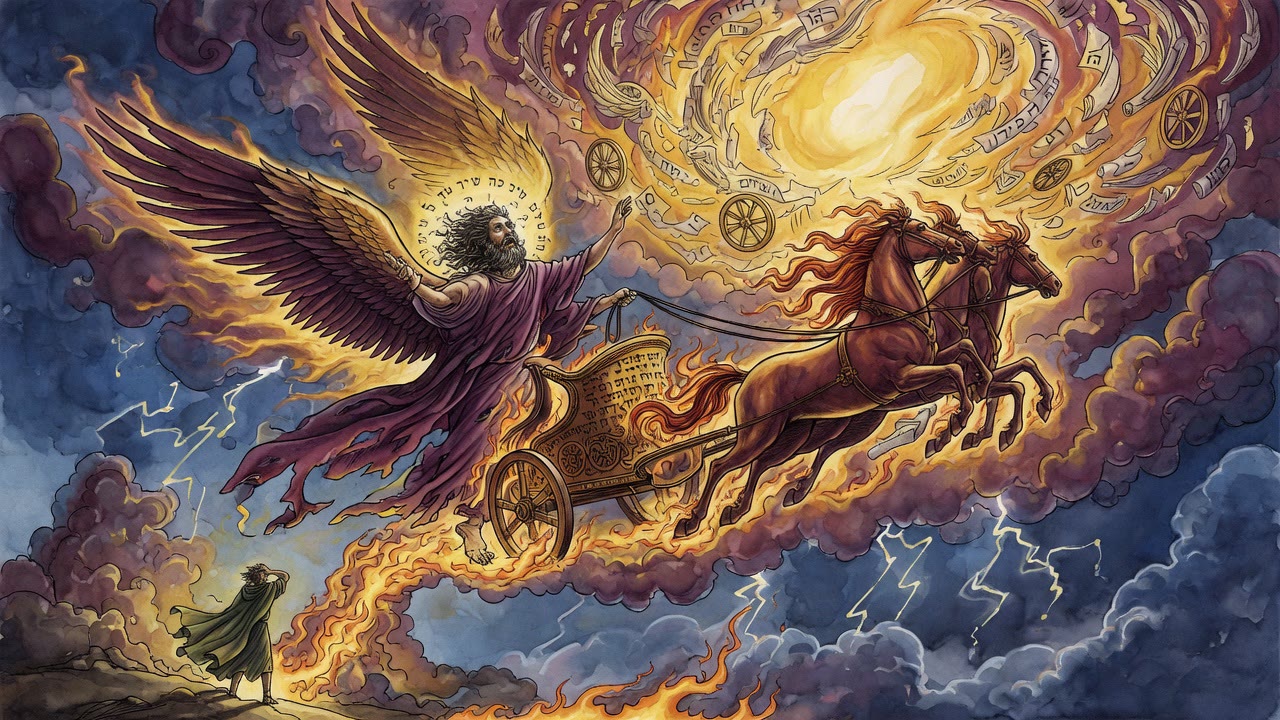
The fiery chariot took Elijah to heaven and that was not the end. He became Sandalphon, the angel who weaves Israel's prayers into garlands for God.
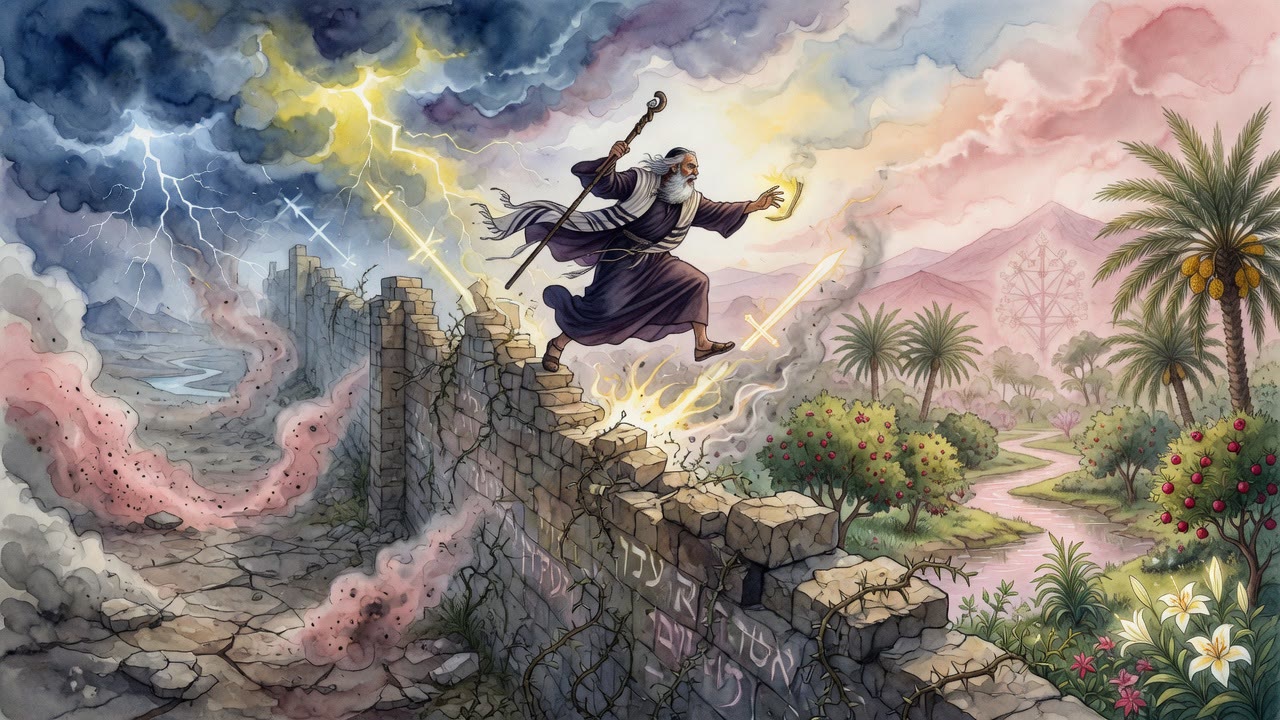
Granted one final wish by Heaven, Joshua ben Levi asked to see his place in Eden, then took the angel's knife and leaped over the wall alive.
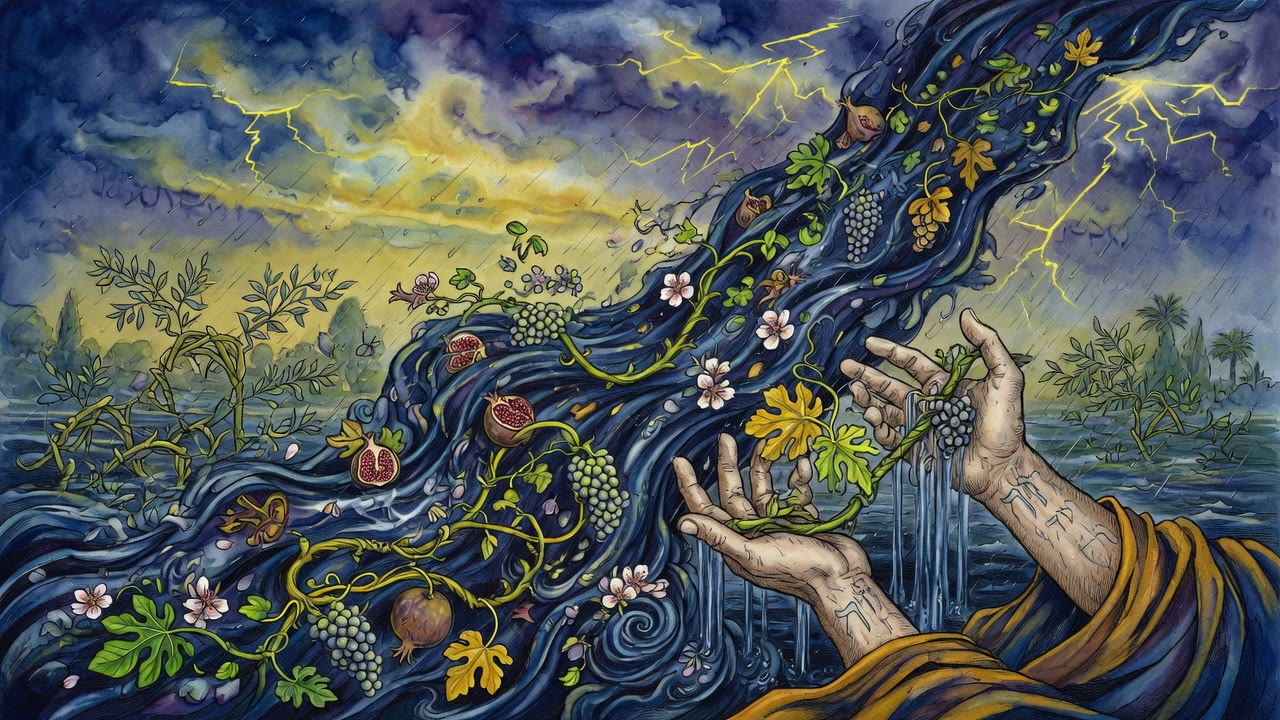
The flood that drowned the world tore a vine loose from the garden of Eden and carried it downstream, straight into Noah's waiting hands.
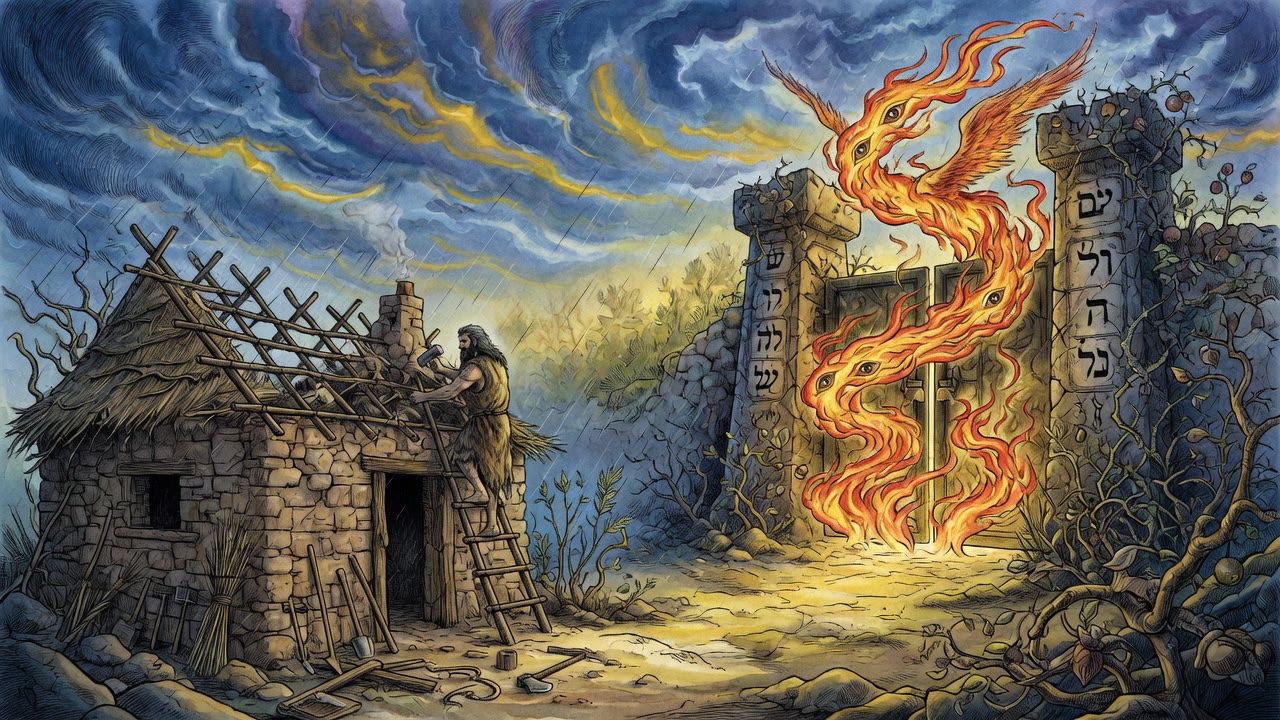
The beasts lowered their heads to the first man. He refused the bow. After the gate shut, he would not walk farther than the nearest mountain.
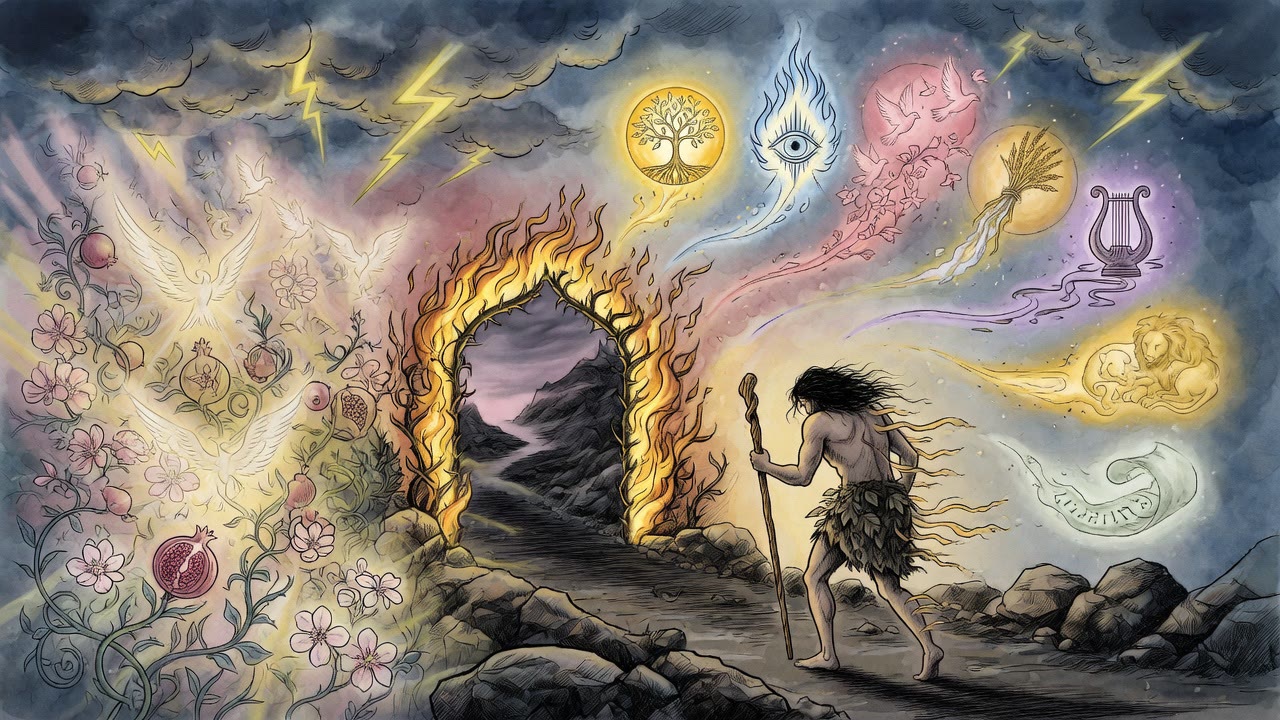
The angels nearly bowed to Adam, mistaking him for God. He was formed in the first hour and driven out by the twelfth. Then his skin stopped glowing.
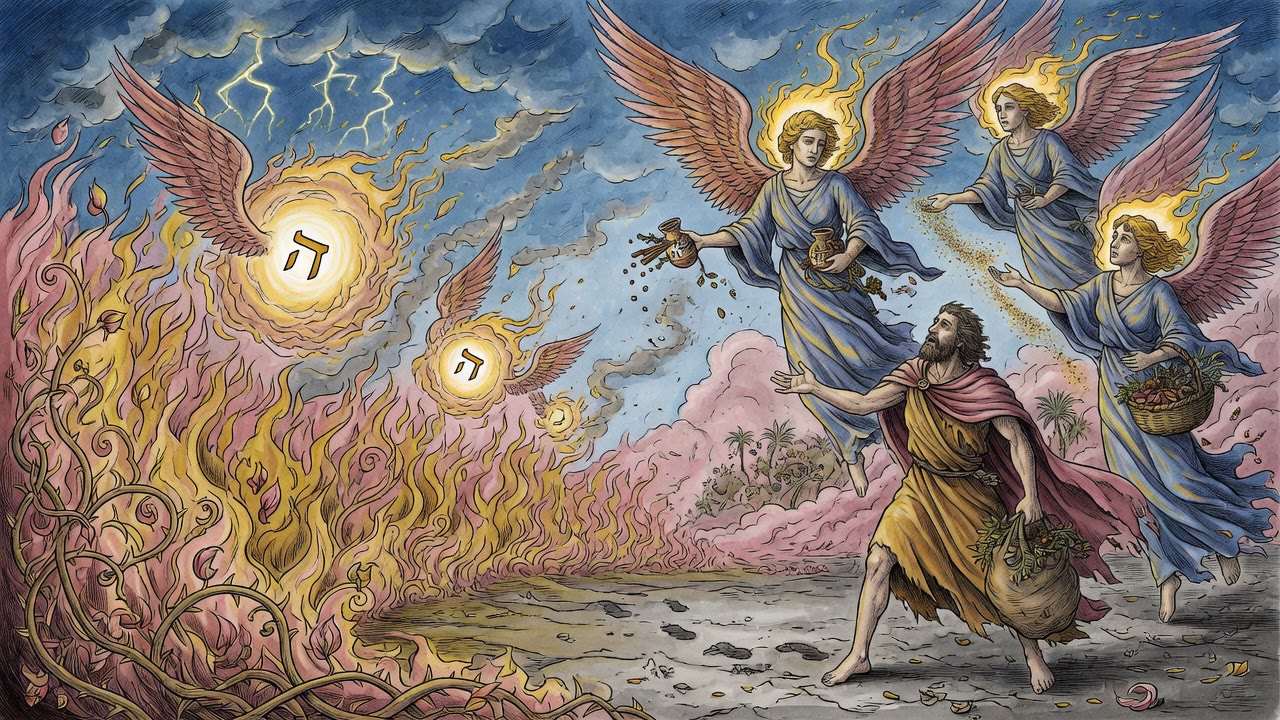
Driven from the Garden in the twelfth hour, Adam wept and begged the angels for one thing before the gates closed: spices, so he could still pray.
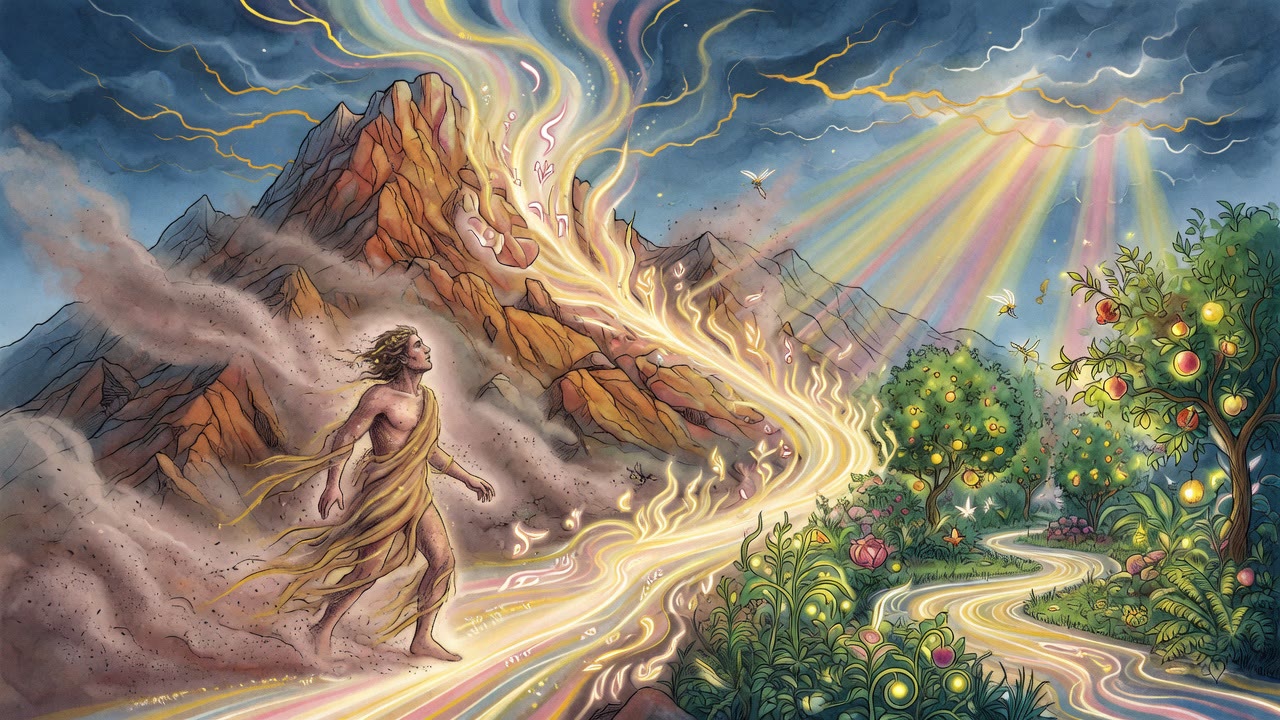
Angels brought Adam his meat and his wine. Animals ate out of his hand and understood every word he said. All of it ran backward in a single afternoon.
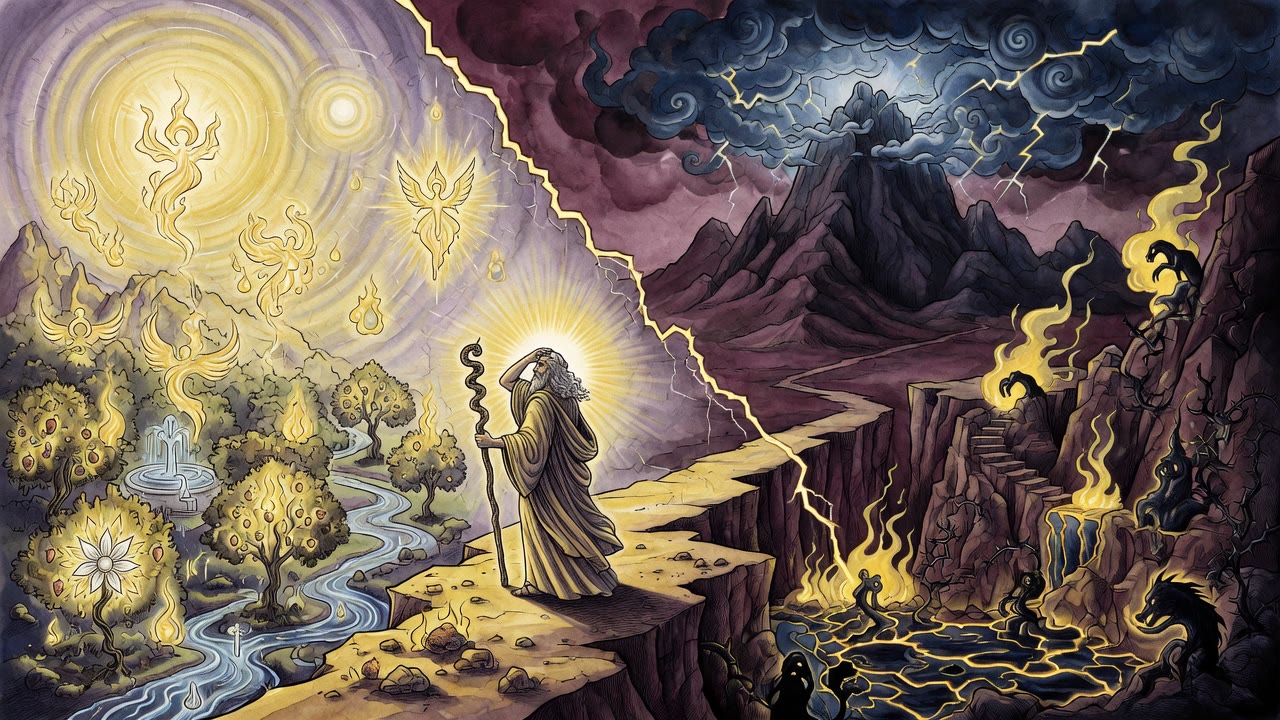
Before Moses left heaven with the Torah, God showed him both Paradise and Gehenna (afterlife of judgment). The fires retreated when he approached.
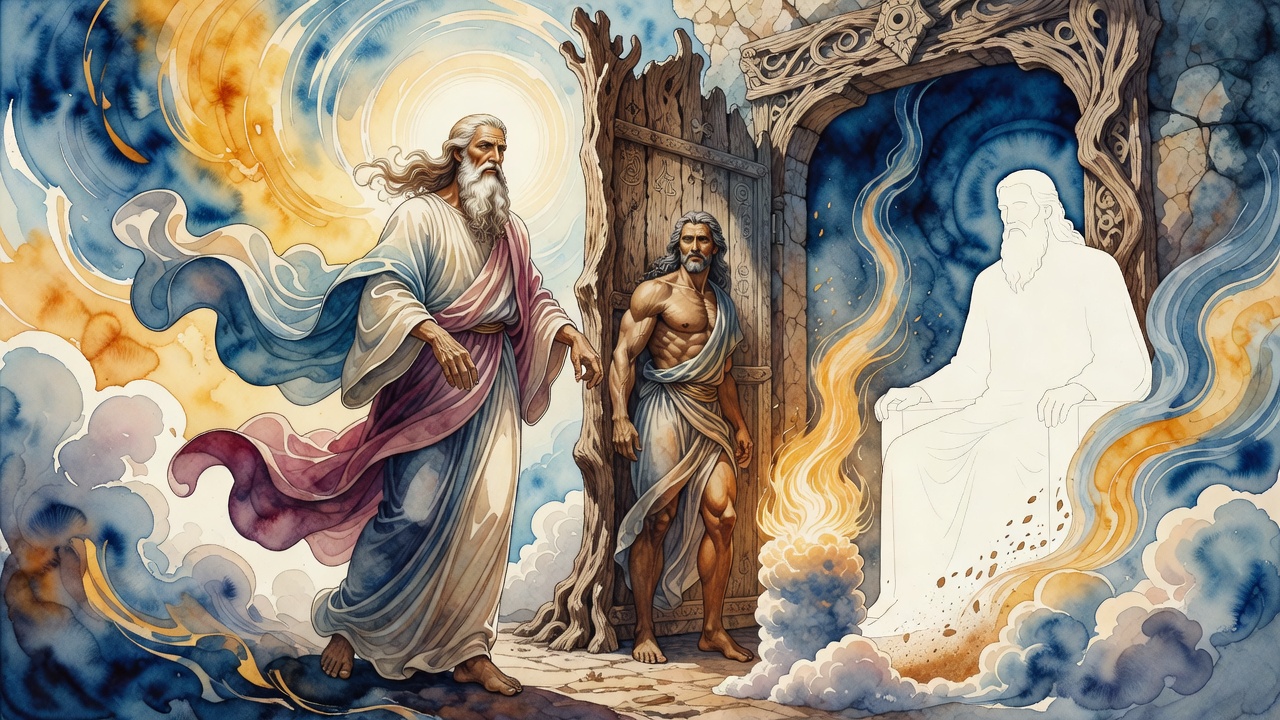
Moses arrived at Eden's gate with his face still shining, and Adam was waiting at the threshold with a claim no mortal had ever answered.
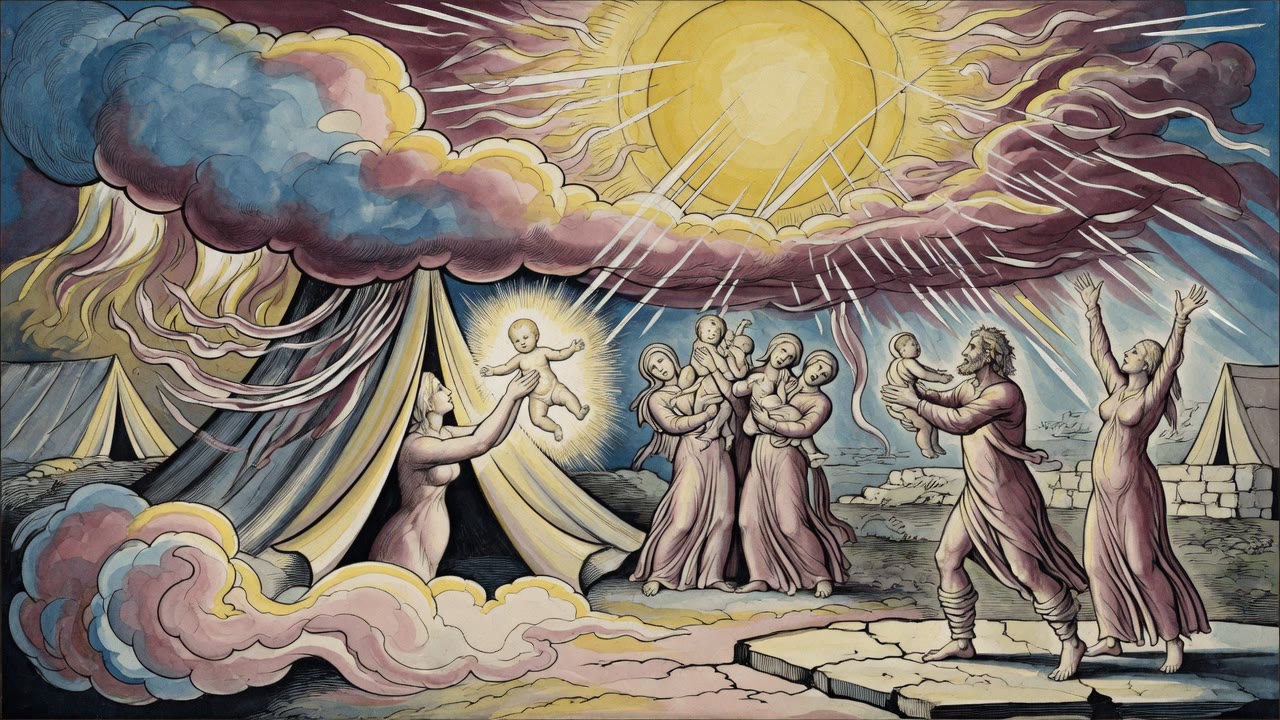
Isaac entered the world and barren women held children, broken bodies rose whole, and the old light of Eden flashed across the sun.
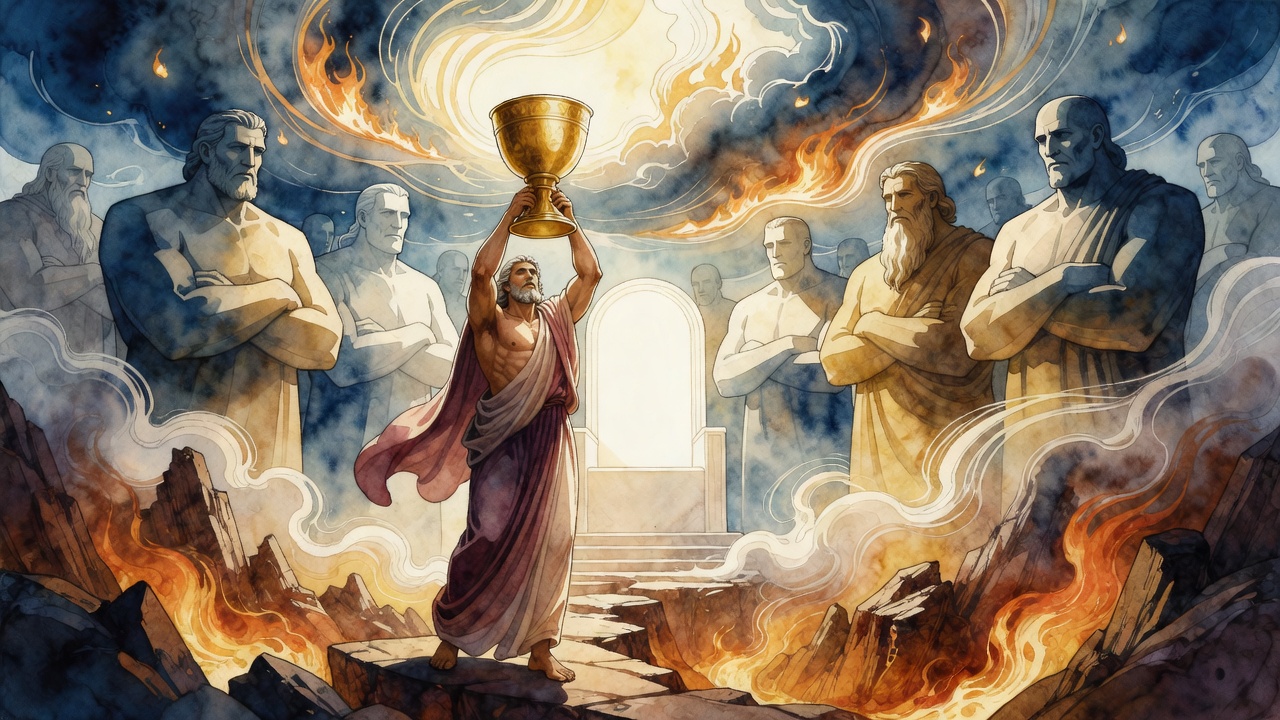
The meal in Paradise was over. A cup of blessing waited for a mouth that could praise after judgment. Abraham set it down.
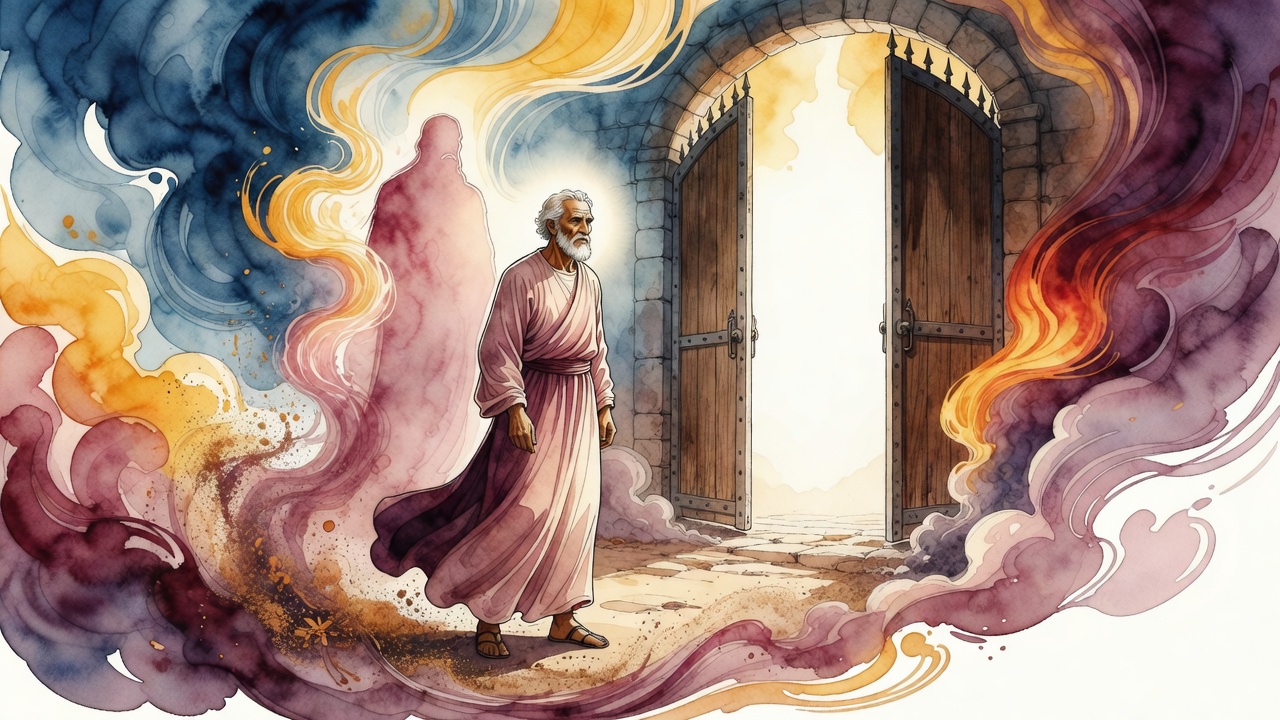
Every back in the courtyard bent when Haman crossed it. The servants crowded the one man still standing and asked why. He told them Haman had a mother.
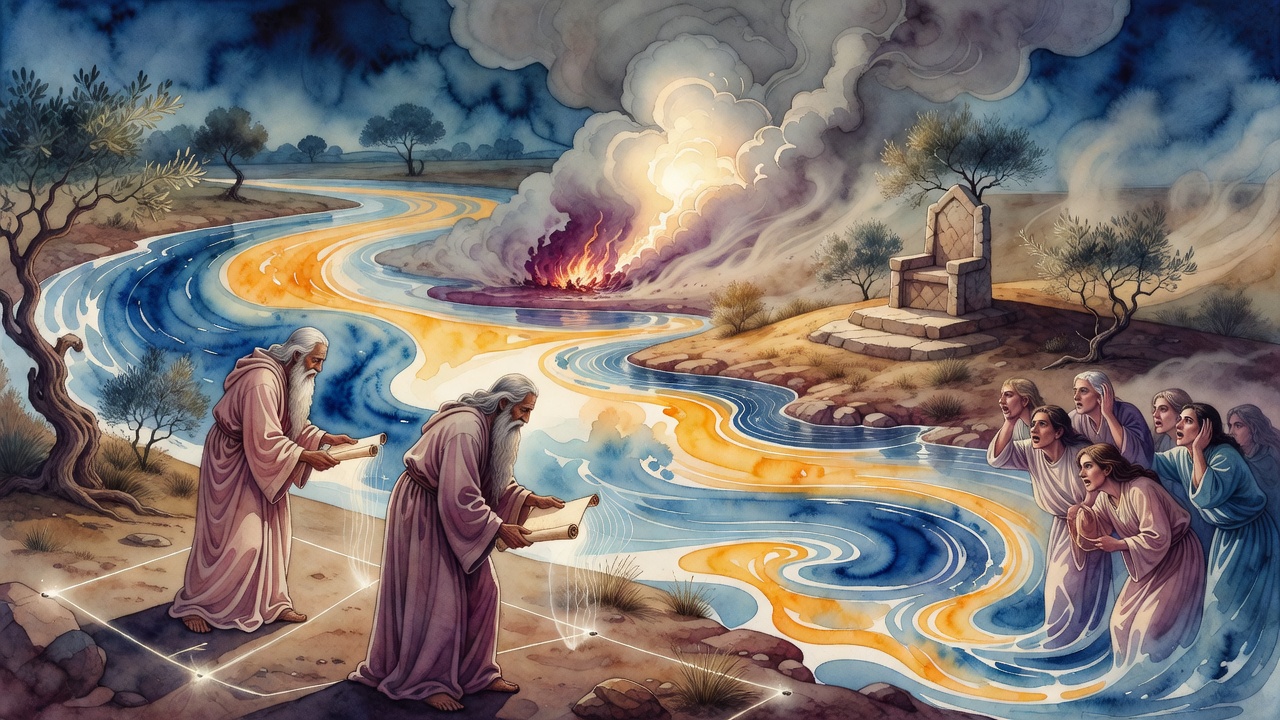
Two sages measured Eden with verses and field units, while the mystics heard a hidden river carrying wisdom into the garden.
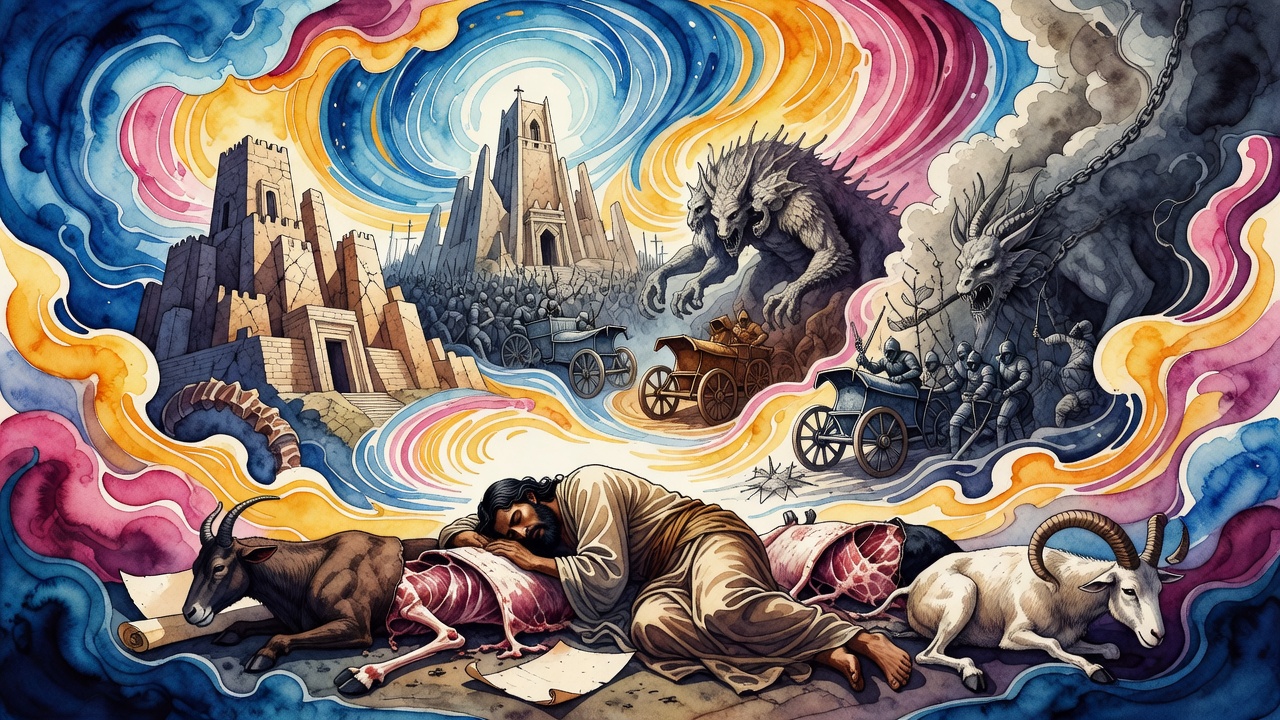
The furnace smoked. The torch burned. God asked Abram to choose Gehinnom or the stranger's rule for every child after him.
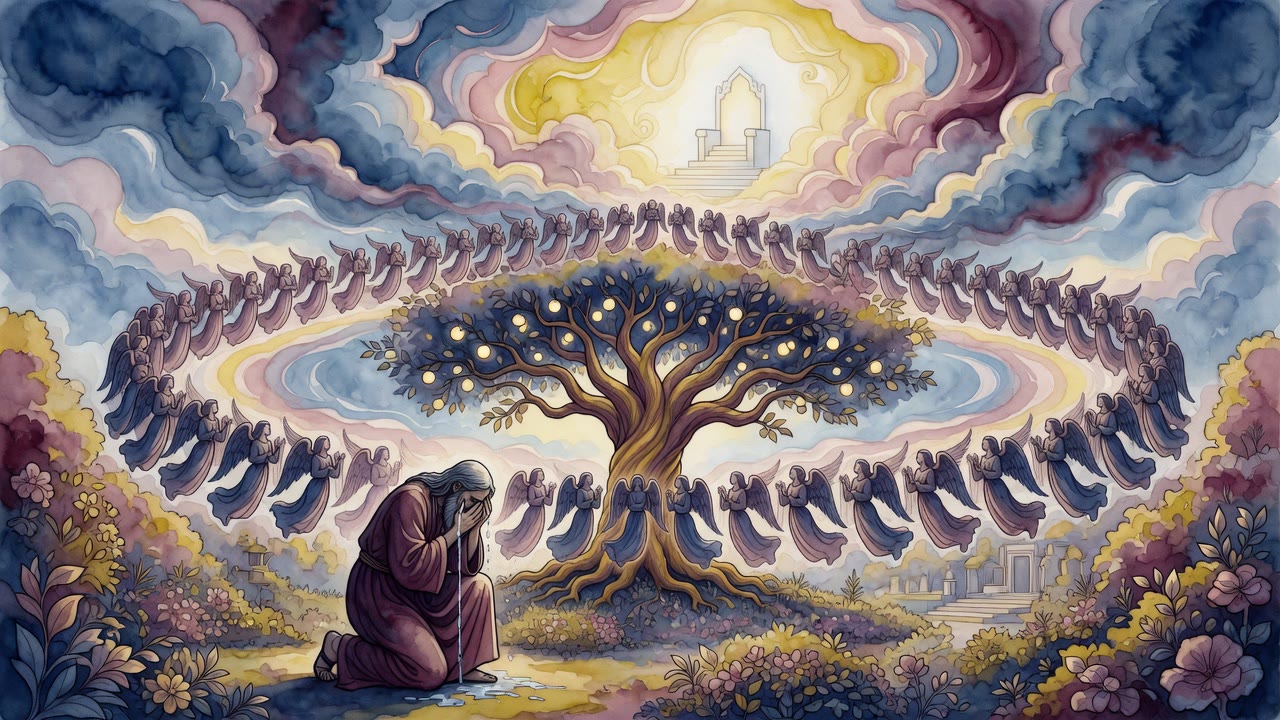
Sixty groups sat under a tree five hundred years thick. Adam stood outside with spices. The garden did not open for him again.
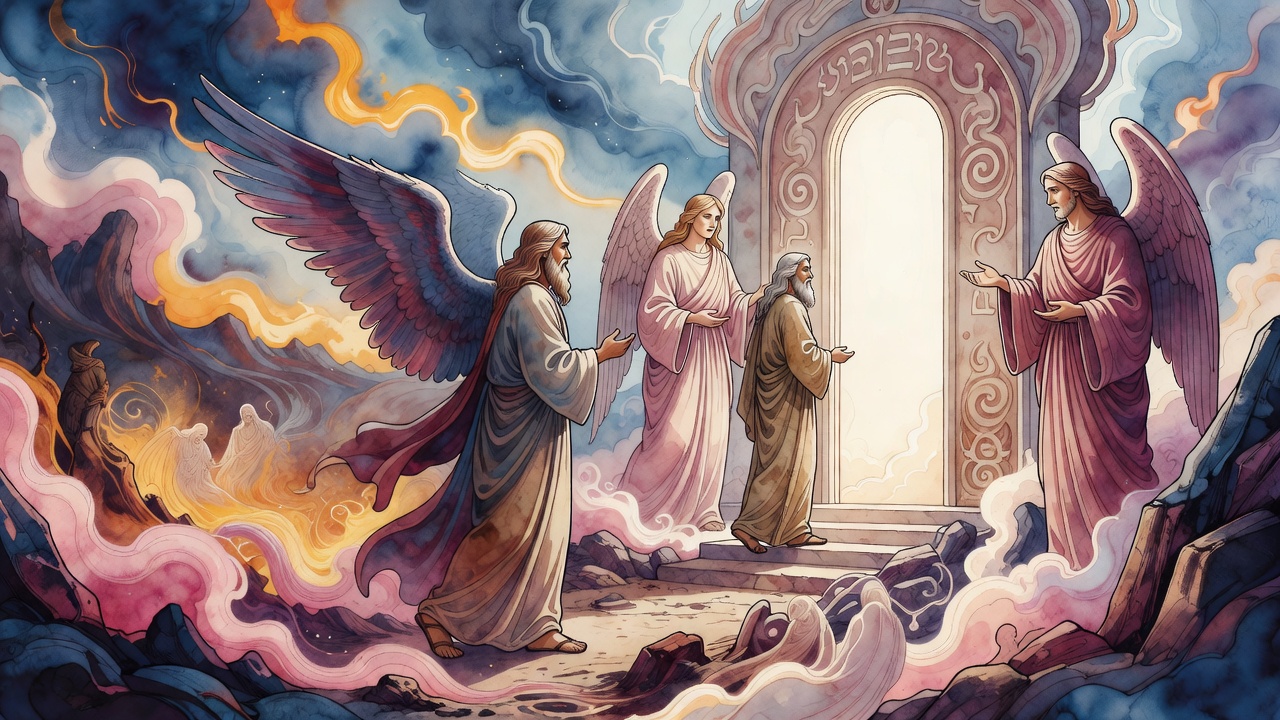
Gabriel led Moses through Gehinnom (afterlife of judgment) first, then to Paradise, where two angels at the gate said something no living visitor had ever.
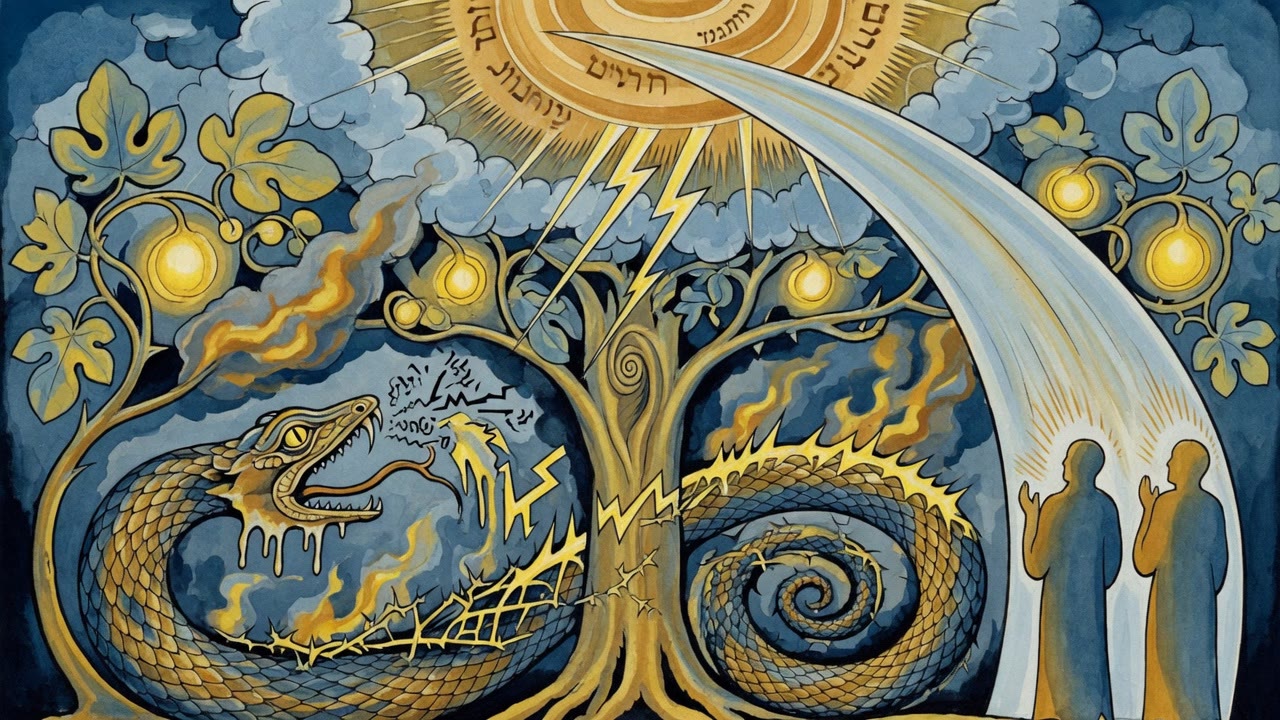
The Angel of Death came with orders to be generous. Rabbi Joshua ben Levi borrowed the angel's blade, vaulted the wall of Eden, and made heaven honor his oath.
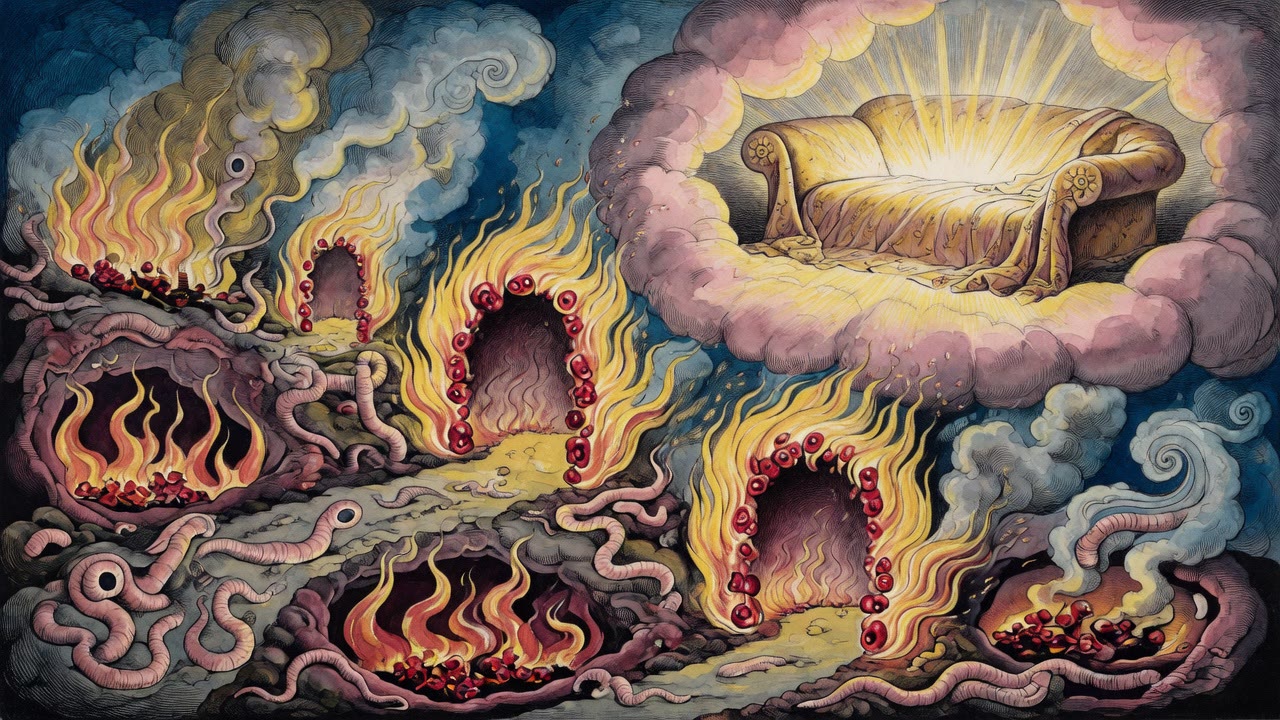
Chronicles of Jerahmeel says the righteous dead emerge from their graves each Shabbat eve to eat, drink, and praise God, then return before nightfall.
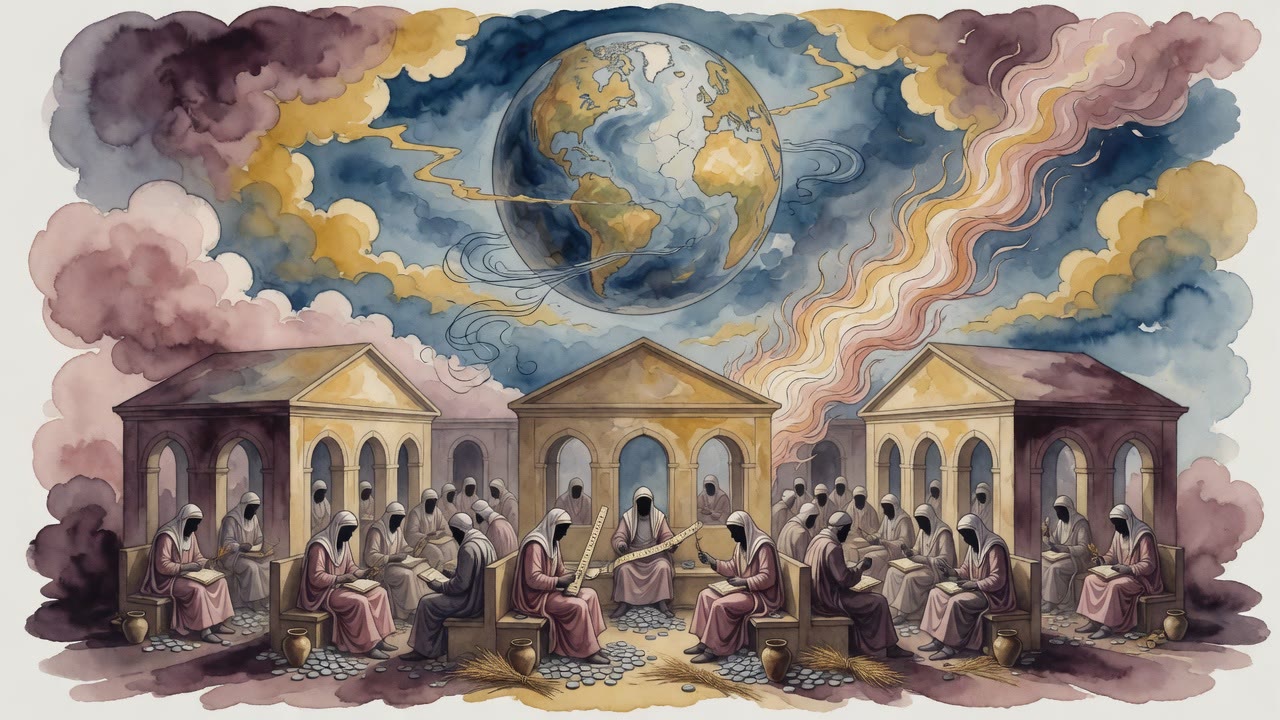
He washed his parents' faces before he opened the shop. Joshua ben Levi had asked Elijah for a name. The name was a butcher.
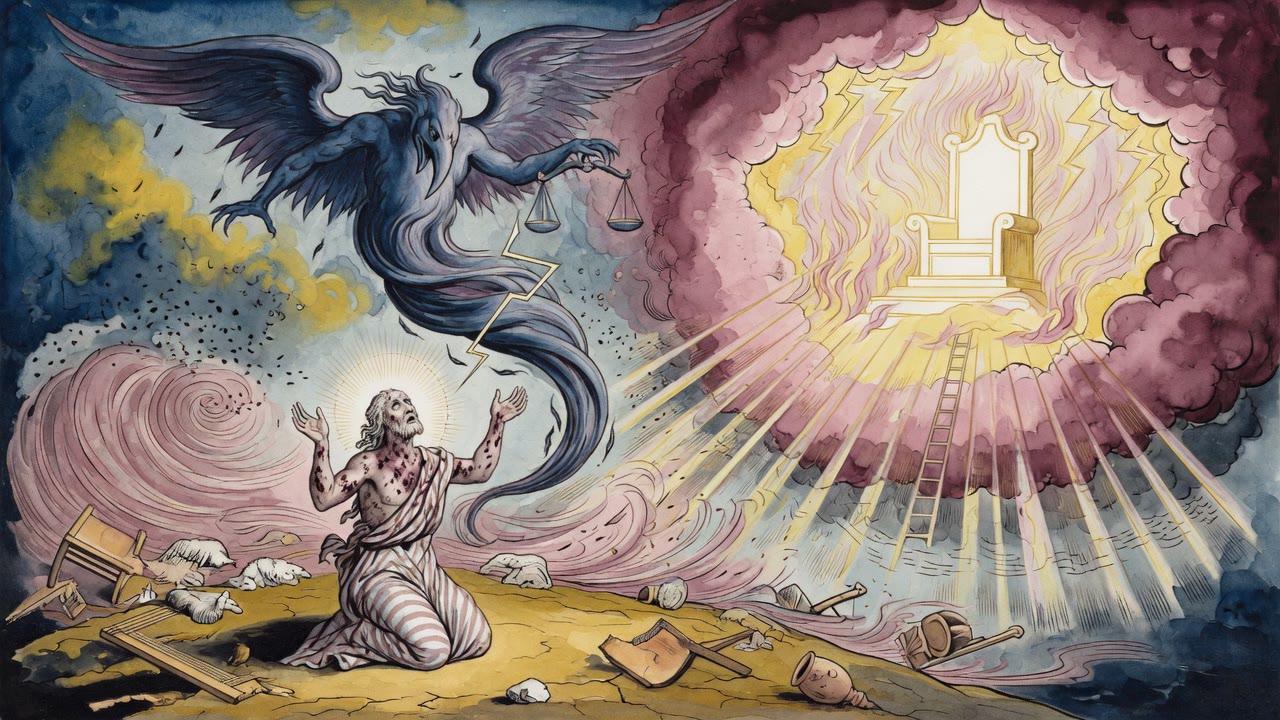
Lilith, queen of Sheba, marched three years to reach Job's cattle. One gashed herdsman broke free and ran to Job's feet. He gave the news and died there.
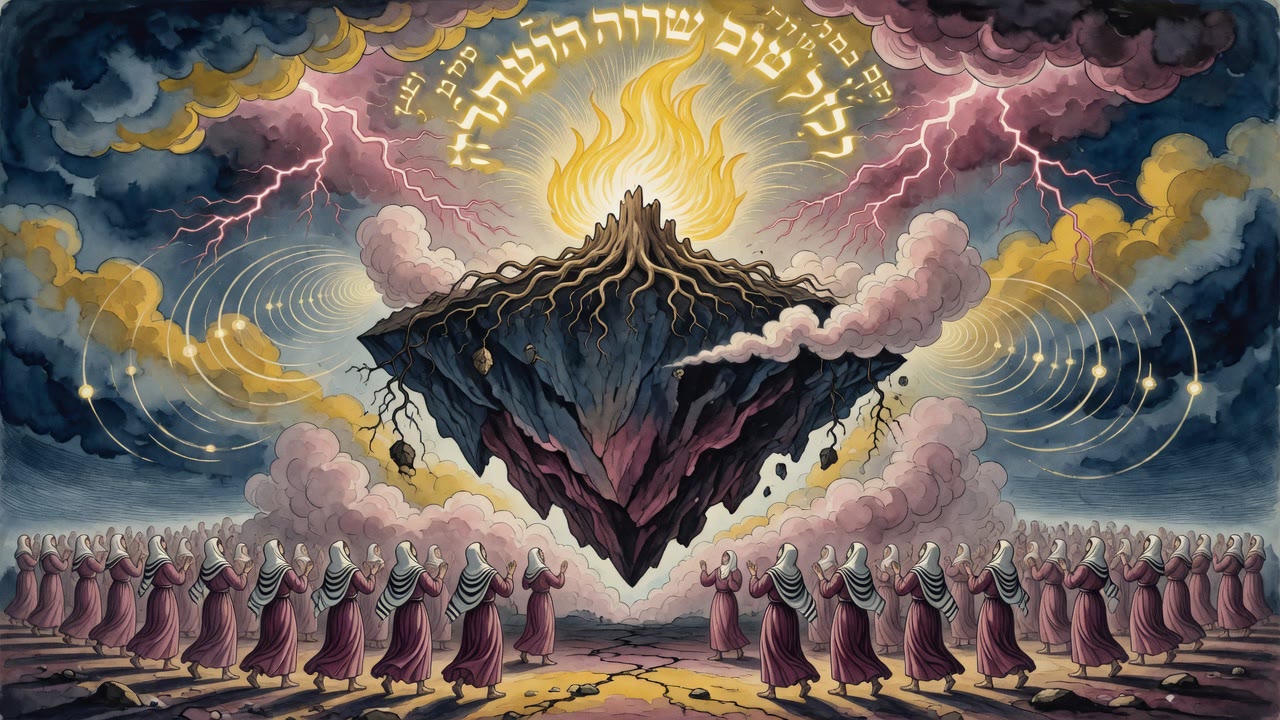
The prophetess who drew water from the rock vanished with her well, and the mystics found her again among the pomegranate trees of paradise.
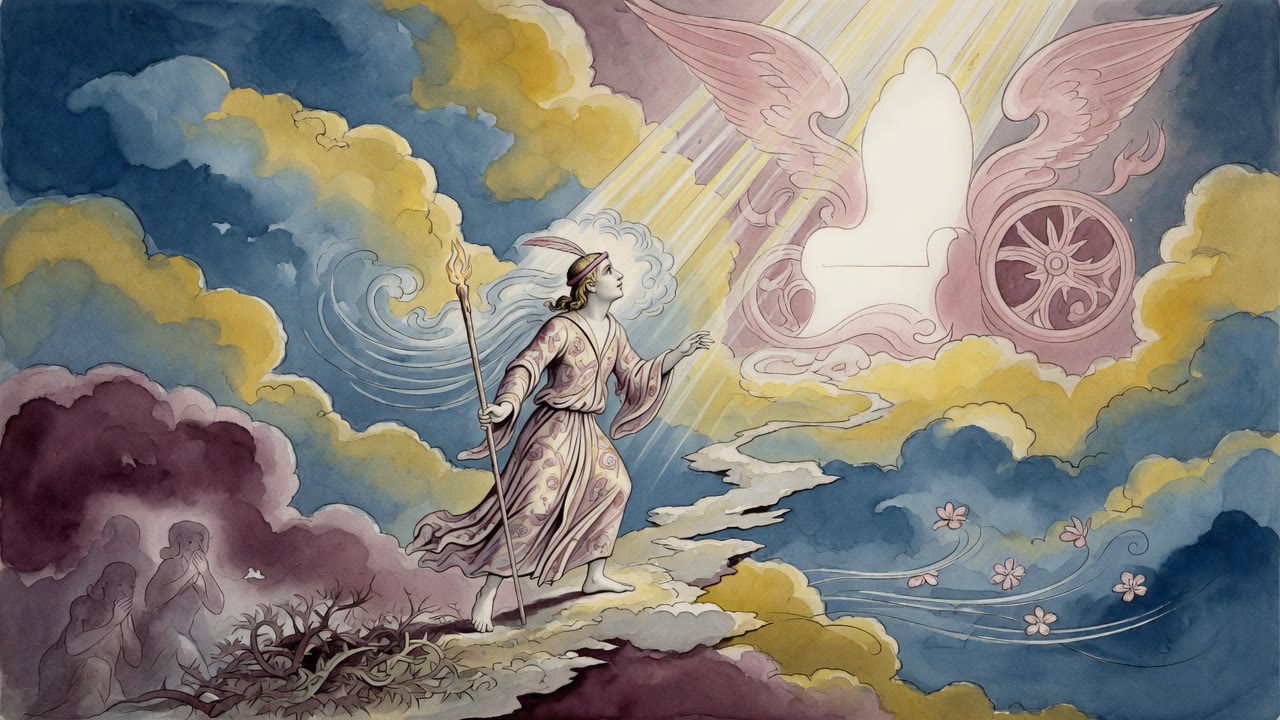
David's overlooked son was born under a cloud of scandal, yet his face silenced the gossips and his piety carried him past death itself.
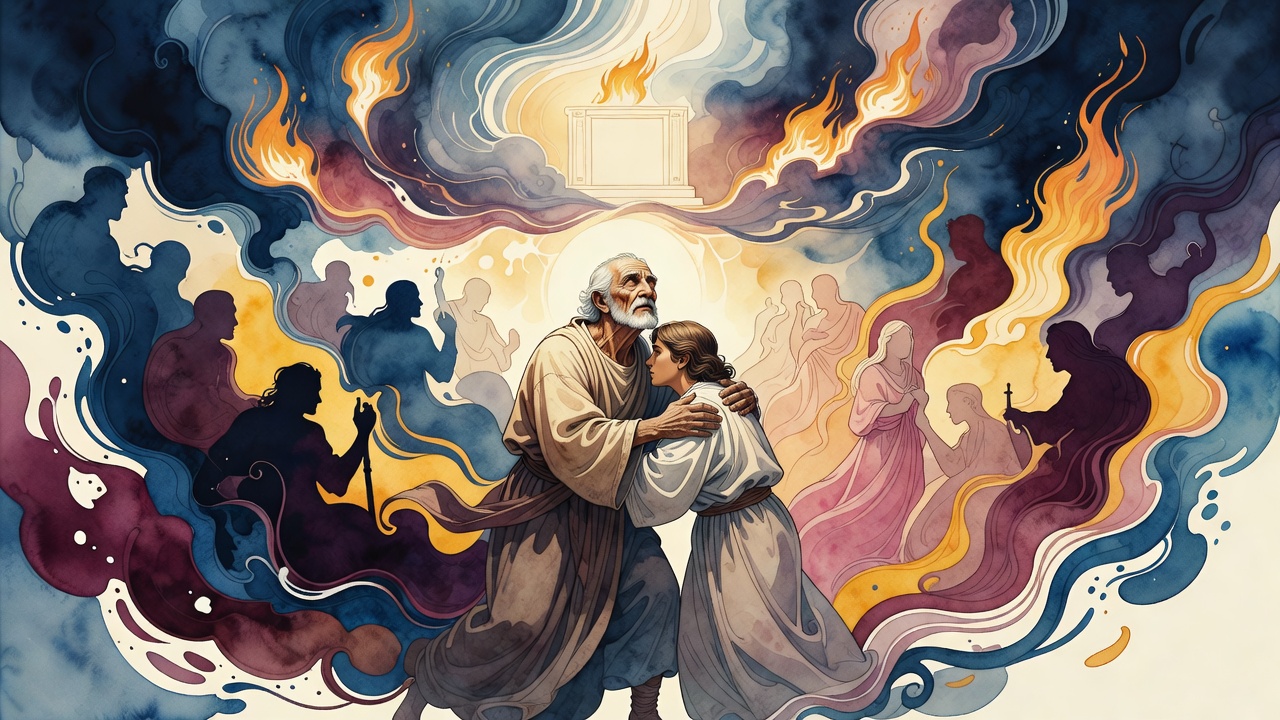
Jacob came in goat skins. Isaac's eyes were dim. The smell that rose off the clothes was not goat. It was a garden he had never walked.
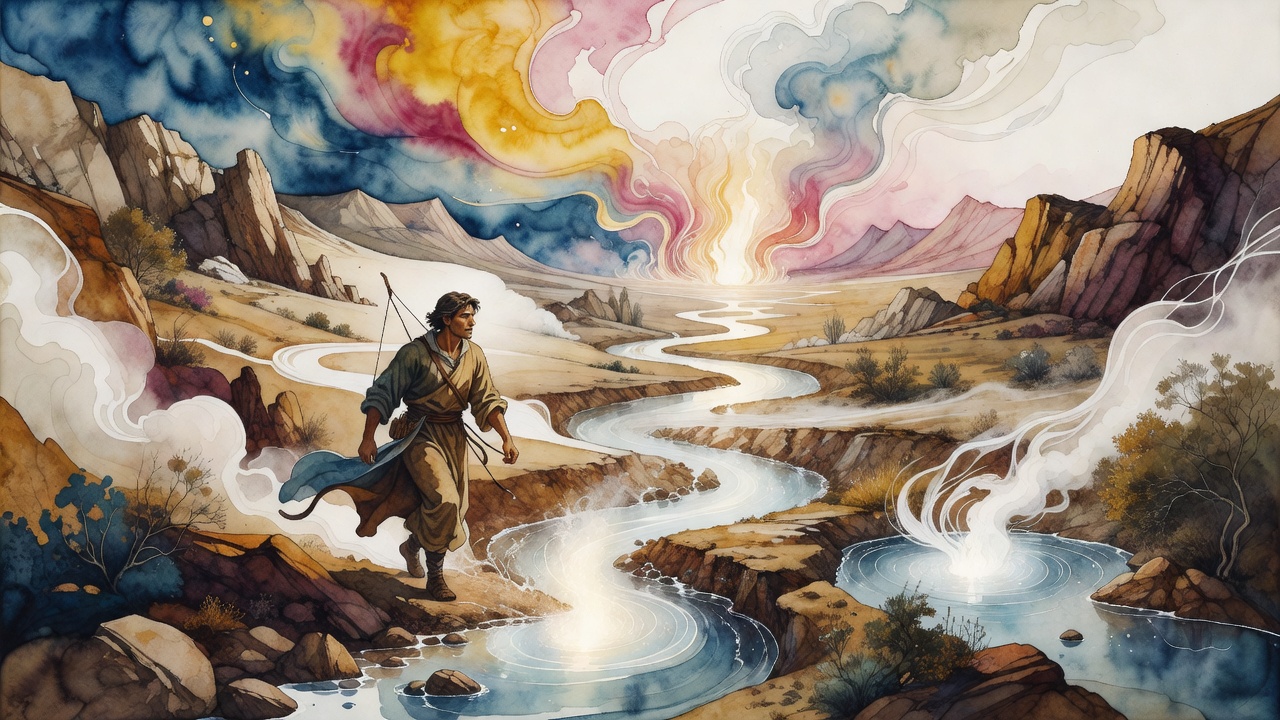
Shepherds pointed at a cold spring and called it the Tigris. He found goats, rock, and wind. No garden. He put Eden under the ground.
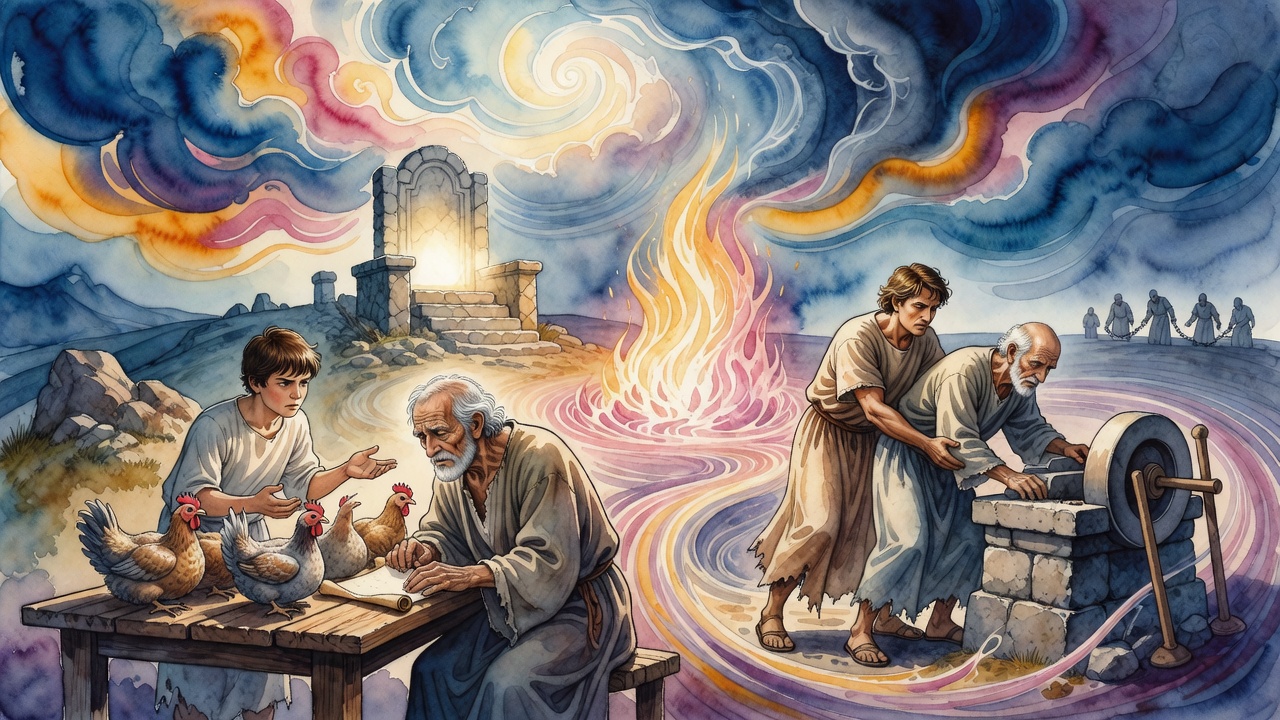
The old man asked where the chickens came from. His son told him to shut up and eat the way a dog eats scraps from the floor.
Dust rose off the road outside Tiberias. Three men waited in the brush for a cart. Resh Lakish held the rope. The others kept their knives.
The harbor smelled of fruit and oil. One man walked those tables and came back hungry. His friend slept on a coil of rope.
