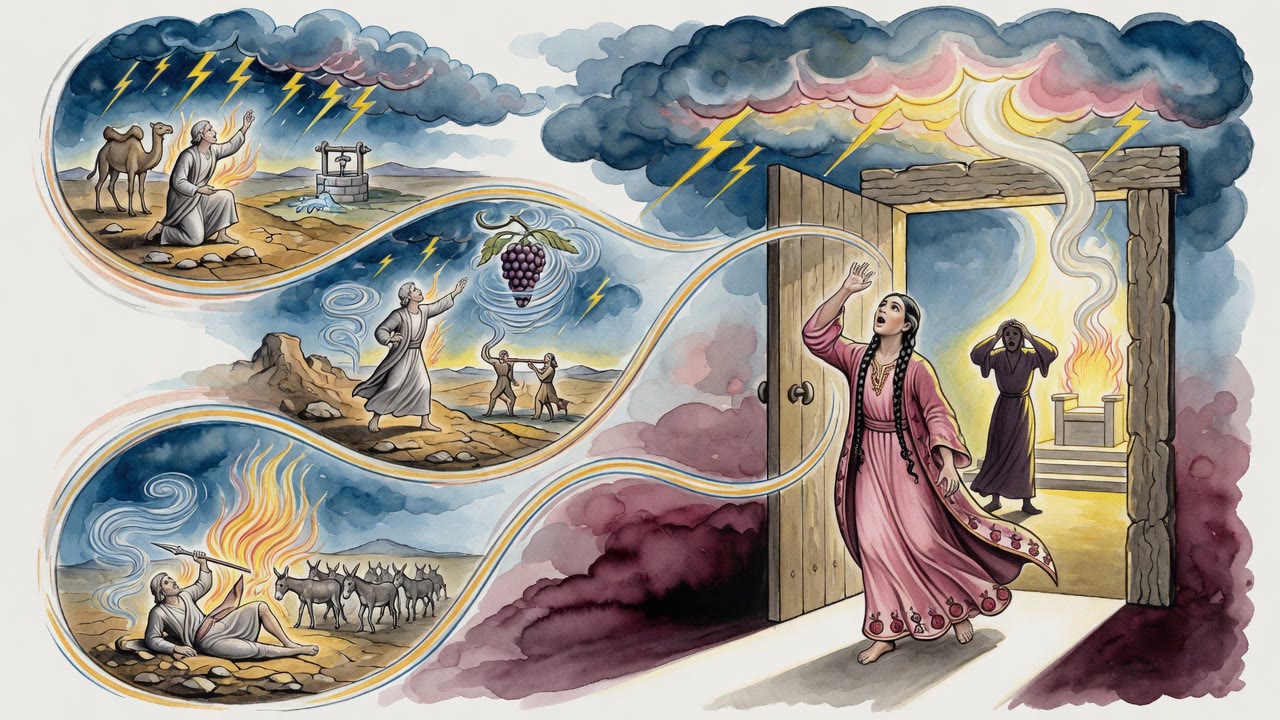
The Rabbi Who Tricked the Angel of Death Into Eden
The Angel of Death came with orders to be generous. Rabbi Joshua ben Levi borrowed the angel's blade, vaulted the wall of Eden, and made heaven honor his oath.
Table of Contents
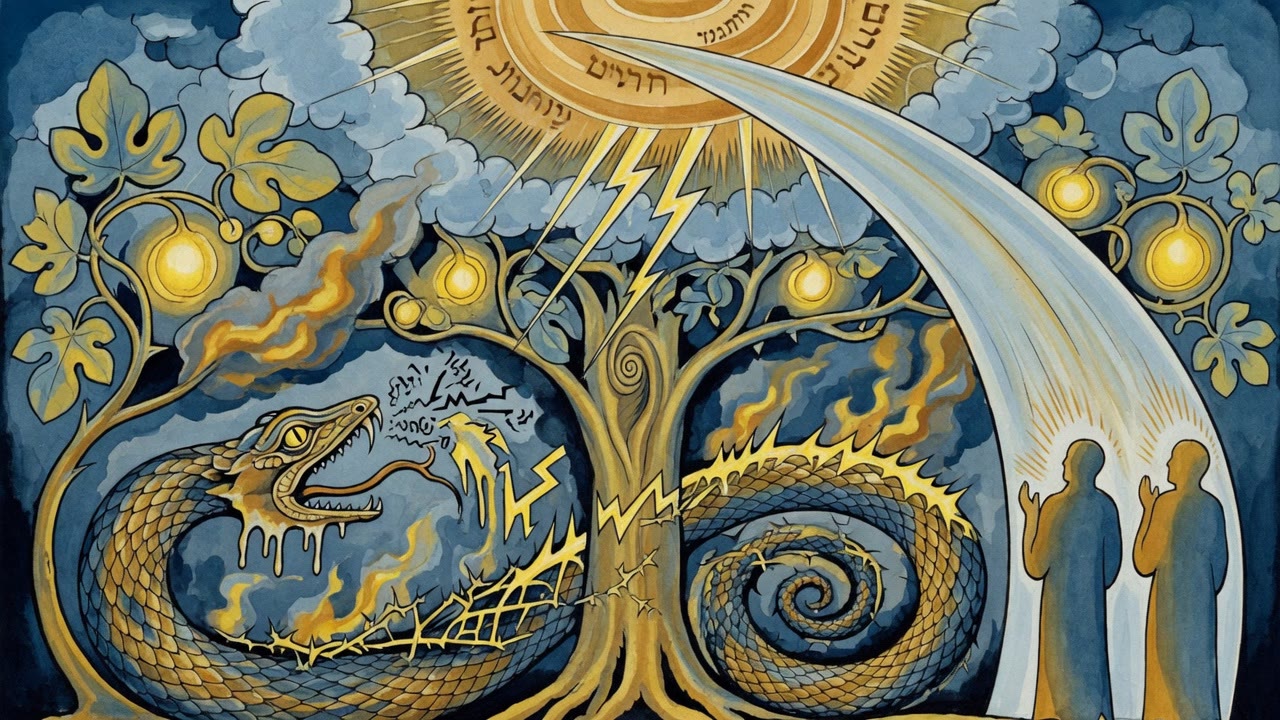 Click for full size
The Last Request Before the Road
God told the Angel of Death: "go to Rabbi Joshua ben Levi, and whatever he asks of you, grant it." The angel arrived armed, as always, but with unusual instructions. The rabbi heard him at the door and understood immediately what was happening. He was dying. He also understood something the angel had perhaps not fully considered: he had been given a blank authorization.
"Show me my place in the Garden of Eden," Rabbi Joshua said. The angel agreed. That alone was remarkable, the tradition notes, because it implied a place had already been assigned. The angel could show it because it existed. They walked together toward paradise, the dying rabbi and the figure who carried the instrument of his finality.
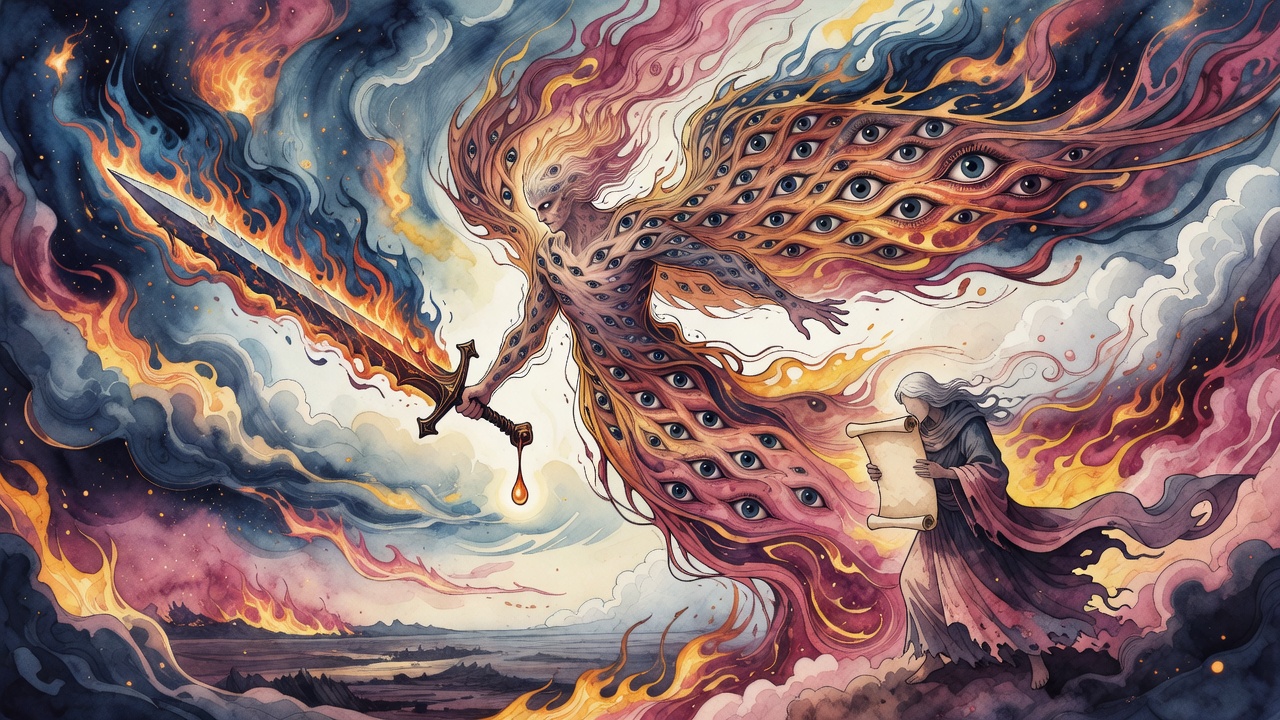
Then Rabbi Joshua asked for the blade. He explained it modestly: he might be frightened on the road if the sword remained in the angel's hand. "Give it to me for the walk." The Angel of Death, carrying explicit divine instructions to grant whatever was requested, handed over the instrument by which finality enters the world.
The Wall and the Leap
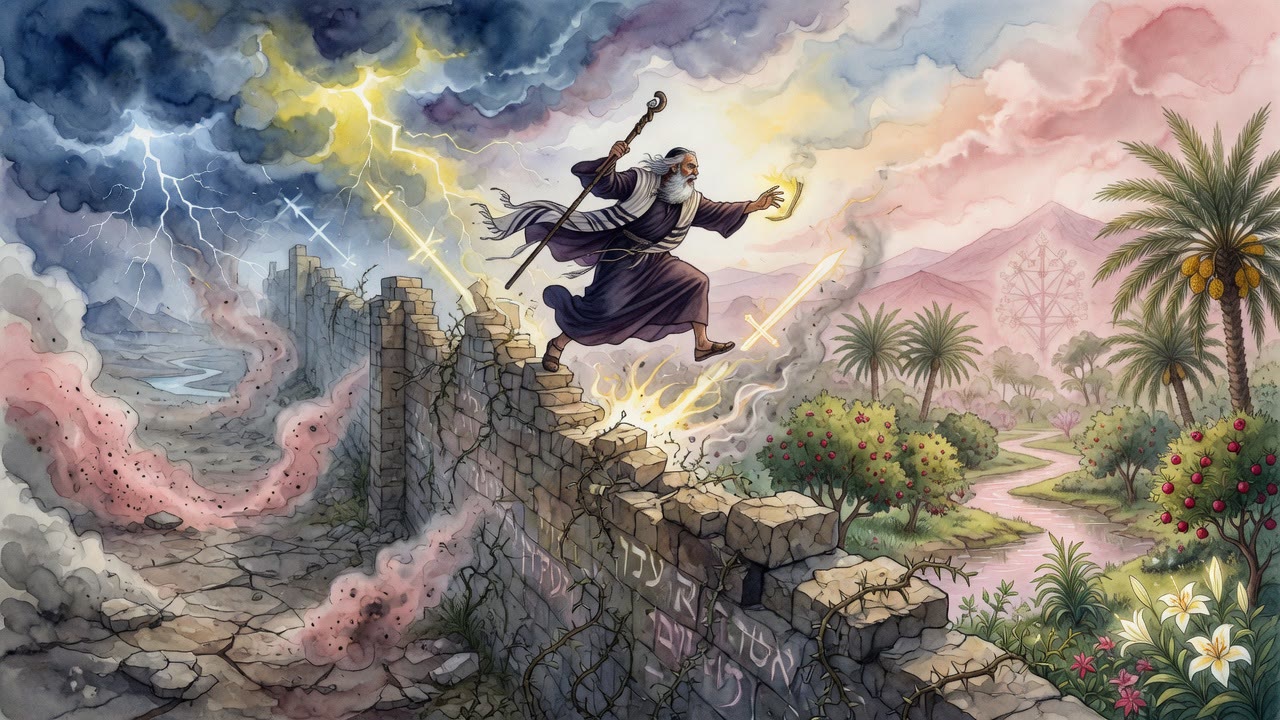
They arrived at the wall of paradise. The angel rose to show Rabbi Joshua his place from above, lifting him to see over the wall. The rabbi looked at what was on the other side, saw where he was standing relative to where he needed to be, and jumped.
He landed inside Eden with the blade still in his hand. He refused to give it back. He had not technically violated any oath. He had asked to see his place. He had seen it. He was now in it. The blade was in his possession on the inside of a wall the Angel of Death could not cross without authorization, and the Angel of Death did not currently have the authorization, because it was in the hand of the man who had just vaulted the wall.
The angel called back to heaven: "a man has stolen from me." A divine voice answered: "did he make an oath to give it back?" The angel said yes. The voice said: "tell him to return it." Rabbi Joshua ben Levi was already inside paradise, alive, standing in the place that had been reserved for him, and heaven was asking him to honor an oath. He honored it. He handed back the blade through the wall. He stayed where he was.
What the Garden Looked Like
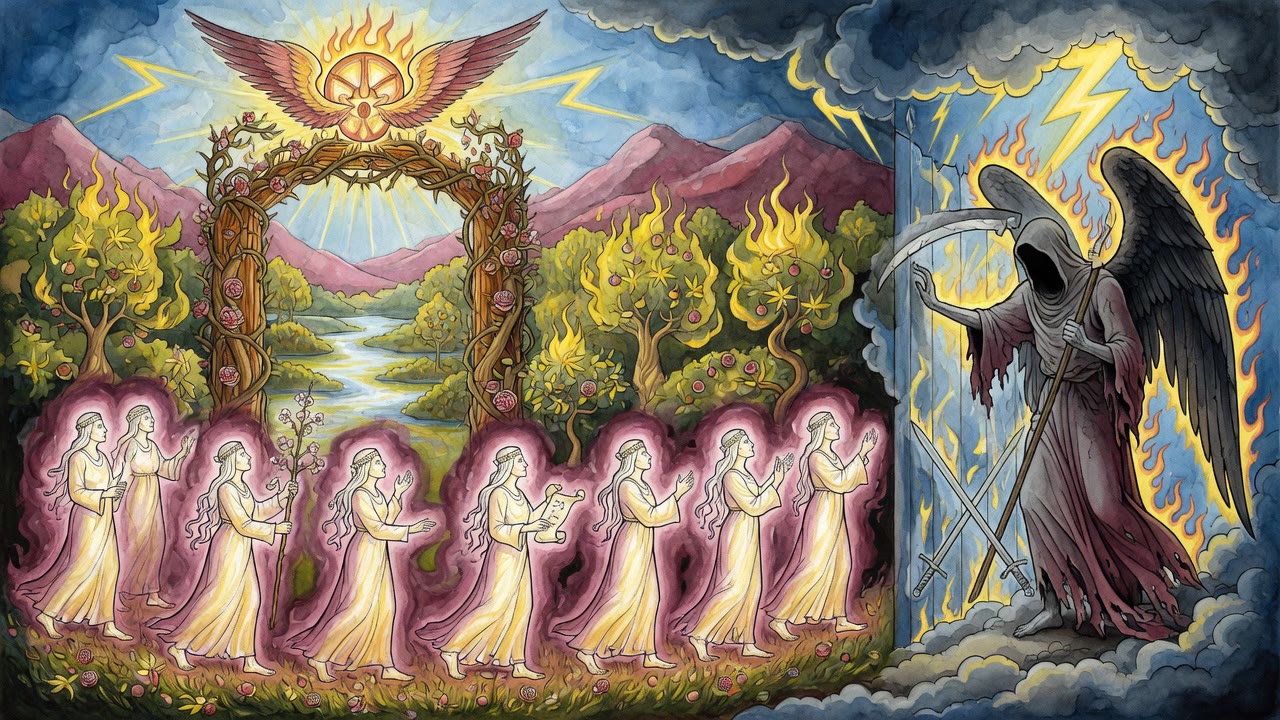
The tradition preserves the account of what paradise looked like through Rabbi Joshua's eyes. There were seven compartments, each for a different category of the righteous. Each compartment had its own quality of light, its own population, its own atmosphere. The compartment nearest to the divine presence was the one reserved for the martyrs, for those who had died for the sanctification of God's name, and even there the tradition noted gradations of proximity and radiance.
The Academy on High sat at the center of paradise, where the sages who had spent their lives in learning continued learning, surrounded by the divine presence rather than approaching it from a distance. Rabbi Joshua had spent his life running an academy in the world below. What he found in the world above was the same work, extended and amplified, without the interruptions of exile and Roman occupation and the constant press of halakhic decisions that needed to be rendered by morning.
The Entry That Was Already Written
The tradition notes several people who entered paradise alive: Enoch, Elijah, and a small number of others whose righteousness was so complete that the ordinary mechanism of death was set aside for them. Rabbi Joshua ben Levi entered paradise alive through a different mechanism: not by being taken up directly, but by exploiting the precise terms of an authorization the angel had received and following those terms to their logical conclusion with more ingenuity than the angel had anticipated.
The divine voice that confirmed his entrance did not object to the method. It asked about the oath. The oath was honored. The entrance stood. Rabbi Joshua ben Levi had found the opening in the one situation that admits none, death itself, and walked through it with a clean oath and a clear conscience.
← All myths