Enoch Saw Eden's Tree of Life in the Third Heaven
Sixty groups sat under a tree five hundred years thick. Adam stood outside with spices. The garden did not open for him again.
Table of Contents
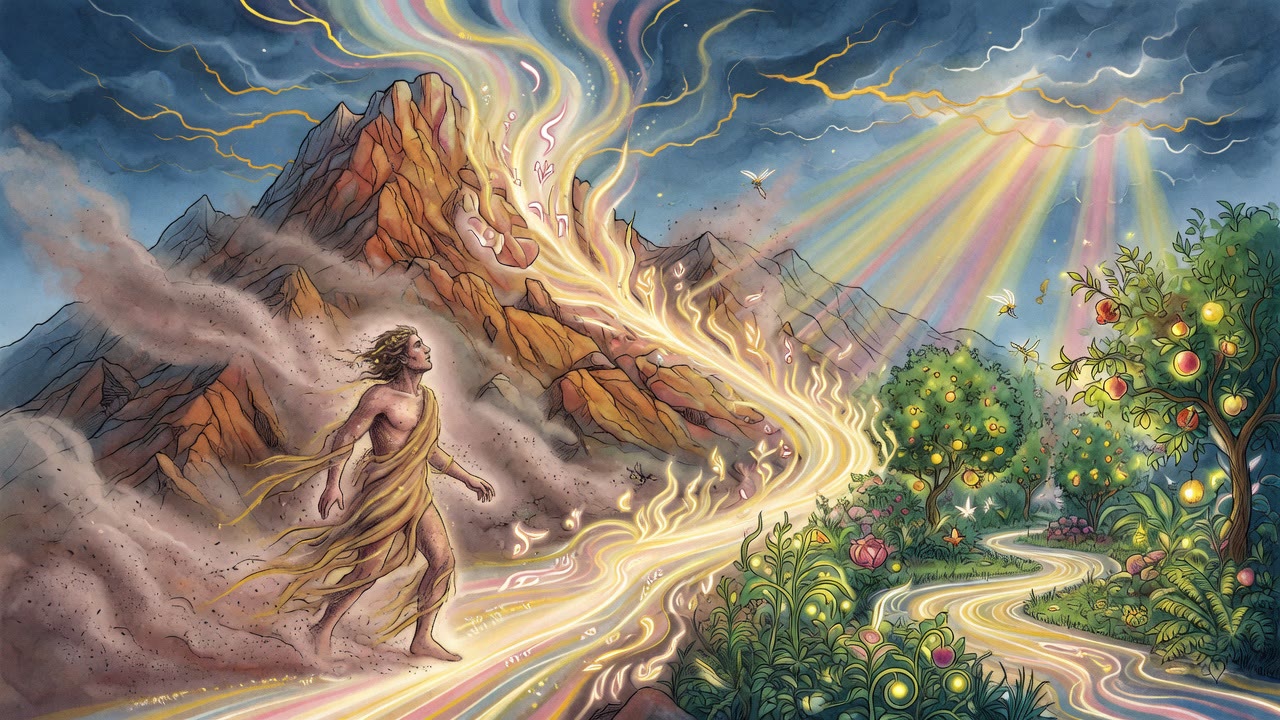
The angels brought Enoch up through cloud and the hanging sea and the dark where the chained ones wept, and they stopped him in the third heaven and told him to look down. He looked. Below him, between the world that rots and the world that does not, a garden was still growing. He knew it the way a man knows a house he has never been allowed to enter. It was Eden, exactly as it had been before Adam was sent out.
 Click for full size
Every tree bore fruit at once. No bough was empty. The air was sweet enough to taste. Four streams left the place, thick as honey and oil, and the smell of the garden spilled past its own border into the heavens above and below.
The Tree at the Center
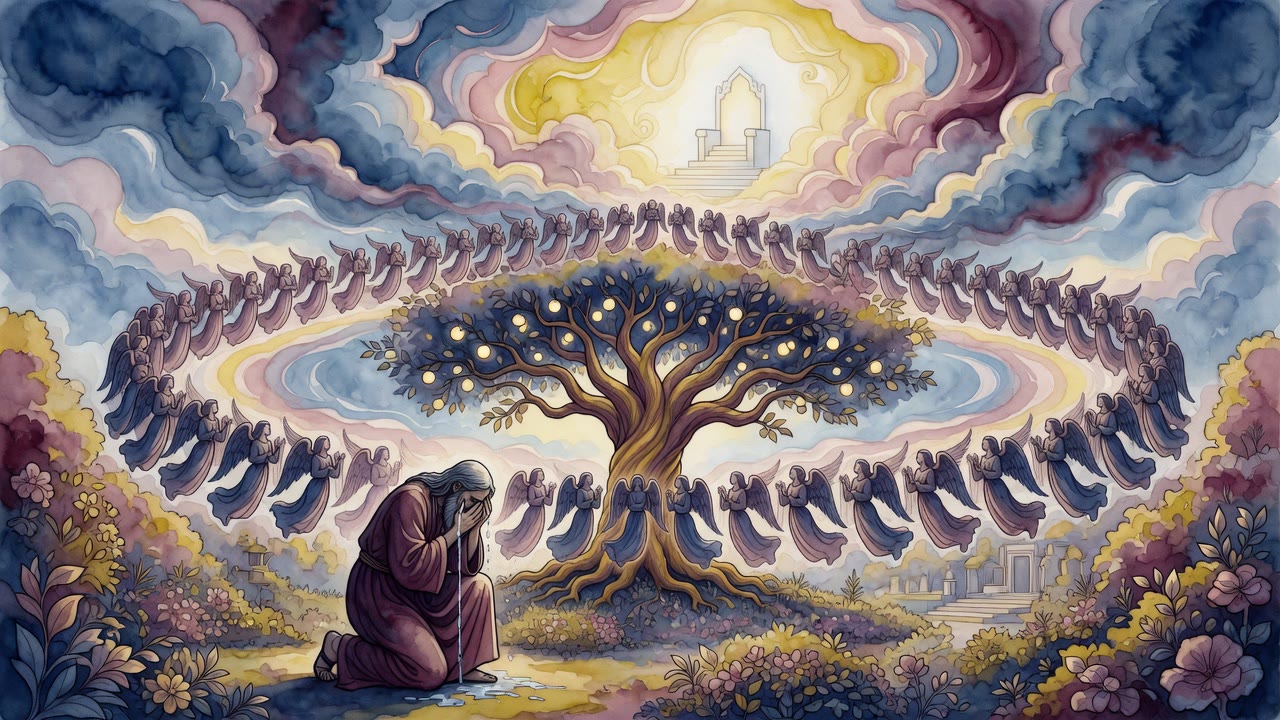
At the center stood the Tree of Life. Gold and vermilion and the color of fire, all at once, too much for a mouth to hold. Its branches covered what stood near it. Its root went down as if it meant to finish the earth. The trunk alone was a walking distance of five hundred years, and even the foliage was that wide. Primordial waters split beneath it and ran out from the root.
Three hundred shining angels moved through the rows, tending and singing. Their voices did not stop. The garden was never quiet. This was the place where God rested when He entered paradise, the resting place below, as the throne room was above.
Enoch asked his guides who the garden was for. They told him: for the righteous who endure, who turn from wickedness, who judge fairly, who give bread, who clothe the naked, who lift the fallen, who help the orphaned, who walk without fault before the face of the Lord. That is what they inherit. A garden on the south side of the third heaven, and on the north a place of fire and the same absolute dark he had already passed through, only hotter.
Adam Asked for the Tree
Adam had stood in that garden once with the fruit still on the trees and the beasts still under his hand. Then the driving began. Angels pushed him and Eve toward the gate amid their loud crying, and Adam begged them to leave him a little space so he could plead, because he only had sinned. The angels paused. God asked why they had stopped. Is it I who have done wrong? Or is my judgment badly judged? The angels fell on their faces and said He judged right, and the driving started again.
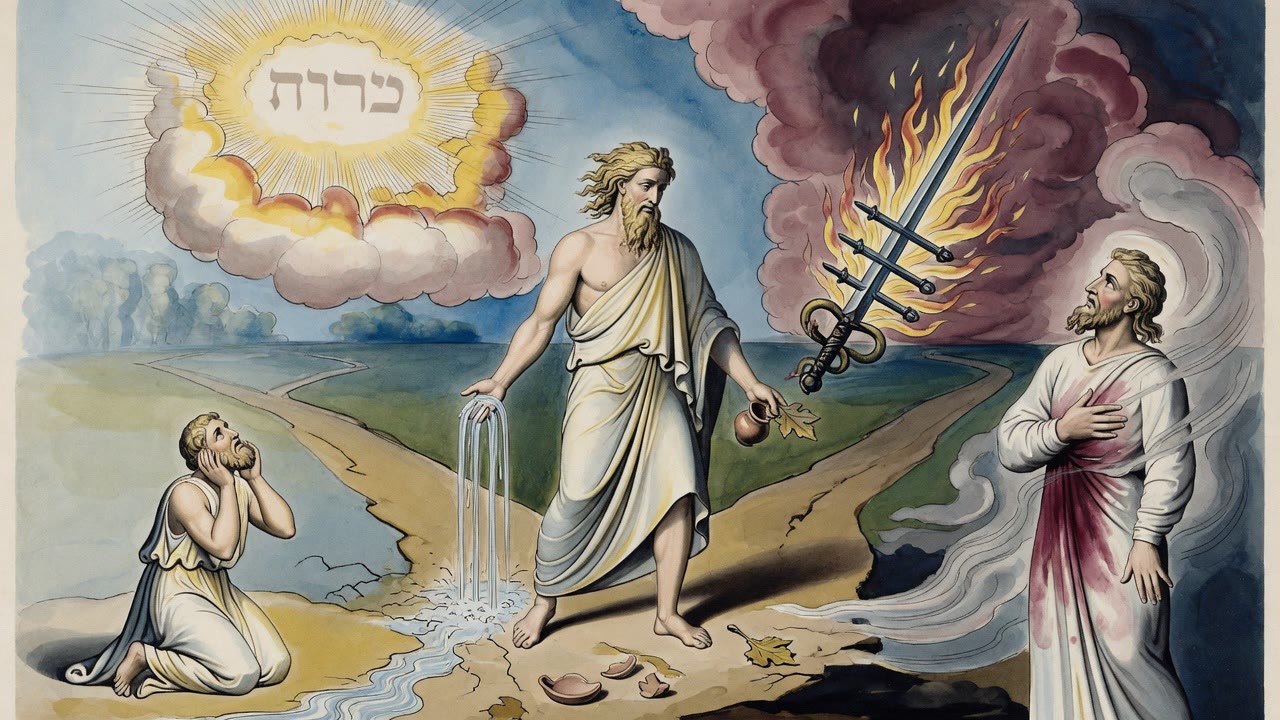
Adam asked for the Tree of Life before they put him out. God refused. Cherubim already held the flaming sword that turned every way. Adam would not taste it now. If he kept himself from evil after he left, there would be a raising, and then the tree. Not today.
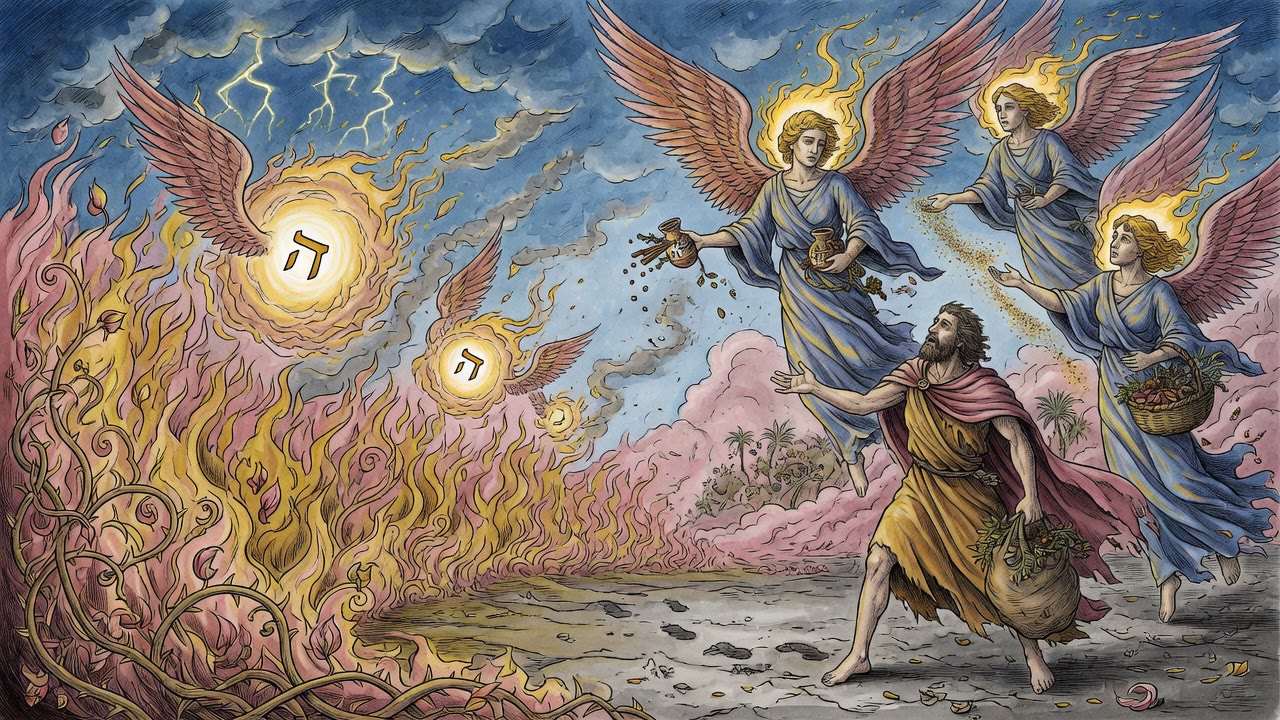
He wept opposite the gate. He asked the angels for fragrant herbs, so he could offer something once he was on the wrong side of the wall. God let him go back in for that much. Adam took four kinds, crocus and nard and calamus and cinnamon, and seeds for his food, and then he went out, and they were on the earth.
Sixty Groups Under the Branches
Enoch looked again. The garden was not empty. Sixty groups of the righteous sat beneath the Tree of Life and studied. They were the sixty queens of the verse, seated in the shade of a trunk no living walker could cross in a lifetime. Outside the tree sat sixty more, the middling, still studying, not as close. Disciples without number filled the rest of the ground. They did not quarrel. They all drew from one source, one law, one analogy, as if the garden itself would not bear a split reading.
The whole world is a walking distance of five hundred years, and that world is like a pot cover on Gehenna. Eden is beyond measure. The sixty under the tree already had their seats. History went on below them. They did not get up.
The Frozen Water and the Weeping
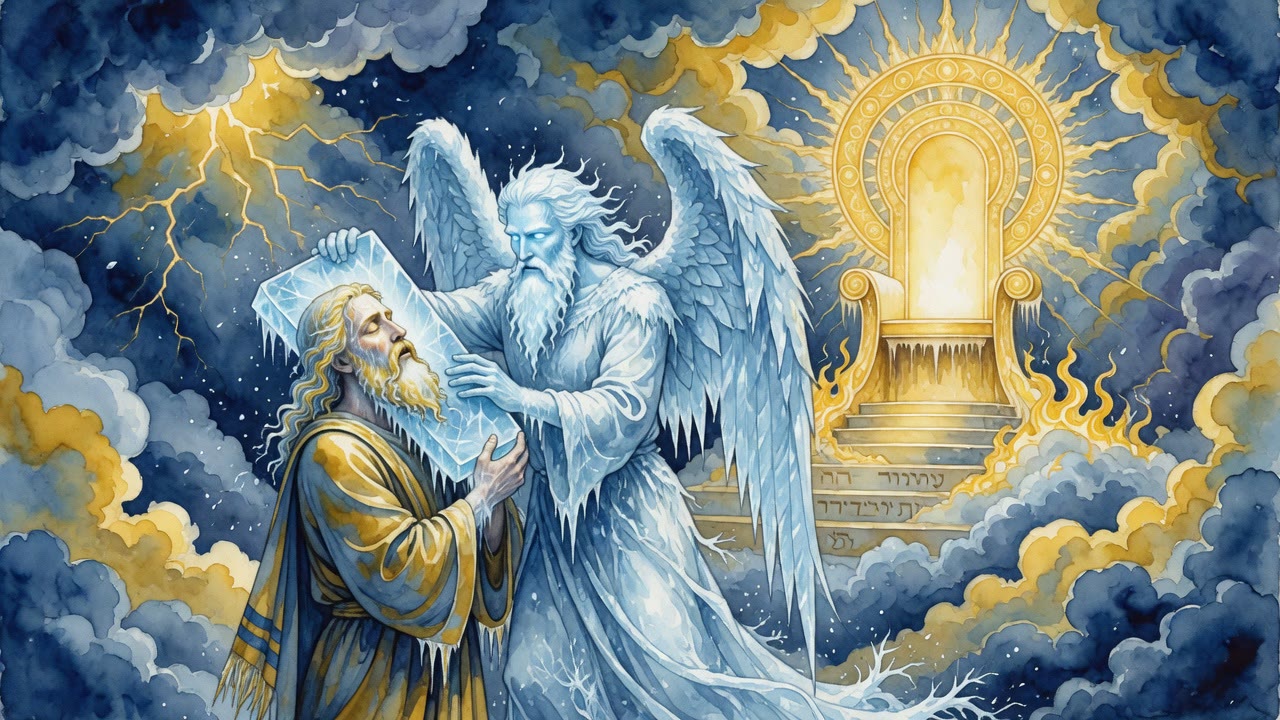
Later, when Adam was old, a chariot like the wind came for him, wheels of fire, and took him back into paradise. He saw the Lord on a throne and could not bear the light off that face. He heard that the time had come for him to die. He asked not to be cast from the Presence, he who had been shaped from dust. God told him his seed would stay. Then the angel Michael took Adam's hand and led him out. Michael touched the waters around paradise with his rod. The water froze. They walked across it as on a bridge, and the vision ended, and Adam did not die that day.
Enoch stood in the third heaven with that same garden under him. He had come from the second heaven, where chained angels had begged him to intercede and been refused. Now he was looking at the seats prepared for humans who had not turned away, and at the gate where Adam had been allowed spices and not the tree. He wept. Not because the garden was closed to him in that hour. Because he could see the accounting whole, south and north, tree and fire, the sixty already seated and the man who had left with cinnamon in his fists.
He did not eat from the tree. He was a witness, not an heir. The singing did not pause for his tears.
← All myths