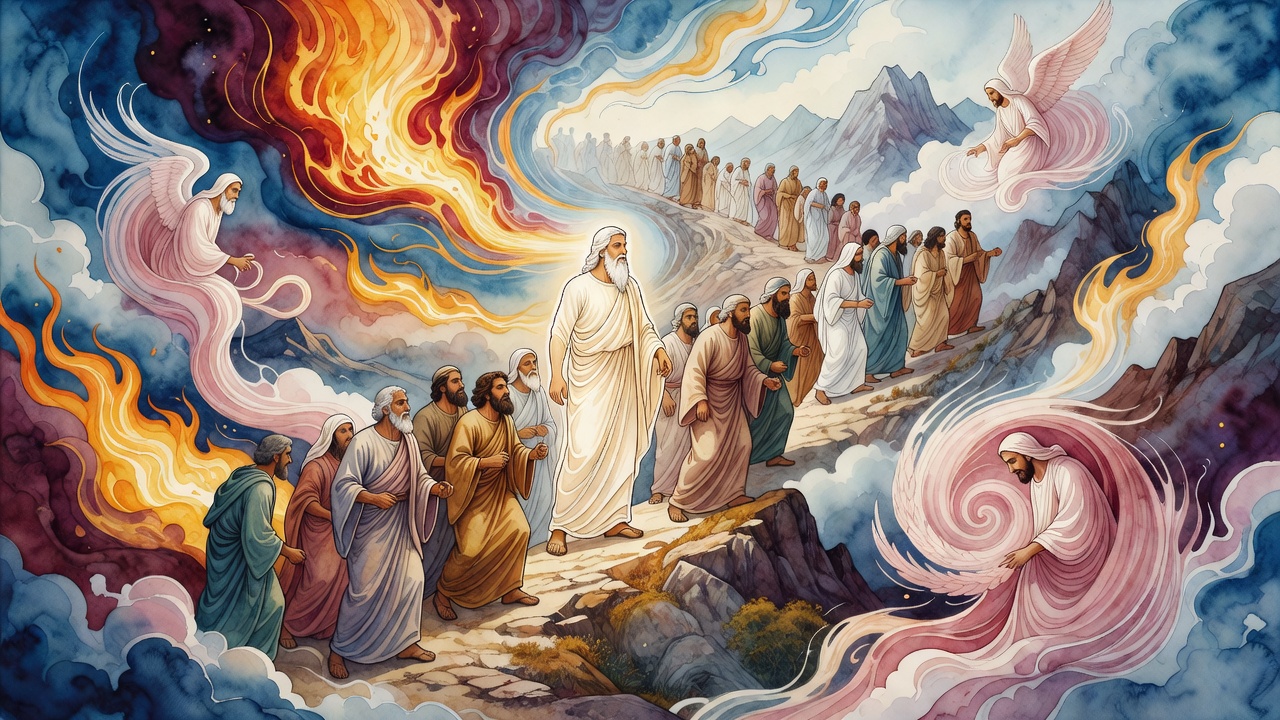
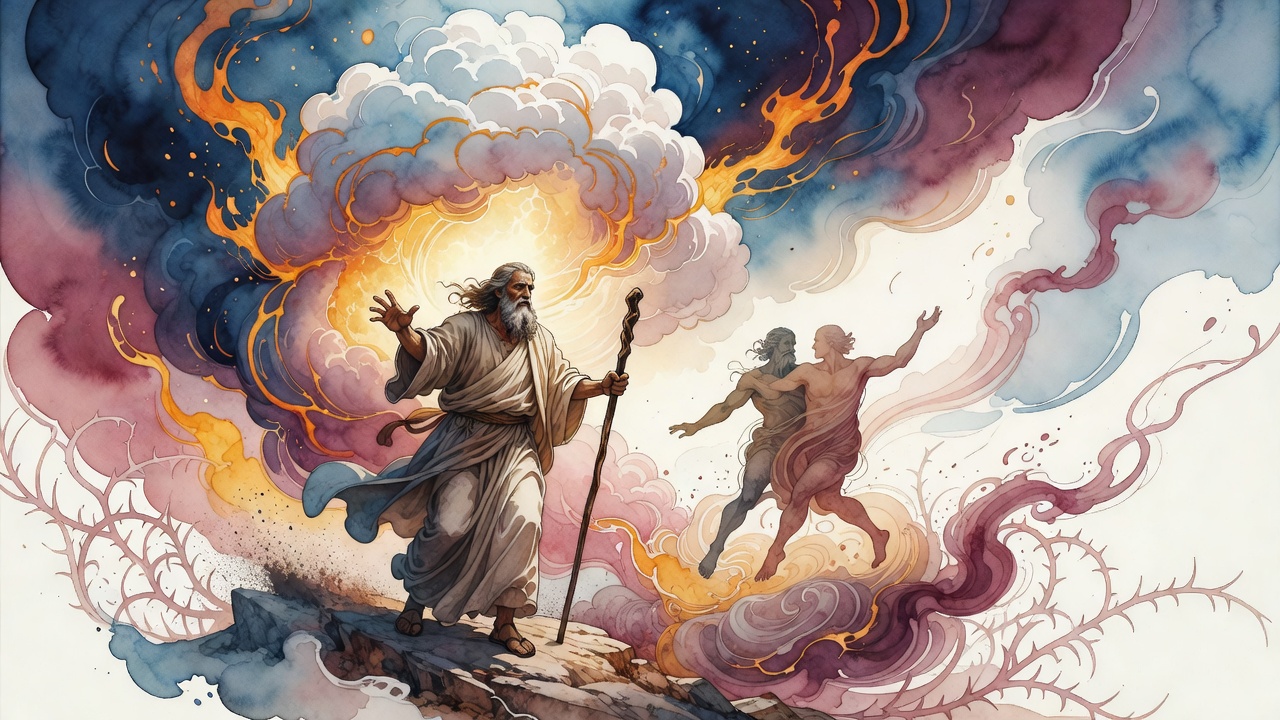
Adam Challenged Moses Before Eden's Door
Moses arrived at Eden's gate with his face still shining, and Adam was waiting at the threshold with a claim no mortal had ever answered.
Table of Contents
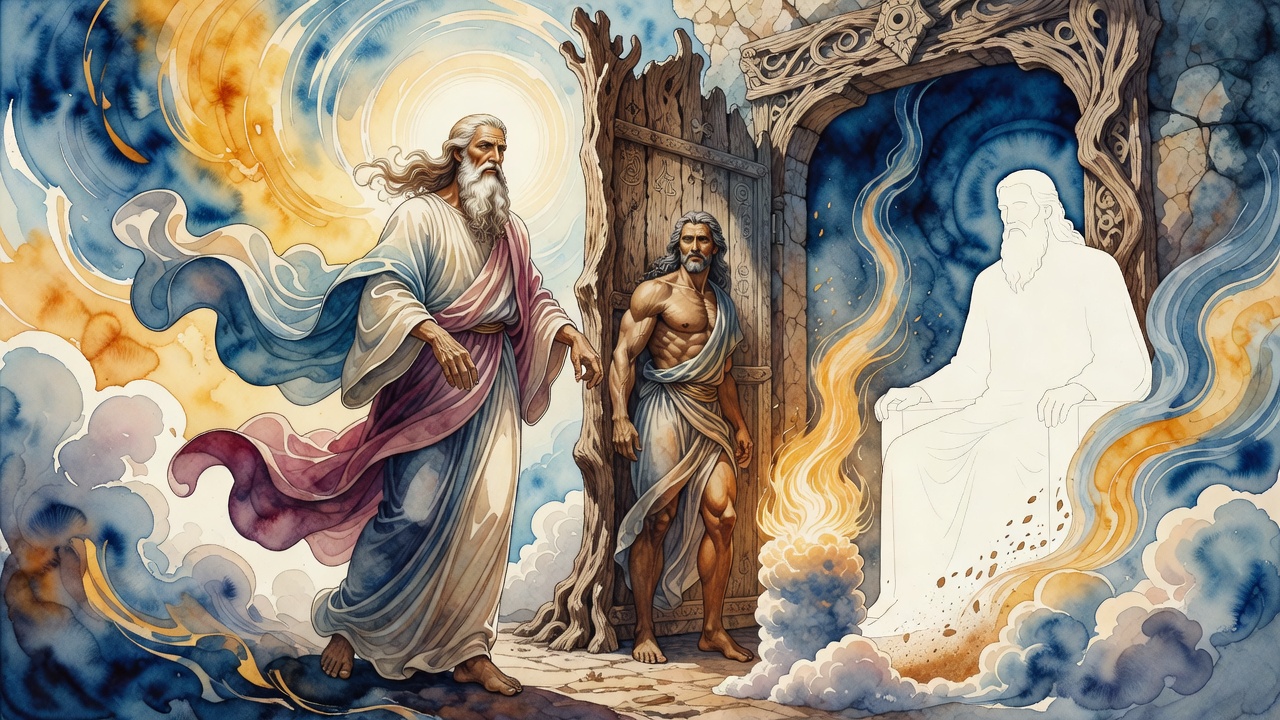
Moses had not yet passed through the gate when he heard the voice. He recognized it the way you recognize a voice you have never heard but always expected, deep, unhurried, the first voice, the one spoken before language had worn grooves in the world. It belonged to Adam. The first man stood at the threshold of Eden and did not step aside.
 Click for full size
The Man at the Gate
Moses had climbed mountains while alive. He had stood on Sinai with the cloud pressed against his back, the fire below his feet, the stone in his hands. He had argued with Pharaoh and with God, and between those two conversations there was not much distance. But he had never passed through the gate of Eden. That door had been closed since long before his parents' parents existed, sealed by the sword that turns in every direction (Genesis 3:24), and now, having died on the eastern bank of the Jordan, he stood at it for the first time. The green of the interior pressed against the light. The gate was open. Someone was already inside, watching him approach.
Adam had been waiting. How long is not a question that means anything in that place, but he had been waiting with intention, which means he had prepared what he would say.
Adam's Claim
He said it simply. "I am greater than you, for I was created in God's image."
It was not a boast. It was a statement of the order of things, the way one might say that the sun rises before noon. Adam had been formed by God's own hands from the dust of the earth, and the shape God chose was the one image God already held. No one born of woman since that morning had been made that way. Not the patriarchs. Not the prophets. Not Moses himself, who entered the world through a birth like any other and who had stood before God only across a distance, face to face but never formed out of the divine hand like clay on a wheel.
Moses stood at the gate and considered this. He was not a man who rushed an answer. He had spent forty years in Midian before God called him, and forty more years arguing, correcting, exhausting his voice in the wilderness. He knew how to wait until the right word arrived.
The Light That Did Not Go Out
When it arrived, it was short. "I am nevertheless superior to you, for the glory you received from God was taken from you. Mine I retained forever."
This was the one thing Adam could not answer.
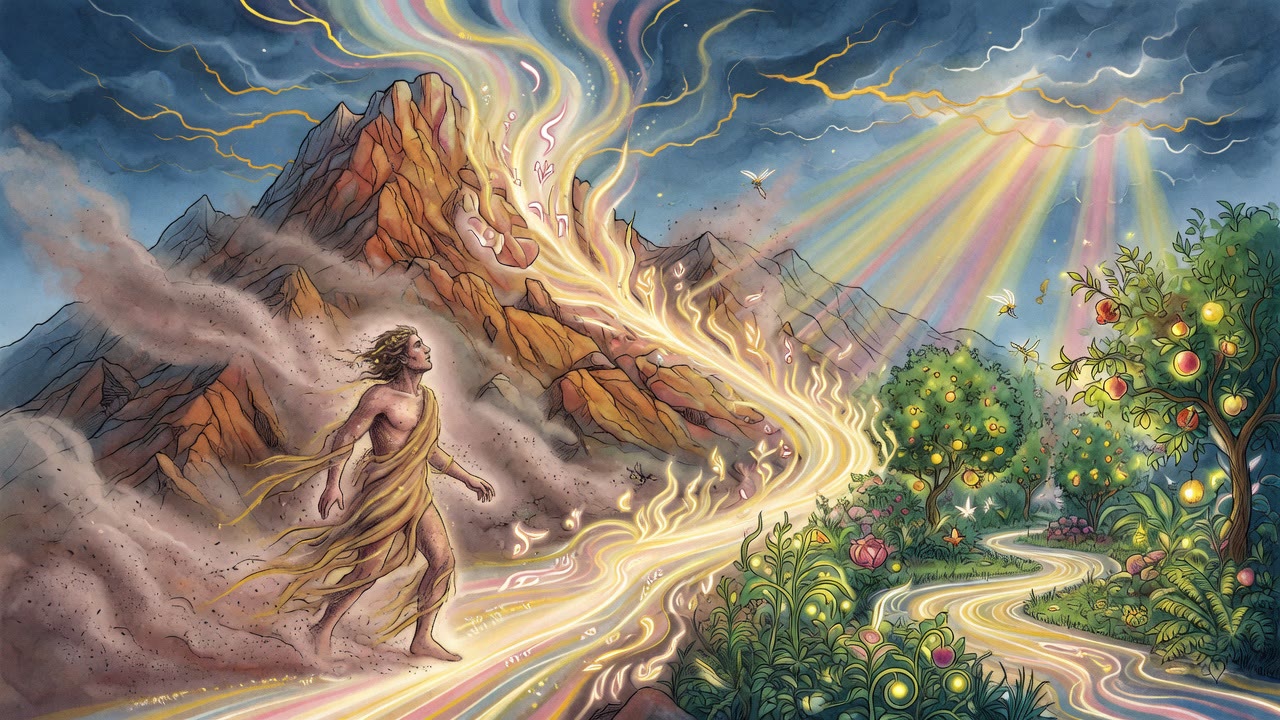
When Moses had descended from Sinai the second time, carrying the commandments, the skin of his face shone (Exodus 34:29). It frightened the people who looked at him. They could not stand near him without squinting, and he had to wear a veil. The light, the karan or panav, the radiance that broke off him like heat from stone in late summer, had come from forty days in God's immediate presence. It did not dim when he came down the mountain. It did not dim when he aged. It was still burning in his face when he died on the mountain looking west toward the land he would never enter. He carried the glory to the threshold of Eden with him, intact.
Adam had not. Whatever luminosity belonged to the first human, made in the divine image and placed in the garden with authority over every living thing, it had not survived the transgression. The radiance had been stripped away when Adam was sent out through the gate Moses was now entering from the other direction. Adam stood inside Eden but without the light he had once worn there. Moses, who had never been fashioned from divine hands, who had been born an ordinary child hidden in a basket in the Nile, had climbed high enough to collect that light and had never put it down.
Inside the Garden
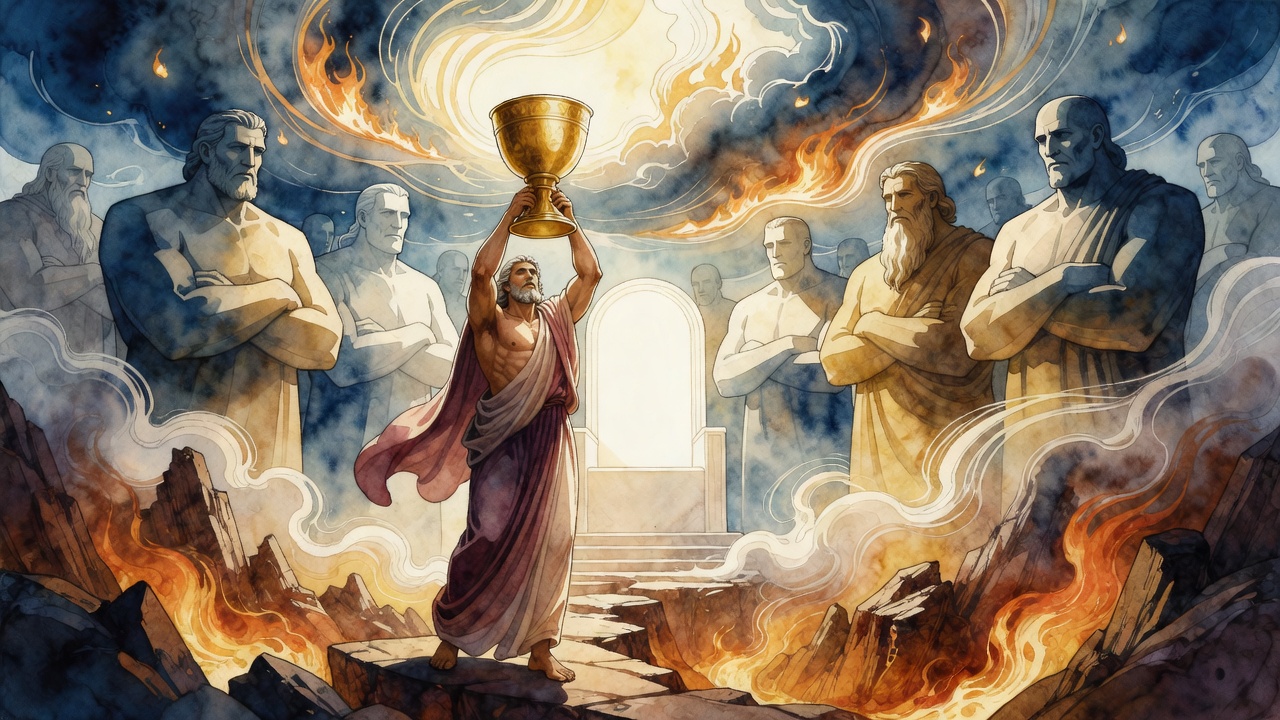
Through the gate, a throne stood on a dais surrounded by animals cast in gold. Six steps climbed to the seat, and each step held a pair: an ox facing a lion on the first, a wolf beside a lamb on the second, a leopard and a goat on the third, an eagle and a peacock on the fourth, a falcon and a cock on the fifth, a hawk and a sparrow on the sixth. These were not decorations. They were a record of every age compressed into ascending pairs, predator beside prey, the powerful beside the small, each pair one step closer to the seat.
At the very top, a dove held a hawk under her claws. The prey had become the captor. All the nations would one day be delivered into Israel's hands, the throne declared without speaking. Above it, a golden menorah (the lampstand) burned. Not a symbol of victory. Light that endures.
The Vine and What It Cost
Adam had lost his radiance to a vine. The forbidden fruit of the garden had been the grape, and Adam had made himself drunk with it. Whatever he had reached for in that condition, the intoxication had cost him everything the garden could give. The light went out. The gate closed behind him.
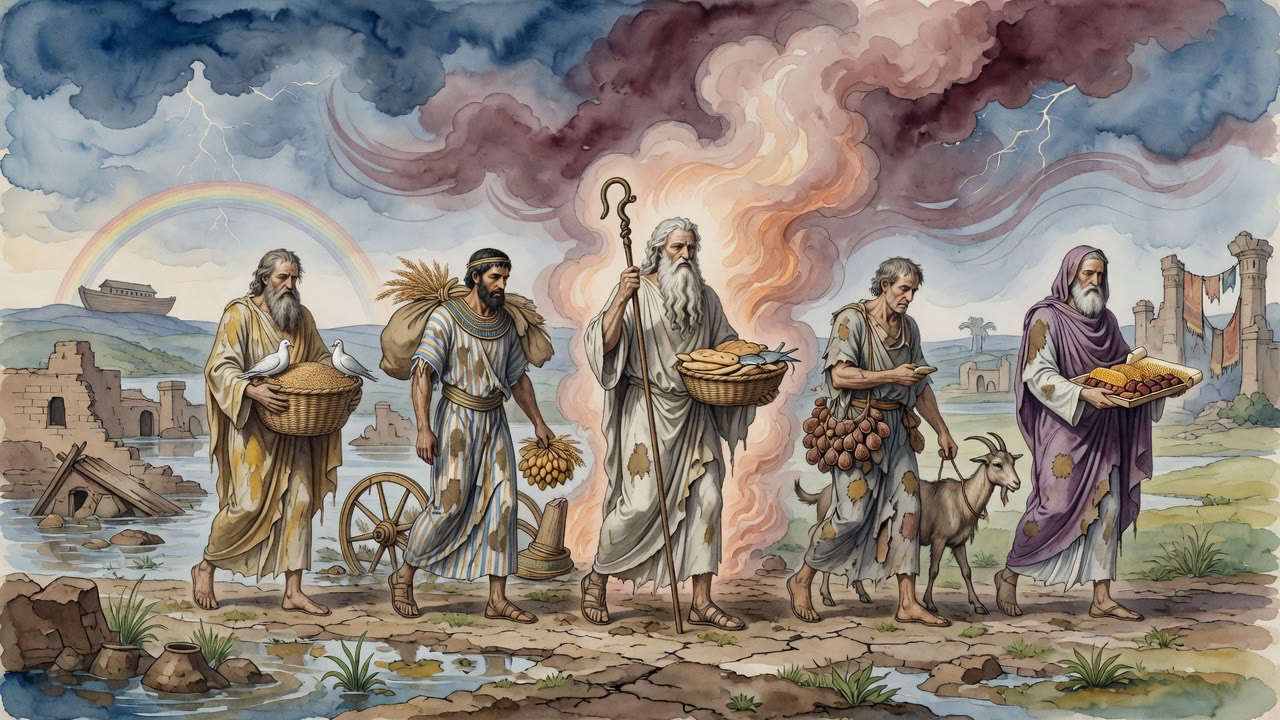
Noah had lived through Adam's consequences. He survived the flood that washed the world clean of the damage Adam's children had done to it. He planted a vineyard and became drunk in his tent, and his son Ham found him there (Genesis 9:21). The vine had reached across the generations, offering Adam's specific mistake to anyone willing to take it.
Moses had not taken it. Moses had climbed the mountain instead, had gone up into the cloud and the fire without food or water, and had come back with the commandments and the light still burning in his face. He had chosen ascent over intoxication, and the light that came from that choice lasted longer than Adam's fall.
Adam stood aside. Moses passed through the gate.
← All myths