5 min read

Adam Was Made at the Temple and Led Into Eden

The sages placed Adam at the future Temple before Eden, then made the garden a palace of Torah, angels, fragrance, and inheritance.

Curated by Arthur · Told by Maggid ·
Table of Contents
  1. The Garden Was a Palace
  2. The Work Was Torah Before Sinai
  3. Shem Inherited the Holy Places
  4. The Tree Fed the Righteous With Fragrance

Adam did not begin in a garden.

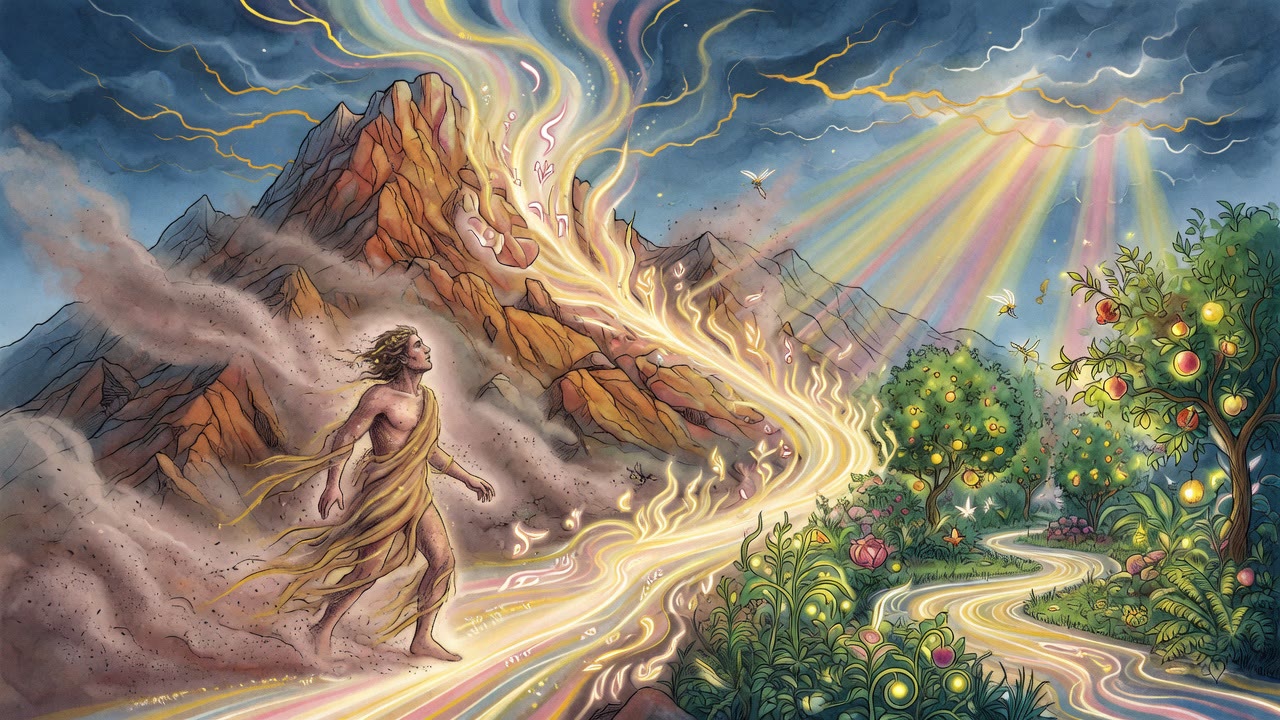
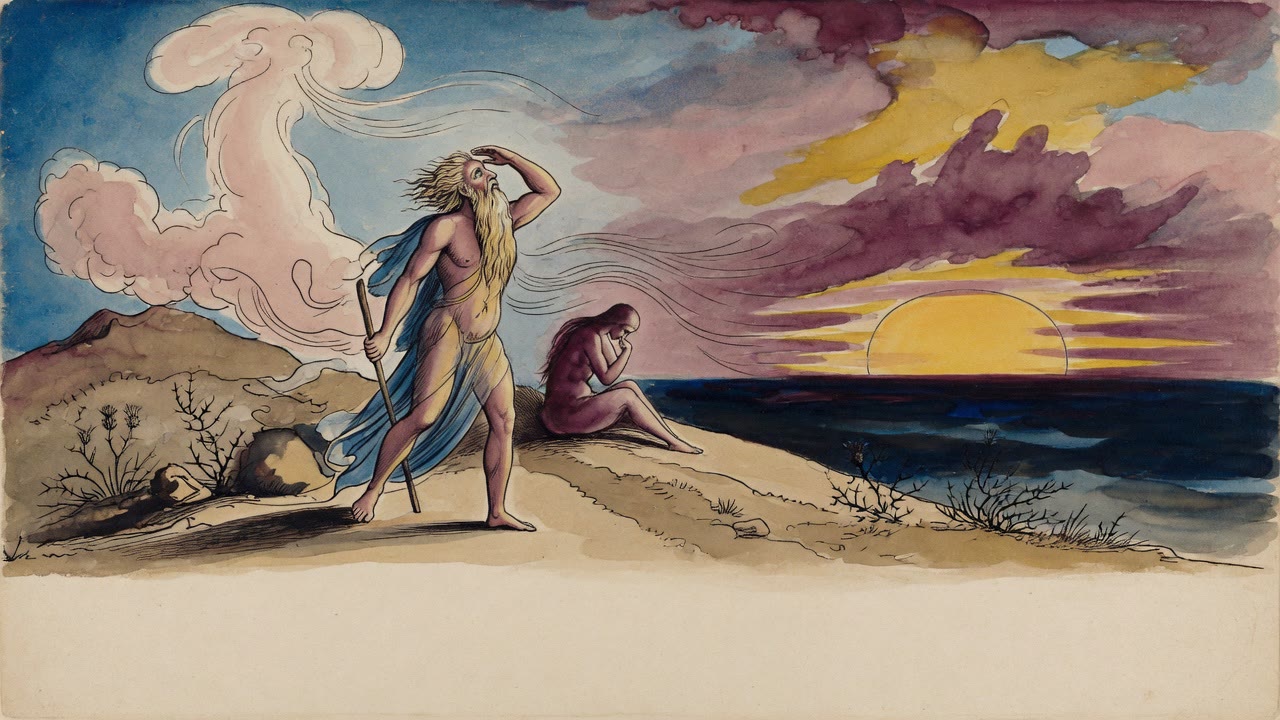
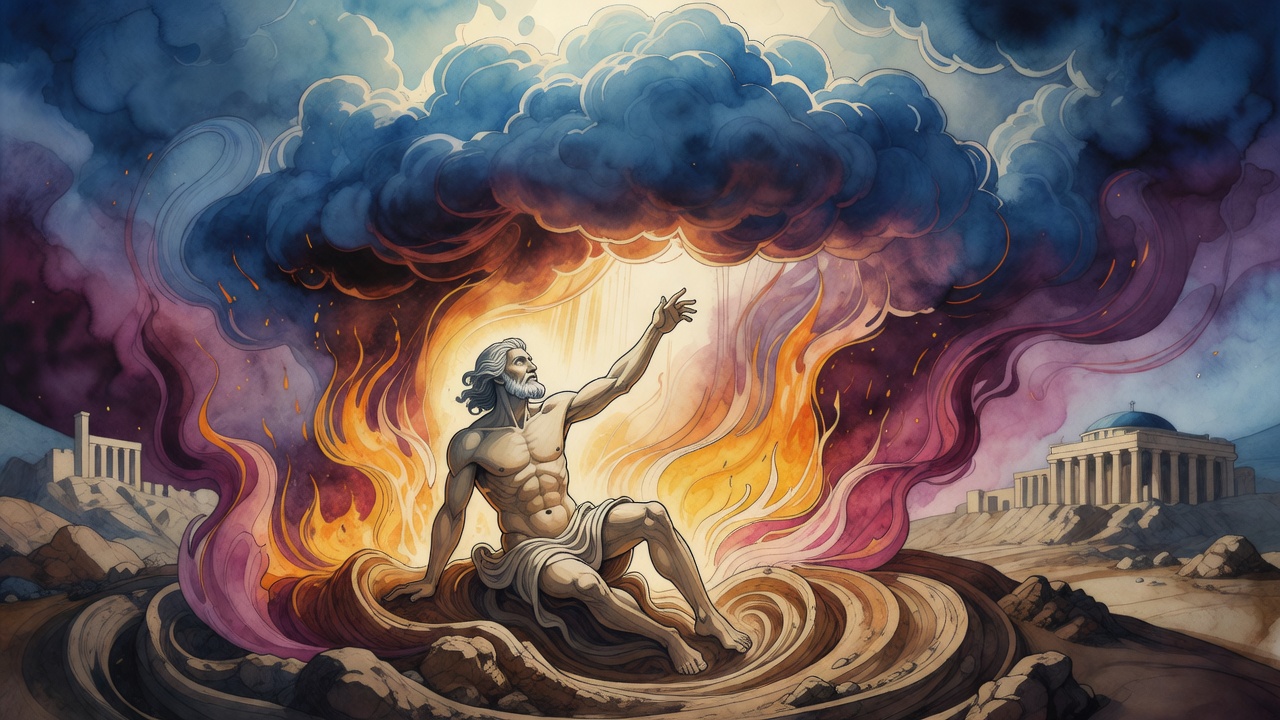
The sages placed his first dust at the navel of the earth, the pure place where the Temple would one day stand. Before Jerusalem had walls, before an altar smoked there, before pilgrims climbed with songs in their mouths, the first human was shaped at the future center of holiness.

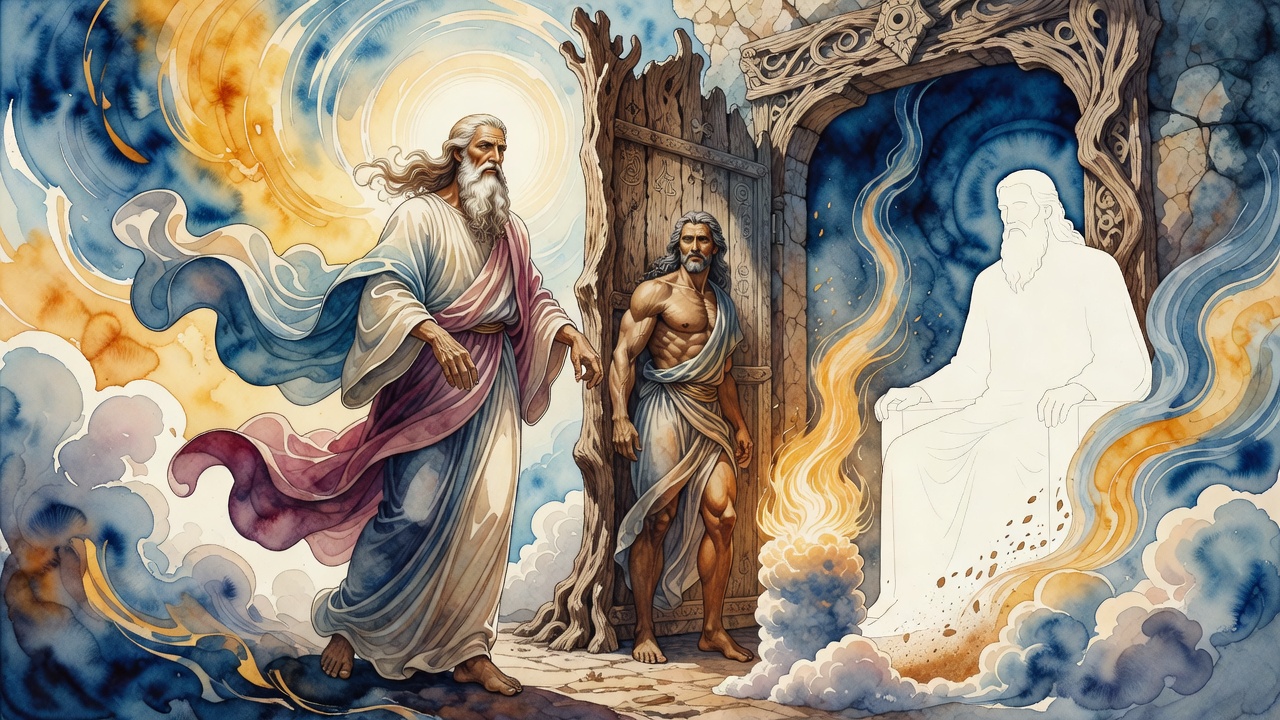
Then God took him from that place and brought him into Eden.

The Garden Was a Palace

Eden was not merely soil with trees.

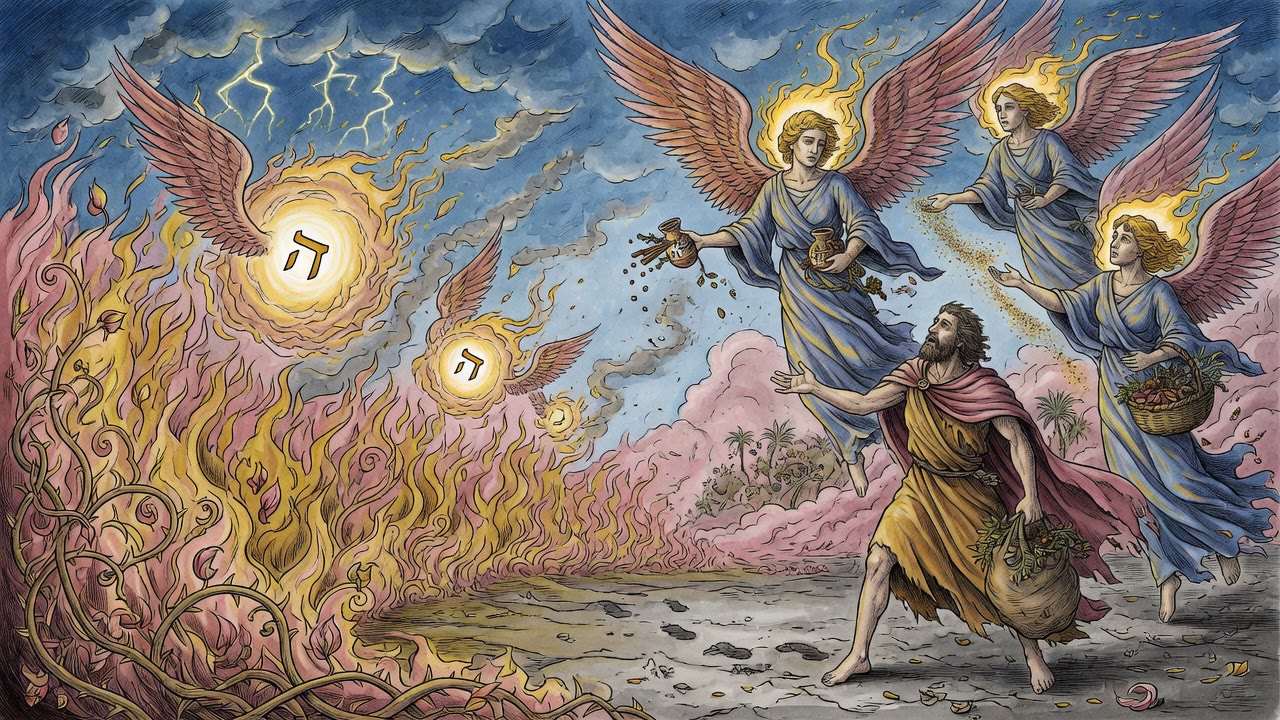
It was God's palace. Adam was carried from the place of the Temple into a royal enclosure, set inside a garden that belonged to the King. The verse says God took the man and placed him there to work it and guard it. The sages did not hear ordinary farming in those words. The first labor was prayer, Torah, and commandment.

No plow scraped the ground. No thorn tore his hand. Adam's task was to keep the commanded shape of the world intact. He stood in the garden as priest before there was a priesthood, as servant before there was a sanctuary, as the first creature asked to guard what had been given.

The garden was not leisure. It was responsibility before sin made responsibility painful.

That makes the movement from Temple site to garden feel less like relocation and more like initiation. God formed the servant at the future place of service, then brought him into the palace where service would begin. Eden was the first chamber of worship, and Adam entered it already carrying dust from the center.

The Work Was Torah Before Sinai

The commandments were already there in seed.

The tradition gives Adam the basic laws by which human life can remain human: no idolatry, no bloodshed, no theft, no sexual corruption, no blasphemy, no eating from the limb of a living animal, and the demand for judgment. The garden held fruit, but it also held law. Appetite had a boundary before appetite ever crossed it.

That is why Adam's work could be called Torah even before Sinai burned. Torah was not only a scroll waiting in the future. It was the order of the King's palace. To work Eden was to live inside that order. To guard Eden was to protect the fragile line between gift and seizure.

One tree would test whether the guard could guard himself.

Shem Inherited the Holy Places

After the flood, the garden did not vanish from sacred geography.

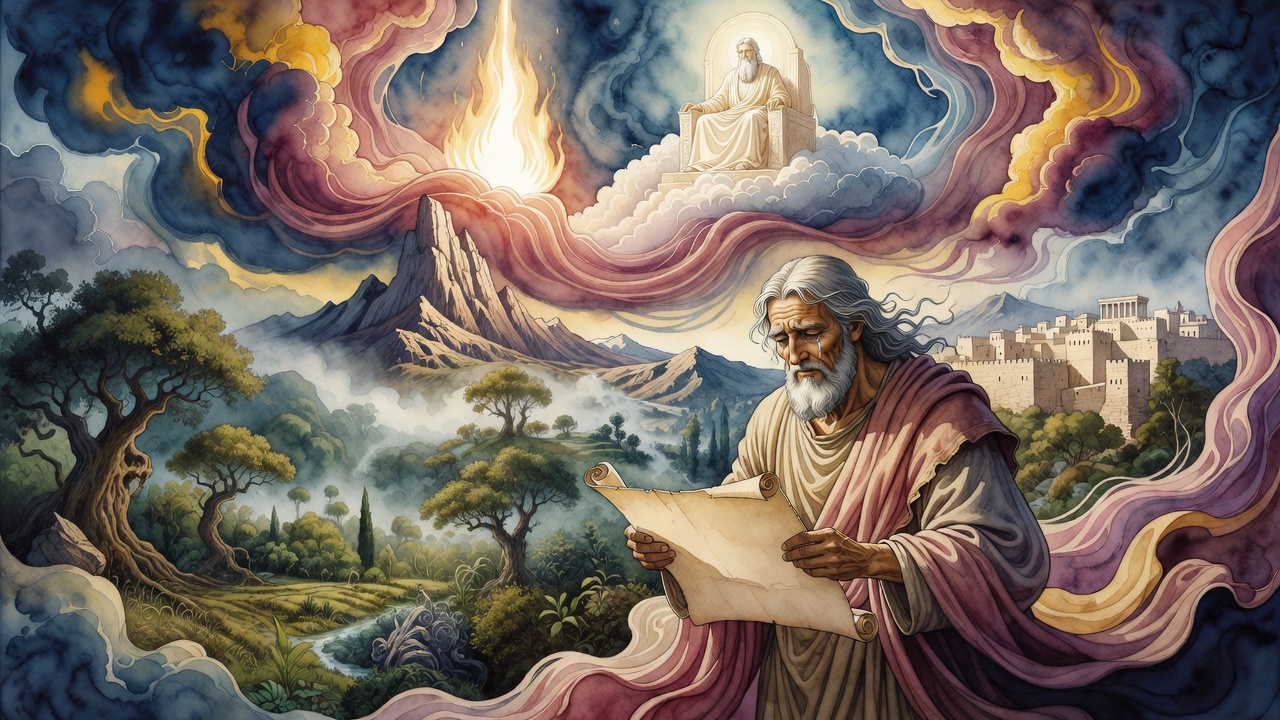
Noah divided the world among his sons, and Shem received the portion that held the holiest places: the Garden of Eden, Mount Sinai, and Mount Zion. The three stood together like hidden posts in the world's map. The place where humanity began, the mountain where Torah would be given, and the hill where the Divine Presence would dwell were all bound into Shem's inheritance.

Noah rejoiced when that portion fell to Shem. The old blessing rose in him: blessed be the Lord, God of Shem. The world after the flood still had a line running through it, and that line joined garden, mountain, and city.

Those places were not random jewels scattered across a map. They marked beginnings: the beginning of humanity, the beginning of Torah, the beginning of sanctuary. Shem's inheritance gathered beginnings into one family line.

Eden was not a lost orchard. It remained part of the sacred claim on earth.

The Tree Fed the Righteous With Fragrance

In the deeper vision of paradise, the garden opened beyond measure.

Every corner held eighty myriads of trees, and even the least among them surpassed the finest spice trees. Sixty myriads of angels filled each corner with song. The Tree of Life stood at the center, its branches shading all of paradise. Seven clouds of glory hovered above it, and winds carried its fragrance across the garden.

Beneath that tree, scholars sat immersed in Torah. Above them stretched canopies, one woven from stars, another from sun and moon, while a curtain of cloud separated splendor from splendor. The first garden had been a palace of work. The later paradise was a palace of reward, but the work had not changed at its root. Torah still gathered the righteous under the tree.

Adam was led from the future Temple into Eden. The righteous are led back under the Tree of Life. The road between them is guarded by commandment.


← All myths

From the tradition

Sources

4 sources

The texts this telling draws on, in full. Open a card to read inline, or expand it for a wider, quieter read.

Pirkei DeRabbi Eliezer 12:1Pirkei DeRabbi Eliezer

Pirkei DeRabbi Eliezer turns to Where Was the Garden of Eden According to the Sages.

That's where Pirkei DeRabbi Eliezer, a fascinating and somewhat enigmatic text of Jewish tradition, offers a compelling perspective. It paints a picture of Adam not just as the first human, but as someone intimately connected to the most sacred space on Earth.

Quite boldly, that the Holy One, blessed be He, created Adam in a place of absolute purity, specifically "in the place of the Temple." Before the Temple existed, before Jerusalem was even a city, the seed of its holiness was already present in the very spot where Adam was formed.

It gets even more interesting. God doesn't just create Adam there, but then brings him into "His palace," which, according to Pirkei DeRabbi Eliezer, is the Garden of Eden. The verse from (Genesis 2:15), "And the Lord God took the man, and put him into the garden of Eden to dress it and to keep it," is key here. Where did God "take him" from? From the Temple Mount, the text insists.

Now, you might be thinking: "Dress it and keep it"? Was Adam supposed to be a gardener? Did he have to till the soil and pull weeds? The text anticipates this question. "Perhaps thou wilt say: To plough (the fields) and cast out the stones from the ground." But, as the text reminds us, all the trees grew of their own accord in Eden. So, what does "dress it and keep it" really mean?

The implication is that Adam's role was far more profound than simple gardening. He was placed in a sacred space, connected to the divine presence, and tasked with preserving its holiness. He was, in a sense, the first priest, tending to God's sanctuary.

It’s a powerful image, isn’t it? Adam, not as a simple man in a garden, but as a guardian of the divine presence, connected to the very place where humanity would later strive to reconnect with God. It makes you wonder about the nature of paradise, and the potential for holiness in the world around us, perhaps even in the places we least expect.

Full source
Legends of the Jews 2:53Legends of the Jews

The familiar picture has it as a place of endless leisure, but the Jewish tradition paints a more nuanced picture. It wasn't just about relaxation; it was about responsibility, connection, and a very specific kind of spiritual work.

The familiar verse from Genesis (2:15) tells us that God placed Adam in the Garden "to till it and to tend it." Now, what does that really mean? According to some interpretations, it wasn't about hard labor in the way we might imagine it today. Instead, "to till it and to tend it" meant something far more profound: to study the Torah and fulfill God's commandments. Adam's primary task wasn't agricultural, but spiritual. He was in charge of upholding the moral order of the world. And what did that entail, specifically? Well, the tradition outlines seven commandments, often called the Noahide Laws, that apply to all of humanity. These are the basic rules for a functioning, ethical society: avoid idolatry, don't blaspheme, refrain from murder, incest, theft, and robbery, and establish a system of justice. As Ginzberg retells in Legends of the Jews, these were the principles that Adam was tasked with upholding, the spiritual “gardening” of Eden, so to speak.

There was also one more commandment, a temporary one: Adam was to eat only green plants. The prohibition against eating meat was lifted later, in Noah's time, after the Flood. But even then, Adam wasn't entirely deprived of the finer things!

Here's where it gets really interesting. Even though Adam wasn't allowed to slaughter animals, he still enjoyed meat and wine! How? The angels themselves brought it to him, serving him like personal attendants. Can you imagine?

And it wasn't just the angels who catered to Adam's needs. The animal kingdom was completely different then. Animals were entirely under his dominion, and they received their food directly from his and Eve's hands. As we find in Midrash Rabbah, the relationship between humans and animals was one of complete harmony and respect. They even understood human language! They recognized and revered the image of God within Adam and Eve. They feared the first couple, not in a terrifying way, but with a deep sense of awe and respect.

This, of course, changed dramatically after the Fall. The harmony was broken, the language barrier arose, and the animals' fear turned into something…else. But for a time, in that perfect garden, there was complete unity and understanding.

So, what does this tell us? Maybe the story of Adam in Eden isn’t just about a lost paradise, but about a lost potential. A reminder of a time when humanity was deeply connected to the divine, to the angels, and to the natural world. Perhaps, in our own way, we can strive to recapture some of that harmony, some of that respect, in our own lives. What do you think?

Full source
Book of Jubilees 8:30Book of Jubilees

Book of Jubilees turns to Shem's Sacred Inheritance Includes the Garden of Eden.

The Book of Jubilees, in chapter 8, describes the division of the world among Noah's sons after the flood. This wasn't just a geographical exercise; it was a divinely ordained allocation, a sacred trust. And what fell to Shem, the ancestor of the Israelites? A portion to be held "forever unto his generations for evermore." A pretty big deal. Noah, overjoyed by this outcome, recalled his own prophetic words: "Blessed be the Lord God of Shem, And may the Lord dwell in the dwelling of Shem." This wasn't just a blessing; it was a recognition of a special relationship between God and Shem's descendants. But it gets even more intriguing.

Because the text then goes on to pinpoint specific locations… locations considered the most holy of holies. According to Jubilees, Noah knew that three places held unique significance: the Garden of Eden, Mount Sinai, and Mount Zion. Gan Eden, the Garden of Eden – the very place where humanity first walked with God. Then, Har Sinai, Mount Sinai – where the Torah was given, and the covenant between God and Israel was forged. And finally, Har Tzion, Mount Zion – the heart of Jerusalem, the site of the Temple, the earthly dwelling place of the Divine Presence.

The text emphasizes that these three holy places "were created as holy places facing each other." What does that mean, “facing each other?" Some interpret this spatially – literally, geographically. But perhaps it speaks more to a spiritual alignment, a connection of purpose. Eden representing the original, perfect relationship with God; Sinai representing the renewed covenant; and Zion representing the ongoing, present connection.

What's so powerful here is the linking of these three sites – Eden, Sinai, and Zion. It creates a kind of spiritual map, a constellation of holiness. It suggests a continuity, a through-line connecting the beginning of humanity's relationship with God to its ongoing development and expression.

The passage also alludes to eretz yisrael, the Land of Israel, being at the “centre of the navel of the earth.” This imagery, also found in other Jewish texts, highlights the centrality and importance of the land in the divine plan.

These weren't just random locations. They were, and are, points of connection, focal points where the earthly and the divine intersect. And according to the Book of Jubilees, they are all intimately connected to the legacy of Shem and his descendants. It makes you wonder, doesn't it? How can we connect to these places, even if we can't physically be there? How can we cultivate that sense of holiness in our own lives, wherever we may be?

Full source
Legends of the Jews 1:39Legends of the Jews

Jewish tradition is rich with imagery, and when it comes to describing the afterlife, it doesn't hold back.

You’re in Paradise, and in every single corner of it, there are eighty myriads – that's eight hundred thousand! – trees. And get this: even the least impressive of these trees is better than any spice tree we could imagine. Can you smell that? Sixty myriads of angels fill every corner, their voices blending in a chorus of unimaginable sweetness.

At the heart of it all stands the Tree of Life, its branches shading all of Paradise. And the smells? Just as varied. According to Legends of the Jews, seven clouds of glory hover above it, and winds from every direction carry its fragrance to the far corners of the earth. Underneath this incredible tree, scholars gather, immersed in the study of Torah.

The honor they receive! Above each scholar, two canopies unfurl: one woven from stars, the other from the sun and moon. And a curtain of clouds of glory separates the two.

But wait, there's more! Beyond Paradise lies Eden. Eden isn't just a place; it’s a series of three hundred and ten worlds, seven compartments in all, each reserved for a specific kind of righteous soul.

Who gets a spot in these ultra-exclusive realms? Well, in the first compartment are “the martyr victims of the government,” people like Rabbi Akiba and his students, who gave their lives for their faith. The second is for those who tragically drowned. The third is reserved for Rabbi Johanan ben Zakkai, a pivotal figure in Jewish history, and his disciples.

Then there are those who were "carried off in the cloud of glory" – talk about an exit! – in the fourth compartment. The fifth is especially fascinating: it's for those who repented, the baalei teshuvah (repentance). Jewish tradition teaches that these penitents can even attain a higher spiritual level than those who were perfectly righteous from birth! The sixth compartment is for youths who never tasted sin. Finally, the seventh is for the poor who dedicated themselves to studying Bible and Mishnah, and lived lives of dignity.

And where is God in all of this? According to this vision, God sits right in the midst of them all, teaching Torah.

This incredible image, pieced together from various sources like Ginzberg's Legends of the Jews, paints a vivid picture. It's not just about rewards and punishments. It’s about continued learning, growth, and connection with the Divine. This isn't just about resting on your laurels for eternity; it’s about continuing the journey. It makes you wonder, doesn’t it? What kind of compartment would we be in? And more importantly, what can we do now to make that compartment even better?

Full source