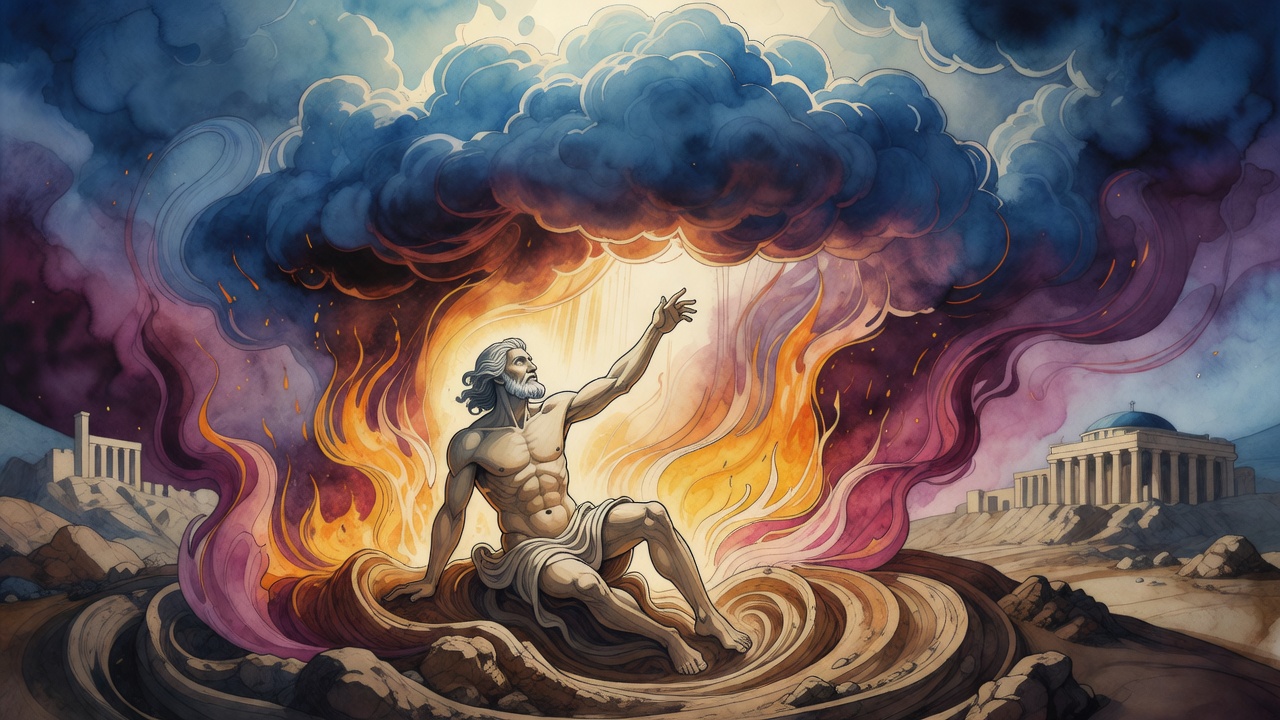
Lamech's Wives Refused to Bear Children With the Flood Coming
Lamech swore the boy in his arms would comfort a cursed world, but his wives had already decided no cradle was worth filling before the Flood.
Table of Contents
 Click for full size
The Two Wives Who Would Not Be Persuaded
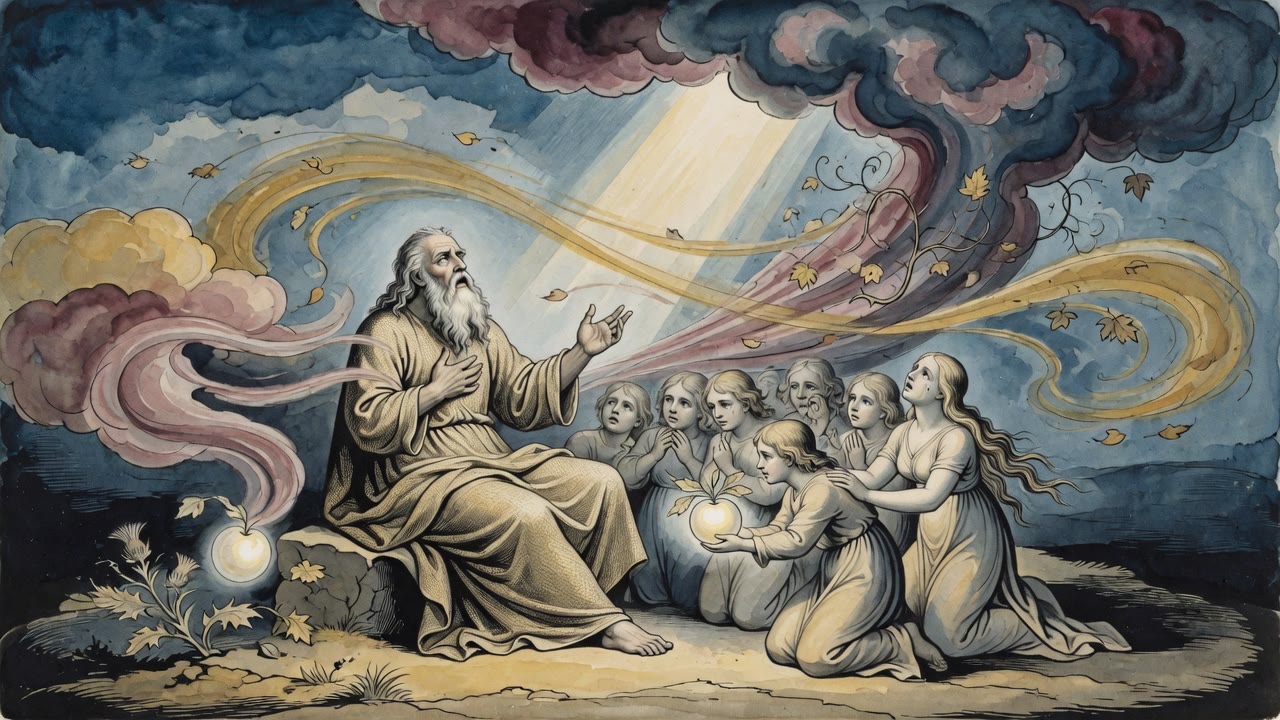
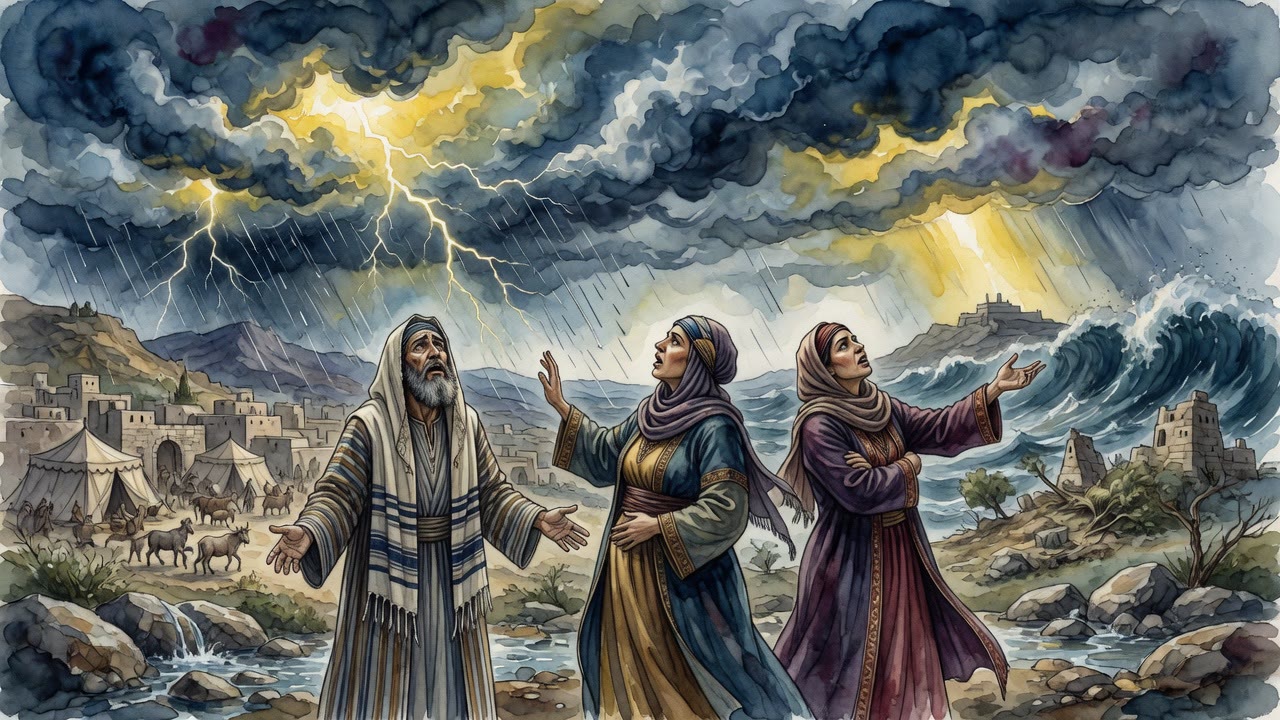
Lamech wanted children, and his two wives had stopped pretending they did. Adah and Zillah had heard the same thing he had heard, the thing the whole dying generation whispered to itself at the wells and over the dwindling harvests. The Flood was coming. Not in a hundred years, not in some grandchild's lifetime. Tomorrow.
"Tomorrow the Flood comes and destroys everyone," they told him. "Shall we listen to you and give birth, only to bring children into a curse?" It was not weakness. It was arithmetic. A woman who carries a child for nine months when the water is due in one is not building a future. She is preparing a smaller coffin.
Lamech refused to accept it. So he did what desperate men do when the facts are against them. He built an argument.
The Argument From a Murderer's Reprieve
He reached back four generations, to Cain, the first man to put a brother in the ground. "Have I slain a man, that I should be wounded for it?" Lamech asked his wives. "Have I killed a child, that I should be bruised on his account?" His logic ran like this. Cain had murdered, and God had not struck him down. God had only postponed the reckoning, pushing the punishment out seven generations. And if a killer earned that much patience from heaven, then he, Lamech, who had spilled no blood at all, surely had nothing to fear from the rising water. How much more so, he argued, should the innocent be spared.
It was a clean argument, and a broken one. The flaw was simple. If God delayed every sentence forever, He would never collect a single debt. Mercy that never arrives is not mercy. It is the end of justice. Lamech wanted the patience without the price, and the rising water was the bill coming due.
A Man in His Limbs, a Child in His Years
There was a second crack in the argument, and it cut closer to the bone. Lamech had insisted he killed neither a man nor a child. But which had Cain killed? Abel had been both. A man in terms of his limbs, fully formed, full-grown in body. A child in terms of his years. He had lived only about fifty days when his brother brought a stone down on him. Fifty days of breath, and then nothing.
So Lamech's careful distinction collapsed. The first death in the world had been a grown man and a newborn at once, and the ground had opened for him just the same. Adah and Zillah felt that same fear in their own bodies. Why pour a life into a vessel the water was already coming to break?
The Question They Carried to the First Man
When a husband and his wives cannot agree on whether to bring a life into the world, they need a judge older than all of them. So they went to Adam.
He was still alive, the first man, the only person breathing who remembered Eden and the sentence that had followed it. They laid the question at his feet. The Flood is coming. Should we make children anyway?
Adam's answer was short and hard. "You do what is yours to do," he told them, "and the Holy One, blessed be He, will do what is His." Fulfill the command to be fruitful. What the water does afterward was never your decision. The duty is yours. The outcome belongs to heaven.
It was good counsel. It was also, the wives saw at once, counsel he had not taken.
Heal Your Own Lameness
Adah and Zillah did not bow and leave. They looked at the old man and they struck where it would land.
"Physician, heal your own lameness," they said. "Have you not kept yourself apart from Eve these hundred and thirty years, so as not to father a child from her?"
The blow went home, because it was true. After the death of Abel, after the ground had drunk one son's blood and the other had been driven out marked and wandering, Adam had separated from his wife for a hundred and thirty years. He had preached procreation to two frightened women while keeping abstinence in his own tent, refusing that same duty for over a century because his grief was its own kind of flood.
Adam had no rebuttal. The wives had caught him living the opposite of his own advice, and something in the old man broke open. He went back to Eve. He took up again the work he had told the young women they could not refuse, and from that reunion the line of humanity ran on.
The Son Born Already Circumcised
What Lamech did not yet know was that he had been right for a reason better than any argument.
There was a tradition that ran in Adam's own hands, passed down from the day the ground was cursed. On that day Adam had cried out, "Master of the world, how long? How long until the curse lifts?" And the answer had come back to him: until a son is born already circumcised from his mother's womb. A child marked from the first breath. A child the earth would not have to wound to make holy.
And then the boy came. Noah was born already circumcised, the sign on his body before any hand could put it there. Lamech looked at the infant and the old promise rose up in him whole. "This one," he said, "will comfort us from our work and from the toil of our hands, out of the ground the Holy One cursed."
The world did not know it had just been handed the date its curse would lift. It only knew the water was coming. The wives had counted the days and decided no cradle was worth filling. Lamech filled one anyway, and the child in it was the only thing the drowning generation had left that was named for relief.
← All myths