God Stayed Near Adam After the Gate of Eden Closed
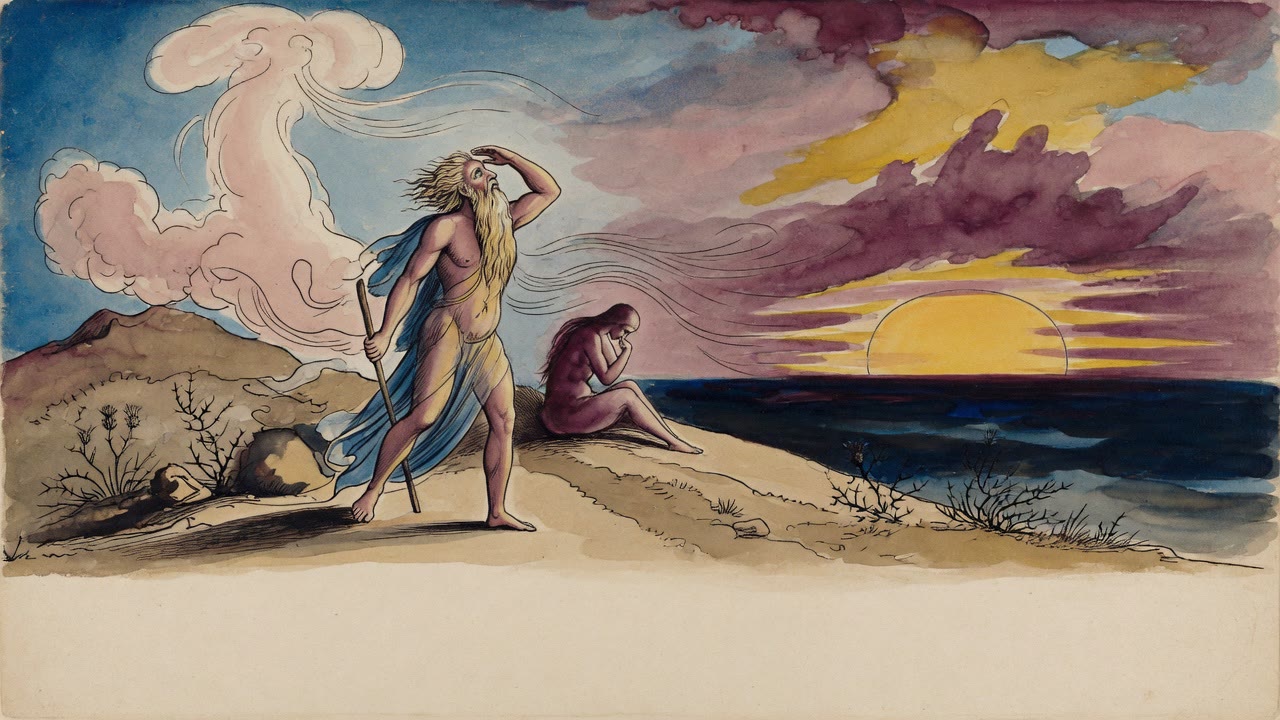
He wept when he heard about the thorns. Am I and my donkey going to eat out of one trough, he asked, and then God said the word bread.
Table of Contents
 Click for full size
A Cup of Blessing and Two Angels at the Wedding
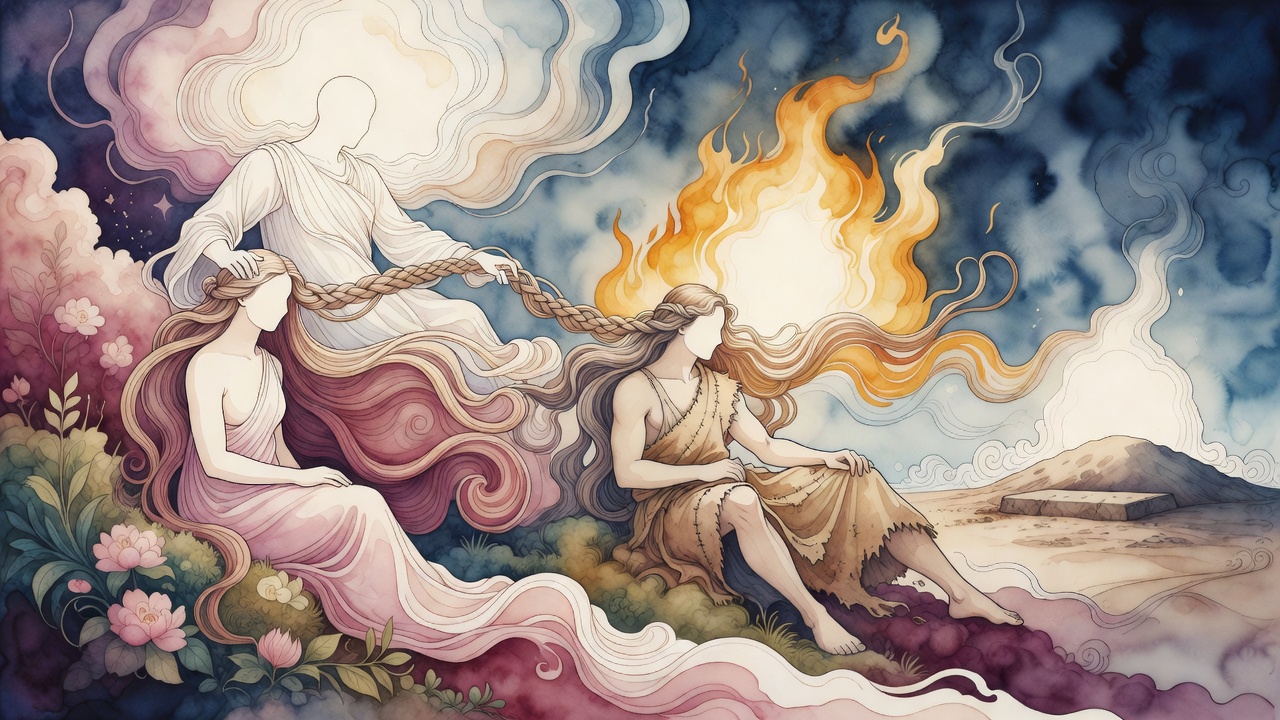
God took a cup of blessing and said the blessing over them. Michael and Gabriel stood on either side of the couple as the groomsmen, the way two friends stand up for a man at his wedding.
Rabbi Abbahu told it that way, and then he pulled a whole pattern out of that one scene. He blesses bridegrooms, because He blessed them on the day He made them. He dresses brides, because the verse says He built the rib into a woman, which is the careful work of someone getting her ready. He visits the sick, because He came to Abraham at the door of the tent while the man was still healing from the knife. He buries the dead, because He buried Moses in the valley Himself. And He shows His face to a mourner, because He came to Jacob after the burial and blessed him with the blessing said over mourners.
The King Came Home and Found the Servant Tasting
Then the tree, and after the tree, the question.
Rabbi Yitzchak told it as a household story. A king says to his servant, do not taste the dish until I am back from the bathhouse. The king's wife comes into the kitchen and says, taste it, so he does not come home and start asking for salt or fish brine. The king walks in and finds the man with the spoon at his lips.
"You listened to my maidservant over me?"
So with Adam. You listened to Eve over Me, God said, and the man was out of the garden that same hour. The verse does not say Adam listened to his wife's words. It says her voice, and the voice was wailing at him.
Three walked into that judgment and four walked out condemned. Adam. Eve. The serpent. And the ground, cursed along with them, for nothing it had done.
Thorns, Thistles, and the Grass of the Field
The ground would now bring up cursed things for him. Gnats. Fleas. Flies. Though even out of that same cursed dirt a camel comes up, and a man can sell a camel and live off the price for a season, so the curse was not sealed all the way shut.
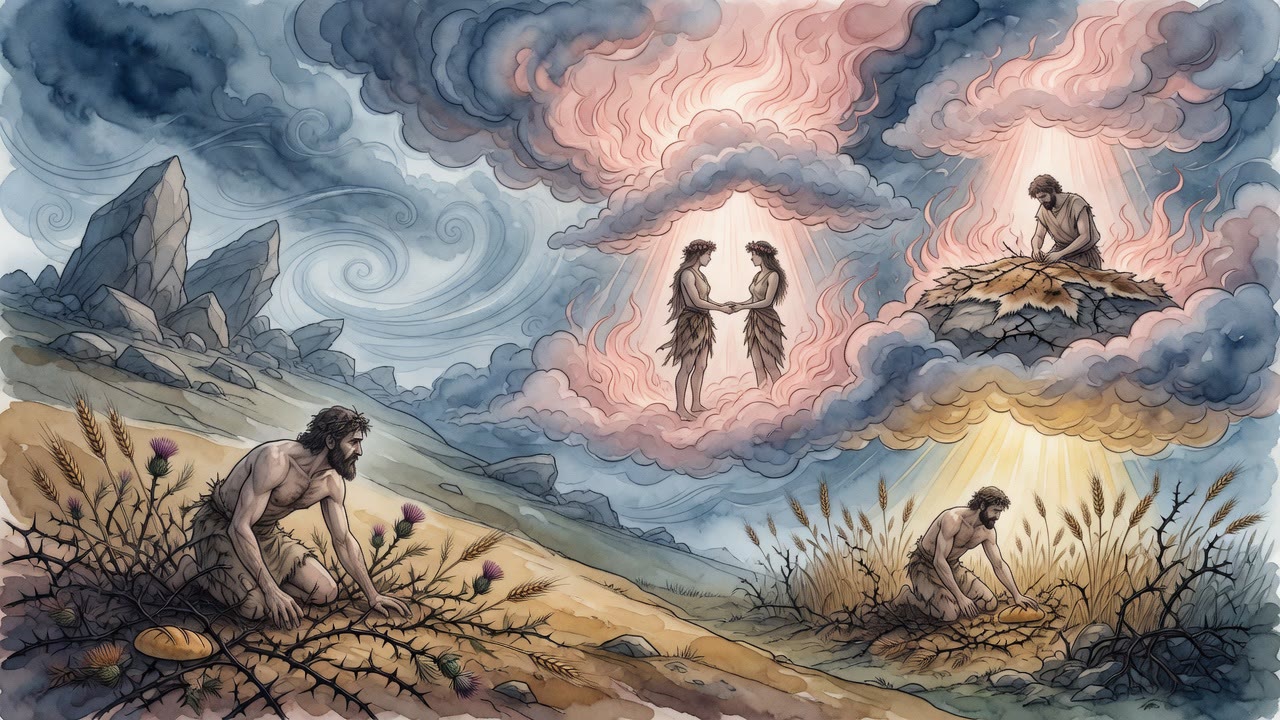
Had you stayed worthy, God told him, I would have raised fruit for you off every tree in Eden, and you would have picked the plainest weed and tasted in it every delicacy in the world. Now thorns and thistles, and you will eat the grass of the field.
Reish Lakish said that when Adam heard the word thistles, his eyes ran over.
Am I and My Donkey Eating From One Trough
He said it out loud, standing there.
"Master of the universe, am I and my donkey going to feed out of one trough?"
Sweat came out across his face while he waited for the answer.
"Since your face has sweated, you will eat bread."
His mind cooled. Nothing had been taken back. The thorns stayed, the sweat stayed, the gate stayed shut. But bread is not something a beast is ever handed, and the man stopped crying.
Reish Lakish, looking at his own century, said we would be fortunate if we were still standing under the first sentence, and that we have not gotten out from under the second one either, because in a hard year people go into the field and eat the grass raw. Rabbi Levi said Adam would have done better to accept the first decree as it was spoken and leave it alone.
The First Garment Anyone Ever Sewed
Before He put them out, God made them coats of skin and dressed them. Rav and Shmuel could not agree on the material. One said a thing that comes off an animal's hide. The other said a thing that the skin is glad to have against it.
Rabbi Simlai built something enormous on that stitching. The Torah begins with an act of kindness and ends with one. It begins with God putting clothes on people who have nothing on. It ends with God going down into a valley in Moab and burying a man with His own hands.
Rabbi Hama bar Hanina asked the obvious thing. How does a person walk after God, when the verse also calls Him a consuming fire? You walk after what He did. He clothed the naked, so clothe the naked. He sat with a sick man at the oaks of Mamre, so sit with the sick. He came to Isaac after Abraham died, so go to mourners. He buried Moses, so bury the dead.
The gate shut behind them and the sword turned in the opening. Outside it, two people stood in clothes that had been cut and sewn for them by the one who had just passed the sentence.
← All myths