18 myths

Adam wanted her beneath him. She speaks the Ineffable Name and flees. Three angels found her far out at sea, still waiting.
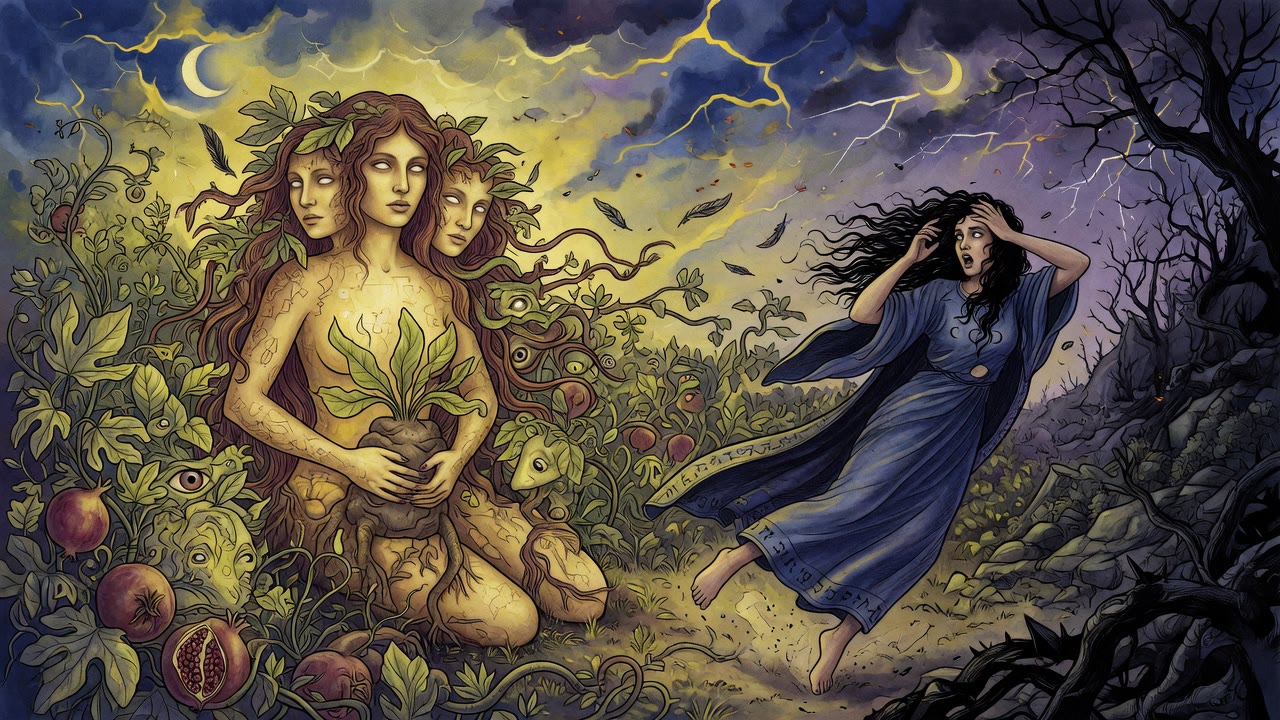
Lilith circles the newly made Adam and claims him, then sees what is attached to his back. She flees to the coasts of the sea and does not return.
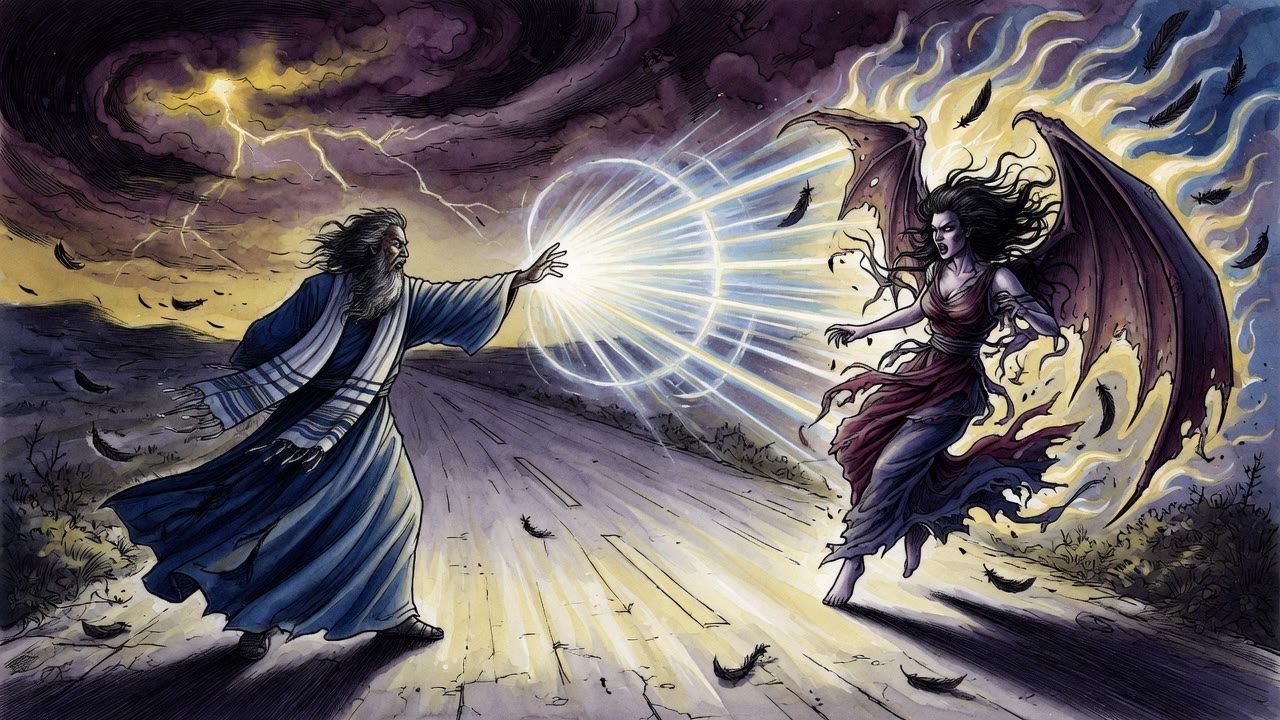
Lilith crossed a night road hunting a birthing mother, but Elijah stood in her path and bound her hunger with an oath by the Name.
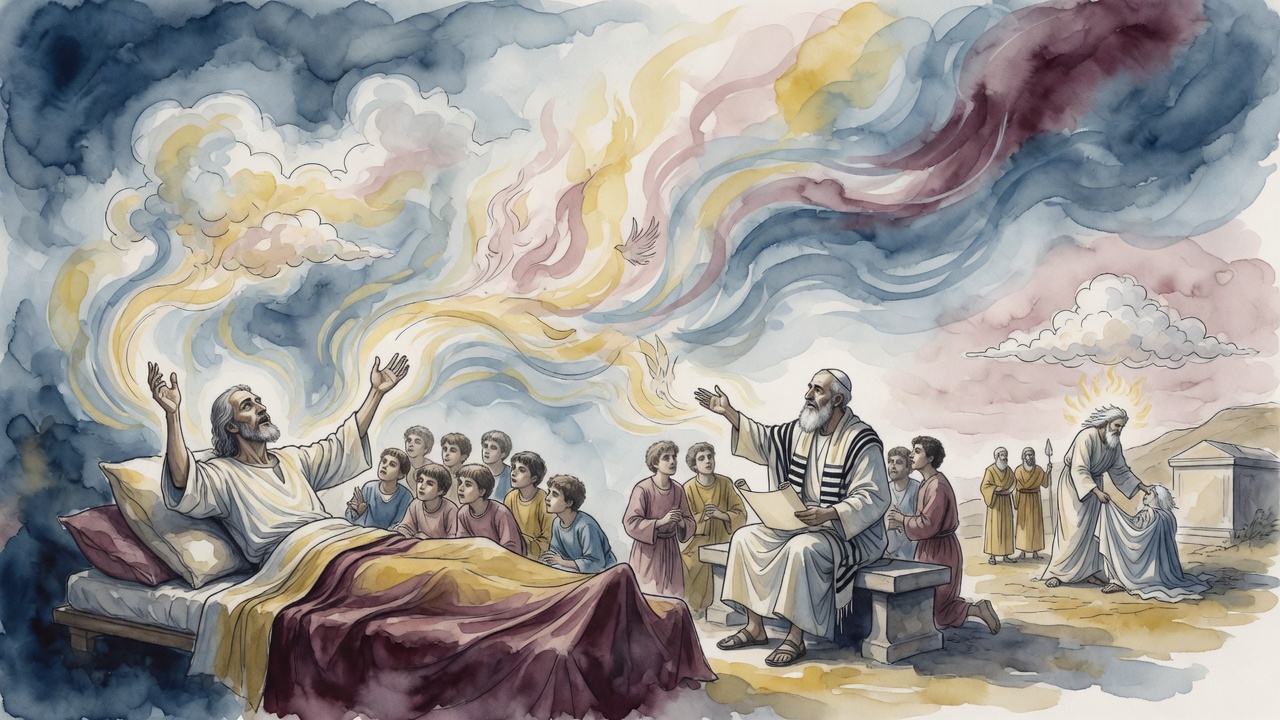
After Abel's blood soaked the ground, Adam fled Eve for 130 years. Female spirits found him there, and grief took on bodies.
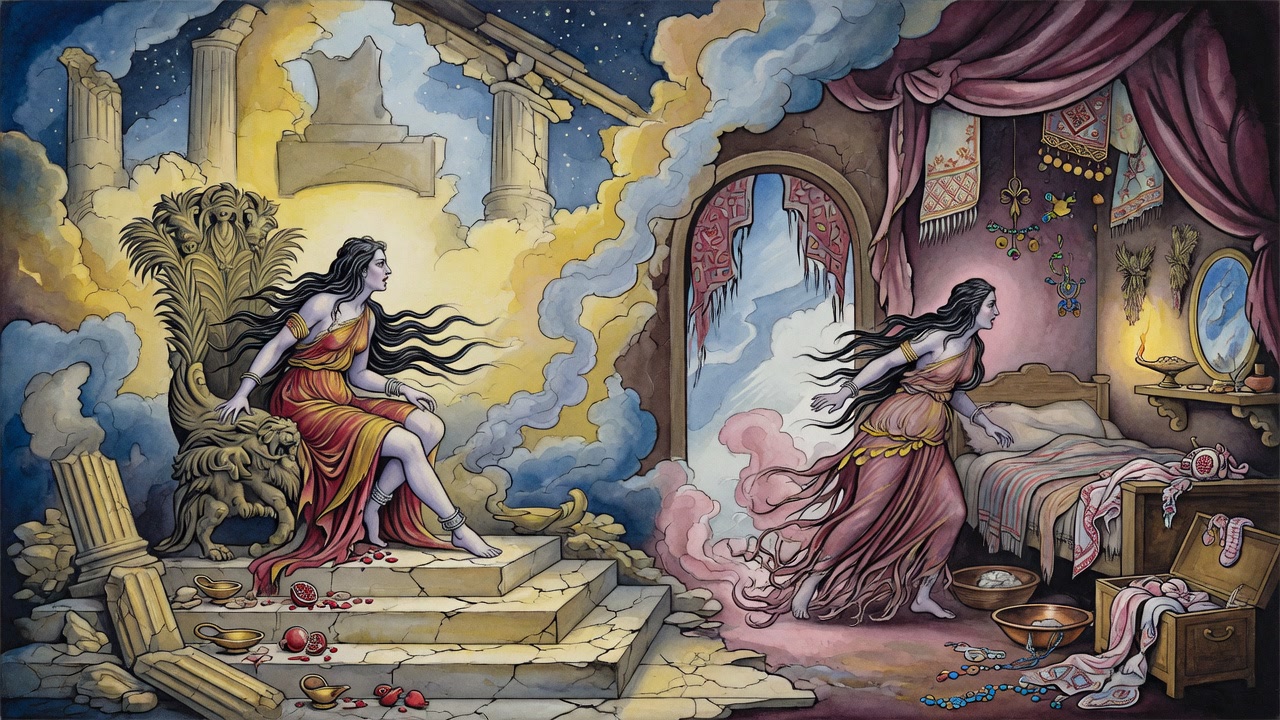
The Temple had burned. Lilith sat down in the empty chair. In a birth room a midwife poured a hair out of the milk and sealed the jug.
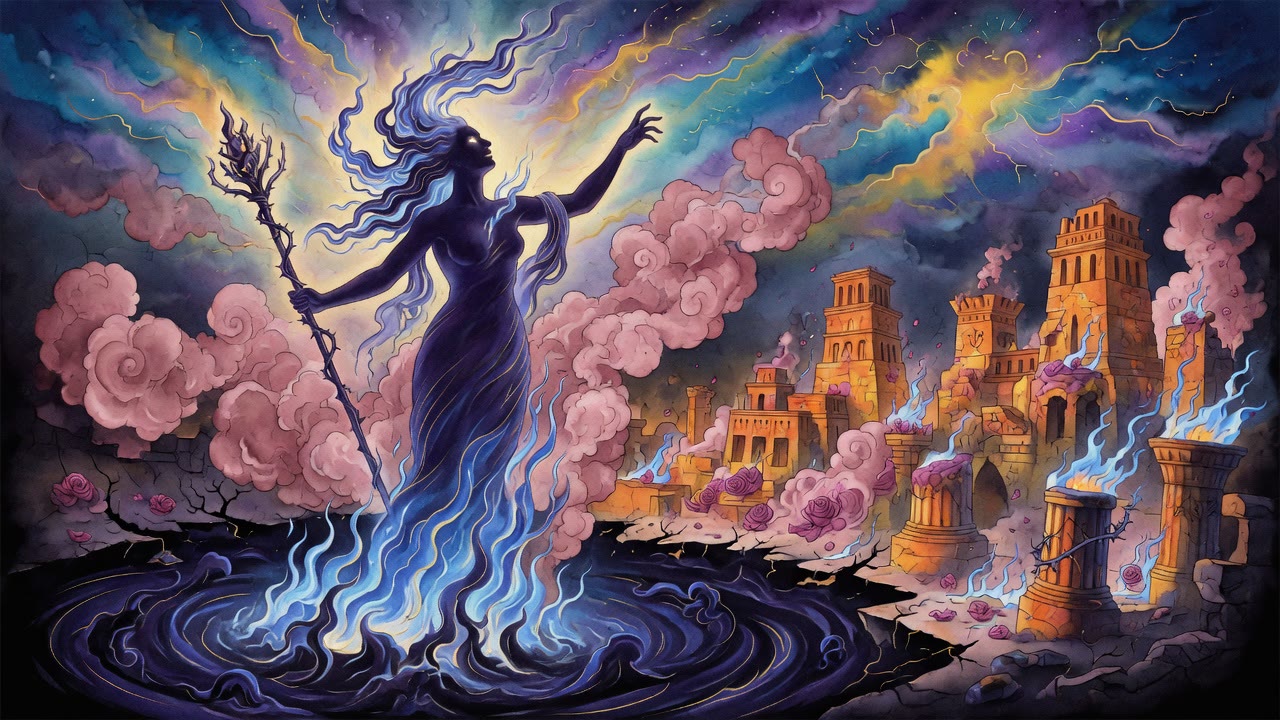
Earrings swung at her face. The traveler drank from the cup she held. Then the drink turned bitter, and the woman at the fork of the road drew a sword.
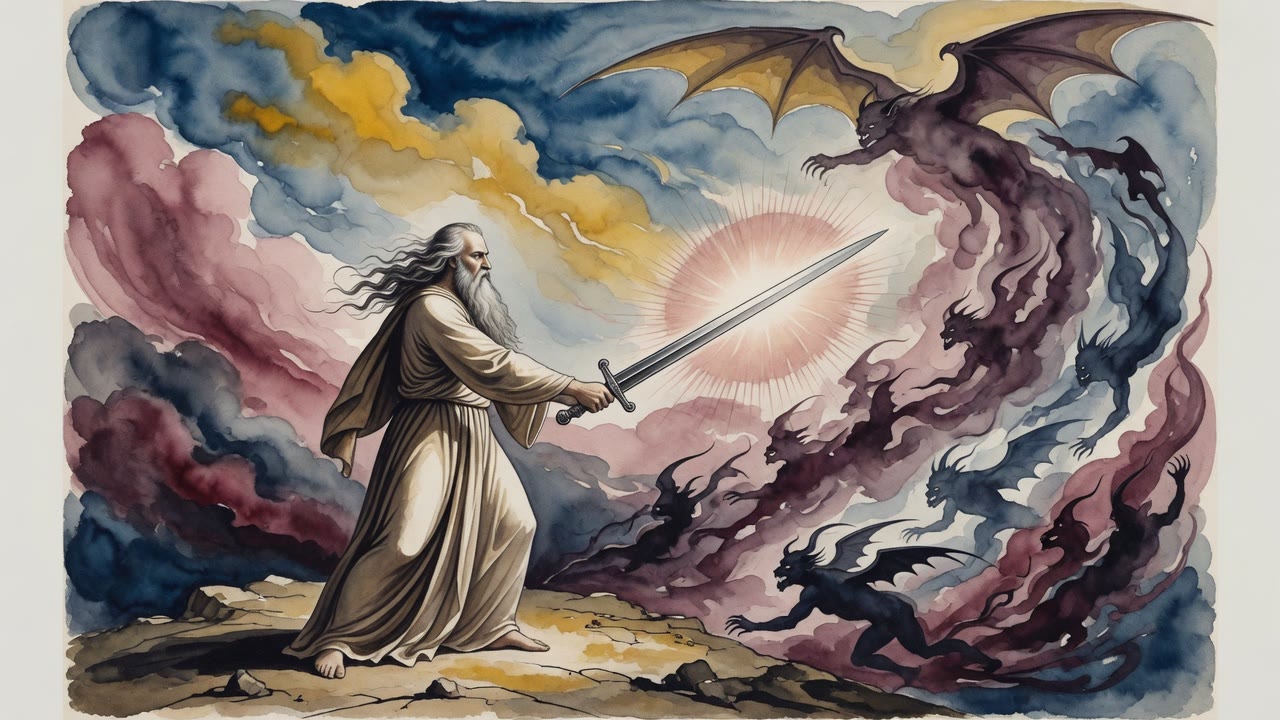
After Enoch ascended, Methuselah ruled the earth. His first task was the demons, Adam's children by Lilith, which he cleared with a sword bearing the Name.
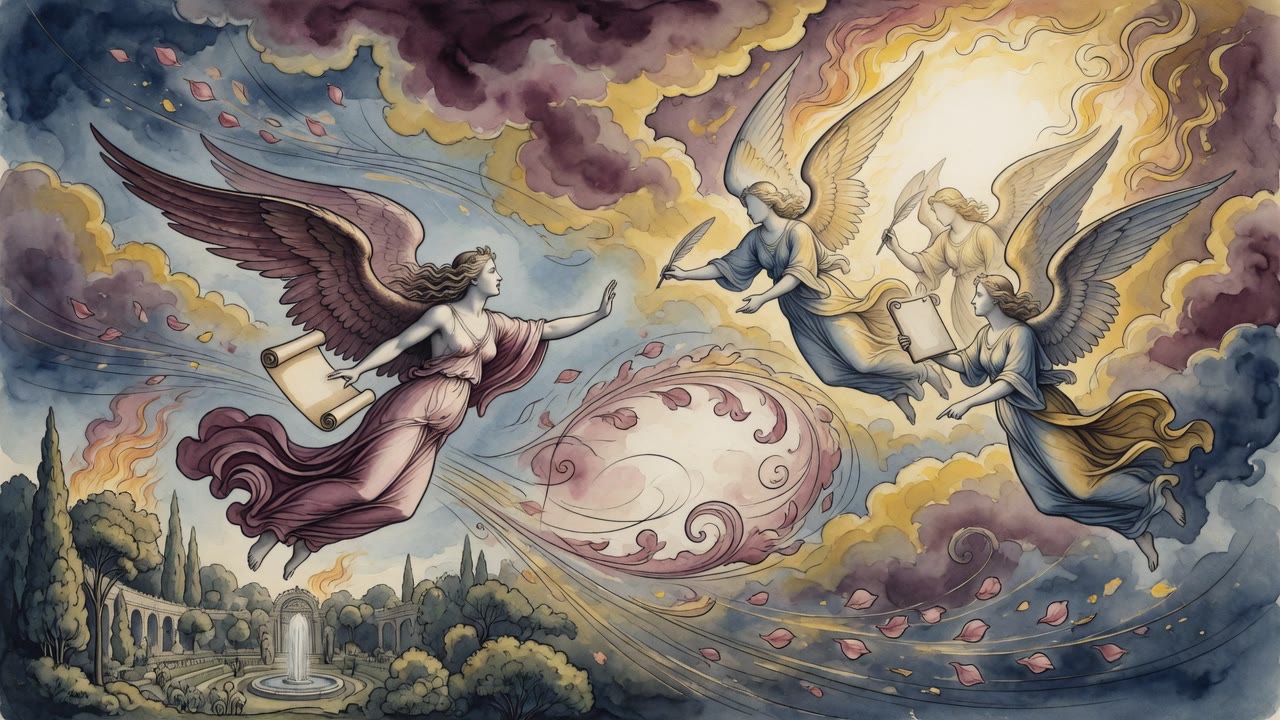
When Lilith flew from Eden, God sent three angels after her. She refused to return. What she offered instead became the contract that still limits her power.
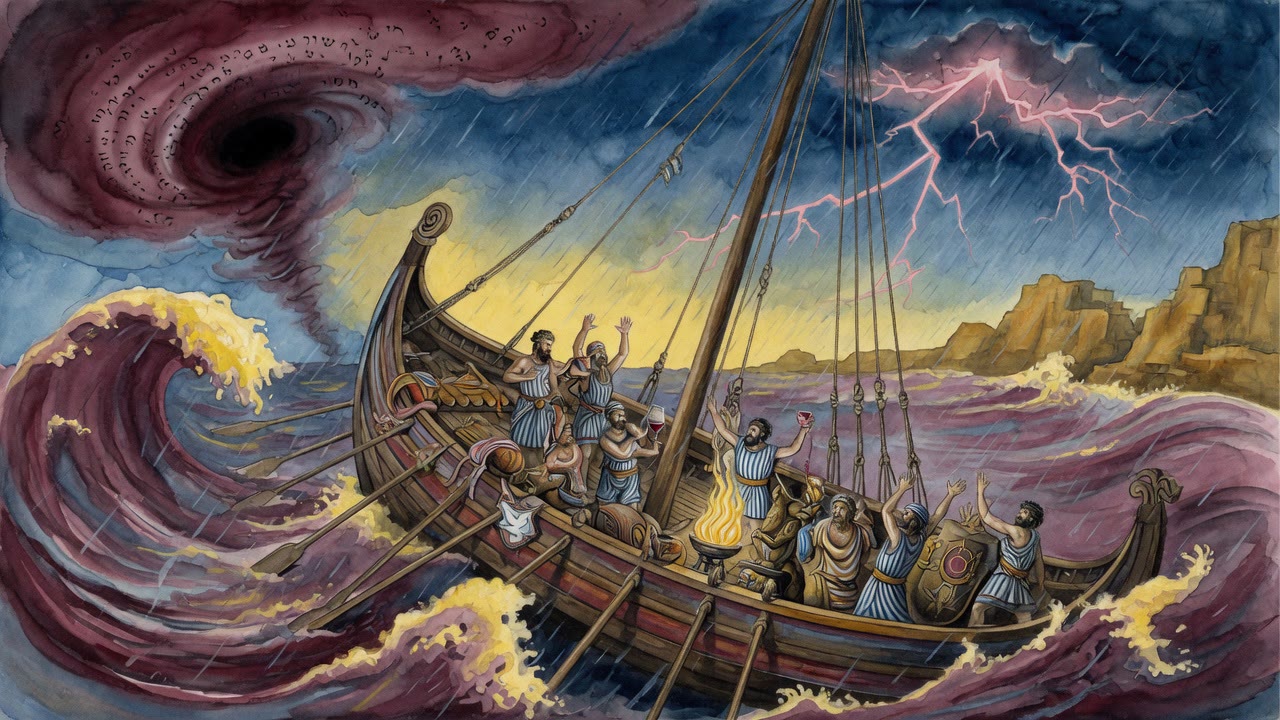
Jonah prays from the bowels of the fish. The Tikkunei Zohar hears the same prayer Israel prayed from the mud of Pharaoh's building projects.
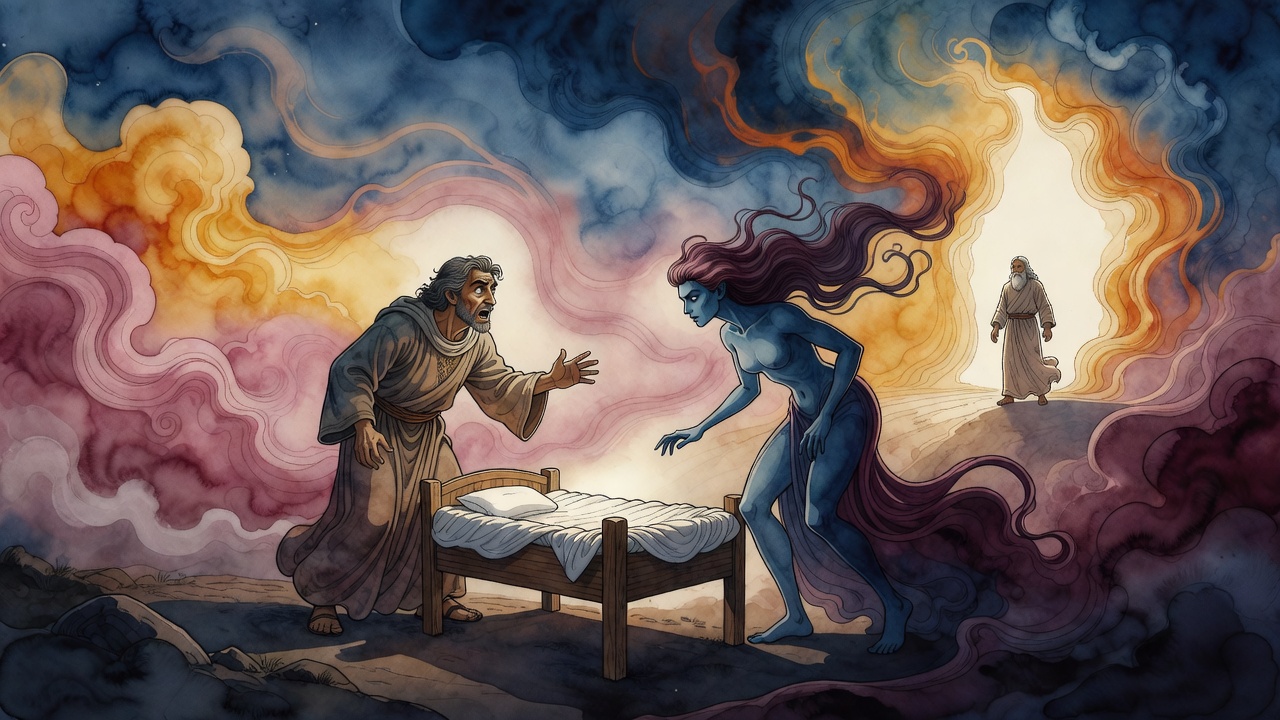
Three angels caught her at the sea and she would not go back to Adam. She swore to spare any child who wore their names. The rest she kept.
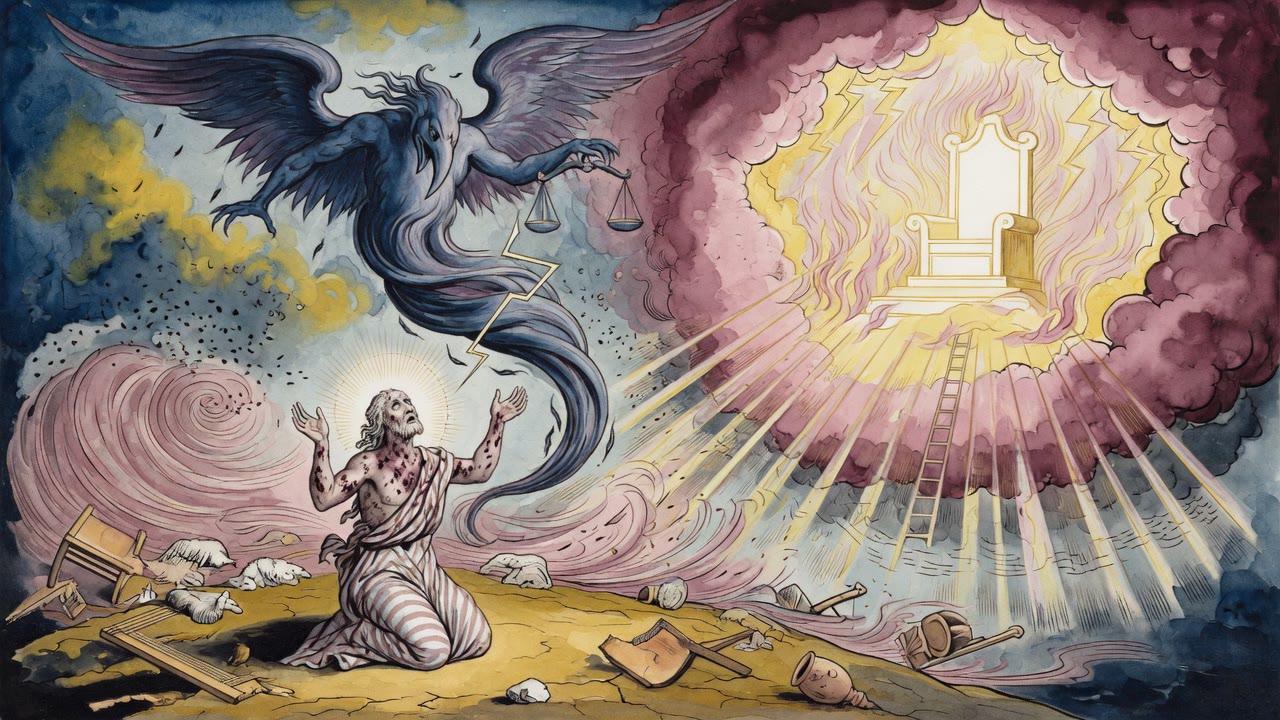
Lilith, queen of Sheba, marched three years to reach Job's cattle. One gashed herdsman broke free and ran to Job's feet. He gave the news and died there.
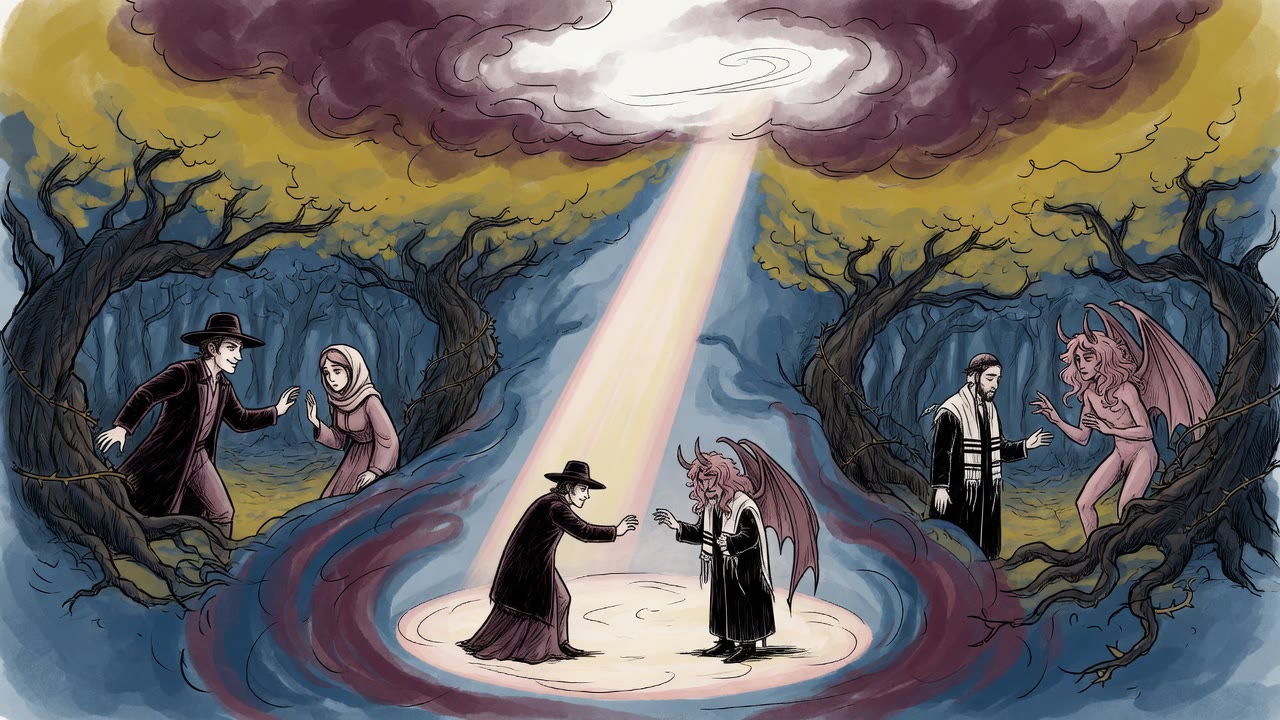
He named a room and an hour as if she had already said yes. She went to his wife instead. The lamp came up on a face he already knew.
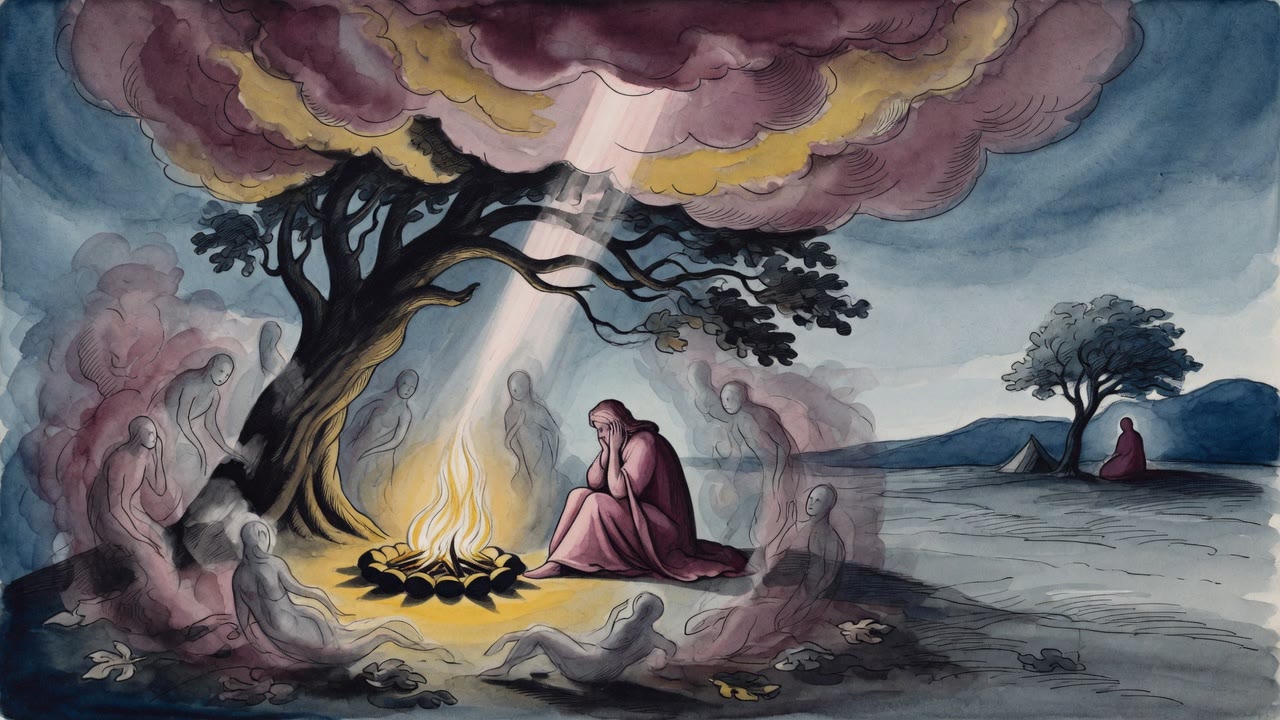
Rabbi Hanina paid a fortune for a silver dish and found a live frog inside. It ate everything he owned, then told him whose son it was.
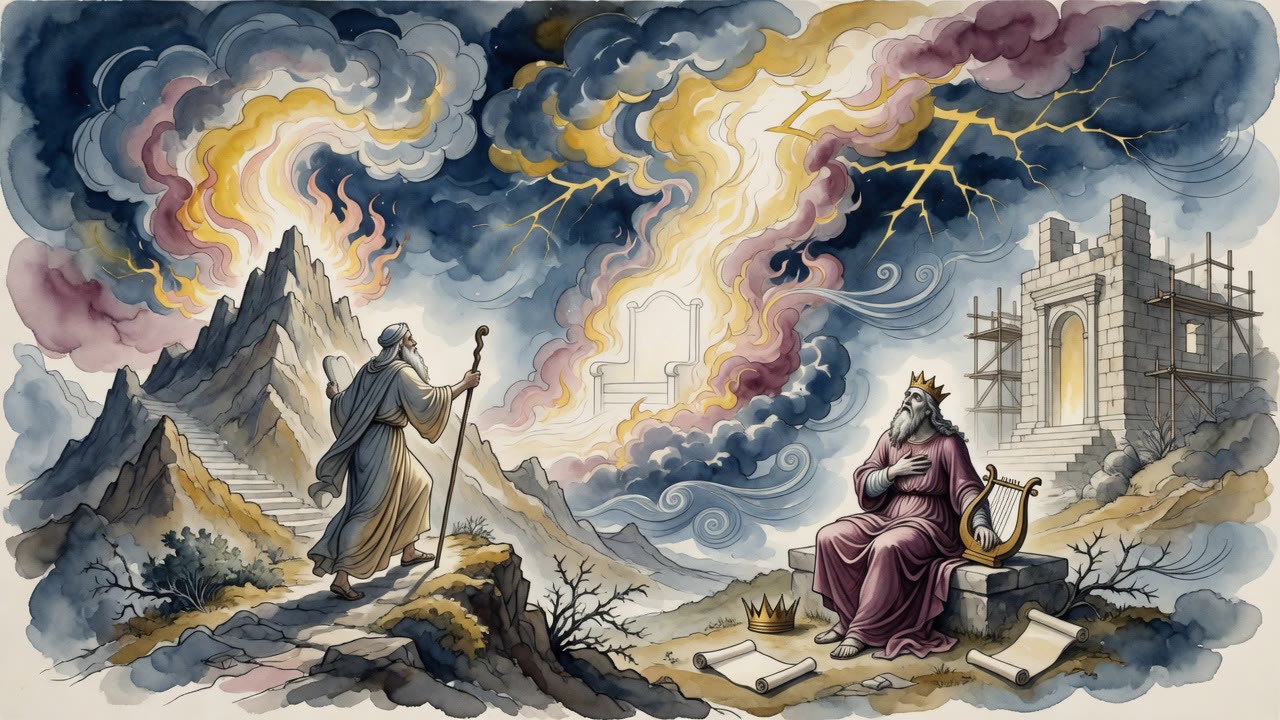
Bereishit is the first word of the Torah. The mystics say Lilith hid inside its six letters and waited there for a crack she could widen.
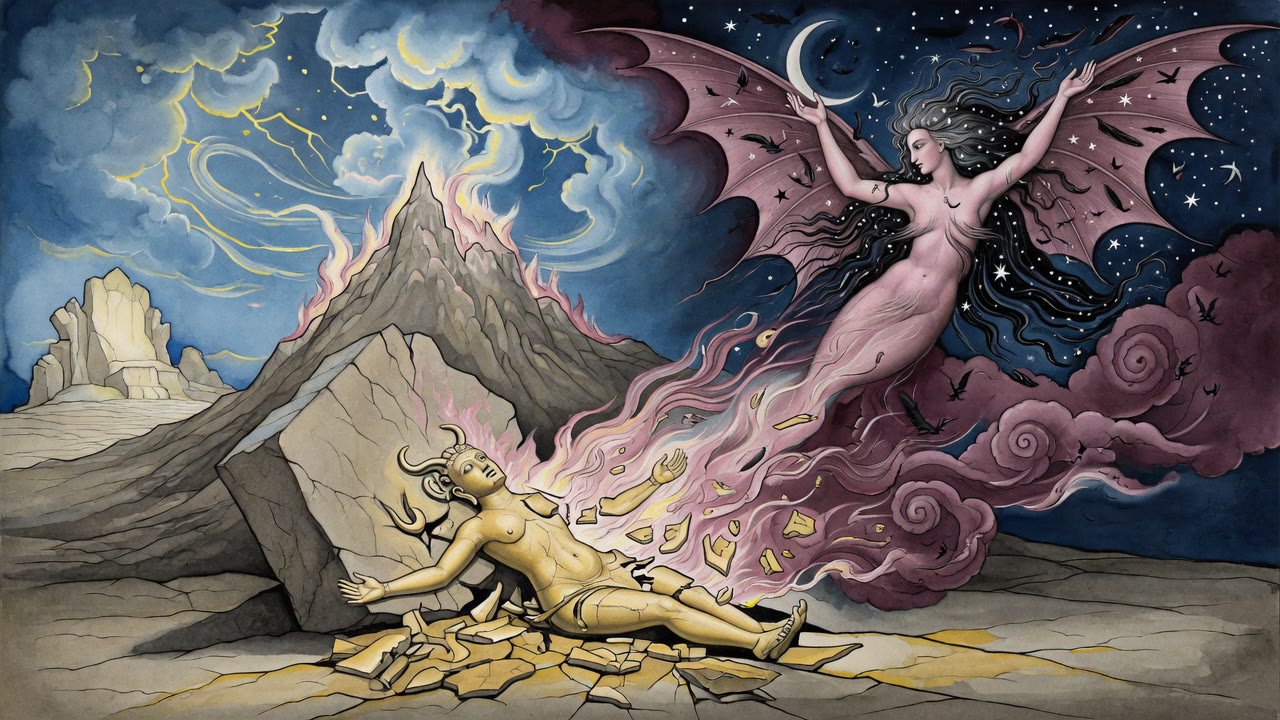
A stone of presence smashes the false image and becomes a mountain. Lilith holds the night while the Shekhinah, the Divine Presence, gathers what broke.
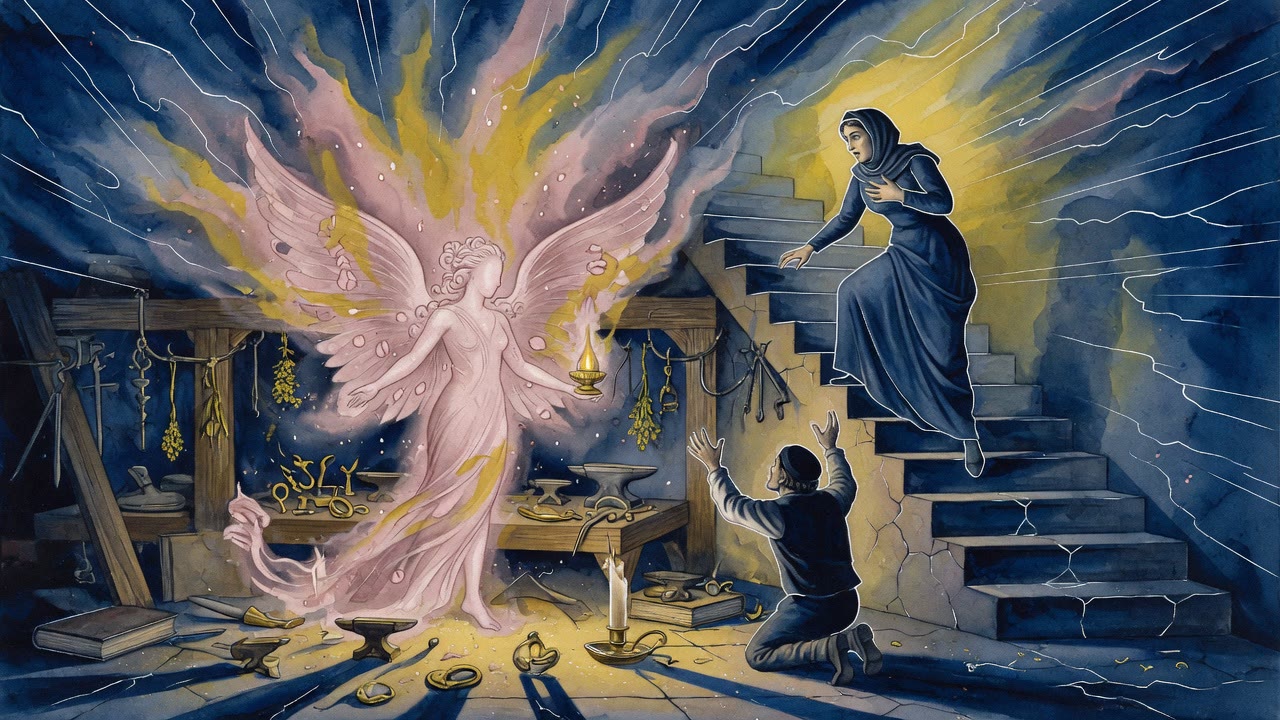
On Passover the goldsmith left the Seder table and went downstairs. His wife put her eye to the cellar keyhole and did not cry out.
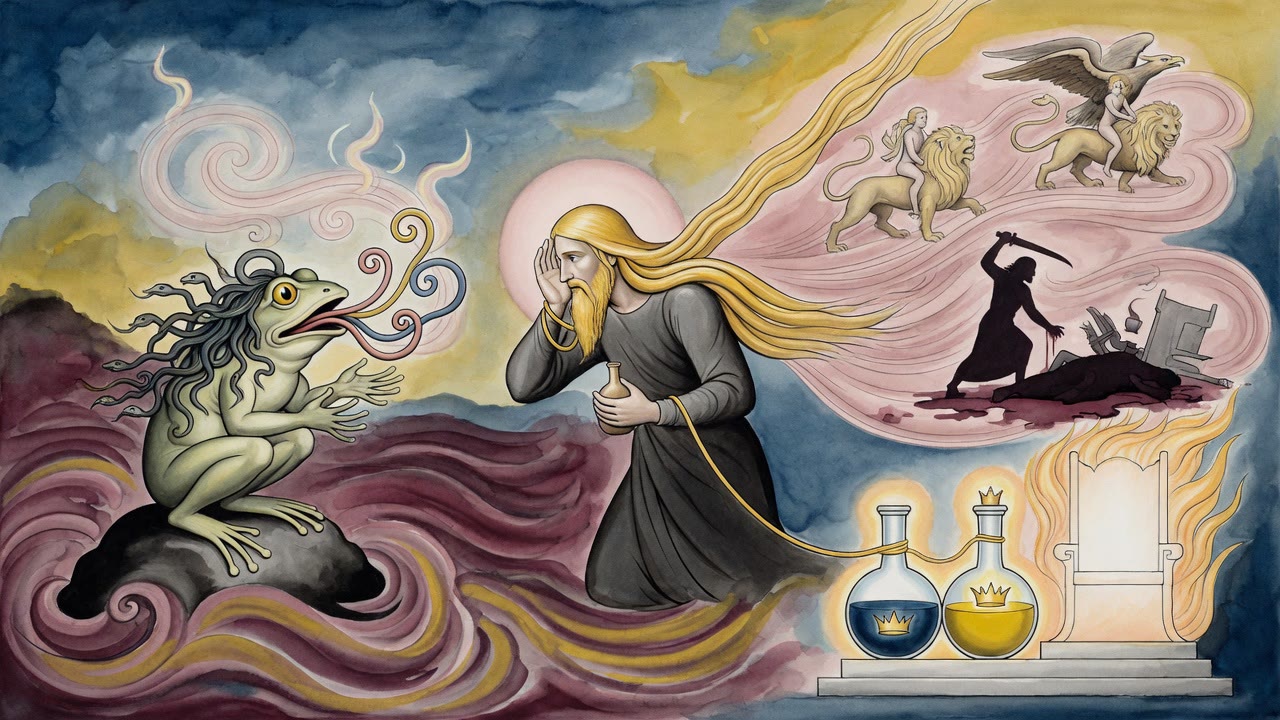
Johanan carried three loaves down the road and broke them for a starving crow and a starving dog. He paid a ransom to put a doomed fish back in the sea.
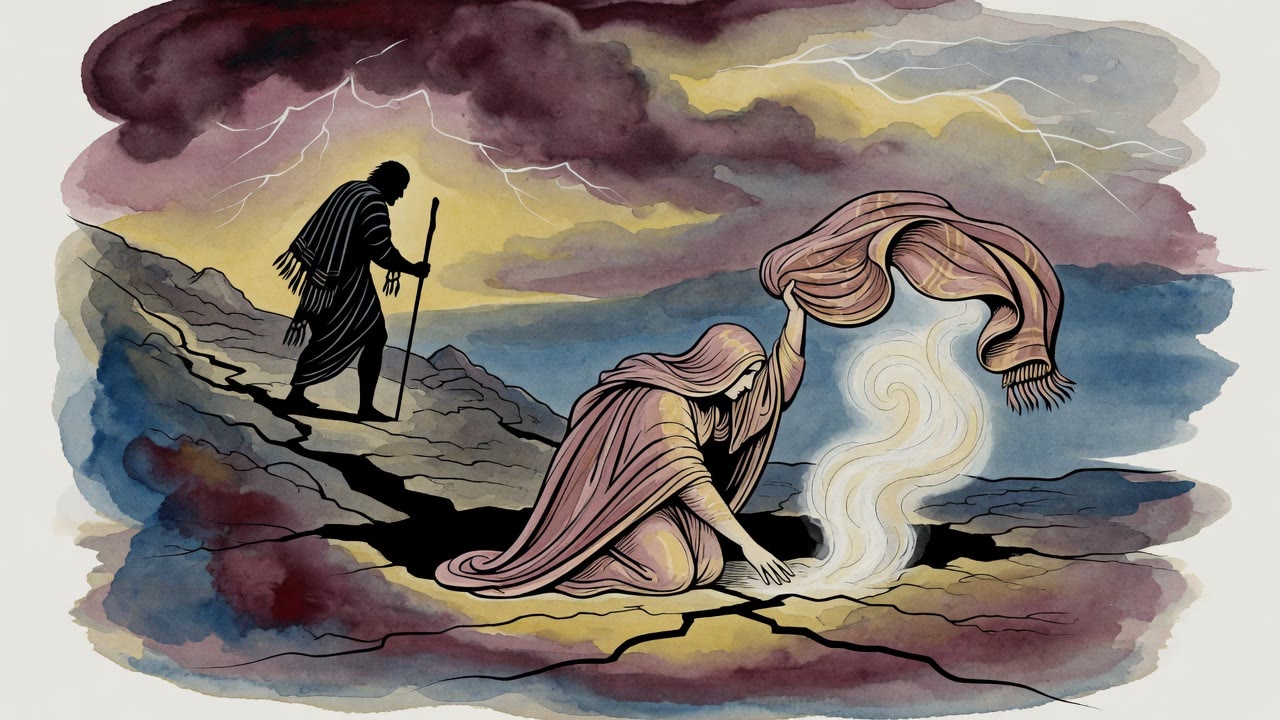
Saul banned the speakers with the dead, then walked to Endor at night. She saw Samuel's mantle. He heard only a whisper rising from under the earth.
