The Fish That Swallowed Jonah Was Egypt and Lilith and the Spleen
Jonah prays from the bowels of the fish. The Tikkunei Zohar hears the same prayer Israel prayed from the mud of Pharaoh's building projects.
Table of Contents
 Click for full size
The Fish Has Many Names
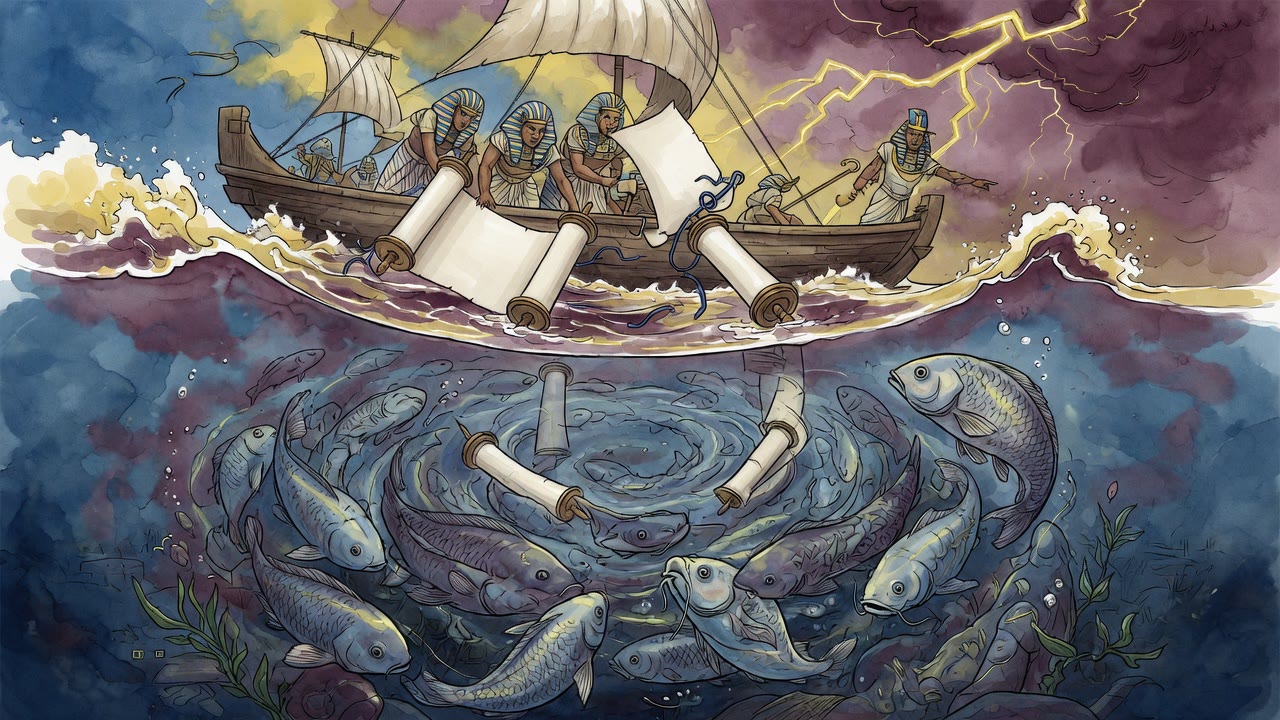
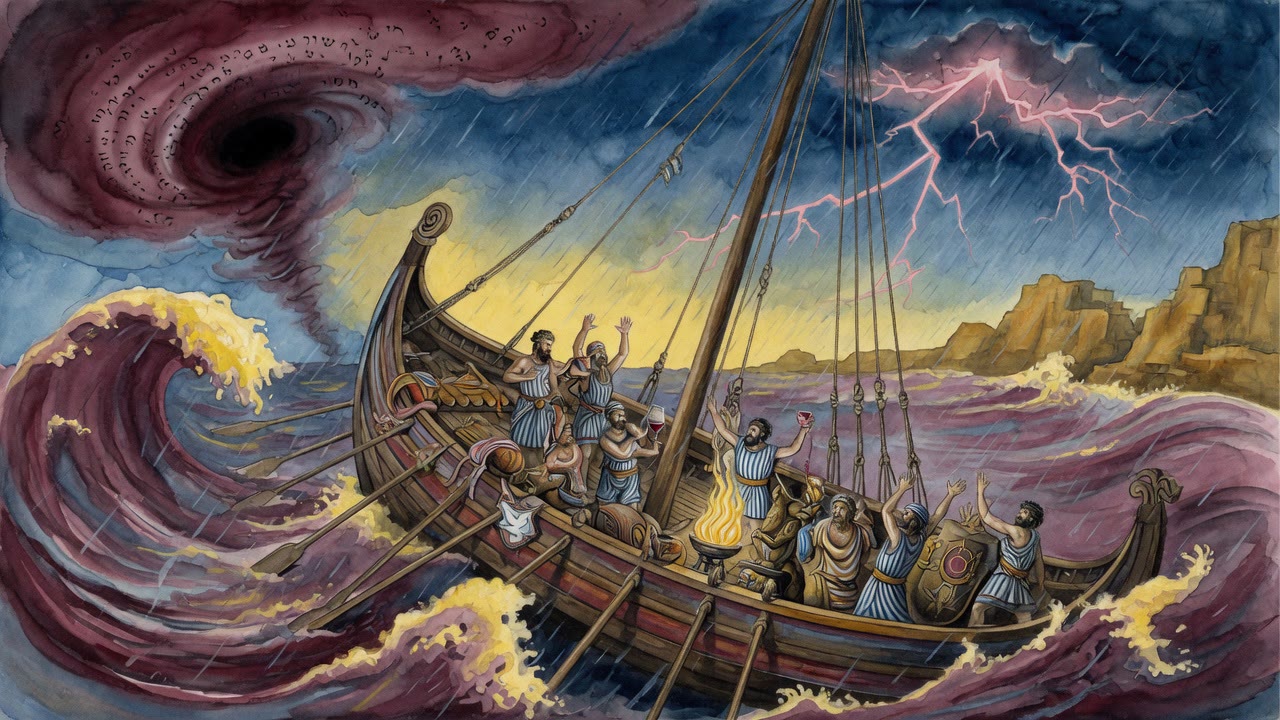
Jonah goes overboard in the middle of a storm he caused. The sailors have done everything they could think of: prayed to their gods, jettisoned the cargo, cast lots to find the source of the trouble. The lot has named Jonah, and Jonah has named himself. Into the sea he goes, and the sea stops raging the moment he disappears. Something has been satisfied. Something has received what it was waiting for.
Then the fish comes.
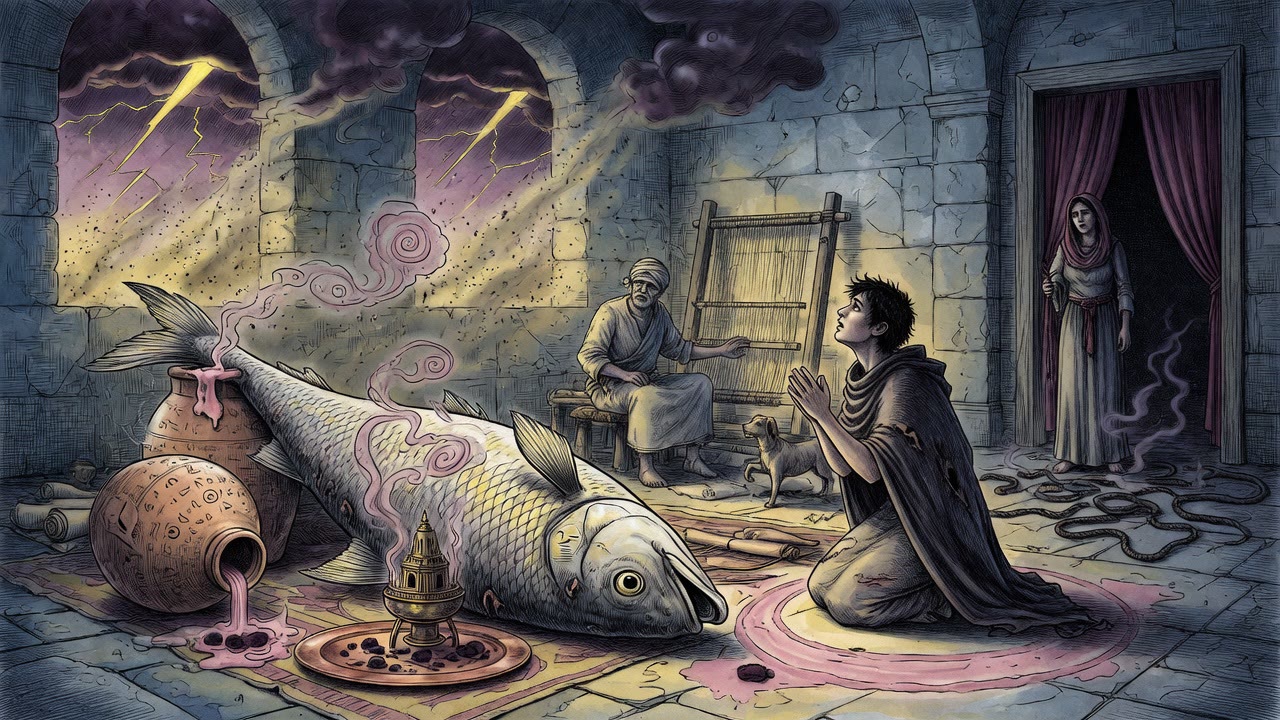
The Tikkunei Zohar, compiled in thirteenth-century Castile, stands at the word dag gadol, great fish, and refuses to move past it until it has named everything the fish is. Because the fish is not simply a fish. The fish is Egypt. The fish is Lilith. The fish is the spleen. The fish is the angel of destruction who walked out of Egypt at the Exodus and never fully left.
Why Egypt and the Fish Share a Name
The Hebrew root that gives Egypt its name, metzar, means a narrow passage, a place of compression and constriction. The same root appears in the word for the fish's bowels where Jonah prays. In the Tikkunei Zohar's reading, the fish and Egypt are not compared to each other. They are the same symbolic reality appearing in two different stories. The fish swallows Jonah the way Egypt swallowed Israel: completely, so that you disappear from the surface of the world and cannot get out under your own power.
The bowels of the fish are the Egyptians themselves. When Jonah prays from the fish's belly, he is praying from inside the body of the empire. His prayer is the same prayer Israel prays in the mud of Pharaoh's building projects, rising from inside the oppression rather than from above it.
Lilith and the Mixed Multitude
The Tikkunei Zohar's section numbered 106 moves through a sequence of identifications that accumulates rather than choosing between them. The great fish is also the female aspect of the demonic realm, which the tradition calls Lilith, the force that attaches to the places of maximum darkness and feeds on what descends there. She is the sitra achra (the Other Side)'s feminine face, and the sea is her domain.
Connected to this is the erev rav, the mixed multitude who left Egypt with Israel at the Exodus. The Tikkunei Zohar tracks this group as a source of persistent spiritual contamination within the community, neither fully Israel nor fully other, carrying the energy of Egypt inside the camp. The great fish contains them too. Everything that came out of Egypt without being fully transformed by the Exodus is in the belly of this fish.
The Spleen and Shortness of Spirit
The most unexpected identification in the Tikkunei Zohar is the spleen. The fish is the spleen. The spleen, in the kabbalistic physiology of the body, corresponds to the spiritual condition of compressed hopelessness, the state in which a person cannot hear good news because the organ of bitterness has seized control. When Exodus 6:9 describes the Israelites as unable to hear Moses because of the hard labor, the Hebrew phrase is kotzer ruach, shortness of spirit. This is the spleen's work.
Jonah in the fish is Jonah inside his own spiritual compression. He fled his mission not out of fear but out of a theological argument: he did not want Nineveh to be saved, and he knew God was merciful and would save them if they repented. He ran because he understood God too well and disagreed with what he understood. This is a particular kind of kotzer ruach, a shortness of spirit that wears the face of principle. The fish is the spleen. It compresses. It holds you in the dark until the compression itself teaches you something about where you were wrong.
← All myths