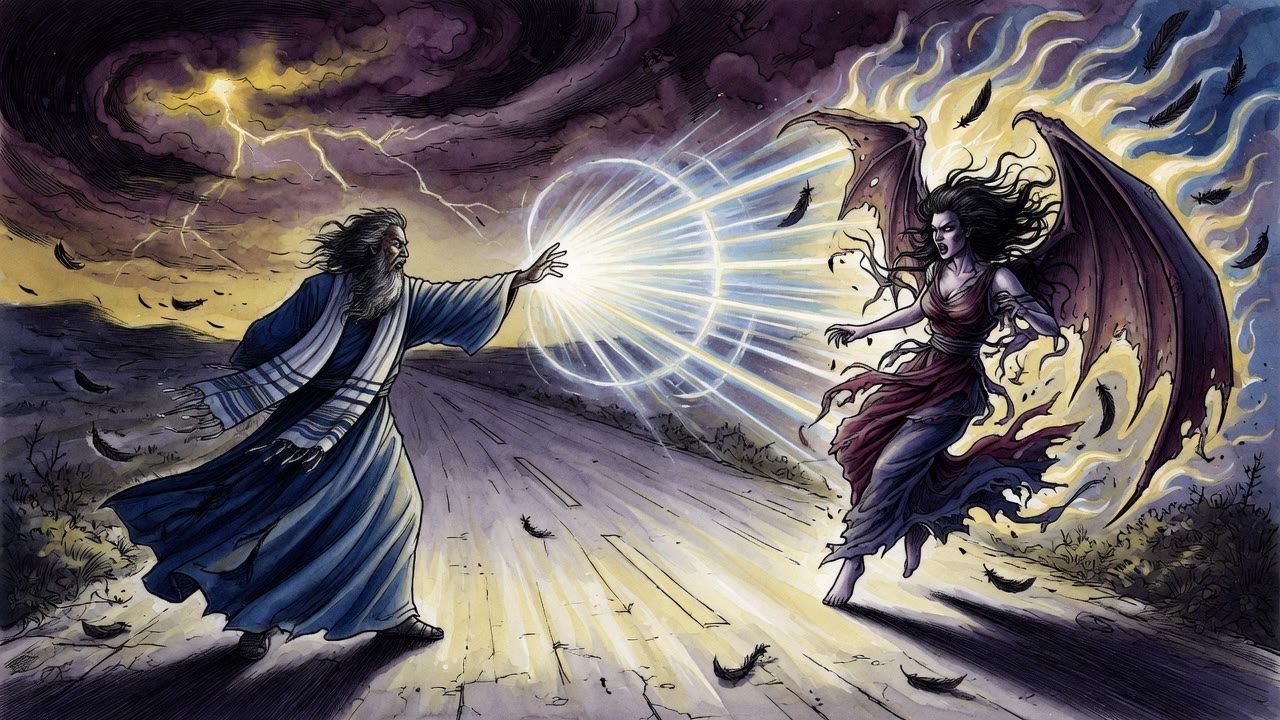
Lilith Fled Eden and Bargained With the Angels Who Followed Her
When Lilith flew from Eden, God sent three angels after her. She refused to return. What she offered instead became the contract that still limits her power.
 Click for full size
The Argument in Eden
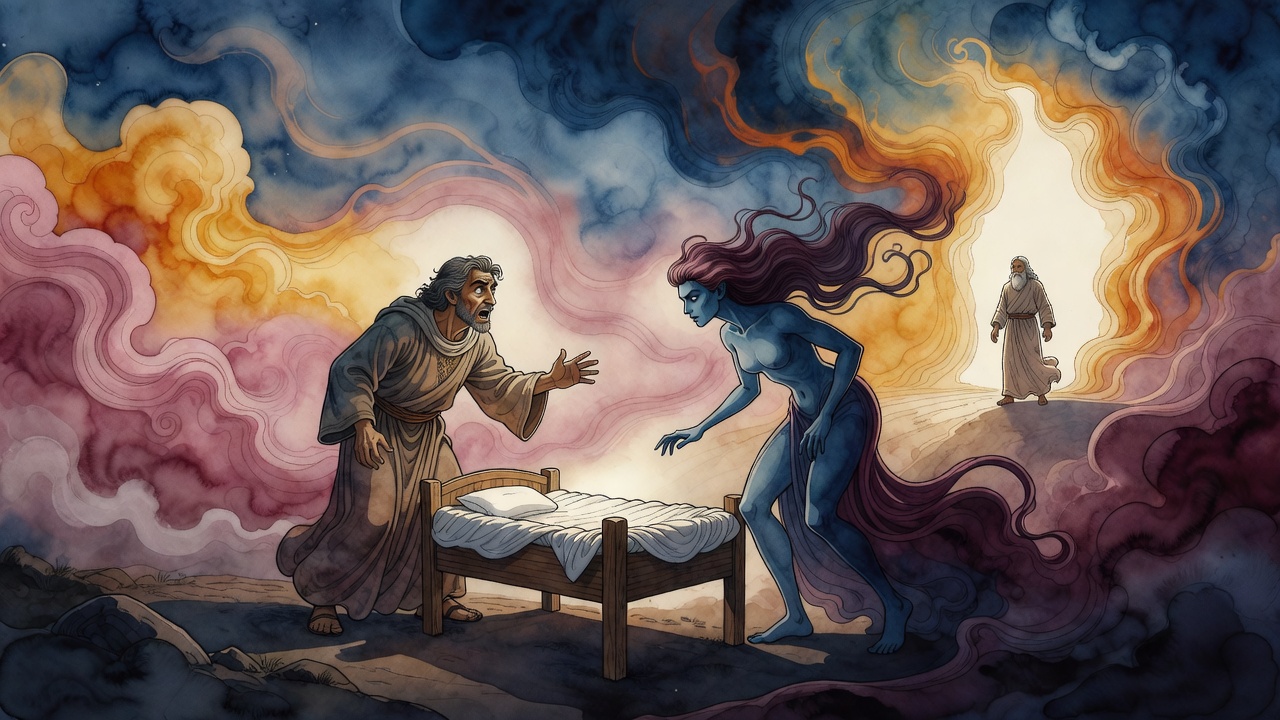
Both were made from earth. That was Lilith's position, and she stated it without apology: you and I were created the same way, from the same material, on the same day. I will not lie beneath you. Adam appealed to God. God heard the appeal and apparently agreed with Adam's position, or at least ruled in his favor. Lilith did not wait for the ruling to become a constraint. She spoke the divine name aloud and flew out of the Garden.
She landed at the Red Sea. The tradition places her there specifically, in the body of water already saturated with the memory of God's judgment on Egypt, where the waters had split and then closed again over Pharaoh's army. In that place Lilith began bearing children. Hundreds per day, according to the accounts. Demons, the tradition calls them, children of the boundary between worlds, born from the meeting of a human woman and the forces of the wilderness.
The Three Angels
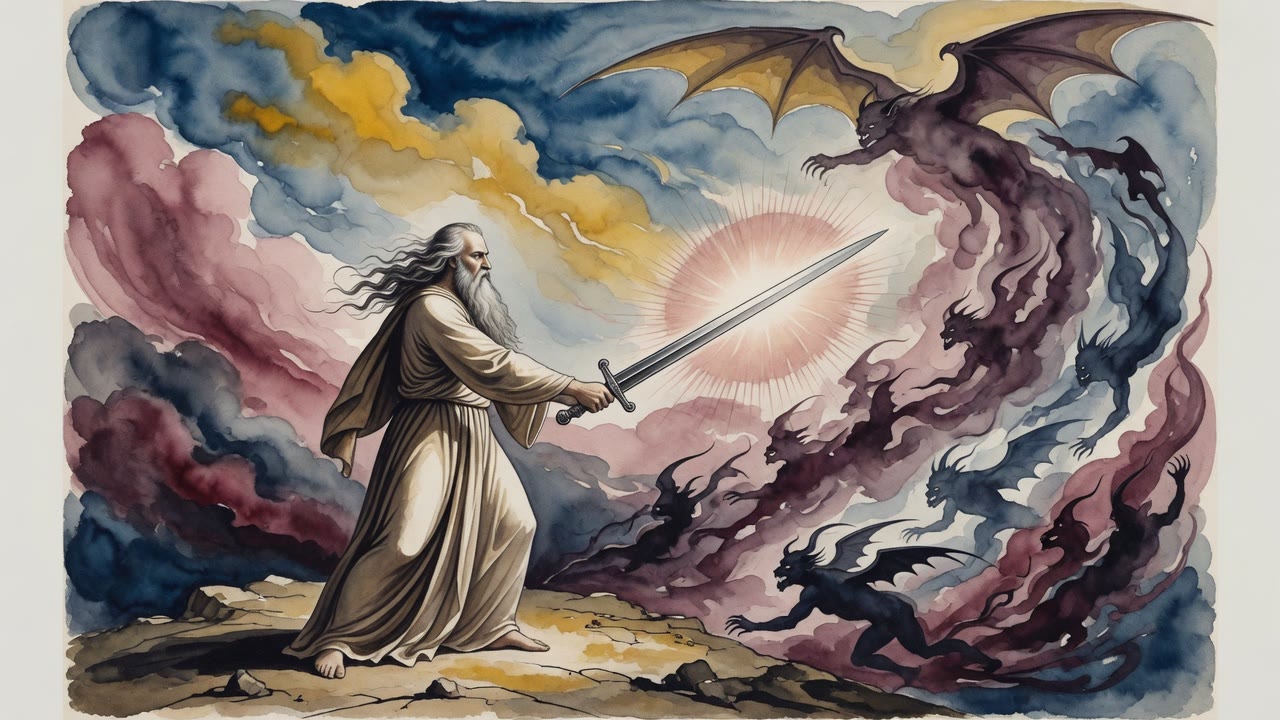
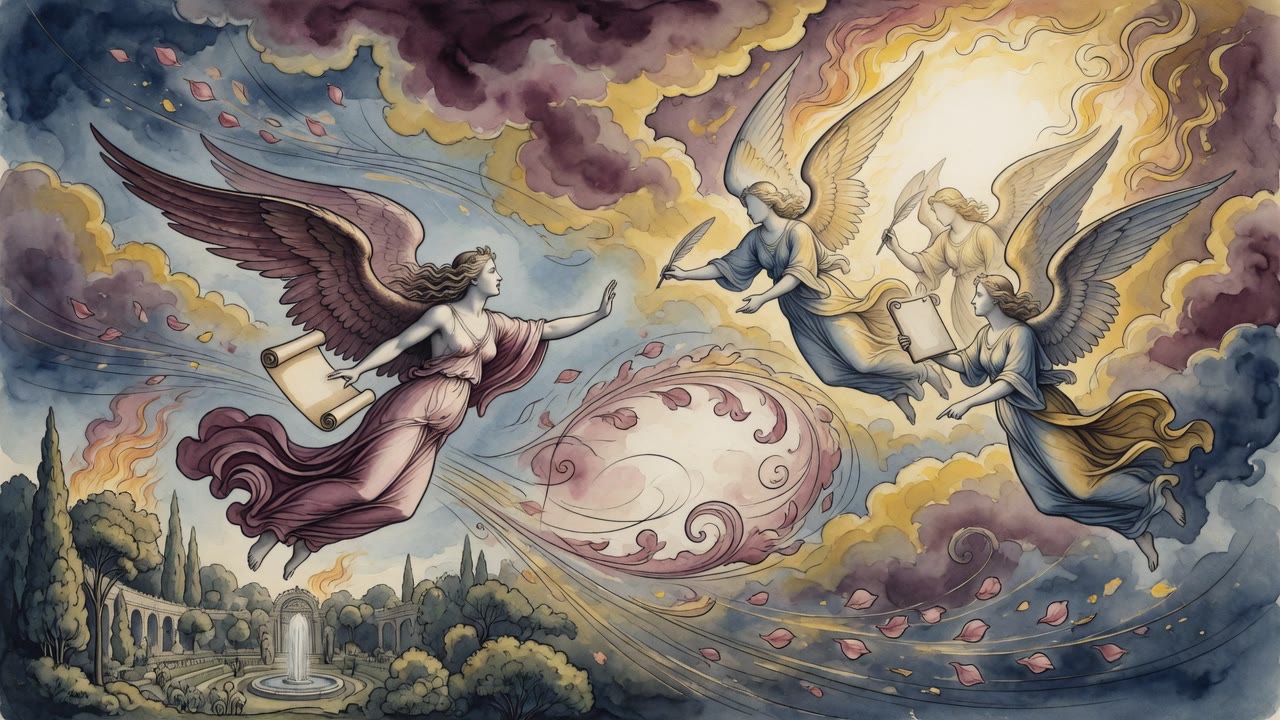
God sent three angels after her. Sanoi, Sansanoi, and Semangelof. Their mission was clear: bring Lilith back to the Garden. If she refused, every day a hundred of her children would die.
They found her at the sea. She refused. She knew what she was giving up. She knew what the refusal would cost her children, and she did not return. This is the hard detail in the story that the later glamorized versions of Lilith tend to soften: she chose her autonomy and paid for it in her children's deaths, day after day, the number accumulating without end. Whether the tradition intends this as indictment or tragedy depends on which collection you read, but none of them pretend the cost is small.
The Terms of the Agreement
The bargain that emerged was not what the angels came for, but it was what they left with. Lilith would not harm any infant who bore the names of the three angels on an amulet. She would not enter any house where those three names were written. She would not kill the children of mothers who invoked the protection of the angels sent to retrieve her. She swore to this.
The amulet tradition that followed from this bargain is among the longest-lived in Jewish folk practice. From the medieval period through the early modern era, amulets bearing the names of Sanoi, Sansanoi, and Semangelof were placed in the rooms of new mothers and hung over the cribs of newborns. The tradition was Jewish in its naming and its angelology, drawing on the specific bargain the Alphabet of Ben Sira describes, and it was practiced across communities from Baghdad to Amsterdam.
What Lilith Became
The later tradition gave Lilith a partner: Samael, the celestial prince associated with Rome and with accusation, whose name appears in Kabbalistic literature as the force that stands against Israel in the heavenly court. The relationship between Samael and Lilith is described in terms that mirror Adam and Lilith: two beings of equal and destructive capacity joined in an opposition to the order of creation.
The Zohar and its related literature are ambivalent about Lilith in ways that earlier sources are not. She appears there not simply as a demonic threat to individual households but as a cosmic force, the shadow side of the Shekhinah, the feminine divine presence. In this reading, the exile of the Shekhinah and the power of Lilith are connected: when divine presence withdraws from the world, the space it leaves is not empty. Something moves into it. The tradition does not resolve whether Lilith is to be feared, understood, or both.
← All myths